The lady asks the man serving the food why the container is only half full. He looks at her annoyed and remarks, ‘I do my best,’ and walks away. It’s obvious to everyone that it’s far from anybody’s best. Not long from there three men harass an actual security guard. ‘How much money do you make?’ He tells them it’s none of their business. Then they move on and try to speak to two women but the women won’t give them any attention, so low is their vibration and problematic their aura. Everyone is sullen and hardly anybody wants to be there. The place is almost empty. I remember the old man whose truck was stalled and nobody would help him in the cold and wind and snow with night approaching. I tried to help him but had difficulties. I am not a mechanic. A lady approaches me and looks at my coffee. I figure it’s not allowed. ‘Can I have the coffee here,’ I ask. ‘You can have the coffee. It’s that I am dying for a coffee also.’ She waits for an answer. I don’t know if she wants me to buy her a coffee. Outside I can see the night, the lights. There was a bread shop that used to donate to the homeless shelter where I worked. I notice it’s gone. I remember the shelter, for there were doors that looked as if they had spirits inside them, and there were many, many good men. And the shelter sat away from the lonesome one lane highway upon the top of a hill. I began work and you had to work part time to begin then, or I did, but I worked 88 hours a pay period which was 8 more hours than the full timers. And I learned much from everyone around me, and I learned many things about life but there is always much more to learn. Outside the window the wind blows cold and that particular town is dirty, grimy. There is some kind of bell affixed to a post. Maybe it is a Christmas bell. But the bell is broken. It’s inside must have fallen out, its ‘heart’ so to speak. The bell is then a shell. It has no heart. But who cares about the poor bell? Nobody. There isn’t even anybody around. The lights that guide the traffic turn. The ones that don’t, well they remain a rueful melancholic yellow. The radio said that storms will arrive. Storms. Ice. Hail. Colder air. As if the world there hadn’t enough trouble already. As if it needed more.
Train Wreck (a pantoum)

Being driven by the urge to stand still
I watched the passenger train derail
It screeched and pounded with a shrill
At iron against flesh with a wail

I watched the passenger train derail
My jaw dropped to the platform
At iron against flesh with a wail
Of death screaming like a thunderstorm

My jaw dropped to the platform
In disbelief at the destructive disarray
Of death screaming like a thunderstorm
I pounded my chest, to face it this way

In disbelief at the destructive disarray
I felt a surge of Divine courage
I pounded my chest to face it this way
Firm in faith against chaos and carnage

I felt a surge of Divine courage
It screeched and pounded with a shrill
Firm in faith against chaos and carnage
Being driven by the urge to stand still
FEEL THE RHYTHM OF FREEDOM!

We poets are like fish in a glass cage,
many admire us because we are displayed as living figures,
we swim in the comfort zone,
where others will say that our love poems in a collapsing world
are very important as themes,
and congratulate us on a nice outfit.
Yes, we are sublime poets who stand for peace in the world
and for a free life in the salty sea, we don't know.
We are scared because
we heard that some dead fish are floating in the sea.
Sharks and some larger fish stalk the tiny souls.
And we so glorious in our poetic movement,
we kiss the hand that carries our food and directs our bodies, minds and words.
Sometimes we are on the surface, sometimes at the bottom,
but it is important that we are protected.
We watch the audience
following our movements as we swim in the limited space
of our personal freedom and peace.
Feel the rhythm of freedom!
It vibrates in my mind as I want to jump over the glass edge,
and even if I were to swim alone in the sea,
at least Poseidon will see my desire.

Maja Milojković was born in 1975 in Zaječar, Serbia.
She is a person to whom from an early age, Leonardo da Vinci's statement "Painting is poetry that can be seen, and poetry is painting that can be heard" is circulating through the blood.
That's why she started to use feathers and a brush and began to reveal the world and herself to them.
As a poet, she is represented in numerous domestic and foreign literary newspapers, anthologies and electronic media, and some of her poems can be found on YouTube.

Many of her poems have been translated into English, Hungarian, Bengali and Bulgarian due to the need of foreign readers.
She is the recipient of many international awards.
"Trees of Desire" is her second collection of poems in preparation, which is preceded by the book of poems "Moon Circle."
She is a member of the International Society of Writers and Artists "Mountain Views" in Montenegro, and she also is a member of the Poetry club "Area Felix" in Serbia.
WEDDING CEREMONIES OF THE UZBEK PEOPLE-PAST AND TODAY
Mokhinur Sotvoldieva,
1st stage master’s student of ASU, Faculty of Philology
mohinurqodirova97@gmail.com Phone: +998930988168
Аnnotatsiya: Ushbu ilmiy ishda, o‘zbek xalqi to‘y marosimlarining o‘tmish va buguni, yo‘qolgan yoki butkul yangilangan udumlar, olimlarning bu borada olib borgan tadqiqotlariga atroflicha to‘xtalib o‘tiladi.
Аннотация: В данной научной работе подробно рассмотрены размышления о прошлом и настоящем свадебных обрядов узбекского народа, утраченных или полностью возрожденных традициях, исследования, проведенные учеными в этом отношении.
Annotation: In this scientific work, thoughts about the past and present of the wedding ceremonies of the Uzbek people, lost or completely renewed traditions, researches conducted by scientists in this regard are discussed in detail.
Key words: weddings of the Uzbek people, wedding, customs, courtship, betrothal, housewarming, meeting, blessing wedding, wedding sending (mazar), girl’s wedding (girls’ meeting), marriage education.
It is known that the stages of the emergence and development of Uzbek weddings go back several years. We know many nations with their historically formed traditions and customs. In particular, if we talk about the rituals of the Uzbek people, whose unique ethnographic history has been formed over the years, there are such customs and rituals that you will hardly find in other nations. Among them, the weddings of the Uzbek people are one of the main rituals that have been practiced since the distant past until now.
Uzbek wedding ceremonies are widely studied and are being studied by many people as one of our priceless values that reflect the culture, history, characteristics and stages of development of our nation.
In this regard, scientists such as D.D.Manukyan, Y.A.Sorokin, D.A.Gilfanova conducted research on the wedding ceremony. “Researches related to the names of modern wedding ceremonies A. Jo’raboev [7,9-35], Sh.Nurillaeva [10,11-39], H.Ismoilov [8,12-47], O.Boriev [6,42] , Z.H.Orifkhonova [4, 36], M.Kakharovalar [13,12-45]. The emergence of new traditions in wedding ceremonies during the Soviet era is reflected in the scientific works of O.A.Sukhareva, M.A.Bikjanova, N.P. Lobachyova, L.F.Monogarova, T.Kh.Toshboeva and M.B.Savurov found Researcher Z. Alimova also touched on Persian-Tajik wedding rituals in her scientific work [1, 102].” [1]
It is known from historical sources that the term “wedding” belonging to the family of Turkic languages was used in the form of “toy” or “kurultoy” from the time of the Mongol and Chigatai khans. If we look at the memories of the Arab traveler Ibn Batuta, who went to the Movarunnahr region in the 14th century for the purpose of the trip, “toy” is an annual gathering (kurultay), which was attended by Genghis Khan’s descendants, emirs and Turkish begs, prestigious women and military commanders. In the historical work “Tavarikh Khorezmshakhiya” (May 5, 1864) it is reported that the son of Minister Hassan-Murod Kushbegi, Muhammad Yusufbek, married the daughter of the Khan, and the party lasted for several days.
Over time, based on scientific research, it can be said that “wedding” is a special gathering in the circle of “elders”, with the participation of relatives, relatives, and officials, along with a big party and a special luxury, known as a tradition since the distant past. It is true that with the passage of time, some changes and updates have occurred in Uzbek weddings, but differences in the ceremony from region to region have been observed significantly. Therefore, as a result of the globalization of relations between different nations and peoples, Uzbek weddings from the period before the introduction of Islam and after that form an integral connection with each other. [2].
In the marriage system of the Uzbek people: betrothal, betrothal, house visit, meeting, blessing wedding, wedding send-off (mazar), girl’s wedding (girls’ meeting), marriage education, bride’s wedding, bride’s greeting, charlari, god’s call (father saw, girl saw ) there are rituals and ancient traditions related to them. Most of them are still preserved and celebrated.
The history of Uzbek weddings, their stage of development, genre characteristics have been widely studied by a number of scholars. In this field, A. Ashirov (“Ancient beliefs and ceremonies of the Uzbek people”), K. Kubakov (“Wedding and wedding ceremonies in the past and present”), H. Muin (“About the wedding and mourning ceremony”), H. Sulaymonova (“In Uzbekistan history and present day of wedding traditions”), H. Umurova (“About wedding ceremony terms in English and Uzbek languages”), Z. Alimova (“Comparative analysis of lexemes related to wedding ceremony in English and Uzbek peoples”), H. Ismailov (“Uzbek weddings”), M. Askarov (“Wedding: yesterday, today, tomorrow-ethnographic analysis”) and others conducted scientific research.
In the marriage system of the Uzbek people: betrothal, betrothal, house visit, meeting, blessing wedding, wedding send-off (mazar), girl’s wedding (girls’ meeting), marriage education, bride’s wedding, bride’s greeting, charlari, god’s call (father saw, girl saw ) there are rituals and ancient traditions related to them. Most of them are still preserved and celebrated. Among them, marriage, cradle and circumcision are among the oldest rituals.
Until the 20th century, weddings were held in homes, but by the 70s of the 20th century, the tradition of holding weddings in restaurants and cafes began. Most notably, the bride and groom’s dresses, which are the reason for the wedding, have also changed. The burqas and thick headscarves of the brides were replaced by a fata dress made according to modern fashion. Only the national cloak and turban worn by the groom remained. In addition, the number of wedding ceremony participants has increased relatively.
Also, in the 70s and 80s, the bride and groom and their “accompanying” friends went to the city’s memorials together, laid flowers, took pictures, videotaped, and put rings on each other. At the same time, especially in the capital, the composition of the bride’s sarpo became more “expensive” with items ranging from tableware, furniture sets to refrigerators, in addition to traditional items. At the end of the 20th century, due to the sharp increase in spending on wedding ceremonies, even in Tashkent, bachelor parties and wedding receptions began to be held together.
In conclusion, it should be said that the wedding ceremonies inherited from the past have been mixed with pre-Islamic and post-Islamic wedding ceremonies. In particular, to protect young people from the evil eye and calamities, they circle around the bonfire, put a big cover over their heads, sprinkle sweets and coins to wish them a happy life, make them sit on their laps, wish them to be rich, and treat them with boiled eggs. special events were held. «Ko‘rpa qavish», «maslahat oshi», «sabzi to‘g‘rar», «mol yoyar» and other udums have reached today without any changes. Even now, these ceremonies are held in the circle of relatives and neighbors, just like before. In addition, there are no additional news to these events. I mean, today’s weddings are held with equal participation of women and men, and it is also customary to bring famous artists to the wedding.
REFERENCES
1. V. Alimova. (n.d.). Comparative analysis of lexemes related to the English and Uzbek folk wedding ceremony, (p. 102).
2. Kh. Saydullaeva. History of wedding traditions in Uzbekistan and today-2021
3. A. Ashirov. “Ancient Beliefs and Rituals of the Uzbek People”,
4. H. Muin. “About the wedding and mourning ceremony”,
5. H. Umurova. “About wedding ceremony terms in English and Uzbek”
[1][1] Z.V. Alimova. (n.d.). Comparative analysis of lexemes related to the English and Uzbek folk wedding ceremony, (p. 102).
[2]Z. Alimova, Z. Ibrahimova. (2022). Comparative analysis of lexemes related to the wedding ceremony in English and Uzbek peoples. Science and innovation.
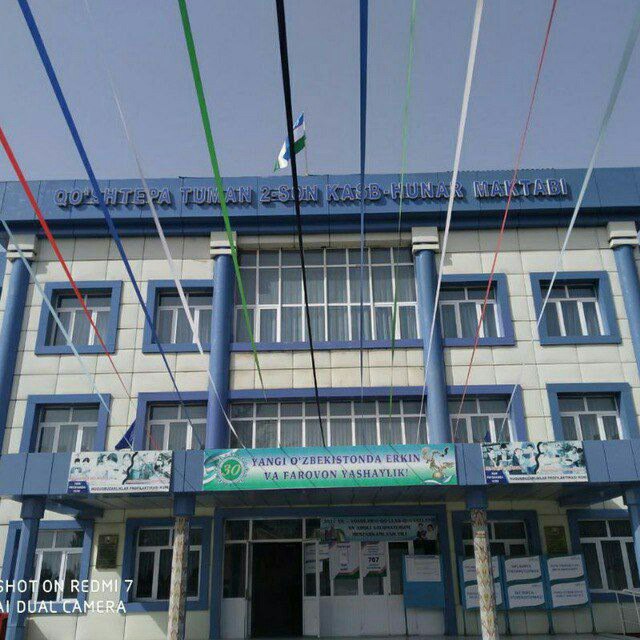
Vocational school No. 2, Koshtepa district, Fergana region. In this vocational school, young people are directed to various professions and trades. Vocational school has various directions.

1 Car body repair.
2 Repair and maintenance of car engines.
3 Tractor driver
4 Tailor
5 Electro-manteur
6 Car electrical and electronic equipment servicing.
7 We can cite computer graphics design and operator directions as an example.
In this school, all conditions are created for young people.
Students can apply the knowledge they have acquired during the lesson in the process of practical training.
As an example, we can say that all conditions are created for the students of the computer graphic design room in this room. And provided with enough computer equipment. Through computers, they study the fields of IT and graphic design. And in the future, they can get a job based on the fields they have studied in school.
Nowadays, due to the high interest of schoolchildren in the profession, schools also guide young people to the profession.

The main goal of these works is to ensure employment of young people in the future.


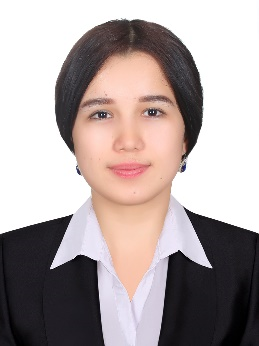
Toshtemirova Dildora Hakim qizi.
Born on October 9, 2008 in Uzbekistan.


Roziyeva is the daughter of Gulbahor Hasanboy.
She was born on September 7, 2006, Koshtepa district, Fergana region. Currently, she is a 2nd year student at KHM No. 2, Koshtepa district.
the kitchen presses against me with the aroma of food
***
wipe my face with the wind
wash my body clean
autumn – human autumn – human
***
The color of the blind and the color of the colorblind
A bird tells a bird about flight
The voice of the silence of the living and the dead
Yellowness of book pages and freshness of rye
The cell of the body and the cell of physicality
The color of death and the twilight of essence
Flight of imagination and imagination of flight
A bird looks for the sky in the sight of a blind man
A color-blind person is bathed in colors
Two people in line in an optician
And over their heads is a joint and separate God
***
No one was born human
No one died as a god
The rain washes away the fear from your face
The courage to be afraid when a stranger with the face of death roars through the windows with artillery explosions
***
Death is the cover
My body starts making friends with worms
The worms are fucking me in all the cracks just as they were during my life
Only now no one pays me for fucking because the bills are paid in full
***
The loneliness of antiquity befell the cemetery
Butterflies played a symphony of heritage with their wings:
They were once in a cocoon
They once cocooned themselves
They were once their own parents
Flowers tickle themselves with playful wings
How much is the life of a butterfly if thanks to a butterfly spring comes and the cemetery lives again?
(The Wise Owl reprint)
***
roads explode right under your feet
war is a house without wallpaper
the skies explode overhead
the plane’s gut becomes the first victim
the ability to be honestly afraid appears when a stranger with the face of death breathes into the crown of the head
***
the witch was burned on such a huge log
that if a crossbar were added
it would be a cross
a time for crusades and disbelief is ahead
my cat is purring
and with my eyes closed I conjure an end to the war outside the window
the cat smiles knowing that wizards do not exist
the future has arrived
it is spring the graves remain
(3rd Wednesday reprint)
***
we drink the silence of the water breaking the reflection of the cherry blossoms
we quench our thirst with cherry blossoms disturbing the water in which it is reflected
we also reflected in the water
we are reflected in each other
we kiss like grains of sand
we fall apart like sand kisses
at least that’s what I imagined in my head
the water in the morning will wash away our paired traces that never existed
*
balancing between
war and war
leads to groin strain
outside the broken
window you can hear
the songs of birds
as if no one had died
*
the bird drowned itself in silence
our night cries fall on the cemetery slabs
along with the autumn leaves
*
boy washes in the rain
near the ruins of a house
the night takes slain soldiers
into its womb
*
the sky is turning blue
the water turns white
transparency disappears
and in childhood everything seemed clean and clear
in childhood everything seemed black and white
as a child I did not believe that it was possible to become an adult
I still can’t sleep sometimes
and monsters crawl out from under the bed
torturing me on a full moon
just don’t call mom for help anymore
(An edited new version published in OPEN: Journal of Arts & Letters)
Essay:
“My cat vomits grass”
What does my cat do all day long? Continuously washes himself after I hug him. However, before that he comes and rubs himself against me. Even at five in the morning and with dirty paws, when I sleep he rubs his face, because the rest of his body is hidden by the blanket.
Often the cat eats: food from the bowl, bugs, grass. Sometimes he vomits on the walkway. The walkway is already stained with cat hair and vomit, too. I don’t blame my cat: I myself have vomited a couple of times in the last year from what’s going on around me.
Often a cat will hunt mice, then toss and chew on the corpse, and leave the mouse remains and guts by the side of the road. Animal instincts are incomprehensible to me: why kill and chew on mice if you’re already well fed?
Sometimes the cat plays with household items, from shoelaces to flowers on window sills.
Despite the fact that my cat is a filthy rotter – I love him. He came to our house after the war began and came to live with us. The cat doesn’t understand at all what’s going on around him, and I don’t explain anything to him: what if he starts protecting our house from the blast wave and dies?
It’s funny, I still haven’t figured out the gender of my cat, but by default I think he’s a boy.
Someday my cat will die without ever knowing that a war has broken out. What’s more, my cat will never know why the war started. I will probably die, too, without ever finding out why people go to war. I want to die without finding out that there is a war.
Reprint by The Journal of Compressed Creative Arts
-----------------------------------------------------------
what could have been


the whispers

of my demise

are getting

louder


i have never

bothered myself

with paying any

attention to them


i'm too damn

busy trying to

sabotage my

own life


so far


so good
----------------------------------------------------
too damn stubborn


sitting alone in a medical

facility waiting to have

some x-rays done


looking around at all

the old couples knowing

damn well i have already

lived half of my life


quickly thinking about

how i'll manage this shit

when i'm older, alone

and too damn stubborn

to ask for help


this is when i hope my

savior has beautiful eyes

and an ass that i can dream

about from across the room
-----------------------------------------------------------
and rainbow eyebrows


just walked by

a woman with

green lipstick


hopefully the

freaks are finally

taking over
------------------------------------------------------
the stranger


a stranger told me

online to seek out

the lord


i asked this stranger

if the lord was there

when i was molested

as a child or when

my father tried to

choke me to death


silence


apparently the lord

was making sure

the stranger didn't

accidentally let the

truth get out
----------------------------------------------
swiss cheese


the guy behind

me in the hospital

waiting room


just said the

doctor said his

mother's insides

looked like swiss

cheese


so much for that

sandwich


J.J. Campbell (1976 - ?) is old enough to know better. He's been widely published over the years, most recently at Misfit Magazine, Disturb the Universe Magazine, Dumpster Fire Press, Horror Sleaze Trash and The Asylum Floor. You can find him most days on his mildly entertaining blog, evil delights. (https://evildelights.blogspot.com)