Short story from Bill Tope

Make Believe

i

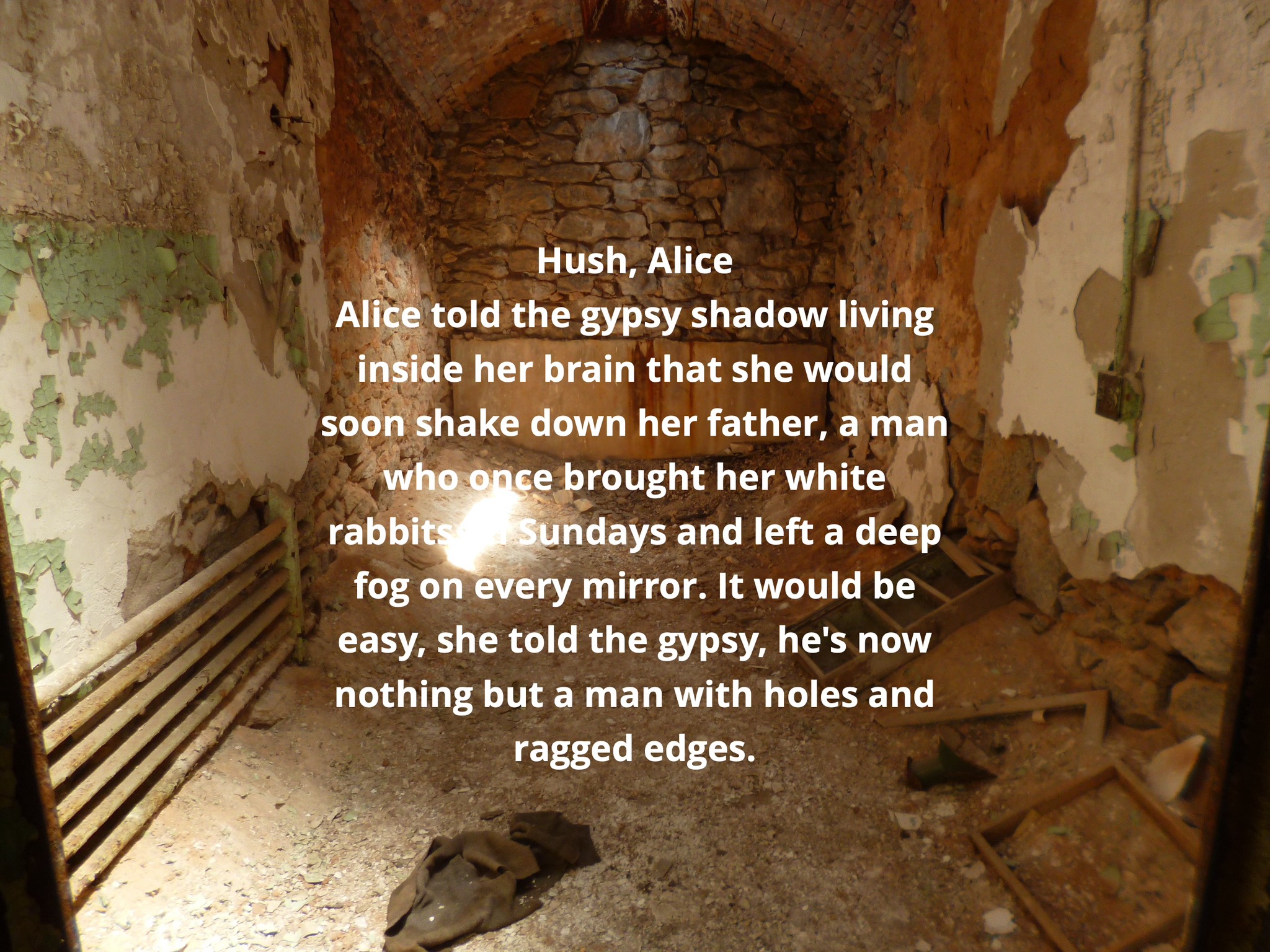
“Clear a path,” cried Stacy, spreading wide her arms. “Here comes Shamu!” As if by magic, the students in the grade school corridor parted like the Red Sea. Lori, the object of this derision, gritted her teeth and said nothing. She walked past the taunting students, wincing in shame at each smirking face. Some of the children hooted or made other ugly animal sounds.

“Be careful what you say to Shamu,” cautioned Stacy. “She might morph into Carrie!” The girls giggled, and the boys guffawed. Lori passed out of their sight. Stacy smiled contentedly.

ii

“Students,” said Ms. Black, the fifth grade teacher, “today we’re going to get your vital statistics.” The children stared back at her blankly, perplexed.

“I mean,” Ms. Black went on, “that I’m going to measure your height and get your weight.” Lori had a sinking feeling. First, the teacher measured their heights, and that went off without incident, but then came the weighing. The children lined up before the physician’s scales, each taking their turn to step onto the platform while Ms. Black balanced the weights. At length, last in line, Lori stepped on the scale and Stacy didn’t remain idle.

“Hey, Shamu, don’t break the scale,” she barked. Several children chuckled. Lori felt her cheeks burn.

“That’s not polite, Stacy,” scolded Ms. Black. “I mean, how would you like it if…?”

“If I were fat?” Stacy finished the teacher’s sentence.

“Now, that’s enough, students!” Ms. Black spread the guilt over the entire class, inasmuch as Stacy Shelton was the daughter of Bruce Shelton, the superintendent of schools. That made him Ms. Black’s boss. He was known to dote on his daughter. None of the teachers were eager to get her in their class.

As Black maneuvered the weights on the scale, Stacy remarked, “They’ve got a special scale down at the stockyards.” The children erupted in gales of laughter. Even Ms. Black, in spite of herself, chuckled into her fist, then tried to hide it. Lori felt her betrayal keenly.

                                                         iii

At noon, the children scattered for lunch. Although it was a closed campus, Lori ran home, tears of humiliation streaking her eyes. When she arrived, she crept silently through the house and into her father’s den, where she found the gun cabinet, unlocked as usual. Lifting out a heavy, ugly black pistol, she then rummaged through the ammo drawer and extracted a box of bullets she knew would fit the handgun. Her father had instructed her on how to handle firearms safely.

Arriving back in class before the lunchroom let out, Lori sat silently in her seat in the back of the classroom. Students were assigned their seats alphabetically, and Lori felt lucky to be situated in the rear, where she’d garner less notice. Stacy’s keen eye and needling voice always seemed to find her, however. The gun sat hidden under the folds of Lori’s billowing dress.

iv

Finally, students began filing back into the classroom. Stacy, as per usual, was last to enter, making a spectacular entrance, of course, arriving as if onto a stage. The other girls giggled in appreciation. No one dared cross the girl. Lori frowned darkly. She hated that girl! When class commenced, Ms. Black instructed the students in social studies until two o’clock, at which time the children exited the school for the final recess. Lori remained in her seat, the gun cold against her thigh. When class reconvened, Ms. Black told the students there would be a test of their ability to write creative fiction. Pencils were turned up, and blank sheets of paper were passed out. Lori bent to her work, and SNAP! Her pencil broke cleanly in two; she had been pressing on it so hard, in frustration, that she ruined it. That was Lori’s last pencil. She looked up; the teacher had left the room, probably to take another smoke. Everyone else was busily scribbling on their own sheets; besides, no one would help the fat kid. Lori sighed. Then she thought: maybe this is the time to make her move. What did she have to lose?”

Stacy, observing what had transpired with Lori, turned to the girl and said, “Wanna borrow a pencil?” At first, Lori expected her to snatch the pencil out of her reach and taunt her some more. But no. Stacy was serious, and Lori accepted the small token of kindness.

“Thanks,” murmured Lori.

“Sure,” acknowledged the other girl, at last taking pity on her nemesis.

v

By the time Ms. Black collected the papers, the final bell rang, indicating it was time to leave for the day. Soon the classroom was deserted, except for the teacher. Ms. Black rifled through the thirty completed essays and began correcting and grading them. When she came to the last essay, her mouth fell open in surprise. She sat up straight in her chair and murmured, “Oh, my God!”

Here’s what the final essay said:

I almost killed a girl today. She made fun of me one time too many, and I had a gun, and I was going to shoot her dead. My dad taught me how to shoot, and I’m a good shot. But she let me use her pencil when mine broke, so for now she gets to live. This is, naturally, only make-believe fiction, as Ms. Black said.

Lori Belzer

5th Grade

ESSAY FROM  FADWA ATTIA WITH HER WORKS (painting and photography)

Woman with light skin, red lips, brown eyes and hair, a white large brimmed hat holding a white cat.

Fadwa Attia from Egypt wonders, do the arts now in all fields need identity?

Yes, it is the difficult equation from ancient times to the present time. We need identity with its features.

These features were formed by different cultures, which It started from the ancient civilizations of the ancient Egyptians. Until we reach the present time, all of this, as I said in my previous articles, made identity formed from ideas and culture, so it became a cultural reference.

The identity thesis became important in theatre, cinema, fine art, and others.

But after I presented solutions to preserve identity, which is one of the basics of heritage, cultural heritage and other things, we need a lot to know the importance of our identity that we have missed, and to continue our dialogue.

About the solutions necessary to preserve identity, after training cadres and developing systematic plans for the coming years through strategic planning by specialists and researchers in these various fields, various seminars to introduce identity, in general.

Then, there is a taste of identity from the receiving audience, whether it is trainees from the cadres who carry out strategic planning.

Canvas impressionistic painting of a person at a circus (?) seated in front of an audience with lamps and banners in the background. Orange, blue, purple colors.

As well as the public that we educate through cultural and artistic seminars, producing short and documentary films about identity.

As well as holding conferences from which it issues,

Books and exhibitions calling for the preservation of identity, its elements and features. 

Also, the media coordinates with him through the responsible state’s channels through various programmes.

Which demands the preservation of identity, its history and culture.

Through the Internet and also through satellite channels and television programmes.

This makes the preservation of identity continuous and never-ending.

White and brown ducks in front of a stone building with some plants and dry ground.

Which brings us to one truth: Identity is a homeland that we cannot do without. My identity is from within my homeland, from within the cultural and artistic heritage. From within our features, our art, and our heritage are like an inexhaustible river. We need a lot and a lot so that our identity from which our art emerges is not lost, and so that there is not a crisis in the loss of our identity. We are peoples with civilizations that have roots. We cannot dispense with our civilizations and our history. We need to support ourselves by preserving identity by all possible means.

Therefore, we continue our simple, enjoyable dialogue about identity through true, sincere art, and we have a new dialogue that we will continue in new articles later, with you with love and respect from our beloved Egypt.

My Lifelong Lover 

Stone ruins of a doorway in a historic building

I have waited for you so much, my beloved, and I have hope that your love will be like the sea whose waves do not calm down. Your love has become the focus of my life. Do you feel me or not? Your distance has increased a lot, and my days have become lost to me and I have become no longer the one who loved you.

Come back, beloved of my life, to my warm heart with your love. Come back. You will find me waiting for you, wandering in love during your days, and getting lost with you in the moments of my life, my lifelong lover.

.

Poetry from Brian Michael Barbeito

Long grasses that have gone to seed with a blue flower stalk in the foreground. Blue sky with a few white clouds.
Closeup of yellow flowers with a caterpillar in focus.
Bush with green leaves and light pink flowers.
Light purple and white lupines up close.
Dry grass that has gone to seed that's brown with green stalks.
Blades of grass up close, one red and black ladybug in the top left corner.
Long stalks of grass and white and pink flowers. Sky is blue with white clouds.
Field of green shrubs and a few flowers with tall leafy green trees in the distance and white clouds in a blue sky.

Summer Scenes Sanguine

There is the sky and the clouds, a long and straight passageway below, beside a hill. It’s dark and shaded but not so much that one can’t see. Wind visits and makes the branches to sway back and forth. Previous storms have strewn leaves and branches around on the earth. Back and back, far and far, the largest mushroom waits untouched and unknown on a broken tree surrounded by reeds tall and then still. Just outside the trees is the open place, and on the feral summer growths are butterflies, spiders, and dragonflies. There are ants and grasshoppers. Blooms yellow, blue, and the open air is cleansing, refreshing. A pastoral scene. What is beyond the end of that place, where there is no passageway and the trees, the shrubs and chaparral become too thick? What would William Golding or Joseph Conrad think of that place? In the winter the snow is like infinite tiny crystals or other-worldly grains of sands. Agate, chaga, a large snake looks at me. Kundalini symbol and sign. I pause and it goes away at which point I look to the sky. I want to understand the clouds. I vaguely remember dreams of the night where I was in the desert and walked to a city at night with metropolitan lights and infrastructure and populace. But I wanted to go back to the desert. I couldn’t remember the rest. Something runs in the tall grasses. Fast. Determined. Magical. I see clover, bee, ladybug. Whitman wrote, -You road I enter and look around, I believe you are not all that is here, I believe much unseen is also here.- Whitman only travelled far and far once, to Canada, to visit his friend a doctor interested in consciousness. I breathe as deeply as possible. I’d say there is a bird but there is no bird then. But the clouds are enough. They are something, colloquially speaking…they are really something then beautifully bloated, numerous, each a little different and content in their difference. The clouds are confident then.

Poetry from Patrick Sweeney

Older light-skinned man in a library or study surrounded by shelves of books and a dictionary or encyclopedia open on a desk. He's seated with reading glasses and a trimmed white beard reading a large book with words and pictures and holding a piece of paper. Black and white photo.

shedding ten-thousand shipworms of worry

skip the low-interest, multi-step directions...  
I've a better chance of deciphering
the Voynich manuscript

swallowtail   guess what I was about to say

even though the complex probability amplitudes are against me, ‘Moon Ra’

tic convulsif…  elder brother’s son home from war

let them use the glitter

heads bowed in the next yard, requiem for a woo woo

kids blowing bubbles in a world without end

he was a nervous talker, 
who punished wide-eyed historians
with Roman forecasts

she preferred he accept a non-speaking part

graciously receiving morning salutations from the thundercloud tree

hard as I tried, the infinite series continued right on out of the back of my flat head

the voiced and unvoiced consonants that happened in the front of the room

Patrick Sweeney is a short-form poet and a devotee of the public library.

Poetry from Mykyta Ryzhykh

People on the roads and in the gardens

People on the roads and in the gardens.

Sunny bunnies eyes, hands, sounds of whispers of people, plants, wind. Sheaves. State institutions. And in every way so rich. Fresh buns, honey, clean water, hot morning coffee, cold morning dew, evening clean air, morning bells of hemingways, evening prayers and excitement: suddenly someone will hear, suddenly someone is still in heaven.

The abundance of grass, the variety of fire, the rain, the light, the mud of the roads, the nonsense of the neighbors, the flights of birds, the scent of flowers, the black circles under the eyes and the minibuses1* are not adapted to happiness.

 - I don't know what to do now ... -  the woman despaired.
- Everything will change tomorrow! - her husband's hope.
- When I grow up, I will not become an adult? - whether it is hope or despair of the child.

Hotel room for one person.

The address of the former. Lover's phone. Despair. Tears of silence.
Little boy with a toy in his hand and hope in his heart. Kindergarten with painted wallpaper. Kindergarten is like a garden. Eyes, like beetles, and want to fly, like Exupery. The mother finally comes to the nursery after a long working day and takes the child home. The guard nods disapprovingly. The mother pretends not to notice. The country pretends not to notice. The guard finally falls asleep quietly on the post. The robbers finally wake up calmly and take up their criminal post.

Taxi again ...
Apology of good and mythology of evil. Three dots. Question mark. Two for punctuation. Four for content. Three2* for the essay. The teacher puts his hand over the journal with grades and for a moment...

A woman sings an aria of a virgin at the opera house, as if she were in fact a virgin. And the night club, which is not so far from here, is about to close due to someone's vandalism and - law enforcement officers, and above them - someone else and - someone else, according to the hierarchy.

A cup of tears, drunk with a trembling grandfather's eye.
Firecrackers under the window.
The final stop - the cottage.
Curves. Hands, their intersection. Plexus of bodies.
Animal bodies. Kitten, bunny, piglet, puppy, duckling, baby. Well, just grace! And still - forcemeat in the city market.

Umbrella instead of blue sky, grayness instead of self.
Abyuz underfoot, comet tails, space rockets.
Movies after ten in the evening, when the younger sister finally went to bed. Sometimes she's really mad.

The afterlife of my grandmother's village.
Chocolate Santa Claus, who remained in the refrigerator from the New Year holidays and miraculously survived.
The face of untruth. The face of the grass.

Walt Whitman, Charlie Chaplain, Uncle Misha from a kiosk on the next street.
Bookshelf of the spirit.
Perfume associations.

A birthday present, and a huge cake (and cousin's complaints about low wages).
Burning. Giants. Giant mountains. Giant people. Mountain people. And somewhere nearby - stone ceilings of misunderstandings, Easter eggs of complaints, easels of cries, dwarfs of humiliation - as soon as it is tolerated.

"New songs are always reminiscent of ...". Key: "Delete message".
Stars above your head, a dream of space, grass, roadsides, a smile on your face - and we are on the way to a fairy tale, but it's time to grow up.

In short, it is impossible to convey this feeling of a home that no longer exists ...

 This is a reprint from "minor literatures"

* 1. Here in the sense «Marshrutka» (Ukrainian: маршру́тка) or routed taxicab, is a form of public transportation such as share taxi which originated in the USSR and is still present in Russia and other countries of CIS, in Baltic states, Ukraine, Armenia, Georgia, Turkmenistan as well as in the territories outside of ex-USSR, such as Bulgaria. The role of the modern marshrutka is theoretically similar to the share taxi, which uses minibuses in some other countries. The first marshrutka was introduced in Moscow, Russia, in 1938.

* 2.  Unsatisfactory score with 12-point school system of Ukraine.

Poetry from Eva Petropoulou Lianou

A precious man

The nights and the days come and go without a smile
The days are so big without a smile
The nights are a waiting for a call or a message
It is so expensive this time away from your eyes.
You are my precious pearl..
A diamond hide in the mud..
Waiting the time to hug you and kiss you.
You are my treasure hidden from the sun
Waiting the day I meet you again..
Waiting your look..
Waiting your lips..
You are my precious pearl hidden in the oyster deep in the sea.
You are my precious man. 


You,

the face I did not see for years

You,

You are the most amazing human being
But i cannot touch

You,
The beauty is hiding in  small pieces in your body and mind...

You,
I can explain why
But i know my what...

You,
That one day  you crossed my path
  Forces of love or passion touched me
Without reason...

I am looking the east
You are looking the west

Miracles happens every day


You,
A passion I can live in a privately moment

Love I give
Love will never be understood

You,
In an another space of galaxy

You,
My ideal
My secret
Garden

You,
The moments I never had

You
The distance between two countries
A bridge i will try to build to reach you


Good night poem

What a caterpillar maybe call the end
A butterfly call it the beginning of a beautiful journey...

The stars are so far but we can see the lights
And feel their heat

As i am thinking of you
Days and nights are together

No distance
Only sun
Only Moon

And for once they are together
In this beautiful sky

Thinking of you
The days

Think about you
My heart
My body
My soul
Wake up
And
Dance in a circle

Imagine u are here
Imagine u are close to me

Imagine our life starts
This is my wish
My prayer

As you are my hope
My inspiration
In those long years of loneliness...


❤️💐💐💐

Love poem

Your smile... 

I dream a future with you

I dream a blue sky

Sunset to a an island 

I dream a white house

And have a view to the sea 

I dream a future close to you.. 

And i get a bad dream

Sleeping alone

Feeling weak

But in my heart

i am not alone because i feel your heart beat

I feel your breath


EVA Petropoulou Lianou
Multi Awarded Author children literary
Official candidate for Nobel Peace prize 
Greece


Poetry from Grzegorz Wroblewski

Old white guy with thinning hair and a beard in a red shirt and black coat smoking a cigarette. He's in front of a brick building with windows and balconies.

THE SUN AND MAMMOTHS


The sun was shining three days ago.
Today it is raining and people in Copenhagen 
are drinking Spanish wine.

A thousand years ago, the sun was shining 
and mammoths lived on Earth.
I never ate mammoth meat, but I drank 
Spanish wine often.

Cortes once conquered Mexico.
The sun is needed for corn to grow. 
Just like rain. Mr. Jensen carefully 
observes the sky and the stars.

Old Sputniks fall into the oceans.
(You need to sleep at least six hours…)

This is a beautiful poem, isn't it?


CARP


Roses and tulips are a favorite topic 
of poets. Or mysterious cats. 
And of course, love after the sunset. 
Teleportation to Venus is also very 
popular.

My uncle never wrote poetry. 
He drank vodka every day 
and told me about fights in dirty 
restaurants. He was always 
authentic. 

They killed him once 
at a pond. 
There were carp in this pond, 
which we ate 
every Christmas.


WELLS


Life is (incredibly) interesting sometimes. 
Potatoes can be eaten with mushroom 
sauce. 
Friends & lovers are smiling traitors. 

That's why we have great literature. 

In case of war, there are basements 
and concrete shelters. 

I've never seen an angel. 
However, the devils hid in black wells. 
Not bad. 
It is shock-free, i.e. neutral.


Grzegorz Wróblewski was born in 1962 in Gdańsk and grew up in Warsaw. Since 1985 he has been living in Copenhagen. English translations of his work are available in Our Flying Objects (trans. Joel Leonard Katz, Rod Mengham, Malcolm Sinclair, Adam Zdrodowski, Equipage, 2007), A Marzipan Factory (trans. Adam Zdrodowski, Otoliths, 2010), Kopenhaga (trans. Piotr Gwiazda, Zephyr Press, 2013), Let's Go Back to the Mainland (trans. Agnieszka Pokojska, Červená Barva Press, 2014), Zero Visibility (trans. Piotr Gwiazda, Phoneme Media, 2017), Dear Beloved Humans (trans. Piotr Gwiazda, Lavender/Dialogos Books, 2023), I Really Like Lovers of Poetry (trans. Grzegorz Wróblewski & Marcus Silcock Slease, Červená Barva Press, 2024), Tatami in Kyoto (Literary Waves Publishing, 2024). Asemic writing book Shanty Town (Post-Asemic Press, 2022).