Poetry from Maja Milojkovic

Younger middle aged white woman with long blonde hair, glasses, and a green top and floral scarf and necklace.
Maja Milojkovic
Poets Power
 
In the realm of chaos, we seek peace, 
Where poets' words make conflicts cease. 
With ink as our sword and love as our guide, 
We stand united, side by side. 
Through verses woven with care and grace, 
We paint a world where hatred has no place. 
In the tapestry of dreams, we stitch our hopes, 
Binding nations together with poetic ropes. 
Let the rhythm of our lines echo loud, 
As we sing of love beneath the shroud. 
Brotherhood and sisterhood, hand in hand, 
Together we'll build a peaceful land. 
So let us raise our voices high, 
And let our words touch the sky. 
For in poetry's embrace, we find, 
The power to heal humankind.

Maja Milojković was born in 1975 in Zaječar, Serbia.
She is a person to whomfrom an early age, Leonardo da Vinci's statement "Painting is poetry that can be seen, and poetry is painting that can be heard" is circulating through the blood.
That's why she started to use feathers and a brush and began to reveal the world and herself to them.
As a poet, she is represented in numerous domestic and foreign literary newspapers, anthologies and electronic media, and some of her poems can be found on YouTube.
Many of her poems have been translated into English, Hungarian, Bengali and Bulgarian due to the need of foreign readers.
She is the recipient of many international awards.
"Trees of Desire" is her second collection of poems in preparation, which is preceded by the book of poems "Moon Circle". 
She is a member of the International Society of Writers and Artists "Mountain Views" in Montenegro,and shealso is a member of the Poetry club "Area Felix" in Serbia.


Essay from Dilfuza Namazova

Abstract: Day by day grows importance of learning foreign languages in Uzbekistan. This article reveals role and place of a foreign language in live of youth of the XXI century.
Keywords: Century, globalization, cultures, foreign language, social networks, modern techniques, language specialist, future, scope of thought, public policy.


At present, it is very important for everyone to know foreign languages. The process of globalization is increasingly taking place in the world, bilingualism is not just an interest, but also a demand of time. Even in state politics, the more languages the representative of that state knows, the faster and they are able to go on the path of perfect progress.

To what extent a foreign language is an important matter of reflection and what does it give us? This is how we can answer this question. First of all, it makes a person broadminded and has an influence on his external mind. Language plays an important role in the life of every person. You can travel freely if you know a foreign language. You will be in communication with people in a foreign state and you will receive insights into their thoughts. Knowing the language will be a great benefit if you also go out to a country. In addition, knowledge of a foreign language facilitates the use of modern techniques and social networks of the present day.

English is also a technical language. Almost 80% of social, remote networks are covered and explained in English. If the young people of the 21st century are able to speak a foreign language and speak
perfectly, then our state will achieve its progress only to a certain extent. In conclusion, I would like to say that English and also knowledge of the Russian language is the key to a new
opportunity for representatives of each field.


To communicate with people of different nationalities and from different countries in the world, several international languages are used. Among them, the most popular language was English and not by chance. After all, English is not just a language spoken in the US and the UK. Firstly, Ireland, Canada, Australia, New Zealand, many African countries and individual Asian states can be added here.

Secondly, it is more than just the language of individual countries.
English has been designated as the language of negotiation in international organizations such as the UN General Assembly, the European Security Alliance, UNESCO, NATO, the European
Union and the Organization of the Petroleum Exporting Countries (OPEC). Society has repeatedly tried to find an alternative to the English language. This was done in order to equalize the chances of representatives of different nations in learning a foreign language.
These attempts led to the creation of several new languages, among which Esperanto became the most popular.


The author of “Esperanto” is Lazer Markovich Zamenhof, a linguist from Warsaw. The language was created in 1887, it took the author 10 years to develop it. However, at a certain point, development and popularization slowed down significantly. Presumably, the reason for
this was that the artificially created language has no history, while English has a rich history and deep roots. After all, it was spoken, sung and written by great musicians, poets, philosophers. That is why today international summits and negotiations are held in English,
the study of the world experience of colleagues in various fields and areas, important state documents are signed, meetings of presidents of different countries. International trade relations are conducted in English, the work of the financial and transport systems is carried
out.


The role of the English language in the modern world is really great. It is studied in schools, universities, specialized English courses online and offline. Thanks to the progress in the field of digital technologies, everyone can learn an international language without leaving home. And such an approach in modern society is considered not just the norm, but a necessity. And this is despite the sufficient grammatical, morphological and lexical complexity of English for us.

After all, compared with the Russian language, English implies strict observance of the order of words when compiling sentences, and the structure of the language itself, although similar (unlike the same Chinese), still has many differences.


English belongs to the group of Germanic languages of the Indo-European language family. The number of people (native speakers) for whom English is native is about 600 million people. The number of people who speak English is over 1.5 billion.


Summing up the role, importance and relevance of the English language in the modern world, it is worth noting the following. Knowing an international language allows you to get more valuable information. Content on the Internet, films, music – all this is produced for the most part in English. Knowledge of the language will eliminate the distortion that may be present in the translation. In the modern world, not knowing English literally cuts you off from many achievements of civilization. You limit yourself to a relatively small dome of information and language instead of thinking more globally.

Again, most of the information on the Internet is in English (more than 54%). An international language allows you to get a
decent education at a prestigious university, a dream job and full communication with foreigners from any corner of the planet. If the young people of the 21st century are able to speak a foreign language and do it perfectly, then our state will achieve its progress only to a certain extent.

In conclusion, I would like to say that English language is the key to a new opportunity for representatives of each field.


References:
1. https: //en.wikipediyaorf/wiki/List^of_language_proficieney_test.
2. https://ielts.org.
3. Expanc.ru.
4. UzNE.The first volume. Toshkent, 2000

Poetry from Avaungwa Jemgbagh

The day he exit

It was a black day void of emotions yet filled with nothingness.
Father called with a loving tone and son comes ingest with daddy 
Buddies and loved ones assembled the table 
Feasting in different numbers as one.
He had gone to lay down his body 
But suddenly a scream knocked everyone to shock 
Doctors ran their ways, in and out, biting their fingers 
As to be compared to when a hunter misses his target.

I bashed in unannounced like a security guard 
And watched how his glowing eyes turned pale.
Mummy, palleted in grief, sighed deeply,
She began to drown the hospital in an ocean of  tears
Thoughts shuffled my heart, plights ran in search of solution
And I sprinkled prayers at the visage of God 
But he was too busy to grant my wish, too busy to save my man.

Soon daddy went on peaceful ride from the struggles of existence 
His gentle soul waved at me as he departed to meet his own.
Hopes left me stranded, swallowing darkness. I became an empty body!

Christopher Bernard reviews Cal Performances’ showing of Socrates and Via Dolorosa by the Mark Morris Dance Group

Several groups of dancers in white and tan robes cluster in front of a background painted in various colors: blue, white, red, orange, and yellow.
Mark Morris Dance Group in “Via Dolorosa” (Photo: Chris Hardy)

Calvary and a Prison in Athens

Socrates and Via Dolorosa
Mark Morris Dance Group
Cal Performances
Berkeley, California

Western civilization. Two words that seem to enrage one half the world while blinding the other with a misguided sense of aggrieved loyalty. The so-called progressive left lays the blame for most, if not all of today’s evils at its doorstep. The alt-right and other so-called conservatives claim to be its sole defenders in a world gone mad with resentment and ingratitude.

“Slavery, capitalism, climate change, nuclear war, toxic synthetics, dying seas, the collapsing of wildlife and the sixth extinction,” the left claims, “including our own under the weight of a catastrophic success – these are the legacy of Western civilization.” “Freedom, unsurpassed prosperity, knowledge without equal, human creativity unleashed and human power without limit,” claims the right, “righteousness, grace and God: these are the gifts and the triumph of Western civilization.”

But today there is no longer such a thing as “Western civilization.” Long after Europe lost its empires and its political and economic dominance, its intellectual and spiritual domination of the world is complete. Now “Western civilization” is world civilization: free markets, the primacy of the individual, the sanctity of human rights and the political authority of the people (in theory when not in practice), the imperative of human creativity, technology, critical reason and the scientific method in addressing our problems – these Western definitions of the good are unchallenged by anyone – though the right seems hardly to understand them and the left pretends to forget them. The right defends a grotesque caricature of “the West” that has its roots in the barbarians that brought down an empire and sacked Rome – their founding fathers are Alaric and Attila, the Vandals and Ostrogoths who gaped at the cities they burned.

The left attacks an equally grotesque simulacrum: a “West” that began in 1619, or 1492, or 1605 – when the Atlantic slave trade began, or Columbus set foot on Hispaniola, or the first stock exchange was founded in Amsterdam and what had been an efficient series of trading markets across the continent turned into the many-headed Hydra that now feasts on the globe.

At the heart of our dominant civilization stand two figures whose shadows have been cast down the millennia; the greatest rebels and martyrs of their times – doubters, skeptics, revolutionists. Each stood for his (for they were both men) convictions regarding reality, truth and the good, and each paid the ultimate price: they were summarily killed by the people and powers of their time, with the assumption their ideas and influence would die with them. They did not. Those two individuals also stood for the two poles on which what was, eventually, called “the West” has revolved for centuries. Their names? Socrates and Jesus.

Socrates embedded the dialectics of doubt and reasoned argument into the heart of the West. Jesus embedded the imperative of faith and love. Both stood for truth – though their conceptions of it were not always congruent, and much of Western history has been a long-undecided conflict, sometimes war, between them, one essentially spiritual, the other material – “Hebraism” and “Hellenism,” as Matthew Arnold defined them two centuries ago.

Or, as we might say today, alt-right and progressive – neither side seeming to realize that both they and their opponents are Western to the core.

What civilization first placed its own self-criticism as one of its fundamental values? Western – and late Western at that. In most other cultures and civilizations, including earlier versions of Europe, the critic, dissident, rebel would have been imprisoned, executed or dismissed as mad.

What civilization places the idea of moral universals and absolutes at its beating heart? Again, Western. Most, if not all, other cultures enforced loyalty to their own and only their own; anyone outside “the tribe” was not considered entirely “human,” and certainly had no “rights.”

This is not to romanticize the West. Being human, it is imperfect – often floridly so. It has blood on its hands, as does every other culture and civilization since humanity broke off from its simian ancestors. And its virtues were not always intentional; they exist at least partly because there has been in fact no single “Western culture” but rather a cauldron of “Western cultures,” dozens of cultures, ethnicities, religions, races, in perpetual war with each other for millennia. But that discussion must be pursued elsewhere.

The Mark Morris Dance Group brought two dances, balancing these Western, and now world-dominating presences, one intellectual and heroic, the other spiritual and sanctified, to Berkeley’s Zellerbach Theater during a recent weekend; performances that could not help but stimulate these thoughts.

The first was a revival of Mark Morris’s celebrated “Socrates,” an intriguing work set to the music of Eric Satie and a libretto taken from three of Plato’s dialogues. Based on designs to be found in Grecian pottery, and at times curiously reminiscent of Nijinsky’s notorious choreography for Debussy’s “Prelude to ‘L’aprés-midi d’un faune,’” the dance moves in smoothly hieratic poses, sometimes childlike, sometimes serenely adolescent, across a landscape of classical purity and grace.

The dance has a libretto, performed gracefully by tenor Brian Giebler and accompanied by pianist Colin Fowler. The libretto’s first part is taken from The Symposium, the celebrated dialogue on the nature of love. Alicibiades describes Socrates as like a Selenus, a grotesque figurine containing, hiddenly, the figure of a god, and also like Marsyas, a satyr and flute player for the gods – though those who remember their mythology will remember his tragic end when he makes the mistake of challenging Apollo, god of the lyre, to a competition: he loses, predictably, and is skinned alive for his hubris.
The second part describes an idyllic passage in Phaedrus in which Socrates and his young eponymous friend seek a place on the banks of a lovely stream where they will conduct a conversation in search of the true, the beautiful, and the good.

The third is taken from Phaedo, narrating the last moments of Socrates’ life, surrounded by his mourning friends in an Athens prison, when he drinks the hemlock to which he has been condemned by the citizens of Athens for corrupting the youth of the city when, in truth, he was liberating them from the very illusions that led, ironically, tragically, to the greatest of ironist’s own martyrdom.
Eric Satie’s music, famously cool and detached, makes little attempt to express the libretto; Morris’s choreography spends almost all of its time following the music and ignoring the words: there is almost no attempt, for example, to express the pathos of the closing pages until the very end, when, one by one, each of the dancers slips gracefully to the floor, expressing the death, perhaps not only of Socrates, but of the Greek ideal itself.

The second half of the program was a world premiere, awaited with much anticipation: “Via Dolorosa,” set to the music of Nico Muhly, performed on solo harp, with formidable virtuosity, by Parker Ramsay. The dance follows the Stations of the Cross, from Jesus’ condemnation to his crucifixion, death and entombment. Interestingly, it distributes the role of Jesus to dancers of various genders, ethnicities and races, appropriate for the universal humanity of the Good Shepherd. Muhly’s music is, for the most part, as detached as Satie’s, though it occasionally gives way to the harrowing drama of the moment. The stunning stage set – a blowup of a searingly beautiful patch of abstract brushwork, whose colors changed depending on how they were lit – was by Howard Hodgkin.

For this dance, too, there’s a libretto, in this case somewhat overwrought, by Alice Goodman, though in this performance it was neither spoken nor sung (as, it seems, might occur at some performances). Which was just as well, as it is, to be frank, a poor substitute for the simple descriptions in the gospel.

The dance was a little disappointing. Though there were moments of genuine originality and the childlike grace and warm humanity one associates with Morris’s dances, there just was not enough inventiveness and too much reliance on mannerisms one has also come to expect. It seemed just a little tired. There was also a strange attempt to take the edge off the final moments of the entombment, at the very end of the dance, to anticipate the coming resurrection, that felt contrived and forced. After all, even in Giotto’s frescoes, the angels are allowed to weep and lament as if there will be no resurrection to come, not take what looked like a not very unconvincing victory lap.

It was perhaps a more thought-provoking evening than one that was entirely satisfying aesthetically, but it was certainly worth the visit. And the audience gave it a standing ovation.
_____
Christopher Bernard is an award-winning poet, novelist, playwright, and essayist. His most recent books are the children’s books If You Ride A Crooked Trolley . . . and The Judgment of Biestia, the first two stories in the series “Otherwise.”


Short story from Faleeha Hassan

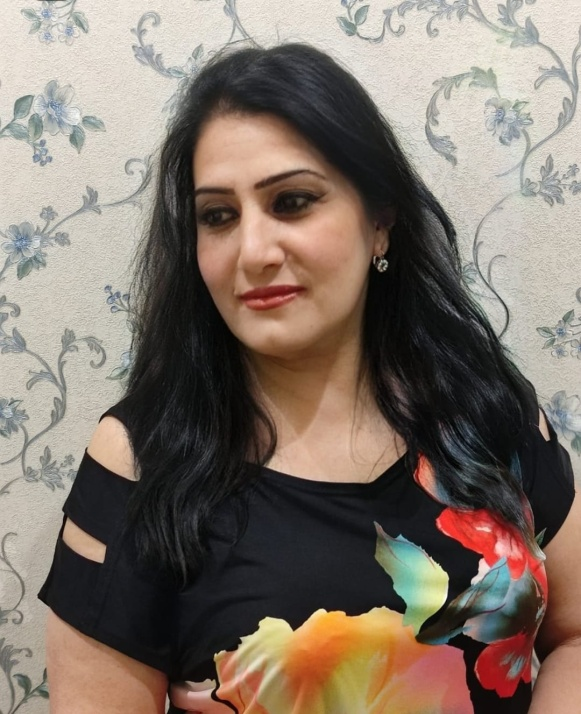
Young Central Asian woman with a green headscarf and a dark colored blouse and brown hair and eyes.
Faleeha Hassan

 Before My Friend Got Killed

The sky actually was blue
The streets were more spacious
Women were sitting on the thresholds of their houses in the afternoon
Telling amazing stories to each other
The cafes were full of men’s laughter
My father smiles as he tells her:
Don’t take Faleeha to the hair salon
Give your hair the color of the sun
And leave the glamour of night to my daughter’s hair
She smiles back and says  
Her name is not poetic
If it were me, I would change it
We all laugh
My mother was more compassionate
She would say 
Eat from one plate so your emotions will not be lost
And like ants on a candy bar, we would gather together
Oh, my friend
After your death
The world wore a garment of dust
The war had swept away the thresholds of our homes
Women now wear worries
Permanent sadness
Cafes are bustling with the songs of false victory
Men’s voices are hoarse from smoke
And from drinking scorching defeats
Oh, my friend
Your death spread the snow colour on my hair
If you had stayed a little bit longer
You would have seen how my name was won
 But death betrayed you
As it did my mother
And my father as well
All their advice fell on stone ears
Our lives filled up with wars, poverty, and exile
When I shout
Oh father ,
Mother,
Brother,
 Sister,
There is no echo coming back
And regret bites my heart
Oh, my friend
Can you stop your Specter from dancing in my memory
Give me ten minutes to sleep
The smoke from the plane that killed you
Suffocates my days
……………
(Dedicated to my friend Mason Hassan Kamuna which she was killed during the Iraq-Iran war)
 
 She is a poet, teacher, editor, writer, and playwright born in Najaf, Iraq, in 1967, who now
lives in the United States. Faleeha was the first woman to write poetry for children in Iraq.
She received her master's degree in Arabic literature, and has now published 26 books, her
poems have been translated into English, Turkmen, Bosnian, Indian, French, Italian, German,
Kurdish, Spain, Korean, Greek, Serbia, Albanian, Pakistani, Romanian, Malayalam, Chinese,
ODIA, Nepali and Macedonian language. She is the Pulitzer Prize Nomination 2018,
PushCaret Prize Nomination 2019.
Member of International Writers and Artists Association.
Winner of the Women of Excellence Inspiration award from SJ magazine 2020,
Winner of the Grand Jury Award (the Sahitto International Award for Literature 2021)
One of the Women of Excellence selection committees 2023
Winner of women the arts award 2023
Member of Whos’ Who in America 2023
SAHITTO AWARD, JUDGING PANEL 2023
Cultural Ambassador - Iraq, USA
Email : d.fh88@yahoo.com


Poetry from Gulmira Nurmuhamedova

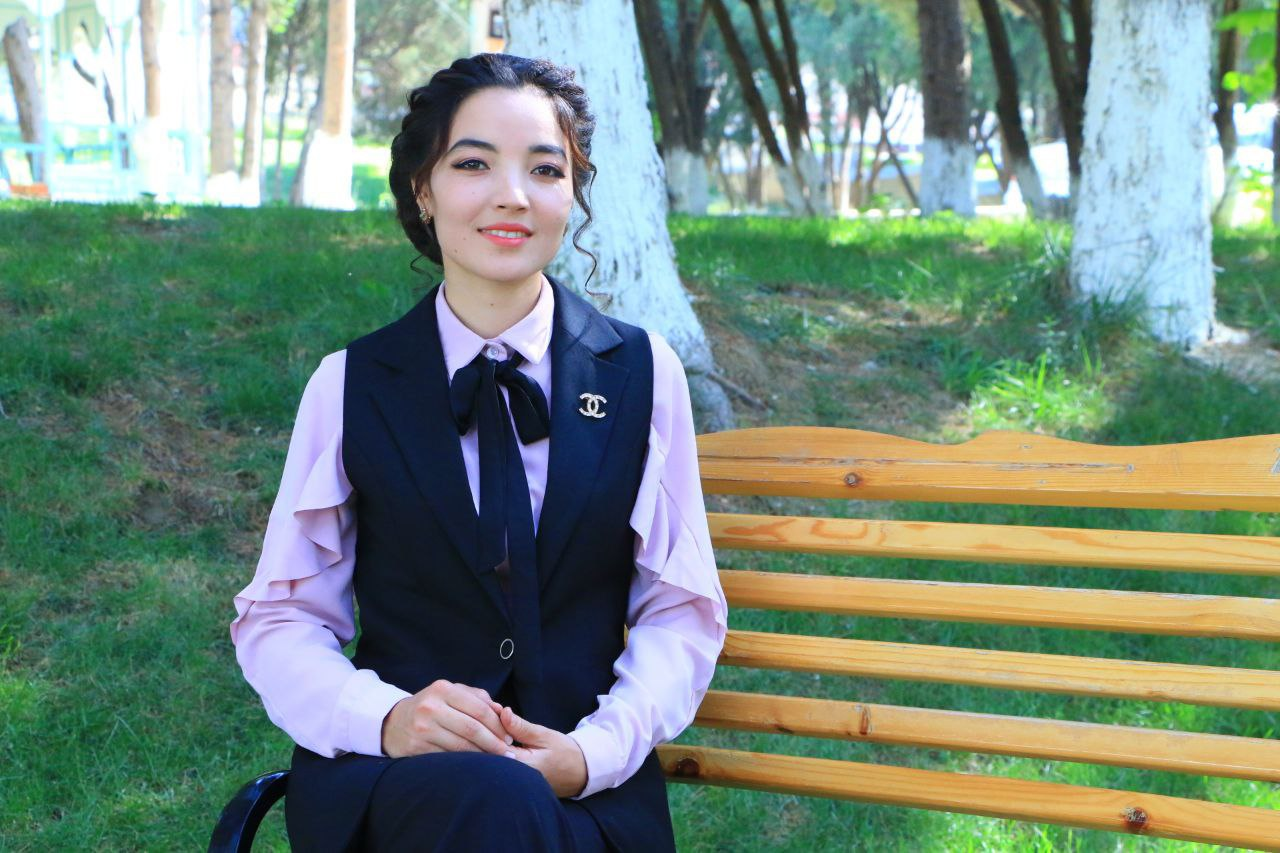
Central Asian teen girl with dark hair up in a bun and a white collared blouse.

SWEET MEMORIES I REMEMBER 
THE REMAINING MEMORY 
WHEN HAPPY JOY WAS WALKING, 
I CAN'T FORGET THIS IS A WONDERFUL MEMORY 

I MISS YOU WHEN I THINK ABOUT IT, 
THE FIELD OF MEMORIES IS ONE BIG OCEAN 
WHEN I REMEMBER I CAN'T FORGET IT 
IT WOULD BE A LIE TO SAY I DON'T REMEMBER 
IT'S TOO BAD IF I DON'T REMEMBER 

THINGS I COULDN'T DO BEFORE 
I WISH MY DREAMS CAME NOW 
MY LIFE IS FULL OF WORK ALL THE TIME,
IT WILL BE UNFORGETTABLE, 
I HAVE A POSSIBILITY TO FIT FOR FUTURE DESTINY, 

ONE DAY, THE FUTURE WILL BE FOR US TOO, 
THE PAST IS THE PAST

Nurmuhamedova Gulmira Jahongir’s daughter was born on September 9, 2006 in Orta Chichchik district of Tashkent region.

In 2022, she solemnly graduated from the “Yosh Journalists” school, and on May 25, 2022, she received a certificate of completion of the 9-month course of “Family Nurse” in “Barkamol Avlod” extracurricular education, “Confectioner and Chef” 7- completed monthly courses with excellent grades and a red diploma.

In 2023, she will attend a vocational school in the direction of Designer and Tailor, she has a certificate with 100-75 points in English-language tests, and she is the owner of more than 30 international certificates, and in September 2023, she will be awarded the “Jewel of the Heart” which is awarded with a certificate for her participation in the collection of creators with her wonderful creation.

She is a graduate of the MNEMONICS course. Also, in 2024, she was awarded a Diploma for participating in the “Blue Sky Stars” Artists’ Row with her creative poem. Currently, she is studying in a Tailoring course.

Member of the 2024 Spring Girl team,

Member of the Young Leaders Club. I am the coordinator girl of “Makolashunos”.

I am a young volunteer, young Tourism Ambassador, PR ambassador, owner of My_kanal

Poetry from Taylor Dibbert

The Raven


He’s spending 

Some time

At the Raven,

This could be

DC’s finest dive,

Three Budweisers in

And he’s wondering

If he should

Start coming here

More regularly.


Taylor Dibbert is a writer, journalist, and poet in Washington, DC. “Rescue Dog,” his fifth book, is due out this month.