Ravenswood was a small town surrounded by thick woods. It was a quiet place with a lot of stories about ghosts and mysterious disappearances. Most people didn’t believe these stories, but one legend still scared everyone: the legend of the Blackburn Mansion.
On a cool October evening, four friends—Emily, Jake, Sarah, and David—met at Emily’s house. They had been friends since kindergarten, and now, in their final year of high school, they wanted to have an unforgettable Halloween. They wanted something different, something exciting, something scary.
“Let’s spend the night at Blackburn Mansion,” Jake suggested with a mischievous grin.
The idea made everyone excited but also nervous. The mansion had been empty for decades since the Blackburn family disappeared mysteriously. People said it was haunted, with lights flickering in the windows and strange sounds coming from inside.
“Are you crazy? That place is cursed,” Sarah said, though she looked curious.
“Come on, Sarah, don’t be scared. It’s just a story. We’ll go, check it out, and leave before midnight. It’ll be fun,” Jake encouraged.
After some convincing, they all agreed. They packed flashlights, snacks, and an Ouija board, mostly as a joke. As the sun set, they walked through the forest, the path lit only by the pale light of the full moon.
The mansion stood before them, its once-beautiful face now falling apart and covered in ivy. The iron gates creaked open as they pushed through, and the air grew colder as they walked to the front door. Jake pushed the door open, and they stepped inside.
The inside was dark and dusty, with cobwebs hanging from the ceiling and broken furniture everywhere. The air felt heavy, like the walls were holding the memories of old horrors. Even though they tried to be brave, the friends felt a chill run down their spines.
They explored the ground floor, finding only empty rooms and old furniture. Then, they decided to set up their camp in the grand hall. The high ceiling and fancy chandeliers showed how grand the mansion used to be.
“Let’s try the Ouija board,” Emily suggested, her voice shaking a little.
They sat in a circle, placing the board on the floor and each putting a finger on the planchette. The room was silent, except for the occasional creak of the old house.
“Is anyone here?” Jake asked, his voice echoing.
At first, nothing happened. Then, slowly, the planchette began to move. They looked at each other, eyes wide with disbelief.
“Who’s doing that?” David asked, his voice nervous.
“It’s not me,” Emily whispered.
The planchette kept moving, spelling out a single word: “LEAVE.”
A sudden gust of wind blew through the hall, putting out their candles and leaving them in darkness. They panicked, fumbling for their flashlights. When they turned them on, they saw with horror that the doors had shut themselves, trapping them inside.
“We need to get out of here,” Sarah said, her voice shaking.
They ran to the door, but it wouldn’t open. It felt like an invisible force was holding it shut. They tried the windows, but they were all sealed tight.
“Let’s stick together and find another way out,” Jake suggested, trying to stay calm.
They moved deeper into the mansion, the air getting colder with each step. The hallways twisted and turned, leading them in circles. They passed by portraits of the Blackburn family, the eyes in the paintings seeming to follow them.
Then, they heard a soft whisper, growing louder. It seemed to come from the walls, sounding evil.
“Did you hear that?” Emily asked, her face pale.
Before anyone could answer, the ground shifted beneath them, and they fell into darkness.
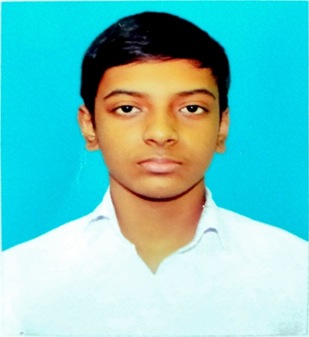
Nahyean Taronno is a student of grade eight in Harimohan Government High School, Chapainawabganj, Bangladesh.
He unintentionally whispered as he held his wife’s hands both firmly and in a kindly way, and he rubbed them on his eyes. Having heard this crying-like exclamation the patient who used to be groaning a minute before regained consciousness. She caressed hair of her husband who was kindly kissing and rubbing her hand on his forehead.
‘Oh how can I quit you, my madman?’
The man who went into ecstasy of seeing his wife’s consciousness automatically kissed her forehead.
‘Just recently doctor was here. He said that you would not wake up in a short time. However, thanks to my God, my prayers seem to be reached to him’.
A weak smile appeared on the pale face of woman. Afterwards for some reason she sighed and army of thoughts conquered her mind.
‘You… never ask for my recovery’ she said utilizing all strength she possessed.
‘Why you are uttering these words?’ the man shocked.
‘Because… I do not know why but for some reason God does not gave us what we asked for but the very opposite one. For instance, now you absolutely want me to live but maybe until tomorrow I will have been perished and fairies will be dancing around my spirit in the heavens’.
‘What should I do then? See, you are in a bad situation and I simply cannot keep calm without paying attention. At least I must pray for your sake’.
‘You would better… ask for my death’.
The situation was really uncomfortable for the husband and even it cannot be described with the help of words unless the reader have been in a such situation. Inclining his head, he was completely dumbfounded by the last utterance. From his condition it was possible to know that he was imagining his life alone. Finally, he managed to say a word:
‘Do not repeat this anymore…’
Apparently, woman suddenly realized that she started talking about unhappiness, therefore she did all her best to explain what was the real meaning of her words.
‘I assume that you misunderstood me. I do not choose passing away, contrarily, I want to live, only to live happily with you, my lover, and I can imagine my future in the dim: you and I shall hand-in-hand go to forest after the rain to collect mushrooms, with a wide smile in our faces. Yes, I can see the very scene! Yes!
A light, tired but happy smile appeared on her pale white face which had been revived a bit but still showing traces of illness. With the most sudden and hopeful gaze she stared outside the window. Due to the fact that her place was inconvenient to look outside, she intended to see the view standing up on her feet. Unfortunately, hands of her husband did not let her move.
‘Please, look at the window. Haven’t it rained recently?’
‘It haven’t rained since you are in bed. Why are you asking?’
‘Honestly, I wish it was raining right now and we could go to collect mushrooms together. But I don’t know the reason. Give me a word, please, shall we go to the forest when I recover from illness?’
‘I promise you, darling. We will go as soon as you are well, but please, get over your illness as soon as possible. Your contemporary condition is the most unbelievable pain for me, darling’.
‘Why you are always being pessimistic, as I said you, I will never let you stay in this world alone. It is not my fate. Let us change the theme, I don’t know why but I am really eager to converse with you’.
Now for the first time a couple of loving hearts felt the initial sweetness of ecstatic moments after surviving prolonged days of misfortune and these moments seemed not to come to an end forever. While dreaming about endless delight a man always lets his painful breath out unintentionally; the whole world, especially, his lovely friends look very gorgeous to his eyes and at that time he will be ready to do anything for his friends.
Now the husband was staring at his wife with the same happy and positive gaze that he suddenly realized it was impossible to stop himself from expressing his feelings.
‘A conversation?’ he questioned holding her hands firmly. ‘Darling, if only you had known that not only conversing with you, but deserving your attention also is the biggest joy for me. Oh, if only you had known that, dear!’
He put palm of his woman on his chest as if he was intending to let her listen his heart beats. But woman pulled his hand back with a quick act as if she touched the fireplace and stared at him smiling mildly.
Eyes could not help looking at each other’s deepest sides and lovers smiled at the same time.
‘I know, even I know very well and every morning I thank God that I am not a blind one. Do you know why I do so? Because God had not deprived me to see you’.
‘Oh darling… We are extremely happy! Have you ever thought whether there are others who are as much contented as we are? If yes, how many of them exists? Very few or so many in quantity?’
‘To my mind, probably there are not any blissful couple except us’.
They both laughed with joy. Husband stared at somewhere so long. Those who had tasted the real happiness and those who had realized what a magic it is usually dwell in the same way: with a smile in their lips, staring at one particular point as if they are obliged to look at that side forever or like a thinker who aimed to reveal all the secrets hidden in that tiny area of room they gaze. In this period of staring, for sure, others’ opinions on happiness seem very interesting to them.
‘For you what is the happiness itself?’ he asked keeping on staring at the same point.
After a while he accidentally recognized what he had said, so he felt somehow embarrassed from his question.
‘You may consider that question as a ridiculous and childish one. But please, do not be shocked, do not be disappointed from me for giving you this kind of weary question. Simply this question came to my mind and I transformed it to my speech. You do not need to answer it’.
‘No, I answer with all my heart. The only thing surprised me is your embarrassment. Because this question should be asked from everyone. It is the greatest question in this world. I commended it a lot, sorry, now I have to answer to this properly. For me every breathe I take is happiness, my ability to cry, to laugh and to see is the great joy, and in general, my existence is happiness. Everything related to me in this world is delight. Breathing in the fresh air, listening to the song of birds, lying underneath the initial beams of sunlight, watching the flight of beautiful butterflies, smelling lovely perfume of flowers – all things I have mentioned is happiness, I even consider pain and sorrow as a type of joy’. Having finished her speech, woman looked at her partner who was analyzing his thought. At that moment she found herself eligible to repeat this question. ‘So, how would you answer it yourself?’
‘I can only state my answer in short. Your existence and your belonging to me is happiness. Right, I am madly devoted to you, darling. I adore you even though you hate me as you hated the most awful man in the world. Maybe my words seem very simple to you. But I want you to know this: you are second half of me. I cannot be perfect without you’.
Woman broke into laughter unintentionally.
‘You spoke like…’ she said and paused for a while. She understood that continuation of her words would harm her husband’s soul.
‘Like what?’ he asked seriously. His facial expression revealed that he was eager to hear the rest of her speech.
‘You spoke like a fake lover!’
Woman smiled sweetly. Her husband once looked at her and then he aimed his glaze at the window.
‘It is still cloudy…’ he said with a sick voice.
His spouse was still staring at him regretfully. Husband had already realized this, however he went on looking at the window intentionally.
‘Look at me’ said she. And he obeyed. ‘I let you down, I know…’ she held his hands and kissed them. ‘Sorry… Please, forgive me…’
He, as well, replied to his wife by holding her hands.
‘No, I am not upset with you. I never be sad because I am not allowed to be sad’ he smiled to prove his words. ‘Do you know, it was not your words, but my own behavior offended me. My attitude and ridiculous sample-like words seemed to you like an artificial one, so it is my own fault, not yourself. I cannot hide waves of feelings I have. I really want to express all the words I possess in my heart. I want to share all the joy and all the sorrow I have with you. Therefore, I reveal you my secrets’.
‘Forgive me for offending your soul, I am so sorry…’
‘No! Please do not say that feel sorry. I am not allowed to be angry with you. It is sin’. He kept a bit silence. ‘Do you know, God lavished us with a great joy. All we have to do is to deserve this joy and enjoy it. Now imagine, if you carry on quarreling and offending each other without any reason, if we do not stop asking for forgiveness, how God will again bless us? He would be upset from our ungrateful attitude. I am afraid of this… I am afraid of living these happy days no more. I am worried that God might possibly retake what he gave us. If I tell you, I have read a book yesterday. The author of that book was a person who denied the God. A minute, please…’ he quickly stood up and took a book with red cover from the shelf. ‘It consisted of such frustrating things that I shocked while reading. Surely it is written by a murderer of happiness’ he started reading the lines which he highlighted before:
“I cannot spend all my life fearing of Great Creator who supposed to be able to deprive me from happiness I have. I would rather live unhappily or die. God wants us to live in fear. He is an egoist. The best way is to disobey his rules and to pass away” – ‘I cannot read more. These are words of a wicked person who teaches to quit bright side and leads people to the darkness. Can it be really true that people follow him and accept his thoughts? Isn’t it a whole of malice, it is? How this person, whose words stink the smell of secularism and materialism, can be able to someone’s attitude towards the life. God will never punish those who are not grateful of their happiness. God is the most generous one. He only wants to give people all the best things because whoever in this world want to harm his or her own children? He will forgive all of our sins if we understand and feel sorry for what we have done. He will even forgive this atheist author, if he feels really sorry. The greatest sin is to criticize openhanded God. But why he does not understand this?!’
‘Can you give me that book, please?’ suddenly she said.
She took the book handed to her and looked for a while. Flipping through the pages she started to read some pieces of it. The more he read, the more sadness and horror appeared on her face… Having read the last page, she closed the book and whispered something. She passed the book to her husband and turning her head back, said: ‘Let it burn…’
Man gazed at her astonishing, but he did what he ordered: he threw the book away to the fire. It started to burn better. Then he looked back at her. The woman accidentally became apathetic to everything, it was difficult to know exactly where she was looking at or what she was thinking about.
‘What you asked for while whispering?’ he asked. ‘I hope you haven’t asked for the death of author’ he laughed.
Now, hearing this sudden question she gained her consciousness and glared at him seriously. Man felt embarrassed at his weird and unlucky joke.
‘How can you assume that? How do I dare to ask for someone’s death?’
‘No, I was only joking, sorry’.
‘You said that you were not allowed to be upset from me. This rule not only works for you, but also for me. Therefore, no need to say sorry. I asked… I asked from God to forgive this sinner. I think, we don’t have to hate these kind of people. Contrarily, we must feel sorry for them. How cannot you feel sorry for those who failed to find the right path? They resemble to the yellow autumn leaves. If an evening breeze blows a bit, they abandon their branches. The reason why they sink in the ocean of sins is that they have lack of patience and ambition’.
Painful silence filled the room. They both were sadly thinking about something. At first husband recognized that there was inconvenience and found it very annoying.
‘Why we are keeping silent. See, we are happy people. Sadness does not fit us. Why not we cheer up or remember something. Because we are not this kind of individuals. What is the difference between us and unhappy people if we carry on keeping silence?’
‘You are right. We got even much sadder. But these kind of people…’
‘Okay, please, let’s stop discussing them. Because they are not related to our life in any way. Why not we look back on any of our more delightful times which are wort to remember. There is no need to think about this kind of issues while we have lots of sweet memories, I think. On the other hand, the world is getting much darker and darker day by day. All we have to do is to burn and tear up this darkness conquering the world.
‘Yes’ she said smiling.
Her husband did all his best to find any worth-to-remember story they had. It did not take a long time. He found what he wanted but it was not a story they both took part in but he was very impatient to tell her something he had had in her mind for long time. Unfortunately, he had no suitable situation to retell it. Now it was the very right time he wanted so he took his wife’s hands in order to let his words out.
‘Actually, I was going to speak about the funniest moments we had. But now I want to tell you something I was dwelling on for a long period. Do you still remember once we made a trip to mountain? At that time something unknown happened and weather turned bad. So as to find a dry shelter we had climbed up to the shanty on the peak of mountain. A wrinkled old man with grey hair had welcomed us. Even though he was not extremely glad to have guests, he did not seem so sad as well from our visit. He invited us to drop in. He even gave us a cup of tea and to towel to dry ourselves and took his sit in front of fireplace and went on reading a book. While we were sipping tea and conversing with each other he had glanced at us so many times both secretly and openly. When we talked about something interesting, he also had smiled and I think, our conversation was more intriguing than book for him. In order to behave as a polite man, he was pretending himself as if he was not listening to our discussion, however my eyes had recognized it already. For some reason the old man sighed while listening to our nostalgic memories. He put the book and gazed at hearth for a long time. He light of the fire revealed that he was hiding his tear drops on his face. He was whimpering with no sound. (You hadn’t recognized it.) At that time, to be honest, I felt very unusually embarrassed. I felt so sorry for an old man that… I contemplated that my future will duplicate this old man’s fate. Do you believe in seeing one’s future or past on another one’s life? I had seen… Then it ceased to rain. We abandoned his old house expressing our gratitude. I overthought about him. But I had not searched for him until I knew that I had to see him again. I had revisited that are to find him and investigated everywhere we stepped on. Unfortunately, I could find neither him nor his shanty. I don’t know why, but I wanted to tell you this…’ – he stared at somewhere for awhile – ‘I… I love you to death!’ As he was going to cry, put his face into the embrace of his wife, – ‘I… I…’ – he could not help himself stop crying, – ‘Why?… Why?’
Early drops of the tear appeared inside the woman’s eyes.
‘It will never happen… Trust me, dear. Because I have told you…’
Suddenly thunderstorm broke out. Thick black clouds veiled the whole sky.
Woman hopefully looked at the window.
‘Look, my dear, it is raining…’
‘Yeah, it is raining’ he also stared hopefully.
They both glared at window for long, until it stopped raining. Despite they both were in tears they were trying to hide it from each other.
It was raining no more.
‘Can you help me stand up?’ she could not do it by herself so she asked for a help.
She went to the door counting on the shoulders of her helper. While walking she looked at her partner. He was trying to hide his eyes for some reason. His eyes were weeping. She paused for a while, wiped his eyes and smiled with sorrow. Then she took her basket.
‘Shall we go?’ she said happily.
‘Let’s go!’ her husband as well said in the same way, forgetting all the pains and tortures of his soul.
Laughing happily, they stepped into the wood spreading dewy petrichor.
2018
Translated from Uzbek into English by Shokhrukh Usmonov
About the author
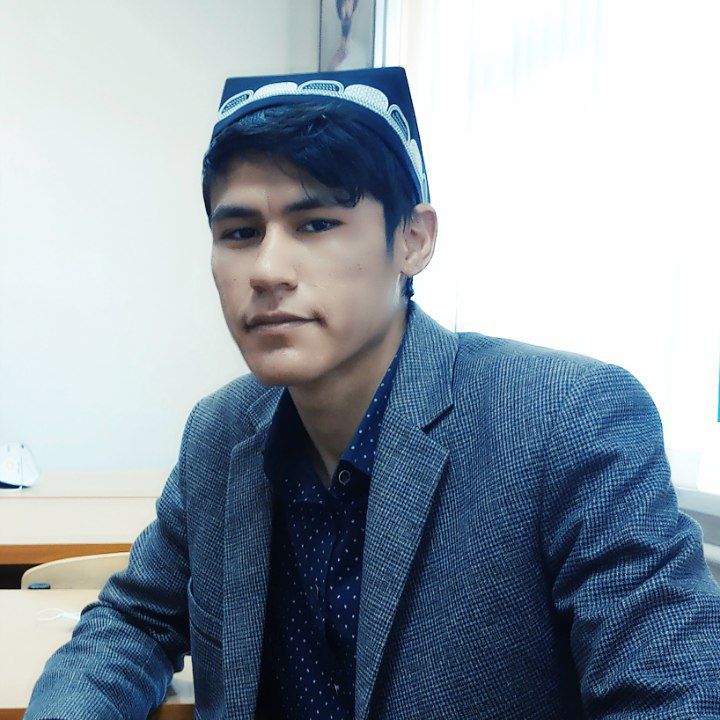
Jumanazar Yuldash was born in 1997 in the Khiva district, Kharezm, Uzbekistan. He is an undergraduate student of Philology and Uzbek Language faculty at Urgench State University. His stories were published on the pages of national press. His works were included in several collection such as “Song of the Rivers” (“Jilgʻalar qoʻshigʻi”), “Common hearts” (“Mushtarak dillar”), “Garden of Creativity” (“Ijod gulshani”). He is a participant of the Zaamin seminar (2018). Winner of the creative festival “Spring of Uzbekistan II” (“Oʻzbekiston bahori”) in Khiva in 2019. Author of the collection of short stories named “Petrichor” (“Yomgʻirdan soʻng”).
Ghost Town

He got on Tinder
Thinking there
Might be some
Awkward moments
Or mildly
Exciting times,
Or things
Unfolding in a
Notable way
But he must
Be doing
Something wrong
Because it
Turns out
That there’s
Not a lot
Happening
On Tinder,
At least
Not for him,
Who knew
That looking
For love in
The wrong place
Could be
So uneventful.


Taylor Dibbert is a writer, journalist, and poet in Washington, DC. “Rescue Dog,” his fifth book, was published in May.
Symbol of 20 years of loyalty

Mother... People compare mother in different ways. In fact, mothers are the most precious gift given to us among the blessings of the world. Mother! Who is he, why is she incomparable...

When a person defines something, he first of all looks at himself. In fact, if a child who has just stepped on the threshold of knowledge is asked what he understands by the word mother, he will say without hesitation what qualities and traits he saw in his mother. It is enough to ask us not who your mother is, but what you feel when you hear the word mother. Our mother is embodied before our eyes, and we begin to describe the word mother with her qualities. A mother is a father, loyalty, life, doctor, counselor, friend, confidant, simple-minded, well-wisher, honest, responsible. The above definitions were exactly my answer to the question: "Who is mother?" Yes, my mother is the kind of woman whose loyalty I know is epic in tongues, the one who praises my mother after seeing the paths of life. A mother is probably the only one who can still preserve the loyalty of 2 years of love, who can devote her life to the loyalty of her love and her child.

18 years ago... That terrible event, the night when the 2-year taste of love that was awaited for 24 years was lost. Death came to a family that was full of happiness and took away all their joy in the blink of an eye. He took a woman's husband, love, confidant, dreams and laughter with him. There was only one reason, which connected him with this world and gave him hope that he would have a smile on his face later. A little girl in a crib who doesn't know what's going on, can't even feel it. It was the only relic left by his confidant. Now the woman could see her soulmate only in her offspring. He gave her his life, joy, love, dreams, everything he had. He raised her, she did not even feel that her father was absent.

It was so much so that even her classmates found out that the girl had no father in the 5th grade, also because of an assignment in the native language class. The woman washed her hair white and combed it, so that she wouldn't lose heart, she pretended that it was coming out of her mouth, so that others wouldn't know her weakness, she confided in him. She taught her daughter so that her life paths would not be like mine, and reawakened her dreams that had turned into mirages. A miracle of God showed itself not to be a miracle, but a miracle. Only a woman, a devoted MOTHER, can do such courage from the blessings created by God. Our mother.

It is said that a human child can endure pain until about 90 bones are broken. Only in the mother's body for 9 months, two hearts beat, and when he was born, he was born with the pain of breaking more than 300 bones. As 9 months are one whole, a woman turns her life into two bodies, holding her life in the hands of death. It's great to give your life, agree to suffer and even give your life as a pledge. That is why Heaven is under the feet of Mothers. Now the counter-respondent?! How? How are we treating them?

To those who gave their lives, put their lives in the middle, spent a piece of our meat night and night, day and night, and threw stones at our beautiful garden, throwing stones at our heels. How are we responding to this man who killed himself?! Instead of comforting him when he is upset, we are the cause of the tears coming out of his eyes. Instead of protecting the pure heart from reproaches and stones, we ourselves are throwing stones. We could not give in to the fact that our tsar missed something insignificant, and we did not even try.

Did we do at least one good deed for people like him to be proud of us while they are proud and bragging about their children. Now ask yourself a question. When was the last time you said to your mother, "Mom, I love you. Thank you, you said. Do you remember when you prayed for your parents during prayer? Let's open our eyes, friends, they are God's blessing, trust, priceless to us. When you enter your home and your parents' shoes are standing on the threshold, there is no happier person in this world than you. Let's appreciate them! After all, "The last regret is your enemy."

Oh, my mother is chasing after me,

A piece of heart is worth a thousand bribes, mother.

In a bright world seeing every misfortune,

My poor mother who did not see Toshkan.

Did I miss you once as a child?

Have I become your child now?

Humanity is created to want to say the dearest and most attractive words about life, the cradle of life - mother. However, the joy of speech and life, life, and happiness begin with the mother. In the above lines, the poet has described his mother beautifully. In fact, it doesn't matter to him whether we are 7 years old or 70. He always worries and thinks about us. "Is my child okay, has he eaten, is it getting colder, please put on some warm clothes, my child is my child," he says, days are restless, and nights are filled with questions.

As if this is not enough, it is necessary to put up with the whims of the spouse. Just one piece of heart breaks itself into a thousand pieces. Child, spouse, family, gossip and slander, suffering, diseases are all his responsibility. Only our innocent heart can see all the sufferings and troubles of this world in half of its life and dreams of seeing the capital once. It's no secret that Uzbek women spend the most beautiful years of their lives in labor and suffering, worrying about their family, while Western women are busy traveling the world.

Our mother is excited to see Tashkent. It is enough to come to the capital once and see its beauty. He brags about his happiness to everyone. If you, as a child, do something good for once, the child's heart will beat with joy. "My child took it for me," he says and shows it to everyone. He rubs his eyes and prays for you every moment. Your small gift will bring joy to the world.

In fact, there is nothing easier than making our mother happy. A small unexpected gift from you will fill you with happiness and joy. Sometimes you don't even need a gift. All you need is a kind word and good health. If you call me my mother, I will give my life for my child. Yes friends, this necklace is such a miracle. He is a child at heart, his courage is as strong as a man's strength, and his patience is stronger than the mountains, he is just a miracle, and this miracle is our paradise on earth.

In conclusion, it should be said that preserving God's miracle and making his eyes wet with tears of joy is a duty for us as well. Let's not forget that even if we are in his service for the rest of our life, we cannot repay him for the one night he spent awake for us. In front of the good things he has done for us, what we do is like a drop in the ocean. Let's protect our paradise, because God has entrusted mothers.

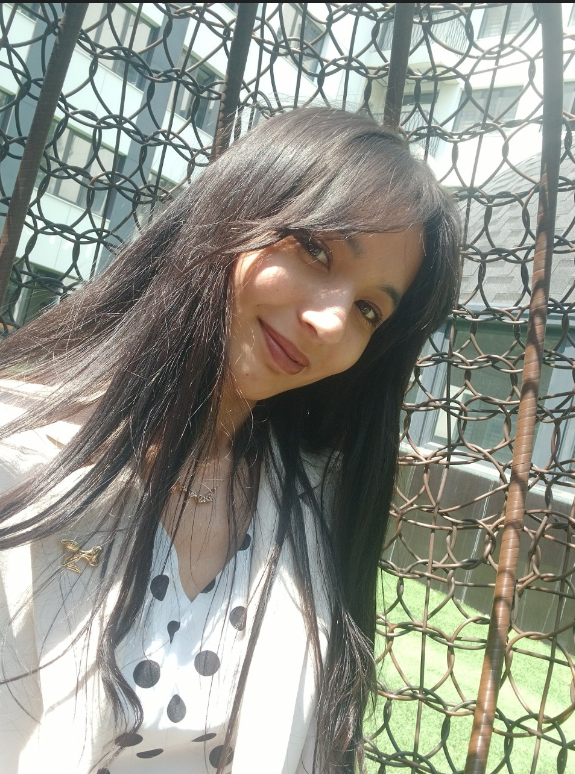
Mukhammadova Mushtariybegim Otabekovna. Born on 01.05.2005 in the city of Navoi, Navoi region. Currently, she is a 2nd-year student of the computer engineering faculty of Tashkent University of Information Technologies. At the same time, she is a young member of the People's Democratic Party. Until now, she has gained knowledge in many areas. In particular, she studied art, culture, education, politics, psychology, personal development, foreign languages perfectly. Currently, she can communicate in Turkish and English.
AT WAR WITH WEATHER

The seed went into the ground all right
Or so he claimed when it was sown
But then he turned his eyes to the skies
And darkly frowned a wrinkled frown
From his whiskered neck
To his tan-lined crown

Thunder rumbled – Rain, he grumbled
But the sky had nothing in it
The bastard won’t rain a drop
He rasped as if he himself was dry
He spied the clouds with squinted eyes
Dark slits of steel-grey flint

After a week he gave up hope
He mumbled profane sentiments
He shook his fist at the barren clouds
And called on God to damn them
To Hell where he said we’d all go
If it didn’t rain soon

I didn’t see him for a while
Another week slipped by dry
When he reappeared one day
He looked a lesser man
He slouched and cursed and spat
But stopped and sat to chat

He said the end was nearly here
His crop was all but buggered
His shoulders slumped and a tiny tear
Rolled down his grizzled cheek
He said that he was finished
And seemed a man diminished

Then a wind got up and clouds blew in
We could smell it in the air
There you are I said and heartily
Slapped a hand on his back
I thought that he would smile at that
But he only winced and said
If the sonofabitch only knows when to quit


Gregg Norman lives and writes in a lakeside cottage in Manitoba, Canada. He reads poetry every day to retain his frail grip on sanity.
His work has been accepted by numerous poetry journals and literary magazines, including Lothlorien Poetry Journal, Dark Winter Literary Magazine, Borderless Journal, Synchronized Chaos, Book of Matches Literary Journal, Medusa’s Kitchen, Horror Sleaze Trash, Impspired Literary Magazine , The Littoral Magazine, MasticadoresUSA, The Piker Press, Academy of the Heart and Mind, Raconteur Magazine, and Suburban Witchcraft Magazine.
MECHANICAL SAFETY
Mamatazimov Kabiljon
Namangan Engineering and Construction Institute, 4th year.
Abstract: Mechanical safety encompasses the measures, protocols, and regulations that ensure safe operation and handling of mechanical systems and machinery. This article delves into the fundamental principles of mechanical safety, highlighting key aspects such as risk assessment, safety protocols, and the importance of maintenance. It also discusses the role of regulatory standards in promoting workplace safety and preventing accidents. The goal is to provide a comprehensive understanding of mechanical safety to foster a safer working environment.
Keywords: Mechanical safety, risk assessment, safety protocols, machinery maintenance, regulatory standards, workplace safety
Introduction
Mechanical safety is a critical aspect of engineering and industrial operations. With the widespread use of machinery in various sectors, ensuring the safety of workers and equipment is paramount. Mechanical safety involves identifying potential hazards, implementing safety measures, and adhering to regulatory standards to minimize risks. This article examines the key elements of mechanical safety, focusing on the importance of risk assessment, safety protocols, and regular maintenance.
Risk Assessment
Risk assessment is the cornerstone of mechanical safety. It involves identifying potential hazards associated with machinery and evaluating the likelihood and severity of accidents. A thorough risk assessment process includes:
Hazard Identification: Recognizing potential sources of harm, such as moving parts, high temperatures, or electrical components.
Risk Evaluation: Assessing the probability and impact of identified hazards.
Control Measures: Implementing strategies to mitigate identified risks, such as engineering controls, administrative controls, and personal protective equipment (PPE).
Effective risk assessment requires continuous monitoring and updating to address new hazards that may arise from changes in operations or machinery.
Safety Protocols
Safety protocols are established procedures designed to protect workers from mechanical hazards. Key components of safety protocols include:
Training and Education: Ensuring that all personnel are adequately trained in operating machinery and understanding safety procedures.
Standard Operating Procedures (SOPs): Documenting step-by-step instructions for safely operating machinery.
Emergency Procedures: Preparing for potential accidents by establishing clear emergency response plans, including first aid and evacuation procedures.
Signage and Warnings: Using clear and visible signs to warn of potential hazards and guide safe practices.
Implementing comprehensive safety protocols reduces the likelihood of accidents and enhances the overall safety culture within an organization.
Maintenance and Inspection
Regular maintenance and inspection of machinery are crucial for preventing mechanical failures that can lead to accidents. Key aspects include:
Preventive Maintenance: Conducting routine checks and servicing to keep machinery in optimal condition.
Predictive Maintenance: Using advanced technologies such as sensors and diagnostic tools to predict and address potential failures before they occur.
Inspection Schedules: Establishing regular inspection routines to identify and rectify wear and tear or other issues.
Proper maintenance ensures the longevity and reliability of machinery, thereby enhancing safety.
Regulatory Standards
Adherence to regulatory standards is essential for ensuring mechanical safety. Organizations must comply with national and international standards, such as:
Occupational Safety and Health Administration (OSHA): Provides guidelines and regulations for workplace safety in the United States.
International Organization for Standardization (ISO): Develops global standards for machinery safety, such as ISO 13849 for safety-related parts of control systems.
European Machinery Directive: Sets requirements for machinery safety within the European Union.
Compliance with these standards not only ensures legal adherence but also promotes best practices in mechanical safety.
CONCLUSION
Mechanical safety is a multifaceted discipline that requires a proactive approach to identifying and mitigating risks associated with machinery. By implementing thorough risk assessments, robust safety protocols, regular maintenance, and adhering to regulatory standards, organizations can create a safer working environment. Continuous education and adherence to best practices are key to sustaining mechanical safety and preventing accidents.
1.Occupational Safety and Health Administration (OSHA). (2021). Standards and Regulations. Retrieved from OSHA Website
2.International Organization for Standardization (ISO). (2021). ISO 13849-1: Safety of machinery - Safety-related parts of control systems - Part 1: General principles for design. Retrieved from ISO Website
3.European Union. (2021). Directive 2006/42/EC on Machinery. Retrieved from EU Law Website
4.HSE (Health and Safety Executive). (2021). Mechanical Safety: Guidance and Best Practices. Retrieved from HSE Website
5.Smith, J., & Johnson, R. (2020). Principles of Mechanical Safety. New York: Engineering Press.Mamatazimov Kobiljon is the son of Kadirjon. He was born on July 6, 2001 in Uychi district of Namangan region. Graduated from Namangan Engineering-Construction Institute, Faculty of "Energy and Labor Protection", Department of "Labor Protection and Technical Safety".
I’m loveless, I’m unhappy – the word happiness without you,
Even the moon is falling from the sky,
Besarhad asked me how I was.
Bearmon – to a bearman world
fed
Chamomile of my heart
from the window.
With countless words spoken,
My last word asks after
at the moment.
He cries to the sky
swans-
The written words of your grandfather are superior.
And but, I spoke, I drank,
i burned
I grew up in the greatest living room.
The Maghreb is a stranger, a homeless stranger,
He asks, searching my heart
space
I will walk around the branch
the streets
I’m sorry
rebellious
that’s it.
They lied
the nights are quiet,
I wandered the lost city.
I thought you were sorry
i,
Wings of Blasphemy
a simple bee.
Hatamova Charos was born in 2009 in Fergana region. Currently, he is studying at the creative school named after Erkin Vahidov organized by PIIMA. His creative works have been published in several international magazines. The artist’s future goal is to become a poetess, to receive the Zulfiya state award and to become a scholar of literature.