
OLD SONGS SUNG AGAIN


This beach that we run on, this beach that we sun on,

was a cold mountain once, indomitable quartz.

An insatiable wind chewed the granite into flinders.

The weathered remains gathered themselves as grains

along this treasured shore, this diamond corridor.

But the bored, restless waves too soon will take their leave,

Our beach’s secret cache will be revealed: the smashed

shells, patches of lather, condoms, crap, cadavers….


Life is like a ledger book.

Plusses and losses shape our plans.


The past is a castle; the present, a pasture:

Both are famous for blades (for cattle, or for knaves).

Instants leave instantly, last an eternity,

and new historians find and restore eons.

…. Mississippi …. Egypt …. Pasts clatter in their crypts,

yesterday’s tomorrows detached from their augurs.


Busses and crosses map our lands.

Life deserves a second look.


EVIDENCE FOR THE MUTATIONAL CODEPENDENCE OF TIME


Yesterday

today

was

tomorrow

& my future


:ours


JEN


Not too short, not too thin,

she hid her out within.

She never showed her smile,

never revealed her pain.


SHAPE OF GOD DEBATED


Once, the future shape of god

was subjected to debate

between Simons, one a sage

and the other dubbed a rock.

One said

that a hermitage

was proper for apostles,

and the other

that brothels

were the fittest

for a sage.


Along with the skies,

the Hawk’s wings

lift

human prayers and praise.

But all the tears

are embraced

by the coils of the

Snake.


LEAP FROG


In slo/

        /mo

                                               / frog.

           tree, and, shade, leap /

Seasons pass, and Velcro lovers to Teflon stray.

Tomorrow

will we kids too play

   kids

   play              leap

                                   frog


                                           leap?
Category Archives: CHAOS
Essay from Christopher Bernard
Christopher Bernard invites people to sign on to this letter in the comments.
An Open Letter to President Biden

Dear Mr. President:

Surely you would agree that defending a "rules-based order" when, and only when, it decides in your favor is not acceptable; in fact, it violates the very principle of such an order.

Why, indeed, are we attempting, through legal actions almost too numerous to count, to hold Donald Trump accountable for his attempt to overturn the 2020 election? When a ruling, whether from a judge in court or the voters in an election, goes against you, it is neither morally nor legally acceptable to attack the system that led to that ruling in a fit of pique.

Yet that is precisely what your administration seems intent on doing. The scurrilous response by Secretary of State Blinken to “work with Congress to penalize” the ICC if it merely considers issuing warrants for the arrest of members of Israel's leadership - and your own petulant response (which, ironically, sounds curiously similar to the response by Trump when legal institutions act against him) - are, both of them, indefensible. The hypocrisy of American foreign policy, one of the few dependable truths of world history over the last two and a half centuries, has rarely been quite so blatant.

Israel has been murdering and denying the basic human rights of Palestinians in violation of international law and the U.N. for, not months or years, but generations. Israel has fooled much of the world, and decades of American presidents, into thinking it is the innocent victim when it has been the perpetrator of some of the most heinous offenses of modern times, not least the mass murder of civilians in Gaza since October of last year, and including policies of mass destruction, ethnic cleansing, collective punishment, and the killing of civilians going back at least to the Six-Day War of 1967, itself a crime under international law as it was provoked by Israel, who claimed it was a pre-emptive strike against an impending invasion by its Arab neighbors: a falsehood long disproven by the historical record.

You weep for those killed, horrendously, on October 7. But you have said nothing about the thousands and the tens of thousands who have been massacred by Israeli forces, whose homes have been wiped out, whose land has been stolen, whose families have been slaughtered, whose lives have been destroyed as deliberate Israeli policy since 1948 and before.

We in the United States are guilty of complicity in war crimes, collective punishment, ethnic cleansing, and genocide. And that includes, above all, American political leaders.

You can influence long overdue changes in both the policy and actions of the Israeli government toward the Palestinians if you so choose. You can begin by sending Israel no more offensive arms. The Israel Defense Force has clearly, consistently, and defiantly broken American law in its use of our weaponry – weaponry paid for by American taxpayers. As president, you have the power, indeed the moral and legal obligation to do this.

If you do not reverse your policy of indiscriminate support for Israel, and that means if you do not stop supplying Israel with arms during the current genocidal war against the Palestinians of Gaza – and furthermore, if you do not hold Israel to account for its generations-long apartheid against the people of Palestine – I, and many like me, will find it difficult, if not impossible, to support you for president, despite the truly frightening alternative.

Often I have had to choose between two evils when voting for an American president, but never to the extent that I am being asked to in this election – and I am haunted by memories of 1968, when the electorate faced a similar moral dilemma during a presidential race, with tragic consequences. Choosing between an insurrectionist and an enabler of crimes against humanity I find profoundly repugnant, on moral grounds. I may find it impossible to make such a choice, or I will vote for a candidate who may have no chance of winning but whose positions do not make me feel I will have blood on my hands if I choose him or her.

I sense there are many like me among the electorate, both Democrats and independents, even among Republicans. If Trump wins in November, his victory, which could well be a catastrophe, may be because you made it morally impossible for conscientious voters to choose the only viable political alternative.

Respectfully,

Christopher Bernard
Poetry from Cheryl Snell
Ascension

A doubt rose up from under our bed
Because I was not optimistic enough.
Come through I said as I opened the
Door, but Doubt thought I was faking it.
Enough of disappearing into places with
Feathers. It was a narrow time and I was
Going anyway. Bodies in motion ─ according to
High school physics─ tend to stay in motion.
I remember the test. I think my brothers took it too.
Just listen─ I can still hear them laughing,
Knocking the knowledge into my head.
Last night, their voices sang to me again
Music all off-key and brittle, each eighth
Note a flap of wings vibrating
On a branch heavy with nests, and
Perched where the flock lined up their
Queue of pitches (the Q followed by silences).
Resisting all dream interpretations,
Suspicious of them at the best of
Times, I turn my attention back to you,
Understanding you’ve already lost interest,
Valentine, in my nervous ups and downs.
While I swallow the bottle marked
Xanax to keep my smile in place for you,
You pull at my wings until I’m ready to soar,
Zigzagging into a future without you.


 Brick

And by brick I mean what happened to my phone when I dropped it.

And by what happened I mean tears I shed, apologies I made to the inanimate object I had made even more dead.

And by inanimate object I mean the transformation the apps made into fooling me that my whole life was in that phone.

And by transformation I mean the way I’d merged with the heads-down crowd, only raising eyes to aim at disasters needing proof.

And by disasters needing proof I mean the way water enters brick and wrecks it, dissolving everything back to clay.


Cheryl Snell’s books include several poetry collections and the novels of her Bombay Trilogy, but her most recent writing has appeared in 100 Word Story, Ink Sweat & Tears, Pure Slush, and other journals. A classical pianist, she lives in Maryland with her husband, a mathematical engineer.
Poetry from Zarnigor Ubaidullayeva
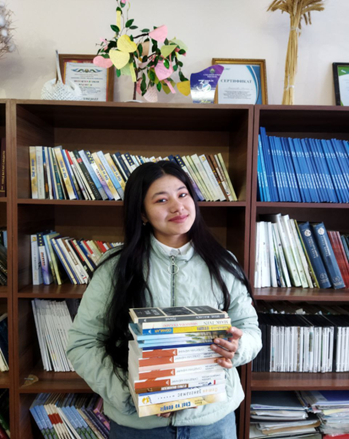
A place where spring has turned into dreams
The white look of the morning in my window,
The sun of my heart rises from afar.
There is beauty in this world,
Spring is on such a fire.
The place where tulips bloom on the shores,
This world will be more beautiful.
Wake up early, look at the trees,
Spring is on such a fire,
Spring is quiet in the bosom of dreams,
There are moonlit nights.
When I open my eyes everything is bright
A place where spring has turned into dreams.
Zarnigor Ubaidullayeva Azizkulov, daughter of Ilhomjon, on January 29, 2005. Born in G’allaorol district, Jizzakh region.
Poetry from Christina Chin and Paul Callus
snow fleas
surface the light snow
jumping
the thrill of a springtail
launch

Christina Chin (Malaysia) / Paul Callus (Malta)

- - - - - - - - - - - - - - -

snow mountain
a bobcat closes in
on a white-tailed deer
the timorous bursts
of vulnerability

Christina Chin (Malaysia) / Paul Callus (Malta)

- - - - - - - - - - - - - - -

daily picks -
hometown favorite
restaurants
a unique experience
of local cuisine

Christina Chin (Malaysia) / Paul Callus (Malta)

- - - - - - - - - - - - - - -
Poetry from Kristy Raines
I Wished for You upon a Star

I feel like a blooming flower in the rain
when you kiss me tenderly in the morning
Your hand is as gentle as silk touching my skin
and your whispers are like a prayerful song

When I am near you, I sigh like a schoolgirl
I never tire of you holding my hand or
smiling at me when I glance your way
Your heart beats as fast as mine
when you hold me in your arms

Everyday we live another chapter
in the book that our lives have written
And from the beginning of it till the end
It will always be an epic best seller.

You were my first and will be my last,
because life brings only one true love...

And the star that I wished upon brought you to me...  ❤


It May Only Come Once

When love happens, you can't stop it
Sometimes it just appears without you realizing it
You look at each other one day
and you find that you feel better when they are around
Suddenly, life feels a lot brighter and happier
You become aware you are smiling again and laughing
You want to send all your time together
and with every glance there is a warmth inside your heart
You realize that you never want to be without them.
You never tire being around each other
and every morning starts out with a smile.
You trust each other without thought of wrong doing
and never question their loyalty
So, if you are lucky enough to find that kind of love,
hold on with both hands and never let it go

It may only come once...

*****

I Feel You...

Whenever you think of me, I feel you
You'll always find yourself in me, good or bad
We are empaths that feel each other's emotions
When I feel sad, you share my sadness
We both fear loneliness, and it is comforting
that you are here with me when I am afraid
You pass my house in the heart of your heart
And I see you out of the window of my soul
You always meet me right where I am emotionally
Nothing can prevent our unions and meetings
because it is impossible to separate or stop them
In slumber, you create my dreams of you.
And I always know I will wake with your smile.


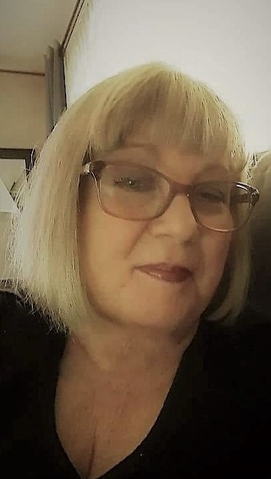
Kristy Raines was born in Oakland, California, USA.
She is an internationally known poet, writer, author and advocate. She has five books getting ready to publish soon, one with a prominent poet from India which will launch hopefully soon called, "I Cross my Heart from East to West", two fantasy books of her own called, "Rings, Things and Butterfly Wings" and "Princess and The Lion",  an anthology of poems in English, "The Passion Within Me" and her autobiography called " My Very Anomalous Life".
Kristy has received many literary awards for her unique style of writing and is a part time freelance journalist.
Poetry from Lidia Popa
The Bay of Thoughts in The Isle of Horses

Turquoise is a deep grassland where seahorses abound.
The sun is reflected while riding the waves
created by ships anchored in the bay.
Not everything is a painted tapestry
From hands full of color.
Peace is a blessing that flocks on earth dream about.
If in the turquoise you are close to God
Pray that at least the sky turns turquoise,
For them who have not known
Serenity and salvation in life.


Marine paths to the Bay of Ieranto (where Ulysses met the sirens)

The path of the parchment with lines just written,
Still wet with ink and words of different languages,
Written with our bare hands, nameless, when the whole
He is torn to pieces by forgotten things
Or strangers, you don't feel at first,
Unspoken words in this stolen time,
In and out of all that has been given,
Where something like a primordial light
Frenzy excites thought in lost sleep.

We write about the sin of living a mission,
A ritual born from the seed of an apple,
Under the lights of a deep-water jellyfish,
Where corals are born like poppies
From the repeated waves of silence,
Upsetting the atmosphere created
From a twilight to the end of June,
Like an ephemeral one night invitation
Where the shadows cannot touch the dawn
Through the imponderable capillaries,
Like a swarm of thrashing butterflies
Deep in a season.


BIOGRAPHY

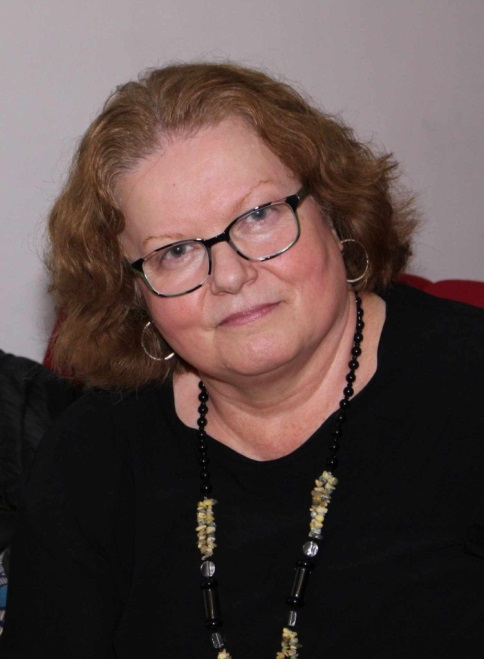
Lidia Popa was born in Romania in the locality of Piatra Șoimului, in the county of Neamț, on 16th April, 1964. She finished her studies in Piatra Neamț, Romania with a high school diploma and other administrative courses, where she worked until she decided to emigrate to Italy.

She has been living for 23 years and worked in Rome as part of the wave of intellectual emigrants since the fall of the Berlin Wall.
She wrote your first poem at her age of seven. She is a poet, essayist, storyteller, recognized in Italy and in other countries for her literary activities. She collaborates with cultural associations, literary cenacles, literary magazines and paper and online publications of Romanian, Italian and international literature. She writes in Romanian, Italian and also in other languages as an exercise in knowledge.

BOOKS

She has published her poems in six books:
in Italy:
1. " Point different ( to be ) " - ed. Italian
2." In the den of my thoughts ( Dacia ) " - ed. bilingual Romanian/ Italian Aletti Editore 2016,
3.“ Sky amphora " - ed. bilingual Romanian/ Italian Edizioni Divinafollia 2017, in Romania:
4. " The soul of words" ed. bilingual Romanian/ Albanian Amanda Edit Verlag 2021,
5." Syntagms with longing for clover " ed. Romanian, Editura Minela 2021.
6." The Voice interior " Lidia Popa and Baki Ymeri ed. bilingual Romanian/Italian, Amanda Edit Verlag 2022.

Her poems have been featured in more than 50 literary anthologies and literary magazines on line from 2014 to 2023 in Italy, Romania, Spain, Canada, Serbia, Bangladesh, United Kingdom, Liban, USA, etc.
Her poems are translated into Italian, French, English, Spanish, Arabic, German, Bangladesh, Portuguese, Serbian, Urdu, Dari, Tamil, etc.
Her writings are published regularly in some magazines in Romania, Italy and abroad.
She is a promoter of Romanian, Italian and international literature, and is part of the juries of literary competitions.
She translates from classical or contemporary authors who strike for the refinement and quality of their verses in the languages: Italian, Romanian, English, Spanish, French, German, stating that "it is just a writing exercise to learn and evolve as a person with love for humanity, for art, poetry and literature ".

SHE IS
*Member of the Italian Federation of Writers (FUIS)
*Honorary member of the International Literary Society Casa Poetica Magia y Plumas Republic of Colombia,
*Member of Hispanomundial Union of Writers (Union Hispanomundial de Escritores) (UHE) and Thousands Minds For Mexico (MMMEX)
*President UHE and MMMEX Romania, August 21, 2021
*She had come power of attorney Vice-president UHE Romania, Mars18, 2021- August 21, 2021
*President UHE and MMMEX Romania, August 21, 2021
*Counselor from Italy for Suryodaya Literary Foundation Odisha India,
*Director from Italy for Alìanza Cultural Universal (ACU) Argentina
*Member Motivational Strips Oman,a member of numerous other literary groups at the level internationally,
*Director of Poetry and Literature World Vision Board of Directors (PLWV) Bangladesh
*Membership of ANGEENA INTERNATIONAL NON PROFIT ORGANISATION of Canada
International Peace Ambassador of The Daily Global Nation International Independent Newspaper from Dhaka Bangladesh - 2023
*Founder literary group Lido dell'anima with LIDO DELL'ANIMA AWARDS
*Founder LIDO DELL'ANIMA Italian magazine
*Founder SILVAE VERBORUM INTERNATIONAL multilingual magazine
*Founder  of the literary hashtag #homelesspoetry
etc.