When I drink tea in New Jersey

Like a girl who writes poetry about a boy she has never seen
My day sits with all this disappointment
Counting her fleeting moments
 I remember my mother using the smell of onions
 To shed her tears in the kitchen
For the absence of my father
 Who climbed his life war by war
Whenever he wore his military belt
 He wished that war was just an old shoe
He could take it off whenever he liked
And he didn't need to think of fixing it at the cobbler's shop
I remember my brother
Who asked in his letters--
When will the war understand that we are not good at dealing with death?
I remember us forty years ago
We were kids, very much kids
With colourful clothes and hearts
It was enough for us to see a balloon
To drown in big laughter
I remember all this now
When I drink my tea
And
I practice my loneliness.

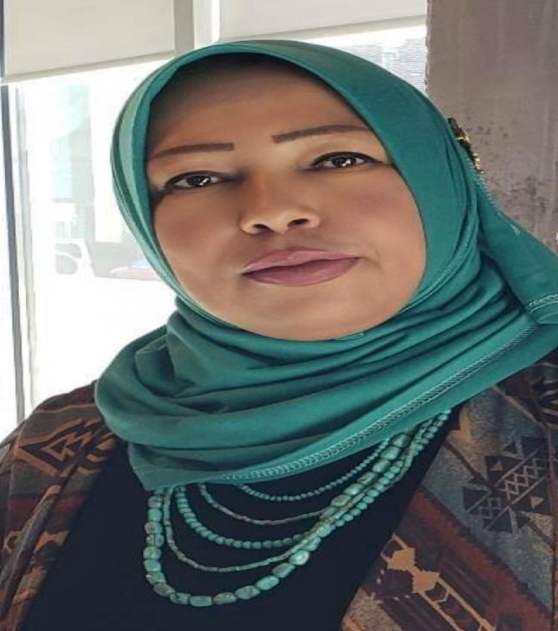
Faleeha Hassan is a poet, teacher, editor, writer, and playwright born in Najaf, Iraq, in 1967, who now lives in the United States. Faleeha was the first woman to write poetry for children in Iraq.

She received her master's degree in Arabic literature, and has now published 26 books, her poems have been translated into English, Turkmen, Bosnian, Indian, French, Italian, German, Kurdish, Spain, Korean, Greek, Serbia, Albanian, Pakistani, Romanian, Malayalam, Chinese, ODIA, Nepali and Macedonian language.

She is a Pulitzer Prize Nominee for 2018, Pushcart Prize Nominee for 2019. She's also a:

Member of International Writers and Artists Association.
Winner of the Women of Excellence Inspiration award from SJ magazine 2020,
Winner of the Grand Jury Award (the Sahitto International Award for Literature 2021)
One of the Women of Excellence selection committees 2023
Winner of women the arts award 2023
Member of Whos’ Who in America 2023
SAHITTO AWARD, JUDGING PANEL 2023

Cultural Ambassador - Iraq, USA
Email : d.fh88@yahoo.com
My tongue that entered my ear as lullaby,
My valiant tongue in the bosom of the ages,
I will write you every moment,
My blood, my language, oh, my motherland.

Come strolling, meaning my language,
Always sing like a nightingale my tongue,
It has the spirit of Navoi, he has Babur,
Let every dialect be beautiful, my language.

Every word has a hundred meanings in my mother tongue,
Every flame is a fire in every heart,
Everything ripples in this language,
Endless treasure, legend in my tongue.

This is my language, which the whole world respects.
This is my language, inherited from my ancestors.


Abdunazarova Khushroy was born on December 21, 2008. She is 15 years old. Currently, she is a pupil of 8th grade of the 15th DIUM of Mingbulak district, Namangan region. She is interested in English and Mathematics. She wants to become a interpreter in the future. And also she is a member of the international organization "All India Council for Technical skill development".
Advanced women in our society!

As each person is born and matures, his mother, who prays behind him, and his teachers at school help him. Where do you think the necessary personnel, teachers, scientists and poets will come from or how will they appear in our rapidly developing society today? Of course, such people are brought up by mothers who are advanced in all aspects, passionate teachers. I know one such woman…

Shirin Sultanova works as the deputy director for spiritual and educational affairs at the 54th general secondary school in the Beruni district of the Republic of Karakalpakstan. Shirin Sultanova was born on March 8, 1967 in Beruni district of the Republic of Karakalpakstan. Studied at school 57.

From 1986 to the present, more than 60 articles and 30 poems have been published in international and republican newspapers and magazines. On July 3, 2010, the "NATURE: yesterday, today, tomorrow" conference of the Republic's youth was held by the "BIOEKOSAN" educational and methodological complex of the Republic of Uzbekistan's Ministry of Public Education. Her student Khidiboyev Nursultan was awarded an honorable Diploma for taking the honorable 1st place and Sultanova Shirin for her article on the same topic. On October 24, 2015, the Republic of Karakalpakstan was awarded a diploma for its proud participation in the 2nd stage of the contest "The Best Spiritualist of the Year" in the field of public education.

In 2015, Khudayarova Maftuna, a 9th-grade student of the 54th school, participated in the stage of the Republic of Uzbekistan, took 3rd place and was awarded a diploma.

On October 20, 2020, on the occasion of the 31st anniversary of the Law "On the State Language" in Uzbekistan and the Uzbek language holiday on October 21, "May your mother tongue be respected!! Beruniy was awarded with a certificate of honor by the district governor A. Saparboyev for taking the 1st place in the district with the song "Ona tilim" in the republic competition.

On October 25, 2021, in connection with the October 25 internal affairs workers' day, in the competition held under the slogan "Let's unite the youth of new Uzbekistan", his student Makhmudzhanova was awarded with a letter of thanks for taking the proud 1st place in the popular drawing competition.

On January 14, 2022, he was awarded a diploma in the category "Best creative work" for the poem "My Motherland" in the online competition "Guardian of my country - a symbol of peace" on the Ustoz channel of the Republic of Uzbekistan.

In April 2020, in the competition held within the Republic of Uzbekistan, he was awarded with a diploma of the highest degree for his scientific article on the topic "The role of teachers in the education of a perfect person".

In March 2020, he was awarded the 1st degree diploma for his scientific article on the topic "The role of scientific circles in raising a perfect generation" in the contest held on the channel of the Intellectuals of the Republic of Uzbekistan.

In June 2020, he was awarded a certificate for his scientific article on the topic "Interpretation of negative and positive images in the story of Genghis Khan's White Cloud" at the 17th multidisciplinary scientific conference of the Republic on the topic "Scientific and practical research in Uzbekistan".

In November 2022, a scientific article on the topic "Improvement of spiritual and educational work in modernizing Uzbekistan" was published in the Russian journal "MEJDUNARODNIY SOVREMENNIY NAUCHNO-PRAKTICHESKIY JOURNAL" NAUCHNIY IMPULS.

In 2022-2023, in the Republic of Karakalpakstan, Makhmudzhanova, an 11th-grade student of school 54, participated in the contest "We are against violence" and took 2nd and 3rd places and was awarded a diploma.

Not only the students of this teacher won a place in the republic, but also his children took pride of place. Sultanova Shirin Yuldashevna is not indifferent to the future of her children in raising them to be educated, knowledgeable, intelligent, intelligent. In 2016, sons Khasan and Husan Tuliyev participated in the "Rekord-Uz" program of the Sport TV channel of the Republic of Uzbekistan with exercises of unique acrobatic skills and won the 1st place and were awarded with a statuette.

Khusan, one of the smallest "Dorbozchilar" in the Republic of Karakalpakstan, plays the simdar, Hassan is engaged in acrobatic, martial arts, bessuyakboza, fantamime exercises. Currently, they are studying at the 3rd stage at the Institute of Culture of the Republic of Karakalpakstan. He works in the department of culture in Beruni district.

Sultanova Shirin Yuldashevna's 3rd child Tuliyeva Sarvinoz is one of the creative girls. He writes poetry and articles. On March 7, 2019, Tuliyeva Sarvinoz personally received the State Award named after Zulfiya from the President of the Republic of Uzbekistan Sh.M. Mirziyoyev. In 2019-2023, he studied at the Tashkent State University of Uzbek Language and Literature named after Alisher Navoi. Currently, he works as a teacher of native language and literature at the vocational school of Shaikhontohur district of Tashkent city. Every mother loves her children. He is proud and even more happy when he sees their achievements.

One of the most important achievements of Shirin Sultanova is that on October 1, 2010, she was awarded the badge of the Republic of Karakalpakstan "Excellence of Public Education".

Shirin Sultanova has been teaching young people for 38 years. She is proud of her good deeds during her life, because looking back, all of them are a purposeful path for the development of the country and society.

The fact that she faithfully fulfilled her duty to the society, was always faithful, raised young people to become perfect and mature individuals, and served well-rounded people is an example for women in our society. As long as there are such passionate teachers and women, our society will improve, and many mature personnel will develop. We wish our teacher great patience and perseverance in raising children who will not be indifferent to the future of our country and will raise the flag of our country to higher heights.

Thank you for taking the time to read my article. Good luck with your work.


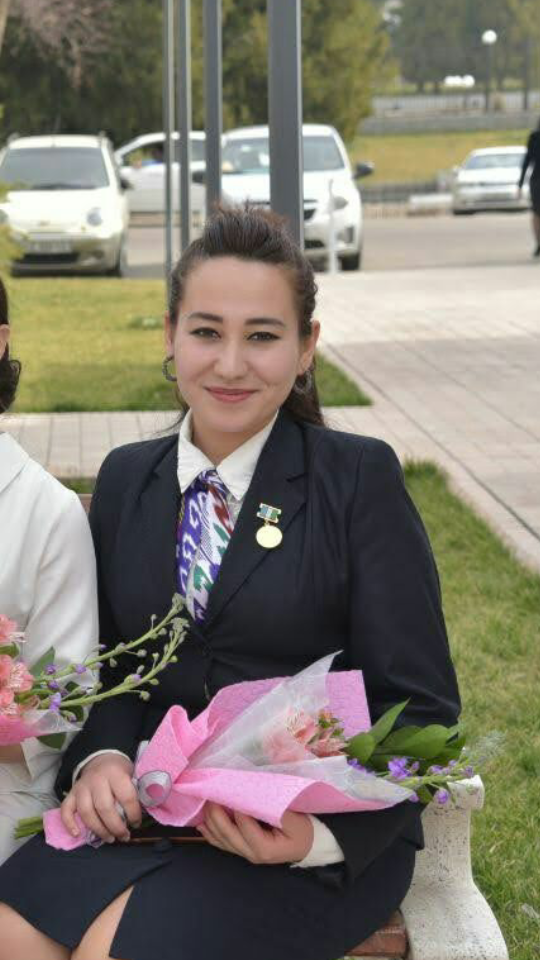
Tuliyeva Sarvinoz. She was born on November 8, 1999 in the Beruni district of the Republic of Karakalpakstan. Graduated from Alisher Navoi Tashkent State University of Uzbek Language and Literature (2023).

The winner of the state award named after Zulfia (2019).
Teacher of native language and literature at Shaikhontohur District Vocational School, Tashkent.

She is the author of the poetry books "Song of Peace", "I am a Girl of Truth", "Morning Poem".

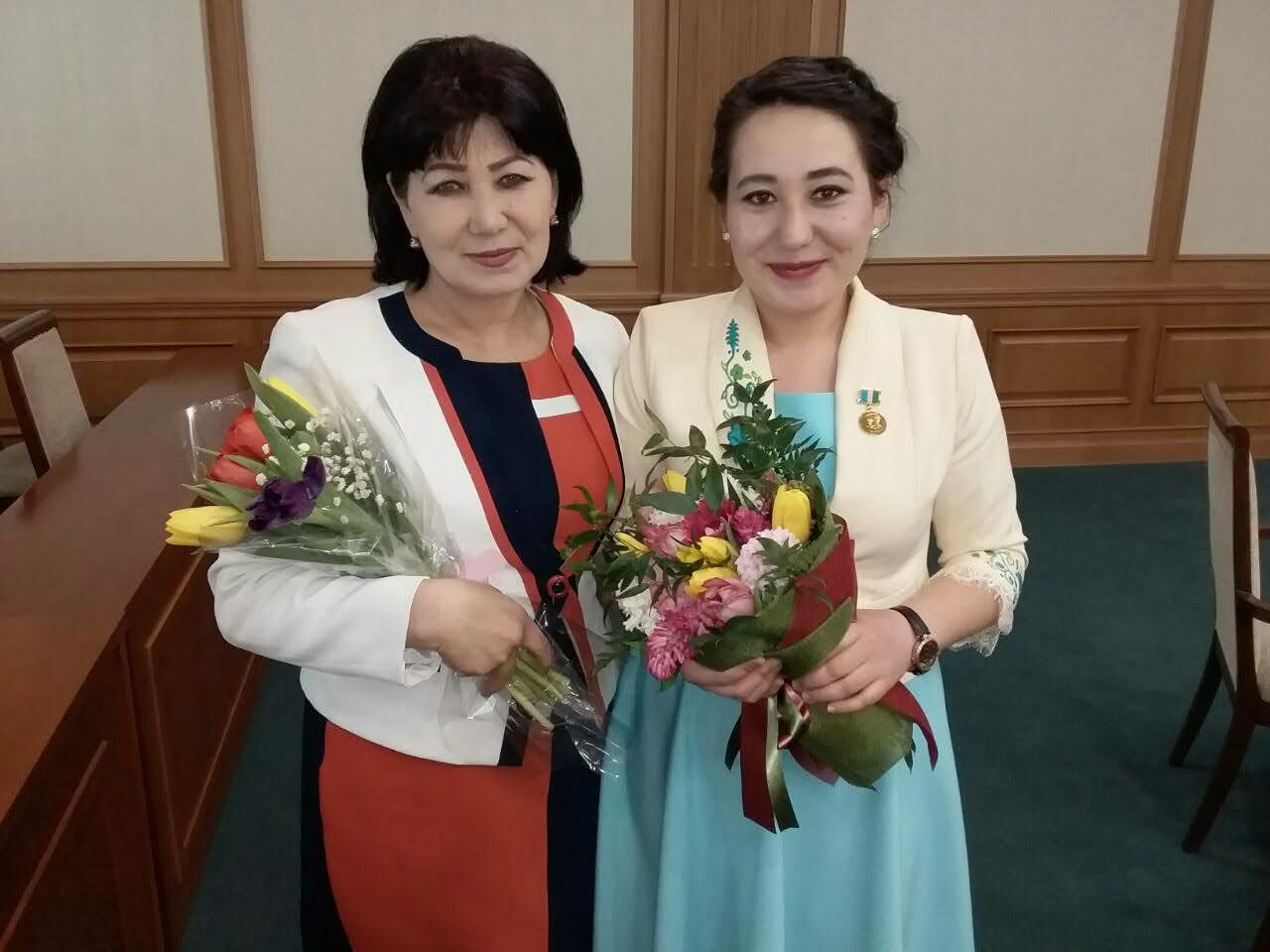
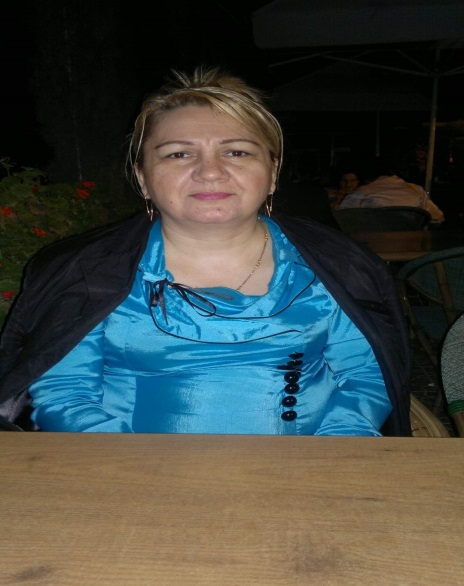
I leave a picture of me and my mother.
From Sex to Super-consciousness

(Musings of an anonymous MAN on sex, spirituality and everything else in between)

As I am wasting my monotonous days, reminiscences began creeping in of those sex-full days of wondrous, wanton lust, languidly fueling up my torn-up moods of boredom with something magical. And I allowed these emotions to distressingly float along the milky way of guilt and joy, dreads and dreams, being and becoming, and the suppressions and exuberance of an immaturely coming of age man in the city of never-ending little circles.

It combines everything together in a banquet of marvelous delight. I remember my love for that cheeky, whore-like colleague, one with brown black hair, a white-like face, and not-so-soft skin, for the pain of pushing, pulling, falling, digging, eating, and at the end, throwing something from my pocket and something for my horse-like thing—no wonder they call me a real hunter; I was always loaded on with my pestle those days, ready for a fire. Too cool, I thought, or perhaps just a fool.

I allowed my life to remain as an itchy despair.
I, the Hunter, as my colleagues have marked me, am a lone employee in the financial sector of the economy, working in little boxes in big buildings, counting and recounting huge cash with nothing in the hand, kind of analogy, here, eating and getting nothing wearing a leather cap. This kind of situation is so easy to put me off. I would shake and spring out life every night.

For those days, I considered myself a sex seeker; I was a sex guru's imperfect disciple, but out of resentment, the gaze of “the other” fixed me as a hunter or for some a Billy goat. Yes, I was addicted in sex, but what does it mean for a man of twenty-four to have this addiction in comparison to those horribly ugly things that everybody watches without any disgust? No, I never abused, manipulated or harassed any one for my lust, it was all straight or nothing, all my passions were congenial partners or affordable professionals.

My habit of chasing fantasies began during my college days. They, with rugged cheeks and a bit of soft, tight tissues, all had to come down to this dull valley to make something out there to survive for their families. For happy buck goats like us, we were a pack of four back then. It was the days of abundance; they were everywhere and we were pushing, pulling, and throwing, and they were grabbing, blowing, dunking, and bucking. It was all white and blue.

Anyway, it all started in a small wooden box. She had a soft smile. I put my hand all over her and then sucked from her nipple. It tasted awfully sweet. I was already high. I emptied my pocket and walked home alone.

In those days of thoughtless sex, I was there almost all the time, at the intersection of seven distinct turns inside the old house.
Sometimes even the prostitutes found it hard to take my push; her juices were not enough.

After some time, my lousy friend arrived from Australia—wow, it was already down under—to find a young girl who would sleep with him for his foreign gate pass. The first thing I said to him was, Have you done it yet? He was perplexed. I still remember that docile rat running away from his horny girl when she wanted to kiss her. It's vivid, and I wanted to take him to my place, a new and recent one I have found near the holy place. Shiva X, and what next?

They were ripe from the village and falling down in the valley with soft and sharp breasts; it was too good to miss. Again, what next? As the white explosions continued, I told my lucky-less friend to join me in my exuberance, but he was a bit too human, not half a kind of animal. I was sure that he had come back to Kathmandu to sharpen a dull pencil on a virgin cutter. He had a magical card to juice up any girl out there. That magical thing works for every middle-class girl?
I can’t understand the black line of separation between middle-class young girls and my better-loved prostitutes; they both easily give up, don’t they? One for the money, two for a show, and three for a pass to fly away. All the same, I am not mistaken between a few thousand and a hard card.

My friend said, I am in search of a life partner to work with and sleep down under. I searched with the face of a sober hunter and found a young woman who was bright, glassy-eyed, restless, and tired of her stepmother and a confused father. I asked her, Are you interested in traveling to Australia? I was not surprised when I got her close, and she agreed. After a few cups of coffee, the deal was done; things will never be the same again.

However, I the hunter was not called for the marriage; I was not bothered, and can’t you see it? What an embarrassment it would be for them to find the presence of a hunter when both of them were thinking about goating each other.

My friend slept with his wife, and that evening, without any disgust, I did the same with a girl in exchange for cash. It was relaxing.
After a while, a thought came rushing into my mind of that soft-skinned pale girl my friend was digging in all the while. What made her so lovely was that she was pretty and tall, like a slate pole. I wouldn’t reach for her hole; it seemed too tight and obstructed for me. Every time Prakash did something with her, it felt as if my spirit was being rapped through my asshole.

It was too much and too big for that girl, Sony, and my boy, Prakash. They traveled across the long lane to the filthy resorts to do that thing. Am I going to tell you more about Sony? Probably NO. Sony was among the girls I dropped for, but she was hunted down by my friend, and I would only say to myself that her grapes are tasteless and sour.

Still, I remember the day of her marriage; it was astrologically supported and arranged, and I even saw tears in her eyes. Her husband was dissimilar as my friend, but he was another kind of hunter; he was rich, round, dull, and bit of hairless in front.
As I go through the news these days, I realize that sex has indeed become a bit too complicated and dangerous because people are too either curious or judgmental. It’s a looming disaster when sex ceases to become straight and spontaneous and begins as a point of abuse and bargain. What if you bump into a stranger who can trap you with lust and completely wreck you?

You may say I got away because I am not a celebrity; I was young and too fit, fine, smooth, and healthy, but I say to them I was an addict because without sex in that zone of quantity, I wouldn't have survived. I have never undermined a woman; even if I had bumped off a feminist, she would have never complained, because there were no tactics, tricks, abuse, false promises, or power involved; it was my nature; no betrayal. And thanks to my ocean guru I never turned into a suicidal man or a suppressed serial killer.

I don't know how I ended up in a marriage—from which side I don't know—but that was the day, around thirty-two, I realized the hunter also got hunted out and the Billy goat in me got castrated. I think to move out of sex addiction is something like moving up in the ladder of seven chakras, channeling that energy some more into the heart and head, and allowing those impulses to find their expressions on something else; there is no need to push or pull so much as these days, I paint, poet, music, focus more on math, and meditate; my guru would say take that leap from sex to super-consciousness.

Oh, my master, I have not touched it yet; I am hanging in between. But I have realized that in the cosmic scheme of things, a sage moon as he was, my master Rajneesh spoke that the urge for sex is an unconscious way of searching for your soul. Indeed, it gives a sense of transcendence to be with the mind, not obsessed with sex.

(Gaurav Ojha is a writer, researcher, and educator at different educational institutions.)
The Girl of Lugansk

Barefooted walking girl on the street
In prickly frost of morning hours
On icy slippery scald- head of the earth
With broken bloody knees.
Standing up and falling down,
Going alone nowhere.
Teared away from the world and herself.
Becoming more wicked.
Cold touching upon the bones
Of the kept silent victim.
Passers- by not finding any word.
Somebody tightly hiding the neck
Under fox collar,
Feeling sorry deep in the heart,
But not asking her anything.
Another one looks askance at the girl,
Expressing the contempt.
…O, Umpire judge!
Sometimes we can hang
The lock of indifference,
Not hear the dumb scream for help.
We are deaf, as caterpillars,
No demand from us,
And the conscience
Becoming blind,
The fire in the eyes is gone.


Nigar Nurulla Khalilova is a poet, novelist, translator from Azerbaijan, currently in the Kingdom of Saudi Arabia. She is a member of Azerbaijan Writers Union. She graduated from Azerbaijan Medical University and holds a Ph.D.
ORIGIN OF THE QAQAN DYNASTY

Abstract: This article provides information on the importance of historical sources and the essence of the works of Kagan historiography in covering the history of the Kagan Khanate. The opinions of various authors of the source studies of the Kagan khanate on the factual information presented in the work are presented.

Key words: Kagan khanate, source, Fargona valley, "Muntakhab al-Tawarikh", "History of Shahruhi", "Tarihi Jadidayi Tashkent", "Tarihi Fargona", A. Fedchenko, V. Khanikov.

After the independence of Uzbekistan, the study of the history of the Uzbek statehood, the study of the history of the states that existed in our country from ancient times and the Middle Ages gained important scientific and political importance. It is one of the main tasks of all historians. As for the Khanate period, the history of the Khanate period is an important period in the history of Uzbek statehood.
Kagan Khanate, as a developed region in the 18th-19th centuries, has always attracted the attention of scientists. In general, many tourists entered Fargona Valley and recorded the available information about this area in their few works.

The history of the Fargona valley of the XVIII-XIX centuries is the legacy of many researchers. Depending on the time they lived and created, the sources can be conditionally divided into several periods: 1. Works of palace historians; 2. The works of local authors that reflect the history of the khanate; 3. travelogues and memories of Russian and European tourists, soldiers, ambassadors and merchants who visited the khanate during the XVIII-XIX centuries; 4. Archive documents.

The first "Qoqon scholars" are local historians who wrote works on the history and culture of Qoqon. These works are also considered important written sources because they were created using different sources, using the language of events and participants.

The history of the Kagan Khanate is organized primarily on the basis of primary sources, that is, historical works created in ancient times. Among such sources, the first work on the history of the Khanate of Qakhan is the work "Muntakhab al-Tawarikh" written by Khoja Muhammad Hakim Khan Tora Khaqandi. The author is a descendant of Makhdumi Azam, one of the representatives of the major sects in Central Asia. Hakim Khan Tora's father, Masum Khan Tora, was one of the most respected figures in the khanate, like his grandfathers. He married the daughter of Khan of Qakan Norbotabi and from this marriage Hakim Khan Tora was born (1221 Hijri). Masum Khan held the post of Shaykhulislam during the reign of Tora Olim Khan and Umar Khan, and was considered an advisor to the Khan in the palace.

One of the characteristic features of Muntakhab al-Tawarikh is that it contains original information not only about the Kagan Khanate, but also about the situation of Russia, Turkey, Iran and Iraq in the first half of the 19th century. such as cities, their inhabitants, trade relations in this city and the participation of Central Asian merchants in it. Tora sometimes does not give an objective assessment of Muhammad Alikhan's personality. According to SH. Vahidov, Hakimkhan Tora was one of the initiators of Amir Nasrullah's march to Kagan in 1842.

After the establishment of the Khanate, one of the valuable sources for us is "Tarikh Jadidai Tashkandi", written by Muhammad Salih Tashkandi. Muhammad Salih wrote "Tarikh Jadidai Tashkand" for 25 years. He wrote some parts in 1305 AH (1887-1888 AD). The author's manuscript of Muhammad Salih's work is a rare copy
The manuscript is stored in the treasury of the Institute of Oriental Studies named after Abu Raikhan Beruni of the Academy of Sciences of Uzbekistan under the number 7791. The copy copied from the manuscript of the same author in 1936 by the secretary Nabirohoja ibn Said Khoja in two covers (NN 11072, 11073) and copied by the hand of the researcher of this institute Abdulla Nasirov. copies (iiv.I 5732) also exist.

In addition to the lithographic copy of the work "Ibratul-khavoqin", which became famous in science under the name "History of Shahrukhi" or "Tarihi Shahrukhiya", one of the major historical sources, there are 12 copies. The description of these copies was not mentioned by T.K. Besembiev in a few research works and scientific research works and in his book.

The work "History of Fargona" is also one of the important sources in the study of the history of the Khanate of Kagan. The work was published in 1916 by the historian scholar Ishaq Khan Junaidullo ogli Ibrat. The work describes a great period from the rise of thousands to the conquest of the Khanate by the Russian Empire. Information about the military campaigns of each Khan of Qagan, socio-political situation, Qazgolans, the Russian invasion, its consequences and the largest cities of the Khanate is given. "History of Fargona" is a historical work of great importance for us. The work was published in Tashkent in 1991 in the "Heritage" series.

In the study of the history of the Khanate, historical documents, in other words, the works of Russian tourists, ambassadors and historians, play a key role. Most of such documents are now kept in state archives.

Most of the documents related to the history of the Khanate are from Turkestan and Russian scientists G. Potanin, D.N. Romansky, V. Khanikov, L.F. Kostenko, A. Maksheev, V. Belyaminov-Zernov, V.V. Grigorev, A.P. Khoroshkhin, N. Pantusov, A. Nurekin, N.O. Petrovsky, It is possible to mention the works of M.A. Terentev, A.F. Mindendorf, A. Fedchenko, A. Kun, V.V. Nalivkin. S.S. Soodanbekov, Yu.Lunyov, N.Terletsky, Scott S, Levay and other scientists whose works have been published abroad, Russian researchers D.V. Vasilev, V.V. Korneev, A.I. Dubinina from the scientists of near and far foreign countries have written about the political, social, economic and cultural aspects of the khanate in their works. who covered his life, his colonial period.

In conclusion, it can be said that there are many problems in the issues of Qakan source studies. In order to study and edit them, it is necessary to know the Persian-Tajik language well, to be aware of the science of using manuscripts. In addition, it is appropriate to use foundation documents, documents and information stored in the archives of Uzbekistan, Russia, Kazakhstan and Tajikistan in the deep and comprehensive study of the history and cultural life of the Kagan Khanate, ethno-cultural processes in it. Otherwise, new works and studies will continue to emerge based on the information provided by previous authors. In addition, the history of the Khanate of Kagan was widely covered in the works of various genres written in Eastern Turkestan in the beginning of the 19th and 20th centuries, as well as in the historiography of Bukhara and Khiva. It is necessary to study the history of the khanate in a holistic and comprehensive manner, involving these data in the research.

LITERATURE AND SOURCES USED:
R.Kh. Akbarov. "History of the Khanate of Kagan" Instructional manual. Fargona, 2015.
Shodmon Vahidov. "History writing in the Kagan Khanate". Tashkent Academy, 2010.
3. Ikramjon Kuzikulov "History of the Khanate of Kagan". Namangan publication, 2014.
4. Mirzo Olim Makhdum Khoji. History of Turkestan" Tashkent "New Century Generation" 2009.
5. Vahidov Shodmon Husenovich"" Development of historiography in the Kagan Khanate at the beginning of XIX-XX centuries"""""Tashkent-1998.
6. Niyaz Muhammad Khaqandi "Ibratul Khavaqin" Tashkent"""Turan zamin zia" 2014
7. Fargona State University. Kokan source studies and historiography. Fargona -2010.