
Meanwhile, in a galaxy not that far away

Last night The Empire
Strikes Back, & a shot of
Yoda resting his 900-year-
old chin on the hand grip
of his walking stick. &

today I am sitting with
my weary chin on the
handle of my walking
stick, waiting for the plane
to take us to Sydney, five

years after I last flew. In
between, faulty knees +
hearing + breathing. & no
holograms around to en-
able me to use The Force.


& on the flight south

I find in the seat-back
pocket in front of me
a finger-sized bar of
milk chocolate, & The
Road, a book by Cormac
McCarthy. Though temp-
ted, I leave the chocolate
where it is, but take the
book to take home with
me. There it will be
placed at the back of a
queue which already
includes the last half-
dozen Lucas Davenport
novels by John Sandford
which I am re-reading
& a number of other
crime novels picked up
at remainder prices in
the (almost) local Big
W department store.

Do not remove all the chairs

The pipe is overhead. Free from all disc-
ursive attachment, it can float anew in
its natural silence. Make no mistake,
nothing is easier to recognize than a pipe.
This is the first rule to be observed. The

second? Never sit down to the piano unin-
vited, unless you are alone in the parlor. An
old custom not without basis, because the
entire function is so scholarly as to allow
the object it represents to appear without

hesitation or equivocation. & the third? The
small articles of a wardrobe require constant
care. Should be of such material as will bear
the crush of a crowded store without injury.
A dignified, modest reserve is the surest way

to repel impertinence. No truer remark was
ever made. In vain the text unfurls below
the drawing with all the attentive fidelity
of a label in a scholarly book. A figure in
the shape of writing. The image of a text.

Sources:

This Is Not a Pipe, by Michel Foucault
The Ladies’ Book of Etiquette (1860), by Florence Hartley
Category Archives: CHAOS
Poetry from Mahbub Alam

Vow

The world is a vow
To keep our promise to the Creator
We have our beauty of eyes
Inner and outer
The sight around
What teaches us?
To learn and obey the plan made for us
Our daily performance
Who is not charmed?
From the beginning of our birth
We have gradually felt a sense of love and to be loved
Love for the self and standing before the mirror
For the sky and the stars twinkling at night, my dear, a soft call
What a vow to each other and for all!
Cultivating in our hearts in the field of work
Though broken frequently, so what?
We have come here with a word so touching, Vow.


Chapainawabganj, Bangladesh,
12 January, 2024.


Md. Mahbubul Alam is from Bangladesh. His writer name is Mahbub John in Bangladesh. He is a Senior Teacher (English) of Harimohan Government High School, Chapainawabganj, Bangladesh. Chapainawabganj is a district town of Bangladesh. He is an MA in English Literature from Rajshahi College under National University. He has published three books of poems in Bangla. He writes mainly poems but other branches of literature such as prose, article, essay etc. also have been published in national and local newspapers, magazines, little magazines. He has achieved three times Best Teacher Certificate and Crest in National Education Week in the District Wise Competition in Chapainawabganj District. He has gained many literary awards from home and abroad. His English writings have been being published in an International Online Magazine - Synchronized Chaos from America for seven years.
Poetry from Kholida Toirjonova
One Day

One day, I will leave this world behind
Leaving my existence to be forgotten by you
However I came, that's how I will go
You won't perceive the struggles I've endured.
When the day comes, my silence will break your heart,
You'll wish to hear a single word from me.

When the day comes, I'll become your pain,
You'll wish for me to return, but in vain.
When the day comes, my eyes that spoke of love,
Will be deprived of the light of affection.
No matter how many regrets you have for me,
Love will always conquer sorrow's affliction.
I have no desire to burn my dreams,
You wash away my hopes like clay and soil.

I am leaving, perhaps just like you did once,
Now you too are growing old and weary.
I'm leaving behind everything in my past,
Leaving, crossing over the world's surface.
Maybe one day you'll hear a whisper from me,
Letting go of the memories and set me free.

I ventured into darkness on a starry night,
The sky united with the silent earth.
My unspoken words were left behind,
I escaped from this deceitful world.
Don't mourn or cry for this stranger,
False mourners are unnecessary when I'm gone.

If one day I leave you all alone,
It is my eternal liberation from those who have passed.
Poetry from Duane Vorhees
CAREFUL DRAGGING


I need to be careful dragging these words from their minefields and dungeons, these weighted syllables of assayed worth. They guard against the bludgeons applied by the enemies of my growth.


When I forget how to live, then that’s the when when I will start to die.

My fault lines can’t fill my rifts, my rainbow vow can’t heal my rainfull sky, until When conquers If.


I live in this continuing city of self-mirroring mirrors.

It is the there where I double and split. Other wheres wither into unintended identities.


My face picks its own disguises from among these many costumes and masks I saved to reveal the lies I wield, with my executioner’s axe, when I end hindering cries.


Forgotten thought may find a place to hide in the nooks of memory. Experience can be buried alive – amnesia as amnesty – but the ignored remains can never die.


In the act of becoming the mind is not molded by the body; it thinks it is eyes and wings. The who I am is never my what. I’m part of everything.

My brain is inferior to my soul, my chamber is not my heart.

By navigating the oceans of Whole and staying true to the art, tomorrow’s ship escapes yesterday’s shoals.


Timeless time measures changes.

No stone is a stone until you kick it, and then time rearranges stones into the anchors of a frigate to mark and limit its range.

Time’s economist tallies the cockroach, the coelacanth, the centaur, the allosaurus, the ape, and the sloth … and assigns expiry hours.

But I prolong, impersonating ghosts, while time rearranges me. I am what I was and what I was not, but I’m always becoming me. The “mine” is distinct from the “common lot.”


And I think I’m almost me.


APPLE BLUES


Look at me, bald, fat as an apple.

Here I am, bald, fat as an apple.

But don’t value goods just by their wrapper.


Old as your father, that’s what you said.

“You’re old’s my father,” is what you said.

But that’s no bother, ain’t decrepit yet.

May look like a wolf, pitted and ugly.

Big bad old wolf, grizzled and ugly.

Feed me love enough, tame as a puppy.


You think I’m a shit, I make your garden grow.

I may be a shit, but I make your garden grow.

When you need a prick, let me be your rose.

Look at me: bald, fat as an apple.

Look at me, bald just like an apple.

Don’t value the goods just by their wrapper.


(Lean me against your marrow like a giant midget jumbo shrimp. Hold my poor minute against all infinity like any other parasol you’d prop against a hurricane. A gossamer-armored middleaged scholar in swimming trunks, let my steady frailty hold the frailty of your own, let my cardboard walls withstand the world’s assault.)


If you break your compass, I am true north.

You lose direction, here I am, true north.

And when you end your wanders, I’m fire in your hearth.

If I’m silent, don’t have much to say.

I’m kind of silent, not a lot to say.

Just like my violence, words left yesterday.


Horny old bastard, last grape on the vine.

Horny old bastard, the end of the line.

Wrinkled and blasted grape a-makes the sweetest wine.


SUBURBAN SHOESTORE


So, you inhabit a steady orbit,

you’re comfortable – or, that is, until

chaos comet comes. Not on provisions

have you spent your self, but on emptied shelves.

You paid prostitutes to wear all the boots.


QUEEN OF DENIAL


So Jennifer you are.

Wrapped in just your thoughts,     (and mine too)    [not that you'd notice]    you assume the Mummy pose in bed. Are you sure your heart's hermetic, secure in its canopic jar? Or is it yet in your breast, just beyond sight, cowering still? (And don't forget your nightly negative confession – the world's bad deeds you've never done -- all of them – don't miss even one.)


And that kind woman in the Registry told you, didn't she, as kindly as she kindly could (but in the blameless guilt of your secret vacuum heart, what was it you heard? And how in your soul did it reverberate?) "Sorry. This is all we have. This is all the information anyone has. We can't find out who you are. We don't know what year you were born. We can't find out where you were born. Nobody knows who your parents are, your mother or your father, or why they didn't want you. Someone – we don't know who – found you, wrapped in a ragged, dirty blanket, lying by the side of the road. You were turned over to the authorities and you were sent to the orphanage. And that's all we know. I'm sorry. I wish we could help you. Sorry." Of course, you knew the whole story already – how could it hurt you now? "Don't touch me," you warn me as kindly as you can manage. "If you just leave me alone     [you, too!]      I can handle this by myself." But a single slow tear somehow engineers its hopeless escape down your Alcatraz cheek.


Wrapped like a glove on the dresser. Lovely warm solft leather. Carefully crafted. Turned nicely out. Waiting for the proper hand.


Together      (does that word really mean separately alone?)     in bed again. Pickets intent, rapt in their mission, inspecting invisible perimeters.

      "All lines secure, Sir."

No intruder can penetrate.    (friendly, or otherwise)     And there you lie, wrapped around your arms     (not my arms),       world-weary frightened.

So Duane you are.


MONTANA MOTEL


[and the radio cowboy sings]

Come lay your body down close next to mine,

Sure, yes I'm sure, your husband won't mind.

We're in Montana, and he's in Japan.

So lay your body down. Lay it close next to mine.

Just turn your lamp off, and close down the blinds.

If he came home to find us entwined,

Your husband's a good man, he'd understand.

So lay your body down. Lay it close next to mine.

(asleep beneath the bower of other tresses,

i do miss the slow flower of your eyes.

but i'll water i guess the garden of her yesses

till i rest in the hollow of your thighs:

is what we learn worth the loss of what we forget?)

Come lay your body down close next to mine.

Sure, yes I'm sure, your husband won't mind.

Sure, yes I'm sure, your husband won't mind.

Sure, yes I'm sure.... Sure, yes I'm sure....

(though i taste the desserts of another's mess,

i still miss the silvered service of your limbs,

i must suppress the appetite of these whims

till again i can dine at the table of your breasts.

who else turns his face from the light to stare at shadows?

who abandons the concert to attend to echoes?)

Come lie here beside me, pass down the wine,

Sure I am that your husband won't mind:

Needs in Montana can't wait for Japan.

So lay your body down,

Lay your body down, body down. Body next to mine....

...
Poetry from Kristy Raines
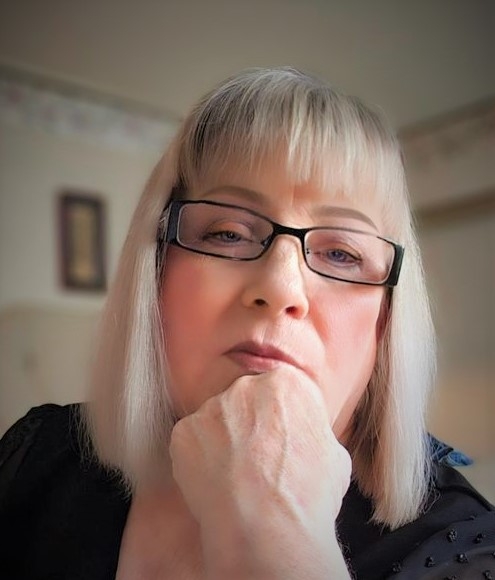
WAITING TO MEET YOU AGAIN

If ever we are in this life or the next,
I will be there waiting to meet you.
Take me to the sky and beyond my imagination
Touch me deeply and tenderly in the depths of my soul
For my heart pines for you over and over
no matter which life we are living in.
Your name is always on my lips when I speak,
as well as the memory of you kiss
At night as I sleep, you enter my dreams gently.
At times they are so real that I cry out your name.
I have no control over the outcome of our life together,
Because, my Love, One who knows best has already
drawn that line and I can not erase it.


Alone...

Loneliness and sadness grew in my heart without you
I tried to find in someone else what I found in you
What I failed to realize is that you can not be replaced
When two hearts are one, none can separate them,
no matter how much I try to move forward..
If he would try to touch my hand, it would chill me
I couldn't look in his eyes...
Because I couldn't find my reflection
You hold the key that locks these golden chains around my heart
I need your kiss, your touch, and the love only we share
But I have no answers...
Because though we are apart in distance
our hearts couldn't be closer
So I will stay alone with your memory
'cause I can't live a life with someone else that was only meant for us
I pray that one day you find your way back to me
You will find me where you left me.... Alone


WHEN I SMILE!

Do you ever wonder why I smile?
I smile when I see a beautiful sunset
When I hear birds sing on a silent day
When a baby laughs, I shine
For many years I lost my smile
Then I saw yours, and slowly
I found my smile again.
Now our world has changed
Our destiny is clear ahead of us
You can rely on me; My world is in you!
Could you not see?
And yes, I am smiling now
So when you see me smile
I hope you realize I smile because of you .... ❤
Poetry from Mirta Liliana Ramirez

Heart

To my heart
they have hurt him
hundred times.

Treachery
tore it apart,
The deception
shook him.
disloyalty
made him bleed...
But nothing
he annihilated him.

With pain he beat
and again
but he did not succumb.
always
reborn
showing me
that exist
beautiful things
by which
it's worth living.

The ones that hurt
must be left behind
as experience
that I must not repeat.

Mirta Liliana Ramírez has been a poet and writer since she was 12 years old. She has been a Cultural Manager for more than 35 years. Creator and Director of the Groups of Writers and Artists: Together for the Letters, Artescritores, MultiArt, JPL world youth, Together for the letters Uzbekistan 1 and 2. She firmly defends that culture is the key to unite all the countries of the world. She works only with his own, free and integrating projects at a world cultural level. She has created the Cultural Movement with Rastrillaje Cultural and Forming the New Cultural Belts at the local level and also from Argentina to the world.
Synchronized Chaos Mid-January 2024: Holding Up Our Corners of Sky
Welcome, readers, to mid-January’s issue of Synchronized Chaos Magazine!
We recognize various observances this month: American civil rights leader Martin Luther King’s birthday, Holocaust Memorial Day, Clean Energy Month and World Braille Day and strive to make our publication as inclusive and welcoming as possible.
We are also hosting a free public literary reading in conjunction with the Association of Writing Programs conference next month in Kansas City, MO. This will be at 6pm on the evening of February 7th at Prospero’s Books. All are welcome to come and hear the readers!
Now for this month’s issue: Holding Up Our Corners of the Sky.
Don Bormon and Mahbub both encourage us to move forward into the New Year with optimism.
Sayani Mukherjee describes cultivating herself as if she were a garden. Chimezie Ihekuna urges young Nigerian students to apply the lessons of their education to their lives, values, careers, and future leadership.
Makhfiratkhon Abduratkhmonova illustrates one young Uzbek woman’s pathway to success and recognition as a writer and intellectual. Davronova Lobar advises parents on how to raise confident children, while Saida Ismoilova speaks to having the courage to pursue our dreams.
Farkhodova Nodira extols the good exercise, glory, and discipline involved in playing sports. Dildora Toshtemirova reminds her fellow Uzbek nationals of the many vocational training opportunities in the country while Shabnam Shukhratova outlines the advantages of study-abroad programs for enriching students’ lives.
Taylor Dibbert also reflects on travel, in his piece where the speaker’s life begins to make more sense when he has a change of scene and visits Sri Lanka. Meanwhile, Daniel De Culla provides an earthier travelogue, about local customs on a trip to Morocco.

Maja Milojkovic’s poem compares working artists to fish in an aquarium, constantly observed while trying to accomplish something meaningful. Graciela Noemi Villaverde touches on the more personal side of her poetic practice in a piece where she “meets” with her poetry.
Sitorakhon Buriyeva reminds us that life is short so we should make moral choices and make the most of our time.
J.K. Durick’s poetry explores our human limitations, what we can and cannot accomplish or change in life. J.J. Campbell dredges up the frailty of midlife: loneliness, physical weakness, awareness of one’s mortality. Niginabonu Amirova ponders human destiny and how we must all die, while Maftuna Sulaymonova highlights the cycle of life with a poem where a daughter cares for her aging mother.
Priscilla Bettis also looks at mortality, with gentle haikus about grief and the burial of a loved one. Mesfakus Salahin reminds us that we are all mortal and will all arrive equally empty-handed in the grave. Sabina Abdulazizova’s poetic speaker speculates on how she’d like to be remembered.
A.G. Davis’ poetry evokes death imagery alongside that of outer space and the mythical underworld. Christina Chin and Uchechukwu Onyedikam’s collaborative haikus also reference death and the underworld, alongside space aliens.
Faleeha Hassan’s lush, imaginative poem illuminates the death of creative imagination that is writers’ block. Noah Berlatsky evokes the impermanence of memory and how past relationships fade into the background.
Jerry Langdon illustrates the storm of heartbreak, when his speaker is no longer able to pull into the safe harbor of his past partner. Mavluda Rusiyeva also describes the intense pain of a broken romantic relationship. Gulsanam Abdullayeva speaks to lost love and heartbreak, while Mohichehra Rustamova quests for interpersonal and emotional peace while grieving having caused someone pain.
Maid Corbic’s poetry extols giving love, but recognizes that his love has limits because of his humanness. Cheryl Snell’s work also probes the limits of love, as she relates coldness and neglect within family relationships.
In contrast, John Culp talks of persevering in love, not shutting the door on each other, even in intense moments. Shukratova Shabnam offers a lament and a tribute to a mother’s hard work and sacrifice while Dildora Toshtemirova probes the complexities of a mother and daughter’s relationship.
Kristy Raines writes of a gentle companionship while Sayani Mukherjee evokes a moment where she meets with God, envisioning perfect communion and realization of her best self. In Charos Makhamova’s piece, spiritual and human love commingle, while Elmaya Jabbarova narrates a vivid dream of a spiritual union with a loved one from whom she draws inspiration. Abdusodiqova Fotima urges people to come to God with their pain, as He is a perfect listener.

David A. Douglas’ formal poem shows a bystander, powerless to prevent the train wreck he’s watching, but infused with courage from his faith to endure being a bystander and bear witness to the scene.
Favour Raymond also bears witness, to domestic violence and its impact on children. Daniel De Culla critiques and diminishes the power of today’s warmaking leaders by locating them within the historical context of other warlords whose empires have come and gone. Mykyta Ryzhykh describes the violence of modern warfare, yet illustrates how life as a whole perseveres and outlasts the individuals who are killed. Evie Petropoulou urges world leaders to pursue peace and justice and for all people to remember our interdependence.
Bahora Boboyeva conveys the terror of a family facing political or ethnic persecution. Jeff Rasley describes a riot where activists leave ordinary passersby to bear the brunt of repercussions for their actions.
Brian Barbeito witnesses and laments people’s increasing post-pandemic harshness and pettiness. Arthur Chertowsky describes slowly losing his ability to read or listen to books as he ages, wondering if he is slowly dying away as he ages.
Fayzullo Usmonov narrates the struggles he faced while growing up in poverty and earning a hard-won university admission. Many other contributors discuss education, including Rejabova Dildora, who outlines modern teaching methods for primary education, Mashxura Maxammatova, who suggests innovative methods for teaching English to youngsters, Fatillaeva Nehrinoz, who discusses language instruction in higher education, Shamuratova Shoira, who highlights podcasts as a tool for language learning, Malika Isomiddinova, who covers new methods for teaching vocabulary, and Alisher Ergashev, who goes into information technology tools for teaching foreign languages.

Farrukh Amirov’s poetic speaker escapes real-world injustice through retreating into the historic poetry of his nation.
Dilnoza Xusanova remembers Erkin Vakhidov, a versatile legend of Uzbekistan’s literary heritage. Bahora Boboyeva discusses Bernard Shaw’s sophisticated analysis of social class, education, and personality formation in Pygmalion. Diyora Bakhodirovna outlines psychological theories of the concept and development of personality.
In his latest set of postwoman poems, Mark Young receives deliveries of various icons of history and culture. Lorette C. Lukajic offers up 13 different ways of looking at Edward Hopper’s painting Nighthawks, about the loneliness, or peaceful solitude, of being in a quiet cafe in the evening.
Duane Vorhees writes of history, the passage of personal and mythic time. Z.I. Mahmud’s essay analyzes how T.S. Eliot and Samuel Taylor Coleridge viewed the purposes of art and literature.
Mirzaliyeva Zarinakhan outlines the history of church reformer Jan Hus, while Daniel De Culla evokes the character of an old fashioned road cleaner. Rbs Nsj gives the background of the Village of the Saint shrine which faithful Uzbeks visit on pilgrimage. Farangiz Safarova discusses Korean greetings and social etiquette.
Arts video journalist and filmmaker Federico Wardal announces his upcoming interview with Italian journalist and music promoter Adriano Aragozzini.
Some more modernist writers play with language. Jim Meirose’s onomatopoetic tale appears to concern a spear-throwing game while Daniel Y. Harris encodes Proxy Godbot the Black Hat Hacker into verse that resembles software. J.D. Nelson contributes his signature word fragments for a piecemeal glimpse of the world.
Sitora Mamatqusimova contributes a paean to the glorious history of her native Uzbekistan. Boronova Sevinch and Nigora Togayeva take pride and find happiness and reasons for optimism in their country and family, while Mohinur Sotvoldiyeva outlines some historical Uzbek wedding customs.
Laylo Mamatova shares the history of the Central Asian spring holiday of Navruz, while Zuhra Ruzmetova waxes effusive about the beauty of Uzbekistan in the spring. Wazed Abdullah writes of the history embedded within a long-flowing river while Muntasir Mamun Kiron rejoices in the beauty of the land and culture of his native Bangladesh, Lilian Dipasupil Kunimasa anticipates the fun of summer in an upbeat piece and takes comfort in gentle winds, and Mahbub Alam reflects on a foggy, quiet morning.
Isabel Gomez de Diego’s photography explores how people experience built environments, on small and larger scales.

Safarova Ozoda speaks to the impact of humans on the earth and the importance of preserving and caring for the environment.
Laura Stamps interacts with nature in a more personal way, through adopting a playful puppy!
We hope this issue will have moments of fun alongside those of beauty and tenderness and intellectual stimulation.