Asli’s name,” sa’d ibn Abu Waqqos”, means that the shrine is divided in two. The upper part of the shrine is the outer area of the complex-it contains beautiful and sacred springs, unique nature and picturesque landscapes. Interested in the history of the shrine, the lower part houses the ancient mosque and Mausoleum of the “SA’d ibn Abu Waqqos” mausoleum.
The village of the Saint appeared in the 7th century AD, and it was named in honor of Said ibn Abu Waqqos, one of the close companions of the Arab commander Muhammad, who took part in the historical events near the Fortress of Mug. Saeed ibn Abu Waqqas was the son of the Prophet Muhammad (PBUH).a.v) of his companions in 17th century, he was one of the first to convert to Islam. There are also holy springs and a small lake bearing the same name.
A person who excels in sports!

Sports that keep us upright,
Takes to the heights,
Set a record in every field
Athletes win always!

Gyms are waiting for us,
It only requires worked,
A chance for a boy or girls
The doors are opened!

A person who excels in sports,
In training full of energy,
Get up early every day
Runs, eats healthy!

Sports-health guarantee,
Make the words a slogan,
To do sports
Consider it a glory for the nation!

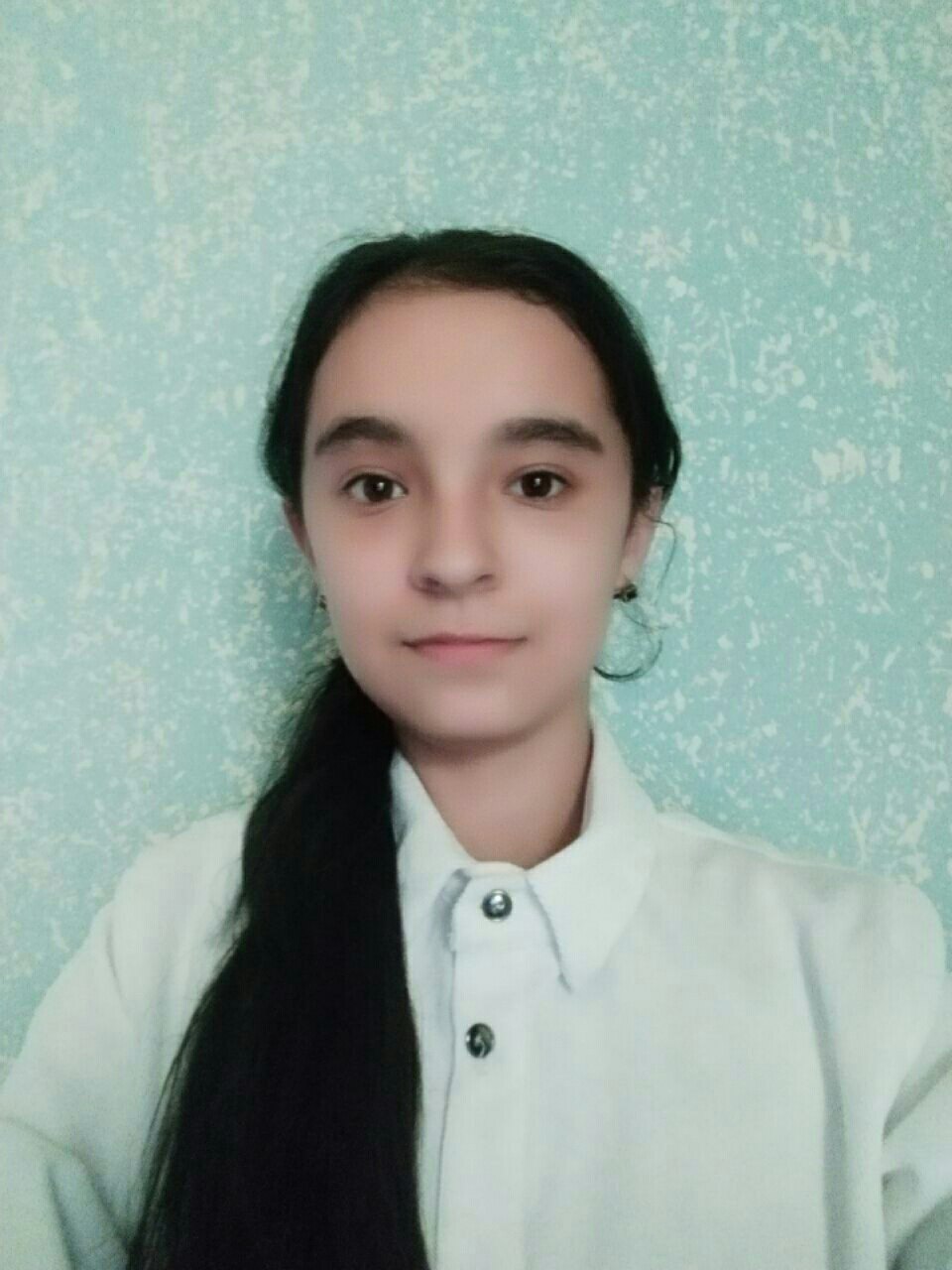
Farkhodova Nodira Ulugbek's daughter was born on November 14, in 2008 Shafirkon district of Bukhara region. She is a student in 9 th grade of 38th Specialized State General Education School of the Shafirkon district public education department. She is a young amateur who is interested in writing poetry. There are more than 30 poems in total. "A person who excels in sports", "My Motherland", "My mother language is my pride and joy" and many other poems were published in newspapers and magazines.  In addition, she took pride of place in several contests.
Today, I returned home to an environment painted with the orchestra of my mother’s screams- half singing, half whimpering. That is another way of saying my father has done it again. She said “ how did your father’s hands which held gifts for me morph into a fist?” That is to say, his fist no longer unravel gifts but spanks. I mean every time I mirror my mother’s face, It still hold a map of my father’s palm prints. And when she sings to the obeisance of my father’s fist, my eyes vies with a cloudy sky. Now I pretend I’m an artist Yet I keep sketching images of a man Letting his anger escape his fist to his wife. That is a shorter way of saying, I barely imagine a peaceful union.
WAVES OF WORDS

Our emotions go so beautifully hand in hand
I am the calm in your heart, like the silent lake
You are the waves of words that bring out the excitement
and every emotion in me.. And you, like a brook that turns
into a river; creating  a strong current inside of me and
causing the beauty from within me to spill out for you
I am the reflection of you like a mirror to your soul
And when I look in your eyes I see me looking back
You walked lightly into the beautiful garden of my life
It was so subtle that I didn't realize that you entered
my deepest dreams.. into the soul of my subconscious
So when I fall asleep, you wait there patiently for me;
Sitting on the shore of my dreams..
causing waves of words that stir the very core of my being.. .❤


**************
Jordan

My Treasure, My Jewel,  With eyes bluer than a tropical pool.
Her heart as big as the sky..
She only knows love which she learned from the One above
and hate has no room in her life.
Her beauty is like no other which she inherited from my daughter; her mother,
and her kindness shines clearly from her smile.
She has crossed borders to other lands, stood side by side helping foreign hands,
and all when she was only a young girl.
She now is grown with a life of her own and no prouder could I be of my Pearl.
With a servant's heart and a teacher's smarts,  and no fear of what lies ahead....  that's my girl. ❤


**************************
 THROUGH ROSY DREAMS

I lay among the blooms in a lush green glen waiting for you
under a blanket of starlight and a smiling moon
The diamond buds bloom beneath the sheer blossoms
As a golden bird sings to you the sweetest song of love
Floating on a silver cloud above me, I call to you
and you swoop down to great me in this sky of blue
You take me where only hope remains and the petals
of the beautiful bloom of the lotus never closes
Life on earth holds little magic for you and I
as the separation of our two hearts continues
to seek only disillusionment through rosy dreams.


*****

Bio:

Kristy Ann Raines is an American poet and author born in Oakland California, In the United States of America.
She is an accomplished international poet and writer.  Kristy has five books which will soon be published.
One anthology with a prominent poet from India, Dr. Prasana Kumar Dalai called, “I Cross my Heart from East to West.”
She has also written two fantasy books entitled, “Rings, Things and Butterfly Wings” and “Princess and The Lion”, a collection of poems in English,” which she intends to use for a book written together with another very prominent poet in Saudi Arabia, which all proceeds will go to charity for children,  and a book of poems, stories and thoughts on her life called, "Her Very Anomalous Life".  Kristy has received many literary awards for her unique style of writing. She also enjoys her work as an Activist and Humanitarian, for the Rohingya People in the refugee camps of Cox's Bazar, whom she has come to love, and also tries to raise money for an orphanage in India.
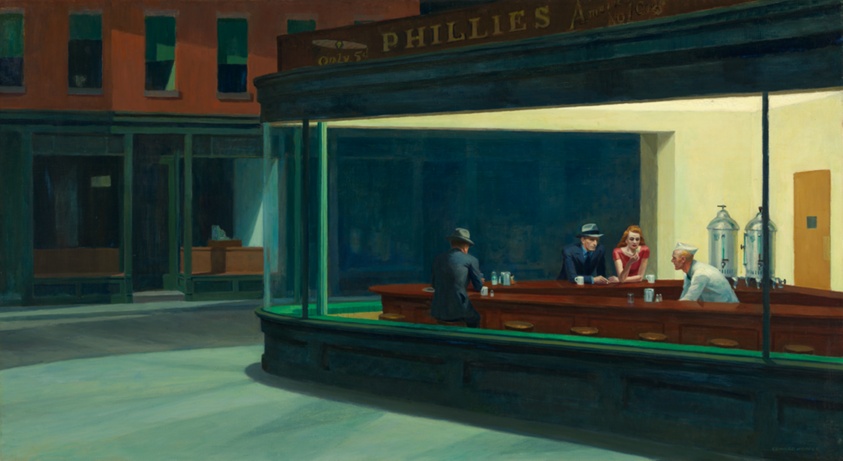
Thirteen Ways of Looking at a Night Hawk

after Nighthawks, by Edward Hopper (USA) 1942

1. Nighthawks: Postcards From Easy Street. A foggy night. Tom Waits choking on the microphone. Eggs and sausage, toast. Warm beer and cold women. Dewana, fading burlesque queen, bumps and grinds through another round of late night jazz. Her husband, in his taxi outside, collects the strays and malcontents and takes them elsewhere, or home, if they have one.

2. May 13, 1942. Mr. Edward Hopper, S. Washington Square, New York. Chicago. Night-Hawks. 3000, less 33 1/3%, 1000. 2000, less photos, 29.00. Check $1971.

3. “The loneliness thing is overdone,” Hopper said himself.

4. Sometime around 1992, stone cold winter, inside McDonald’s, somewhere in New York, waiting to warm. Drifting, in those days, from town to town. A gangly sort, his face a sharpened street corner, slid his tray over, sandwiches and fries. It could have been Ric Ocasek but he said his name was Voltaire. All I had on my mind was running away backwards, homewards, or if my boyfriend would come back for me after whatever business he was up to, but I distracted myself with the little salt packets heaped high in hopes of skinny fries. I was half-starved, but toughed it out by grumbling about the un-green meal I’d been given. Voltaire was unruffled, but he did have a lesson to teach. You chose this place, he said. He picked up the little white envelope and folded it until it broke open and salt snowed over the Formica. Besides, this little packet’s whole purpose is your fries, and in wait of that, to hold the essence of the world... I’d never thought of it that way before, but never thought of it any other way again.

5. On a winter’s night, a traveler: hair full of Jupiter and copper pennies. She’s a long way from Nacogdoches and she can’t sleep. She inspects her nails, lets her new friend in the fedora edge his fingers closer to hers. He seems nice. She nods for more coffee, dreams of rum and grenadine.

6. Another diner, a dime a dozen. A woman is writing a song. Another woman hitches up her stockings, ducks into the dawn and wields her umbrella against the rain.

7. Kaldi’s, New Orleans, Decatur Street, our meeting place. Chicory in heavy pottery. Tourists and trombones and vampires.

8. Nine years after Nighthawks, the ballad of the sad café.

9. Café des Nattes, Sidi Bou Said, artists gathering above the sparkling Tunisian sea for shisha and mint tea for 300 years. For one afternoon I join them, squatting down on the red and green floor mats like I lived there. A German tourist next to me is reading Hesse and on the other side, some young women are arguing amicably about the origin of tajine cookery.

10. 1990. The fleet of puffy shirts and pointy boots line the north window of the all-night Yonge and Carlton Golden Griddle like some kind of pirate wedding party.

11. Night + brilliant interior of cheap restaurant. Bright items: cherry wood counter + tops of surrounding stools … good looking blond boy in white (coat, cap) inside counter. Girl in red blouse, brown hair eating sandwich. Man night hawk (beak) in dark suit… holding cigarette…Sign across top of restaurant, dark—Phillies 5¢ cigar… Note: bit of bright ceiling inside shop against dark of outside street—at edge of stretch of top of window. Descriptive notes for her husband’s work by Jo Hopper

12. Everything Hopper painted was a kind of movie still.

13. A clean well-lighted place, a cafe church, an American prayer.
Lorette C. Luzajic reads, writes, publishes, edits, and teaches small fictions and prose poetry. Her work has been published in hundreds of journals, and translated into Urdu and Spanish. She was selected for Best Small Fictions 2023. She has been nominated several times each for Best Small Fictions, Best Microfictions, Best of the Net, the Pushcart Prize, and Best American Food Writing. She has been shortlisted for Bath Flash Fiction and The Lascaux Review awards. Her collections of small fictions are The Rope Artist, The Neon Rosary, Pretty Time Machine and Winter in June. Lorette is the founding editor of The Ekphrastic Review, a journal of literature inspired by art, running for almost nine years, and the brand new prose poetry journal, The Mackinaw. Lorette is also an award-winning mixed media artist, with collectors in more than 40 countries so far.
Welcome, readers, to a new year! This time, Synchronized Chaos Magazine focuses on time’s passing, whether that represents new growth and fresh possibilities or the sobering reality of grief and loss.
Regular contributor Channie Greenberg has a new book out, Subrogation, which includes many of the images she’s published with us.
Adhamova Laylo Akmaljon urges people, as much as possible, to maintain a positive attitude while Dilfuza Salomova encourages people to take action on their hopes and dreams. Shahnoza Ochildiyeva reflects on her 2023 accomplishments and comes into 2024 with excitement and hope. Elmaya Jabbarova beckons readers to step forward, away from lingering griefs, into the new loves awaiting in the new year.
Ike Boat broadcasts the news of a spectacular dance show and concert in Ghana.
John Edward Culp illustrates people who connect with childlike innocence, finding and then losing and finding each other again. John Mellender shows heartbreak transmogrifying into inspired creative writing and the beauty of platonic friendship between people of different genders.
Duane Vorhees evokes natural beauty and romantic, sensual, and spiritual love in his poetry and Aminova O’g’iloy celebrates the lush floral beauty of a Central Asian spring. Graciela Noemi Villaverde highlights the singular moment of capturing a rainbow at the dawn of the New Year. Sterling Warner arranges symphonic bouquets around themes: waterfalls and rapids, a woman’s silk clothing, astronomy and cosmology.
Munnavar Boltayeva encourages compassion and unity among the world’s people while Maid Corbic details his personal quest for a world of freedom and mercy. Kristy Raines declares her holiday and New Year and perennial wishes for a world of kindness and tolerance. Jerry Langdon crafts a ballad asking Santa to bring him peace and hope as an adult, while in another piece paying tribute to personal heroes.
Diyora Kholmatjonova finds and claims her identity and self-esteem in a world where people can abandon and forget each other, as Jamshidbek Abdujabborov expresses her human insecurities and hopes for the future.
Michael Joseph comments on the journey through life, as our paths narrow and focus as we age and feel the impact of our choices and circumstances.
Noah Berlatsky reflects on how life goes off in its own directions regardless of our plans, while Devin Rogan probes the stories we tell ourselves and each other about our origins and existence. Bill Tope reminds us that physical and emotional attraction will take its own course, regardless of our plans and thoughts.
Christopher Bernard describes ways to subsume our small human consciousnesses into the larger, ever present Cosmos.
Maja Milojkovic writes of her desire to stop time and preserve a moment with her lover.
Ian Copestick suggests that not everyone needs to reminisce about their pasts and some should happily move forward into the future.
Peter Cherches’ vignettes add some whimsy back to our existence and Jim Meirose crafts a fanciful deck of cards with surreal conversations and images.
Isabel Gomes de Diego comments on the passage of time with photos of small children in front of the skeletons of extinct prehistoric animals. Daniel De Culla renders the trip to the Museum of Human Evolution (Burgos, Spain) into poetry.
Daniel De Culla illustrates love and nature in ways that are at once exotic and commonplace, and also remarks on death through a skeleton’s fanciful trip to the dentist. Robert Fleming “reports” on weather conditions in the Rocky Mountains through a set of photographs that bring up thoughts of climate change, chemistry, nature, culture, and humor.
Mark Young creates synthetic “geographies” of fictional lands that carry their own forms of symmetry and intricacy. Stephen Bett creates new metapoetry by riffing off of existing metafiction and postmodern novels. J.T. Whitehead probes and questions our senses of certainty with his poetry, destabilizing our perspectives and opinions, yet returning us to a sense of awe and wonder at the universe, symbolized by a majestic flock of birds.
Mitchel Montagna‘s poems lament the inevitable losses of our world and our lives, while Mukhlisa Safarova laments love’s losses to betrayal and death in lyric poetry. J.J. Campbell captures the chilly monotony of winter suburban loneliness while Sherova Orzigul laments cruelty and social isolation that can begin in childhood, and Zofia Mosur’s poetic speaker hides herself away in grief, taking solace from the moon.
Gabriel Flores Benard writes of life’s impermanence and our overwhelming universe through the metaphor of stellar death.
Henry Bladon probes our own minds’ shiftiness and confusion, sifting through the surreal landscape many find in our interior. John Grey probes the different layers of our existence, the assorted things, people, and experiences who together shape our identities. J.D. Nelson conveys scenes from everyday life and develops a narrative around a person’s developing bond with nature in the form of an old crow.
Faleeha Hassan’s speaker expresses how she is only a normal woman, not as reminiscent of the scriptural figure of Maryam as the people around her seem to hope and believe.
Adolatxon Shermuhammedova looks forward to the time after death when she believes she will be forever free from sin and temptation.
Brian Barbeito’s poetry expresses how “the world is too much with us” and lets us escape into nature, as Skye Preston recollects a visit to their aunt’s home and colorful garden and Gulsevar Khojamova compares the beauty of her country to the colors of the rainbow. Mahbub Alam writes with grace of his tender love for and intimate knowledge of both the winter and spring seasons in his country.
Meanwhile, Azemina Krehic crafts evocative language on how human bodies and minds adjust to darkness.
Blue Chynoweth illustrates the difficulties of being feminine and vulnerable and dealing with society’s insults to the female body and mind.
Mesfakus Salahin grapples with the question of how to be a good man when visiting sex workers where there is clearly an economic and power imbalance.
Z.I. Mahmud explores the role and social position of women in Victorian times through an analysis of novels by Charles Dickens and Charlotte Bronte.
Mykyta Ryzhykh’s pieces highlight the absurdity of wars, especially those waged by the powerful for abstract reasons, as Aituvova Khurshida outlines the need for and ways to purge Uzbekistan’s government of corruption and Akhmadjanova Muslimakhon urges Uzbek leaders to make rooting out bribery a priority on moral, cultural, and pragmatic grounds.
Odina Xonazarova outlines Uzbekistan’s friendly cultural relations with other countries in the region and the importance of embassies and diplomacy.
Manzar Alam renders his hopes for a more peaceful, socially just, and ethically managed nation through the very personal metaphor of a tiny baby. He wants a better future for the small child, whom he sees as uncorrupted.
Ahmad Al-Khatat reflects on the nurturance and comfort people find in each other in a healthy relationship. Stephen Jarrell Williams illuminates the beauty of a romance between people who find unity despite their differences.
Baratov Quvonchbek translates a poem by Rumi that reminds us that true love requires caring action. Annie Johnson crafts multi-layered morning and evening moments of perfect stillness and communion between people in long-term love and with nature.
Wazed Abdullah sends up a simple, heartfelt tribute to his friends, and the importance of friendship.
As a teacher, Sitora Mamatqosimova relates an experience of encouraging and befriending a shy student, while Madina Abdullayeva reminds us of the preciousness of children and encourages compassion for orphans.
Surayyo Xolmurodova describes the mixture of care and guiding discipline she received from her father and Zuhra Ruzmetova reflects on her mother’s constant care and nurturance. Munisa Narzulloyeva finds joy and comfort in the love of her family.
Eva Petropoulou Lianou pays tribute to the mothers of Gaza who are going on with parenting in difficult wartime conditions, in a piece translated into Swahili by Charles Lipanda Mahigwe, a refugee from Congo resettled into Malawi and part of the African Youth Artistic Poetry organization.
Lilian Dipasupil Kunimasa gently encourages people to retain hope, especially at the turn of the year, because one’s circumstances can always change and there is still beauty in the world.
Nasiba Kamalova explores what a person needs to feel happy and suggests that joy comes through contributing to one’s society and achieving one’s goals, rather than just through wealth or comfort.
Behruz Toshtemirov urges Uzbek youth to live up to their ancestors’ ideals, while Lobarxon Bazarbayeva outlines the history and architecture of the Grandfather Sultan Uwais Pilgrimage Complex.
Farrukh Amirov envisions his future literary career reading his own poetry to enthused audiences amidst the world’s despair. Jullayeva Sitora laments the inadequacy of her craft to inscribe the merits of her home country while Shahzoda Imomova reflects on her passion for poetry, developed at a very young age.
Abdunazarova Khushroy celebrates the poetic beauty of the Uzbek language while Lobar sings the praises of Uzbekistan’s centuries of literary heritage and Nigunabonu Amirova highlights the state of the literary, publishing, and journalistic scene in Uzbekistan.
Chexrona Pulatova extols the personal and professional benefits of learning a foreign language, particularly English as a second language. Sarvinoz Mamadaliyeva describes the intellectual growth she experienced through learning another language.
Qurbonova Shakhriyo describes the growing respect and societal support for and professionalization of teaching in Uzbekistan.
Aziza Amonova encourages educational leaders to incorporate and facilitate creativity in the curriculum alongside practical skills, as Shloka Shankar harnesses song lyrics from now and yesteryear to comment on the creative process.
Iroda Bahronova encourages Uzbek children and youth to make their country proud by excelling in academics and sports, while Farkhodova Nodira takes pride in her country’s athletic prowess and urges young people to take up sports and exercise.
Rosiyeva Gulbahor outlines new directions in Uzbek vocational programs while Maftuna Torayeva probes possible new directions for Uzbekistan’s primary school system.
Kadyrova Arofat Abdukarimovna explores the prospects for geothermal energy’s use in central Asia and encourages the development of renewable power. Muslima Najmiddinova points to the possibilities of privatizing oil and gas firms within Uzbekistan’s developing economy. Mashhura Ikromova looks at energy use in heating and cooling buildings and suggests what we have to gain through improved efficiency.
Hilola Hojimamatova explores how to define values in mathematics, and Akmalova Nargiza outlines the mathematical properties of square and triangular numbers.
Omondi Orony’s protagonist describes the complicated relationship he has with his brilliant father, whom he comes to respect over time as he grows.
Maftuna Yusupboyeva reminds us that we can’t expect to be wildly successful every minute of our lives and to achieve things in a moral way even if that takes longer.
This perspective may temper some of our ambitions, but it reflects wisdom and patience that comes through life experience.
We hope you will benefit from the thoughtfulness and insights within this issue.
I am not a person who is easily forgotten

One day I will go, I will go to the sky
The distant sky is calling me.
But you will write my name in your heart
I am not a person who is easy to forget.

I will never leave you alone without disappearing in your dreams
You heart is broken, there is no cure.
But you won't find it, then it's too late
I am not a person who is easy to forget

When those you trust leave you
When your heart is broken by the unfaithful.
You still remember a lot when your heart beats
I am not a person who is easy to forget

One day they will pierce your heart like a blade,
Missing hurts your heart every day.
But it will be late now, I won't be there that day
I am not a person who is easy to forget.

You can't let it go now,
You can't take your eyes off of me.
It's never too late, you can't forget.
I am not a person who is easy to forget