“Kamilah the Miracle Filly,” by Angela Alioto, wins the Courage for Freedom Film Award
San Francisco. The “Courage for Freedom Film Award” has been awarded to Angela Alioto’s film “Kamilah the Miracle Filly” narrated excellently by Joe Mantegna, winner of a Tony Award, multiple Emmy nominations, and honored with a star on the Hollywood Walk of Fame.
The coveted award was presented to Angela Alioto last week by Count Federico di Wardal.
The citation is: “for creating a work of high cinematic value based on saving a life through courage and faith, with unparalleled determination “
Angela Alioto, politician, president of the Knights of St. Francis, and one of the most esteemed lawyers in the United States, has taken actions considered of historic importance for human and civil rights and for peace, upholding the creed of St. Francis of Assisi of universal love, which is the goal of SF founded by the Franciscan missions.
Alioto gave also a strong contribution to San Francisco concerning cinema.
The SF Film Commission is attributed specifically to her legislative initiative as its creator.
But let’s get back to the film “Kamilah, the Miracle Filly”.
It is the true story of the filly Kamilah that doctors had decided to put down, refusing to operate on her legs.
The story captivated California, spread throughout the USA, landing in Europe, where Angela Alioto is known too, and in the rest of the world, via social media.
Through UC Davis, Alioto operated on Kamilah, saving her life, during months of tribulation.
At that point she committed to making the film “Kamilah the miracle filly” selected in 2025 at the LA Tribune IFF, chaired by Moe Rock and Emily Letran and winner at the SF New Concept IFF chaired by Joanna Zhang and at the Vesuvius FF, in Pompeii (Italy) chaired by Giovanna D’Amodio.
Alioto, as well as the Count Federico Wardal, was friend of the film legend Federico Fellini and she always was involving in an international film entourage.
At the same time, Francesco Garibaldi Hibbert, a descendant of the hero of two worlds Giuseppe Garibaldi, and his friend Count Federico di Wardal met in LA last summer and decided to found the “Courage for Freedom Film Award” and “Courage for Freedom” and to create the film “Anita,” with music by Andrea Ceccomori, centered on a touching poem of the highest artistic value by the hero Garibaldi on the agony and death of his young Brazilian wife Anita.
For this, an unusual aspect emerges for a hero: being also a poet and poetry is close to the border with cinema.
Here’s what the coveted award is: The “Courage for Freedom Film Award” is issued by the “National Giuseppe Garibaldi Association” to honor excellence in films that exalt the universal values that inspired the revolutionary Hero of Two Worlds, Giuseppe Garibaldi, in his quest for freedom, equality, and justice for oppressed peoples.
The award immediately became one of the most coveted internationally, supported by institutions for peace, the protection of human rights, the environment, and film festivals with these missions.
Congratulations again to Angela Alioto and a call to everyone to cultivate a profound awareness of inner peace.
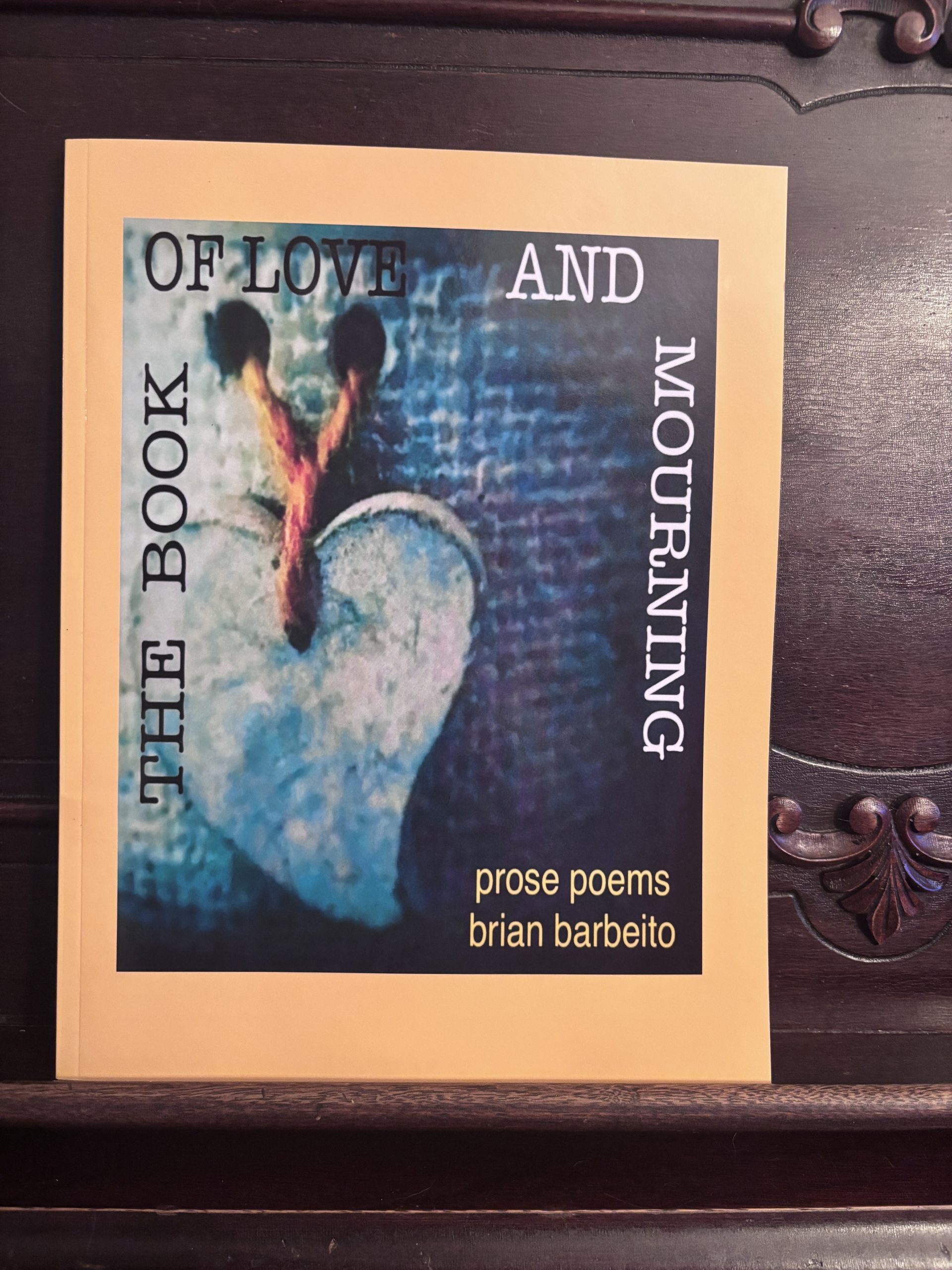
Mini Essay on The Book of Love and Mourning (prose poems and photographs)
87 pages print
105 pages electronic
colour photography
independent
publication, (February 2026)
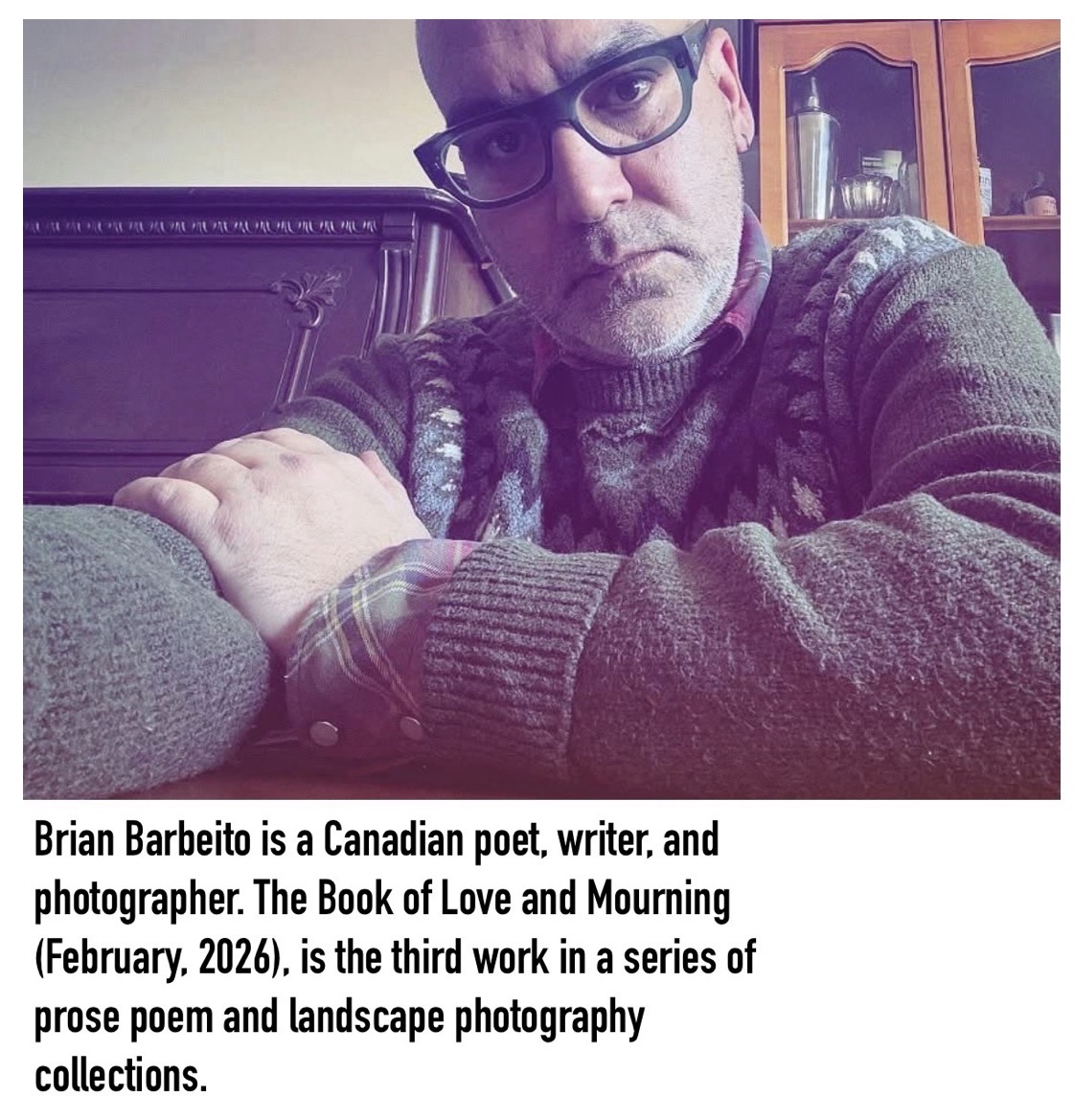
-Brian Barbeito
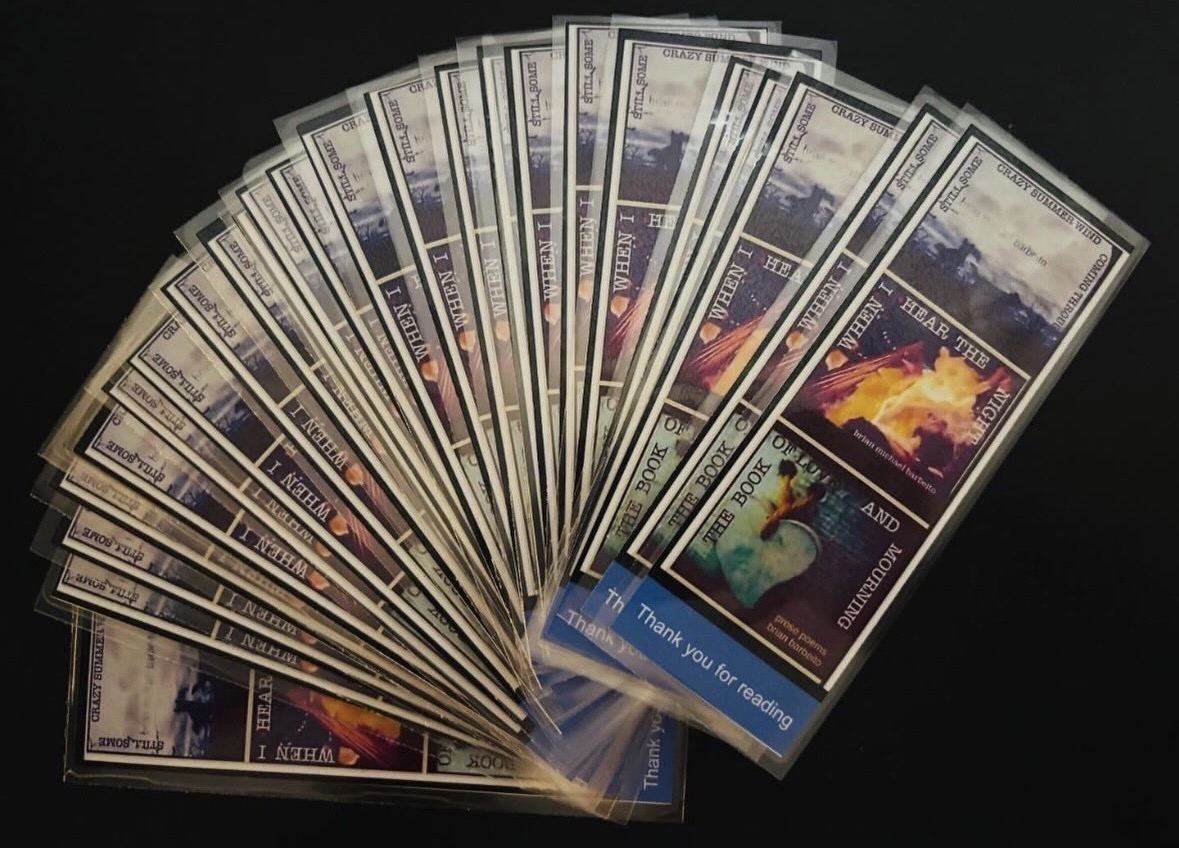
The book is out and a copy arrived. I think it’s well done in content (the writings and photos) and the physical book looks and feels nice. A large softcover work, perfect to go on coffee tables or carry around, not dissimilar to the first two collections, Still Some Crazy Summer Wind Coming Through, and When I Hear the Night. The covers and the yellow of this one are cheerful and upbeat, positive.
Plus, it’s different, interesting, and unique. Inside and the actual book as I said. When I think of it; who needs another book that looks like all other books? There are millions that look so regular. Something different has been done! For instance, there are not nearly as many ‘prose’ poets as there are regular poets in the poetry worlds. Secondly, the poet is the photographer and it’s his work (my work), on the covers and throughout.
Everything about it is original.
If Tara hadn’t put this volume together, though I had written and photographed and compiled the manuscript, I don’t know if I could have. It takes patience and some technical skill and learning. Also, there is a picture of Bear and one of Paws (next to Raquel’s artwork, a painting of dogs on the wall beside Paw’s cat tree in the picture). So, Bear, nearer the start of his life, represents new beginnings, and Paws closer to the end of his life, the last chapter if one will, is seen dignified and independent and is remembered, honoured, immortalized through this photograph. Love and mourning. We love them of course when they are with us, and we mourn their loss.
The book works on several levels. Poetry book. Photography book. Travel companion. Coffee table work. Conversation piece. Honoring the past. Acknowledging the present. And looking to the future…
Zulfiya Isroilova, widely known as Zulfiya, was one of the most respected and loved poets of Uzbekistan. She was born in 1915 in Tashkent, she showed a passion for literature from a young age. Her first poem was published when she was only seventeen years old , marking the beginning of a lifelong dedication to writing. Throughout her life, she not only wrote poetry but also worked as a journalist, editor, and translator. Her contributions left a permanent mark on Uzbek literature and inspired many people.
Zulfiya’s poetry is known for its depth and emotional power. She wrote about love, hope, sorrow, and the struggles of her people, connecting personal feelings with social and historical events. After the early death of her husband, the famous poet Hamid Olimjon, her works became even more expressive and heartfelt. Through her poems, she shared her personal grief and reflected the difficulties faced by society during war and challenging times. Her creativity was not limited to poetry; she also translated works of foreign writers into Uzbek, helping to introduce international literature to her readers.
One of the most remarkable aspects of Zulfiya’s work is her commitment to women’s rights and education. She encouraged young women to express themselves and participate actively in society. Through her poems and journalistic work, she highlighted the value of equality, justice, and moral responsibility. She believed that literature could teach, inspire, and influence positive change in people’s lives. Her efforts earned her prestigious awards, including the title of People’s Poet of Uzbekistan, Hero of Socialist Labor, and international recognition such as the Nilufar Prize.
Zulfiya’s influence continues today. Her poetry remains a source of inspiration for both students and professional writers. She showed that writing is not only an art but also a tool to educate, unite, and heal. Through her legacy, we learn about resilience, compassion, and the importance of cultural heritage. Her life proves that one person’s dedication can leave a lasting impact on society.
In memory of Zulfiya, we honor her creativity, courage, and devotion. Her words continue to live in the hearts of readers, reminding us of the power of literature and the responsibility of artists to inspire others. Zulfiya’s life and work teach that through art, dedication, and empathy, one can make the world a better place. She remains a shining example of how poetry can transcend time, touch lives, and leave an everlasting legacy.
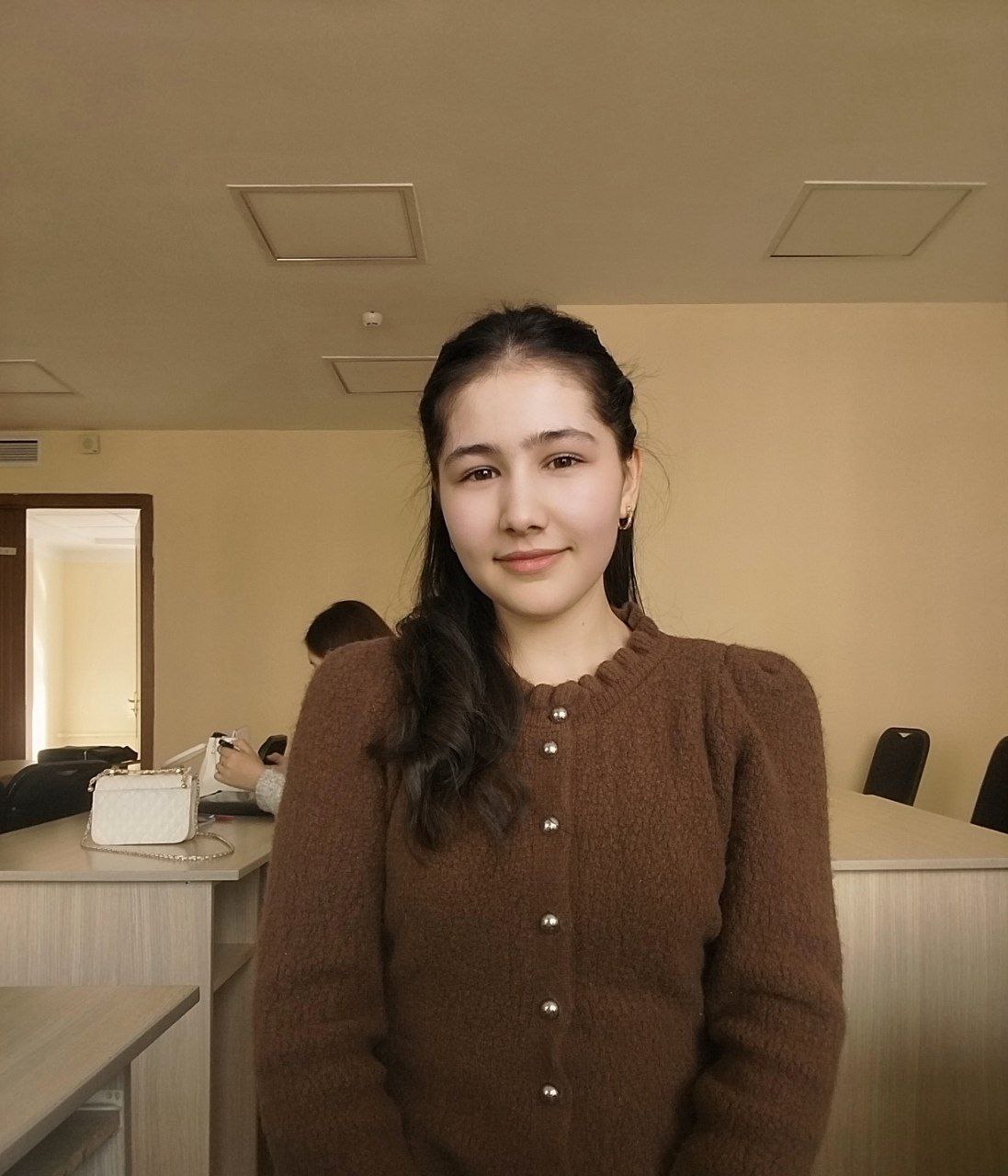
I am Jurayeva Barchinoy Boboqulovna, a second-year student at the University of World Languages in Uzbekistan, majoring in English Philology. I am passionate about poetry, reading, writing, and exploring new ideas. I enjoy creating essays and articles that reflect my thoughts and perspectives on literature, culture, and creative expression.
“My Andijan, which saved my soul there, remained with me…”
(Babur)
Uzbekistan is a Motherland that lives forever in our hearts! O dear country, which has captured the morning shimmer of the sun in your orbits, I feel helpless, no matter how many words I find to describe you. You are a sacred land where stars embrace in your mountains, where the wind writes pages in your steppes, and where the breath of life sparkles in your rivers and lakes! Sun particles smile and scatter across your sky. Every morning your dawn breeze creeps through my soul. These breezes feel as if they carry not just the air, but the living breath of history. You are like a perfect picture drawn for the face of the earth; I feel the breath of tranquility at your every point. You are not the pearl of the East; you are the crown set within its bosom! Thousands of dreams blossom in your every inch of soil, and the birds that fly in your sky sing the song of freedom.
Andijan! The rays of dawn are reflected in your white tunics, the wings of swallows harmonize in your silk belts. You are radiant like a bride whose solar hair is scattered across the sky. You are a miracle that has made both the sun and the stars fall in love with you. You are a mother who bestows hope in the hearts of your children and courage in their gaze.
In the heart of every person is imprinted the bright image of the land where they were born and raised, where they took their first breath. This image is not only a geographical location but a part of the soul, the beginning of destinies, the first foundation of the future. Andijan, in turn, is the lifeblood of blessed Uzbekistan, a living witness to a thousand years of history, the inspirational abode of the great Mirzo Bobur, the land of hardworking and sincere people, the supporting mountain of the nation. The description of this land, where every inch of soil is kneaded with the traces of history, and every drop is moistened by the sweat of a hardworking farmer’s brow, is beyond an epic poem. My chest is full of pride and honor for growing up under the warm sun of Andijan and being raised among its rich culture and generous people. This is not just a fleeting emotion, but a feeling ingrained in my heart and soul, an eternally connected spirit, a dear fortress to me. It is not only the apple of the eye of the Fergana Valley but also a majestic land standing tall as the Eastern gate of the country, a symbol of the harmony of historical heritage and modern development.
The great personality who stamped his seal on Andijan’s glory is undoubtedly Zahiriddin Bobur. The great writer of his time, statesman, and great commander, this world conqueror who founded the Mughal Empire in India, was born in the dignified bosom of this land. Talented poets and poetesses, including Nodira and Muhammad Yusuf, the Venerable Jadid Abdulhamid Chulpan, the world-recognized Shaykh Muhammad Sadiq Muhammad Yusuf, Shaykh Hasan, Husayn Yahyo Abdulmajid, and many other scholars and intellectuals originated precisely from this region.
Andijan is the most invaluable gift nature has bestowed upon the local people. This land, which is one of the most fertile and lush areas of the valley, is deservedly called the “Jewel of the East.” Even the thistle that grows here is a cure for a thousand ailments. The true wealth of the province, I believe, lies in its simple, hardworking, and sincere people. Andijan residents are known for their devotion, sincerity, and hospitality. Their every word and gaze reflect boundless love for the homeland, respect for labor, and gratitude for life. Here, let alone speaking a harsh word to a person seeking refuge, even looking at them coldly is considered a sin. Their tables are always open, and their magical hands are always ready to prepare pilaf.
Their friendly words and unique, sincere dialect are proof of their warm embrace, even for strangers who come from afar. The juicy accent is like a stream rushing through the blood of every Andijan resident. I also speak this dialect, and it always gives me a special warmth and pride.
Andijan people are very emotional individuals who completely immerse themselves in work, friendship, and even sorrow with their entire being. The neighborhood is the center of life in Andijan. The ties of neighborliness here are extremely strong. There are such close neighbors who share fresh bread when baked, and meat from their meal when cooked, that an unaware person might think they were born from the same mother. Their affection, kindness, and generosity are extraordinarily high. Those who are too shy to address each other as “you” are Andijan residents; those who hold weddings for forty days and forty nights are Andijan residents; it is exactly them who have turned unity and community into a core value! In particular, Andijan is a crossroads of cultures, a magical land where the vigor of people whose hearts are as bright as their faces is reflected, a place upon which the Creator’s gaze has fallen.
Today’s Andijan fundamentally differs from yesterday’s. The province is known not only for its cotton fields but also as the powerful heart of modern industry. Moreover, Andijan is considered a center of the sacred religion of Islam, a hearth of science and enlightenment. This region has presented countless talented individuals to society—from scholars and philosophers, famous religious figures to undefeated athletes, sharp-penned poets and writers to Honored People’s Artists of Uzbekistan—all have emerged from this land. In the remote villages of the region, there are still countless women and girls faithful to their “paranji”, accomplished reciters of the Quran, as well as students worthy of various named scholarships and honorary titles, striving intensely in the pursuit of knowledge. This is, of course, a vivid proof that the future of Andijan is bright.
Dilafruz Muhammadjonova was born on January 2, 2007, in Qorghontepa District, Andijan Region, Uzbekistan. She is currently a second-year student at the Faculty of Philology of the Uzbekistan National Pedagogical University named after Nizami, majoring in Uzbek Language and Literature Education.
She is proficient in Uzbek, English, Turkish, and French. She holds national certificates in Mother Tongue and Literature as well as English.
For you, I gave up countless things, So come deserving, my destined one. For you, I kept my soul pure and clean, So keep yourself pure for me, my only one.
Every word within my heart is yours, All my dreams are light that leads to you. I live for you, I long for you, May we meet one day in sacred truth.
Your absence has worn my heart away, I cry your name — where are you now? My waiting eyes are fading day by day, My heart grows tired of asking how.
Even the nights ask of my pain, The stars reflect your gentle face. Each breath repeats your unknown name, Each moment without you leaves a trace.
I watch the roads with endless hope, “Perhaps today you’ll come,” I pray. Waiting for you is my hardest test, But loving you — my brightest fate.
Each dawn I wake with thoughts of you, Each moment dreams your presence near. I place my pain in God’s safe hands, And let my patience conquer fear.
Come blessed like my midnight prayer, Come beautiful like dawn’s first light. Even if late, just come, my love — My heart still waits through darkest night.
But come unwavering, faithful, true, Unchanged by time or passing years. For you, I’ll wait as long as fate allows, Yet come sincere, without fears.
Come loyal, never to be replaced, My lifetime’s lawful, destined part. For you, I’ll wait till endless days, O come, my soulmate, to my heart.
Methods of forming knowledge about the concept of “Text” in primary school students
Abdulla Qodiriy Jizzakh State Pedagogical University
Faculty of Preschool and Primary Education
Primary Education
Student of the 1st year, group 811-25
Rajabova Nozima
rajabovanozima635@gmail.com
0009 0000 6161 2148
Annotatsiya:Mazkur maqolada boshlangʻich sinf oʻquvchilarida “Matn” tushunchasi haqida bilimlarni shakllantirish hamda darsni tashkil etish usullari yoritiladi. Maqolaning asosiy maqsadi boʻlajak pedagoglar va oʻqituvchilar uchun boshlangʻich sinflarda “Ona tili” fanini qanday oʻtish toʻgʻrisidagi qarashlarni bayon etishdan iborat. Shu bilan bir qatorda, 1-sinf oʻquvchilarining “Matn” mavzusini tushunishi va chuqur oʻzlashtirishi uchun maxsus metodik tavsiyalar beriladi. Bolalarning dars mashgʻulotlarida zerikib qolmasliklari uchun turli metodlardan foydalanish usullari haqida fikr-mulohazalar keltiriladi.
Kalit soʻzlar: Matn, pedagog, tadqiqot, fikr-mulohaza, metodik tavsiyalar, dars mashgʻulotlari, oʻqituvchi, boshlangʻich sinf oʻquvchilari.
Аннотация:В данной статье рассматриваются методы формирования знаний о понятии «Текст» у учащихся начальной школы, а также способы организации урока. Основная цель статьи — раскрыть взгляды будущих педагогов и учителей на преподавание предмета «Родной язык» в начальной школе, а также дать специальные методические рекомендации для учащихся 1-го класса по пониманию и глубокому усвоению темы «Текст». Приводятся мнения о применении различных методик, чтобы дети не скучали на уроках.
Abstract:This article discusses methods of forming knowledge about the concept of “Text” in primary school students and ways to organize the lesson. The main purpose of the article is to clarify the views of future educators and teachers on how to teach the subject “Mother Tongue” in primary school, as well as to provide special methodological recommendations for 1st grade students to understand and deeply master the topic “Text.” Opinions are given on the use of various methods so that children do not get bored during lessons.
It is no secret that we have been surprising other countries with our science for centuries. Each era has had its own scientists and philosophers, who left behind disciples and passed on their knowledge to us. It is no exaggeration to say that one of the most pressing issues today is obtaining knowledge, learning professions and teaching them to young people, continuing the tradition of teacher-student relationships.
Our esteemed head of state also noted, not without reason, that “we have set ourselves the great goal of laying the foundation of the Third Renaissance in our country, and for this we must create an environment and conditions that will nurture new Khorezmians, Berunis, Ibn Sina, Ulugbeks, Navoiys, and Baburs.”
Of course, a number of reforms are being implemented in our country in this regard. The main goal of us, educators, is to prepare the necessary personnel for the future generation. In this article, we will outline our recommendations for forming the concept of “Text” in primary school students and gaining in-depth knowledge of this topic.
Review of used literature
It is important for each growing young generation to be able to speak their own language fluently. Therefore, for the good development of speech in children, “Text” and working with it are taught from the 1st grade. In this regard, D. Sh. Yuldasheva’s 1st grade “Mother Language” (Part 1) textbook is an important source for providing students with in-depth knowledge. This textbook provides a number of exercises, and each task encourages the student to think independently. The short and clear rules in the textbook create a basis for children to master the topic without difficulty.
For example, the definition, “A text is made up of sentences. Two or more sentences connected by content are called a text,” forms an initial idea of the text. The brevity and consistency of the rule serve as a foundation for the topics that will be covered later.
In order to educate students, the 2nd grade textbook “Mother Language” by K. Qosimova, S. Fuzailov, and A. Ne’matova, published in 2018, is also being used. This textbook defines a text as follows: “A text is two or more sentences that are interconnected in content. A title can be given to the text.”
The above textbooks are used to teach children today. We will also share our thoughts on how to organize a lesson using these textbooks.
Research methodology
In the 2023 edition of the “Mother Language” textbook, there are several tasks given in accordance with the topic “Text”, and we prepare the way for students to explain the topic by completing these tasks. For example, in exercise 1 of this textbook, a text is given and it is stated that it should be given a suitable title. We, as educators, should not just complete this exercise, but approach this situation creatively. While reading the text, we are also required to directly enter the role and use various pictures to develop imagination in the minds of children. After all, children’s attention is considered to be fast-moving, and they do not pay attention to simple things. Pictures and videos, exhibition materials help increase the creative potential of students. We conducted such a study among students. The main purpose of this study was to determine which way is more effective for students to explain the text. Two parallel classes, 1st “A” and 1st “B”, were given a text on the topic “Wild Forest”. 1st “A” class was shown pictures of various wild animals and had them act out the characters. 1st “B” class was given a simple text.
Results
After a day, each child was asked about their thoughts in order to determine how the text was formed in the students’ memory and imagination. The results of the study showed that students of grade 1 “B” did not fully understand the text, and their understanding of wild animals was not sufficiently formed in their minds. 60-70 percent of students could not remember the text. Students of grade 1 “A” showed excellent results. All children had formed understandings of the text and were able to describe each animal.
Analysis
Our conclusions from the study are as follows:
—It is necessary to organize the lesson without monotony in providing knowledge to students. After all, today’s youth are curious and get bored very quickly.
—During the lesson, it is necessary to effectively use various methods, including video and picture materials. Children’s attention is quickly shifting and often shifts from one thing to another.
—When working with a story or text, if the text is read while entering the images, the expected results will be achieved faster.
Whether we have acquired new knowledge or learned something new, we are not considered to have fully mastered this knowledge until we try it in practice. When we put it into practice, we become one of those who have benefited from this knowledge. Therefore, we should not demand this knowledge from our students without ensuring that they do so in practice. From this perspective, it is appropriate for the teacher to give the children the task of writing a short text about family members.
The text plays an important role in shaping the worldview of students. Each text provides information about an instructive event or about something and an event. It is considered very useful for children who do not have an understanding of this at first. At the same time, the student’s speech becomes fluent. The vocabulary of the Uzbek language increases. Therefore, organizing a lesson using instructive stories and interesting facts in the lesson is an important factor in improving the teacher’s pedagogical skills. During work with students, the teacher should not only impart knowledge, but also develop the skills to apply them in practice. One such exercise is to clarify the extent to which children have mastered the text, requiring each student to sequentially recite information about this text.
During the organization of the lesson, we may encounter a number of problems. In particular, children may not fully understand the given text. The reason for this is the abundance of scientific terms in the text, the essence of the topic is not fully disclosed. When we encounter similar problematic situations, we should try to explain to children in a simpler way. Only then will we be able to achieve the expected result.
Conclusion
The world is developing rapidly. In order to take our place on the world stage, we must constantly seek and learn. Realizing that our future is in the hands of young people, we cannot be indifferent to their education and upbringing. The role of teachers in this path is extremely important. In our article, we have given useful recommendations for teachers. In this article, we have given our opinions on the formation of the concept of “Text” among primary school teachers. Through research, we have analyzed which path is correct. We have studied in detail what the main goal of teaching text is.
2. K. Qosimov, S. Fuzailov, A. Ne’matova “Ona tili” ( 2-sinf darslik -Toshkent: “Cho’lpon nomidagi nashriyot-manbaa ijodiy uyi” , 2018.)
3. “ O’zbekiston Respublikasi Prezidenti Shavkat Mirziyoyevning Oliy Majlisga murojaatnomasi” ( Toshkent: “O’zbekiston nashriyoti” , 2021.- 72 b.”)
4. Muzaffarova Sitora Hamid qizi, “BOSHLANG’ICH SINF O’QISH DARSLARIDA O’QUVCHILARINI BADIIY MATN USTIDA ISHLASHGA O’RGATISHNING ASOSIY MASALALARI” maqola (https://econferencezone.org/index.php/ecz/article/download/1586/1461/1629).
5. Begimqulova Manzura Kadirovna, “BOSHLANG’ICH SINF O‘QUVCHILARIDA MUSTAQIL MATN YARATISH KO‘NIKMALARINI SHAKLLANTIRISH – TIL TA’LIMINING BOSH VAZIFASI”maqola https://zenodo.org/records/7954845/files/Begimqulova%20M%2025-28.pdf?download=1)
6. Nosirova Mashxura Husniddin qiz, “BOSHLANG’ICH SINF O’QUVCHILARIDA MATN BILAN ISHLASH KO’NIKMALARINI SHAKLLANTIRISH” maqola (https://econferences.ru/index.php/tafps/article/download/34932/18118/18456).
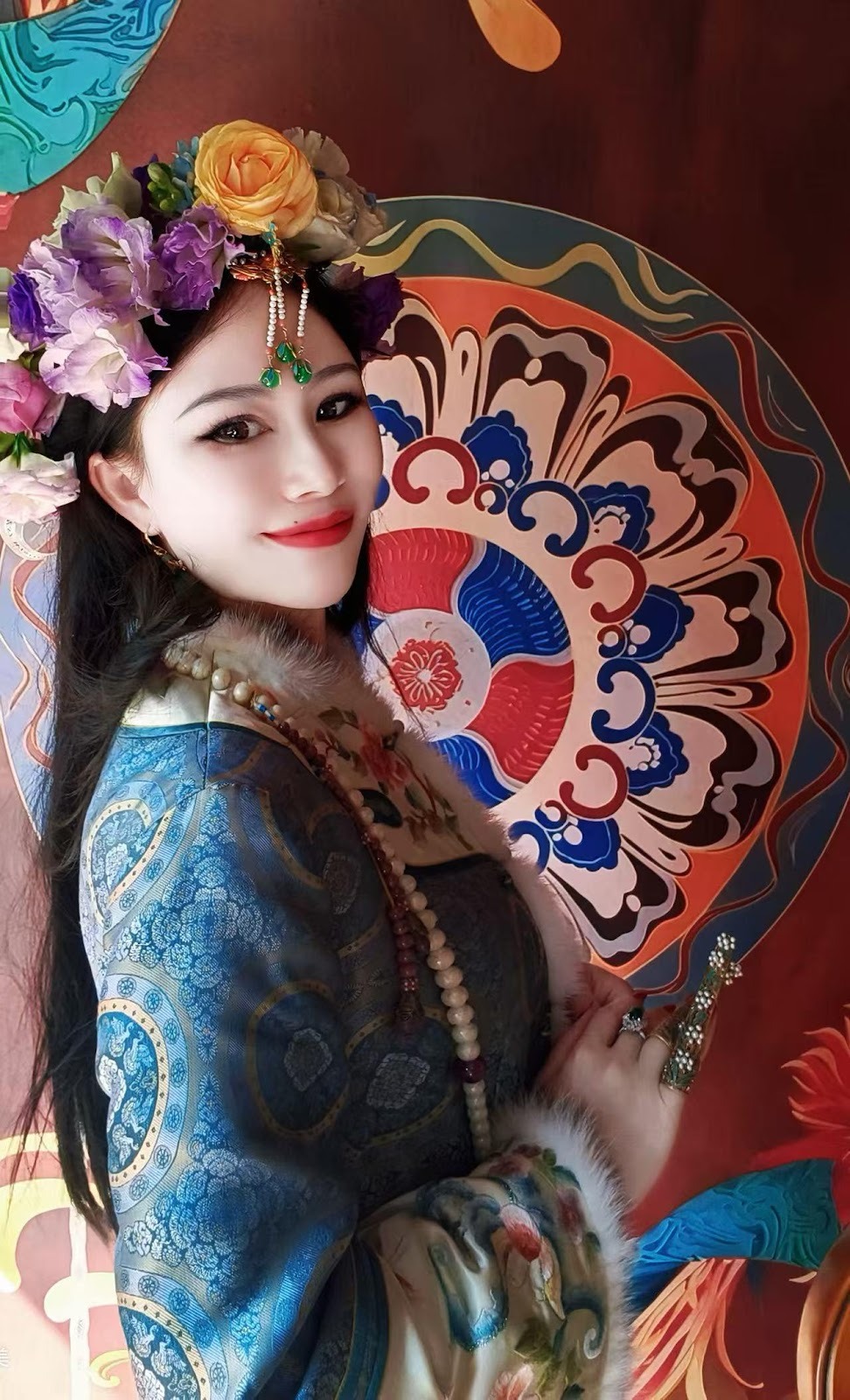
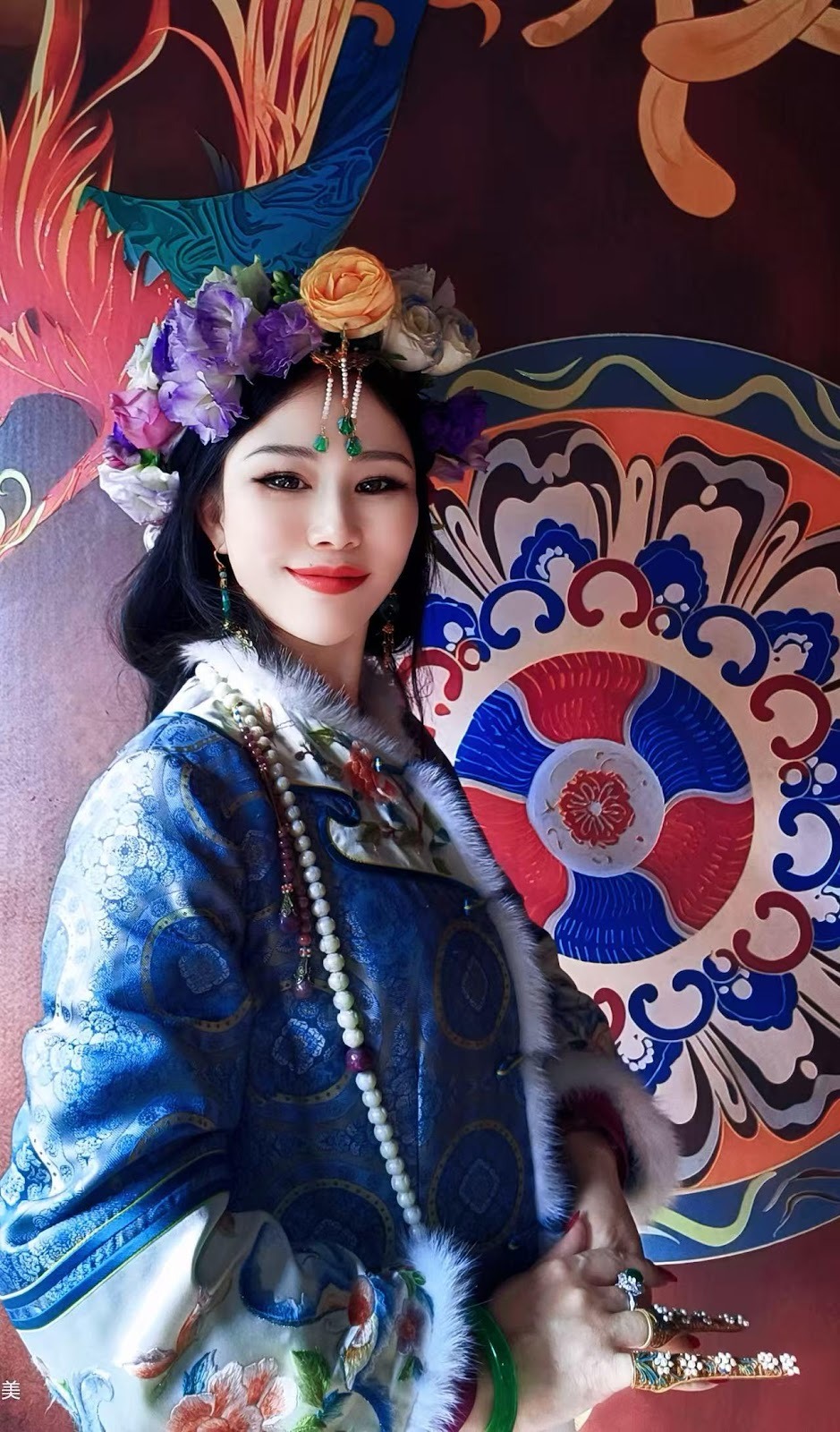
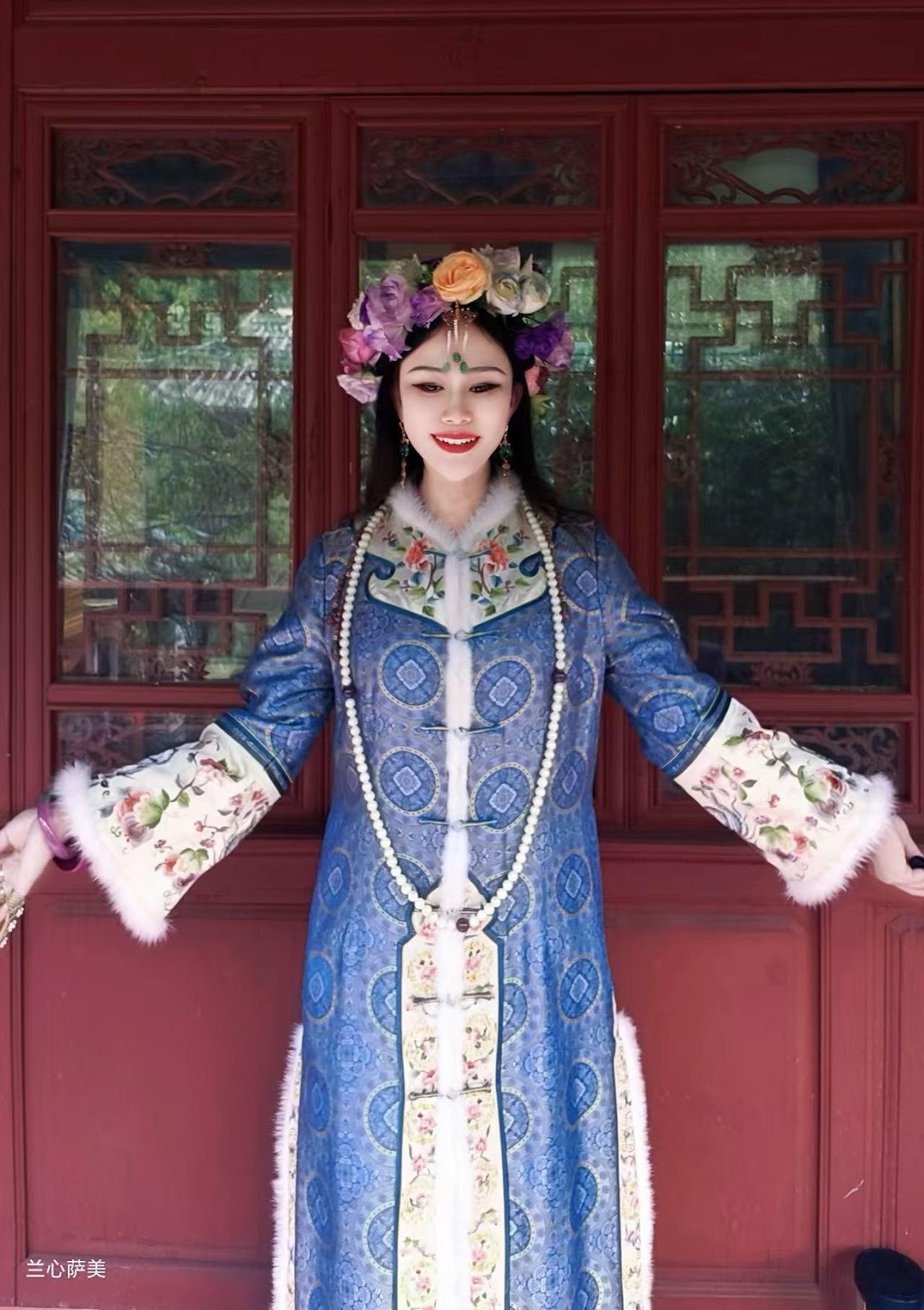
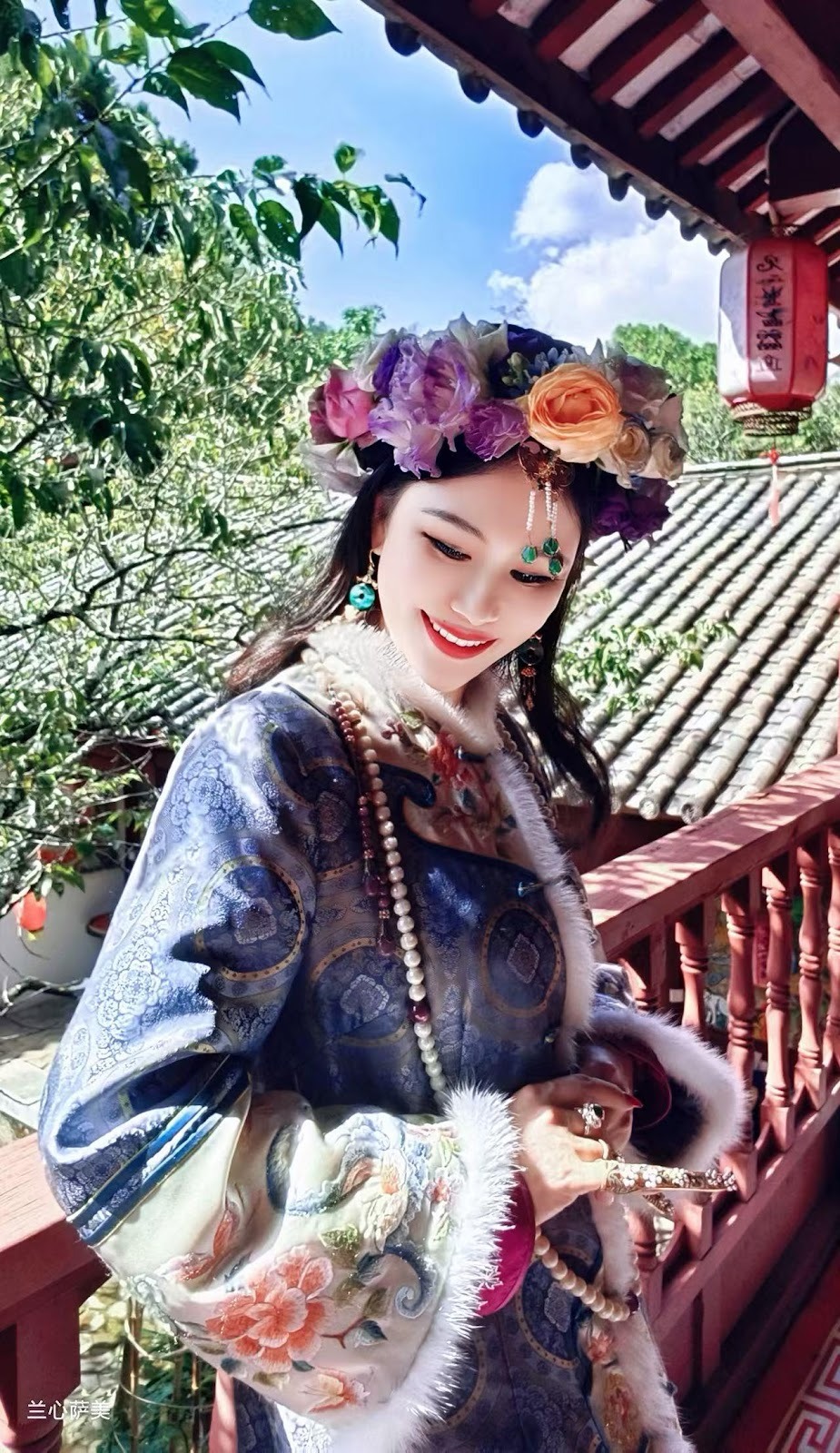
Internationally acclaimed bilingual writer, poet and translator, member of the Chinese Writers Association. The only female inheritor of UNESCO-listed Dongba Culture, International Disseminator of Dongba Culture and practitioner of Chinese culture’s global outreach. Winner of the Italian Francesco Giampietri International Literary Award, President of Lanxin Samei Academy and Dean of Yulong Wenbi Dongba Culture Academy.
Back to this place, on the eve of the Year of the Horse
This homeland where I once lived for years
Harbored the first bud of dreams, wrapped in the warmth of attachment
Also bore the twists of fate, and the unspoken journeys of the past
Old friends have all left for their homes, the streets still familiar
I go alone for a meal, to the small shop with childhood tastes
Light clinks of bowls and chopsticks, no one by my side
No more the warm eyes I long to see
No need to force a smile, no need to echo polite greetings
Quiet thoughts run deep in my heart, only shared with myself
Filter out the false noise and entanglements of the world
This dinner is the peace of being alone, the loneliness of standing on a height
The higher you fly, the farther from the mortal world
Few appreciate the high melody, and truly understanding souls grow fewer
The wind of the higher dimension brushes my shoulders above the nine heavens
Why linger on the trivial chirps of mortal birds on the ground
Like a phoenix spreading its wings, soaring above the sea of clouds
Why pause the forward resolve for the trivialities of mortal dust
This dinner tastes the warmth and cold of human relationships
I see the world clearly, and hear the true answer of my heart
This is a dinner of pride, a calm of rising steadily
A quiet joy held fast, after seeing through the world
Let go of the bonds of the past, head for the distant mountains and seas
A dinner alone is also a completeness of one’s own
Homeland has no bounds; where the heart is at peace is home
When the heart holds the world’s mountains and rivers, every place is a blooming homeland
Blood ties are not the only way home; warmth can bloom even among strangers
Where someone understands you, cherishes you, and keeps you in their heart
That is the best haven in the world
Mountains and seas can all be crossed; a heart bond knows no distance
Even across thousands of rivers and miles, never met before
When souls know each other, we are close at hand
With love as the boundary, with the heart as the soil
The whole world is homeland, and there is the light of understanding souls everywhere on earth