Crab Nebula

a tenuous spoon bent into black
whirlpool joy at a trillion volts

orange whispers out
just touching the void
thankful for unencumbered elements

what's it like to spin thirty times a second?
do you get dizzy?
what would Lao Tzu have to say about you?

rings form, concentric
trying to hide the numbing density
you've thought about slowing down
taking a look around the neighborhood
but that's best left to the wear and tear guys
or the wishes of the slide rule

you lost some of your shine over the last
millennium
but heat and beat
they're all yours

acorn sermon

live with the acorn sermon
that sits for a long time in the stubble fields
that seems boring
until it razors home

greet the duck as a distinguished guest
quacking tales from hither and yon
he knows both North and South
and his wife can tell East and West

words dangle on cool air come fall
they sprinkle the ground
racing again in spring
then everybody talks summer
and sun waits for blossoms to sweeten the life

history of my body

Right index finger:  Carbon created in a supernova in the Sculptor
Supercluster 8 billion years ago, travelled to Earth via
Sculptor Void
Left knee:  bone atoms from a Blue Giant in Leo Supercluster 6.8 billion years ago
White blood cells:  material from Fornax cluster, type 1a nova over 5.5 billion years previous
Hair: spun from a molecular cloud in the Andromeda galaxy, carried to Earth via a comet 3.7 billion years ago
Eye:  a rain of organic material from the small Magellanic cloud, 4.5 billion years travel time
All other parts from unidentified parts of the Universe.  Estimated travel time:  5-10 billion years

Aldo Leopold

at a pure stone table
I write in a way cognizant of bumps, ridges and purple flowers
Coolness in the wind seeks out its own kind of day dream
the peculiar symphony of trees holds a memory of seed, the last rainfall and buttercup sky
curved pathways lead who knows where?
Overhead a small plane plies cloud, but the labyrinth branches ground eyes and birds soar sound.
Mary E. Croy lives in Madison, Wisconsin where she works as an administrative assistant. She spent nine years teaching English Language Learners in Ha Noi, Viet Nam. During her free time, Mary likes reading poetry and hanging out with her cats, Buster and Gabby. Her work has appeared in Better than Starbucks, Woven Tale Press, and Valley Voices, among others.
Moon Meets the Sun

I remember when I first saw you, your shining face smiling at me from afar

Said the moon.


You are so bright, so golden and sweet

I can almost taste your laughter

how it fills the holes of my heart with joy

Said the moon.


I  know I hide in the shadows

I am shyer, only showing my face once in a while

but when I look at you, I light up

You make the darkness go away

as you smile

and fill the space around me with warmth

Turning my world

into the perfect place

Said the moon.
One cold, sad and sunny morning, I was walking my grandson along the Paseo de la Isla, in Burgos, when, suddenly, I had a horrible urge to urinate, remembering that my family doctor, in his day, already told me that: “every individual who has undergone prostate surgery, the cold makes him urinate a hundred times.”
The itch to urinate caught me next to the “Punto de Lectura” (Reading Point) booth; leaving my grandson in his car right next to the side of the booth, urinating where no one could see me.
While I was urinating, while I was ecstatic in the piss as if I were contemplating a masterpiece by Velázquez, Goya or “El Greco”; suddenly, an old and ugly lady appeared to me like a “Menina” by Velázquez, who told me:
– Hello, friend: have you lost the horn, because I only see a skin? I thought we could have rented the booth for both of us!
It’s been a few days since I’ve seen you coming to this place to urinate, but I never thought you’d have a penis smaller than my husband’s when, at the funeral house, they embalmed him to take him to bury.
-Ma’am, I replied, from the scare that you have given me, I have saved “the skin” as you say, before finishing, and with the zipper of my fly I have caught it.
Don’t even dream that here, in this booth, we’re going to ride. Zambomba!
“Whoa!” she replied. What annoyance I have taken to see myself represented, seeing you, in the “Burial of the Count of Orgaz”from “El Greco”.
Her copulative conjunction is minuscule, master!
– But, ma’am, I answered, I don’t ask that they give me a rabbit, but money. You are similar to the grandmother of Little Red Hood, when she told the wolf that she was, when she said no; and this one, instead of fucking her, ate her.
Unintentionally, a fart escaped me, telling to the lady:
-There goes, Menina, the service and the tip. Bye¡
I took the car with my grandson, marching towards the Castilian and Leonese Language Institute, listening to the lady yelling at me:
– What a blow you have given me when you peered, scoundrel!
Instantly I saw a crowd approaching; a brave man came out from among them and shouted:
– Bravo! Olé! The task that you have done to the lady is reckless. You could have given her a spanking!
Living in dreams

The dead do not die
When you expect them to. They live on,
Ghosts trapped
 In the minds of those, who loved them, feared them.

The living don’t live
When you expect them to. They exist
In the trudge of reality,
Living in their dreams.
Dying in their lives.

Ghosts live in the dreams of others
Family friends and lovers.
And the living live in their own dreams
With lovers friends and family,
With strangers exotic places a hopeful future,
With the past of their mundane world.

The dead don't die,
The living don't live
Because of dreams.


Unusual places I have been

Each with their own moment
 salted into the web of my memory
A tenuous painted contrail
A trail traveled many places
The smell of a place evoking

It is the one stool ramen stall
next to a small westernized Chinese hotel In Wuhan
It is fool's gold sparkling on a dreary day
 in the cold rocky shallows of Donner Lake in California
It is the dry smell of a late summer day
at the hot train station in Havre  Montana
Each a unique serendipitous memory, each a thread
One of many woven
to be clutched in the hands of Lachesis
Measured and imbued by a fate
An unintended interesting life.
Write a note on the functions of the chorus in Sophocles’ Antigone.
Or
How does Sophocles use the chorus in Antigone ? Do you think it represents his own point of view?
M.H. Abrams denotes chorus as a group of dancers, persona wearing masquerades, who sang songs and chanted verses, performing dancelike maneuvers at religious festivals. Sophocles has implemented the choral character and chorus to enchant, enlighten, enliven, enthrall and entertain the spectator of audience through commentaries and lyrical relief. Instances of dramatic actions and scenes wherein the chorus express traditional, moral, religious, ethical and social attitudes is revealed in the tragic drama Antigone. In this case, chorus functions in eulogizing lamentations of the cathartic plight of Creon associated to the tragic fate of his transgressions of heavenly laws. Or grieving maddening love of Haemon for Creon
The universality of the chorus survives in musical comedies and operas alike and tragic drama Antigone engrossed with the chorus in choral interludes as in the heart wrenching emotions arousal by the song of the chorus recalling the curse befall on the House of Labdacus. King Oedipus, King Creon and the progeny of royal clan are haunted by the grime murder and bloodshed. Furthermore terrible sufferings undergone by Danae, Lycurgus and Cleopatra resonate in contrast to Antigone’s awful suffering. During the Elizabethan age the Chorus was also applied to a single character who spoke the prologue and epilogue to a play, and sometimes introduced each act as well. The choral character served as the author’s vehicle for commentary on the play as well as or exposition of its subject, time, and setting, and the description of events happening offstage; ironic perspective of Chorus imitates invocation of Dionysus after Tiresias’ prophecy which can be starkly contrasted with the erelong justification of Creon’s edict; defiance to the divine laws or denial of Polynices’ corpse burial.
Chorus of Theban council consisting of elderly citizenry laments te grimacing grime of the royal legacy whose generations are preys to ruination. They are ruined throughout their race like ‘mounting tide’ and later ‘rolling dark heaves of sand as proclaimed by the chorus as reechoed and resonated in these lines as soon as Creon sentences Antigone to death and ironically absolutizes politicization of death.
Chorus:
“The ruin will never cease, cresting on and on
from one generation on throughout the race—
like a great mounting tide
driven on by savage northern gales,
surging over the dead black’ depths
rolling up from the bottom dark heaves of sand” [pg no. 91 lines 660-665]
“To combine, to harmonize, to deepen for the spectators the feelings excited in him by the sight of what has been passing on the stage— that is the one grand effect produced by the Chorus in Greek Tragedy.”
Bibliography and Further Reading
M.H. Abrams A Glossary of Literary Terms 7th Edition 1999.
Is the central figure in the tragedy not Antigone, but Creon? Discuss.
Or
Between Creon and Antigone who is the real tragic figure? Justify your answer.
Or
Describe and discuss Aristotelian tragic hero Creon and the protagonist Antigone with reference to textual evidence and critical evaluation.
Creon and Antigone are evidently manifestations of avowal to political sovereignty and commitment to fraternity of kinship respectively. These archetypal characters or dramatis personae are of Sophocles’ classical masterpiece Antigone. In the tragic drama Aristotelian hamartia invokes a provocative evocation through the fatal flaw of Creon’s defiance and transgressions to the divine laws of Heaven due to utmost denial of deceased Polyneices’ burial. And as far as hubris is concerned, readers and critics alike surely cast a probe to trace the superciliousness and haughtiness in the feminine figure of Antigone. Textual evidence and excerpted quotable illustration should be cited to be befitting; “I will bury him myself. And even if I die in the act, that death will be a glory. I will die with the one I love and loved by him—- an outrage sacred to the Gods!” (pg no. 63 lines 85-88) Antigone’s arrogance and vanity can be impersonating glorifying martyrdom as an eternal seeker of truth and justice. Antigone’s fate truly arouses in us feelings of pity, fear, awe and admiration which a tragic character is expected to arouse.
Although Creon embodies the epitome of loyal patriotism and welfare of polity nevertheless, this overindulgence with conscientiousness springs up arbitrariness, callousness, narrow-mindedness and obstinacy. On the contrary, Antigone is a damsel of family bonding, who exhibits the essence of humanity through advocacy of the claim of funerary rites of her dearest sibling Polynices. Creon establishes a hegemonic and patriarchal monarchy through defiance of unalterable and inevitable laws of divination. Despite being a secular believer, Creon’s utmost denial of granting funerary burial is the tragic flaw which delineates the peripetia or the reversal of fortune as the ominous foreboding misapprehensions prophesied by Tiresias, the disavowal and premonition of the enactment of the choral character, the rebellious spirit of Haemon and his stabbing of himself and finally suicide of Eurydice. Being neither villainous nor daredevil, either crafty or spiteful except viewing the world in a different light is the characteristic trait that Creon manifests within himself. In concluding Antigone symbolizes familial kith and kin brethrenship and adoration of cherishing fraternity whilst Creon symbolizes absolutization of polity through championing legendary statesmanship in his politicization of royal monarchy.
Write a note on the character of Haemon in Sophocles’ tragedy Antigone.
Creon’s heir, Haemon, is a main character emboldened with romantic engrossment with soon to be bride Antigone. Haemon is a personae of sacrificial romance for love of sweetheart maiden Antigone, who forsakes her living life in the ardor of life-in-death situation within the tombed rocky cavern. Creon is heroic in lambasting the royal decree of the injunction ordained by his father, Theban monarch, Creon. Disdaining the imprudence and absurdity of hegemonistic Creon, Haemon, the interlocutor, remonstrates “the city mourns” of the idealized fiance, Antigone. Furthermore, such a ‘brutal death’ for such a ‘glorious action’ arouses the tenderhearted Haemon in pity and admiration for his soon to be wife and thereby lectures Creon to the pathway of contemplation reawakening conscientiousness or prudent judgment.
Truly Haemon is in fact, maddened by the romantic love for the girl she idolizes and this is reflected as he exposes Creon’s vicious follies to peril Antigone at the enterprise of misfortune misery and injudicious entombed death. In this anticipation, ignominy of Creon, faces the harshest grumbling of Haemon, who scowls him to be a monarch of a desert island. This is manifested evidently in these crystal clear bold statement which delineates that he could stake life even soaring cliffs in justification of Antigone’s glory:
“She deserves a glowing crown of gold” and “What a splendid king you’d make of a desert island—
you and you alone.” [pg no. 97 and lines 826-827]
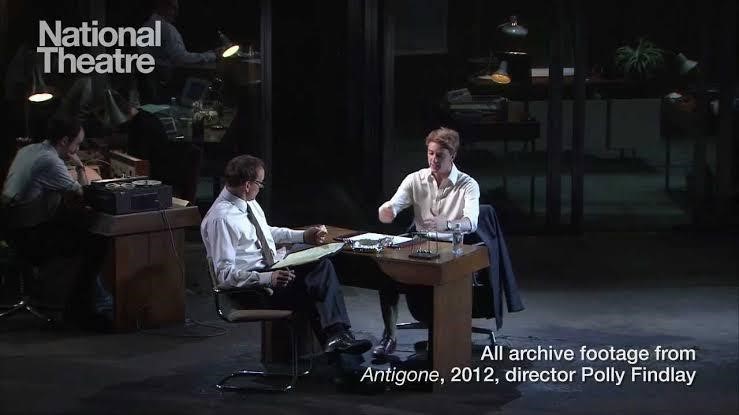
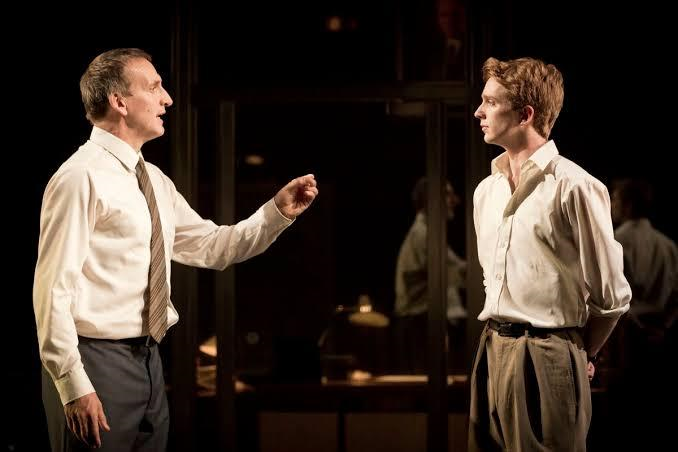
“Haemon is sort of between his father, Theban monarch, Creon and his betrothed lover and soon to be wife, Antigone, fighting to stay on both of their favors…” Luke Neberry the cast of National Theatre Antigone’s Production: Antigone and Haemon observations as the role of Haemon. Haemon is intensely desperate to be driven by the aura of passion and this is heightened by the obvious action in embracing death hood in togetherness with Antigone.
Merry Christmas (ii)

It’s been a long time coming!
A once-in-a-year event nearing
I’ve been getting ready for yuletide
Taking every circumstance in great stride
It’s about me making plans for the following year
Working hard so that New Year’s Resolution won’t be at the rear
I have to live with the moment as I press on
Positioning me in the light of thorough reflection is the impression
It’s about savoring the festive period
Caring about my neighbors is the watch word
I have to celebrate with people en masse
To wish them a fruitful Merry Christmas!