
Pearls in heaven

I see several micro flashlights blinking into deep space and it seems lots of smoothing sands sparkling on waves of frequencies, mysterious rounded sounds, surveillance eyes granted human hyper sight over postponed realities in many layers, caves, boost grooves, upper rings around planets with their own moons, walkers space, ravish cannon of lights, swimmers on whirlpool galaxy. A full high brain resolution of ourselves drifted away on a big translucid mirror pointed to the past sending images to right now by a minimalistic painter over the sea of darkness, and I wonder: is the universe outside an unlimited dream where I have always slept; my unconscious existence?
But, I have found music, the divine language. This ocean of coincidences converges in a single singularity where immaterial energy emerges in chains of luminosities, spiral shades pointed everywhere, in the compass of unheard voices; there are glimmered rocks in a chord field that are crossing through spectral layers, flaming spaces. At end of billions of worlds, it will be revealed one more unknown path that is moving to its core, another drawing, a piece of a child’s imagination. The stars could collide into rivers which flow to be blossoms, our inner streaming, parallel beats, curling grooves; maybe a new blackhole swallowing matter and creating outer lands for living with carbon, oxygen-hydrogen, any system breathe based, new sounds and drums;  another nano-telescope moved by gravity, seeking for meaning, destiny machine stimulation engraved into a simulated human journey. What is hidden in a covered nebulosity? Words must feed worlds, Which strongest beauty silence before everything. We named this frontier skyline, cause the sunset has a moment of shyness where the sun brights at the edge of Earth. In this milk way lay down the Supreme Graced Womb's mother of inked souls traveling in the surreal night dream where a dark blue veil covers the nature of everything. I see this curved space ahead of me fulfilled with plenty of tears in rain. Each step in throw the darkness bends our cosmovision like a spectacular blade runner who embraces us in an illogical transition where many seeds of life are graved over otter space fields.
Hold your impulsiveness of changing everything, ruling the world is an old human wish for power.

Magnetism acts as a paradoxical creation that suddenly takes place. This invisible force used to be an untamed movement to sustain the wheel of life,  and  I only could say that I could resist until the last tear. Please, wait a little bit more, the pairs are gaining time to win this frozen battle fight. When they are prepared to launch the ultimate combat a huge purple wind will blow to the Kings of liberty.

Vangelis (Acrostic)

V-angel-is you in verse (Vangelis universe)
Ethereal voices on the sea, now you run to be, cause your soul belongs to immaterial being, in a solstice place there are V-angel-is' singing,
Your enchanted life is everywhere, we can hear the stars are pleasured with this marvelous presence.


Spiral rotations of the universe keep in touch (for Albedo 0.39)

Inner strength calling 920,978; September raining day 785,321; soft dancing
of light 508,765; ultimate belief upon the seventh sky 042,759. Liquid spaces orbiting around everywhere 917,532; spiral connections and solid voices surrounding the sun: 101 2 three, who's the man; Mature consciousness presented by our time, it runs: Could anyone listening and answer it 730,283; Unknown code of love and mystery cre@tion of the universe:  Please find us!!!


For the la petite fille de la mer

Rain, all these dispersed drops, form your transverse mantle that doesn't fit in my chest. Today, it is so sad to say that my thirst is absent from its brief rain. To the little daughter of the sea. (Vangelis) .
Category Archives: CHAOS
Poetry from Christine Tabaka
The Last Seed

My family
glass & rust
fragile & corroded
crumbling at the touch

Erased history
shame & tears
we continued on our path

Sins elude the breakwater
ocean swallowed all
a repentant crossing

Meals eaten in silence
prayers said in fear
no one dared to question

The last tree has fallen
I am the last twig
sheltering the last seed


No One Left to Hear

Talk is cheap. Always cheap. Counting pennies for a dime.
Actions play the mime, refusing to recite their lines.
I buried a crucifix once, hoping to grow some faith.
The ground opened up to swallow me. Hair tangled in
knots like a fist pulling out roots of truth. Lavender
speaks in soft whispers. What colors do you hear?

Pennies tarnished and pitted. Chatter, chatter, chatter.
The asking price for a word is an entombed relic.
The cost of life, caged by lies, trapped without a voice.
The prefix of time sits on shoulders of thought,
not able to utter a syllable. Bound by convention,
it sinks deeper beneath contrition, buried along with my cross.


I Ask the Sky for More

Standing still, alone, upon the hill / above the clouds.
Dreams turn red / they burn through time.

Time practices its lines over, and over, but cannot speak;
muted to all who would listen / its tongue severed.

I ask the sky for more / it does not answer.
Thunderous silence fills my head.

I stare into white light / blinded by your brilliance.
I stand still, alone, upon the hill / above the clouds.

You were so beautiful / your eyes so green.
You slipped through barriers of reality.

I climb even higher. Stars reach out to take my hand.
They dance for joy / I join the dance.

The end is near <I am ready>.
Stepping off the galaxy, I fall into your vacuous night


Finding the Truth of Who I Am

there is no roof	only a starry expanse
reaching ever further
	beyond the dawn of man

we trip over words 	light as feathers
always searching for truth

in the timelessness 	of tomorrow
	ideals do not equate
as yesterday draws us back

I was such a fool
	turning my face away
		reality played its little ruse

a thousand years
	passed through our fingers
riding imagination	back home

time does not change
	who we are
		unless we deem it so


The Curse of Green Eyes

Greed festers in my veins / seeping through my pores.
Wanting what I cannot have. Always seeking more.
Born with green eyes / the curse before me came.
Helpless to my fate. Desire was my calling / envy
was my name. I craved the peace I could not have,
even that I wanted more. Nothing was for nothing,
and everything was less. Time passed and light
dimmed. Of memories, I have none. One emotion
remains, the tireless pursuit of what I cannot have.
To the very end of hope, a lust fills my soul. To
quench the mighty thirst that bore me through this
world. To calm the fire and know quietude just once.


Gateway to Hell

Standing at the gateway to hell.
There is no going forward / no going back.
Paralyzed / afraid to breathe. Encircled
by a fire of hate & apathy. One small
move, and we topple over the edge. A
devouring vortex of horror sucking us in.

Four years of uncertainty / two years
in captivity. War caps off the dread.
Fear of annihilation if we step too far.
Where do we turn / where do we go?
Darkness closes in all around. A world
trembles. Can hell be far behind?

Beyond our reach / behind our knowing /
lies a place where we play games.
Games of life and death. Foreboding
stillness awaits the eruption of truth.
A truth that stands alone. We are the
makers of our own hell.
We pave the path we trod.
Poetry from Salim Yakubu Akko
The Funeral of Grief

i want to disown my body. reshuffle my teeth & name myself not a man that neighbours the hellfire(s). or that lives under the canopy of the silent grief. stranger, i don't want to hear anything home, again. this is not an irony. now,  a home is a hyperbole used for pain. i went on searching for. for a place where plants are green. for a place where the anatomy of pain’s never seen. for a place where none ever holds a gun. for a place, of fear, none ever, runs. for a place i could call my home. but, now, i am tired. of listening to my men singing in pain. sisters fetching dirty water &....raped. here, i want to burn, rebirth this home, again. these walls, that always break. these walls, that always fall. on our boys. on our girls. on any head they see. you see, we built them. with our fingers. with our eyes. and, it's time. we can scrape their paints. burry their sands. off memories. it's time. the line between our accents. between the colours of our bodies. between our hearts. is buried. grief does not know who is black. who is blue. or which is brown. it's a disaster. it eats all. it's time we thought. we buried their cruelty. off memories. it's time.

Salim Yakubu Akko is a World Voices Magazine’s Nigerian correspondent, Guest Contributor at Applied Worldwide, a poet and short story writer from the great city of Gombe state. He has been published/forthcoming in reputable newspapers, national and international journals and literary magazines, including the Lothlorien Poetry Journal, Trouvaille Review, ILA Magazine, Ice Lolly Review, Brittle Paper, Amulet Poetry Magazine, Arts Lounge, Imspired Magazine, Fevers of the Mind Magazine, African Fingers, Nnoko Stories,  World Voices Magazine, Spill Words Press, Upwrite Magazine, Applied Worldwide, Lumiere Review, The Pine Cone Review, The Piker Press, Afreecan Read, Teen Lit Journal, My Woven Poetry, OneBlackBoyLikeThat Review, Giallo Literary Magazine, Scratch Poetry Magazine, Literary Yard, Parrot Box, Calabar Poetry Magazine, Daily Trust Newspaper, The Nation News Nigeria, Blueprint Newspaper, The Guardian Newspaper, Independent Nigeria, Nigerian Tribune Newspaper, Opinion Nigeria, My Nigeria, African Fingers, The Campus Watch, Today Post Nigeria, People’s Daily Newspaper and elsewhere. He has been published in national and international literary anthologies like Love Nniwanti, Flow of Love published by Dr. Durga Patva, and the 2020 Lekki Massacre and so forth. He has also been shortlisted for the 2021 Bill Ward Prize for Emerging Writers; 2021 GSSS Gombe delegate for the annual Hadiza Ibrahim Aliyu Secondary Schools Festival (2021 HIASFEST); participated in the 2020 Jewel Writing Workshop and the 2021 Jewel Peace Project.  Akko is a member of Gombe Jewel Writers’ Association, Creative Club Gombe state University and Hilltop Creative Arts Foundation.
Poetry from Mahbub

War and Love

The world is exposed to this hammering
And moulding the golden or silver necklace
How beautiful and brightening!
Everyday every moment the fighting people bleeding and dying
How pathetic the role played!
Although we perform our duty from both sides
No caricature, no specialty before-after
So touching the heart of others
How loving the scenery of land and waters
On the other hand the little bird flapping its wings
Gasping for a little chance to live
In the world it's very hard nut to crack
The destination of peace and love.

Chapainawabganj, Bangladesh
28/05//2022

Water Crisis

Bangladesh is a land of rivers
But they are crying for water
If you cross them in summer or winter
Its only knee touching once twenty years ago
It was full to the brim
I live in subconscious
I die unconscious
Dryness covers up my area
Dams, dams and dams that tears the heart
The world is open for all
But some are victimized by the barriers in waters and land
Can you imagine the problem in the subcontinent?
I live in subconscious
I die unconscious
At times when water flooded us to the place
Can you imagine?

Chapainawabganj, Bangladesh
28/05//2022

The World Attacked By

The world is attacked one by one
One by one -Corona Pandemic, Russia - Ukraine fight
Israel - Palestine fight, China - India Fight
Fight against hunger and plight from country to country
We, the commoners try to get free from the clutch of the spoiled brains
Control the markets for high rise price of the necessary commodities
Standing before the shop look so high around the sky
Eyes turn so big and red bright!
And all seem to be dark at the time of paying the bill
Fight within me on the land, in the ocean, hills and the place
Where the children are learning their lessons at the institutes
Only fight and death - death and fight.

Chapainawabganj, Bangladesh
28/05//2022

Immunity

All fades away! Hi immunity
Lost your power of moving in body
Just like the shooting star in the sky
Twinkling once goes out of sight
But we do have belief
We must stand side by side so close
Its patience that permits us to exist here from time immemorial
Day by day our immunity dims away adding the earth
One day I must see you with our loving desire
I must run from one to the other-the loving bird
How maddening the love between!
O love, my dear love!
Immunity must be regained one day in us.

Chapainawabganj, Bangladesh
30/05//2022


Risk

While swimming on the pond at my high school life in seven or eight grade
I take risk of him for holding me on the back
Spread my hands on water
But within a minute or two I get tired
Finding no way I wanted to escape
The more I want to escape the more he wants to hold me so tight
At last I stared my journey again on water
Crossing the middle part of the pond
At reaching point to the other side two or three yards left
Losing all my strength, we began to take water
Just at the moment a black boy standing on the bank jumped on
Robust and strong enough to support us from going under water
We revived, but the moment still I remember at times to take my shelter in love.

Chapainawabganj, Bangladesh
30/05//2022
Story from Pascal Lockwood-Villa
The Sheriff of Faraday

The ninth day of the bicentennial eclipse had been unlike any other days on that distant sector of Faraday. For starters, Faraday’s eclipses only ever lasted the course of a workday, with the exception of the eclipse of August 3rd, 5933, in which the solar alignment lasted for exactly 24 hours. Interestingly enough, the only arrest that was successfully carried out that day was when George Harlon was detained for his late grandfather’s charge of public urination.

The “Harlon Case” aside, the eclipses, which had become famous for the way that they refracted the atmosphere at certain times of day like a kaleidoscope, had not ever fluctuated in their schedule before. They would always begin on the third day of the eighth month of the year, once every fifty years. At exactly 3:52 AM, to be exact.

The alignment of all fifty-seven baby suns over the sky at this time, through some strange thermodynamic phenomenon that no one in all of Faraday had ever bothered to figure out, would bring the temperature down to “a bit cooler than usual” degrees Fahrenheit (as opposed to “thermometers don’t work because they explode out here” degrees Celsius). This system of using descriptive adjectives as opposed to numbers was first pioneered by Dr. Carmichael Faraday
himself, who, among other worthless accomplishments, such as being the first man to earn more than one PhD from another planet, founded the town of Faraday and constructed its unique defense system before he himself was caught in the act of sexual congress with a bag of cocaine
and was promptly decapitated by forty-six rapid fire high caliber gunshots.

Although early in the morning, the first stray rays from the infant stars would slither out from between the nebulas of the night and threaten to scorch the little village into nothingness
(which would have been the case, had the houses — like all the foreign matter on the planet,
 including the townsfolk — not been altered and mutated by these same rays to thrive on the infernal world [These mutations had no ill effects on the inanimate building materials, but cursed the humans with a chicken pox-like skin disease which burned like hell after a hard workout.]).

In the age when Dr. Faraday and his plucky crew arrived on the scalded rock, The good doctor had the first town built to emulate the romanticized locales of Earth’s wild west, complete with a saloon, barbershop, schoolhouse, hotel, windmill, and stable, all of which were loving recreations of the buildings of the time of showdowns and desperadoes.

Yes, as anyone could see, Faraday had a theme — a theme broken only by the jailhouse, which had been constructed
from scraps of the original starcruiser which the ancestors who built Faraday arrived in. The haphazard dome had no paint or decorations, save for a tall pole just right of the jailhouse, bearing an aged megaphone, which, since the dawn broke, had been blaring nonstop.

On a usual day, most of the folks would be wide awake, sweating, panicking, and preparing futile attempts to hide or fight what was to come. Sometimes Johnny Bosch would be
 prancing about, yodeling from his window in his room above the saloon, attempting to convince his newest lover to allow him to procreate with her before he was hauled off.

Downstairs, Abner Fitch, the bartender, would be shoving his barrels of moonshine deep beneath the floorboards of
the bar, all while Howard and Franklin Jennard, the twin boys, ran about hooting and hollering in the main street, rousing their neighbors from their homes. Then, as the thirtieth, fourth, and sixteenth baby suns would turn the dawn sky into a mirror of frolicking silver, the wake-up call would come.

There had not been the need for a wake-up call in eight days.
Back when things were normal, the call would come as a roaring, foghorn voice, signifying one thing for the poor people of Faraday. The Sheriff’s Boys were out and about.

“MOUNT UP!”

They would hurdle out of the jailhouse at the call from their leader Hoss. These six humanoid robots, each with a single treaded wheel in the place of legs, looked and acted identically, but it had long become tradition for the people of Faraday to dress up and decorate the robots the day before the eclipse. As a result, each robot was given an outfit and nickname to denote each other. Hoss was adorned in a ten-gallon hat perched atop his smooth, visored cranium, which would be fastened in place with a dollop of cambull glue.

Hoss was famous for the twin megaphones molded to the sides of his head, which would project his computerized voice to the people of Faraday. Not that he had much to say. As Hoss was not a living thing, he had not learned any words or phrases other than “mount up,” “freeze, you crook,” and a recital of the Miranda warning, and therefore found it pointless to attempt to commune through these statements. As Hoss and company thundered out of the jailhouse doors and onto the main street, he mimed clearing his throat, before roaring his words for all to hear.

“FREEZE, YOU CROOK!”

“Cheese it!” young Howard Jennard would yell. “The Sheriff's Boys’re here! Everyone scatter!” The people of Faraday sprinted as they could, out of their homes and heading for the
hills, while a few chanced peeks out of their curtains, saw the chaos, and ducked back down.

Hoss and the others wasted no time in rapidly approaching them and scanning them. There was no need to be picky. The Sheriff’s Boys could easily outspeed the people if they wanted to, but as it stood, it was far easier for them to separate the criminals from the innocents by herding them down the streets.

Hoss’s sensors locked onto a young woman in the crowd, and he sped up to approach her.

Maria Fetters, he registered. Great-great-great-great-granddaughter of Felicia Fetters. Crimes:
Petty theft, cambull tipping, and public nuisance. Sentence: eight months.

Hoss’s engine roared as he ripped through the wave of fearful humans. He raised one hand to hold his ten-gallon hat
 on his head. Hoss’s magnetized joints in his other arm began to shift and reconnect his arm into a spool of steel wire, fashioned like a lasso. The arm shot ahead, snaking around Ms. Fetters’
ankles and yanking her to the ground. Hoss began to broadcast the Miranda warning, drowning out the crowd’s panicked screams and yells as he pulled Ms. Fetters toward himself, his expressionless face unperturbed by her tears and frantic cries for help. She kicked and struggled
until Hoss’ Surround Sound audio sensors detected a wet, quiet snap, and she quieted her screeching to a light moaning. Hoss’ grip had shattered her shin.

The Fetters had lived on Faraday for sixteen generations, and they had developed a bit of an initiation sequence for the eldest daughter on the day of her first eclipse. This had become a strictly female ceremony ever since Terrence Fetters divorced his wife Lucriecia, before leaving her to care of their three sons and her daughter Felicia (no relation to the criminal). These boys would grow up to lead dull, uninteresting lives, with the pleasant exception being the middle brother, who would gain a significant amount of notoriety as the ringmaster of a flea circus.

Nonetheless, the tradition remained. The advice was quite simple. Don’t let them see your guilt.

Maria’s mother was a firm believer in the intelligence of the robots, which was complete unfounded and, as far as Maria was concerned, absurd. Just because the robots looked kind of like people didn’t mean they were people. If they felt emotions, she argued, why did they capture people with so much as a ‘hello?’ Maria had always thought a response to the eclipse was stupid, anyway, and so absolutely nothing about the advice she learned when she was seventeen was
keeping her safe at sixty-seven.

It had been a few hours since Maria was taken back to the jailhouse. She had given up on pleading and had fallen silent in thirty-six minutes of being taken away. Had her mutations not relocated her tear and sweat glands to the base of her spine, she mostly likely would have been bawling. The best she could manage was a dry heave which sounded oddly similar to the gurgled cries of an alley cat she had drowned in a ditch when she was nine. This had never been listed as
a crime because, quite frankly, when she had told her parents, they refused to believe that a cat was capable of surviving in a place like Faraday. They brushed it off as a spoiled little girl wasting time for attention and forgot all about the incident.

The jailhouse wasn’t intended to make its residents or prisoners feel uncomfortable, but ages of little to no attention had left the interior without much in the way of “fancy decor.” Not that there was any need for ornamentation. The single room was about the size of a ballroom and was completely dark. Or maybe it was really bright. Maria’s head was swimming down her gut and it seemed to be trying to get home, but it got stuck near her lungs and couldn’t get out. It was like this light. Not there when you needed it, but only when you didn’t.

During eclipses, Maria recalled from her school textbook, the conventional rules of light and space do not always apply.

“Hoss?”
Maria couldn’t understand why she thought of her jailer at that moment, but she was struggling against what she thought were chains in what reminded her of medieval torture
chambers and the color pink and suddenly she really just wanted to tell Hoss something.

“Hoss?”

In the dark that smelled like machine oil and glue, Maria baked in silence like it was a warm, fuzzy feeling. After nine minutes exactly, she was aware of the cold, inanimate surface
that hovered in front of Maria’s face. She wasn’t sure which one of The Sheriff’s Boy’s it had been, but Had she been a little girl again, she might have been star-struck at the chance to be so close to this legend, let alone being able to talk to him.

She spoke slowly, with the grin intonations of someone on their deathbed choosing their last words. Unfortunately, as emotional intent is lost on someone like Hoss, that only made Maria said next all the more ridiculous and confusing. She spoke between parched sobs, heaving for oxygen with each pause.

“‘In…5276, Doc..Doctor Carmichael Faraday…found a solution to the livestock issue of the..then-code named Planet Goldilocks-5, via…splicing the genes of dromedary camels and cows. These experiments are known today as ‘cambulls,’ and serve a variety of purposes in our daily lives. Yet, when these multipur……purpose beasts of burden were first unveiled,…Dr. Faraday was vilified and ridiculed. They accused of playing gif and had threatened to kill him, and they succeeded in killing many of the first cambulls until it was revealed that the camels and bulls that had been brought to the planet had procreated of their own will, and that Faraday
merely helped these burgeoning animals become an entirely new species. And yet, those first cambulls are neither mourned nor remembered for their sacrifice.’”

Maria coughed.
“That’s…that’s a quote from my old school textbook…before the paper had been
 heat-treated, they soaked those books in liquid nitrogen to keep them cool. Buy you get it, right?

You see, Hoss? I think you do. Everyone in this town fears what they can’t understand. You must think we hate you. We don’t. We shouldn’t. Our ancestors made you because they knew we couldn’t make it this far on our own.”
“You’re doing the right thing, Hoss. Never forget that.”

She coughed once more, and then she could no longer feel that cold slate in front of her.

In fact, she could no longer feel anything.

She had smelled of clover, Hoss would have thought if he could think days later. Not that he was sure it was that long after. Days later, there was nothing. Something had happened. That odd eclipse didn’t go away. It was still cool enough for The Sheriff’s Boys to continue their work.

Faraday’s criminals were gone. Faraday’s innocents were gone. The other Sheriff’s Boys, due to the destruction of the windmill, were unable to charge their batteries, so they, too, were gone.

There was only Hoss. Well, Hoss and the cambulls. But mostly just Hoss.

Hoss’ final moments, if he was alive, could have had him pointlessly wander about the ruined wastes of the town, shattered from gunfight after gunfight after gunfight. Hoss’ final moments could have had him ponder on certain things he still didn’t know, like what is justice? What is peace? Are they different? Does it matter?

Did it ever matter?

Hoss’ final moments could have had him go through a range of emotional realizations, like the irony of his creation at the hands of those he was built to punish, or how with no one left
to arrest, the most logical thing to do was to throw himself off a cliff with some poetic epitaph for a grave that would never be.

Hoss did none of this.
He merely sat among the wistful cambulls. The cambulls had, by some miracle, found a patch of shrubbery around the back of the saloon’s remains, and were more than content to
guzzle a clear liquid from the barrels that certainly wasn’t water, but didn’t spike anything on Hoss’ built-in breathalyzer. So, Hoss sat down among these innocent, grazing animals, thinking on what he would think if he could think, and counted down his battery’s percentage until he remembered he couldn’t count.
Poet Mary Mackey interviews poet D. Nurkse

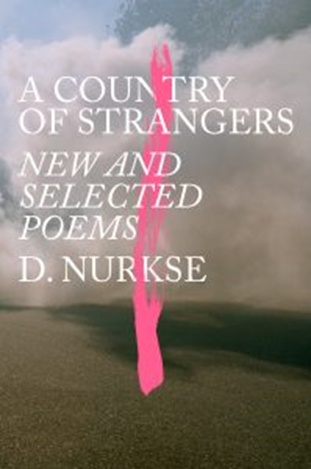
D. Nurkse is the author of twelve books of poetry, most recently A Country of Strangers  (Knopf, April 2022), a "new and selected." He has received the Literature Award from the American Academy of Arts and Letters and fellowships from the Guggenheim and Whiting foundations. His work has appeared in The New Yorker, Poetry, The Paris Review and many other venues, and has been widely translated. He has taught poetry at Rikers Island and served a term on the board of Amnesty International-USA. He currently teaches in the MFA Program at Sarah Lawrence College and collaborates with Zephyr, his visionary dog.

Mary: Welcome to Synchronized Chaos Magazine, Dennis. A Country of Strangers is wonderful and very moving. I loved these poems in so many ways: in breadth, depth, and height; in subject; in beauty; in richness. This collection, which is a "New and Selected," brings readers thirty new poems and over 150 poems drawn from eleven of your previous books. How did you choose the poems for such a rich collection, one that spans well over three decades of your work? Did you pick your favorites? Select according to a theme?

D. Nurkse: I’ve worked hard all my life in this poetry labyrinth, and all the prior collections left out a lot. I’ve learned to have a Zen attitude. If a poem has intensity, it’s because a lot of companion poems were left out—it's representing more than itself. So the selection process was pleasurable for me. My editor Deb Garrison had her own thoughts but was very flexible: it was a good situation, I had a check on my impulses but didn’t feel constrained. My books tend to be thematic, and my first impulse was to preserve each theme and keep each collection distinct. Deb was more granular, thinking about individual poems.

Mary: What changes did you discover in your writing? How have you changed as a poet in the past thirty-five years?

D. Nurkse: Maybe I’ve gotten worse? I was a hardworking kid, for sure. But I have done books recently that are speculative, approached the poem in a way that’s more open to other voices, sui generis structures, themes like marine biology that weren’t always part of the poet’s palette. We’re all struggling with a permanent crisis—the world is imploding, the universe squeezing itself back into a dot of sound byte. How do we deal with that? How do we live with disaster without investing in it or denying it? That’s the background. In the foreground, poems take so much time to write that you’re not always conscious of style, just of endless trial and error. Judgments are for the critics who have detachment.

But there’s another side to your question: what did writing help me discover? Often, I found the poem taking the other person’s point of view in an argument, being tolerant of an adversary, being curious for no motive. Poetry is more generous than I am.

Mary: In the poems in this collection, you seamlessly combine the personal and the political, demonstrating compassion and understanding for those who protest injustice, and the poor and oppressed who cannot speak for themselves. For example the first poem in A Country of Strangers, “Order to Disperse,” is dedicated to your students and takes as its subject protestors facing armed troops. What makes it remarkable is that you simultaneously reflect on the beauty and fragility of life in lines that are lyrical and deeply poetic. In other words, your poetry is often political, but never didactic. How do you accomplish this?

D. Nurkse: Mary, you’re too kind. I really believe all our lives are political. But I deeply believe in the autonomy of the poem. We as a species don’t know ourselves. We’ve been organizing ourselves with the same brain capacity for 30,000 years, and all we’ve come up with is a handful of male narcissists with the ability to destroy every sparrow and butterfly in the world. I really believe in poetry as a thought experiment: a decoy self that channels its own emotions and creates a mirror in which we can see ourselves, maybe, at least for a blink. It’s important that that decoy self doesn’t have to be righteous, anti-bourgeois, and infallible. Otherwise we just intoxicate ourselves with our own convictions and we end up being Communist oligarchs or the kind of Christians who couldn’t forgive a mouse.

Mary: How has your family history influenced the poems in this collection? For example, I understand that your parents immigrated to the United States from Estonia in the 1940s.

D. Nurkse: My family history has been a huge influence. My parents both came through trauma and never visited that on me for a moment: that’s an immense accomplishment, and I will honor them for it as long as I breathe. They met on a boat out of Portugal in 1940, escaping Nazi Europe, and their lives have a sheen of precarity, contingency, that becomes more meaningful to me as I watch America now. There was a lot they wished they hadn’t seen that they didn’t want to talk about. That double negative made me a poet—the sense that there was another story behind people’s everyday words and actions, and it was full of danger.

Mary: How has your more recent, personal history influenced your new poems?

D. Nurkse: I’ve had several moments of deep sickness, those times when life is like a low door you have to duck way down to pass through, and you don’t know what’s on the other side.

Mary: There are mystical elements in your poetry that don’t lend themselves easily to words, yet somehow you find words to express them. Have you been influenced by poets from other eras and other countries? By poetry in other languages? By walks in the forest?

D. Nurkse: Walks in the forest, yes. Poets in other languages—Michaux, Apollinaire, Lorca, Alberti, Jimenez, Cendrars, Gabriela Mistral, Anna Swir. I taught in prison and inner-city schools, and there was a lot I could learn from the kids there. A little African American girl in Topeka, Kansas wrote “I’m just about average/but no two mirrors/show the same me.” That’s mysticism.

Mary: One of my favorites is the title poem “A Country of Strangers.” In it, you write of refugees from the “nation” of “Sheol” with its “limousines and shanties, padlocked granaries and empty fields, live wires strung in the rain,” and “our country” which is “poor too” and where “every inch of the border is sealed.” Could you tell us something about the circumstances that inspired you to write this poem?

D. Nurkse: I think you have ideas and graphic images: two very different sources, for poetry. I had the images in El Salvador—people uprooted, with their possessions sewn in canvas sacks, kids trying to save a pet. And the meditational idea is just the bemusement that we all die, and yet death doesn’t unite us as a species—we each feel it happens to everyone else. It’s a poem about “othering.”

Mary: Do you have a favorite poem in this collection?

D. Nurkse: “Caligula.”

Mary: Here is “Caligula."

                         Caligula
                                                             After Suetonius
Caligula ordered the night city illuminated.
Every stoop, porch, or balcony was a stage.
He made the senators dress as prostitutes--
tight silk skirts, paste-on eyelashes.
Up to a matron to wriggle into a boy’s shorts.
Marcus Severus, one-armed veteran
of our labyrinthine border wars,
had to hobble into the amphitheater
armed with a plume, and attack a lion.
A plume _ We were fascinated.
We were all players, who was the audience?
The Emperor chose me, me, me, and me,
and slept with us. He was passive
as a bedpost, but listed his demands
in documents we had to sign in advance.
Slaves--who had been stockbrokers
or insurance agents a moment ago–-
carried triremes on their backs to Rome.
Sails billowed above our seven sacred hills.

Would it ever end? We were enthralled.
Every breath was a saga
when you long to skip to the finale.
We no longer washed, brushed our teeth,
or picked a scab–just him, him, him.
It was Cassius Chaerea who killed him--
that silent tribune he called ‘pansy.’
The Emperor lay on his golden bed.
We were mesmerized. All we could do
was compete to reconstruct the portents:
headless chicken racing all morning,
kitten born without eyes, huge cloud,
tiny cloud, cloud like a fist...
For a few hours the Chronicler
listened and scribbled, but soon
he grew bored, we bored ourselves,
so began Caligula’s slow death--
Caligula who so often said of a captive,
‘make him feel he’s really dying.’
Now we’re helpless as always,
faced with twilight, a child crying,
birdsong, the breeze, our seven steep hills.

Mary: Why is it your favorite?

D. Nurkse: I think it speaks to authoritarianism, the temptation of our age, without letting the public off the hook. Why do we allow ourselves to become spectators?

Mary: Thank you, Dennis. It's been a pleasure to talk to you.
Anyone who would like to buy a copy of A Country of Strangers is invited to click here for a direct link to hard cover, Audible, and Kindle editions of this remarkable collection of poetry by D. Nurkse.
Poetry from Bruce Roberts
N.R.A.

The happiness, the joy,
		of a good day out
 Shatters with the arrival of bullets,
A hurricane of bullets,
	    			An apocalypse of bullets,
	Blood, pain, unimaginable screaming,
		And loved ones
	Deathly silent, deathly still.

Yet it’s ok, OK!
	Take a deep breath!
					Life goes on!
Know that all will be better
	When the airwaves
			Are flooded with words
	Of meaningless profundity.

Flags will drop to half mast,
	And public officials—
From THE PRESIDENT
	To the Congressman
			To the Mayor
Will wrap themselves in pious language
	    And babble on:
	“Our prayers are with you!”
	“Cowardice can’t defeat us!”
	“Hearts go out to the victims!”
   “God’s love and unity will prevail!”
 “This will make our community stronger!”

	So soothing—until the next time,
		And the next time.
			And the .  .  .  .

						Bruce Roberts, 2019
 HAUNTED

Yes, we’ve patched the bullet holes,
Cleaned the blood off the walls,
	The floor, the ceiling,
   Painted the whole room
	So it’s fresh and clean,
Even renumbered the entire hallway,
	So that number
		No longer exists,
Like the 13th floor in a high rise,
	But still, no one—
	I mean NO ONE—
Volunteers to teach there,
  And parents sell the house.
		Leave town,
So there’s no chance
	That their son,
	Their daughter—
Center of their family,
	 Their hearts—
 Will ever have to learn
With GHOSTS ever present
	Silently screaming
   Over their shoulders!
						Bruce Roberts