
The Weeping Poet

The weeping
poet is
not weak

we
have
the strength

to tell
the wonderment
of truth

in all of its beauty
before
we lose it

to those
that want
to outlaw
tears.
Category Archives: CHAOS
Poetry from Oona Haskovec
toast on the kitchen floor

the feeling that sulks in my bone marrow and weighs me down
melts into the air pockets of day old sourdough.

i didn't know that wanting to die was meltable.
i hoped it wasn't
now all i am left with is drips of oil and soot i never tracked in on my heel.
patches of raw feeling still keep their opaque huddling figures
but now it just looks like i have plain toast with molding clumps.
the crust is too hard for my crying jaws. i leave it on the cutting board.

a staler slice resides in the toaster that i have grown up with
so i get crumbs under my nails pulling it out.
fresher emotions that give the illusion of being gentle and friendly
are spread across the surface with the cchhh of
butter knife on bread
i don’t close the feelings container because it's a pain in the ass
and i always cut my fingertips just enough to feel the texture difference
but not enough to hurt
i leave a smear of suicidality in the deli container.

of course its not enough for a whole slice of toast
but thats too bad for whoever next finds themselves foolish enough to crave toast.

toast is dumb.

it takes the gentleness out of the fresh-baked bread and prods at over-chewed gums.
i only find myself seasoning a second toast because it's there
and i need something to do.
i pull out a fresh plate and everything for my pretty little crunchy mean bread.
so many favors i've done.
i smeared my feelings out and stared them down
like a single poppyseed on a fucking sesame bagel.
i also have mixed feelings about sesame seeds.
i’ll eat something that i didn't even know had sesame seeds but for some reason
i always wrestle with the tiny little flavor between my teeth for hours before i taste it.
sesame seeds are also dumb.

my stupid little toast is face down on the floor now and i'm not going to pick it up.
Poetry from Emmanuel G.G. Yamba
Poetry

~ Tears ~


How do I say this

As peace roll out of my life

While I wear a garment of pain

To sleep in the bed of sorrow

Having my room spray with depression

Blocking the sound of melodies in my ear

Left in the hands of the bed sheet

To give me cold after being soak with Nile from the eye


The road to happiness is block with every man foot

No one to consider the cripple rather whip the crush stick out of their hands

The only one that appear on the scene is the one that wet my face

And inspire these broken lines carrying my thoughts far off

In the land where nature controls creature

So I’m lost of sound stanzas
Poetry from Chukwuma Eke Pacella
This poem does not wish to have a name because name is of no gain when pain is a name.


This poem rewrites the scriptures into a nightmare
where man and wife unglued one
to one and one.
first one seeking comfort in the arms of another,
second one finding hers
 in the arms of her daughters
so one and one made their homes,
far from home.
we watched them become brushes
painting their marital underwear simultaneously
on our pale faces
we were just four little cubs
putting on the skins of pain as clothes
their disjointed union had sewn us.
it was lengthy and weighty
and threatened to uninstall joy in us
and whether or not we wore
the old ones
their needle words would
 weave more for us.
so our broken hearts watched
as one split in two
believe me, this wasn't a divorce
there was no paperwork
but even God knew
 the better-or-worse deal was off.
so our broken hearts watched
mom and dad become
mom, dad
 and  was washed away by the brutal storm of grieve
and betrayal and infidelity and denial.
so our broken hearts watched
dad yearn the arms of another
I'd rather be a dead lad than mistake this imposter
as mother
that one that willed happiness from us
rolled dad away from us
 or presumably, she did not.
for our broken hearts watched one split in two
way before three was born


a voice tells me,
that this union was not meant to be.
Poetry from Tali Cohen Shabtai
I have to know the wage of text

For a poet, silence is an acceptable, even flattering response,
claimed Sidonie-Gabrielle Colette.

Another claimed
that the calm that is the history of silence
is the poet's revenge.

Look, I walk around with a quill
between my teeth

Some people have their sensory hearing absorbed into in the most unexpected organs, and some will qualify in silence, accordingly I have to know the wage
of
text —

Surely, the initial reaction in humans
in their early lives is the voice, after
which everything else is a charade.

I am new

They don’t know
Where I came from
I must connect the- leg
With the waist
And the pelvis to the spine

That’s the way when items
Are separated from bodies
And an artificial
Lens is implanted
In the - eye.

Who said it’s possible to move
Organs
Away from their
Place?

Who said?
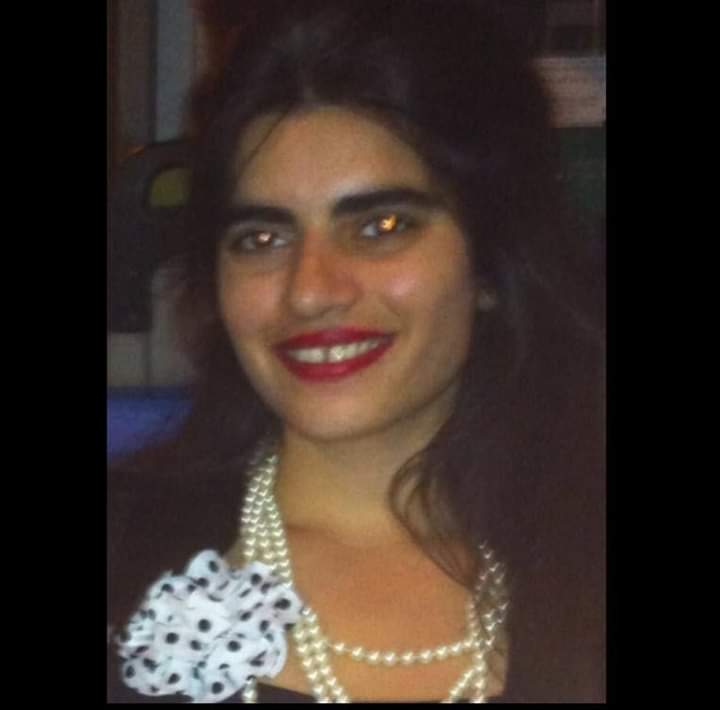
Tali Cohen Shabtai, born in Jerusalem, Israel, is a highly-esteemed international poet with works translated into many languages.
She has authored three bilingual volumes of poetry, “Purple Diluted in a Black’s Thick”(2007), “Protest” (2012) and “Nine Years From You”(2018). A fourth volume is forthcoming in 2022.
Tali began writing poetry at the age of six. She lived for many years in Oslo, Norway, and the U.S.A. and her poems express both the spiritual and physical freedom paradox of exile. Her cosmopolitan vision is obvious in her writings.
Tali is known in her country as a prominent poet with a unique narrative. As one commentator wrote: “She doesn’t give herself easily, but is subject to her own rules.”
Synchronized Chaos February 2022: Back to Browsing
One of my favorite experiences pre-Covid was visiting a library or bookstore and picking up books, fingering and flipping through and reading the backs of each title with an interesting cover or concept. This month’s issue of Synchronized Chaos provides a ‘browsing’ experience as it includes a large number of submissions, each with their own themes, style, and flavor.
FYI Synchronized Chaos Magazine will host a free public reading, “Audible Browsing Experience” to coincide with the AWP conference in Philadelphia at Head House Books. Our monthly theme for this issue is a homage to the name of the reading! We have a lineup of readers and will host an open mic if time allows. Event takes place Thursday March 24th from 6-8 pm. Please sign up here if you would like to attend as the store has limited capacity due to social distancing. Head House requires masks and proof of vaccination.
Michael Robinson describes his personal, spiritual experience of salvation and resurrection. Hongri Yuan returns to evoke spiritual ideas, a world more eternal and orderly than our own. Chimezie Ihekuna’s screenplay Saved by His Grace explores the workings of faith in the life of a pastor who loses his son. Sayani Mukherjee bears witness to the last musings of a person who dies through drinking hemlock.
Hong Ngoc Chau dreams of a future literary career and shares the spiritual and intellectual transcendence she finds through the written word. Lorraine Caputo relates vignettes of reading, writing, and traveling, village markets and hotel room sunrises. Reading Don Quixote, she shares some of Chau’s idealistic spirit.
Chris Suah’s speaker’s creative journey allows him to move through loss and arrive at a balance of grief and joy. Abdulloh Abdumominov finds joy in reading nonfiction to learn and grow as a person, while Sushant Thapa celebrates the excitement of learning from both books and life.

Amit Parmessur describes the poetic beauty of nature and literature in elegant prose. Mahbub’s free-verse speakers do the same, finding stillness and grace in hearing the flowing river, embracing on foggy days, and even facing the prospect of death. Joseph Balaz advocates in Hawaiian Pidgin through wind metaphors that readers should face life with a mixture of calm and passion.
J.D. Nelson experiments with language as symbol, with the connections between letters and words, and words and meaning. Joshua Martin draws parallels between words and syllables as the units comprising poetry and the physical plants and bricks making up ecosystems and cities.
Howard Debs brings a historical perspective to the January 6th, 2021 mob attack on the U.S. Capitol. Patricia Doyne speaks of the history behind the racial categories of ‘black people’ and ‘white people’ and protests racism within the U.S.

Ryan Quinn Flanagan offers up observations of mini-scenes and encounters within the United States’ interior. Mark Young crafts work in a similar vein but on a smaller scale, looking at insects and impressionistic personal experiences.
D.S. Maolalai covers domestic quietude and drama: brewing tea and sunrise alongside romantic betrayal and storms. Linda Hibbard writes of the near-universal awkwardness of junior high school, not being a sheltered child anymore but not yet a young adult. Arthur Russell paints a portrait of a New York couple who has found an uneasy truce with middle age and each other.
J.J. Campbell conveys the loneliness that can come with singleness, illness, and caregiving, while Edwin Olu Bestman evokes the loss of belonging and sense of self that can come with the end of a romance.

Robert Ragan admonishes the ‘man in his mirror’ to grow up and move beyond an impossible love to focus on the life in front of him. Ahmad Al-Khatat also writes of the journey towards emotional maturity, how a gentle and mutual romance inspires him to become a more caring person.
In another piece, Khatat mourns the tragedy of sexual assault. Judge Santiago Burdon’s poetry also laments violence, poverty, and heartbreak some women suffer. He also speaks humorously of the confusion a man feels when his female partner reveals her interest in the Wiccan religion.
Amos Momo Ngumbu Jr. expresses his wish for the blind to regain their sight. Christopher Bernard urges each of us to take what steps we can to improve our world.

Jason Visconti celebrates the ‘electricity’ of a passionate human connection, while John Thomas Allen writes of the rich drama of a day in the life of a dumbwaiter. John Culp shouts out about his romance with exuberance. Ian C. Smith reaches for past memories and future knowledge that lies just out of his grasp, while Frankie Laufer speaks of our physical and psychological ‘collections’ – classic rock music, dolls, love and nostalgia.
Andrew MacDonald describes the way our minds make sense of complex, random human or natural events. Lorette C. Luzajic renders Hieronymus Bosch’s jumbled art into lengthy but taut poetry. Jack Galmitz observes the world around him with the eyes of a philosopher or painter, calling to mind Hume and the masters who painted country scenes.
J.P. Lowe reflects wryly on his past animal companions and how Bukowski’s experience with cats and dogs runs counter to his own. J.K. Durick also ponders his past, ruminating on society’s leftovers: what has changed and stayed the same as he grew up. Abigail George renders her past in an impressionistic essay, chronicling and reflecting on her search for family and romantic love as well as her development as a writer. Ivan Fiske ponders the history of Liberia from its connection to the liberation of American slaves to its present-day struggles and resilience.
Our hope is that this issue’s many resplendent offerings will inspire your own creative journey.
Poetry from Amit Parmessur
Lily and Reed

My mossy pad touching your mighty waist
melancholizes my petals. You play
the flute as if it were a lissom sword.
I love your Creole voice, twigs of raucous
French marinated and casseroled with
African leaves. A rich spinster reading
the soul of the perfect, poor man makes her
richer. I will give my horizontal
to your vertical. Give me not curved moons
that belongs to primitive people; give
me a rusty sickle that I may reap
you for myself. I cannot wait for you
to call yourself mine. Time, our breath, is but
a flower jealously jailed by its bud.
You are egoless; I want to live and
end on your reedbed, not in this soggy
palace. I want to call you, your voice mine.


Fatherly Forms

When I feel down, like a small bulb dying
among a crowd of condescending moons,
my guilty eyes see only one martyr.

He is a devoted, withering trunk
holding countless boughs, twigs, leaves, flowers, fruits.
Unmoved by his perpetual pain, like
greedy worms we feasted on his glory.
We picked up huge stones to stone him, sometimes.

Each dewy morning, the massive mountain
is losing his soil to the angry waves.
He walks around leaning against the walls
of the house he built but can no more own.
Like a scarecrow he kept us safe and fed

our fields, but since the avalanche of white
hair, he is toothless and frightens no birds.

And, when I spend the afternoon over
the bridge watching the fragile fish carry
their blissful bodies down the river, I
feel his youth in the rhythmic ripples and
know he would lie about his evening grief.


Self-Isolation & Shakespeare

A nameless day, I see myself leaning
on a Malboro backstage, my green tongue
in love with borrowed smoke. I talk of
dreams; I am the musical Mercutio.
Stickmen on fire queue up for my concerts.

A blank night, I find myself in seiza
at a shrine, gargling with sweet, warm water.
An Asian Orsino, I chew music;
I am the scarecrow stuffed with red hay,
whose harmonium goes wild and mild.

A dateless noon I see myself digging
into an oyster; I am Bassanio,
the gambler. I rejoice in the absence
of the sun, trying to lure a mermaid into
the spirited marrow of my drained skeleton.

I have no regret as my beard falls on
the cracked window sill. On the old table,
fresh newspaper. Covid count. Coldest rain.
To be Romeo, or not to be Romeo?
Back to my boulder, I am the snowman
cheating invisible death, in his blindness.
Amit Parmessur, 38, a private tutor, is a two-time Pushcart Prize and two-time Best of the Web nominee. His poems have appeared in over 165 magazines, namely WINK, The Rye Whiskey Review, Night Garden Journal, Hobo Camp Review, Ann Arbor Review and Ethos Literary Journal. He lives in Quatre-Bornes, Mauritius, where he spent his adolescence hating poetry.