The Human-Centered Solution To All Problems

Problems abound everywhere. Some have retraceable origins while others remain mysterious. Humanity has been plagued by an array of problems-from birth to death-through the ages. It is amazing how man has been able to fashion ways to live with them throughout time. Harboring problems has become the second nature of man!

In some ways, humans have successfully engineered problems, detrimental to their continued existence and, as a consequence, knowingly and unknowingly, challenging Mother Earth-humanity’s habitat. The consequences are enormous. An instance is the human-known diseases. Spanish Flu, malaria, HIV/AIDS, SARS and so on, to the recent COVID-19 virus have spelt in plain sight man’s knowledge towards destruction, self-deliberate or not.

There are problems transcending the understanding of logic. This is an integral part of man’s reasoning designed to tackle problems (of course, known) through a three-dimensional analysis-the physical length, width and height of concerned situations. For example, the issue of malaria in the light of  its height of destruction of human lives, length of time of infliction and magnitude of harm in the lives of people of all ages.  Man was able to eventually come up with a cure via proper medical analysis (logic). The use of penicillin as invented by Alexander Fleming set the pace for subsequent medical remedies to the once-upon-a-time pandemic.

However, what happens if logic proves futile in attempt to approach problems that are said to the mysterious? An analogy is the situation of a young individual (X, say).  X is healthy and strong. X diets properly, engages in good exercise routines and does regularly go for medical check-up. X is certified ‘healthy’.  On a weekday, X decides to take the usual rest, having worked for a couple of hours, Sadly, X refuses to wake up! Despite all efforts to revive X the medical way, it is discovered that X has passed! Any proper (logical) explanation to the sudden demise of X? Of course, man’s logic is conspicuously a failure in that case. To some folks, the saying ‘God gives, and God takes’ would be pronounced and ‘Such is life’ would be heralded  by others-all in attempts to console those related to the deceased individual. They simply cannot explain the mystery behind X’s death!

Arguably, man has decided to embrace problems as they come. He is of the belief his advent in the world is faced with problems. Mankind has reasoned, ‘despite attempting to find solutions to lingering (physical) problems, more problems have consequently emerged.’ Humanity seems to realize the more the approaches to curb the ‘levels’ of problems disturbing its existence, the higher the ‘devils’ they pose on its entirety.

What is the way out of the conundrum? Is there a possibly lasting solution to the vicious cycle of problems-the ones that are seen and unseen? Those questions are typically asked by people whose concern for humanity’s plight is paramount. Napoleon Bonaparte once said: ‘Impossible only exist in the dictionary of fools.’ For every problem lies a solution.

The reality of what we have come to embrace exists within the framework of perception. Simply, we see reality or the way things are based on what we are told and that forms our very perception-what would become ‘our reality’. If we chose to change our perception, we change our reality. A change in perception in terms of harmonizing with nature-appreciating the universal elements of water, earth, fire and wind through learning, enhanced by the powers of creativity and imagination is the door-way to finding a benefit-yielding human-centered solution facing all and sundry.

Through that, the man’s body would be free from being in a ‘dis-ease’ state-obviously obliterating ‘disease’-thereby positioning one to savor the health of creatively bringing to attention the wealth of the learnt-about nature’s harmonization. The imagination, over time, of an egalitarian, utopian and El-Dorado society would be a possible depiction of change in perception (again, in terms of harmonizing with nature through appreciating the universal elements). That’s the human-centered solution to all problems!
Doing the Work

My therapist thinks being

polite is the same as faith,
a habit, worn long enough—


like a crate-trained soul—I smile.

This is how we patronize

each other, her and me
and God. If I promise to jump


at the thunder, He promises

not to burn me from the

ground up. With her, it’s just
cash. She asks
if I have any

friends. I say too many has always

been my problem. That’s not

the right word. What I mean
to say is that when I was younger,


I never woke up alone, but

I never slept, either. Let me

tell you a joke. What does
a gangster cat say? (In an Edward


G. Robinson voice) Meow, see,

meow. My daughter and I made

that up together. Maybe you had
to be there. To put it another way,

if I open my mouth, what do you

think will come out? Dirt daubers

crawling on my tongue, which
is another way of saying writer’s

block, the smell of mud, which

is another way of saying death.

But I paw through the nests,
looking for the sound of my own

voice before I lost the accent,

the mud for my father’s approval.

When I was a boy, and the sickness
took her, my mother would howl

late into the night, me lying

in the dark, listening to the animal

that had gotten in, waiting for it
to find me and feed. I’m not trying

to complain. Lots of my friends

had much harder lives than I

until they died. She asks why
I’m here, and I say I’m buying time.

I’m tired. I’m going to kill myself,

but I can’t today. I have an

appointment. Give me a decade.
Help me find the strength, somehow

to last that long. Not that I’m implying

in any way that it would be your

fault. She nods, and I’m grateful
for her so obviously practiced

sincerity; the last thing I need

is to fling a craving on some

body. Here is a list of ways I’ve


tried to die. Water, wind, a bullet’s

kiss, the things of the world

I’ve swallowed. I’ve got so much

going for me, I can barely stand.
This is why I don’t own a gun.

Do you drink or do drugs? She asks.

That’s a kind of trust exercise

with the world I’m not prepared
to take, I say. The only thing

I remember about my mother’s smell

is urine. Maybe, if I could’ve

saved her, I could forgive myself
for still being alive. But forgiveness

is a myth; eventually, you just

forget to be angry. Let’s not talk

about me anymore. She says,
Okay Here’s an exercise. I want you

to write about your trauma.

When that’s done, I want you

to run as far away from it as you


can. And then have a snack or soothe

yourself in some way. I can hear rain

outside as I type this, working on

its aim. Maybe I’ll order pizza.

***


Some Thoughts on Moonflowers


Skitterings in the night, like

            bristly feet and dripping teeth.

            I am not butter, I don’t

            care what the pamphlets say.

            You may not fry anything in me.


Magic lacks melatonin, which

is why it hides from the sun.

Ask anyone who knows.

Shadows. Moving lights.

If all the evil could shut

the fuck up that would be

great. I’m trying to die, here.


My head hurt for days because

            I couldn’t afford to keep up

            with my meds. Don’t tell me

            it’s about anything other than

            greed.


It’s always raining somewhere

            n mi hart. *tap tap*


Maybe the mice are putting on a symphony.

Maybe the moonflowers are going for a walk.

Maybe the dust bunnies are thirsty for blood.


When I go on meds, I can’t see anything

            inside my head, so I have to write

            to have thoughts.


It’s about keeping myself safe because

            the squeaky wheel gets evicted.


On a scale of one to ten tell me how

            Capitalism is treating you today.

            The first two don’t count.


These nights when I’m waiting to be

            recycled, I think about the warmth

            of your body in my arms

and remember there was a time

                        however brief

            I didn’t feel alone.

haha no take backs.

***


Mary Oliver


I’m supposed to tell you a story

to make you forget how sad it is

you’re going to die without having

enjoyed most of your life. Well, okay.

Nature is a good start, like how these

little gray birds roll in the dust on

a path outside my apartment, avoiding

the broken glass, stray cats. They do

it because their bodies make too much

oil, which is good for helping them be

aerodynamic, but not when it’s too much.

This is a metaphor for how adaptations

often overwhelm our lives. But it’s also

about birds, so Mary Oliver can eat it.

But not really, because she’s really good,

if you’re the kind of person who can

afford a garden. I still need a joke, though.

They’re hard, especially in poetry, which

is supposed to be too pretentious to laugh

at itself. Here’s one my daughter is working

on:

Knock knock.

(Who’s there.)

Doorbell repairperson.

(Doorbell repairperson who?)

Ding dong.

She’s still working on it. She’s eight.

Don’t be so fucking judgmental.

***


Remember the Lightning and Her Sister Darla


Back then, the world existed in 4 minute slices,

radio friendly, and capable of being shined

with the right spit. We never listened to

the words because we trusted the censors, not

realizing they were dying like the rest of us.

Pastries tasted like sugar, and funny colors

didn’t matter in a beverage. This morning,

I dumped out my leftover intentions in

the parking lot so I could recycle the cup. Maybe

a flower was trying to grow from that concrete.

I followed a man to the stairs—give me

the confidence of an old man in shorts

and sandals, black socks worn without irony,

and an overwhelming need to chat with strangers.

I was never that unable to question others’ desire

for my company, and I have mania. Inside,

everything is animal, including my shirt. Every

day, I forget the color of the sky until I sneak

out and ask someone. Most times, they look

from one to the other and shrug. I finally

petitioned to get a screen put up. It flashes “blue

and sometimes gray” from dawn until dusk.

I still ask because I don’t like to believe. Back

then, the sky was always forgetting me. Lightning

asked my name at parties, so it knew who to avoid.

Now, I see it on my morning commute. Ugly

tie and khakis. Sleeveless blouse the wrong

color for its skin. Its sister Darla got married

and divorced a long time ago. She’s back

from the coast, but no one seems to know

which one. Kids and debt. When I catch the last

elevator with the lightning, it’s shaking its head,

shocked at the state of things, like us all.
Raised on a rice and catfish farm in eastern Arkansas, CL Bledsoe is the author of thirty books, including his newest poetry collection, The Bottle Episode, and his latest novel The Saviors. Bledsoe co-writes the humor blog How to Even, with Michael Gushue: https://medium.com/@howtoeven Bledsoe lives in northern Virginia with his daughter.
Maxx Orange Kitchen - MOK
MOK - Cooked With You & Radio Maxx 105.1 FM

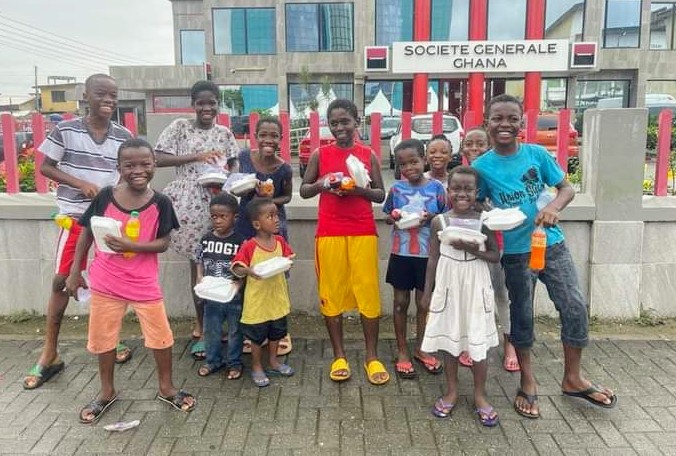
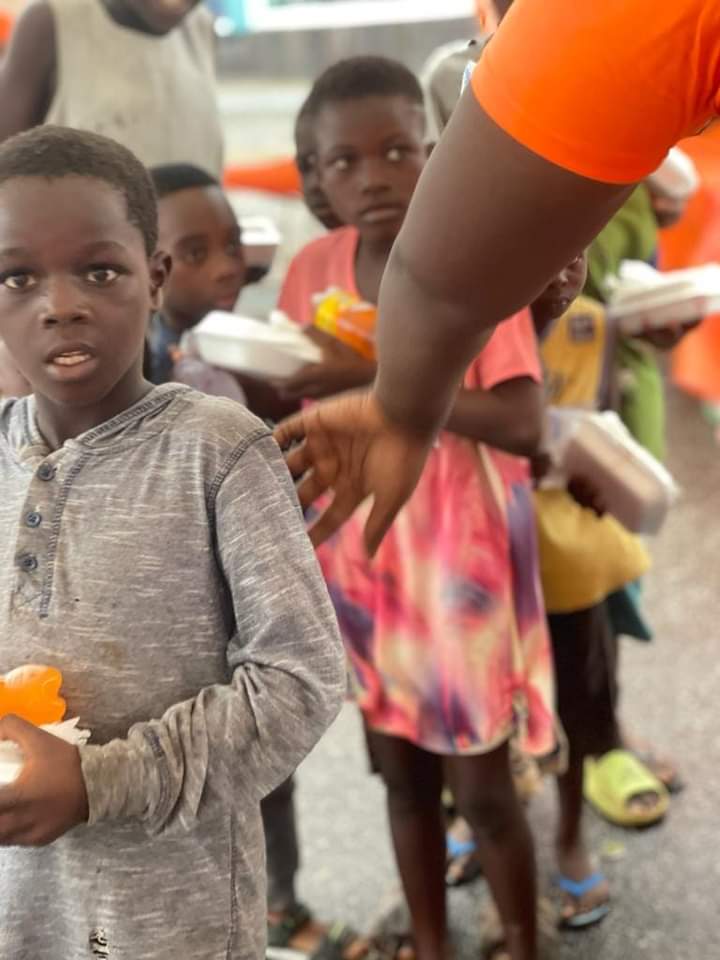
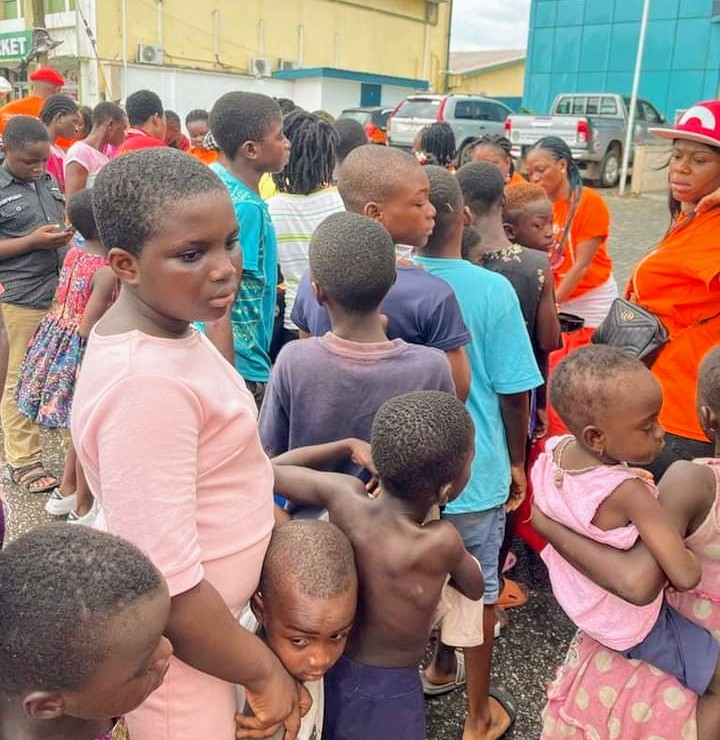
MOK is simple abbreviation or acronym for the Maxx Orange Kitchen is the charitable initiative made possible by kind courtesy leadership and management of the Orange Broadcasting Brand - OBB, thus Radio Maxx 105.1 FM in Takoradi at the heart of the Western Region, Ghana.(West Africa). According to authentic information available, it’s been fifteen (15) solid years of making this event worthy course to the young masses as a means of continuously feeding the less-privileged kids on the street of Takoradi in the south-western part of Ghana.

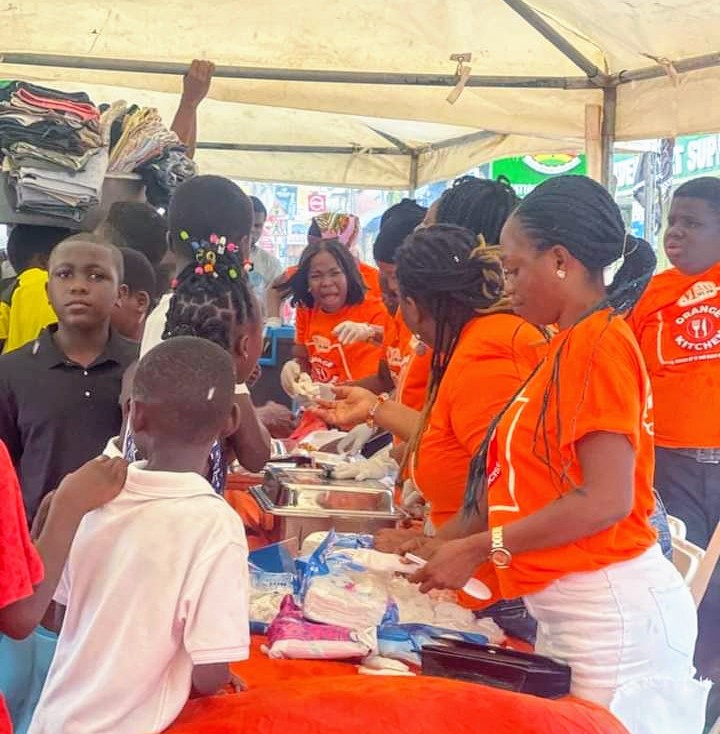
Factually, before making this out-door program successful there’s often Audio-Promo, Live Presenter Mention (LPM) and Announcement to the general public on Radio Maxx 105.1 FM to ensure donations of food items of all kinds such as bags of rice, chicken, soft drinks, canned or tin products, bottled as well as sachet mineral water and other edibles which go through cooking process then sharing to street kids in the city of Takoradi, Western Region, Ghana. It certain, some comes from the sister city of Sekondi and its environs to participate as well.

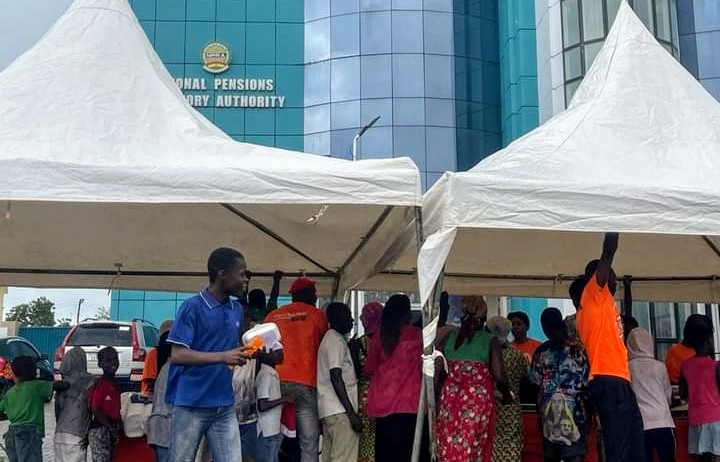
MOK 2022 took place on the street of Liberation Road, close to Market Circle which is under re-construction in Takoradi. In the early hours of Easter Monday, 18th April,2022 - chairs, tables, canopy and public address sound system to ensure music playing as well as live monitoring of on-air programs by the organized media company, Radio Maxx 105.1 FM became available at the street-venue of MOK. There’s loading and off-loading of food items donated by some cherished listeners of Radio Maxx 105.1 FM, precisely from the station’s premises located at Essikafo-Ambentem No.2, close to Bethel Methodist Church in Takoradi, Western Region of Ghana.(West Africa).

It’s comely to catch glimpse of key voluntary support by the members of Mike Foundation as a youth-dominated Non-Governmental Organization (NGO) through their respectable cooperation to ensure success of the Maxx Orange Kitchen - MOK 2022. Certainly, some volunteers were chosen through directive and decision of the radio station’s CEO, Sir Maxwell Okyere Ahenkorah, an expatriate of the United States of America.

MOK 2022 experienced unusual down-pour, thus intermittent drizzles and heavy rainy moments. Well, regardless of the boisterous nature of windy conditions, it didn’t change the general atmosphere or it never stopped the event or attendees of both young and old folks to enjoy delicious cooked rice, stew and chicken as well fried fishes, meats and soft drinks served on the street blocked with barricades i.e.(Liberation Road) in Takoradi, Western Region of Ghana, West Africa. Interestingly, although the main purpose of Maxx Orange Kitchen - MOK is to feed kids of all walks of live on the street. It’s realized many adults couldn’t cope with the fact that only kids had to fill their bellies on such a festive season of Easter to their satisfactory merit.

Hahaha, LOL! -  Hunger is there for old too! As I over-heard one woman say that emphatically to my ready-to-hear ears. Well, with respect to the target, it’s meant to feed over Five Thousand (5000) street kids in the Sekondi/Takoradi metropolis, Western Region of Ghana, West Africa. On mind visual recollection and reflection, when boisterous winds set-in it’s all hands on deck to hold canopies firm on ground to ensure stability and non-disastrous atmosphere as electrical equipments also needy safety to avoid accidental occurrence of fire out-break at the scene.

MOK 2022, had the following industrious leaders and staff-body of Radio Maxx 105.1 FM playing vital roles at the out-door venue on Liberation Road in Takoradi, Ghana. Indeed, the mastermind CEO as well the Boss, Sir Maxwell Okyere Ahenkorah, being quite instrumental in bringing the cooked rice, stew, fried chicken, fishes, meats and take-away packs to the street-venue. Better-still, he also did very well during collection of donation and compilation of the donor’s and sponsors details as well as particulars. Also, he being part of the packing of food items at his office and other rooms of the radio station is quite memorable and shows the quality of a leader, leading by example in terms of event organizing.
More-so, next to give a worthy mention is the General Manager of Radio Maxx 105.1 FM, popularly known as Mantse, a church leader Reverend Alexander Nii Sackey, host of early morning devotional program dubbed Maxx Morning Bells - MMB. Indeed, this man has been so committed to the Orange Broadcasting Brand - OBB since its early years as well as movement from different geographical locations within its catchment areas of Takoradi and beyond.

To be precise, he helped to convey soft drinks, bottled and sachet water from the station’s premises to the street-venue, aside breaking of ice blocks to freeze the drinks in the refrigerators meant for the Maxx Orange Kitchen (MOK 2022). Amongst other things, he also supervised the happenings and made reasonable decisions in the absence of the CEO Sir Maxwell Okyere Ahenkorah, when the going got tough on the street-venue of event. The on-air presenter of the mid-morning show Maxx Metro Mix (MMM) as well marketing executive, Sir Harold Ewusi also contributed well to and fro in relation to the needed items and other equipments at the station’s premises and street-venue. The likes of DJ Asabir, DJ Mike G and Ebo Smith were also solid to ensure music playing and sound technical assistance on the street-venue. Of course, it’s scene of all hands on deck so Ayatullah Abass (Kendrick) on-air presenter of Maxx Over-Drive (MOD) fame also did well as he later went to do presentation on the radio.

Some female staff were seen round including Bettina Sweetie Doie, as she also did well with the serving, loading and off-loading of food items, alongside the technician Sir Sylvester and Angel…… It’s obvious Sir Philip Ampofo, who’s hosted me and promoted Synchronized Chaos Magazine a couple of times as Anchor of the Joy 99.7 FM - Super Morning Show (SMS) also contributed directly and indirectly to bring about ultimate success of the Maxx Orange Kitchen (MOK 2022).

Also, not forgetting Sir Henry Aggrey (MC Clenzy), and Mr.Gabi Ampiah of Sunday Evening Gospel Train, they all did brilliantly well behind the scenes as well as ensuring LPM of the donations made possible by audience of the Orange Broadcasting Brand - OBB, Radio Maxx 105.1 FM (Magic Music Station - MMS). Notwithstanding, some members of staff were not present at the street-venue of the event but they also contributed effectively to this year’s Maxx Orange Kitchen - MOK.

MOK 2022 had contribution of items and donation of cash from the following companies and benevolent individuals: Akroma Plaza Hotel, TICO, Raybow International Hotel, Ghana Water Company Limited, Jomra Electricals, One King Mineral Water, Philnock Enterprise, Voltic Cool Pack, Agwils Enterprise (Inchaban), 1st Gate Supermarket (Kojokrom), Elok Jewelry, Nana Yaw Pinto, Eagle Nest, National Investment Bank - NIB, Zenith Bank, First Samuel Enterprise, Red Run Pizza, Sally’s Akwaaba Boutique, Mr. Godfred Teledzi, Miss Chima Obi, Aniyak Guest House, NPP Loyals, Ghana Police Service, Sekondi-Takoradi Metropolitan Assembly - STMA, Maa Anita (EcoBank) and all anonymous donors.

However, not forgetting generous heart of another VIP media figure, Mr.Kwame Adu-Mantey - CEO of Focus 1 Media, he also donated tremendously to support such a worthy course of Maxx Orange Kitchen (MOK 2022).

Well, as a writer of this Arti-Blog what I also did was new English audio-promo for the Maxx Orange Kitchen - MOK as part of on-air publicity apart from the creative poetic piece which stated MOK in the last stanza, dubbed Two Decades Of Orange Enjoyment #2DOE. It’s a means to promote the MOK 2022 as well s 20th Anniversary Celebration slated to take-place on 5th November, 2022. Better-still, physically I also assisted during loading and off-loading of donor’s products t the station’s premises and street-venue of MOK respectively. More-so, airing of the processes and procedures to donate on Sunday Evening program Gospel Train as a Guest-Panelist, thus it’s also effective to the glory of God and humanity. Nevertheless, the rains which occurred might have associated with divinity as a means of our Creator’s showers of blessings upon us being conscious generous care-givers in the society of poverty-stricken people.

As Maxx Orange Kitchen - MOK is annual charitable event to kids on the street, and then you’re welcome to partner with us via Call or WhatsApp the following Numbers:   +233207174878, +233243445144, and +233243734791

Thanks for taking time to read.

Name: Ike Boat
Email: ikeboatofficial@gmail.com
Call/WhatsApp: +233 267117700, +233 552477676
Facebook Page: www.facebook.com/ikeboatofficial1
Country: Ghana, West Africa.
All are welcome to attend the Hayward Lit Hop, a multi-venue literary reading at 3pm Saturday April 30th, coinciding with and continuing after Hayward’s first youth poet laureate award ceremony. Several Synchronized Chaos contributors will read from their work.
Welcome, readers, to Synchronized Chaos’ second April issue, To Know We’re Alive. This issue explores ‘signs of life’ of many kinds, creative and emotional and intellectual as well as physical.
Michael Robinson relates his faith journey and in honor of this weekend’s Easter celebration of resurrection and new life. John Culp asserts his spiritual wellness and his choice to stand with what’s good. Stephen Jarrell Williams shares gentle odes to love, writing, and the next
John Thomas Allen leads us through a semi-urban nocturnal trek amid the cicadas and beer cans and metallic moonlight. Dan Raphael ponders existence and observation from a distance in a variety of domestic and ordinary settings.
Mahbub discusses lively characters: birds in flight, soccer player Diego Maradona, people of the world embracing in peace. He pleads for people to come together in harmony and also to show special care for those in need, such as the frail and lonely elderly.
Denis Emorine celebrates the rich heritage of Russian culture and urges us not to equate all of it with Putin’s contemporary aggression. Chimezie Ihekuna celebrates the dedication and honor of a soldier who has chosen to put service to their country above their own desires.
J.J. Campbell brings us our monthly theme, mentioning how pain is often a medical clue that a person is still with us. His work explores heartbreak, disillusionment, and the vague unease of watching news of a distant war.
Howie Good sends up vignettes of trauma observed from a distance, of how the passage of time, space, and culture renders inhumanity mundane. Brian Fugett renders trauma half a world away into a symphonic metaphor, pondering what it means to bee the audience to events that kill children.
Gabriel T. Saah paints a pastel photo of a gentle village beachside love, along with the drama of driving in the rain. Santiago Burdon also depicts love, at nighttime, in a hypnotic sentence replete with moonlight, street lamps, and scented magnolia blossoms.
Yusuf Salisu Muhammad celebrates his love for his mother in a piece full of visceral images: food, the home, and his body. Gerald Onyebuchi renders love through Biblical psalm imagery, adding a historical, cultural, and spiritual dimension to his romantic yearnings.
Please enjoy and find comfort and inspiration in this month’s issue.
Rebirth of a Soul

Life had been empty when my faith was lacking.
Years of seeking something that was empty within.
Faith came to me earlier this season of Jesus’s death.

Daily praying to be saved from a world which held nothing.
Listening to the gospels there was no recognition of death.
Yet, death had me in a vice on me daily without ceasing.

My emptiness repeated each year and tears continued to flow.
Kneeling at the altar alone and crying alone praying for a life.
Finding that empty place within me without salvation coming.

Meaning meant life was a vacuum of suffering and pain.
Jesus hanging with nails in his hands had meaning for me.
It was a day in which a quietness blanketed me the first time.

Walking with a wooden cross on his shoulders alone.
It had meaning to walk to his death to suffer with meaning
Sitting there in an empty church alone changed that day.

Instead, it was an understanding of what death meant,
There was no flashing of lights or angels singing.
It was a recognition that my life meant something.

My life was given to me by God’s love for me to live.
Somehow it all meant something to me that he died.
Not for my sins but rather to save me from emptiness.
God had given me my life and my life had meaning.
Diego Maradona, A Wonder of the World

Diego Maradona, a name of charisma, the famous football player of the world
Today and tomorrow will ever flow on - to you, to me and for all
Whenever the ball touches his feet, the rhythmic passing can't but charm
Though the striker all the time circled round by four or five opposite players
Ran so swift with the ball to the goal post in an instant leaving behind all
And the whole stadium fascinated with the sound 'Goal' ---- in the blink of an eye
Technique of passing with the ball always made the audience spell-bound
Even his throwing by the hand to the goal once judged as 'The God's hand'
What a striker! What a magician!
In the field of The World Cup Football
What a magic playing! How charismatic in dealing with the ball!
Though went away very soon from his earth
Can we say he is no more in the field of The World Cup Football?

Chapainawabganj, Bangladesh
05/01//2021

The Tough Loving Cup

The heat caused deaths by corona
More violent than the heat causing deaths by gratuitous violence
From this different guise of destruction
People hang on the fate for mutual submission
Of course, we can't blame our predecessors for this
The skin disease of white and black
For what is happening today or happened in the past
In this garrulous world suffocated by the smoky, enigmatic form of work
Like the car in a dizzying speed or guarding the buildings like a Dobermann
Where is the loving cup?
Can we sip in the Holy Grail?
Though the curling smoke mounts high in the morning, evening or midnight cup
The woods are burning; the land submerged by
Everyday every moment in the light, shade or dark.

Chapainawabganj, Bangladesh
05/01//2021


The Flapping Bird

The bird is flapping standing still over head
Like the plane before landing on the ground
Jerking the body and the people inside
This is the sky the bird flies free
Take rest on its feather and fly again
Is it watching my black-haired head or something other for a particular thing?
Different species of birds possesses different ways of flying
Compared to body, strength or taste
According to God's will
But all fly free to the own
That acts on the human brain and search for the new
In this evening when the sun is just going to set with its round red charm
Reflecting on the mind in bond of love
The bird snatched me away to the wonder of the nature's diversity
I fly over where the bird can't.

Chapainawabganj, Bangladesh
07/01//2021


The Sign of Love

Let the sky be open
From the hazy and crazy mood of the universe
Let the passion be for beauty
From the morning to the evening
Let the moon kiss on
From all sorts of pain and suffering
Let love be for each other free from any danger
From one corner of the earth to the other
The sun shines on flowers
Blooming the smile of all faces
Let tyranny and oppression be stopped
Singing all in harmony the sweet note of birds
Let peace cuddle on everybody irrespective of cast, color or creed
Removing the snake tamed in the palace causing so many deaths
Let shake hands to each other and embrace to die for each other
Can you see the sign of love hung on the wall? - The heart!

Chapainawabganj, Bangladesh
07/01//2021

The Old Home

Life cries on the bend of the river
The flow of the river halts, when life falters
A great relationship we find in between life and river
Streaming from an unknown power
Rivers dry up- sand and sand -the bottom and the surface
Life walks -life burns, life dives in quicksand
The sandy river turns into a hot spot
The green leafy trees fade away
 Life from on to the other
Life appears to be a skull, a living dead on the flowing blood
Why do the sons and daughters leave the parents?
Why is the blood cut off from its blood's stream?
Why power and pelf lead the rational being to the path of blindness
Forgetting the nourishment and the caress in childhood?
The old in no way walk to The Old Home
A woman lying on bed paralyzed and senseless
Roaring in pain for bed sore in the back
The old coming here were unknown to each other before
So close now and very near and dear to each other
From the long journey of life, all seem to be a love bird singing altogether
Or like the weathered green glittering in the sun after the rain
Rolling water into my eyes
Life is like the flying rain with its different means and ways disappears very soon
How diversified to take a single breath cultivating the land in different field!

Chapainawabganj, Bangladesh
10/01//2021
Broken Poets

Alone in a locked room
window bars rusted
unmade bed against the wall
dripping faucet in the dimly lit bathroom

someone slamming a door down the hall
a thumping from the ceiling
forgetting yesterday with the outside wind
nighttime shadows already closing in

sitting in the corner on the only chair
beside a tiny desk handmade wood
an open notebook filled with words
lines of poetry endless in thoughts

they laughed at you when you were a kid
wrinkles on your forehead and closed mouth
only a few poets are known by name
but you are blessed and will never change.


Never Forgetting

In this quiet
night

soft on your back
remembering

the past
horizons
caressing
sighs

oceans away
but waves coming near
rhythmic
with her beside you

sand and salt
smooth beach
laughter and tears
never forgetting

the touch
of her
tender hand

with you
all those years.


Her Last Words

Heaven so near
to us,
we can touch it.