
	         CIVIL WAR:  ACT 2

		Three hundred years ago,
		Europe wasn’t white.
		Men were French, Polish, Italian, Greek,
		Swiss, Danish, Ukranian, Turk,
		Finns, Spanish, Austrian, Swedes,
		Dutch, Irish, German, Serbs.
		Not white.

		Three hundred years ago,
		Africa had no blacks.
		They were Maasai, Himba, Zulu, San,
		Dogon, Yoruba, Berber, Bantu,
		Kikuyu, Ndebele, Ashanti, Hausa,
		Fulani, Samburu, Hadzabe, Igbo.
		Not black.

		Then slave traders came with guns and ropes,
		buying and selling.
		Captured Africans filled boats
                stacked like cordwood.
		Now they were black.
		Auctioned off to customers
		who matched every shade on the gray scale,
		but had the power to be white.

		Opposites.  Duality.
		Authority vs. slavery.
		Slavery endorsed by church-going whites.
		After all, black property wasn’t Christian.
		Nor truly human.
		When the world is black and white,
		individuality is erased.

		Only poles remain,
		like goalposts in a football game.
		Immigrants jockey for a place on the yard line.
		But the poles are not equal.
		The balance is off,
		and imaginary goalposts
		flash like ghosts.


		Tremors of change shake the field,
		and those who own nothing but whiteness
		lash out,
		afraid they will lose their grip.
		Those whose blackness is matched
		by talent and ambition
		see a new day on the horizon.

		But many hang on to the old days,
		days when Jim Crow kept order,
		kept the lowest white
		a degree above the highest black.
		Along comes a TV name with a slogan:
		Make America great (white) again.
		The second Civil War begins.

		Shots ring out.
		Hate crimes multiply—
		against Muslims, Asians, Jews, Hispanics, Blacks…
		The first skirmishes in a war we thought was over.
		Democracy dies first.
		A foot on the neck, until life is snuffed out.
		We should have seen this coming.
Category Archives: CHAOS
Poetry from Lorette C. Luzajic
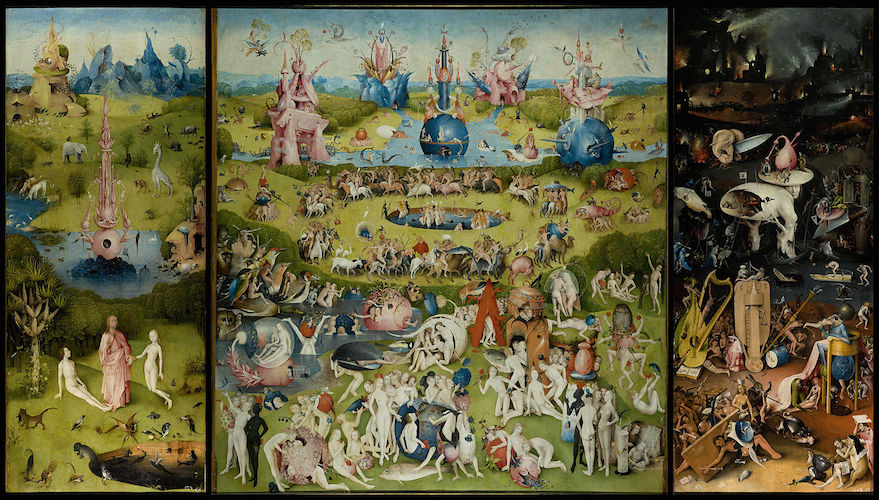
Heaven and Hell
(Hieronymus Bosch, in scrambled haiku)

a peacock, three Eves
with four apples up on top
dark twins flank six white thighs

*

a woman torn asunder
by silver spiked saw
all breast and sinew

*

grown from fish gums
rabid incisors, dark claws
how we are hungry
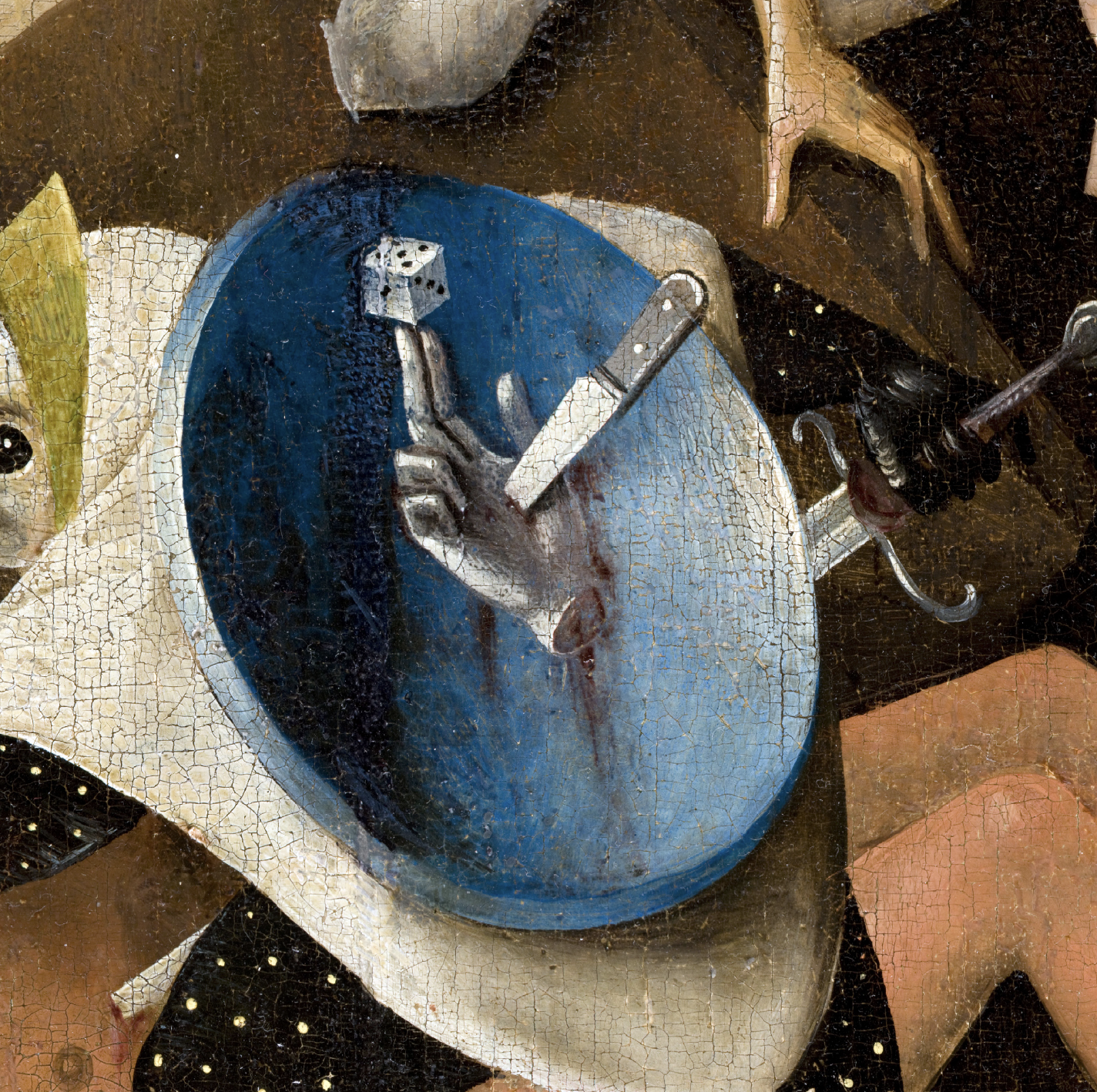
he is the keeper
of dead birds, their ocular
sockets oozing death

*

a man with a platypus bill
points to the words on the page
hooked crooked nose, a flashlight

*

the gourd drums,
the cockroaches
the sloped ukeleles

*

butterfly wings
salamander feet
a parade of devils

*

pterosaurs and frogs
sail through the constellations
feathers like silk, hook web flippers

*

slippery, sex stuffed with
moonlight, cock and buttock
cuffed, cucked, drowning

*

the pigment is cracking
the bonfires are crackling
the witches are cackling
soot, smut, braided angels
fingers in her sex, mouth open
drowning men are swimming

*

owls, line laundry,
hooded heads and varicose veins
stingray, crab, a basket of wolverine


*

the lamb of the world
in a tunnel below the loam
the keys to death and hades in her hooves

*

sail away
sail away
sail away

*

you are the doctor
at this table, this emptied heart
these fractured bones

*

my ears and my feet
have been severed by arrows
hell's sharp blades

*

the water is green life
and your wife's skin is red
blood, trickling from struck branches

a murder of crows
streaming from the crack of your ass
from his, gold coins.

*

a cauldron, an oboe,
a man vomits into a portal,
another man is born from blue.

*

three fey faces feed
on blackberries and pigs
a martyr is hogtied and stung with arrows

*

this is the house of empty barrels,
and an old and spooky widow
eyes glued to the window

*

the bridge to nowhere
the ladder to an overpass
that slides back down to earth, or hell

*

a reindeer is a centaur
a fig leaf is a burial cloth
a bovine jangles goblets and red silk

*

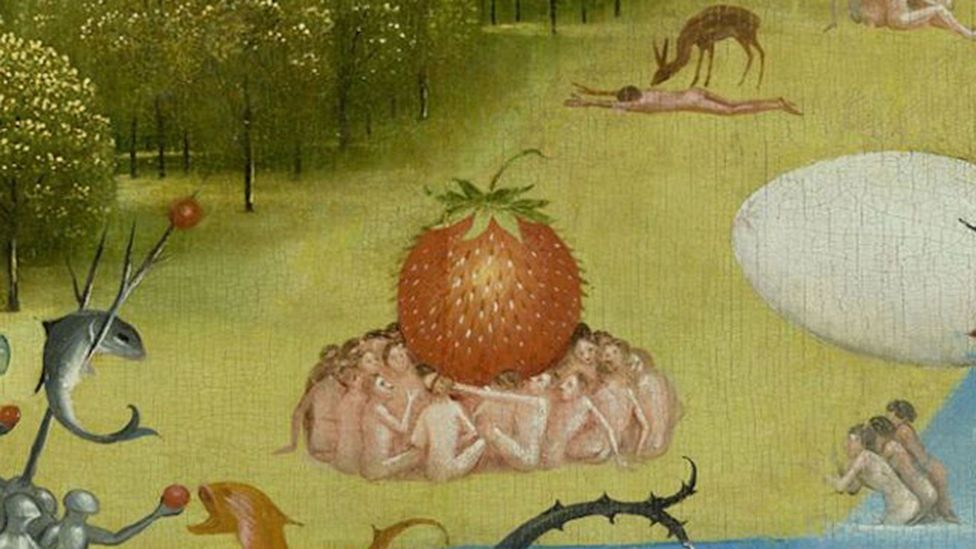
the gooseberry orgy, naked
circling the giant spiked fruit, mouths open,
dice, vice, stockings, and scorpions

*

the bull ruts until the woman's thighs
fall open and she cries with relief
at entry

*
a nun screams at puncture
porcupine quills, claws of skunk
sex with white teeth and a mask

*

plucked bird, polka dotted fox hijab
pewter vessel of bitter water
a turtle, a crystal ball in his rubber throat

*

there are ladders across hell
the miners and their shovels
hoist volcanic ash, ashes to ashes

*

the arrow, the bullet
they are aimed at the swan
watch how her wings span death, then life

*

frail white eggs glow
among cymbals and harps
so long ago, the garden

Lorette C. Luzajic
Lorette C. Luzajic writes poetry and flash fiction inspired by visual art. Her works are widely published and nominated. She is the founder and editor of The Ekphrastic Review. She is also an internationally collected visual artist.
Poetry from J.D. Nelson
gree--------N

gob
lint


ammo/nia nile

nihil
N.O.


wal-

	ker
	lace
        let
        mart
	nut
	rus
	ter
	ton


cylindricalifornia

mistaken for old john coltrane
buttery sky oh


warm germ

petrie
petri
	peachtree


bio/graf

J. D. Nelson (b. 1971) experiments with words in his subterranean laboratory. His poetry has appeared in many small press publications, worldwide, since 2002. He is the author of several collections of poetry, including Cinderella City (The Red Ceilings Press, 2012). His poem, “to mask a little bird” was nominated for Best of the Net in 2021. Visit http://MadVerse.com for more information and links to his published work. Nelson lives in Colorado.
Poetry from D.S. Maolalai
Herb tea

each afternoon
we set out our herbs
on their rack
to a spot they could finger
some sunlight.
we thought ahead;

propped open the door
with a painted blue chair
from the balcony. smells entered;
air softened, like water in cups
of herb tea. and sometimes
it was herbs, but hops
blew more often,
roasting like biscuits
in fumes rising out
of the guinness factory,

set up across
the way on the river,
which was really quite
nearby.

Where I am

inside; I’m a cell
passing protein.
my window a frame
on a bright
concrete yard.
yellow leaves climbing
the wall and distress marks,
broken through brick,
the bones of a long-
rotten pigeon coop. I own
one small fridge,
and a storage heater
and a painting
done in orange
of a tall city
landscape; dublin,
overlooking the quays.
picked up for 70 euros
in a shop on camden st
when I was last working. my teapot,
brown as old blood
and my books
are all thumbed for the first half
and forgotten. I
am a torn-up chip bag,
lying on the road,
looking at lights
in the ceiling.

My defence.

if I remember correctly,
in our two years together,
it was the first time
you’d learned
that I’d cheated.

but, in defence
of my defence:
at that point
we'd lived
different cities
for 8 months
and going longer.

in the morning
I called you,
broken as an angry
drunk's wineglass
and hungover
as a drunkard
as well. I got up – I went
to the city. took a train
and wandered london
like a bottle
on a brutal
sea.

people
were everywhere.

Water ingress.

there were storms
blowing east
from late sat
until afternoon
sunday. now the ceiling
of the entrance
to the branch
over Patrick St,
circles of stain
like a burned
dirty stove-top –
and leaks
getting through
in two places
at least. above
the main entrance
it's pooled
on the flatroof,
and through
some electrical
conduits. taking calls
monday morning
I organise contractors,
issue blanket POs
for supplies and a P1
priority. the news
of the closure
and all the redundancies
were made public there
only last friday. customers
pretty soon coming to check
on their money. this sends
the completely wrong
message, I'm told.

We'd planned on the beach

we'd planned
on the beach
for an evening
but in absence
some wind
had kicked up.

we sat in the car
in the wide
empty carpark,
drinking cold
tea from thermos,
and sandwiches meant
for the sand. the dog
was quite anxious –
had detected, I guess
the piss of dead fish
on the tideline.

I took her a minute,
hoping wind
would discourage
enthusiasm –
sand in my eyes
and the leash
in my fist
under pressure –

the atlantic a doorbell
and crouched
behind dune-piles,
pretending that no-one
was home.
.
DS Maolalai has been nominated nine times for Best of the Net and seven times for the Pushcart Prize. He has released two collections, “Love is Breaking Plates in the Garden” (Encircle Press, 2016) and “Sad Havoc Among the Birds” (Turas Press, 2019). His third collection, “Noble Rot” is scheduled for release in April 2022.
Poetry from Amit Parmessur
Lily and Reed

My mossy pad touching your mighty waist
melancholizes my petals. You play
the flute as if it were a lissom sword.
I love your Creole voice, twigs of raucous
French marinated and casseroled with
African leaves. A rich spinster reading
the soul of the perfect, poor man makes her
richer. I will give my horizontal
to your vertical. Give me not curved moons
that belongs to primitive people; give
me a rusty sickle that I may reap
you for myself. I cannot wait for you
to call yourself mine. Time, our breath, is but
a flower jealously jailed by its bud.
You are egoless; I want to live and
end on your reedbed, not in this soggy
palace. I want to call you, your voice mine.


Fatherly Forms

When I feel down, like a small bulb dying
among a crowd of condescending moons,
my guilty eyes see only one martyr.

He is a devoted, withering trunk
holding countless boughs, twigs, leaves, flowers, fruits.
Unmoved by his perpetual pain, like
greedy worms we feasted on his glory.
We picked up huge stones to stone him, sometimes.

Each dewy morning, the massive mountain
is losing his soil to the angry waves.
He walks around leaning against the walls
of the house he built but can no more own.
Like a scarecrow he kept us safe and fed

our fields, but since the avalanche of white
hair, he is toothless and frightens no birds.

And, when I spend the afternoon over
the bridge watching the fragile fish carry
their blissful bodies down the river, I
feel his youth in the rhythmic ripples and
know he would lie about his evening grief.


Self-Isolation & Shakespeare

A nameless day, I see myself leaning
on a Malboro backstage, my green tongue
in love with borrowed smoke. I talk of
dreams; I am the musical Mercutio.
Stickmen on fire queue up for my concerts.

A blank night, I find myself in seiza
at a shrine, gargling with sweet, warm water.
An Asian Orsino, I chew music;
I am the scarecrow stuffed with red hay,
whose harmonium goes wild and mild.

A dateless noon I see myself digging
into an oyster; I am Bassanio,
the gambler. I rejoice in the absence
of the sun, trying to lure a mermaid into
the spirited marrow of my drained skeleton.

I have no regret as my beard falls on
the cracked window sill. On the old table,
fresh newspaper. Covid count. Coldest rain.
To be Romeo, or not to be Romeo?
Back to my boulder, I am the snowman
cheating invisible death, in his blindness.
Amit Parmessur, 38, a private tutor, is a two-time Pushcart Prize and two-time Best of the Web nominee. His poems have appeared in over 165 magazines, namely WINK, The Rye Whiskey Review, Night Garden Journal, Hobo Camp Review, Ann Arbor Review and Ethos Literary Journal. He lives in Quatre-Bornes, Mauritius, where he spent his adolescence hating poetry.
Poetry from Jerry Durick
Donuts

Do they still eat donuts? It’s easy to picture it:

a squad car pulls up to the precinct or station

a cop goes in, heads immediately for the lounge

that small area that smells of the burned coffee

they all complain about but drink, and there on

the counter is the box of donuts. Might be from

Dunkin or, better, that small bakery someone’s

aunt owns or at least knows the owner. No lean

and hungry look about them, some go for jelly

others for glazed or chocolate. Don’t you recall

the pudgy policemen we’d see downtown, always

friendly, knew everyone, and always quick on

the draw when it came to donuts and burned

coffee. You have to wonder, now that you have

a moment, do they still eat donuts, like they did

back when a policeman was a familiar face and

sometimes even smiled.


Gunless

Never owned a gun, my mother said

“no son of mine…” and so I never did.

Never really bothered me either. My

Friends went off hunting and I stayed

Home in my gunless house waiting for

Their stories to unload. Missed that

Part most, the stories that guns give

A person, the hunt, the perfect shot

The pats on the back standing over

The kill, elements we knew from TV

And the movies, so many war stories

Westerns and gangsters, everyone

With a gun, toting or carrying. Knew

All the words, tough masculine stuff,

“make my day” and variations of that.

I grew up in a gunless home, never got

To clean one, load one, aim it, and then

Pull the trigger – and never shot anyone

By accident or on purpose, never stood

Over some slow-moving animal, dead

Now because I had a gun and shot it.


What's Left

On quiet evenings like this

I wait till after dinner


To drag the rubbish and

Recycling down to the end

Of the driveway.

It’s dark enough to go

Almost unnoticed

By neighbors who always

Win the race to be first

With their leavings placed

Out for others to pick through

To pick up, to take away.

We produce so much waste,

The things left over after

We live our daily lives.

We crowd, we fill, we mess

Yes, we stuff, we cram, we jam

We crowd the world with leftovers

With trash, with recycling that

Will never be recycled

With what is left over of our time

Here

We will fill it soon and then we’ll…
J. K. Durick is a retired writing teacher and online writing tutor. His recent poems have appeared in Third Wednesday, Black Coffee Review, Kitchen Sink, Synchronized Chaos, Madswirl, Journal of Expressive Writing, Lightwood and Highland Park Poetry.
Short story from Linda Hibbard
GROWING UP
Linda Hibbard
It is the autumn of my 7th grade at school. The first year at Frick Junior High.
The school is large and dirty and very impersonal. Perhaps it is the first year of my life that feelings seem to have any importance. I think I am lost, lost in a large world of uncaring people. It is as if I turned around and found myself in something I couldn’t understand and most of all didn’t want to understand.
I wonder what am I doing here and why? Why am I sentenced to this setting. Last year I didn’t seem to feel much of anything. I was a child that was taken care of and I want to go back, but I know I can’t. Now I’m something that is not a child, but what am I?
We’re told to go to period 1, that is P.E., so I go. The teacher always looks so strange. Her legs are thick and bulky and she wears short socks and heavy white shoes. Her face is like stone, no emotion, she acts like something of a man and woman combined. I am scared. We dress in a cold room, it is always cold in that room. We dress in queer looking blue shorts with elastic in the legs and snaps on the side. The shirt is blue all blue with snaps in the front. Everybody looks alike, we are now going to play tetherball, and we do. Then the loud whistle brows, it blows in my ear and I can hear the ringing for the next ten minutes. The game is finally over, nobody seems to know who won or lost and nobody cares.
Next we shower in dirty stalls and hear laughing, giggling and yelling. My hair is a mess and the day has just began. I wonder will I get through Period 2.