While the rest of the submarines are off patrolling the oceans.
With sonar ears and gangly periscope eyes.
Waiting for their shore leave.
An opportunity to hit the links.
Your
life can be in park
even if you don’t drive
that is what
they never tell you
once they get
around to not telling
you things.
Steve Jobs
ate his food raw
and would always lease a car
for 6 months
because anything longer
required a license and registration
under California law
so that every six months
Steve Jobs would drop off his car
at the dealership
and drive a new one
off the lot
behind that steering wheel
that had just been waiting
for its turn at the helm.
Question
What’s wrong with losing your mind?
You may find it all over again.
And never in the way or place
they told you.
Ryan Quinn Flanagan is a Canadian-born author residing in Elliot Lake, Ontario, Canada with his wife and many bears that rifle though his garbage. His work can be found both in print and online in such places as: Evergreen Review, The New York Quarterly, SynchronizedChaos, Literary Yard, Red Fez, and The Oklahoma Review.
Rome. An astonishing Mega-Event and Spectacle dedicated to Dante Alighieri on Via Margutta—a Street linked to Fellini, Picasso, Gregory Peck, Audrey Hepburn. Billy Wilder Celebrated in SF and Naples.
By Federico Wardal
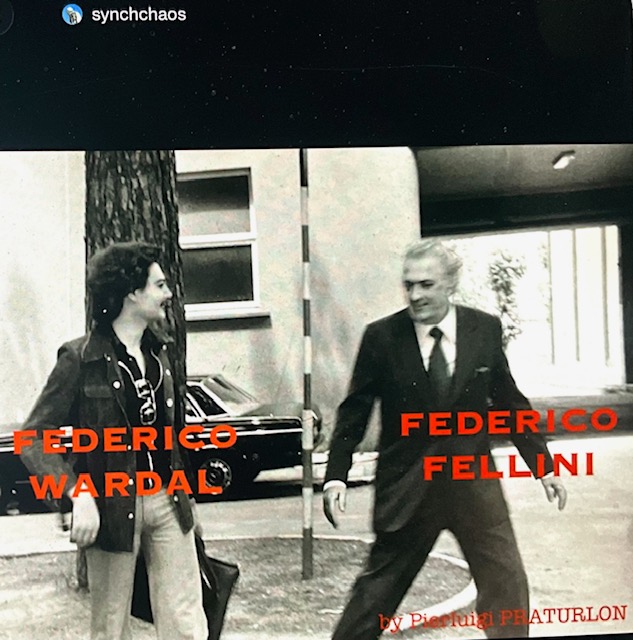
Rome. In early December of last year, *Il Messaggero*—a newspaper that frequently reaches one million readers a day—published a massive article about me (https://www.ilmessaggero.it/roma/eventi/wardal_amato_da_fellini_da_hollywood-9232025.html?refresh_ce), an article that would restore my full renown throughout Italy. Around Christmastime, a magical encounter took place between myself and Tina and Teresa Zurlo—the curators of one of Europe’s most important art galleries.
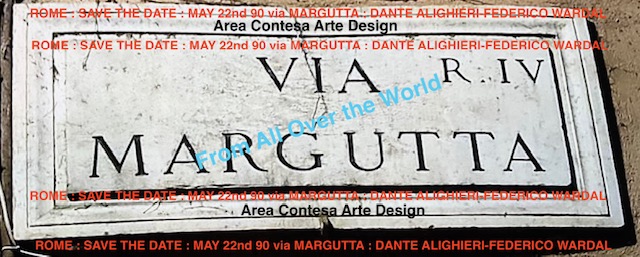
It is located at number 90 on the legendary Via Margutta, this street is inextricably linked to my mentor, Federico Fellini (who lived at number 110), as well as to Pablo Picasso; it is also famously known as the setting for the film *Roman Holiday*, starring Gregory Peck and Audrey Hepburn, which was filmed at number 51.
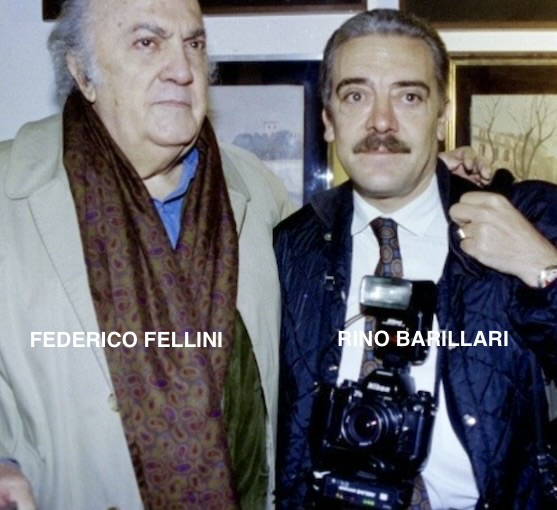
Via Margutta also played a starring role during the years of Fellini’s *La Dolce Vita* and the era of his paparazzi—foremost among them the globally famous and celebrated Rino Barillari, known as “The King.”
During our meeting, the Zurlo sisters and I discussed Fellini, as well as a major exhibition dedicated to him by the renowned painter Mario Russo—an event graced by the exceptional presence of his daughter, the famous actress Adriana Russo, serving as its godmother. However, as I was unable to return to Rome due to filming commitments in Hollywood, I sent a video message offering my greetings and recalling my personal bond with Fellini. The video proved to be a great success, and the brilliant Zurlo sisters subsequently informed me that they wanted me to serve as the absolute star of a grand event dedicated to the “Supreme Poet ” Dante Alighieri—an event that would extend into a subsequent tribute to Pier Paolo Pasolini and Dario Bellezza.
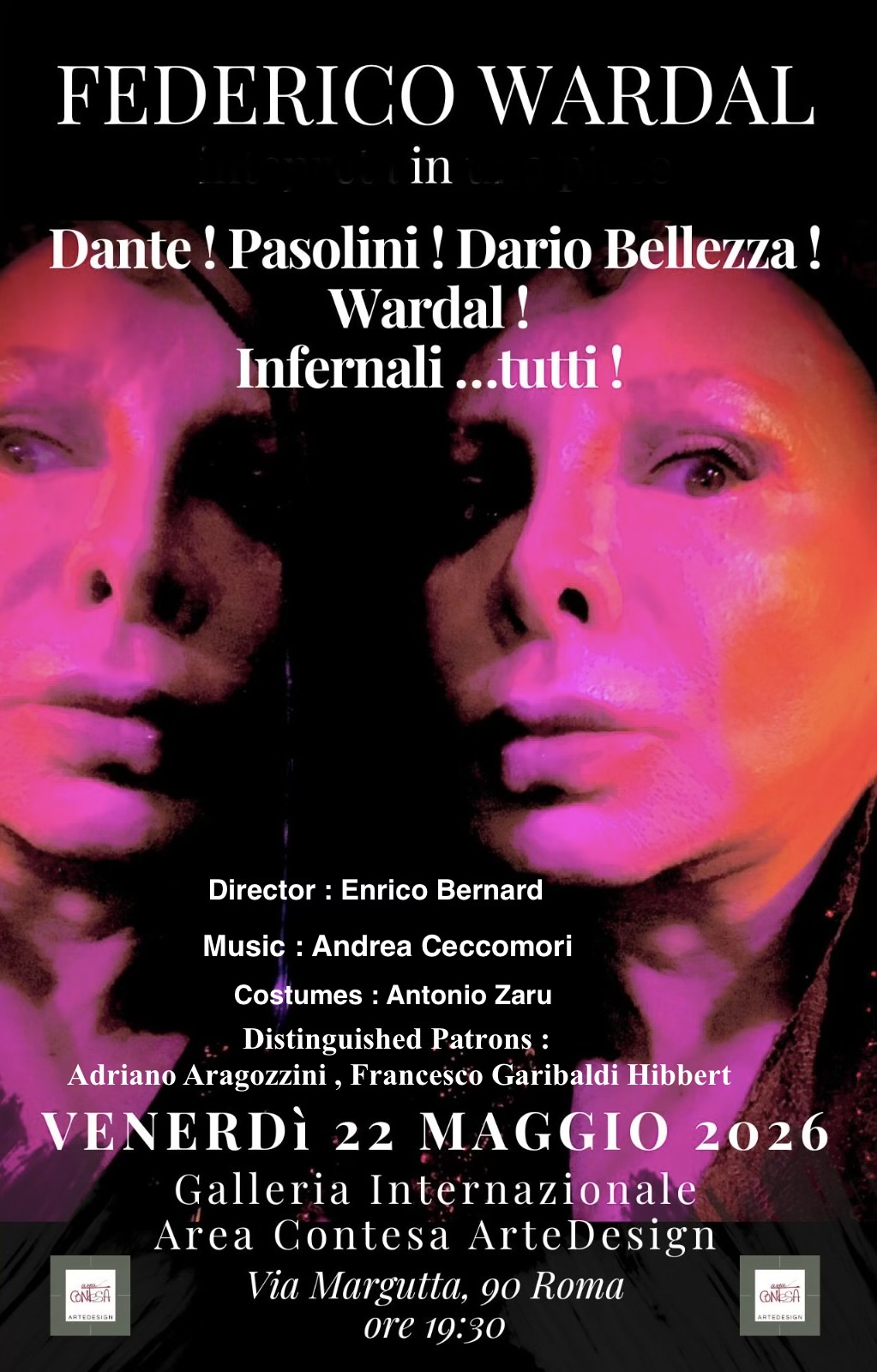
Inspired, I bring forth—from “the strata of the rock of history”—a short theatrical piece titled: *Dante, Pasolini, Dario Bellezza, Wardal: Infernal… all of them*. It is a reverse journey for the poet Virgil, who guides Dante into the contemporary world of Pasolini, Dario Bellezza (a friend of mine), and myself. Enrico Bernard—a playwright and director of exceptional caliber—directs me; the popular flutist Andrea Ceccomori graces the performance with magical musical moments (much like in the film *Anita*); and Antonio Zaru has designed for me a floor-length tunic of “Inferno-red” sequins.
My entrance is planned to take place from a luxurious automobile—naturally, also “Inferno-red.” An event constructed from such elements—never before blended in this way—has already circled the globe before it has even taken place. The glamour enveloping the event serves as a garment through which—with increasing clarity—emerge political, social, and moral issues: questions regarding peace, and the rampant psychological toxicity pervading both personal relationships and fluid modern connections. It feels as though a “Golden Age of Hollywood” has returned—a legacy that belongs to me through my friendships with Alfred Hitchcock and Billy Wilder. Indeed, I am bringing Billy Wilder back into our present times, envisioning him as the potential protagonist of a mega-event spanning San Francisco and Pompeii—the latter being close to Ischia and Sorrento, where Wilder filmed *Avanti!* with Jack Lemmon.
From the Cannes Film Festival, stars are already booking their attendance for the Roman event scheduled for May 22nd; meanwhile, in Egypt, *The Times International*—edited by Ibrahim Shehata—has published a fascinating article on the subject: https://www.thetimesinternational.com/?p=169588. A flurry of activity is currently underway, forging connections between an American film festival—active across California, Massachusetts, Rhode Island, and New York State—and the Vesuvius Film Festival in Pompeii, presided over by architect Giovanna D’Amodio. Meanwhile, the film *Anita*—based on a poem by the hero Garibaldi and a winner at both the SF New Concept IFF and the Vesuvius FF—is enjoying special screenings in Brazil at the Gramado IFF, as well as at Andrea Priori’s Cortintelvi IFF (located between Como and Milan); it has also garnered interest in France at the *Festival International du film d’histoire*.
By now, the role of “puppeteer” seems to be taking hold of me—a role I embrace in order to bring to life these cultural and artistic bridges that constitute my lifelong dream. The very latest news concerns the event scheduled for May 22nd in Rome: the occasion will be graced by exceptional patrons—the legendary impresario of Tina Turner, Domenico Modugno, and the longtime head of the Sanremo Festival, Adriano Aragozzini—alongside Francesco Garibaldi Hibbert, a direct descendant of the “Hero of Two Worlds” who is currently making waves in the film world with *Anita* (a film about his famous ancestress, Anita Garibaldi). The event’s distinguished hostess will be the great actress Adriana Russo. Also taking center stage will be prominent ladies such as the Hon. Angela Alioto and *Cavaliere* Silvia Gardin.
We anticipate a veritable flood of VIPs, aristocrats, academics, stars (whose names we will reveal only after the performance), and filmmakers—including, of course, the performance’s director, Enrico Bernard. They will be joined by directors Antonello Altamura (*Ancient Taste of Death: The Sinister Legend of Wardal*)—who has a “top-secret” surprise in store!—as well as Andrea Marfori (*SHEMSU-HOR*), Jason Zavaleta (*Start on Market*), Sherif El-Azma (*Al-Maza*), and Jennifer Glee (*Narcisse Fluid*). All will be there with me, accompanied by the stars of their respective films—my heartfelt thanks to them all! Also in attendance will be director Agostino Marfella, who, like me, shares a theatrical bond with the poet Dario Bellezza.
But hopefully, all of this will be replicated live in NYC, LA, SF, and the Bay Area—and certainly on both Italian (TV programs featuring Maria Luisa Lo Monte) and American television networks.
I entered the water but had noticed other people did not. Yet there were no sign or verbal warnings about anything. The sea in a storm season had somehow riled and stirred everything and people were getting almost immediately stung by jellyfish upon entry. And I was next.
I didn’t realize at first, just that my body ached and itched and I got right out and tried different things. Water cold. Pool water. Air. Nothing worked. A doctor came and gave me some medicine, and we could see the line on the arm that extended far across the inner arm that was swollen. After a while I felt well, not in crisis.
But the doctor came back and said she was worried because that medicine is supposed to be liquid not solid, that it had gotten old. I said not to worry, and she stood watching the sea eating an ice cream cone.
At the night I sat on the balcony and read For Whom the Bell Tolls under a soft yellow electric lamp. A lizard, the small type, watched this from the stucco wall. This was in Puerto Morelos. I slept a bit and began reading again inside the morning. Beautiful pelicans that looked like dinosaur things flew. I stood and stretched. Things would be okay. I’d avoid the sea for a while, certainly. But things would be okay. There were passages from the novel written so well I had to just pause and stare at the sky, wondering how Hemingway had done that. Ya, things were well enough, having Hemingway and that balcony. Besides, they had a good pool on the grounds.
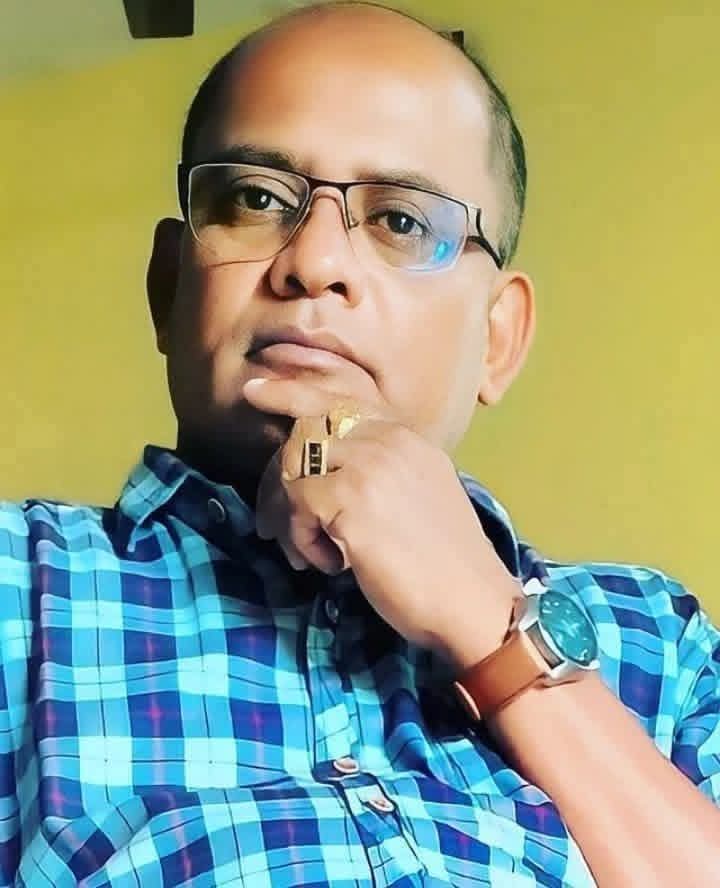
(DOB 07/06/1973) is a passionate Indian Author-cum- bilingual poet while a tremendous Asst Professor of English by profession in the Ganjam district of Odisha. He is an accomplished source of inspiration for young generation of India. His free verse on Romantic and melancholic poems appreciated by everyone. He belongs to a small typical village Nandiagada of Ganjam District,the state of Odisha.After schooling he studied intermediate and Graduated in Kabisurjya Baladev vigyan Mahavidyalaya then M A in English from Berhampur University PhD in language and literature and D. Litt from Colombian poetic house from South America.
He promotes his specific writings around the world literature and trades with multiple stems that are related to current issues based on his observation and experiences that needs urgent attention. He is an award-winning writer who has achieved various laurels from the circle of writing worldwide. His free verse poems not only inspire young readers but also the ready of current time. His poetic symbol is right now inspiring others, some of which are appreciated by laurels of India and across the world. Many of his poems been translated in different Indian languages and got global appreciation. Lots of well wishes for his upcoming writings and success in future.
He is an award-winning poet author of many best seller books. Recently he was awarded Rabindra nath Tagore and Gujarat Sahitya Academy for the year 2022 from Motivational Strips. Jaidev Puraskar from Kavita Minar Badamba Cuttack A gold medal from world union of poets France & winner Of Rahim Karims world literary prize 2023.The government of Odisha Higher Education Department appointed him as a president to Governing body of Padmashree Dr Ghanashyam Mishra Sanskrit Degree College, Kabisurjyanagar. Winner of ” HYPERPOEM ” GUNIESS WORLD RECORD 2023.Recently he was awarded at the SABDA literary Festival at Assam. Highest literary honour from Peru contributing world literature 2024.Prestigious Cesar Vellejo award 2024 & Highest literary honour from Peru. Director at Samrat Educational charitable Trust Berhampur, Ganjam Odisha.
Vicedomini of the World Union of Poets, Italy. UHE awarded him the prestigious Golden Eagle award for his contributions to world literature in 2025.
Completed 257 epistolary poems with American poet Kristy Raines.
Bharat Seva Ratna National award 2025, International Glory award from Manam Foundation Hyderabad Telengana. On the eve of the 1979 Independence Day celebration he earned the Rashtra Ratna award & Maa Bharati Seva Sammana. In 2025 he received a doctorate in Humanity and Literature from Theophany University in Haiti with UNESCO, AEADO and the leaders of Autonomy International. The Prince of Crimea and the Golden Horde from the House of Genghis Khan gave him the prestigious title of “Honorary Bey.”
Received Sahitya Ratnakar from New Delhi 2025, Honorary Doctorate from RMF University collaborated with east and west university Florida United States of America on the eve of International Peace Day. Prestigious THE CONDOR OF ANDES from UHE Mexico 2025. PRESTIGIOUS DOCTORATE from VICTORIA UNIVERSITY OF CULTURE AND WORLD PEACE 2025. Nominated for Padmashree 2025. Three-time Gold from the world Union of Poets France. Doctorate from Theophany university Haiti contribution for the world literature 2025. SAHITYA RATNAKAR from New Delhi. Dr. Mayadhar Mansigh Saraswat Samman 2025. Doctorate in Gandhian Philosophy, Peace and Humanity 2025.
Doctorate from Victoria University for Peace 2026. UHE of Peru appointed him as a World Ambassador for Peace and Justice 2026.Valiant of the Nation Award 2026 on the eve of the 129th birthday commemoration for Subash Chandra Bose.
INTERNATIONAL BOOKS
1.Psalm of the Soul 2. Rise of New Dawn 3. Secret Of Torment 4. Everything I Never Told You. 5.Vision Of Life National Library Kolkata 6.100 Shadows of Dream 7. Timeless Anguish 8. Voice of Silence 9.I Cross my Heart from East to West and epistolary poetry with Kristy Raines, published in USA.
When you peel back a Type-B woman, beans that sprouted upon dust spring forth. With every sound of a rolling bean, a corner is carved out. A corner: a place seen only when you kneel and bow your head. A place where tilted heads— those nearly missed—begin to bud. Therefore, shell the beans gently, as if stroking them soft. Such is the counsel of the corner.
Scattered sincerities are gathered onto the dining table. Within the husks, hollowed by heartache, the rank regrets of things that lunged away lie in a row, once-sunken pits.
Repeating mistakes cast far off in shallow sleep, she opens her eyes to the morning sun. From the woman’s listless calves, now a layer lighter, baby mice flee in a frantic line.
“Be fruitful, multiply, and fill the earth”— a fitting night resides within each bean pod. Beans, born but a moment ago, leave their hulls one after another to simmer intimately, bubble-boil. Every bean is nurturing its own grain of a corner.
Profile
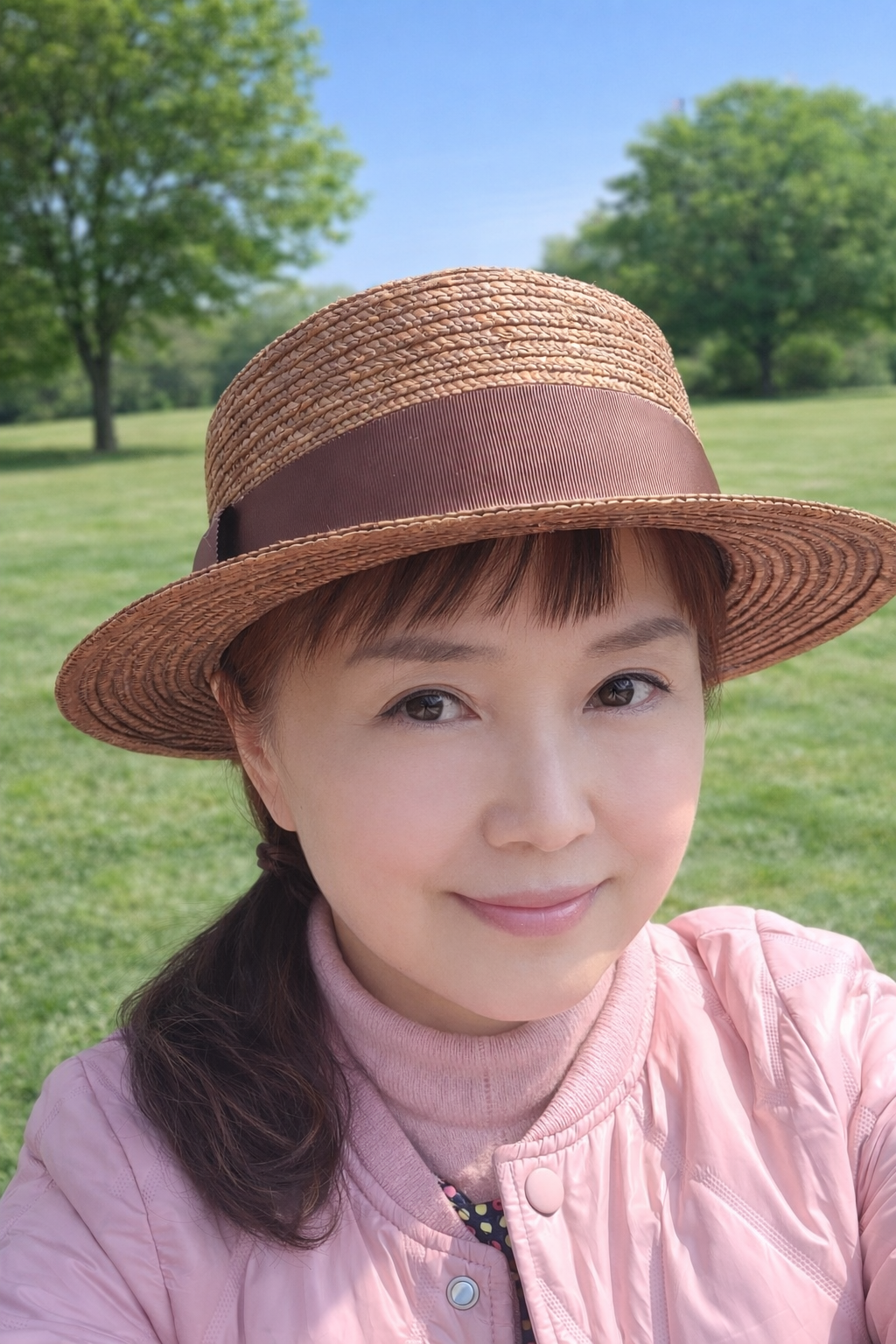
Poet Yeon Myeong-ji began her literary career in 2013 with the poetry collection 『Gashibi』, published in the Minerva Poetry Series.
Her published works include the poetry collections 『Sitting Like an Apple』 and 『Where would the House of the Sorry’ be? 』 the e-poetry collection 『Seventeen Marco Polos,』 and the travel essay 『Step by Step, Walking the Camino.』
She has received the Tolstoy Literary Award, the Homi Literary Award, the Cheongsong Gaekju Literary Award, and the Aviation Literary Award. In 2025, she was awarded the Bronze Prize in Poetry at the Literature Asia Awards.
Her poems have been translated and published in local languages in India, Pakistan, Kosovo, Italy, Egypt, the United States, and Belgium,Greece,and Iraq.
In general, the results obtained scientifically confirm that innovative approaches in native language lessons significantly increase the effectiveness of working with a dictionary. This indicates the need to combine traditional methods with innovative approaches in the modern educational process, without completely rejecting them.
CONCLUSION
In conclusion, the process of working with a dictionary in native language lessons is one of the pedagogical areas that is of decisive importance in the formation of students’ speech development, level of thinking and communicative competence. The analysis conducted during the study showed that working with a dictionary is not just a process of teaching new words, but a complex methodological system that shapes students’ attitude to the language, develops their creative and independent thinking.
Traditional approaches – that is, methods of explaining, memorizing and translating words – although useful to a certain extent, cannot fully meet the requirements of today’s education. In a modern educational environment, it is necessary to involve students as active participants, increase their interest and direct them to independent research. In this regard, innovative methods significantly increase the effectiveness of working with a dictionary.
According to the results of the study, interactive methods (cluster, brainstorming, group work), digital technologies (electronic dictionaries, multimedia tools, mobile applications) and gamification elements contribute to the rapid and stable acquisition of vocabulary by students. In particular, these approaches increase students’ interest in the lesson, forming them as active participants and independent thinkers.
Also, the research revealed that when innovative methods are used, students develop not only their vocabulary, but also their speech literacy, level of logical thinking and creative approach. This directly affects the quality of education and the effective organization of the educational process.
In general, organizing work with vocabulary in native language lessons based on modern innovative approaches is one of the important factors in increasing educational efficiency. In the future, teachers should further improve these methods and widely apply them in the educational process. This will serve to form a high level of speech culture, independent thinking and creative approach in students.
REFERENCES
Gulamov A. Methodology of teaching the native language. – Tashkent: Teacher, 2010. – pp. 145–150.
Mahmudov N. Language and speech culture. – Tashkent: Science, 2018. – pp. 98–105.
Matchonov S. Interactive methods in native language education. – Tashkent: Innovation, 2020. – pp. 67–72.
Harmer J. How to Teach English. – London: Longman, 2007. – pp. 120–130.