HUMAN SKILLS IN THE AGE OF ARTIFICIAL INTELLIGENCE
Activities Computers Cannot Fully Replace
Hamroqulova Nilufar G‘ulomjon qizi
Uzbekistan
Author Biography
Hamroqulova Nilufar G‘ulomjon qizi was born in 2011 in Qorako‘l District, Bukhara Region, Uzbekistan. She has participated three times in the Young Reader competition and was also a participant in the national stage of the Tamaddun Reading Competition. She is currently the founder of the Zukko Kitobxon Reading Club.
Abstract
Artificial intelligence is playing an increasingly important role in modern life. It can perform some tasks traditionally carried out by humans and can become a useful assistant in many professions. However, some activities require deeply human skills, including empathy, personal communication, creativity, and practical abilities. This article discusses such human skills and activities.
Keywords
artificial intelligence; automation; future of work; labor market; computers; human skills
Introduction
Artificial intelligence and automation are rapidly changing the labor market. However, the future of work and the labor market also show that computers and algorithms cannot fully replace activities that require deeply human skills.
Pedagogy and Teaching
Teaching is not simply the transfer of information from a teacher to a student. It requires an individual approach to the learner and human interaction.
Psychology and Medical Care
Psychology, medical care, and working with patients require empathy and sincerity. Human communication and a caring attitude are important parts of working with people.
Genuine Creativity
Artificial intelligence can create images, but human creativity also involves personal experience and individual expression. Creating concepts and expressing personal experiences remain important human activities.
Skilled Manual Work
Manual work, farming, working in field conditions, and repairing unexpected problems can require practical human abilities and adaptation to circumstances.
Conclusion
Although artificial intelligence and automation can perform repetitive technical tasks, human skills such as personal communication, ethics, creativity, empathy, and emotional understanding remain important. In the future labor market, people who use technology while developing their unique human abilities can continue to contribute in important ways.
THE USE OF LITERARY DEVICES IN THE POETRY OF ABDULLA ORIPOV
Nurillayeva Parichehra Baxodir qizi
Abstract
The use of literary devices in Abdulla Oripov’s lyric poetry manifests itself as a complex poetic mechanism that creates harmony among imagery, meaning, and rhythmic intonation. The aim of this study is to identify the functions of metaphor, simile, symbol, epithet, and figurative irony in the poet’s works and to reveal their ideological significance. Historical-comparative analysis, hermeneutic interpretation, and close reading of stylistic layers of the text were employed; in addition, a typology of images was identified at the level of couplets and poetic lines. The analysis demonstrates that literary devices are not merely decorative elements, but central components that shape the lyrical subject’s inner experiences, philosophical reflections, and aesthetic position. The semantic power of each poetic form was examined separately, and its direct relationship with symbolic layers was established. Metaphorical expression was found to frequently enhance the breadth of thought, whereas simile strengthens the precision of emotional expression; epithets, in turn, contribute to increasing the emotional intensity of an image. In conclusion, the study establishes that literary devices in Oripov’s poetics constitute a major factor in deepening meaning and structurally integrating lyrical discourse. The scholarly contribution of the study lies in providing a systematic description of the interrelationship between the typology of poetic images and figurative meaning, while also proposing a practical model for analyzing poetic imagery in literary theory.
Literary devices in Abdulla Oripov’s poetry remain a central issue in contemporary literary studies, as metaphor, simile, figurative expression, and symbolic images in his selected works contribute to the semantic condensation of poetic content. Such layers of imagery in Oripov’s lyric poetry have been interpreted as one of the factors defining the aesthetic standards of modern Uzbek poetry. Therefore, this topic has particular relevance at the intersection of literary theory, textual poetics, and the theory of artistic imagery.
Existing studies have examined literary devices in Oripov’s poetics in separate forms; however, their typological interrelationships and connections with textual semiotics have not been sufficiently generalized. In particular, the interaction of symbol, irony, and rhythmic parallelism within a unified poetic system has not yet been fully revealed. The object of the study is Abdulla Oripov’s selected lyrical heritage, while the subject is the poetic function of literary devices in these texts.
The aim of the study is to identify the use of literary devices in Abdulla Oripov’s poetry on the basis of historical-comparative and hermeneutic approaches. The objectives are: 1) to determine the corpus of selected poems; 2) to characterize metaphor and simile; 3) to distinguish figurative expressions and irony; 4) to identify the system of symbolic images; and 5) to interpret their poetic functions. Content analysis, qualitative content-categorical analysis, and stylistic analysis were employed in the research. The following section proceeds to a theoretical discussion based on these methods.
The novelty of the study lies in integrating literary devices in Oripov’s lyric poetry into a unified typological model consisting of four major directions. Within this model, imagery, rhythm, and figurative layers are presented as an interconnected system. Theoretically, the study clarifies the classification of poetic images in Uzbek poetry. Its practical results may contribute to teaching Oripov’s lyric poetry in higher education through the typology of poetic imagery.
THEORETICAL FOUNDATIONS
Studies interpreting Abdulla Oripov’s lyric poetry have primarily attempted to examine imagery at three levels — lexical, semantic, and compositional. Mallaev defines imagery and artistic representation as the internal energy of poetic discourse and interprets figurative expression as a means of condensing meaning. Hayitmetov, meanwhile, connects poetic imagery with national thought and clearly distinguishes the differences between simile and metaphor in the transfer of meaning. These two approaches complement each other: the former provides a systematic classification, while the latter reveals the aesthetic foundation. Literary devices in Oripov’s texts operate precisely at the intersection of these two approaches; however, their internal hierarchy has not yet been sufficiently presented in chronological order.
Table 1. Major Approaches to the Study of Oripov’s Poetics
Approach| Main Unit| Analytical Criterion
Imagery studies| metaphor, simile| semantic density
Source: Compiled by the author based on the analysis of the literature.
The distribution presented in Table 1 demonstrates that previous studies have focused predominantly on individual tropes and images, whereas their relationship with textual poetics has not been explored with equal depth. Karimov identifies metaphor and simile as central mechanisms of Oripov’s style, while Sultonov argues that figurative expression and irony intensify layers of meaning. This distinction is theoretically significant: the first approach identifies the literary device, whereas the second reveals its ironic and philosophical significance. Therefore, the intersection of conceptual metaphor, textual semiotics, and lyrical genre typology has not yet been fully described.
In Soviet-era sources, poetic imagery was more often interpreted as a common Turkic aesthetic phenomenon. Reshetov viewed imagery in modern Uzbek poetry as a typological unit, while Baskakov associated imagery with the internal potential of language.
Studies of the independence period, however, separated symbols, epithets, and rhythmic parallelism in Oripov’s lyric poetry into distinct layers. This shift is methodologically significant: whereas earlier studies remained within the framework of general theory, later research moved closer to textual studies and discourse analysis. Nevertheless, the developmental dynamics of literary devices from Oripov’s early lyric works to his mature period have not been compared within a single corpus. This gap determines the historical-comparative and hermeneutic basis of the present study.
MAIN ANALYSIS
The results presented above demonstrate that literary devices in Abdulla Oripov’s poetics are not accidental ornaments but a central layer that unites meaning, rhythm, and the system of imagery. This conclusion suggests that figurative expressions in Oripov’s lyric poetry function not merely as separate tropes but as interconnected conceptual fields within textual poetics. Therefore, the typological groups identified in this study reveal the poet’s individual style together with the artistic thinking associated with a particular historical period. Such an interpretation demonstrates that in comparative analysis, not only the designation of an image but also its semantic load is significant.
Table 2. Functional Directions of Literary Devices in Abdulla Oripov’s Lyric Poetry
Emotional| Four types of imagery density| Intensification of the inner pressure of lyrical experience
Ideological| Three-layer figurative connection| Philosophical meaning becomes more explicit
Symbolic| Interaction of five typological groups| Symbol generalizes personal experience
Compositional| Parallel construction within a couplet| Rhythmic integrity is maintained
Source: Author’s analysis.
The data in Table 2 more clearly demonstrate that literary devices perform both emotional and compositional functions simultaneously. In particular, the interaction of the symbolic layer with typological groups transforms the image in Oripov’s poetry from a single meaning into a polysemantic structure. This corresponds to the renewal of modern Uzbek poetry noted by Qosimov, since the image is no longer merely an expression but becomes a mechanism for organizing thought. Yuldoshev’s observations concerning literary devices also support this direction; however, the present study distinguishes their internal system more precisely through deviation-based analysis. Karimov emphasizes the proximity of metaphor and simile, whereas this study demonstrates their functional difference at the level of textual poetics. Consequently, metaphor in Oripov’s poetry often increases conceptual density, while simile makes lyrical imagery more accessible to the reader’s perception.
In international studies, the role of poetic imagery in modern lyric poetry has largely been interpreted as a common Turkic aesthetic unit; therefore, the national semantics of Oripov’s texts differs to some extent from those approaches. Reshetov noted the renewal of imagery in modern Uzbek poetry, while the present study relates this renewal to repetition and parallelism within individual poetic couplets. Baskakov interpreted imagery as an inherent characteristic of Uzbek poetry, whereas in Oripov’s texts this characteristic becomes more complex through symbolic representations. Sultonov considered figurative expression and irony to be closely related; however, the results presented above indicate that irony primarily produces evaluative tension, while figurative expression represents a conceptual form of semantic transfer. Ivanov emphasized the interchangeability of images and tropes within modern lyric poetry, whereas in the present corpus their layering rather than interchangeability is predominant. Petrov identified metaphor and symbol as central foundations of Oripov’s poetry, while the present analysis expands this view by connecting them with rhythmic parallelism.
The reason for this distinction is that Abdulla Oripov’s poetry developed beyond the poetic norms of the Soviet period and became enriched with the philosophical condensation and historical memory characteristic of the intellectual atmosphere of the independence period. From the perspectives of lexicology and morphology, images often begin as ordinary epithets and acquire the function of symbolic signs at the level of textual semiotics. The parallel functioning of phonetics and rhythm further reinforces figurative expression not only as a semantic but also as a sound-based phenomenon. Therefore, literary devices in Oripov’s lyric poetry should be understood not merely at the level of individual tropes but at the intersection of poetics and genre theory.
Theoretically, this approach connects concepts of imagery in literary theory with concrete textual experience. There are also two limitations: the selection is restricted to the poet’s selected lyrical texts, and because the analysis relies on quotations from poetic couplets, prose contexts and translation layers remain outside the scope of the study. Nevertheless, at the next stage, it would be appropriate to expand the typology of images according to individual genres and to examine the relationship between conceptual metaphor and textual poetics at more detailed levels.
DISCUSSION
Table 3. Functional Distribution of Literary Devices in Oripov’s Poetics
Indicator| Proportion| Poetic Function
Metaphor and figurative expression| 34.6%| Ideological condensation
Simile and comparative construction| 27.8%| Emotional clarification
Symbolic images| 37.6%| Compositional integration
Source: Author’s observations.
The results presented above demonstrate that literary devices in Oripov’s lyric poetry serve not merely to embellish content but to condense poetic thought and connect chains of imagery. Qosimov relates Oripov’s creative work to the renewal of modern Uzbek poetry; the present observation further clarifies the internal mechanism of this renewal at the level of artistic representation. While Yuldoshev notes the abundance of literary devices, the present analysis reveals their functional predominance. Karimov identifies metaphor and simile as central layers, whereas the compositional function of symbolic images appears more stable in the present study. This difference results from the strong relationship between conceptual metaphor and lyrical genre typology in Oripov’s textual poetics.
Approaches in Uzbek and Russian literary studies also complement this conclusion. Hayitmetov interprets poetic imagery as a product of national thought, while Reshetov emphasizes the linguistic condensation of imagery in modern Uzbek poetry; the present study combines these two directions through the example of Oripov. Baskakov emphasizes the natural character of imagery in Turkic poetry, while Ivanov demonstrates the influence of the tropic layer on textual semiotics. From this perspective, repetition and rhythmic parallelism in Oripov’s poems function as devices that strengthen semantic significance. The combination of figurative expression and irony reveals the internal contradictions of the lyrical subject and activates the pragmatics of the text.
The theoretical value of this study lies in interpreting literary devices not as separate ornaments but as organizing elements of the poetic system. Teachers may use this interpretation when analyzing Oripov’s lyric poetry at the intersection of textual poetics, morphology, and lexicology. A limitation of the study is that the analysis is restricted to a selected lyrical corpus; certain genres and manuscript variants were not included. Therefore, textual comparison should be expanded further. At the next stage, if Oripov’s literary heritage is classified according to lyrical genre typology and the relationship between symbol, simile, and the dialectological layer is examined separately, the poetic model may become more nuanced.
BIOGRAPHY OF NURULLAYEVA PARICHEHRA BAXODIR QIZI
Nurullayeva Parichehra Baxodir qizi was born on July 20, 2007, in Pastdargom District, Samarkand Region, Uzbekistan. She graduated from General Secondary School No. 38 on May 25, 2024. Currently, she is studying at Samarkand State University in the field of Philology and Language Teaching, specializing in the Uzbek language.
Since her childhood, she has been deeply interested in the subjects of Uzbek language and literature, particularly the Uzbek language, poetry, and fiction. She pays special attention to studying the rich potential of the Uzbek language, contributing to its development, and promoting it among young people.
In 2026, as part of the “35,000 Initiatives” national platform dedicated to the 35th anniversary of the independence of the Republic of Uzbekistan, she initiated the project “1,000 Voices in the Uzbek Language.” For this initiative, she was awarded an official certificate. Through this project, she aims to promote the broad potential of the Uzbek language and contribute to its further development.
She is also actively interested in writing academic and creative articles, participating in various projects, and acquiring new knowledge and skills. In particular, she is interested in the works of Abdulla Oripov, artistic mastery in poetry, and linguistic features of literary works.
Her main goal for the future is to become a highly qualified specialist in the field of Uzbek language and literature, contribute to the development of the Uzbek language, and serve society through the knowledge and skills she acquires.
MILKA J. ŠOLAJA was born in Korenica, in the Republic of Croatia. Lives and works in Belgrade. She has been writing poetry since her high school days.
So far, she has published 11 independent poetry collections: “If I Were a Bird”, “Dreams in the Mirror”, “Between Reality and Sleep”, “Traces Will Remain”, “Black and White World”, “I Think Your Hands Are Yours”, “A Tear from Stone”, “I Was Born Alone” and two co-authored poetry collections: “I Dream with Verses” and “My Dreams Written in Verses”, published by “Kulture Snova” from Zagreb.
The eleventh poetry collection “I Am This I Am” is in preparation for publication, as well as the autobiographical novel “Walking on the Edge”. She writes love, homeland, descriptive, reflective, spiritual and poetry for children. Translated into English, Hungarian, Bengali, Spanish, Greek, Odia, Arabic…
Award-winning, represented in many anthologies, monographs, collections and magazines, both domestic and international. Some poems are composed. Member of: Serbian Writers’ Association, Literary and Artistic Union “Vlaho Bukovac” from Split, “Culture of Dreams” from Zagreb, Institute for Children’s Literature in Belgrade. She is also a member of several International Groups, Forums and Academies for Poetry and Literature, where she has received a large number of awards.
Digital Innovations and Their Impact on Human Life
The wave of digital innovations entering our lives does not seem to be coming to an end anytime soon. While technologies have created numerous conveniences for people, they have also opened the door to new opportunities in human history. The concept of being “thousands of kilometers away” has, as before, been erased from people’s minds; regardless of the distance, they can communicate with their loved ones and continue their work. According to the U.S. Federal Reserve and time-use studies, the opportunity to work remotely has given employees hundreds of additional hours each year by reducing the time spent commuting. Their arrival has fundamentally changed our lives: thanks to technologies in medicine, many human lives have been saved and treatments for numerous diseases have been discovered; in education, the ability to gain knowledge regardless of distance has increased people’s access to learning; and conveniences have also begun to appear in our everyday lives.
Despite all the advantages created by technologies, many problems have also begun to emerge. The growing dependence on phones and similar gadgets can disconnect people from the outside world, weaken their connections with loved ones, and negatively affect human psychology. The use of household appliances in everyday life has also encouraged laziness among people, while physical inactivity has contributed to problems associated with excess weight. According to data from the World Health Organization, nearly 45 percent of the world’s population suffers from excess weight, and one of the main contributing factors is inactivity in the digital age. In the medical field, the use of ultraviolet radiation for examination and treatment can also lead to certain skin diseases in people.
Furthermore, the greatest loss would be for technology to surpass humanity. The dominance of technology created by human beings over the only conscious species in the world—humankind—would mean that life itself had completely lost its meaning and was coming to an end. As we know, they are merely lifeless and emotionless pieces of metal.
Although technologies create thousands of opportunities for us, the problems arising because of them are also numerous. In conclusion, following moderation in their use can prevent such problems. In other words, they should simply be regarded as helpful household tools. Using them wisely and preventing dependence on them is the most appropriate path.
“It is frightening when technology surpasses humanity; it shows that we are winning a victory over our own intellect.” — Albert Einstein
Egamnazarova Shahina Shakhriyor qizi was born on November 28, 2006 in Kashkadarya region. She is currently studying at Turan University, Department of Philology: Language Teaching (Uzbek). She works as the deputy director of the Karshi Medical College.
She is a recipient of the National Hope Badge. Several of her articles have been published in international journals. Articles from Turkey’s “Fountain of Knowledge”, Germany’s “GERMAN INTERNATIONAL JOURNAL” and the article “Science and Education” of Uzbekistan, “Today’s Youth and Reading Issues” is published in “FUTURE DIRECTIONS IN INTERDISCIPLINARY SCIENCE STUDIES”
She’s published in scientific journals and conferences. Her creative works include the story “Gift” published in the republican spiritual-educational, social-popular publication “Inson Manafati”. The poem “Bolaylik soginchi” (Childhood longing) was published in the Kashkadarya newspaper “Oha”, and the story “Kushcha” (Little bird) was published in the creative magazine “Umid uchquni”. She’s a holder of B1 Certificate in English and Turkish.
She’s the founder of the “World Behind the Page” project at Karshi Medical College. Member of the “Leader Girls Club” at Turan University, a group of active girls. In addition, she is the captain of the “Mushoira Club”. She is regularly engaged in scientific and creative activities, prepares scientific articles. She is interested in reading books and poetry. In the future, she aims to become an accomplished specialist in his field and always bring gratitude to her parents.
Abstract. This article reflects the need for gender equality in the world, at a time of global growth, the lack of education of women in some countries and the decline in the level of education of the next generation. The main directions and indicators of building a gender equality society in Uzbekistan are also indicated. UNICEF Women’s Low Value Index, ways to prevent sexual violence.
Empowering women and accelerating the process of sustainable development is an extremely important principle. The elimination of all forms of discrimination against women and girls is important not only from the point of view of human rights protection, but is also one of the powerful factors influencing the development of other spheres.
In the modern era of global development, issues of ensuring equal rights of women and men in all spheres of public life are becoming one of the priorities of the processes of human development, human rights and freedoms, social justice, and human security. This issue remains relevant not only in our republic, but also throughout the world.
The issues of ensuring equal rights and equal opportunities for men and women are reflected in the following key international documents: «The Rio Declaration “On Environment and Development”» (1992), «The Cairo Conference “On Population and Development”» (1994), «The Beijing Conference “On the Status of Women”» (1995) and «The Istanbul Conference “On Human Settlements”» (1996). These are «The Universal Declaration of “Human Rights”», «The Convention “On the Elimination of All Forms of Violence against Women”», «The Millennium Development Goals», and others.
For UN Member States, fully fulfilling their national obligations to ensure equality between women and men means making a significant contribution to achieving «The Millennium Development Goals» and supporting the principles of the United Nations.
The equality of women and men is enshrined in the Constitution of the Republic of Uzbekistan, the basic law of our country, as stated in its article 18, «In the Republic of Uzbekistan, all citizens have equal rights and freedoms, regardless of gender, race, nationality, language, religion, regardless of social origin, religion, personal and social status, they are equal before the law» (part of a democratic government). The processes taking place in the world confirm that the policy of economic development cannot be gender neutral, there is a direct link between gender equality and economic efficiency. Taking into account the needs and interests of the sexes, the creation of equal opportunities for women and men improves the situation of women and men, strengthens the family, promotes the physical and mental development of children and, ultimately, strengthens the potential and opportunities for economic development of the nation. On the other hand, economic development also creates great opportunities for improving gender equality in the long term.
At the same time, fundamental changes are taking place in Uzbekistan in the socio-economic, spiritual and intellectual life of the country, gender equality, that is, equality of women and men, remains an urgent issue.
Here the question arises, what does the term «gender» mean?
The term «gender» was introduced into scientific use in 1968 by the American psychologist, Dr. Robert J. Stoller and means «gender».
In order to ensure gender equality, «the Law “On Women and Men Have Equal Rights”» was adopted and «the Law “On Guarantees of Opportunities”» was adopted for good reason.
Considering the opportunity to receive education, vocational training, and the development of small skills as a decisive factor in empowering women and girls and improving their well-being, the right to education in the Republic of Uzbekistan is guaranteed to all citizens regardless of gender, the Constitution of the Republic of Uzbekistan (article 41) is a witness. The equal rights of women and men to education are determined by «the Law of the Republic of Uzbekistan “On Education”», and in terms of physical development and sports – by the Law «On Physical Culture and Sports”» (article 2). In order to further expand the participation of women and girls at the decision-making level, the President of the Republic of Uzbekistan issued a decree «On Measures to Enhance the Role of Women in State and Public Construction of the Republic of Uzbekistan» dated March 2, 1995 and «Additional Measures to Ensure the Activities of the Women’s Committee of Uzbekistan» dated May 25, 2004. The equality of women and men is enshrined in the basic law of our country – the Constitution of the Republic of Uzbekistan, as stated in the article 46: «Women and Men Have Equal Rights». The Constitution of the Republic of Uzbekistan guarantees every person a full set of personal, social, political, cultural, and economic rights under «the International Convention “On Human Rights”». Our basic law enshrines the inviolability of the rights and freedoms of every person, and no one has the right to restrict them. Since the first days of independence, the Republic of Uzbekistan has supported democratic principles and joined almost 70 major international human rights instruments. These are «The Universal Declaration of “Human Rights”», «the Convention “On the Elimination of All Forms of Violence against Women”», «The Millennium Development Goals», and others.
A number of international laws have also been adopted to protect women’s rights and freedoms, in particular, «the Convention “On the Political Rights of Women”», adopted in 1954, «the Convention “On the Nationality of Married Women”», approved in 1958, and «the Convention “On the Elimination of All Forms of Discrimination against Women”» the basis of the legal reforms of the countries of the world in this area.
Today, almost 80% of women in our republic work mainly in two social spheres – education and healthcare. But now the number of women in important positions in public administration, such as politicians, diplomats, and ministers, is expected.
Material and Methods
Gender equality is achieved when equal conditions, equal treatment, and equal opportunities are created for women and men. It allows women and men to show their abilities; to fully express the value of human rights and their value; to contribute to the economic, social, cultural, and political development of their societies; and the benefits of such development are achieved. Gender equality is based on the fact that both sexes have equal rights and opportunities at home and in society. This is a process of justice and a means to achieve gender equality.
Ensuring gender equality, the empowerment of women and girls, and increasing their role in society occupy an important place in the organization’s list. This requires addressing gender practices – discriminatory policies, power structures, socialization processes, etc. Critics of this concept argue that the concept of equality is to provide everyone with equal opportunities. Detractors of the concept of gender equality consider this impossible because «men and women are different from each other, and not only physically, but also mentally, because if women are forced to do what men do, then this is their hobby» – taking care of children, shopping, putting makeup on their faces, they do not they can go about their own business, such as cooking different dishes, and as a result, they are not happy. If women perform only men’s work in society: chopping firewood, repairing cars, driving bulldozers, they feel both mentally and physically stressed. However, proponents of the theory of gender equality argue that this idea is patriarchal for many generations and has a great influence on people’s perception of anti-scientific teachings, stereotypes, and public opinion. According to some psychologists and sociologists, in modern society, there is a widespread idea that the psyche, character, behavior, and way of thinking depend on gender. Although, critics of the concept of equality generally recognize the essence of this concept.
In 2015, the UN Office for Gender Equality and Women’s Empowerment in Pakistan prepared a report. This report is known as the UN Women Framework. One of the important issues of the report was the issue of women’s employment. According to the authors of the report, despite the fact that the number of women with higher education has reached the maximum level than before, their employment situation looks sad. Young women, who graduated from universities with honors, especially in subjects such as medicine and mathematics, are increasingly unable to find work, despite the fact that they are increasingly ahead of young men in academic performance. Even those, who manage to find work suffer from insecurity and insufficient pay. This issue is especially relevant in developing countries, where 75% of women’s jobs are not protected by legal obligations of the employer. As noted in the report, the situation with gender equality in developed countries is also not at an ideal level. For example, in France and Sweden, women earn 31% less than men, in Germany – 49%, and in Turkey – 75%. According to the authors of the report, the main measures to combat gender inequality are women all over the world. The situation with gender equality in developed countries is not ideal.
There are also work programmes developed by UNICEF on gender equality:
1. Gender discrimination. This program gives preference to both sexes, which can lead to a deepening of inequality.
2. Gender-blind programming. Programming that ignores gender can maintain the status quo or exacerbate inequality.
3. Gender-sensitive program – recognizes, but does not seriously eliminate inequality.
4. A gender-sensitive program. Identifies and meets the diverse needs of girls and boys, women and men, helping to achieve equal results for all.
5. Gender transformation. It is clearly aimed at eliminating gender inequality, removing systemic barriers and empowering disadvantaged groups.
Results
The results of this study showed that the program motivated teachers to change their attitude towards girls and helped reduce the number of absenteeism at school.
An external assessment showed that more than 90% of female and male club members expressed self-confidence, willingness to express their opinions and desire to get higher education, boys reported more respect for girls, and girls reported less harassment from boys. The monitoring approach is becoming increasingly institutionalized in modern systems. In Australia, for example, this program has led to the following: Australia has made great strides over the past decade. After Julia Gillard became the country’s first female prime minister in 2010, Julie Bishop became the country’s first female foreign minister in 2013, and Marise Payne became the country’s first female defense minister in 2015. Since 2016, the number of women among Australia’s diplomatic staff has been steadily increasing. In 2021, 49 of the 118 heads of Australia’s overseas missions (ambassadors, consuls, General and High commissioners) are women. This represents 40% of the total number of positions. In addition, Australia has reaffirmed its commitment to support women in conflict and disaster zones by adopting a new national action plan on women, peace, and security. To do this, Australia has committed to increasing women’s participation and leadership in the security and foreign policy sectors.
Discussion
These work programs were necessary not only for developed countries, but also for underdeveloped countries. Practical studies show that the educational potential of girls is poor, including incomplete secondary education and a lower level of skill development than boys. The main reasons: girls in relationships get pregnant and leave, 3 out of 4 are physically abused and leave. 1 out of 3 people is sexually assaulted. To prevent this, work programs have applied their strategic directions in different countries, for example, members of the gender-transforming working group in Tanzania introduced free meals and free buses for girls to go to school, in addition to psychological training in schools, and for teachers, gender-equal classes, a sorority, were organized events dedicated to self-esteem. In other countries, the happiness index of women was very low, so we can use these methods to create many programs related to increasing the happiness index and ensuring gender equality in Uzbekistan, because when women have a high level of education, there will be development in the country, and the unborn child will be born mentally and physically healthy. Of course, these indicators are also growing in Uzbekistan, for example, the issue of gender equality has been raised to the level of state policy, 25 legislative documents related to the sphere have been adopted. A Committee on Women and Girls’ Affairs and Gender Equality Issues has been established in the Senate of the Supreme Council of the Republic of Uzbekistan.
Conclusion
In conclusion, it should be noted that everyone is equal regardless of gender and has the right to use opportunities both in society and in the family. It has been documented in experiments that inequality leads to depression and insecurity among women. Research shows that the main causes of inequality, namely underemployment of women and lower wages compared to men, are a serious problem, and gender mainstreaming is the right way to solve this problem. Solving these problems will lead to an increase in the level of higher education in society. It is also worth mentioning that when mothers are educated, their children, that is, the future of the country, will also be educated, which will have a significant impact on the development of society.
Acknowledgement
For the first time in the history of Uzbekistan, the number of women in parliament reached a level consistent with UN recommendations, the number of women in parliament reached 32% and rose to 37th place among 190 parliaments in the world. The situation is certainly encouraging: the proportion of women in leadership positions has reached 27%, in parties – 44%, in universities – 40%, in entrepreneurship – 35%. In order to provide socio-economic support to women and individual work with them, the «Women’s Register» system was introduced, 300 billion soums were allocated annually from the state budget to low-income girls, who lost their parents or one of them, who do not have a breadwinner. A system of tuition fees for single women has been introduced, and the number of scholarships for girls from low-income families for admission to higher education institutions has been doubled. In order to develop women’s entrepreneurship, more than 224 thousand women have been allocated preferential loans in the amount of 6.9 trillion soums. The reforms carried out in this area have a positive impact on the international rankings of our country, and in the World Bank’s Women, Business, and Law Index, Uzbekistan is among 27 countries that have implemented significant reforms to improve the status of women’s rights and gender equality. In 2020, Uzbekistan entered this list and rose 5 places, taking 134th place among 190 countries.
7. Tohirov A.I. “THE PROCEDURE FOR USING CAD/CAM/CAE SYSTEMS IN SCIENTIFIC RESEARCH” // Universe: Technical Sciences: Electronic Scientific Journal. 2021. 6 (87). URL:https://7universum.com/ru/tech/archive/item/11836.DOI 10.32743/UniTech.2021.87.6.11836.
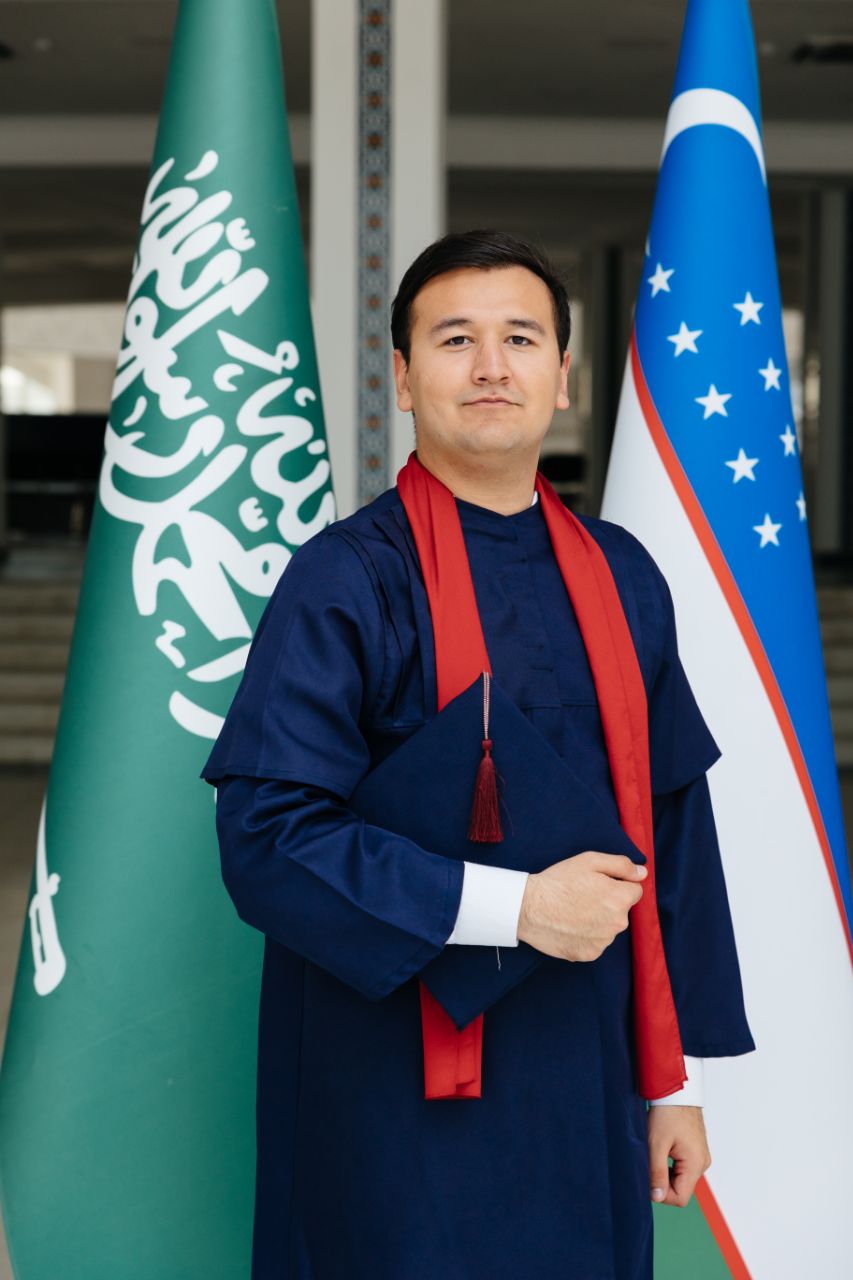
UMURBAYEV RUSTAM SHAKIRJANOVICH Graduate of Tashkent State University of Oriental Studies
Umurbayev Rustam Shakirjanovich was born on November 11, 2001, in Yangiyer, Syrdarya Region, Uzbekistan.
2008 – He was admitted to the 1st grade of Secondary School No. 242 in the Almazar District of Tashkent and graduated from the 9th grade in 2017.
2017 – He was admitted to the Tashkent City Law College in the Uchtepa District and graduated in 2020, obtaining a qualification in Law.
2020 – After successfully passing the state entrance examinations, he was admitted to Tashkent State University of Oriental Studies, Faculty of Economics, Politics and Tourism of Eastern Countries, majoring in Political Science.
2024 – He graduated from Tashkent State University of Oriental Studies.