As men, we ought to give into sexual advances to women, whether married or not
If the statement is put this way: As women, we ought to give into sexual advances from men, whether married or not, the male folk will unequivocally have problems with it. Ironically, in loose terms, men generally tend to key into this deceptive assertion. Hence, one of the reasons for male chauvinists treat their spouses less than second fiddles and simultaneously gratify their sexual thirst with other women, irrespective of relationship status. They fail to recognize that the women they “cheating on” have rights to take part in what they seem to derive pleasure from. Without a doubt, the statement “equal rights” irritates them!
Granted, men are moved by what they see and women are moved by what they hear. However, self-control cannot be excused for giving into sexual offers. Some men claim that the reason they give into sexual advance from women is due to the response of “the manhood” to sex-tuning offers from women and assert that the ‘seat of womanhood’ cannot be noticed and hence, women should not ‘enjoy’ such a right as they do. What an alibi!
The statement has two interpretations, that is, “As married men we ought to give into sexual advances from women”. And “As bachelors, we ought to give into sexual advances from women”. Therefore, we will consider them.
“As married men, we ought to give into sexual advance from women”
If you on advocate of this statement, do you believe in the efficacies of marital vows you swore on the altar? Do you know that from the moment you took those vows, you are entitled to sexually submit yourself only to your wife? Are you aware of the fact that marriage is a life-long test of your fidelity? Also, can you remember how sincerely passionate you were about committing yourself (Sexually) to your wife? Have you forgotten that marriage is an institution where sexual, physical, emotional, spiritual and other important requirements are needed for its longevity? If you think that as a married man, you could give into sexual gratification outside your marital convenience, then where have you placed self-control? Apart from that, how would you react if your wife says: “As a married woman, I ought to give into sexual advances from my male admirers”?
It is a generally sorry-case for men who get married without having the necessary knowledge of staying married. Ill-equipped with the necessary skills of managing one’s sexuality, they stumble into the institution, apparently believing their youthful exuberant tendencies will come to a halt but the reverse is the case. No wonder most exuberance – driven men cannot be sexually committed to their wives – they fail to really put to a full stop their care-free sex lives of their youth days.
In a way, this statement has made married men believe that there is practically no consequence. What a shallow thinking! If nothing, think about the guilt you will live with for a very long period of time. Of course, thanks to your judge, your conscience!
In all, if you really want to confirm how deceptive the assertion is, try self-control.
“As an unmarried man, I ought to give into sexual advance from women”
Because you do not have a spouse doesn’t permit you to have “unlimited” sexual pleasures. Some bachelors would say ‘we are for the fun of having sex, since we are unmarried.
By observation, however, they would want to settle down and commit themselves to their (would-be) wives in future. Unfortunately, they fail to build the entirety of their personality; sexually (exercising self-control) and goal-oriented. Instead, they gallivant in the name of youthful exuberance to seek for sexual gratification.
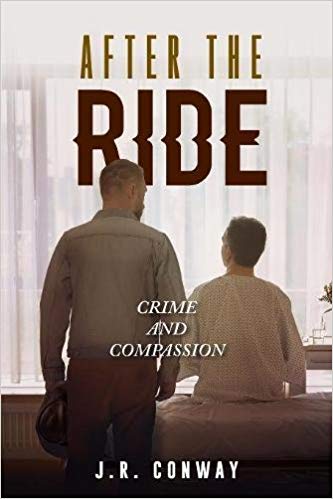
After the Ride is the sequel to Greyhound Therapy and picks up right where the other ends in a very smooth way. In After the Ride we are introduced to Kenneth Boutros who has PTSD and was placed on the Greyhound bus to Sweetwater County to live at his uncle’s ranch. When he arrives he finds out that his uncle had died and another relative paid the back taxes and bought the ranch and does not want Kenneth there. The sheriff finds out the reason is a major chop shop operation. The reader will be taken on a thrilling read that will keep him/her riveted to the very end. This would be perfect for older teen to adult. I found it to be a very exciting read and absolutely loved it.
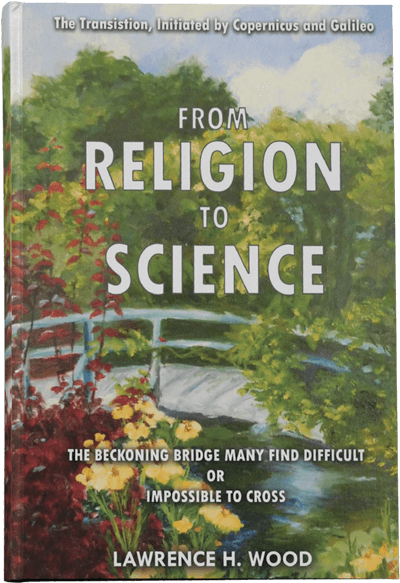
This book brings the subjects of religion and science together, from the conception of science as a worldview and how it differs from the basic fundamentals of the Christian religion. A lot of scientists are atheists and can’t conceive of any of what the Bible says as truth. This book is very interesting in that it states how life evolved from one single organism, according to the scientific explanation. This book also gets into the study of the tectonic plates and the movement that causes earthquakes. This book is filled with many scientific facts and explanations. It is perfect for someone into the sciences or just starting them. I, myself, found it very fascinating.
The Future of Nigeria is an updated version of the original book. It has been updated to include new data on the economics and political forces on the people of Nigeria. Instead of moving forward as a country, Nigeria is lacking in progress. The author goes on to say that Nigeria is encouraging relapse instead of moving forward. The current federation in Nigeria is not working so that the country can progress. If Nigeria does not move forward it could collapse as a nation. The leaders must listen to the people if they want to see any improvement. This is the perfect book for readers who are interested in reading books about other nations.
Nowrang Persaud grew up in poverty in Colonial British Guyana surrounded by his very loving extended family. This is his autobiography, starting from when he was young and living in poverty through his adulthood and how he worked hard to climb out of poverty. He has great respect and love for his mother who worked hard as a weeder on the estate to take care of all of the children and husband. When his father became a driver, they were able to move into an independent house. They finally had floors and a bathroom in their home. This is the story of how Nowrang worked hard and persevered to become a teacher and work for the UN and other very important jobs. This is a very uplifting and interesting story of his life. He overcame so many hardships with hard work and pure determination. I found it very interesting and can honestly highly recommend it.
The Lumpa Rupper is an extremely cute children’s book. It is about a Dachshund named Fee Bee but also called Fee Fee who is very mischievous. The illustrations are bright and children will be excited to look at them. They will love the story and will want to have this read to them over and over. I absolutely loved this and very highly recommend it.
This is also another cute book by Tina Heinrich. The illustrations in this one were drawn by her son when he was 10 years old. It is the true story of their hen house and the two chickens that made it and hatched. Little children will absolutely love the drawings and the story itself. I also found this one very delightful and highly recommend it.
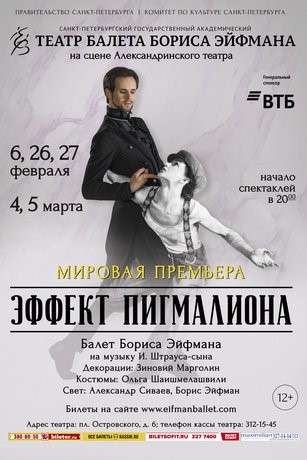
Russian poster for Boris Eifman’s ballet “The Pygmalion Effect”
DID I MENTION THAT I LOVED IT?
The Pygmalion Effect
Eifman Ballet of Saint Petersburg
Zellerbach Hall
Berkeley, California
A review by Christopher Bernard
Sometimes all I want to do in a review is say “I loved it, I loved it, I loved it” two or three hundred times (enough to fill a couple of pages and one or two smartphone screens), and call it a day. Who wants to analyze something you’ve just fallen in love with, especially a fairy tale straight out of “My Fair Lady,” with a Russian twist, a nod to Ernst Lubitsch, and a Viennese soundtrack? I just want to daydream, go over it in memory, laugh out loud again at the jokes, the galloping music, the inspired moves, the tender sentiments, the big heartedness of it all.
For example, the mysterious opening where a young woman lies curled up on the ground, asleep and abandoned outside a wealthy house, where she is tormented by erotic dreams of a man being worshipped by women, none of whom is herself. And the dream goes on, segueing into what we will learn is a long flashback. Beginning with:
A street suddenly packed with a score or so skittering demimonde types dancing their hearts out, a poor workhorse of a father (danced by a vigorous Dmitry Fisher) putting his daughter, dressed up in drag-prince costume military togs, to work collecting customers for his carriage service. The daughter is a tomboy gamine named Gala (the ravishingly graceful, lithe and witty Lyubov Andreyevna) with the tatterdemalion charm of an Artful Dodger who invents the dance’s insouciant heroine out of thin air and the champagne effervescence of a Strauss polka.
Or the Ballroom Contest, watched by an enthralled Gala, where sequins-draped ladies and their sharply attired consorts ravish the stage, trying to out dance each other with an athletic, competitive joyfulness until one of the couples, Leon (a commanding Oleg Gabyshev) and his partner Tea (an Amazonian sex goddess who rules the stage whenever she is on it, Alma Petrovskaya), at the point of achieving supreme perfection, slips and collapses, mortifyingly, across the stage.
Or the organized chaos when Leon, on his way home, is mugged by some of Gala’s lowlife confreres, and Gala, still in her boy togs, and showing her street chops to smartly punishing effect, saves the overwhelmed dancer, who, thinking her a good fellow to have in a pinch, takes her home for a post-pugilist celebration.
When lo! he discovers he is a she! Much is made of the attendant confusion. Leon, of course, takes her under his wing. The father finds out and sees an easy way to cadge some rubles via his little girl, and Gala falls ever deeper into an infatuation with the fellow she saved, and Leon, for a laugh, brings the graceless, galumphing, spectacularly over-dressed hobbledehoy to his dance class, where he conceives a bizarre plan to turn this bundle of grotesquerie and unconscious charm into a prize-winning dancer. He bets on it against the scoffing Coach (a properly sneering Igor Subbotin) and proceeds to prove his point.
Though not before nearly conceding defeat as he tries to mold this feckless ne’er-do-well into something half civilized, with not even an iota of success. At which point he gets a brain wave: fit her up with an all-body robotic armature, cap her with a neon helmet, and set her off with a remote control, a la “Die Puppe” (“The Doll,” Lubitsche’s famous silent film from the 1920s), and let his fingers do her dancing.
Which is just the final push Gala needs to get it, clicking into the dazzling dancer we in the audience have known all along she is, but only now the rest of the ballroom dancing crowd is forced to admit, as she and Leon dance off with the top prize of them all.
But what is this? Leon, our Henry Higgins, the aim and goal now of little Gala’s heart, now that he has won his bet, casts her off. What is she to him? A successfully made point. With the arrogance of the “creator,” he leaves her to her venal father, her mugger class, her gutter.
But she has been poisoned by her success. She can’t return to her old life. She is no longer that, she no longer can do that. She curls up on a street bench, lost between worlds, rejecting what she once was, dreaming futilely of what she might have had and what she might have been. We are back at the beginning. Leon visits her in her dreams. She does not realize he is the cause of her misery as much as of her peak of joy. She has become a prisoner of her love.
Boris Eifman choreographed this supremely charming ballet (which is being given its U.S. premiere in these performances through Cal Performances), and shows that there is still a place for a dance of pure pleasure. I suspect that all, or at least most, of his company, the Eifman Ballet of St. Petersburg, appears, and a more vigorous, graceful, and irresistibly happy group of dancers it would be hard to imagine. (One of the heady joys for an American is seeing this example of the Russian style of ballet dancing at its best: sharp, exuberantly athletic, and romantic, all at the same time. One gets an idea where Balanchine came from.)
The brilliant sets were by Zinovy Margolin, the deliciously louche costumes by Olga Shaishmelashvili. The effortlessly engaging music was, for the most part, by Johann Strauss, Jr., with a few numbers by Josef and Eduard from the same, copiously composing family, and a handsomely judged concluding contrast from tender, truthful, unsentimental Mozart.
_____
Christopher Bernard is co-editor and poetry editor of Caveat Lector. He writes on dance, drama, and art for Synchronized Chaos. His most recent book is the poetry collection Chien Lunatique.
His novel Meditations on Love and Catastrophe at The Liars’ Café will be out later this year.