Poetry from Amlanjyoti Goswami

Odiyan

You call me monkey man, odiyan, shapeshifter

When I stalk the still night, deserted by shadows.

Everyone is imprisoned in their homes.

You take photographs. I let you

See me in my naked wisdom, I turn

Your myths around, the camera can see me too.

Your wide angle, your narrow perspective, the side glance

Doesn’t matter. What matters is matter, and how it thinks

How it changes shape, becomes ape.

How it walks on stilts, my legs lightning.

You measure me metric, call me eight feet, electric.

You chase, I follow you, in a karmic circle

Where yesterday is today but with another name.

I count stars on lazy nights, not with fingers but with toes

Bending inward, breaking the chasms of distance.

Yes, I change shape sometimes, when I feel like it.

In the rain everything will be blurred again.

Today’s light post, tomorrow’s shadow. 

I am still alive, if that’s what you want to know.

Though living now is a different matter,

Filled with absence and uncertain wisdom.

I fly on my feet to remind you it can be done.

You are a little short of confidence, need a spring of hope

And though you are all inside, you must not forget who you are,

What you can be. As for me, I am who I am. Pure matter

That changes form. A spirit, free bird, Ariel, peeping tom,

I am not going to change, but into a bird, or who knows

The next wild thing that comes my way.   

Woman of the High Plains  

(Dorothea Lange, Woman of the High Plains, 1938)

In one photograph there is a woman

Scorched by sun.

Hand on forehead, another on neck.

She cannot resist a smile,

Where does it comes from?

Something the photographer just told her?

We won’t know. It changes things,

Turns her into an emblem,

Fortitude against the elements.

This is deep desert country. Texas, 1938.

She needs the work, has to keep at it.

Cannot give up. No not now.

Salt dripping the sack she wears.

The horizon beyond the toil. Earth and sky.

No war yet, but enough going on at home.

She stays unnamed. Perhaps the name is hidden in Lange’s notes.

Notes that say: ‘if you die, you are dead, that’s all’. Her words.

But she is alive, willing, a survivor.

There is still some time to go.

There will be work today, tomorrow.

We aren’t sure about the day after.

We don’t know what after that. Perhaps a house, in sunny country

Perhaps olives and vegetables. Perhaps the hint of a smile

Even as the day moves down west.

Twilight and then night. The photographer goes home,

Equipment packed into a box.

The photograph reaches the galleries, eighty years later.

We pause near the exit, return to her

From a million miles away

In another country, almost another world

A familiar worker down the road

A weary deserted path to nowhere. The sight of a day’s wages

The same sad hint of a smile.

Short Bio: Amlanjyoti Goswami’s poetry has been published in journals and anthologies around the world, including his recent collection River Wedding (Poetrywala) which has been widely reviewed. His poems have also appeared on street walls of Christchurch, exhibitions in Johannesburg, an e gallery in Brighton and buses in Philadelphia. He has read in various places, including in New York, Delhi and Boston. He grew up in Guwahati and lives in Delhi. 
Synchronized Chaos April 2020: Stone Soup

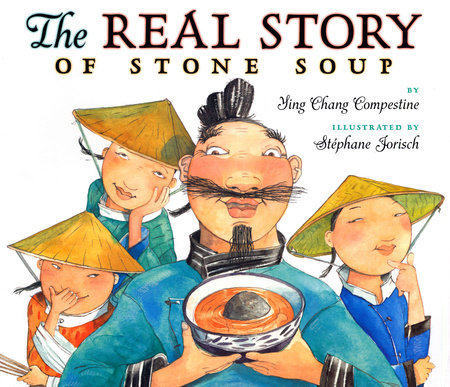
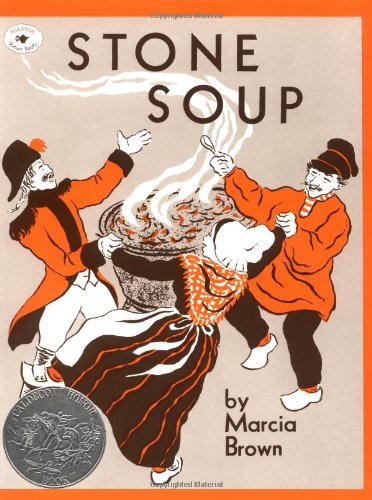
Stone Soup is a European folk story in which hungry strangers convince the people of a town to each share a small amount of their food in order to make a meal that everyone enjoys, and exists as a moral regarding the value of sharing.

Stone Soup can also be taken as a fable about how every person’s small, but unique, contributions can add up to something quite nourishing. That is a wonderful metaphor easily translatable to each issue of Synchronized Chaos.

Right now much of the world is physically distanced from each other, and most people are spending much more time in their homes due to the coronavirus outbreak. Yet we are finding ways to connect, ways to pursue our unique creative gifts and share them with others through virtual community.

I, personally, have been able to interact with a more geographically diverse set of artists and writers than before, visiting virtual versions of events that would have been located far away from me. And I’ve watched each person bring something to the soup pot in the face of illness and grief – whether it’s sadness and trauma, humor, hope, kindness, eccentricity, eclectic knowledge, or confidence, it’s flavored the shared meal. As the old saying goes – no one can do everything, but everyone can do something. And your ‘something,’ whatever it is, can be brought to the table and included.

Film critic Jaylan Salah takes up a conversation with Egyptian satirist and scriptwriter Haitham Dabbour. In it, they explore the ways that we seek to transcend our inevitable mortality, whether by writing and creating, by falling in love later in life, or through obsessions with martyrdom and heroism.

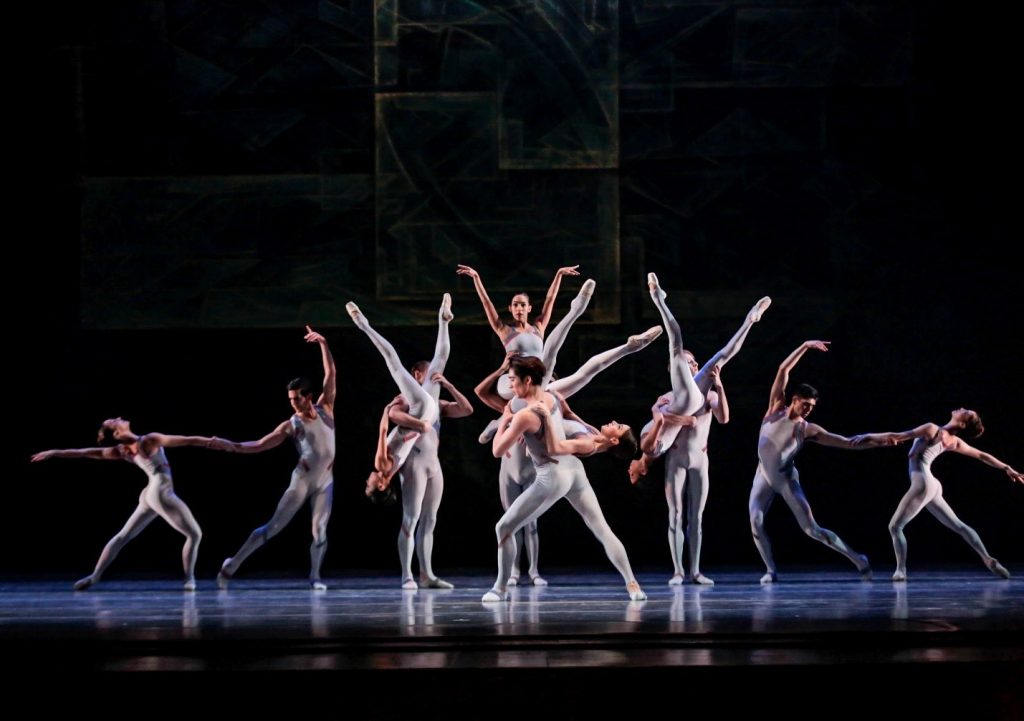
Christopher Bernard reviews a transcendent dance show from the Joffrey Ballet, performed recently at UC Berkeley’s Zellerbach Hall. Various pieces embodied the punk spirit of defiance, the determination of space exploration, and human strength.

Abigail George’s essay poetically advocates a more mindful approach to both romantic love and to writing. She strives for more depth and empathy in both endeavors, hoping that our hearts will open enough to embrace refugees and the displaced.

Photographer: Iain Bagwell, Food Stylist: Randy Mon Prop Stylist: Emma Star Jensen

Five contributors directly discuss the coronavirus outbreak. J.K. Durick chronicles the daily dislocation and elongation of time of sheltering in place at home, while Joan Beebe points forward to a time of hope. Michael Robinson shares a poem reflective of his sorrow over our losses, while Christopher Bernard describes the grotesque loveliness of San Francisco’s empty streets.

Norman J. Olson polemicizes in the second half of his essay about his Mexican vacation that governments should fight coronavirus by investing in human services and medical research rather than war.

In Mahbub’s selections this month, death is present, an unromantic and everyday occurrence brought about by the carelessness of random humans. Yet life, and romantic love, are also present, and just as much a part of everyday existence.

Hallmarks Home and Family in Dollywood 2016

Michael Robinson’s other set of poems was inspired by his time in a nursing home. They suggest that beauty, and human love, can outlast time, violence and death, even when they do not always triumph in the moment.

John Sweet writes of individuals adrift in decaying towns, lost amid hopeless environments.

Ike Boat, the Poetrician from Ghana, versifies about his Facebook friends, who bring him succor and encouragement while he’s in a difficult financial situation at the beginning of his artistic career.

J.D. DeHart explores how artists can use the graphic novel medium to illustrate serious issues, how the form itself does not have to negate the weight of the themes. Daniel De Culla’s piece resembles the style of a graphic novel, pointing out the obscenity of religiously motivated violence.

Ahmad al-Khatat’s poems play on and draw out the different meanings of words, the different images that words can bring to mind. Some of his pieces probe the complex psyches and memories of survivors of wartime violence.

In the same vein, Jeremy Karn’s first piece comes from a young soul bemoaning ever being born, yet the next piece reflects the joy of hearing everyday, amusing kitchen sounds.

J.J. Campbell writes of the powerlessness of sickness and bodily weakness along with his regular themes of depression and loneliness. Chimezie Ihekuna urges single readers not to assume that marriage will magically improve their lives.

Using a unique, but specific creation ritual, Mark Young touches on what we know, what we sort of know, and what we think we know, and how little any of that sometimes has to do with what is explicitly stated.

Christopher Bernard reviews The Return, the fourth part of Eunice Odio’s poetry collection The Fire’s Journey. In his view, the volume deals with the darkness after expending one’s brilliant light, about the return to normalcy after the moment of creation.

Shelby Stephenson’s winsome piece celebrates a writer he knows and loves, while Leticia Escalera finds joy and inspiration in the companionship of her pets.

Finally, most explicitly in the spirit of this month, poet Joe Balaz points out in Hawaiian pidgin that our lives aren’t entirely our own, but a combination of what everyone brings to the table.

Fill up a cup and join us in reading this month’s issue. Dinner’s ready!

Recipe by Sharon Palmer, for real Stone Soup

Poetry from Michael Robinson

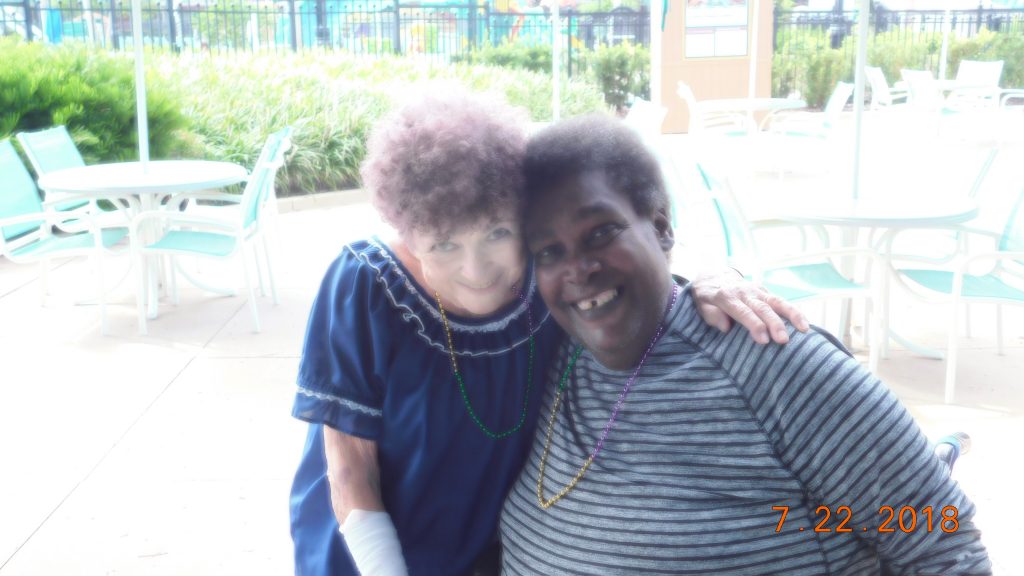
Michael Robinson (right) and fellow contributor Joan Beebe

Weep

In the middle of the night, when the moon is dark, and the clouds black.

In the middle of the night, when all the souls of America stare into the ceiling, the warm tears slowly crawl down their cheeks.

In the middle of their life, it is uncertain if there will be a tomorrow, because a sociopath stands before the cameras and rant.

We weep as a nation when our loved ones are taken away in the hearse without fanfare because there are so many that are dying.

I weep alone in my apartment because there is no one able to mourn the death of so many at one time in our history.

I weep because the war is in our midst, and the Doctors and Nurses are the first casualties in this war.

I weep because my tears cannot save lives.

My tears can not save those who die on a hospital bed in the corridor, with many besides them enclosed in plastic bags.

I weep because there are too many graves filled with someone’s loved one, and the count continues.

In the middle of the night, I weep alone because there are only memories of a time that my tears were joyful as the sound of the National Anthem was a song sung by all the nations.

Body Bags

There are body bags flowing; out of the back door of Brooklyn hospital in New York.

Body bags with someone loved ones
And I have no words as the count continues.

Do you know that the bodies will be taken away?
To be placed on a slab?

In America, there are thousands of body bags,
Bodies in the corridor of the hospitals.

It’s a war without the guns and bombs,
It’s a war on our fellow Americans.

It’s a war!
When will the body bags stop?

I’m not ready to be taken away in a Boddy bag,
And put in a refrigerated truck and carried away.

Are you?

In a war, there are always body bags,
In a war, people die alone.

I don’t want to die alone,
In a hospital corridor.

Poetry from John Sweet

the age of hopeless causes, without end

in the half-light of approaching snow

in the godlike silence of an

empty parking lot at the edge of some

anonymous upstate factory town

six vultures circling the february field

that runs down to the river

the ghosts of houses

still waiting to burn

takes a whole lot of pain to make the

days seem worthwhile but what

else do you have to look forward to?

monday morning and

some joni mitchell song in the

back of your mind

great men with mouths full of blood

because the theory is that

there can be no heroes

without victims

teenage girl stabbed once for every

wasted year of your sad little life

middle-aged life and what the fuck good

is a poem going to do her now?

what good is it going to do any of us?

we were like kids shooting dogs

we were too sick to see how

ignorant we really were

it was summer maybe or

the end of winter

dead trees and poisoned water

no kings no kingdoms but borders and

barbed wire in every direction

enemies that needed to be kept out

              that needed to be

crushed

and we were less than gods but

more than the men who had invented them

i was 24 and drunk in a stranger’s bed

you were 40 and always running

in the opposite direction

already felt like the asshole i knew i’d

become but was still thinking

about the possibility of salvation

had my 3rd eye painted in the

palm of my right hand

had the mantra memorized

create

evolve

destroy

and so i was like a

soldier shooting children

wanted nothing to do with that

grey area between slaughter and

victory and what do you think?

does love beat lust?

have we finally arrived at

the brighter shining future?

jump off the cliff on the

clearest day of the year and

tell me everything you see

like francis bacon, dreaming

wasn’t going to be one of those

fuckers hung up on time & space

wasn’t going to be bathed in the

blood of christ or blinded by the holy

light of some absolute god

paper said it was the last good year

but that seemed like a lie

sun felt too good for a lifetime of fear

and the gold was pure white light

running through my veins

was always cold in the house

so we lived in the forests

lived in the vast open fields of our minds

only wanted to be your favorite

poison and only wanted you to be

everything i’d ever wanted

only wanted more

and i wasn’t going to one of those

assholes strung out on pain and despair

the words of the prophet

were meaningless to me

the days were all delicate filigree,

all scrimshaw and lace and

when the cops shot that kid i was

asleep in your arms

when the pills are all gone

i stop looking in the mirror

i am tired of the

addict i’ve become

cowards, because

were we talking about the

age of magic?

first days of summer, i think,

and i was already frightened it was

passing me by

girl i had known 30 years earlier

called up to tell me she loved me

                      but she was stoned

could hear her kid

crying in the background

could feel the presence of

an indifferent god

a sharp blade sliding in

just behind my eyes

[what makes you happy?  your misery]

the suicide season again,

and all your fucked up lovers say

it’s the sunlight that ties this noose so tight

they say it’s the fading warmth of

a half-remembered past

that blurs the future to a dirty grey, and

what can you do but agree?

your father never liked you, sure

left nothing but the gift of self-hatred

when he walked away from the burning house

and how many years did you wait before

you went looking for him?

how easy do you think it was

for him to forget your name?

opened the door to his shithole apartment

with shaking hands, with a blank stare,

and told you he’d never had any kids

told you his wife disappeared

back before the war

made you start to doubt you’d

                         ever been born

my place on the map of nowhere

and i knew the guy, not the one who

died but the one who killed him, stupid little

fucker but mean, and everyone drunk in

a fight about nothing

blood smeared on chrome in the

back of the parking lot, and

i had to work the next morning

had to explain to my girlfriend about the

phone number she’d found in the

pocket of my jeans, had to find a place

to sleep, had to just finally grow up and

get away from all this shit

maybe pretend i was human for a change

Poetry from J.K. Durick

Plague Poem for Day Nine

and I always thought they lived

outside my imagining they did

were actual links to reality

solid shapes coming and going in

patterns they control – but today,

and yesterday now that I think of it,

the street out front has been/is empty

the neighborhood is neighborless –

the cars strangely silent,

the children playing elsewhere, if at all,

joggerless, dogwalkerless, the elderly couple

walk for their health no more, perhaps

there never was a mailman after all —

the whole world has become worldless,

absent, misplaced, unaccounted for

like it never was, never wasn’t, won’t be

— I’d open the blind most mornings

like this and there it was and there

I imagined it would always be.

Plague Poem for Day Thirteen

This morning is so quiet here:

my careful morning routine

seems hollow, empty of all

the meaning I assigned it before,

why even the birds hesitate at

the feeder, sing to themselves

if at all, or just recall the songs

they sang before, before this,

these numbers that numb us –

more than 22,000 dead worldwide,

over a thousand in the U.S. –

the numbers seem mysterious,

distant suggestions floating by

hinting at things beyond this

morning quiet, this isolation

I have made of myself, for myself.

When does it catch up with me?

When does this slight cough connect

me with others, gives me my place

in the count on the morning news?

               Plague Poem for Day Fourteen

As faithful as that, they are there each morning, early

as if waiting all night to announce the latest, as if

the virus was theirs to dole out a little at a time, yesterday

the mathematics of it, exponential, then geometric growth,  

the effected and the dead, and now today a new symptom

they’ve discovered to haunt us – can I taste, can I smell,

is this headache the usual eyestrain or persistent, just like

the coughing I do in the morning as if I’m a cold engine,

the aging car in the driveway trying to start up again, did

I get too close then touch my face, should I stand back even

further than I have my whole life, this checking of new

symptoms has become a symptom of this new virus that

has us, has us turning to the networks and internet, has us

waking to the “they” that have been waiting all night to make

our day.

Christopher Bernard reviews the Joffrey Ballet’s latest production

DANCING IN SPACE

The Joffrey Ballet

Zellerbach Hall

University of California, Berkeley

A review by Christopher Bernard

What is greatness – moral, intellectual, artistic? It has a musty, old-fashioned sound, and is not exactly a fashionable idea just now, with our cultural hysterias against “elitism” of any kind, or perhaps ever was in a democratic culture with its sweet, egalitarian shibboleths. Nevertheless, the idea of greatness, saintliness, genius – of a superiority one cannot ignore but only acknowledge with humility and gratitude and admiration, even, in supreme cases, awe – periodically returns, because, like “truth” or “goodness,” it is a value that, however we may pretend we can do without it, at a certain point we discover that we can’t without collapsing into moral incoherence: nihilism, demoralization and despair.

In my own experience, artistic greatness, in particular, is partly discernible by the fact that the subject is more powerful, more beautiful, more astonishing or impressive than I remember it: that painting, this poem, this dance company, that book is more than I assimilated or knew; in some sense is permanently beyond me. It reminds me of what is often meant by “transcendent experience” – “artistic greatness” seems to mean a direct, sensuous experience of transcendence, piercing through the fog of distracted daily living in concentrated brilliance – and thus is an absolute value and not a category of relative merit.

I was provoked to these thoughts partly by the arrival in Berkeley over a recent weekend (and thanks to Cal Performances) of one of the country’s pre-eminent dance companies, a company that has, in the past, shown itself capable of reaching such heights with sometimes intimidating ease – the Joffrey Ballet, based in Chicago and not nearly a regular enough a visitor to the Bay Area and the finely tuned dance audiences we have here. And the company was indeed better than I remembered.

The Joffrey, originally under Robert Joffrey, then Gerald Arpino, and now Ashley Wheater, has mastered a lithe and muscular style of dancing that was on full display throughout a cast in which all of its member are presented as principals.

The performance I saw opened with Christopher Wheeldon’s “Commedia©” (yes, the copyright symbol is part of the title, as with other dances by Wheeldon; is this meant to prevent other choreographers from every using this title for one of their own works? Will someone now copyright “Swan Lake” or “The Nutcracker”? One can only hope they will resist the temptation), a brittlely elegant dance-class piece mimicking the somewhat matte cheeriness of the Stravinsky score it is set to, the clever, if chilly Pulcinella. Never having warmed to the music, I found it hard to warm to the dance, admiring it too from afar, though the contributions of Yumi Kanazawa and Yuki Iwai were noteworthy, and above all that of Brooke Linford, which was of an altogether memorable lightness and grace.

Stephanie Martinez’s “Bliss!”, which followed, set to Dumbarton Oaks, a richer and more complex piece of Stravinsky’s, was a good deal of a looser, less self-conscious affair, spinning between beefcake machismo and winsome femininity, with strong contributions, again, by Iwai and Kawazawa and by Jonathan Dole, and with an almost hilarious riff on muscularity by a stunning Derrick Agnoletti.

If the performance had ended, or peaked, there, at the first intermission, I would have had an interesting afternoon, with some moments to savor and much to have enjoyed. But I wouldn’t have been prepared for what followed.

What followed? “Beyond the Shore” followed. But wait: this is a work, choreographed by Nicholas Blanc (long a staple at the San Francisco Ballet) and co-commissioned by Cal Performances, and so having a special relationship with the Bay Area. The dance is set to a thundering, highly theatrical score by Mason Bates (perhaps best known here for his work, a few years back, with the San Francisco Symphony), “The B-Sides,” originally commissioned by the Symphony. Blanc describes his dance as about “exploration as a metaphor for human nature,” which is certainly a good thought to hang on to as we are thrust into a series of dance adventures, one for each section of the music, as thrilling, compelling and complex as I hope to find in this or any other dance season, climaxing in a profoundly astonishing and deeply moving  pas de deux by Victoria Jaiani and Dylan Guttierez that took me to places dance has not taken me in a very long time indeed, in a section called “Gemini in the Solar Wind.” This was inspired by (and for once, the word is just, for this was in the deepest sense an inspiration) the famous 1960s Gemini spacewalk, recordings of the NASA communications from the walk being cleverly, and oddly movingly, incorporated into the music. The dance was a haunting and vivifying experience, demanding much of the entire company, which met the challenge with limber and dramatic success.

After being vaulted into outer space by “Beyond the Shore,” we put on the razz and came back to earth in the concluding, dance, “The Times Are Racing,” by Justin Peck, a choreographer I have had mixed feelings about till now but this time was completely won over. A sneaker dance if there ever was one, this work starts in a throbbing mob cluster of bodies exploding into a swirling disco-thon to a jammy score from Dan Deacon (moving from ironic, to joyous, to hopeful, to joyous, to ironic, from his hit album America) with an array of young dancers who seemed like they’d jettisoned ten years from the assertive maturity of the Blanc, and dressed up, or down, in sports punk togs from Humberto Leon of Opening Ceremony, splashed with defiance – “Fight,” “Rebel,” “Change,” “Obey,” and of course “Defy” – and knocking them flat with a trip-hop stew of dance styles I soon gave up counting. Starting at a race, it only got faster, wilder, crazier, though whittled down at moments to knock-’em-out solos, especially from Edson Barbosa, that knocked out the audience too, till, speeding by like it would never stop, the dance spun out to succeeding heights of crazy, then spun back in on itself, whooshing back into its cluster like a deblossoming flower before collapsing in total exhaustion.

What a dance. What a performance. What a company.

____

Christopher Bernard is co-editor and poetry editor of the webzine Caveat Lector. His new novel, Meditations on Love and Catastrophe at The Liars’ Café, appeared in January 2020.

Poetry from Michael Robinson

Michael Robinson (right) and fellow contributor Joan Beebe

Quiet Reflections

She always slept in the chair,

Between the boxes that were full of clothes:

Children’s clothes that she passed down.

Her with her silver-hair and arthritic fingers,

With the scar on her nose that had been broken,

“I was a Helen,” she declared.

It was hard to imagine this old half negro and Cherokee woman,

Being anything other than a gentle and sensitive redeemer,

Of abandoned children in the inner-city.

3.20.2018

Never Mind

Why should we forget the bodies lying in,

Streets, in the classroom, in the hall.

Blood dripping into the cement.

We should not mind those body-bags lying in the corner

Collecting dust year after year.

Should we mind it after all,

This is Vietnam.

No flags are placed over the bodies,

Eventually, they too will be forgotten.

3.20.2018

Remember Me

Long after my body turns to dust,

After the last spring flower bloom over my grave,

And the peacock returns to the mountains.

The words, my words will still live on someone’s bookshelf.

Words are long forgotten in the world.

Sweet Love

The moon is fading my love,

Ending our moments of joy,

It is the daisy that we hate seeing come to life.

Still, we remember our tender bodies engulfed in ecstasy,

Long before the moon faded over the eastern skies,

Among a host of stars reflecting over the pond.

We too still fade into the sunrise.

3.20.2018

Forget Me Not

Do not forget my love for you,

Those roses made of cardboard,

While the sun turned into dust.

And the moon fell into the ocean,

Forget me not my tender heart.

Remember that blanket that held us together,

And those glasses of wine spilling onto the sheets,

Our lips touching as if they were silk.

Forget me not my tender soul.

3.20.2018

Curse

My black skin with my Cherokee mother’s eyes,

Reflects the sadness of generations of crossing the desert.

Living in contempt of life,

We hold onto the strength of our very souls.

3.20.2018

After the Winter Snow

For Larry and Donna

Bliss surrounds a black boy after the snow has fallen

A sign of the human heart has survived

An understanding of life and suffering

Hunger and thirst and desire and  hopes

No longer does regret linger within his soul

It was a winter of solitude setting on the pew

Praying for salvation

While the flakes of snow surrounded the outside

Harsh was the winds and still was the life he had

There’s no need to be afraid he thought:

In time there would be a flower that would bloom inside of him

Today was that day.

3/5/2018

Touch Me

Touch me with your soul,

Like the haze of the mountain air,

That surrounds me,

Touch me when I’m young before the pain of life,

Surrounds me,

Wipe away my tears with your calm fingers,

Hold me close to your center,

Place the flowers in my garden.

8/27/2012 11:10 AM

9/6/2012 9:43 AM

The Return

The ride back to the inner-city was not the same,

It was the peacock’s feathers that allowed me to fly,

Flying above the winter winds,

High enough to reach the heavens in the summer breeze

It was never enough to ride the tide of hope with the winter snows,

With it flakes of violence.

8/27/2012 10:57 AM

A Drop of Love

A drop of love

In the shadows

A sip of warmth

No sexual fantasies

Reality a sip

Of kindness

And shadows turn into woodchucks.

9/6/2012 9:45 AM

Yesterday Hopes

Dreaming of the mountains,

In the middle of the night,

Two empty wooden chairs set in the open air,

Amber winds engulf my wonting spirit,

Peacocks coo,

In the middle of the night.

9/6/2012 9:12 AM

Awaking to it All

The freshness of it all:

Mountain air and flowers in the garden,

Blossoming souls arrive from the city,

Chickens, ducks, peacocks, turkeys, and geese,

Gaze around the coop,

 I see life open before my tearful eyes.

9/6/2012 9:27 AM

Never the Same

Never the same after visiting the mountains,

Eating moms farm fresh eggs over easy,

Dad feeding the birds,

And it’s my time to renew the essence of my soul. 

9/6/2012 9:36 AM

Play It Cool

When the sun climbs between the mountain’s breast,

Just play it cool,

Like jazz bouncing off the rooftops,

Just play it cool,

Smells of fried chicken and collard greens

Pork chops covered with gravy,

Just simple words and simple actions,

 The cool breeze settles on the top of the ocean waves,

So just play it so cool.

9/6/2012 12:00 PM

Roof Tops

It was never easy climbing to the top of the building,

Like crabs pulling each other down,

 As they reached the top of the pot,

Clawing their way to the top,

Climbing the stairs each rung brings me closer

To the top of the mountain in the inner-city,

Rooftops close to heavens gates

9/6/2012 12:11 PM

Life is Gentle

For Pat

Life is gentle at night with the wind blowing calmly. When you walk the dogs and rest from a long day’s work. Life is so peaceful knowing you are rested and wait for me to come to you. We hold one another. The years have been so precious to us both. It’s always the calming rains that last forever in our relationship. Life is kind and so is our love for one another. Life continues as does my love for you. Life is gentle as is my love for the life we have built together. You are the heart that I found in the time of my sadness. Life is so gentle now that you have found peace.

I want to Write

I want to write about the stars and the moon. To put down on paper what has never been writing before about love and the destiny of the heart. To write words that climb out of the catacomb of the darkness into the wondering light of the stars.

The Visit

The dining room is nice—

Pink wallpapered walls:

But no music playing

Shiny silverware and steak knives:

Beautiful Chinaware and nice designs

A plastic knife and folk:

White soft walls—

Woody Woodpecker laughing;

And a Styrofoam box with a hotdog

Star Night Star Bright

Shooting stars shooting

Shooting guns shooting

Shooting stars shooting stars

Shooting hopes shooting guns shooting

Bodies shooting stars shooting

There’s hope while stars keep shooting past.