Toward an Ecological Civilization: A Manifesto for the 21st Century
By Christopher Bernard
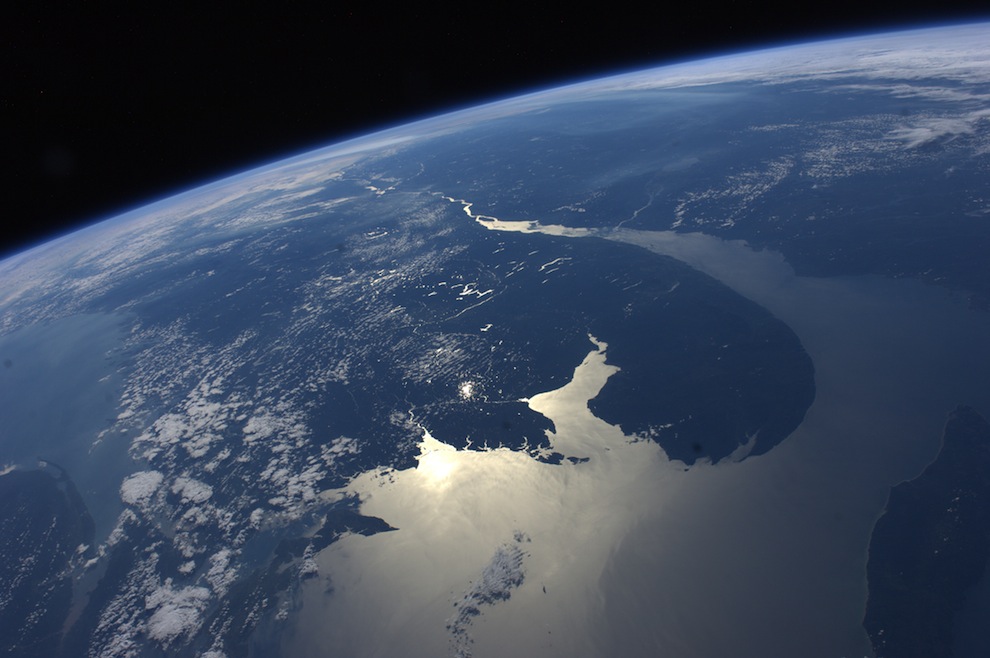
I am no moral authority—am neither a rabbi nor an imam, a minister nor a pope. But, as an average straight older European American male, I am deeply concerned about a future I may see only the dark, leading edge of, but that will be affected in many small ways by the life I and others like me have lived, to say nothing of our material “afterlife”: our words and actions and their effects, which will last long after our physical existence is over. And so this is as much a personal statement as it is a call to thought and action.
I offer the following as a modest part of a debate we will, all of us, need to have about the long-term future of life, including the life of human beings, on earth. The phrase “ecological civilization” is not a new one; it has become current over the last several years in a number of environmental circles, though its first official use may have been by the Sino-German Environment Partnership, which in 2012 used the phrase to describe the heart of its mission.
That we need to create a way of life in better balance with nature if we as a species hope to have a tolerable future is something most of us, I suspect, would agree on. I will not waste time in describing and trying to justify the sense that we are in a plight that is indeed dire, possibly as great as the human race as a whole has ever faced. The question is how to achieve that new balance. I describe below several basic goals to keep in mind as we take thought on how to act to face a crisis that will drastically affect the future life of the human species, even its survival, and the fate of all of life on earth.
In the following I sometimes take a deliberately provocative tone; I do this to inspire response and engagement, not in mere comments on the internet, but in the analog world where we live, breathe and have our being—and where we will decide how, and if, we will live in the future.
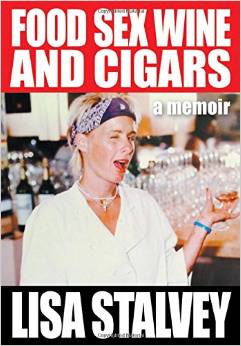
A renowned chef, Lisa Stalvey spent the past eighteen years of her life penning her independently published cookbook-to-memoir, Food, Sex, Wine & Cigars.
A raw, experiential self-reflection; FSWC, to me, is more than a mere book – it is a Movement. Lisa embodies the literary risk-taking often absent today – a reality she, certainly, can relate to as a culinary innovator.
A personal memoir, in itself, is a massive undertaking; and to pen one, in lieu of culinary trendiness, is quite admirable. Reading Lisa Stalvey is like working in the culinary domain she previously mastered – spontaneous, intense, unpredictable, shocking..
One can never fully understand an artist’s creative process, but Food, Sex, Wine & Cigars is guaranteed to fulfill.
I descended into Euston station, pulled further down by the fast pace of the crowd on their way to work, just like me. The escalators took me further and further underground and I quickened my pace as I followed the throngs of people onto the platform. I glanced to my right at the giant sign outlining the blue veins of the Victoria Line, confirming that I was going the right way. I strategically made my way to the ends of the platforms, where I tried to convince myself that there were fewer people here and thus a shorter wait time. I stood behind rows of Londoners, listening to the cries of the worker who stood at the edge of the platform. He stood in a bright yellow vest, calling loudly for passengers to keep away from the platform, and blowing a sharp whistle to signal the closing of the train’s doors. I heard the automated, pleasant voice telling me to mind the gap, the whoosh of the train as it departed, and inched closer to the edge of the platform and my turn to board.
I could finally step into the train compartment, and pressed forward with the many other bodies. It was rush hour, and the passengers made themselves as compact as possible to allow room for the new people getting on. Today, I was lucky enough to snag a spot next to a pole to hold on to. This immediately brightened my mood; I was too short to reach the handles that dangled overhead and usually only had the wall of bodies around me to keep myself from stumbling as the train lurched forward. I had four stops: Warren Street, Oxford Circus, Green Park, and finally Victoria. With each stop, pedestrians came and went; there were businessmen with long, expensive-looking coats and perfectly trimmed haircuts, young men and women in casual dress, often with a book or headphones in, and always people sitting with their eyes closed and heads tilted back. I surveyed all of them, in wonder of what they wore and what they read and where they were going.