THE IMPORTANCE AND PRACTICAL APPLICATION OF ARTIFICIAL INTELLIGENCE TECHNOLOGIES IN MEDICINE
O‘roqova Nargiza Sherali qizi
First-year student, Group 102-A
Faculty of General Medicine
Tashkent Medical Academy
ABSTRACT
This article analyzes the role of artificial intelligence technologies in the medical field and their application in diagnosis, treatment, and prevention from a scientific and theoretical perspective. The importance of artificial intelligence–based systems in early disease detection, the development of personalized treatment plans, and the improvement of healthcare system efficiency is highlighted. In addition, the challenges of implementing artificial intelligence in medicine and its future development directions are discussed.
Keywords: artificial intelligence, medicine, diagnostics, personalized treatment, telemedicine, digital healthcare.
INTRODUCTION
Modern medicine cannot develop without information technologies. In recent years, the rapid development of artificial intelligence technologies has led to the emergence of new approaches in the healthcare system. The need to process and analyze large volumes of medical data requires the use of artificial intelligence. Therefore, artificial intelligence is becoming an important factor in improving diagnostic accuracy and treatment effectiveness in medicine.
MAIN PART
1. The Concept of Artificial Intelligence and the Foundations of Its Application in Medicine
Artificial intelligence is the ability of computer systems to model analytical thinking, learning, and decision-making processes characteristic of human intelligence. In medicine, it is used to support clinical decision-making, create analytical forecasts, and develop automated monitoring systems.
2. Artificial Intelligence in Diagnostic Processes
The analysis of medical images is one of the most effective areas of artificial intelligence application. Based on radiological and tomographic data, AI can:
detect pathological changes;
assess the stage of disease progression;
reduce diagnostic errors.
This is especially important in fields such as oncology and cardiology.
3. AI Capabilities in Personalized Treatment
Artificial intelligence makes it possible to develop treatment strategies by considering the individual characteristics of each patient. Based on laboratory indicators, genetic information, and clinical signs, it becomes possible to:
select appropriate medications;
determine the optimal dosage;
predict possible side effects in advance.
4. Artificial Intelligence in the Pharmaceutical Industry
During the process of drug development, artificial intelligence performs molecular-level analyses and shortens the time required to identify new medications. As a result, the efficiency of clinical trials increases and drug development costs decrease.
5. Telemedicine and Remote Medical Monitoring
Remote monitoring systems powered by artificial intelligence track patients’ vital indicators in real time. This helps provide early warnings and prevent complications in chronic diseases.
The Use of Artificial Intelligence in Diagnostics
Radiology is currently one of the most widely used areas of artificial intelligence in medicine. For example, the Google DeepMind Health system has demonstrated higher accuracy than physicians in detecting lung cancer and retinal diseases at early stages by analyzing MRI and X-ray images.
Artificial intelligence analyzes imaging data such as X-ray, CT, MRI, and ultrasound to help detect tumors (cancer), cardiovascular diseases, and lung diseases (such as pneumonia and tuberculosis) at early stages. In some cases, AI can identify minor changes more accurately than doctors.
Moreover, AI also contributes to the evaluation of laboratory analyses. By comparing blood, urine, and other biological test results, it helps detect diseases such as infections, diabetes, and hormonal disorders.
Advantages of Artificial Intelligence in Medicine
Artificial intelligence increases the speed and accuracy of diagnosis and enables early detection of diseases by minimizing the influence of human error. It proposes individualized treatment by considering the patient’s age, gender, genetic condition, and medical history. It also improves access to healthcare services in remote regions.
In addition, AI can predict diseases in advance, identify patients in high-risk groups, enable timely preventive measures, and even forecast epidemics.
Risks of Artificial Intelligence in Medicine
Although artificial intelligence has many advantages, it also has certain risks. In particular, it may reduce direct communication between doctors and patients. Furthermore, incorrect algorithms may lead to incorrect diagnoses. In such cases, the question arises: who is responsible for the misdiagnosis?
Artificial intelligence provides answers based on the information available in its database. Currently, data resources in languages such as English, Chinese, and Spanish are extremely rich, which allows AI systems to analyze patient symptoms more accurately in those languages. In other languages, however, there may still be certain limitations.
CONCLUSION
The introduction of artificial intelligence technologies into medicine is taking the healthcare system to a new stage of development. It serves as a supportive tool that complements physicians’ work and makes diagnostic and treatment processes more efficient.
Artificial intelligence has also brought major changes to the field of medical diagnostics. It accelerates the diagnostic process, increases accuracy, and significantly improves the efficiency of the healthcare system. However, artificial intelligence should remain a supportive tool, and the final decision must always be made by a qualified physician.
REFERENCES
Topol E.J. Deep Medicine: How Artificial Intelligence Can Make Healthcare Human Again. Basic Books, 2019.
World Health Organization (WHO). Ethics and Governance of Artificial Intelligence for Health. Geneva, 2021.
Rajkomar A., Dean J., Kohane I.S. Machine learning in medicine. New England Journal of Medicine, 2019; 380: 1347–1358.
Esteva A., Kuprel B., Novoa R.A., et al. Dermatologist-level classification of skin cancer with deep neural networks. Nature, 2017; 542: 115–118.
Zenodo.org – The Role and Importance of Artificial Intelligence in Medicine.
Kun.uz – The Benefits and Risks of Artificial Intelligence in Medicine.
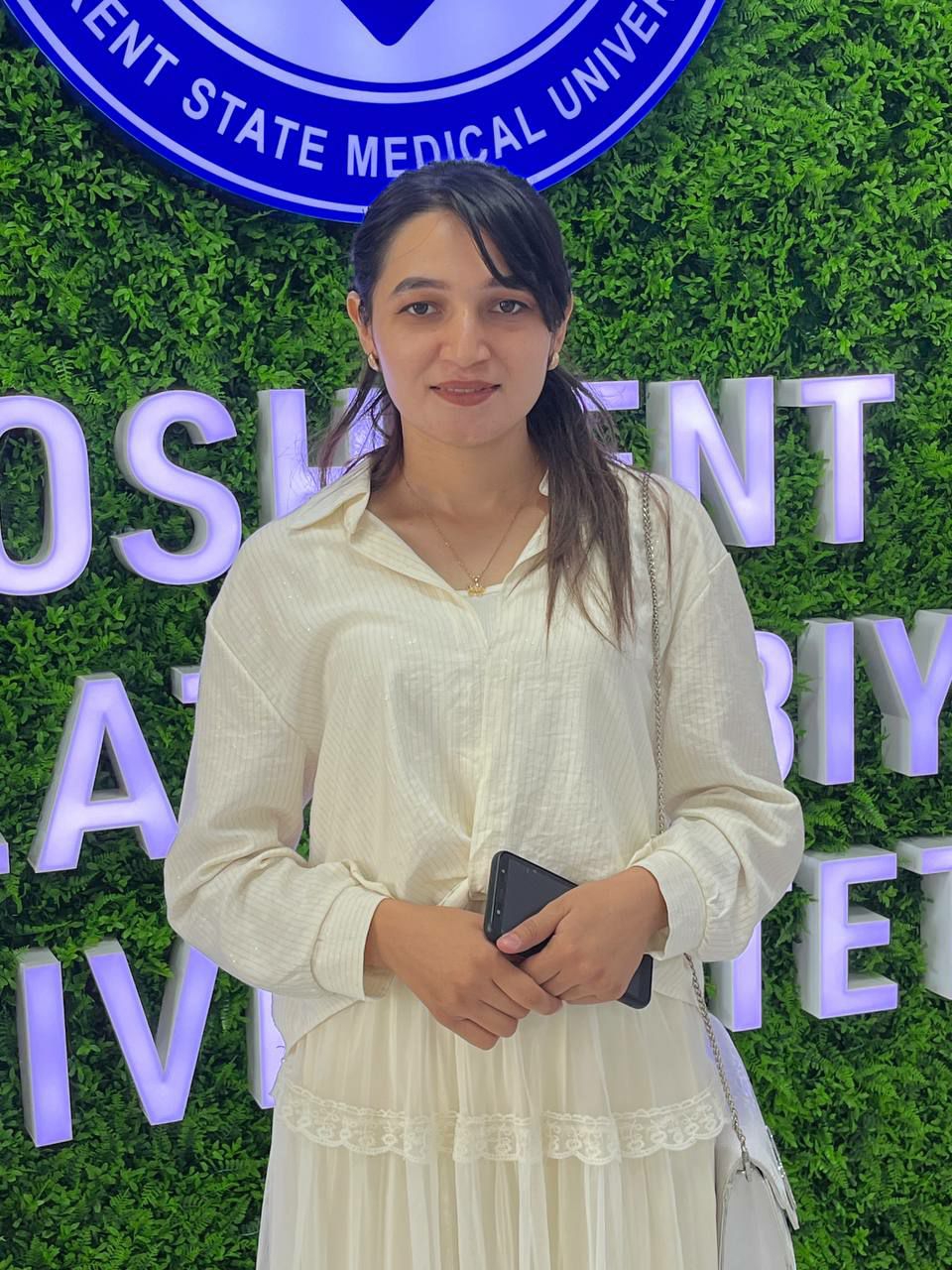
O‘roqova Nargiza was born on March 26, 2001, in Ishtikhon district of the Samarkand region. She is currently a first-year grant student at Tashkent Medical University.
In the 2024–2025 academic year, she works as a biology teacher at School No. 33 in Ishtikhon district of the Samarkand region.
She graduated from the Faculty of Biology at Jizzakh State Pedagogical University in the 2020–2024 academic years.
She has an excellent command of English, Russian, Arabic, and Turkish languages.
Señor Despaïr
Against a Hopeless Time
A Poem by Christopher Bernard

3. The Angel

I waited for the old man
to answer, but all I heard was waves,
suddenly distant, as though withdrawing with
    the tide.
Then I saw a dim glow above the horizon
and watched as it grew stronger, felt my shadow
deepen with the appearance of the light.
The sky grew dull and stretched with cloud ribbons
and flattened out. The sea looked like pewter.
Then an edge of startling brightness
appeared beneath the scrambled glow,
and the sun edged upward, red and gold.

I turned to look at the old man,
but there was no one there. I was alone on the beach.
Had he walked away in disgust at my last speech?
Had he given up on someone so incorrigibly naive?
Had he even been there at all? No, he’d been there,
of that I was sure. Perhaps he had thrown himself
back into the sea from which he had come.
I watched as the sun rose like a head or like an eye
staring across a world that was all sky.

And a form broke from the sun and the far
calling of the waves. Nebulous as fog or cloud,
it seemed to step toward me over sand
brilliant and slippery as glass,
and I saw behind it a throng
of brilliant, smiling – were they angels? –
misty and fragrant as the breeze
that lifted from the sea.
The glowing form seemed to speak,
and it was the voice inside me,
bright and soft as an angel’s,
or as I would imagine an angel’s.

“Know this,” it spoke, as if close to my ear,
almost a whisper, and I strained to hear.

“Know this: we are perpetual creation.
Know this: we are the infinite world.
Time wee enter to work out the possible,
which knows no end and no beginning.
Know this: your task on earth
is to build possibility.
Know this: we are nature,
nature is ourselves.
Just as you are nature,
nature is you.
You are our hands and eyes
as we are yours in all that is.
The power of evil and good
is in your eyes and hands.
The ultimately beautiful is the ultimately real.
Know this: You are free. So: choose.”

And the smile of the diaphonous glowing figure
burned my face.

Suddenly the throng of angels,
and the sea and the shore and the sky
rang, like all the bells in all the cities
of the earth.

Though how could that be? How could any of this
    be?

And I was surrounded by the flocking and singing of
    many birds.
And the waves glittered before me,
and I heard enchanting laughter.
And the air smelled of shells and brine and roses
and smoke, perfume, wine, and brandy and
     apples.
And a crab made mock with a clam, and a blade of
    grass
traced in the dunes the outline of the loveliest of girls
to the dip of a breeze and a turn of a sun ray. And a
    falcon
traded mysteries with a dove. And wind
swept up the sand in a glory of wind devils
swirling in shapes of Carmen, Venus, Tamara,
formed in a moment, in the next cast back
to sand and wind. And whiteness throned in clouds
    above,

and wind and galleons moved across the blueness
    like a sea,
a moment hoped for, lost, here, once, forever.

And the sun as it rose opened and filled the sky
for a moment that passed like a breath
with a beauty that was infinite
and a love that was for all time.

_____
Christopher Bernard’s most recent collection of poems is titled The Beauty of Matter, “A Pagan’s Verses for a Mystic Idler.” Señor Despaïr will appear in book form from Real Magazine Productions, a publisher based in India, later this year.
We haven’t met yet, We were supposed to go to war together; Yet, you went to battle alone, becoming my very adversary. Still, we haven’t met yet, Because I never went to war.
A black cat blocked my path, Facing the movement of the parrots, I have withdrawn my weapons. The sissoo trees have welcomed me into their fold— Whose shadows fall even in the sun, like a drizzling rain. There is no wailing in the sound of the wind, Only the eternal friendship of sunlight, breeze, and leaves. I am now with the fish, we do not have to go to war…
Even then, we are marked for slaughter… Since we haven’t met yet, You haven’t been able to kill me. To destroy me, you are building heavy missiles, Warplanes, even nuclear bombs; While I am weaving a net of sky-blue dreams.
If we ever meet, I will give you the messages of the birds, I will take flight with you like wild geese, I will build nests on new islands; If we ever meet, I will give you love.
We haven’t met yet; You are searching for me to kill, And I am searching for you to love.
Happiness may not be what you are searching for. Perhaps your happiness is somewhere else — in another place or even in another time. A person should never fall into despair. One must always keep moving forward. This is the law of life: the higher you want to rise, the more challenges you will face. In some you will win, in others you will lose, but if you do not stop moving, one day you will certainly reach the goal you have set.
You should learn to see only the good in life. Life educates a person; it gives opportunities and offers choices, and to test you, it gives trials. The one who can properly overcome the ups and downs of life will be met with a bright future.
Juraeva Aziza Rakhmatovna was born on March 26, 2000, in Uzbekistan. She graduated from Kokand University in 2023 with a degree in Primary Education. In 2022, she was included in the almanac “100 Leading Students of Uzbekistan.” In the same year, she became a recipient of the iBook.uz scholarship. Her articles and poems have been published in Turkey and South Korea.
Gangrenous goodbyes on the breast of tears smothered
Or the corrosive taste of briny eyes with every furtive hello.
But time has done nothing to exempt the heart from
The onslaught of raging waves crushing into
Empty shores –like the old bell ringing
Through my ears at Angelus –
Dusk, our favorite time of day
Before you left without that anticipated
“Look, I’m sorry, okay?” backward glance.
And bells do not have a memory of tunes
For awkward silence, silence, silence.
:
Nominated for “Best of the Net 2025” for his poetry, Emeniano Acain Somoza, Jr. considers himself the official spiritual advisor of his roommates, Gordot and Dwight – the first a goldfish, the other a Turkish Van cat. His works have been published in The Poetry Magazine, Moria Poetry Journal, Fogged Clarity, Everyday Poem, Loch Raven Review, The Buddhist Poetry Review, The Philippine Graphic, The Philippines Free Press, Troubadour 21, Full of Crow, Indigo Rising, Asia Writes, Triggerfish Critical Review, Troubadors 21, Gloom Cupboard, TAYO, Haggard & Halloo, and elsewhere. His first book, A Fistful of Moonbeams, was published by Kilmog Press in April 2010. His second, Kleenex Theory, published by Createspace-Amazon, came out in 2015. He is busy anthologizing emptiness and boredom at the moment.