“MY CHILDHOOD MEMORIES ALWAYS TUNE ME TO FRAGILE NOTES”
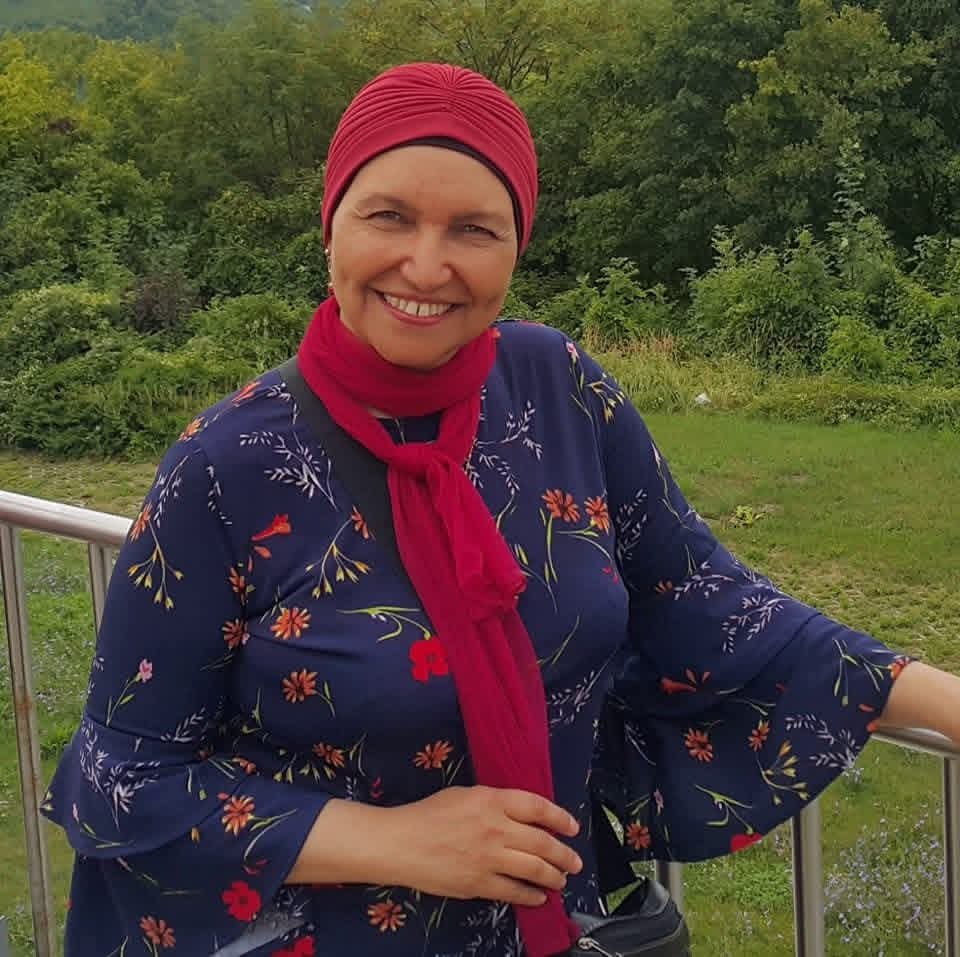
Our interlocutor is one of the bright figures of Azerbaijani literature — poet, publicist, and editor; a member of the Azerbaijan Writers’ Union, the “Yanqi Ovoz” Central Asian Writers’ Union, and the “Iraq-Turkmen Writers and Literary Figures Union”; a recipient of the Presidential Scholarship; laureate of the “Rasul Rza” and “Shakhmar Alakbarzadeh” Literary Awards; Head of the Women’s Wing of the Civil Solidarity Party; and editor of the website Mustaqil.az — Aysel Khanlargizi Safarli.
– When speaking about childhood, a person dives into an ocean of both joy and sorrowful memories.
When you recall your childhood years, what feelings awaken in your heart first?
— My childhood memories always tune me to fragile notes. Whenever I recall them, I return to the carefree, beautiful days when my father was still alive. Back then, little Aysel would show her very first poem to her father, and his kind words would light a small spark of creativity in her heart… I become a child again, and my father gently strokes my hair with eyes full of love… In this flow of emotions, I find myself gazing both into my past and into my own soul.
– There is a delicate silence and a deep emotional wave in your poetry.
Where does this silence come from — childhood memories or the turbulence of life?
— Some of these feelings come from the fragility of childhood memories, while others were born while rowing against life in the stormy sea of existence, fighting to survive.
– Every poet carries an invisible flame within.
Who ignited that fire in you for the first time — what event or which feeling?
— The first torch of poetry within me was lit by my late father. From my earliest years, he took pride in my poems, encouraged me, became my first reader, and always stood behind me… I believe it is a unique happiness for a girl to love her father also as her very first reader.
– “Paper planes” — does this symbol represent the purity of childhood or the human need to let dreams fly?
— In fact, the origin of “paper planes” is different. Because I lived far away for many years and waited for someone from afar, my life passed through airports filled with longing… In one of my poems, I wrote about how my son, waiting for his father, made paper planes and flew them across the room, turning our home into an airport… That is where the expression “paper planes” was born.
– Truth and beauty — how do these two concepts merge in your poetic worldview?
— Although truth may sometimes appear ugly to people, in my world it is a form of beauty itself…
Beauty always changes depending on one’s perspective. What matters is the ability to see beautifully. Sometimes a person can feel happiness even in sorrow, can live through pain beautifully, and carry it with dignity.
– In the modern world, a woman is simultaneously a creator, a mother, and a leader.
How do you maintain the delicate balance between these roles?
— I try to maintain it as best as I can. A woman is created so strong and perfect that she can carry the highest emotions of the world with immense love and patience. I am happy that I am both a mother and someone who can express her feelings through writing.
– You also lead the Women’s Wing of the Civil Solidarity Party.
When literature and social activity intersect, what tones collide within your soul?
— The founder of the Civil Solidarity Party is himself a People’s Poet — Sabir Rustamkhanli, a master who gifted priceless works to literature. I believe literature itself is already a form of social activity…
Even the strongest conflicts have often been resolved with a single word. My soul stands in harmony with both my words and my actions; it befriends them, loves both its work and its word.
– There are wars, hunger, and injustices in the world.
What should a poet do in the face of such pain — remain silent or turn the pen into a sword?
— Even if a poet wants to remain silent, they cannot. Poets feel those pains and emotions as if they have lived them themselves. That is why the countless states of the world have always been transformed into poetry, words, and verses — and will continue to be.
– In your opinion, is modern literature a remedy for society’s spiritual wounds, or merely consolation?
— I believe literature is neither consolation nor a remedy. Literature is the verbal expression of feelings that thousands of people cannot articulate. Literature is the image of emotions, the artistic tones of life. When we are alone with ourselves, it makes us think, sometimes awakens us from heedless sleep, and sometimes gives the human soul the strength to fight. Literature is the nourishment of our spiritual world.
– Time changes, technology dominates the human soul.
Do you think the value of words still remains in this century?
— As long as humans exist, words will exist, and their value will remain. Sometimes a word becomes healing and hope in a sick heart; sometimes it becomes life itself.
There is nothing a word cannot do… Just as with a single word — “dear” — a person is ready to sacrifice their life for the one they love.
– They say a person must find the meaning of their life.
Where do you see the meaning of life?
— Giving meaning to life depends on the individual. When a person sees what they value in the place they desire, life becomes beautiful in their eyes. For a creative person, the meaning of life is to live, to create, and not to grow tired of struggle.
– What inspires you most or causes you concern in today’s literary environment?
— The emergence of many talented young writers today inspires me greatly. What concerns me are those who devalue words, who seek so-called fame for the sake of publicity and ratings, or who force themselves into being poets or writers. But then I think to myself: time and the scales of literature will weigh every line and every verse; meaningless things that exhaust the agenda will be sifted out and filtered away.
Leaving everything to time is the wisest choice.
– Is there a distance between today’s reader and the poet, or do souls still hear one another?
— Where there is spiritual kinship, there is no distance. A true reader and one who understands words will feel, sense, and comprehend them anywhere.
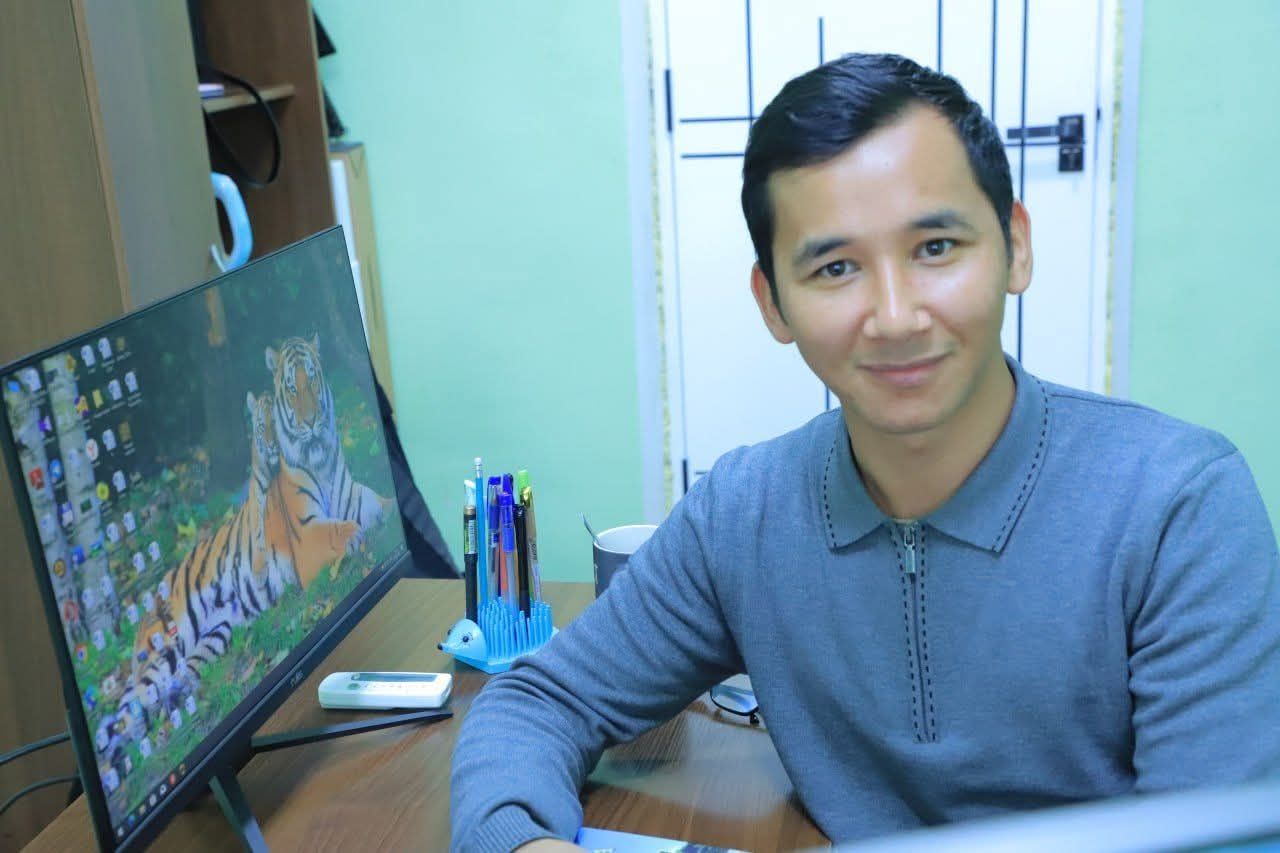
Jakhongir NOMOZOV, is a young poet and journalist from Uzbekistan.
He is also a Member of the Union of Journalists of Azerbaijan and the World Young Turkic Writers Union.
Every morning, on my way to university, I see our flag blowing in the wind along the road. Our symbol dances in the winds as if it is alive and breathing with life itself, its colors clashing with the blue of the sky. Every moment of the flag gives my heart a warm feeling – pride, trust, strength. Because it reminds me of the most sacred word – Homeland.
One day, our teacher asked in class:
– Children, what does Homeland mean to you?
The whole class became quiet. Someone said, “My mother”, another said “Nature” someone else said “Freedom”. I thought for a moment. Because this question was not simple – the answer had to be genuine and come right from the heart. On my way home, I watched the city: new roads being built, children playing in parks, farmers working in the fields, people hurrying home from work. These scenes helped me understand one truth: Homeland is not only land or a place – it is a sacred home built by the hard work, dreams, and dedication of its people.
The Homeland is warm like a mother’s love, strong like mountains, and full of life like a river. It raises us, supports us, and gives wings to our dreams. As a child of this Homeland, I want to be worthy of it. I may be young, but my dreams are as big as my country.
I study, learn, and work on myself every day. I know that educated youth are the biggest treasure of a nation. As our President say, “An educated generation is the guarantee of a great future”. That is why I push myself everyday and aim for new opportunities. Maybe one day I will become a translator, or maybe a diplomat or scientist who proudly speaks the name of Uzbekistan one international stages. But one thing will never change – I will always carry the warmth of my Homeland in my heart.
Whenever I feel tired or face challenges, I tell myself: “Charos, remember, you are an Uzbek girl! “. These words give me strength, patience, and confidence. Because being from Uzbekistan is not just a word in a passport – it is a pride, loyalty, love and staying true your dreams.
For me, Homeland is my parents’ prayers, my teachers’ effort, people’s smiles, and children’s laughter. Every time I hear about new achievements of my nation, I feel proud. Because every success is the result of our shred hard work.
Today, the reform in our country and the opportunities created for youth are universities, research centers, sports complexes – all of these are chances for the younger generation. We, the youth, must live up to this privilege.
I want to love and honor my Homeland not only with words, but with my actions. I want to make my country proud with everything I do and every idea I have. Because real patriotism is not only shouting slogans on holidays – it is living with dedication every day.
Whenever I speak on a big stage, I feel the eyes full of pride, trust and love of my parents on me. The words, “Our daughter is our pride”, ring in my ears. This is my biggest reward and my greatest motivation.
My Homeland – my pride
It lives in every breath I take, every intention I make, and every dream I have. It inspires me, gives me strength, and guides me. I study, learn, and work hard to be a worthy child of my nation. Because a person who truly loves their Homeland never stops – they always move toward greatness.
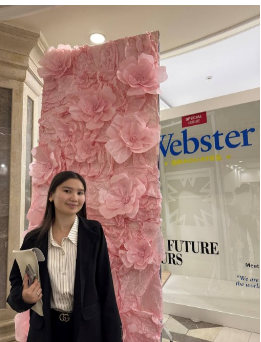
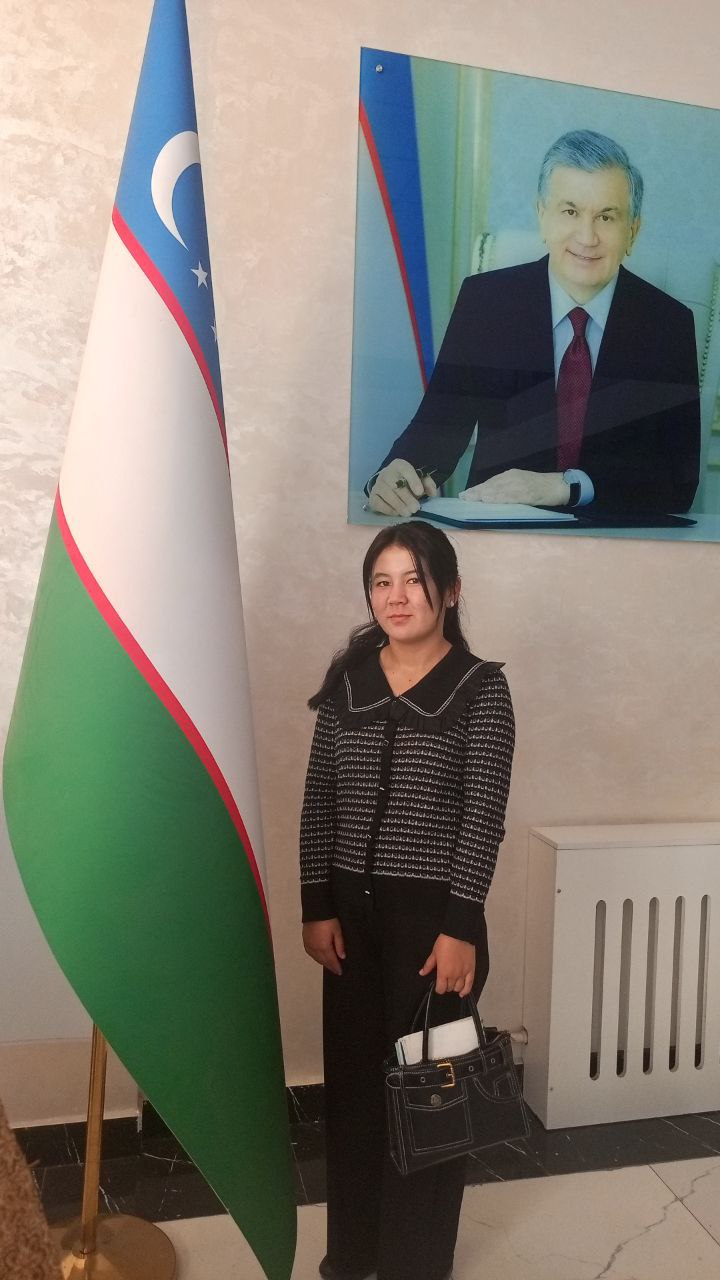
Normuminova Charos Shamshoshodovna was born on August 4, 2007, in the Kashkadarya region. Along with her school studies, she finished the Children’s Music and Art school No. 15with a high diploma. She is a winner of more than 15 scholarships. She speaks four languages fluently. She has IELTS and CEFR certificates in English. She has been accepted to more than 15 international and state universities. She is a currently a bachelor’s student at Webster University in Tashkent on a full scholarship. Holder of more than 50 international awards. She was a guest on the “Fayzli kun” program on the Kashkadarya TV channel. Her articles have been published in the USA and Turkey.
In recent years, rapid urbanisation has forced governments and city planners to reconsider how cities should be designed. While some people argue that living and working in a vertical city with numerous high-rise buildings is more beneficial, others believe that a horizontal city with fewer tall structures offers a better quality of life. This essay will discuss both perspectives before presenting my own opinion.
On the one hand, supporters of vertical cities claim that this model is a practical solution to overpopulation and limited land availability. High-rise buildings allow a large number of people to live and work within a compact area, which helps to reduce urban sprawl. As a result, essential facilities such as offices, shopping centres, and public services can be located close to residential areas, saving time and increasing productivity. Moreover, vertical cities often encourage the use of public transportation, which can alleviate traffic congestion and lower carbon emissions. From an economic standpoint, concentrating businesses in tall buildings can also stimulate innovation and collaboration by bringing professionals closer together.
On the other hand, opponents argue that horizontal cities provide a healthier and more sustainable living environment. Cities with fewer tall buildings usually have more open spaces, parks, and low-density housing, which can significantly improve residents’ physical and mental well-being. Living in such environments reduces stress levels and promotes a stronger sense of community, as people are more likely to interact with their neighbours. In addition, horizontal cities are often associated with better air quality and less noise pollution. Critics of vertical cities also point out that high-rise living may lead to social isolation and overreliance on elevators and artificial environments.
In my opinion, although horizontal cities offer a more comfortable lifestyle, vertical cities are a more realistic and efficient solution for modern urban development. Given the continuous growth of the global population and the scarcity of land in major cities, building upwards is often unavoidable. However, this does not mean that vertical cities should ignore human well-being. By integrating green spaces, recreational areas, and sustainable design into tall buildings, cities can combine efficiency with livability.
In conclusion, both vertical and horizontal cities have distinct advantages and drawbacks. While horizontal cities prioritise comfort and community, vertical cities address the urgent challenges of population density and land limitation. Ultimately, a balanced approach that incorporates the strengths of both models is the most effective way to design future cities.
I am Jalolova Charos. I was born in Kashkadarya region of Uzbekistan. Now, I am studying at Uzbekistan State World Language University. My hobbies are reading books, playing table tennis and listening to music.
Effective Approaches to Teaching Classical Epics in General Secondary Schools
Shermamatova Kamola Azizbek qizi
Namangan State Pedagogical Institute
Master’s student (2nd stage), Uzbek Language and Literature
Tel: +998932367802
Abstract
This article provides a scientific and methodological analysis of ways to improve the process of teaching classical epics in general secondary schools. The educational, moral, and aesthetic significance of classical epics is examined, and effective pedagogical approaches—particularly competency-based and interactive methods—are highlighted. The research findings demonstrate that teaching epics in accordance with modern educational requirements contributes to the development of students’ literary thinking and independent reasoning skills.
Keywords: classical epic, literature education, effective approach, interactive methods, competency.
Main Text
In the process of teaching literature in general secondary schools, classical epics occupy a special place as artistic sources of great spiritual, educational, and aesthetic value. Epics embody the centuries-old historical experience of the people, national worldview, moral norms, and aesthetic ideals. Therefore, studying them contributes not only to the development of students’ literary knowledge but also to the formation of their moral maturity.
However, school practice shows that teaching classical epics is often accompanied by various difficulties. In particular, the complexity of archaic language elements, the abundance of figurative devices, and the extensive plot structure make it challenging for students to fully comprehend the text. As a result, in some cases, epics are studied only at the level of retelling the plot or memorization, while their ideological and artistic essence is not sufficiently revealed.
Modern educational concepts emphasize placing the learner at the center of the educational process and shaping them as an active participant. In this context, competency-based approaches, interactive methods, and integrative educational technologies play a crucial role. Especially in teaching classical epics, these approaches foster students’ independent thinking, analytical skills, and aesthetic appreciation.
The purpose of this article is to scientifically analyze effective approaches to teaching classical epics in general secondary schools, identify their advantages in the educational process, and develop practical recommendations. The research findings hold significant theoretical and practical value for literature teachers and methodologists.
A comprehensive methodological approach was employed in the study. Initially, scientific and pedagogical sources related to the topic, research on literature teaching methodology, state educational standards, and curricula were analyzed. This theoretical analysis made it possible to identify existing approaches to teaching classical epics and assess their effectiveness.
Within the framework of the empirical study, literature lessons conducted in general secondary schools were observed, and the practices of experienced teachers were examined. The use of interactive methods such as clustering, discussion, conceptual mapping, role-playing, and creative writing tasks during lessons was analyzed. The impact of these methods on students’ comprehension and analysis of texts was studied comparatively.
The competency-based approach was selected as the methodological foundation of the research. This approach aims to develop students’ ability to apply knowledge in real-life situations and serves as an effective tool for mastering the moral ideas embedded in classical epics. Observation, comparison, generalization, and analytical conclusion methods were used throughout the research process.
The research results indicate that the application of effective approaches in teaching classical epics significantly increases students’ activity during lessons. In classes organized on the basis of interactive methods, students demonstrated deeper comprehension of the text and actively engaged in character analysis. In particular, tasks aimed at identifying the characteristics of epic heroes—such as “Character Description” and “Evaluation of a Hero’s Decision”—contributed to the development of analytical thinking skills.
Through group work, students acquired skills in listening to others’ opinions, providing evidence, and drawing conclusions. Lessons conducted using a competency-based approach showed that students were able to evaluate the actions of epic characters, draw moral conclusions, and relate them to contemporary life. For example, concepts such as justice, loyalty, and patience depicted in epics were analyzed in comparison with modern life situations.
Comparative analysis revealed that in lessons dominated by traditional explanatory methods, student engagement was relatively low, whereas lessons incorporating interactive approaches demonstrated higher effectiveness in question-and-answer sessions, discussions, and creative writing tasks. This had a positive impact on knowledge retention and long-term memory.
The findings confirm the necessity of updating teaching approaches for classical epics in general secondary schools. Modern pedagogical technologies and competency-based approaches make it possible to present the complex artistic structure of epics in an accessible and engaging way. Interactive methods enhance students’ independent thinking and their ability to justify personal viewpoints. Thus, teaching epics becomes not only a means of imparting knowledge but also an effective tool for holistic personal development.
At the same time, these approaches require teachers to possess high methodological competence, apply creative lesson planning, and use modern technologies wisely. The study shows that implementing effective approaches in teaching classical epics fosters respect for and interest in national literary heritage among students. This expands the educational potential of literature as a subject and contributes to improving the quality of education.
Conclusion
In conclusion, the process of teaching classical epics in general secondary schools needs to be reconsidered in accordance with modern educational requirements. The research findings demonstrate that education based on interactive and competency-based approaches ensures students’ deep and conscious mastery of classical epic content.
Effective teaching of classical epics develops students’ literary thinking, moral worldview, and independent thinking competencies. Therefore, the widespread implementation of modern pedagogical methods in teaching epics and the enhancement of teachers’ methodological skills remain essential tasks. The conclusions of this article contribute to improving literature education in general secondary schools and to effectively transmitting classical literary heritage to the younger generation, while also serving as a theoretical foundation for future research.
The Last Your heart tiptoed down the hall out the door across the street as far as the other side of town until the rubber band snapped and took the rest of you leaving a chasm in mine.
I filled it with words first as entreaties cried out ever so calmly then etched onto endless pages until the torrent ebbed and shifted form.
One day I realized I had written a poem that wasn’t about us.
So this is my final for you. One word broken in two.
Good bye.
Periodic Table of Emotions
There’s a science to this chemistry of avoiding combining catalytic connections between the heart and the head. Like all good experiments, something has to blow up, spill over, or make me choke to figure out what doesn’t work. Unfortunately, while actual scientists record the results to know what to avoid, as an artist, I tend to use a less clinical approach; the process has always been what interests me most. Even with the dances I choreograph, once they are done, it’s being in rehearsal I remember, not the finished work.
So in the lab of my life, I need to go back and redo again, and again, not remembering that it isn’t the amount of each element, but the fact that they don’t work together at all. Reminding me once again that this combination still produces a destabilizing outcome.
Longing and anticipation, anxiety and memory, anger and regret, self-medication and sorrow, these opposing components do not play nicely together in any setting, controlled or otherwise.
With compounding and identifying which interactions work well together, the balancing act is more nuanced, but I have found that these groupings are always from the same side of the spectrum. Calm and compassion, forgiveness and gratitude, awareness and curiosity, these always interplay quite nicely. Mixed with the right physical response, they can produce an alchemical conversion into a state of being that is calm, settled, almost at peace. With more subtle adjustments: a little more breathing, a little less fear, the sweet spot of spiritual sanity is attained. Not in the past or future but finally, gloriously, successfully in the present.
Exhale.
Now, where did I leave that glass of wine?
– Janaea Rose Lyn
5
4
I love this rhythm. Generally subdivided as 123, 12, or 12, 123, it’s my favorite to choreograph and drum. Dum dum dum, Tek tek. Dum dum, Tek tek tek. Or to jumpstart the clutch of my heart when it’s faltering. Boom boom boom, Bap bap. Boom boom, Bap bap bap.
Five is the number of wounded themes I have identified, where the best and worst of my impulses reside. It is the count of the primary pillars that inform my life. And let’s not forget the senses. Each has a primary pattern that is daily re-interpreted with subdivisions, changing accents, and syncopation, as I phrase the structured improvisation that is my life:
Belonging attention care, Trust guidance
Love service, Art beauty abundance
Sight sound smell, Taste touch
The first are my recent areas of intense scrutiny. What I didn’t get, what I long for, what I gave to a fault, what informed my behaviors, and where I attached the conviction that no longer serves me. Protective armor has its place, for a time. Defenseless, I have no choice but to give these to myself. The necessary cliché of healing my inner child so the adult me is integrated, interacting with intention and no longer in reaction. The work at hand.
Following are what nourish me, and each other. Soul food.
The last are trickier. Blinders finally off, the view is expansive, but the glare of seeing what is actually in front of me often requires a hat, something I never wore before. The volume of the voices in my head is louder, too. I lost my olfactory sense for a time, which has always been dominant for me, so it was disorienting to say the least. The day of the shock, it came back full force. It turns out I also needed some pharmaceutical assistance, so it’s now safely restored to the pantheon of pleasures. The final two can leave me aching, so I try not to focus on them as much since you’ve gone. I can enjoy eating and drinking again, but that’s not the flavor I miss. When we do see each other, I look forward to our parting hug, brief kiss of care, and the sensation of your scent landing lightly on my skin.
– Janaea Rose Lyn
Room to Move
Gravity, physics, and physical abilities notwithstanding, the primary partner in my dancing life was space. Moving in and through it, changing levels and planes, staying in place or inverting perspective, all of this expanded my expressiveness. Space is tangible. It has weight and viscosity. It’s more obvious when it duets with water or temperature and can be felt as humidity or an icy chill, but it shimmers all the time. Pay attention, and you’ll see.
Now I am navigating a whole other relationship to spaciousness, interiority. My head and heart growing to make room for a different kind of locomotion. I have always worked on my inner self, but as with training my outer self, neither produced outcomes as quickly as hoped. With time, the results were evident in both areas. I have many decades of practice under my belt.
Unencumbered by the grueling demands of the life I once lived, I find I am working harder than I ever have. My daily spiritual practice takes as long as a New York City technique class once did. Once completed, I am not sweating on the outside but equally as exhilarated within. Filled with insights, understanding, and shifting perceptions, I may look the same to others, but invisibly, I am more gracious and accepting. I am less encumbered by my psychology, and am learning how to get, and stay, out of my old ways. I no longer get as easily ensnared in the drama of others.
I have blood memory and bone density, even if my flesh is a little more wrinkled. I often get compliments on my long, salt and pepper mermaid hair. You have to earn that, and I can live underwater now. I can breathe in both worlds. The vastness of emptiness is not terrifying anymore because I have found that when I fall, I can also grow wings. I have met divine mentors and apprenticed myself. I was always a serious student, though to my chagrin, not always a quick learner.
Like the air that surrounded me onstage, unseen by the audience but charged nonetheless, I am a lone but no longer alone.
I’m in good company.
– Janaea Rose Lyn
See Through
Where stone and pillar held firm and formidable, diagonal canyons of air and light form transient shadow and shape.
Strange how echoes become visible when belonging to either side.
Confessions and fervent prayers drift past in full view, no longer needing to seep through cracks to escape.
Bored eyerolls and questionable gestures intended for childhood crushes across a pew look lost, eternally seeking a response no longer forthcoming.
The curious daughter of the tree out back
climbed as the perfect perch
to hold hands, steal a kiss,
has entered as a congregant of trunk and branch.
Deeply exquisite is this state of exposure.
Nothing ruined, only revealed.
Centuries of lives that cobbled these stones with their stories, only to find their place with one. At their head.
Sun replacing stained glass becomes the window witness.