With the rise of human unrest, everything around feels breathless.
Distrust and rashness spread in every direction Like unleashed waves of overflowing waters outside They devour our shelter, devour our lives Nature itself is losing its own rhythm.
Rivers are drying, settlements are burning Cities and ports drift away The game of justice and injustice goes on While elsewhere piles of bodies keep rising.
As if from behind, someone pulls the strings, Drunk on the intoxication of the dead— Someone, keeps pulling the strings.
Just as history’s pages reveal: Seeking one’s own heroism In exchange for human corpses.
Yet we grew up knowing We learned it from the pages of books— Human beings exist for one another.
As if in some mythic war The might of the powerful is being put on display Oil for oil’s own sorcery Gold mines and strings of pearls—
Searching and searching One day the earth will give up All its glittering treasures from within.
And that day, Powerful and powerless alike Will blur into one voice and ask together: What has happened to the Earth?
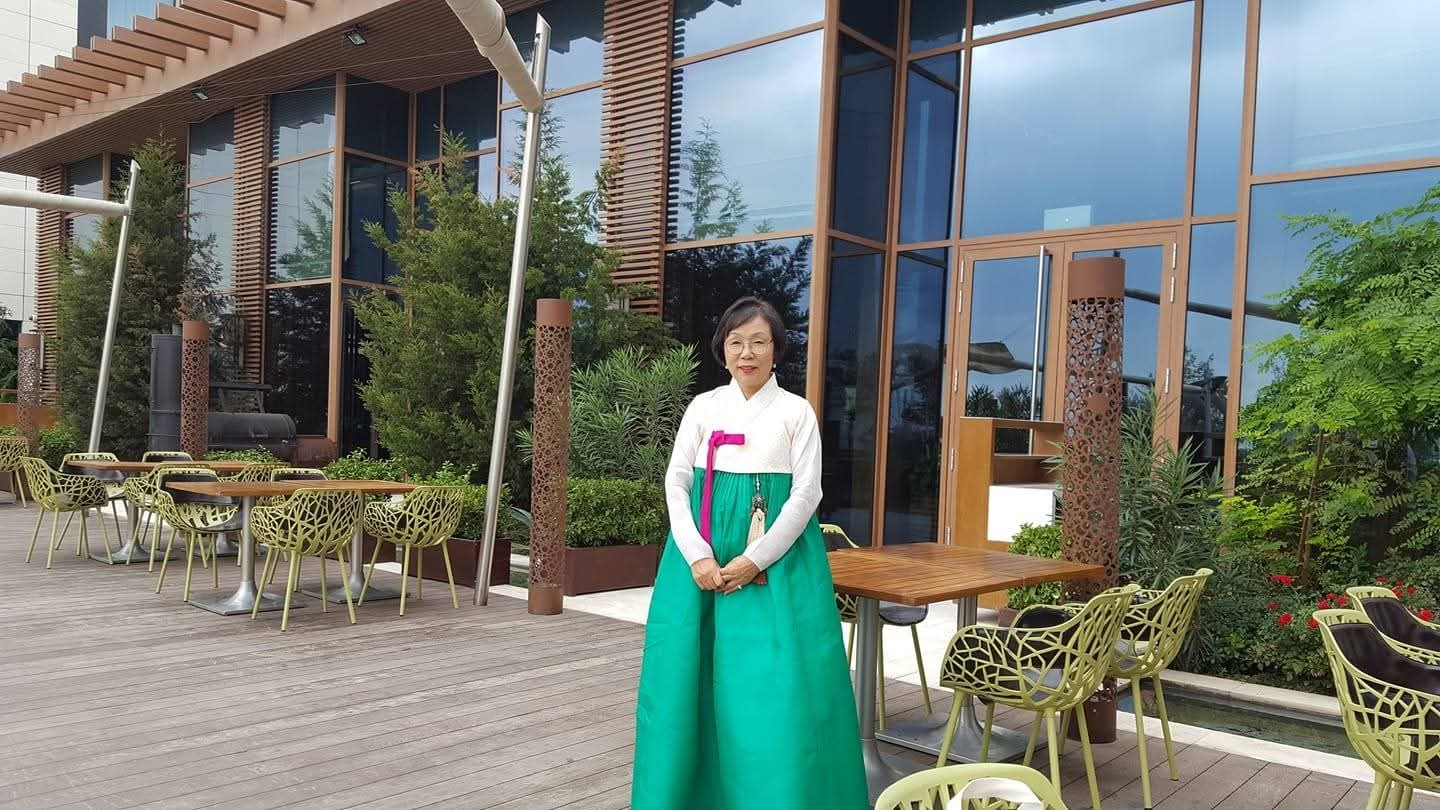
Md. Mahbubul Alam is from Bangladesh. His writer name is Mahbub John in Bangladesh. He is a Senior Teacher (English) of Harimohan Government High School, Chapainawabganj, Bangladesh. Chapainawabganj is a district town of Bangladesh. He is an MA in English Literature from Rajshahi College under National University. He has published three books of poems in Bangla. He writes mainly poems but other branches of literature such as prose, article, essay etc. also have been published in national and local newspapers, magazines, little magazines. He has achieved three times the Best Teacher Certificate and Crest in National Education Week in the District Wise Competition in Chapainawabganj District. He has gained many literary awards from home and abroad. His English writings have been published in Synchronized Chaos for seven years.
Once when he was in grade ten in 1990, his Bangla letter was selected as the best one from Deutsche Welle, Germany Radio that broadcast Bangla news for the Banglalee people. And he was given 50 Dutch Mark as his award. They would ask letters from the listeners to the news in Bangla and select one letter for the best one in every month.
From 17 to 30 September, in 2018 he received a higher training in teaching English language in Kasetsart University of Thailand for secondary level students through a government order from education ministry.
On 06 November 2015 he achieved Amjad Ali Mondal Medal for his contribution in education field by a development organization in the conference and felicitation function for the honorable personalities at Rajshahi College Auditorium.
On 30 December 2017 from West Bengal in India he was declared a ‘Literary Charioteer’ in Bangobandhu Literary and World Bango Conference and they awarded him with a Gold Medal in their International Literary Conference and Prize Giving Ceremony.
In 2018, he achieved Prodipto Lirerary Award in Prodipto Literary Conference at Kesorhat, Rajshahi for poems in Bangla literature. He received honorary crest from the administration of Chapainawabganj District Literary Conference and Cultural Function in 2021 and 2022 consecutively.
His poems have been published in many international online magazines such as Juntos Por las L Raven Cage Zine, and Area Felix. His poems have been translated and published in Argentine and Serbian, and he participated in many international online cultural meetings.
Her words are filled with love, patience, and light.
In her eyes remain traces of sleepless nights,
Each prayer a shield that never leaves my side.
My father says, “Walk straight, never bow your head,”
Be honest — this is the advice he gives me.
In hard times, his words become my support,
Through prayer, his strength grows even more.
Even when they see me fall, they stay silent,
Inside them live a thousand unspoken wishes.
Quietly at night, they raise their hands in prayer,
Calling my name, pleading to the heavens.
These prayers open wide the paths before me,
In every task, God Himself gives support.
Not wealth, not fame — this alone is enough,
A parents’ prayer is the greatest treasure.
Time will pass, hair will turn gray, I know,
I wish to serve them, knowing their true worth.
While they are here, I am never alone,
Where their prayers exist, sorrow cannot stay.
O Lord, always protect them,
Grant them long lives filled with blessings and peace.
Every breath I take is full of gratitude,
For my parents’ prayers — my eternal thanks.
I was born in Asaka District, Andijan Region. I entered the 10th General Secondary School of Asaka District in 2014 and graduated in 2025. Currently, I am studying at the Andijan Branch of Kokand University in the English Language Teaching program, group 25_09. I am studying at this university with excellent grades and actively participating in many conferences, scientific articles, and numerous seminars.
I have also taken part in many competitions for young readers and have won honorable prizes. Similarly, I have achieved first and second honorable places in national competitions. In 2025, I graduated from school with a red diploma due to my discipline and outstanding academic performance.
I love expressing my thoughts and feelings through creativity. In my works, sincerity, a deep perspective on life, and inner emotions hold an important place. I write every line with responsibility, striving to convey words that come straight from my heart to the reader. This book is the result of my search, my hard work, and my love for creativity.
First-year student, Faculty of Foreign Languages and Literature
Bukhara State Pedagogical Institute, Uzbekistan
Scientific Innovation and National Development
Abstract
Scientific innovation has become one of the most significant forces shaping national development in the modern world. In an era characterized by rapid technological advancement and global competition, nations increasingly rely on scientific research and innovation to strengthen their economies, improve social welfare, and ensure sustainable development. This article explores the relationship between scientific innovation and national development, emphasizing the role of research and development, education, technological progress, and government policies. The study analyzes how scientific innovation contributes to economic growth, social transformation, environmental sustainability, and global competitiveness. Furthermore, it highlights the importance of supporting young scientists, investing in education, and fostering innovation-friendly environments. Through theoretical analysis and real-world examples, the article demonstrates that countries prioritizing scientific innovation achieve long-term stability and prosperity. The findings suggest that scientific innovation is not only a tool for economic advancement but also a key factor in addressing global challenges and ensuring inclusive national development.
Key Words
Scientific innovation, national development, technology, economic growth, research and development, sustainability
Introduction
In the 21st century, the concept of national development has expanded beyond traditional economic indicators such as gross domestic product and industrial output. Today, development is closely linked to a nation’s ability to innovate, adapt, and apply scientific knowledge to solve complex problems. Scientific innovation plays a central role in shaping economic structures, improving living standards, and enhancing global competitiveness. Countries that prioritize science and technology tend to experience faster growth, stronger institutions, and greater resilience to global challenges.
Scientific innovation refers to the process of developing new ideas, technologies, and methods through systematic research and experimentation. It is the foundation of technological progress and a key driver of modernization. National development, on the other hand, encompasses economic growth, social progress, political stability, and environmental sustainability. The interaction between scientific innovation and national development is dynamic and mutually reinforcing.
In a globalized world, nations compete not only in terms of natural resources or labor but also in scientific capacity and innovative potential. Advances in information technology, biotechnology, artificial intelligence, and renewable energy have transformed economies and redefined development strategies. As a result, understanding the role of scientific innovation in national development is essential for policymakers, educators, and researchers.
This article aims to analyze the contribution of scientific innovation to national development by examining its impact on economic growth, social welfare, education, healthcare, and environmental sustainability. It also discusses the challenges faced by developing countries in promoting innovation and suggests strategies for building innovation-driven economies.
The Concept of Scientific Innovation
Scientific innovation is a multifaceted concept that involves the creation, application, and diffusion of new knowledge. It is rooted in scientific research, which seeks to understand natural and social phenomena through observation, experimentation, and analysis. Innovation occurs when scientific discoveries are transformed into practical solutions that improve efficiency, productivity, or quality of life.
Innovation can be classified into several types, including technological innovation, organizational innovation, and social innovation. Technological innovation involves the development of new products, processes, or systems, such as advanced machinery, digital platforms, or medical devices. Organizational innovation focuses on improving management practices and institutional structures, while social innovation addresses societal challenges through creative solutions.
Scientific innovation is not a linear process. It requires collaboration between researchers, industries, governments, and educational institutions. Universities and research centers play a crucial role in generating knowledge, while industries apply this knowledge to create marketable products and services. Governments support innovation through policies, funding, and infrastructure development.
The effectiveness of scientific innovation depends on a country’s innovation ecosystem. This ecosystem includes research institutions, skilled human capital, financial resources, legal frameworks, and cultural attitudes toward creativity and risk-taking. Countries with strong innovation ecosystems are better positioned to achieve sustainable development.
Scientific Innovation and Economic Growth
One of the most significant contributions of scientific innovation to national development is economic growth. Innovation increases productivity by enabling firms to produce more output with fewer resources. Technological advancements reduce production costs, improve efficiency, and enhance product quality. As a result, innovative economies tend to grow faster and create more employment opportunities.
Research and development (R&D) is a key component of innovation-driven growth. Investments in R&D lead to the development of new technologies and industries, such as information technology, biotechnology, and renewable energy. These industries generate high value-added products and contribute to export competitiveness.
Moreover, scientific innovation promotes entrepreneurship and the emergence of startups. Innovative startups introduce disruptive technologies and business models that challenge traditional industries. This dynamic process fosters competition, drives efficiency, and stimulates economic diversification.
Developed countries such as the United States, Germany, and Japan have demonstrated the importance of innovation in sustaining economic growth. Their strong emphasis on scientific research, technological development, and education has enabled them to maintain leadership in global markets. Similarly, emerging economies that invest in innovation can accelerate their development and reduce dependence on raw materials.
Innovation and Social Development
Beyond economic growth, scientific innovation plays a vital role in social development. It improves living standards by enhancing access to healthcare, education, and essential services. Innovations in medical science, for example, have led to the development of vaccines, advanced diagnostic tools, and effective treatments for diseases. These advancements increase life expectancy and improve quality of life.
In education, scientific innovation has transformed learning methods and expanded access to knowledge. Digital technologies, online platforms, and artificial intelligence enable personalized learning and distance education. These innovations are particularly important for developing countries, where access to traditional educational resources may be limited.
Scientific innovation also contributes to social inclusion by addressing the needs of vulnerable populations. Assistive technologies support people with disabilities, while innovative social programs help reduce poverty and inequality. By promoting inclusive development, innovation strengthens social cohesion and stability.
The Role of Education in Innovation
Education is the foundation of scientific innovation and national development. A well-educated population is essential for generating new ideas, conducting research, and applying knowledge effectively. Education systems that emphasize critical thinking, creativity, and problem-solving skills prepare individuals to participate in innovation-driven economies.
Higher education institutions play a central role in scientific research and innovation. Universities conduct fundamental research, train scientists and engineers, and collaborate with industries on applied projects. Strong links between academia and industry facilitate knowledge transfer and commercialization of research results.
STEM education (science, technology, engineering, and mathematics) is particularly important for fostering innovation. Countries that invest in STEM education develop skilled workforces capable of driving technological progress. At the same time, interdisciplinary education that integrates social sciences and humanities helps address ethical and societal aspects of innovation.
Encouraging youth participation in science and innovation is also crucial. Young people bring fresh perspectives and creative ideas that can lead to breakthrough innovations. Supporting young scientists through scholarships, research grants, and mentorship programs strengthens a nation’s innovation capacity.
Scientific Innovation and Environmental Sustainability
Environmental sustainability has become a major challenge for national development. Climate change, resource depletion, and environmental degradation threaten economic and social stability. Scientific innovation offers solutions to these challenges by promoting sustainable practices and green technologies.
Renewable energy technologies, such as solar, wind, and hydropower, reduce dependence on fossil fuels and lower greenhouse gas emissions. Innovations in energy storage and efficiency further enhance the viability of clean energy systems. These advancements contribute to sustainable development and energy security.
In agriculture, scientific innovation improves productivity while minimizing environmental impact. Precision farming, biotechnology, and sustainable irrigation techniques help conserve resources and ensure food security. Environmental monitoring technologies enable better management of natural ecosystems.
By integrating sustainability into innovation strategies, nations can achieve development that meets present needs without compromising the future. Scientific innovation thus plays a critical role in balancing economic growth and environmental protection.
Government Policies and Innovation
Government policies are essential for creating an environment conducive to scientific innovation. Public investment in research and development provides the foundation for innovation activities. Governments fund universities, research institutes, and innovation programs that generate knowledge and technological breakthroughs.
Innovation-friendly policies include intellectual property protection, tax incentives for R&D, and support for startups and small enterprises. These measures encourage private sector investment in innovation and reduce risks associated with research activities.
National innovation strategies align scientific priorities with development goals. By identifying key sectors such as information technology, healthcare, or renewable energy, governments can focus resources on areas with high growth potential. Effective governance and coordination among stakeholders enhance the impact of innovation policies.
Challenges for Developing Countries
Despite the benefits of scientific innovation, many developing countries face challenges in promoting innovation-driven development. Limited financial resources, inadequate infrastructure, and weak educational systems hinder research and innovation activities. Brain drain, where skilled professionals migrate to developed countries, further reduces innovation capacity.
Institutional barriers, such as bureaucratic inefficiencies and lack of coordination, also impede innovation. In some cases, cultural attitudes toward risk-taking and entrepreneurship discourage creative initiatives. Addressing these challenges requires comprehensive strategies that strengthen education, infrastructure, and governance.
International cooperation can help developing countries overcome innovation gaps. Partnerships with foreign universities, research institutions, and international organizations facilitate knowledge transfer and capacity building. By learning from global best practices, developing nations can accelerate their innovation efforts.
The Future of Scientific Innovation and National Development
The future of national development will increasingly depend on scientific innovation. Emerging technologies such as artificial intelligence, biotechnology, and nanotechnology are reshaping economies and societies. Nations that adapt to these changes and invest in innovation will gain competitive advantages.
Innovation will also play a crucial role in addressing global challenges, including pandemics, climate change, and resource scarcity. Collaborative research and international cooperation will be essential for developing effective solutions. As innovation becomes more interconnected, national development strategies must balance global integration and local priorities.
Conclusion
In conclusion, scientific innovation is a fundamental driver of national development in the modern world. It supports economic growth, enhances social welfare, promotes environmental sustainability, and strengthens global competitiveness. The relationship between scientific innovation and national development is dynamic and mutually reinforcing, as innovation fuels development and development creates opportunities for further innovation.
To achieve sustainable national development, countries must invest in education, research, and innovation ecosystems. Governments, educational institutions, industries, and individuals all play vital roles in fostering innovation. By prioritizing scientific innovation and addressing existing challenges, nations can ensure long-term progress, stability, and prosperity.
References
UNESCO. (2022). Science, Technology and Innovation for Sustainable Development.
World Economic Forum. (2023). Innovation and Economic Growth.
OECD. (2021). National Innovation Systems.
Smith, J. (2020). Science, Technology and Development. Academic Press.
United Nations. (2022). Sustainable Development Goals Report.
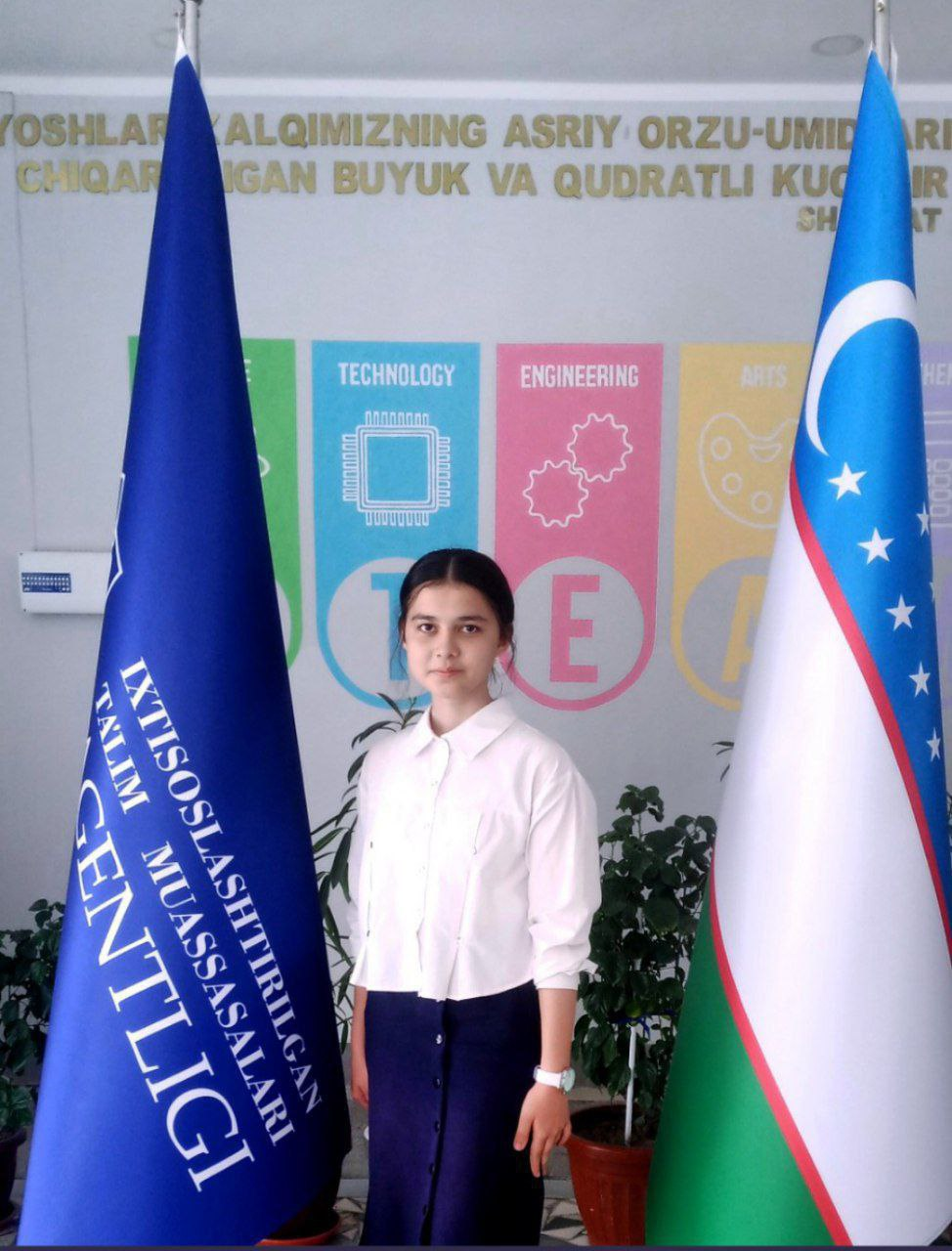
Breaking the silence: A girl`s story To every girl who has ever been told “you can’t”- this is for you.
Author: Baxshilloyeva Nigina Bahodir qizi (01.01.2026)
“Imagine being born into a world full of invisible walls — walls that tell you where to go, what to dream, and how loud you may speak. Now imagine breaking through them to find your own voice“. This is not the story of an ordinary girl. This is the story of a girl who found her voice amidst silence. From the moment she was born, invisible walls surrounded her: because she was a girl, her world was “too small” and her dreams were considered “too big”.
For a long time, she accepted these walls as natural, because everyone around her seemed to live within them. Yet, deep inside, questions began to form. And it is that very question — quiet, persistent, impossible to ignore — that changes everything.
Think about: If you had grown up in the same environment, would you have noticed these walls?
Days passed, and the walls seemed taller, stronger and louder. Every “you can’t” and “you shouldn’t” echoed in her ears. She felt small. Invisible. Forgotten.
Yet in the quietest corners of her mind, a whisper began. A tiny, trembling voice, almost afraid to exist, yet undeniably there. “Why must I stay inside these walls?” it asked. She started to notice things others didn’t — the way her dreams refused to shrink, the way her laughter refused to fade, the way her questions refused to die. And for the first time, she realized something powerful: these walls weren’t her world. They were someone else’s rules.
One day, she reached for a notebook, her pen trembling in her hand. She wrote down every dream, every question, every desire that had been locked away. Words poured out like sunlight breaking through storm clouds. And slowly, the walls began to crack.
Every time she spoke up, every time she tried, the walls shook a little more. Every “no” she heard became fuel, not a chain. With each step, the girl was no longer just surviving — she was beginning to exist. Fully. Freely. Loudly.
And then, one morning, she realized she had done the impossible: she had found her voice. Not the quiet, hidden voice that whispered in corners — but a voice strong enough to shake the world, gentle enough to heal and fearless enough to inspire.
To every girl reading this: the walls around you are real, but so is your voice. You are not too small. Your dreams are not too big. You have a fire inside that no one can dim. Speak. Sing. Write. Paint. Dance. Question. Challenge. Break. Build. Every time you do, you are shattering limits, not just for yourself, but for the girls who will follow you.
Your voice matters. Your dreams matter. And your courage is louder than any wall. So keep going. Keep fighting. Keep finding your voice — because the world is waiting to hear it.
“This motivational piece is small and simple, and I’m not even sure if it can really be called a story, but if even a little part of it has touched your heart or given you a bit of inspiration, I’m truly happy.
Baxshilloyeva Nigina Bahodir qizi Peshku Specialized School, Bukhara
National certificates: • Multi-level (English): C1 • Mother Tongue and Literature: A • History: B • Mathematics: C+
• IELTS Academic: 7.0
Awards & Achievements: • Winner of “Ingliz tili bilimdoni – 2024” • 1st place in English and Uzbek language at district Olympiads • Prize-winner of UBS subject Olympiad (English) • Holder of multiple certificates of appreciation and excellence • Early admission student with a total score of 189 points • Appeared on “Istiqlol TV”
Activities: • Founder of “Englishblog_nb” where she teaches English free of charge to younger learners • Participant of several educational camps and training programs, including “English for IT” • Actively involved in social, volunteer and street educational activities • Experienced in Telegram channel management related to education and media
Interests: • Learning foreign languages • Reading fiction and literature • Piano playing and chess • International education opportunities and teaching