Poetry from J.J. Campbell

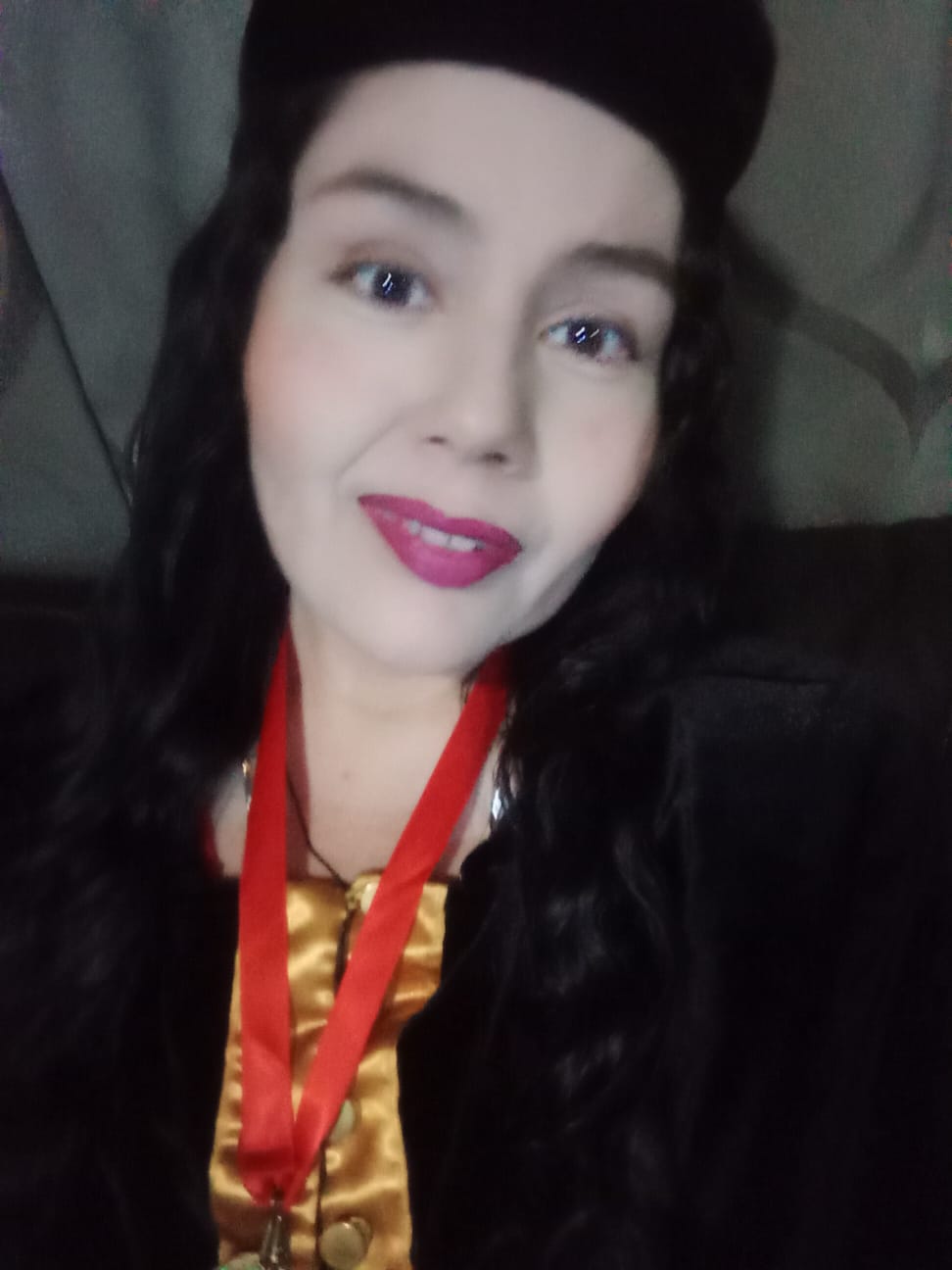
Middle aged white man with a beard standing in a bedroom with posters on the walls
J.J. Campbell

—————————————————————————————-

a revolution

sit on the back

porch in the

drizzle, end

of summer

listen to the

crickets plot

a revolution

your father once

told you dreams

were useless

hard work was

the only way

to get ahead

kind of ironic,

since that fucker

didn’t believe in

hard work either

he just wanted to

beat it into your

soul so he could

think of himself

as a good father

yet another thing

he failed at

still think about

cigarettes and a

glass of scotch

watching the cat

kill a mouse and

bring it to you

for a reward

————————————————————–

the mystery meat

never trust a skinny

chef

a nail shop that has

no koreans working

or the mystery meat in

any sandwich for lunch

and you wonder why so

many people fail gambling

on baseball

testing the limits on sanity

watching my mother’s health

fail a little more each day

i tell her it is probably better

she dies before democracy

does

and the young still want

to get married

and the rest of us only see

the cliff and an endless

fall ahead

just fucking jump

——————————————————————-

slipping into the abyss

i thought i would

let out a loud

collective fuck

before we are

never allowed

to do it again

slipping into the

abyss of scrambling

underground like

the cockroaches

they all think

we are

say goodbye to the

freedom of speech

and hello to the

consequences of

speech they don’t

approve of

fuck fuck fuck

i never was any

good at conformity

and was always

fucking proud

of that

the twilight is here

i ain’t fucking

changing now

——————————————————————————

volunteer

the only job

i seem to be

qualified for

is volunteer

hell,

i remember

back in 1988,

i was 12

years old

and told

my mom

and dad

i was going

to mow lawns

over the summer

to make some

money

there was a

drought that

year

i mowed one

lawn

never got

paid for it

so yes,

volunteer

i guess it is

———————————————————————

if she only knew

breathless beauty

but always just

out of reach

always her choice

by the way

if she only knew

what could have

been

two worlds that

are completely

different

colliding into

a beautiful

kaleidoscope

of wonder

sexual tension

for years to spare

but the comfort

of endless miles

between means

there is never

the need to take

a chance

and just like that

a moment in time

lost in whatever

like so many damn

times before

J.J. Campbell (1976 – ?) is old enough to know better. He’s been nominated three times for Best of the Net and once for the Pushcart Prize. He’s been published for over 30 years now, most recently at Disturb the Universe Magazine, The Beatnik Cowboy, The Rye Whiskey Review, Misfit Magazine and Mad Swirl. His latest chapbook, to live your dreams, will hopefully be out before 2025 ends. He has a blog but rarely has the time to write on it anymore. (https://evildelights.blogspot.com)

Essay from Pardaboyeva Charos

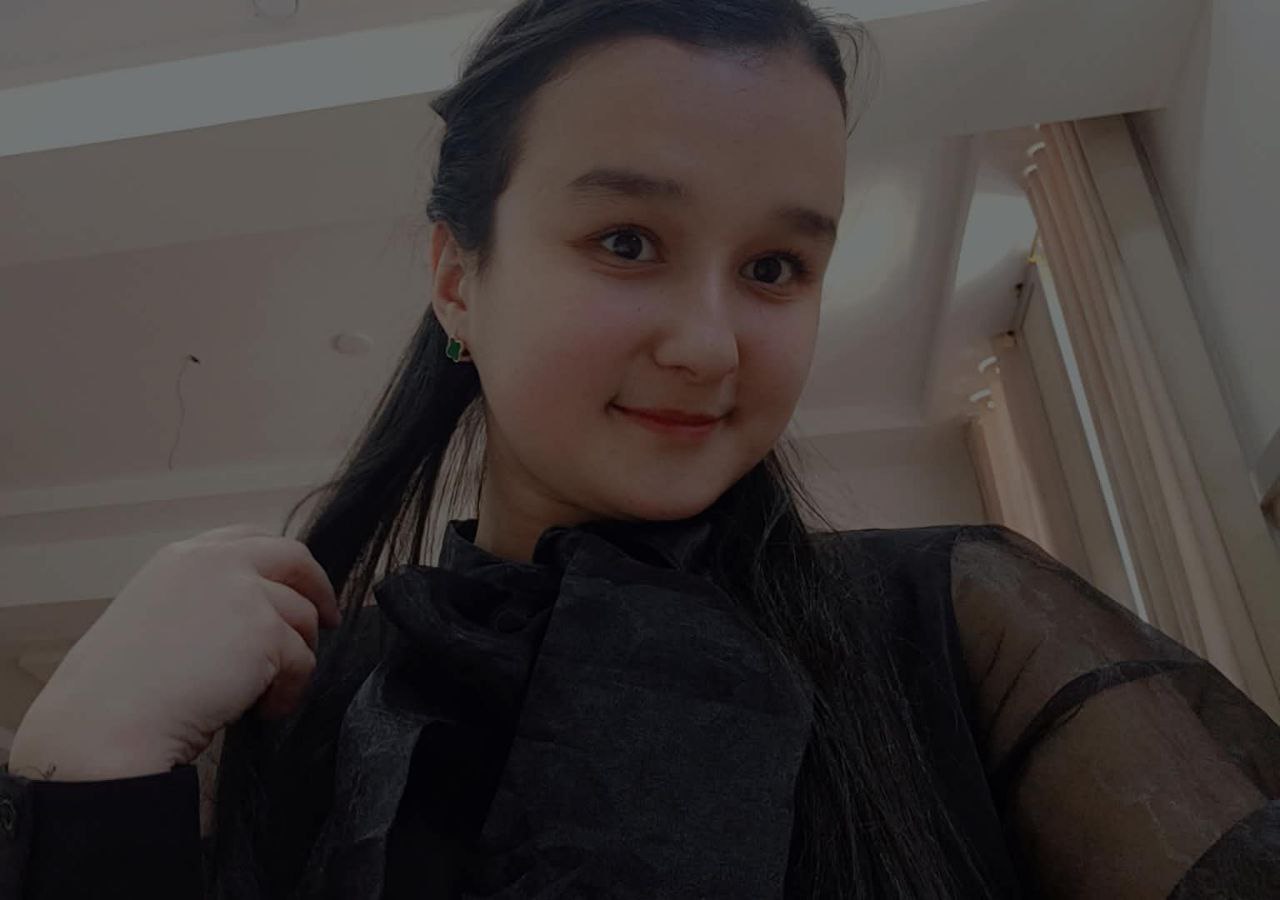
Young Central Asian woman with a patterned pink and green coat standing next to a TV screen and a set of leafy houseplants.

Patterned Uzbek embroidery, leaves and vines and red and blue circles.

Embroidery

Embroidery is one of the oldest and most traditional crafts in Uzbekistan. For centuries, the people of Nurota, Shahrisabz, Fergana, Tashkent, Samarkand, and Bukhara have practiced this art. When stitching techniques, threads, fabrics, and patterns are harmonized, they create a beautiful result. Embroidery features a wide variety of stitches, colors, patterns, and fabrics. Bright colors are often used to make the designs more attractive.

Stitching techniques
Chain stitch, double stitch, couching, satin stitch, and others.

Threads used in embroidery
Silk, wool, cotton.

Silk thread – the most delicate and glossy (often used for suzani).
Wool thread – warmer, used for robes (chopon) and pillows.
Cotton thread – cheaper and available in many colors.
Silk is preferred because its shine lasts long and gives elegance to the design.

Fabrics for embroidery
Mainly strong and smooth fabrics are chosen: adras, coarse cotton, silk, and others.

Meanings of patterns
Pomegranate – blessing, abundance
Almond – happiness, fertility
Pepper – protection from the evil eye

Meanings of colors
Red – life, love
Green – nature
Blue – sky, loyalty
White – purity

Embroidery is 100% handmade (stitched with a needle or a hooked tool).

According to ancient traditions, Uzbek girls – future brides – prepared various embroidered items for their dowry: handkerchiefs, curtains, belts, bags, vests (nimcha), bedsheets, suzani, clothing decorations, headwear, and other gifts. At the wedding, the bride presented the items she had made to the groom’s relatives. Before the wedding, the dowry was displayed as an exhibition to demonstrate the bride’s skill and diligence. The finer and more beautiful the embroidery, the more highly it was valued. Girls were taught embroidery from a very young age and, after three to four years, began embroidering independently.

Today, one of the most popular garments is the suzani robe (chopon), which combines tradition and modernity and appeals to everyone. Iroqi stitching is mainly found on girls’ skullcaps (doʻppi). On Uzbekistan’s national holiday Navruz, people wear iroqi skullcaps, khan-atlas, adras, and suzani robes.

Poetry from Bhagirath Chowdhary

Older South Asian man with white hair and a tan coat encircled by a red and blue circle reading Global Literary Society Founder.

Tree of Life

Evolution made man

Truly wise and sane

The human child 

Comes to earth

Like a divine tree

Without any worry

So infinitely innocent

Trusting all

Like a loving saint

Desiring to make man like an earthly sage

God modelled man in his own image

And gave man only three commandments

Asking man, be steadfast upon these commitments

God desired to fill the earth with multitude of sages

God asked man to “go and multiply” his images

Multiply doesn’t mean have violent, cruel egoistic kids

But multiply God’s images of kind saintly seeds 

God desiring to make man benevolent and useful 

Secondly, God commanded man to “be fruitful”

Be fruitful doesn’t mean to keep fruits to yourselves

But kindly share like Ubuntu do among themselves

Desiring to fashion man as earth’s holy midwife

Thirdly, God commanded man to “be the Tree of Life”

“Tree of Life” means, man “be a guardian of all Life”

Like tree, a man must make good of existential strife.

This is all about the Holy Bible’s true message

Rest comes from Christ and apostles holy Praise.

Give breath, catch clouds and cook food for all 

Be a “Tree of Life” to nourish, a foe or a pal.

Synchronized Chaos Mid-September 2025: Beneath the Surface

First, from contributor Jacques Fleury, an announcement of a new book! “Immortal Lines of Poetry” by Sourav Sarkar and Jacques Fleury

Book cover for "Immortal Lines of Poetry." Pictures of a young middle aged South Asian man in a black coat and blue top and black hat outside by a tree and a Black man in a black vest and white shirt and patterned tie and dark sunglasses. Text on the bottom, dark colored cover.

A collaboration between myself and internationally renowned poet Sourav Sarkar of India. The book presents us both as “2 Poets of the Common Era Literature Period” (a term Sarkar claims to have coined himself on Oct. 24, 2021 and is celebrated worldwide on its founding date yearly) and allows the reader an opportunity to “sample” our poetic styles and substance. It is at times a supple staccato or eroticism, at times mesmerizingly musical of humanism, at times visceral to its soul core but eventually reaches a crescendo to volcanic eruption of literary passion, hope and inspiration for our seemingly crumbling humanity. Here is a sample of one of MY poems from the book. Hope you check it out on Amazon. Merci beaucoup! 

This month’s issue focuses on what’s going on inside of all of us, and how that shapes who we are. We’re going Beneath the Surface.

Woman in a long blue dress holding a sword out away from her body lying down with her long red hair floating.
Image c/o Stella Kwon

Stella Kwon’s paintings explore dreams, childhood, fantasy, and the interiority needed for a creative life. Jacques Fleury’s sample poem from his new book Immortal Lines of Poetry looks into dreams and internal inspiration. Debabrata Maji’s poem traces his heart’s inner journey. Damon Hubbs tracks the odds and ends running through his mind while watching competitive tennis. Annabel Kim’s artwork explores and celebrates human and natural creativity. Ma Yongbo evokes the change of seasons, nature, and mortality.

Mark Young renders maps and nature into works of art in his ‘geographies.’ J.K. Durick speaks to intellectual experiences – the news, books, museums – and how we communicate ourselves to ourselves. Jasmina Saidova honors an inspirational teacher as Abdirashidova Ozoda explores possibilities for digital technology in early childhood education. Eshmamatova Shabbona traces the history and evolution of Uzbek literature and Munira Xolmirzayeva traces the history of Russian writing.

Eva Petropoulou Lianou praises the delicate elegance of Lily Swarn’s new poetry collection A Drop of Cosmos. Uralova Gulmira highlights themes of personal experience and motherhood in the patriotic writings of Uzbek poet Saida Zunnunova. Sayani Mukherjee reflects on being driven towards poetry in a full and changing world. Dr. Rasmiyya Sabir writes of romantic love, poetic inspiration, and the irrepressible drive to be heard.

Jakhongir Nomozov interviews poet Rustam Bekhrudi, who intends to capture and convey the resilient Turkish spirit in his writing. Mesfakus Salahin speaks to human psychology and the drive to live amid the allure of death. Mahbub Alam describes a night of discomfort due to mosquitoes, which he endures by thinking of people who have it much worse. Abdisattorova Hurshida’s short story highlights the dignity and self-determination and patience of the hardworking rural poor in Uzbekistan, even when facing death.

Red and white lighthouse on a pile of jagged rocks in a white capped ocean on a cloudy day.
Image c/o Omar Sahel

Hanen Marouani probes our internal emotional life with tenderness. Bill Tope uncovers the veil of a past sixth grade classroom where the students and teacher are full of inner and outer turmoil. Alan Catlin continues his surreal examination of the physical manifestations of work anxiety as Elbekova Nilufar warns of the danger to our eyes and psyches posed by Internet addiction. Emeniano Somoza Jr. reflects on what we lose by lessening the ups and downs of our emotional nature. Donia Sahab’s poetry probes the psychological torment and confusion Dr. Alaa Basheer alludes to in his painting. J.J. Campbell navigates loneliness with his trademark wit and cynicism.

Joana L.J. Milovanovic’s words bear witness to the psychological and physical damage domestic abusers inflict. Mykyta Ryzhykh’s characters find themselves subsumed by the crushing violence of a metaphorical “leviathan.” Alex S. Johnson reflects on his friendship with Runaways band member and visionary Kari Lee Krome and how the music industry elevates and chews people up.

Jakhongir Nomozov’s speaker reasserts himself after intense seasons of emotional pain and rejection. Soumen Roy highlights the importance of respect and patience in true love. Munisa Rustamova expresses gratitude for her mother’s constant love in a harsh world full of fake people. Alex S. Johnson and Kandy Fontaine assert their confidence in their way of living and loving and show how power is expressed through service and care, not abuse. Liderqiz demonstrates this ethic of service through a profile of Uzbek Information Service leader Dilbar Ashilbayeva.

Light purple cyclamens growing out of large tan rocks.
Image c/o Marina Shemesh

Andela Bunos speaks of the universal human grief of lost love. Kristy Raines’ poetry expresses commitment to a romantic relationship despite being separated. Lola Ijbrater outlines the rise and fall of a romance through a series of flowers. Ken Gosse describes heartbreak through clever poems with increasing numbers of lines. Eva Petropoulou’s lines address intimate love and the beauty of forgiveness. Annamurodov Umarbek reflects on coming of age after losing his father.

Journalist Giorgos Pratzikos and literary figure Eva Petropoulou Lianou interview Greek writer Fay Rempelou about how she intends to inspire peace, creativity, and humanity through her poetry. Nilufar Mo’ydinova presents a thoughtful exploration of artificial intelligence’s potential and how to mindfully develop it for the benefit of human creativity. Taghrid Bou Merhi traces the moral ascent of humankind, as societies developed respect for life, human rights, and gender equity. Omonova Sevinch highlights the importance of educating women and girls to uplift society. Graciela Noemi Villaverde points out the power of icons and commemorations of peace to interrupt the hostility that leads to war.

Giorgos Pratzikos interviews actor and children’s author Zisis Papaioanou on his craft, his artistic vision, his inspirations in Christ and Aristotle, and desire for Greeks to have more neighborly concern and look out for each other.

Person's hand holding a white ball and magnifying a few clouds against the sky.
Image c/o George Hodan

Taylor Dibbert reflects on the impression Americans make while traveling abroad. Doug Hawley and Bill Tope present a humorous tale of unintended interplanetary cooperation. Duane Vorhees’ poetry deals with our humanity, the roles we play in life and who we choose to become to each other.

Abdel Iatif Moubarak’s words express solitude and the hopes and dreams of individuals and communities in an uncertain world. Abigail George reviews Nadine AuCoin’s horror novel Tucked Inn, a tale of survival and good overcoming evil. Justin Faisal, a Rohingya refugee from Myanmar and advocate for his fellow refugees, writes of his inner journey of perseverance and finding beauty in life. Sharifova Saidaxon reflects on similar sentiments, finding forgiveness and acceptance through her faith.

We hope this issue inspires you to dig into your inner psyche and uncover strength and reach for your hopes and dreams.

Poetry from Munisa Rustamova

Central Asian teen girl in a white collared top posing in a park with buildings behind her.

Mother, I’ve been deceived by this world,
By the feelings it so easily unfurls.
My heart is aching, heavy with pain —
Mother, today, I feel drained.

Let me rest upon your knee,
Sing to me a melody.
Today, dear Mother, I need to say,
So many words I’ve held at bay.

Your daughter never truly fell,
She only bowed, and wore it well.
They tried to break me — let them try
But breaking me became their cry

Still, deep within, I cracked apart
When friends betrayed my loyal heart
That day still haunts me, lingers on —
Why can’t I let it just be gone?

But hush, don’t worry, I’ll be fine
Though shadows fall, the sun will shine
So come, dear Mother, sit with me
Let’s talk with hearts, and just be free

I’m tired of the masks of faces,


the lies have begun, the truth has stopped. False pictures become interlocutors, and
now we live without seeing each other.
I’m leaving on the road with my destination unknown,
A friend walks beside me, a smile on his face.
I don’t know where he got this mask he’s wearing now.
Some face meets me, and
the face changes as soon as he leaves me.
Masks are so skillfully made,
even a wise eye can’t sell them.
When it’s not written, only masks,
expiration dates and dates.
Tell me too, where is that,
the workshop of the mask maker. 
I found it.
It’s an ownerless shop,
but there’s a sign on the facade that says: 
“Take the mask you want and use it, as long as you leave the original face as payment!”

Munisa Rustamova is a 16-year-old creative mind from Yangiariq district, Khorezm region, Uzbekistan. She has a deep interest in both creativity and self-expression. Through poetry she gives voice to her inner feelings, emotions, and personal experiences. Her verses reflect a sincere and powerful connection to the human soul.

Essay from Annamurodov Umarbek

Central Asian boy with short dark hair and a white collared shirt holding a certificate and standing in front of greenery and a tree with a large trunk.

Now I want to share about my life. Are you ready to listen to me?. As we all know, every person suffers from painful losses at some point in their lives. My dad was on his deathbed…

Even while in pain, he used to lecture about how I should be there for my mom and sisters, protect them, and be the man of this family even at a young age. 

I knew that day was coming, the day I would be losing my title “kid,” the day I would carry all responsibilities of my dad’s and also mine, and the day I would become father to my siblings.

It came… It was harder than I thought to bear the pain of losing the person you love the most and at the same time, to be strong for your family as the only man left now. 

It was painful—the fact that I didn’t spend time with my dad a lot, the fact that we don’t have enough memories, and the fact that Dad doesn’t feel proud when I achieve the dreams I promised to him. To fix that, I started to spend more time with my mom; it wasn’t talking and chilling but more like cleaning the house, cooking in the early morning, and going to work together. I got a job in a clothes shop. It was harder than I thought, giving suggestions, communicating with different types of people, and handling their personalities.

Even though I faced some challenges at first by not managing time properly, in the end, I learned to be there for my family and work. Also, my teacher Shukurova O’g’iloy helped me a lot in learning English. She was always patient, kind, and understanding. Although English seemed tough to me at first, thanks to my teacher’s kind words and wise advice, I gradually fell in love with the language. She taught me grammar, pronunciation, and, most importantly, self-confidence. I was afraid to speak English before, but my teacher’s words, “You can do it,” made me confident. She gave me strength and confidence and never left me alone. Every lesson of my teacher was interesting, and I looked forward to each lesson. Instead of criticizing my mistakes, she patiently explained them and encouraged me to try again. This gave me great confidence. My teacher became not only a teacher for me but also a kind person, like a mother. She loved me, supported me, and cared deeply for me. That’s why I value her so much and love her like a mother in my life.

This challenge, one I cursed at first, taught me being strong doesn’t mean hiding pain; it means carrying it while still showing up for the people who need you. Most importantly, I discovered that real connection comes from shared moments, not expensive places. These lessons have shaped me into someone who values family, hard work, and growth.

My name is Annamurodov Umarbek, a passionate and ambitious high school student born on November 10, 2009, in Karshi, Kashkadarya Region, Uzbekistan! 

I currently study at college. I have earned several educational grants and awards, and my achievements include being an IA volunteer, Collab Crew member, volunteer at a youth center, Youth Perspective Club member, Youth Run Club member, Avlod talk participant, coordinator of Kashkadarya, and 1-degree diploma.

With a deep interest in leadership, public speaking, and writing, I continue to work hard toward achieving academic excellence and inspiring others in my community. A bright example of this you can find on my Telegram channel @Annamurodovv_Umarbek.

Short story from Abdisattorova Hurshida

Young Central Asian woman with long black hair, a white top and green coat.

The Wisdom of a Prayer

When summer came, Aunt Anora would come to our house every evening with her granddaughter Humora to watch TV. Because there was no electricity in her hut. She would wake up at dawn in her house among the reeds and go around her yard – after all, she would take care not to let the animals eat the reeds. She would sell the reeds and help her family. Although she did not have much money, Aunt Anora could not stop working.

By the way, they had about a hundred sheep, more than seventy goats, more than thirty cows and dozens of horses – but still, Aunt Anora’s enthusiasm for work amazed everyone. The melon crops in their yard were overflowing – not only people, but even birds seemed to be waiting in line. After all, he didn’t trust anyone — “My own work, my own livelihood,” he always said.

When the sun was slowly setting below the horizon, Aunt Anora would come to our house, first opening her hands in prayer:

— Oh my God, You are kind. Don’t make me need anyone else but You. Take my life where I walk. Protect me from being a burden to someone while lying in bed. Amen… Allahu Akbar…

This prayer of his always seemed strange to me. After all, he has everything, right? If he doesn’t lack anything. Why does he ask for so much money? Unable to hide my surprise, one day I asked him sarcastically:

— Aunt, why are you so worried? In any case, we don’t have any…

He smiled, handed me the tea, and frowned:

— You’ll understand when the time comes…

At that moment, my daughter-in-law, Oisara, who was making a batch in front of the tandoor, said, “Zuhra, bring the bowls, we’ll make the soup.”

Years passed. Aunt Anora’s prayers rang in my ears. I went to study in Tashkent. However, soon after, a constant sore throat began to bother me. Sometimes I felt embarrassed in front of my friends. A year passed in such agony.

The second year of study began. But the pain in my body made me think more than the lessons. During this time, my heart would pound, I would feel weak, and my complexion would turn pale. I dropped out of school and returned home. The doctors examined me, and finally they gave me the diagnosis: pulmonary tuberculosis.

 My head was spinning, my heart was pounding. Sometimes I could barely breathe. The doctors were surprised.

— This is the first time in my career that I have ever encountered such a situation, — said Sister Zaynab, her eyes sad.

My condition worsened day by day. At that time, Aunt Anora’s prayers kept ringing in my ears: “Take my life while I am walking…”. Could it be that I, too, would be bedridden and unable to drink a single mouthful of water without anyone’s help?

My heart shuddered. My limbs trembled, and my eyes filled with tears. Now I understood — no one wants to be in need, even the closest ones. Loneliness is the most painful cry in silence. For a person lying in bed, no one hears this cry. No comfort, no consolation can be a balm for your pain. Fighting illness alone is the most difficult test for a person.

One such day, I went to the window. Outside, the autumn breath was deep and the birds were chirping. But I couldn’t feel this beauty inside me. The sadness that was pressing hard on my heart was like darkness. My eyes were fixed far from the window – on the light clouds at the foot of the sky. For a moment, Aunt Anora came into my mind – she always emphasized that “One should not forget to be grateful.”

Suddenly, something trembled inside me. It was hope. Although the pain had taken over my body, my spirit had not yet been defeated. At that moment, my mother entered the room. Her gaze was as kind as if it were swallowing me, and in her hand was a bowl of hot soup. I looked at her – in this look there were a thousand words, in a thousand words there was only one plea: “I still want to live.”

 She put the soup on the table and stroked my hair:

— You are strong, my daughter… You will pass this test too. As Aunt Anora said, one should not be absorbed in silence, there is life in it too.

Her words began to illuminate the darkness inside me a little. Perhaps this pain did not come to break me, but to teach me a lesson. Perhaps I am now understanding the truth that Aunt Anora said: a person should be grateful for every breath, every step, every mouthful of water.

A light whisper was heard in the silence. I did not know if it was the wind outside or the patience in my heart. But there was one truth that I knew:

Life is the realization of the blessing of opening your eyes every morning when you wake up. Every heartbeat is the belief in living.

The greatest truth that I realized during these difficult days was the wisdom hidden in Aunt Anora’s prayer.

 She pleaded:

“Take my life where I am, don’t make me need anyone…”

At first, these words seemed to me just a fear of old age. But now I understand that this prayer was a request for humility before life, for the preservation of human dignity. Because lying in bed and needing someone’s help with every breath is a test not of the body, but of the soul.

I gradually began to recover. Every morning, when I wake up, I repeat Aunt Anora’s prayer:

“Oh my God, You are kind, don’t make your servant need anyone other than You…”

Now I have learned to walk with gratitude at every step, to feel life with every breath. Pain breaks the body, but patience makes a person an idol.

And I understood: sometimes one prayer changes a whole life.

Abdisattorova Hurshida was born on November 9, 1997, in the village of Olmazor, Chirakchi district, Kashkadarya region. She is currently a third-year student of Sports Journalism at the University of Journalism and Mass Communications.

Her articles have been published in the newspapers Hurriyat and Vaziyat, as well as on the websites Olamsport and Ishonch. She is also a participant of the international scientific-practical conference titled “Future Scientist – 2025.”