Like a lost camel, sad and weary, I don’t understand how time is passing. A mysterious cry roars within my heart— The holy Ramadan is slipping away.
So many sins, countless and easy. Saying “forgive me, God” is so simple. Some are careless, some are joyful, The holy Ramadan is slipping away.
One says, “Faith lives in my heart,” Another walks the path of injustice. Have we still not understood even now? The holy Ramadan is slipping away.
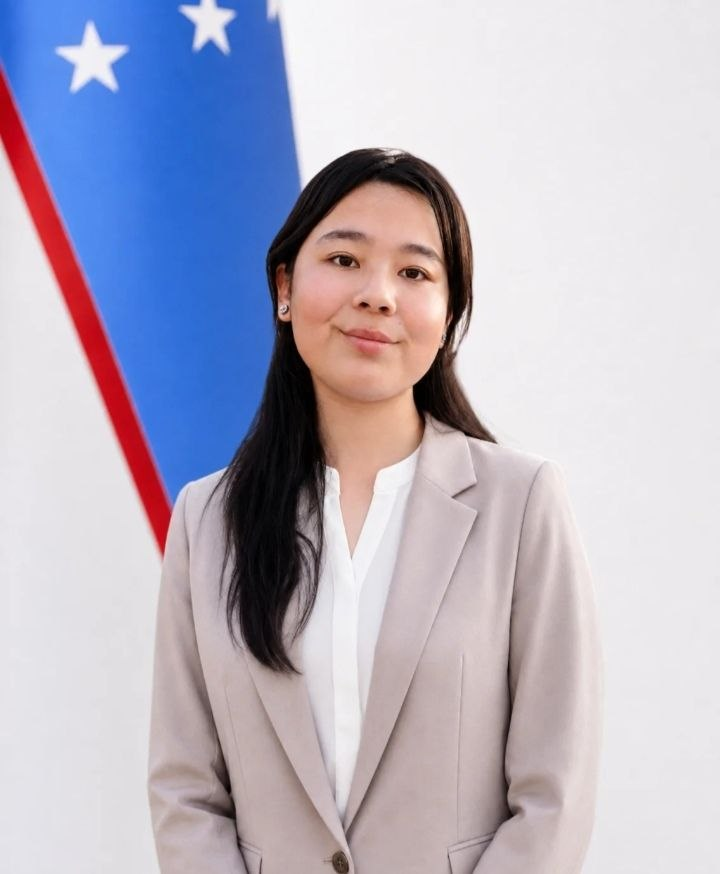
Maqsudova Anora Alisherovna was born on November 2, 2010, in the village of Gazovot, Kushkupir district, Khorezm region. In 2017, she was admitted to School No. 30 in Kushkupir district.
In 2022, while studying in the 5th grade, her first poems were published in a collective anthology titled “The Praise of the Motherland in Hearts.” In 2023, during the 6th grade, her first personal poetry collection titled “A Little Heart’s Gift” was published. Later that same year, several of her poems were also included in the anthology “Hearts Passionate About Creativity.”
In 2023, she won honorable first places at both the district and regional stages of the “Creative Children” competition. That same year, with high results, she was admitted to the “Ogahiy” Creative School in Khiva city as a 7th-grade student.
In November 2023, several more of her poems were published in the collective anthology “Hearts Passionate About Creativity.”
In 2025, while in the 8th grade, her second personal poetry collection titled “Awakened Poems” was published. In addition, a number of her poems were also published in literary collections in Russia, Azerbaijan, and Turkey.
Currently, Anora is studying in the 9th grade at the Ogahiy Creative School.
After graduation many students take a year to travel. Some think that it would be more useful to work for a year. To what extent do you agree or disagree?
Namangan State Institute of Foreign Languages, 2nd-year student of Philology and Language Teaching (English).
Many students choose to travel for a year after graduation. Others believe that this time is better spent working. I think traveling can be useful too, but working gives more practical experience and important opportunities for the future. On the one hand, working for a year gives students real-life experience. On the job, they learn important skills such as responsibility, time management, and teamwork. In addition, by working, they can test their knowledge of their profession in practice. Another important aspect is that by working, students will also have the opportunity to save money, which will help them in their future plans.
On the other hand, traveling also broadens one’s worldview. By visiting different countries and cultures, young people gain new experiences and learn to be independent. This also greatly contributes to personal development. In conclusion, although traveling is also beneficial, I believe that working for a year is more beneficial. Because during this time, students can gain experience and create a solid foundation for their future careers.
This article explores the innovative intersection of ecotourism and physical education (PE), proposing a shift from traditional gym-based activities to outdoor, environment-centered learning. As global trends emphasize sustainability, integrating ecological literacy with physical activity offers a dual benefit: improving student health and fostering environmental stewardship. The study examines methods such as plogging, orienteering, and eco-trekking, highlighting their physiological and psychological impacts. Practical frameworks for educators are provided to implement these strategies within the modern curriculum.
Literature Review The relationship between physical movement and nature has been a subject of increasing academic interest. Louv (2005) introduced the concept of “nature-deficit disorder,” arguing that the lack of outdoor activity contributes to various behavioral and health issues in youth. In my opinion, this underscores the urgent need for PE curricula to move beyond the physical boundaries of the school building. Similarly, Higgins (2002) suggests that outdoor education provides a unique platform for experiential learning that traditional classrooms cannot replicate. This perspective is insightful as it suggests that physical exertion in natural settings enhances not only muscular strength but also cognitive adaptability. Furthermore, recent studies by Pretty et al. (2005) on “green exercise” demonstrate that physical activity in the presence of nature significantly reduces blood pressure and improves self-esteem compared to indoor exercise. From a pedagogical perspective, the integration of ecotourism elements—such as navigation and environmental preservation—aligns with the principles of holistic education. Bunting (2006) emphasizes that the “adventure” aspect of outdoor PE fosters resilience and teamwork, essential traits for 21st-century learners.
Methodology This study utilizes a qualitative synthesis of existing pedagogical models and a comparative analysis of traditional PE versus eco-integrated PE. The research explores the practical application of “Fijital” and “Green Fitness” concepts within a secondary education framework. Special focus is placed on the “Leave No Trace” ethical framework and its implementation during school-based trekking and orienteering sessions.
Discussion The nature of physical education is evolving from purely athletic training to a more comprehensive lifestyle discipline. Our analysis shows that integrating ecotourism elements does more than just burn calories; it builds a bridge between personal health and the health of the planet.
Conclusion Ecotourism and physical education are key building blocks for a sustainable future. When we move PE darslari (lessons) to natural settings, students develop a more profound connection with their environment. Our analysis shows that “Eco-Athletes”—those who train with an awareness of their surroundings—demonstrate higher levels of empathy and long-term health commitment. Modern education must embrace this shift to ensure that the next generation is not only physically fit but also environmentally conscious.
Reference: Bunting, C. J. (2006). The Outdoor Education Classroom. Human Kinetics. Higgins, P. (2002). Outdoor education as a method of teaching for environmental education. Journal of Outdoor and Environmental Education. Louv, R. (2005). Last Child in the Woods: Saving Our Children from Nature-Deficit Disorder. Algonquin Books. Pretty, J., et al. (2005). The mental and physical health outcomes of green exercise. International Journal of Environmental Health Research. UNESCO. (2017). Education for Sustainable Development Goals: Learning Objectives.
I was born in Athens in 1980, and from an early age interested in the relationship between culture and society. I’ve been writing as a hobby since I was a child. Writing has always been my most natural way of expressing myself and understanding the world, a constant inner need that has accompanied me at every stage of my life.
After high school, I pursued studies in the field of Information Technology, both in private and public vocational training programs, acquiring a solid technological foundation and analytical thinking skills. Later, I studied Greek Culture at the Hellenic Open University, successfully completing the History course, which deepened my interest in social and cultural structures.
Throughout my journey, I have combined work and education, adapting to the needs of each period, while maintaining my knowledge of English and German, which I always strive to refresh. At the same time, personal development and lifelong learning are fundamental elements of my journey and my goal.
I am the founder and owner of the sole proprietorship “Nea Themiskyra,” a vision that began in 2022. I financially support the publication of my book in collaboration with the publishing house AKAKIA, provide writing services, and distribute my book, as well as works by other authors, online.
I have actively participated in human rights campaigns and social initiatives in Athens. In the past, I was a member of the Rainbow Families.
I recently added my name to the collective initiative “Her Voice – Women Writers Against Gender-Based Violence,” in support of women’s empowerment.
The inspiration for my first book, “IStis Politeies tis Gynaikas” was born in 2014, when I felt strongly that this story needed to be told and given form. In 2022, the work was printed and published for the first time in London by AKAKIA Publications. It was a small-format book with a limited print run. The second expanded edition was released in 2023 with a larger print run and in a larger format than the original.
The third expanded edition of this book is being published this year, 2026.
In my free time, I engage in meditation, wellness, the study of social issues, and connecting with nature—I hold a second-degree Reiki certification.
Dark fate knocked on the door twice in a single day: as Bayna momo laid her two beloved ones into the earth, it felt as though not only the sun of that day, but the sun of her entire life had set. The yard fell silent and desolate, the tandoor grew cold, and even the wooden platform by the door lay quiet, as if it too had lost its owner. Once, the sound of a man’s footsteps and her son’s cheerful laughter echoed through this yard. Now, Bayna momo was condemned to live among memories and restless loyalty.
People came and went, offering words of comfort, and then dispersed, each returning to their own concerns. Bayna momo was left alone, face to face with her solitude. At times, she would sit by the hearth, gazing far into the distance, as if waiting for someone from the past to return.
Zamon the horse keeper still walked about the village with pride. Not a trace of regret could be seen in his eyes. Yet in the hearts of the people, heavy words toward him were ripening; all the elderly women of the village cursed him silently from within. Before long, Zamon’s affairs began to fail: all his horses died in a single day, his trade collapsed, and his reputation fell to the ground. People turned away from him. It was as if an invisible curse followed him wherever he went.
One day, Bayna momo went to the market. There, she noticed a young man working as a cart driver. There was a calmness in his face, mixed with a quiet sorrow.
“Thank you, my child,” she said involuntarily.
“Your voice… your gentle voice and your words reminded me of my mother…” he replied, his eyes filling with tears.
From that day on, the yard came back to life. Tea would boil on the platform, the smell of fresh bread would rise from the tandoor, and in the evenings, the quiet conversations of two souls would fill the courtyard. Bayna momo straightened her back, and light returned to her eyes. She no longer thought of the past, but began to think of tomorrow.
The wind blew again. But this time, it was not destructive—it was a warm breeze circling the yard.
Bayna momo finally understood: a human life is made of trials. Some fall while standing against the wind, while others rise again after it passes. Meaning had returned to her life—the happiness of being a mother once more.
Saparboyeva Laylo Xajibay qizi (born in 2010) is a student of the Ogahiy School of Creativity and a young writer.
She began her creative journey in primary school by writing poetry. After a certain break, she returned to literature and is currently working in the field of prose. Her dedication piece titled “I live in Your Heart” was published in the newspaper “Xiva Tongi”.
Laylo actively participates in scientific and practical conferences, where she expresses her ideas and perspectives on literature and creative thinking. In addition, she writes short stories and fanfiction, which she shares on online platforms.
Her works mainly focus on human emotions, inner experiences, and observations of life. In the future, she aims to further develop her creative potential and become an internationally recognized writer.
Fastival, the latest book of poems from Duane Vorhees, reads as anything but the poet’s final word and contains multitudes of playful exploration for the restless mind.
Covering a dizzying array of themes, this substantial tome delivers an intellectual and spiritual feast. He explores dichotomies — such as sex/love, profane/holy, and life/death — that are suitable for meditation by sinner and saint, as well as by day laborer and tenured professor alike.
Vorhees, in his poem “The Importance of Word Association,” proclaims anyone can write poetry but notes, “But only a true poem can feel the sun on your face as the snow commandos parachute in behind enemy lines. A real poem contains stone syllables standing against a rain-striped horizon.” — John Stephen Howard
Yucheng Tao thanks everyone who entered his poetry contest and announces that the prizes will be paid out in April.
Christopher Bernard announces his new book The Beauty of Matter (out from A Press of Rabble) and invites people to read and review it. Please email us at synchchaos@gmail.com if you’re interested.
A lyrical journey into nature, spirit, and the quiet mysteries of being aliveIn this contemporary poetry collection, Christopher Bernard invites readers into a world where ordinary moments reveal extraordinary depth. With the grace of lyrical verse and the clarity of philosophical insight, these poems move through landscapes of memory, nature, beauty, and our shared human search for meaning.This is poetry for readers who crave emotional richness, mindful presence, and poetic meditations that illuminate both the fragile and the eternal. Through imagery rooted in wild earth, myth, and the intimate spaces of everyday life, the poems contemplate existence, loss, renewal, and the astonishing beauty hidden within matter itself.
A Celebration of Life in Every Grain of Being
Here are poems where the natural world speaks, where silence becomes revelation, and where spirit and earth touch.
Bernard explores mortality not with despair, but with wonder, reminding us that every breath, every shadow, every passing moment is charged with significance. Readers will find nature inspired writing that moves between tenderness and awe, between solitude and belonging, revealing how deeply our lives are shaped by the world around us and the world within us.
For Lovers of Reflective and Soulful Poetry
Perfect for readers of lyrical verse collection and philosophical poetry, this book speaks to those who seek: poems about nature and life, existential poems, meditations on life, spiritual poetic reflections, poetry about mortality and rebirth, poems about memory and meaning.
If you believe poetry can open the heart and sharpen the senses, if you are drawn to poetic meditations that deepen presence and expand awareness, this collection belongs in your hands.
Discover a voice that honors the beauty of existence and the mystery of being human.
Now, for March’s second issue, which forms a polyphonic archive of the contemporary human condition, fragmented, globalized, anxious, but full of people searching for meaning, beauty, and connection. A chorus of voices from different countries, cultures, ages, and backgrounds, all speaking to how we can remain human in a complicated age.
First, we address war, violence, and illegitimate political power. These pieces do not merely document suffering; they interrogate the structures that produce it. They ask what it means to live under systems that distort truth, normalize destruction, and erode empathy. Yet even here, amid devastation, there is an undercurrent of resistance—a refusal to accept violence and injustice as inevitable.
Patricia Doyne lambasts the United States’ blowing up a girls’ school during the war in Iran. Stephen Jarrell Williams laments the coldness and human tragedy that leads to war. Ibrahim Honjo calls for peace by cursing those who wish for war. Bhagirath Choudhary’s poem, translated to French by Samar Al-Deek, also critiques war through the dramatization of violence against women and children. Poet Billy Bin celebrates women and laments war and human rights violations. Mykyta Ryzhykh’s work comments on human fragility and the internal and external destruction caused by vaulting ambition and greed for power. Farzaneh Dorri laments the war and the current government of Iran while recollecting the nation’s vast cultural heritage. Molly Joseph’s piece presents the tragedy of war through a clever piece that hides its profundity in a childlike style. Ri Hossain critiques war by showing the absurdity of having to kill strangers. Bill Tope’s short story presents a tragicomic farce that reveals itself as a lament for those lost to the recent Iranian war. Dessy Tsvetkova joins the chorus of those who call for peace as Hadaa Sendoo presents a child’s song for peace with nature and with themselves as well as in the world. Gulhayo Egamberganova creates a tale of a wise king with the welfare of his people in mind. Dianne Reeves Angel’s political poem describes how callous leadership can lead to internal, structural damage to our shared “house,” even when we don’t see outright collapse. Yuray Tolentino Hevia asserts his freedom of thought and personal dignity even in a wounded homeland. Imma Schiema presents the flag of peace as strong, but stiff, unnatural, and difficult to maintain. Peace takes maintenance and care.
Some contributors explore how systems of power, or our cultural vantage points and perceptions, shape how we think and view the world. Rich Murphy’s work explores how power and hierarchy can distort reality and get in the way of critical thinking. Dr. Jernail Singh Anand lampoons the hypocrisy of those who seek to bury their own misdeeds among those of celebrities. Stephen Schwei’s clever work meditates on how we assign meanings to things and aspects of the universe. Wan Yilong dramatizes the absurdity of a world full of technology but with no soul. Mark Young’s speaker assembles meaning from fractured cultural debris, his mind moving through fragments. Ag Davis’ poetry blurs the guidelines of semantics to generate meaning through pattern recognition rather than text. S.C. Flynn explores different ways we disconnect from the fully intense human experience to make it more manageable, whether through pills or screens.
Türkan Ergör’s piece breaks apart language and puts it back together, questioning whether reason can adequately explain human experience. Maja Milojkovic explores the tension between imagination and reality in her reflective poem on making a wish. Mark DuCharme’s poem explores thirst and desire that twists and morphs but is never quite satiated. J.J. Campbell’s poems read like cigarette smoke in a dim room, unfiltered, bitter, and honest. Patrick Sweeney’s work explores memory, shame, art, invention, nature, and tenderness as the Chinese elementary school students’ works, compiled by Su Yun, show a developing poetic consciousness as they address nature and dreams.
Dr. Jernail S. Anand considers how much we as humans project our own failings onto other creatures through our concept of natural law. Sevinch Rustamova explores human projection, lamenting the loss of a no longer idealized unfaithful love. James Tian reflects on how we choose to speak of our dead can say as much about us as the living as it does about the deceased. Nirasha D’Almeida speaks to memory, reflection, power, and class and ethnic tensions. In Emeniano Acain Somoza Jr.’s elegiac poem, time continues to move, even as the speaker remains within memory. Sheryl Bize-Boutte’s poem and short story excerpt highlight how connection can persist even when we reject it. Qo’narova Yulduz mourns and regrets the loss of her loved one and of her life to grief.
Some writers highlight resilience and personal growth, the journey to become who we are, all that we could become. Nazokat Jumaniyozova traces a character’s personal growth and development. Danijela Ćuk encourages people to believe in themselves and persevere through hard times. Zilola Qutlimurotva calls out the role of challenges in building strong character. Priyanka Neogi urges people who seek to achieve something in life to keep their priorities straight. Ruxshona Shahobiddinova shares how she learned to achieve for her own sake and not compare herself to others. Rashidova Shakhrizoda’s short story celebrates a brave kitten who becomes a hero of the forest. Muslimbek Abdurakhimov reminds us that anyone can act with integrity, regardless of nationality. Zilola Qutlimurotva points out reactions one may receive to developing self-respect. Juraeva Aziza Rakhmatovna urges people to persevere towards their goals even through obstacles. Gabriel T. Saah encourages us to stay humble, stay kind and make the most of our lives.
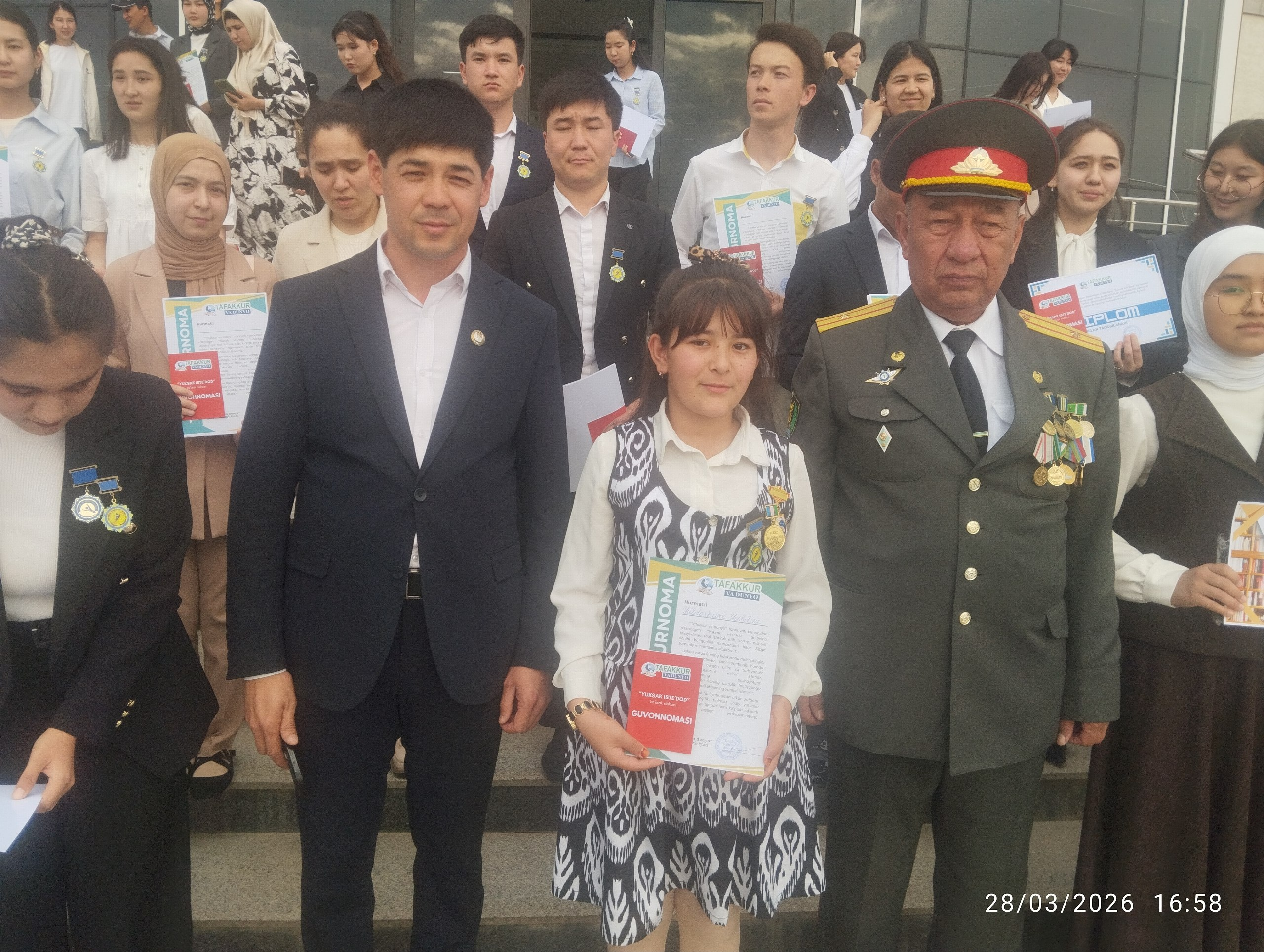
Others discuss education, youth, and the future. Rakhmonova Gulzoda Sodiq qizi discusses how to help depressed young students. Daminova Sevinch highlights the importance of childhood to personal development. Choriyeva Oynur discusses the importance of sleep in personal health and academic performance. Dildora Xo’jyozova remembers earning recognition and a laptop in an Uzbek academic competition and reflects on the importance of encouraging the world’s youth. Ibragimova Orzigul Sharobiddinova’s poem celebrates her university and its educational opportunities. Alimqulova Munisa Abdurayimovna discusses how students can best prepare themselves for international scholarship competition. Bekturdiyeva Nargizabonu and Xayitova Mehribon discuss positive and negative impacts of social media in young people’s lives.
Several contributors apply their intellects to the real world, science, mathematics, economics, and medicine. Oroqova Nargiza outlines roles for artificial intelligence in health care. Tadjiboyeva Marxaboxon Sherzodbek qizi discusses diagnosis and treatment of chronic heart failure. Inomova Kamola discusses diagnosis and treatment of breast cancer. Durdona Shafqatullayeva Olimqizi outlines the structure and function of the human skeleton. Dr. Jitender Singh dispels embarrassment and shame surrounding menstruation and promotes hygiene. Sardorjon Ahmadjon o’g’li Ergashev discusses various ways of analyzing and interpreting statistics. Mamatkulova Muklisa outlines opportunities and risks within the maturing microcredit industry. Tuychiyeva Odinaxon Ahmadjon qizi outlines ways to standardize the preparation of graphical documents in school drafting classes.
Who we are, in large part, comes from our family and cultural heritage. Yulduz Niyazova highlights the history and meaning of Uzbekistan’s Nawruz spring celebration. Jacques Fleury’s photographs capture the spirit and energy of Boston’s St. Patrick’s Day celebration. Sardorjon Nabiyev remembers a tale of singing for neighbors at Ramadan that ended with his father’s tender love. Begijonova Marjonabonu shares a tender thought for her mother. Eshmatova Charos speaks of her gratitude to her caring mother and father. Turg’unov Alisher Yordamali o’g’li expresses his respect for his hardworking mother. Ahmadov Bekzodjon Obidjon ogli highlights the literary and cultural importance of Uzbek writer and philosopher Chol’pon. Damilova Sevinch Tuychi qizi highlights the cultural and dramatic contributions of historical Uzbek writer Abdulla Avloni. Halilova Ruxshona Abdufattohovna provides an overview of the scientific work of Abu Nasr al-Farabi, an Uzbek thinker who espoused rational inquiry and built upon Greek thought. Sottiyeva Gulshan celebrates the Uzbek constitution’s protections of liberty. Marvaridabonu Abdumalikov discusses Uzbekistan’s current environmental initiatives, including a vast program to plant tree seedlings and civic waste sorting and recycling efforts. Otamurodova Asal highlights the role of strong families in building a strong culture in Uzbekistan. Kholbekov Ozodbek Makhammatovich’s poem celebrates the sacred and worthy heritage of Uzbekistan’s national heroes and scholars.
Sitora Siroj qizi Usmonova looks at the use of emojis in text messages and social media as a case study of Uzbek linguistic evolution in real time. Jerome Berglund’s stream of consciousness poems illuminate how things hidden – people, truth, meaning – don’t disappear, but wait to be seen. Joey Whitton’s poems move across very different terrains, such as mysticism, memory, existential philosophy, and political satire, but they’re unified by a restless, searching voice. Alan Catlin builds a poetic cathedral of collapse, a symphonic logic of accumulation. Duane Vorhees contributes a symphony of voices that find a way to hang together.
Art, literature, and culture are integral parts of our heritage, and many people look into how we understand stories and art. Christopher Bernard discusses poignant themes of masculinity, love, aggression, and redemption in Beauty and the Beast and the somewhat awkward presentation in Opera Parallele’s live stage remix of the Jean Cocteau film. Maxmasharifova Shodiyabegim looks at the theme of fear in Abdulla Qahhor’s short story Dakshat as a way of critiquing governmental and social oppression. Abdugʻaniyeva Muhlisa Abdunabi qizi analyzes Jack London’s winter wilderness survival tale Love of Life in terms of literary motifs and themes of free will and individual struggle in harsh conditions. J.T. Whitehead reviews Margaret Randall’s Letters That Breathe Fire, an anthology of literary correspondence among the editors who submitted to the journal El Corno Emplumado (The Plumed Horn) in the 1960s. He views the work as a crucial cultural artifact documenting poetry’s becoming more democratic and international. Alexander Klujev outlines various ways to understand music: as a venue for spiritual contemplation, as an abstract study in sound, or as direct participation in the sounds and rhythms of nature. Dennis Vannatta reflects on a life shaped and punctuated by music. Virginia Aronson celebrates the complex work and life of Japanese visual artist Yayoi Kusama.
Art and culture can lead us to a lyrical, restorative place, where we consider love, nature, and the human spirit. Eva Lianou Petropoulou affirms the largeness and vastness of the human spirit, much larger than any attempt by society to contain it. JoyAnne O’Donnell takes joy in poetry on World Poetry Day. Eva also urges humans not to abandon empathy for and relationships with each other. Slava Božičevic celebrates poetry and encourages poets to write to bring love into the world. Prasanna Kumar’s poetry reflects how he needs love to make sense of existence. Abigail George’s work shows characters choosing love, kindness, and forgiveness, even when they are not strong enough to stop trauma and violence. Mahbub Alam contributes a piece on waiting, restraint, and the persistence of the inner light of love as Su Yun encourages a young child to grow and develop courage and embrace a world of love.
Genevieve Guevara presents a poetic manifesto about ending violence against women. Sherdonayeva Ozoda Mahmarajab qizi’s short story highlights the obstacles facing women leaving abusive relationships. Lan Xin also honors International Women’s Day, softly and gently urging women to value and take care of themselves. Mahmoud Said Kawash outlines the political and cultural history of International Women’s Day. Dr. Jitender Singh celebrates the virtues of many women he admires. Dr. Ahmed Al-Qaisi evokes the poetic beauty of a woman’s tender love. Tasneem Hossain discusses the historical and cultural meanings of flowers as gifts and urges people to consider flowers as an International Women’s Day gift for women.
Image c/o Brian Barbeito
Brian Barbeito revels in the mystical and thoughtful connection he has built with the land he regularly visits, how time alone in nature invites contemplation. Adham Boghdady celebrates the beauty of a forest lake through his contemplative persona poem. Soumen Roy rejoices with the hope of a fresh spring season. Ananya Guha’s incantatory poem claws out hope from the starkness of winter.
Sometimes a small sensation, image, or moment counts for everything. Mohira Mirzayeva celebrates the joys of silent reading from a physical book. Bonu Jurayeva reminds us of the sensory pleasures of physical books. Noah Berlatsky celebrates the wealth of love that he finds in his affectionate cat and dog. David Sapp contributes gentle, pensive moments of family and domesticity. Christina Chin’s haikus transport us to the sounds and feel of summer. Tammy Higgins’ photographs present life as surprising, highlighting disparate elements and unusual colors and perspectives. Jacques Fleury’s poem travels between the worlds of belonging and isolation, wealth and poverty, anchored by the recurring image of ships. Nuraini Usman’s photos capture moments of mystery: dim light, and a foot stepping into the unknown. In Sayani Mukherjee’s poem, rain, letters, memory, and love all blend together into one immersive experience. Graciela Noemi Villaverde welcomes the autumn to her Argentinian home with lush, atmospheric prose about transitions. Elaine Murray finds connection across millennia with humans and other creatures who have walked the same beach.
The final pieces return us to the act of creation itself. They ask what responsibility the artist bears in a world marked by injustice and fragmentation. If we can imagine, can we also rebuild? If we can name what is broken, can we help to mend it? These are not questions with easy answers, but they are questions that must be asked.
Christopher Bernard’s final installment of Senor Despair ends with an affirmation of a creator’s radical responsibility. Jose Luis Alderete’s work suggests the possibility of rebuilding society through intentional acts of human creativity. Tokhtaboyeva Nilufar Nomonjon qizi urges her fellow Uzbeks to move forward with courage to build up their newly independent country. Mesfakus Salahin speaks to the hope of global renewal through love and insight. Hanaan Abdelkader affirms her determination to find hope in a world full of injustice, yet leafy and sunlit.
What emerges from this collection is not resolution, but recognition. We hope that you recognize yourselves somewhere in the issue.
The spell of the red flowers in the nursery seeds planted in World War Two Japan in the afternoon shadow of the Japanese Alps in the personality shade of a troubled family a berating mother sending the child to spy on the playboy father sexual obsession and fear sitting side by side by the smooth white river stones, flowers speaking
of the war lingering in the blackout factory thinking of hanging herself throwing herself in front of a train a shrink called her a genius helped her gain recognition planning her escape from self-obliteration from endless revolving in the infinity nets the absoluteness of reality and unreality a proliferation of talking pumpkins only to be reduced to nothingness.
Yayoi Kusama grew up in a small mountain town west of Tokyo in a wealthy, high society family, owners of successful wholesale seed nurseries. As a child she had asthma and a partial hearing loss, and she suffered from hallucinations and periods of depersonalization. Her domineering mother forced her to spy on her father and his geishas, ripped up her artwork and tried to marry her off.
Infinity Nets
The Flower That Blooms In My Heart
Out in the purple fields of flowering spring the blossoms sprung tiny individual faces opened pistil mouths to her, to the child the violets spoke chasing her back to her mother’s house of anger, fighting and a pencil, paper the art supplies her father gave her only escape.
Her spirit floated from her little body wandering the border between life and death a thin curtain of gray like a personal cloud shadowing the girl the young woman bent over body drawing, sketching painting, creating in a wild fever born of desperation reproducing endlessly on the conveyor belt to infinity, net cast over her life, art her creed.
Paintbrush in hand imagination overdrive obsessions crawling mind and body working herself away from madness on an endless highway of fear and visions fleeing hallucinations seeking obliteration following the flowers following red thread on the path to freedom allowing her to live.
Yayoi’s art has been called feminist. It’s been labeled pathological art brut, or outsider art. She doesn’t think it fits any category. She mixes East with West, realism with surrealism, hallucinations with humor and pathos. Her work is eclectic and electric and eccentric. It is her own, unique.
The Scandal Queen of Japan
“Ultimately, behind the impulse to fight is the simple fact that men have penises.”
Repetitive Vision
Soft-sculpture figures by the boatload the couch load the chair load furniture obsessions macaroni mannequins overcoming fear machine-made naked polka dots all the way to her studio across the street her permanent residence a psychiatric ward.
If it were not for art I would have killed myself a long time ago before global fame before legions of fans her alter-ego pumpkin black spots on a pier of plastic and I’m here but nothing in Tokyo infinity in mirrored rooms dancing lights fly up to the super-reality to the unclothed universe all together in the altogether the dissolution of self via immersive obsessions repetitions and intrusions transporting us too to another cosmos.
In the midst of the mid-century avant-garde art revolution, Kusama’s large scale paintings of nets and polka dots caught on. Critics called her work obsessional, austere, disturbing, and a tour de force. She expanded her work to include political theater, fashion design, and body art. Her clothes were sold in Bloomingdale’s, and she appeared on The Tonight Show. But in Japan she was a national disgrace and her family shamed.
Fire Burning in the Abyss
My Eternal Soul
The Manhattan suicide addict starving, suffering the vertigo of nothingness crawling into cold hands no heat, no bed, no money the downtown den of resistance a shimmering veil across reality fate like a chorus of violets launching her like a moonshot into the bright eye of acclaim crowds at galleries, museums drawn to her strange beauty blending personal revelations bare-faced self-promotions branding the self as product art as fiery weapon: Go live your shining life.
Back home in Japan the castle of shed tears a studio down the street from the stark white room at the soft sculpt loony bin in the moon dot aftermath of obliteration of eternity the world’s most successful living artist transcending female Asian identity art genres and cataloging unnecessary boundaries barriers and structures dancing swarms of fireflies fly up and out of this universe showing the route to full happiness to spending everyday every day embracing red flowers.
Yayoi believed that Japan had ostracized her for her mental illness. But she returned there after 17 years in the U.S, famous and successful and so ill she chose to live in an open ward of a Tokyo mental hospital for her own safety. In the 2000s, she collaborated with several brands to share her style including polka dot Cokes and pumpkin-like BMW Minis. She continues to create at age 97 and traveling retrospectives of her work still draw massive crowds.