A young man dreamed of becoming very rich. He devoted his life only to work and earn money. But on this way, thinking that his mother could not help him, he ran away from home. His mother always looked forward to his return. Years passed. The young man became rich, became a famous businessman. But during this time, he never heard from his mother. One day he received a letter.
“My son, I miss you so much. It would be nice if you could come and check on me.”
But the guy didn’t come because he had a lot of work. A few years later, he receives news of his mother’s death. The young man returned home and found his mother’s small chest. Inside the box was a letter addressed to him.
“My child, I have tried my best to create a good life for you. If you are happy, I am happy. Just remember one thing: the greatest wealth in the world is mother’s love.” mother’s value.
IBRAT: Appreciating mother’s love, appreciating the greatest wealth in our life, is one of the highest human qualities. Taking care of parents is the duty of every child.
* A Self Interview Craft Essay on Books and Future Work Plan
Brian Michael Barbeito
January, 2025
I sit at my window and the words fly past me like birds —with God’s help I catch some.
-Jean Rhys
Wide Sargasso Sea
literary map book abbreviation legend:
Wind: Still Some Crazy Summer Wind Coming Through
Night: When I Hear the Night
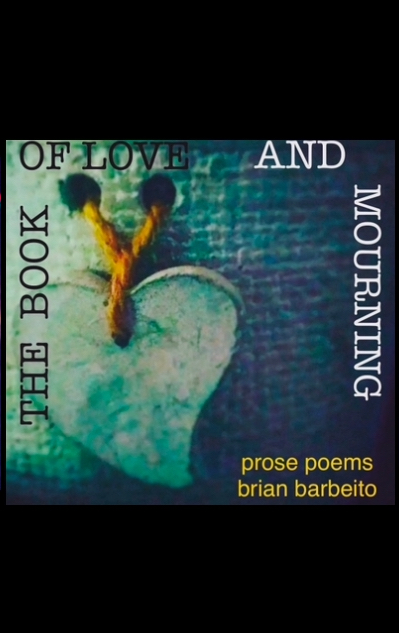
Love: The Book of Love and Mourning
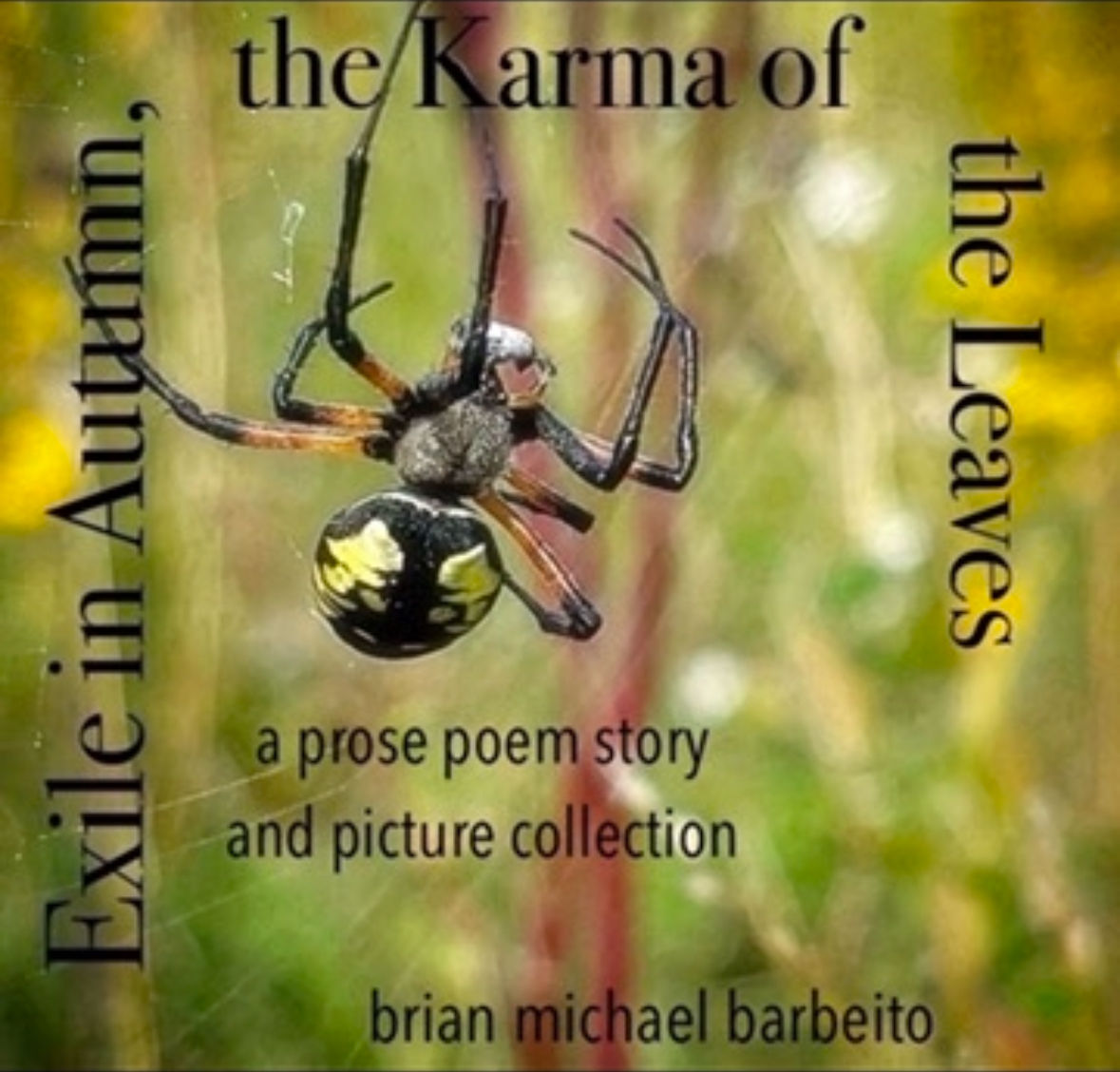
Leaves: Exile in Autumn, The Karma of the Leaves
How I feel about it currently is that there should be four books at the least. One, Wind, is already in existence. It is published by Dark Winter Press who did an excellent job and it came out in July 2024. It is a book of prose poems and photography and has three official reviews, plus a positive reception overall. The book’s introduction, a fantastic summary of the work, is by Cristina Deptula and the volume is dedicated to Tara. I am happy with the content and what I call the physicality of the book (how it feels and looks as an actual thing), its overall existential aesthetic.
Dark Winter Press has agreed to publish the next book, called When I Hear the Night. Night is scheduled to be released in January of 2026. The manuscript is complete and the press has it. I am waiting for an introduction by a Vancouver based editor that wrote a highly perceptive and insightful review for Wind. But, yes, other than that said review, the manuscript is complete. Night, as with the four books I am talking about here, will all have similar formats. This includes cover art and back art by me, my prose poems and photography of course, a dedication page and quote page, and an introduction by someone competent and obviously sympathetic to the work.
The third instalment in these four books, The Book of Love and Mourning, has the writing part of the manuscript done. These books are prose poem books, each writing approximately two thirds of a page. Sometimes shorter, sometimes longer. I will still have to pick the photos to go with the writings. I have sometimes been asked about the functions of these art forms, meaning which I practice primarily or if I give equal time and importance to both of them. Actually, I am primarily a poet/writer. In heart, in time spent at craft, in what I think about. In identity. I would like to mention here that each book is titled in accordance and inspiration from one of the writings within the text. For instance, there is a piece to be found in each manuscript that I drew the title of the entire work from. I like this, how it helps bring each entire book together thematically. Hopefully, Dark Winter Press will continue to work with me on this third book and the fourth one also. It would be nice to have a sense of uniformity and publishing stability for all of these projects.
Exile in Autumn, The Karma of the Leaves, or ‘Leaves,’ would be the fourth installment in the prose poem photography books. If things continue as they are, with me writing and photographing each and every day, there will be more than enough poems and pictures to make up this book. I would ideally still have the involvement with the publisher, Dark Winter Press, and continue the format. As with the third book, Love, I would have to find someone who would be interested in writing an introduction. My thoughts about introductions are that they are a fine thing, grounding the reader in a sense of what they are about to embark upon.
I would describe the overall writing as a celebration of nature and also a portrait of the unique spiritual journey. Unique simply because not all embark on it, and also because of those who do, each spiritual path has its own nuances, characters, its own stories. I would describe the photography as lauding the look of unique angles and light, mostly of phenomenon like pastoral vistas and also close things like flower petals.
In conclusion, I am about two-thirds through the work of the prose poems and photos that will compile four books. This is a good place to be at as a poet and photographer. I am happy with the format and content of what has already arrived, what is waiting, and what is and will be in the works. Wind, Night, Love, and Leaves. In this brief writing I will include the four front covers.
Umring bo‘yi ishonging kelar Buyuk bo‘lib tug‘ilganingga. Farishtalar ishora qilar Deya ko‘kdan sen kelganingga.
Umr o‘tdi. Chang – to‘zon aro Bilmay bormi yo eding yo‘qdan. Yerostiga chorlaydi sado, Lek ishorat bo‘lmadi ko‘kdan.
● Alexander Arkadyevich Feinberg
You believe throughout your life, That you born being great, talented Born once in a million. Wait for angels to prove that. Time has gone, life ended Without purpose and achievement You’ve realized nothing. Next life is waiting you, but no prove yet
● Translation by Shukurilloyeva Lazzatoy Shamshodovna
Everywhere I go, the world is noisy, unbearably loud. I can’t stand the sharpness of laughter that pierces the air. I struggle to understand today’s people—their ways, their minds. My friends were once like brothers to me. We spent Friday nights together, savoring the weekend as if it were sacred. But now, everything has changed. Faces are unmasked, and I can clearly see who’s my friend and who’s not.
I’m tired of falling into people’s hands like a losing card, shuffled and discarded. Judgment comes at me mercilessly from all sides. I’m no saint, but my needs feel ignored, my voice silenced. In my exile, my siblings are like sunsets—beautiful but distant. My parents are storms, rumbling and restless.
I wonder if my coworkers and so-called friends notice the bruises on my face. Sometimes, I can’t even find my own body, lost in the heaviness of burying a piece of myself alive. I wrote my final voiceless poem, but as a stateless man, the world gave me a name: The Kite.
They fly me against the wind, just to watch me falter, to see me suspended between the clouds and the earth, barely tethered. Those who mock my accent, the foreign characters with beautiful faces—they steal my breath with their words.
I hug a woman, not out of nervousness but to anchor myself. Yet I bleed brutally when I fly too far, becoming incurable, untouchable. My mother cried the day I was born, sensing something in my face—a mark, an omen—that none of my siblings carried. She calms my father whenever I come home drunk, but she never shares the truth with him or anyone else. Only my homeland knows the full weight of it.
In my grandparents’ time, I would have been a leafless corpse on a mountaintop, touched by fingers and tongues seeking blessings. Now, I seek isolation—not to sin, but to find meaning. To bloom in peace. To live where butterflies don’t die from human greed, where roses aren’t picked in screams.
A child in an orphanage once celebrated his first birthday with nothing but wishes—soft, muted whispers. I don’t want to hear the world’s loudness anymore. I hear it all too clearly, but I can’t promise anything. I’ve been sitting in this metaphorical wheelchair for far too long.
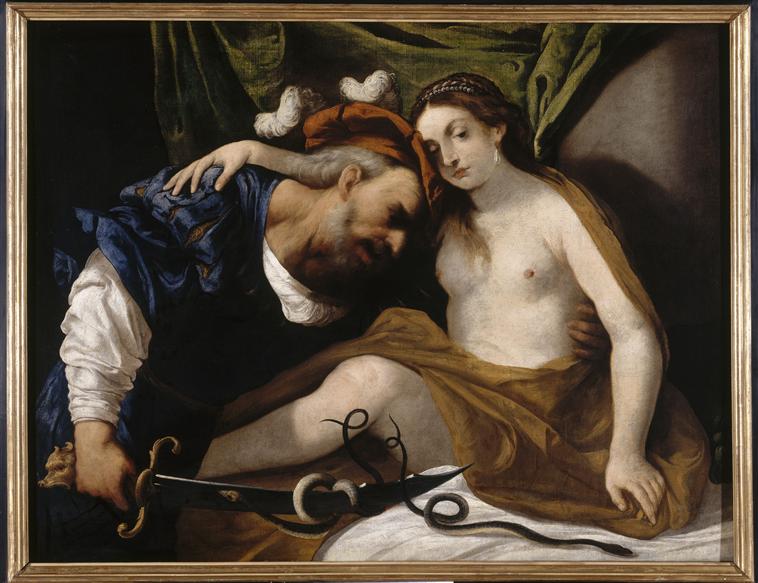
Pietro della Vecchia – Tiresias transformed into a woman
“Tiresias Disrobes” by Mark Blickley “A prayer for the wild at heart kept in cages.” ~ Tennessee Williams
One day in ancient Greece, Tiresias was walking down a path when he was interrupted by two snakes copulating on the road, blocking his way. Tiresias got so angry that he took his staff and killed one of the snakes. It turned out to be the female s/erpent. What Tiresias didn’t know was that these snakes were guarding Hera’s sacred tree with golden apples in the Garden of the Hesperides. Hera’s rage, upon learning of the death of her beloved female guardian snake, was to turn Tiresias into a woman.
For ten years Tiresias lived as a woman. And not just as any woman, but the town whore. One day the female Tiresias was walking down a path and once again came upon two snakes copulating. She killed one and this time it turned out the slain serpent was male, so Hera changed him back to a male. These gender transformations made Tiresias the only man in the history of the world to have been both a man and a woman.
Years later, Zeus and Hera were having a terrible fight on Mount Olympus about who enjoys sex more, the man or the woman. Hera had caught her insatiable husband once again cheating on her. Zeus roared females enjoy sex more than men. Hera called him a liar and claimed females accommodate the male out of duty, not pleasure.
Zeus called her a liar. Hera screamed back that her husband was a Trickster and a vicious rapist. Their battle over which gender derives the greatest satisfaction from carnal knowledge went on for days. A frustrated Hera finally decided to summon Tiresias to Mount Olympus to settle their heated dispute. Tiresias’ unique experience of indulging in sexual intercourse as both a man and a woman could supply the definitive answer.
Poor Tiresias was summoned to the foot of their thrones where Hera ordered him to respond to the question of whom achieves more satisfaction from sexual intercourse—the man or the woman. Tiresias drew a breath, fearful of the consequences of any opinion he would admit. But he decided to tell the truth and answered, “It is nine parts female, one part male.”
An enraged Hera did not allow Tiresias to explain which nine parts favored women and what single part favored men because she immediately blinded him for exposing her feminine truth to Zeus, thus losing their argument.
One god cannot undo the spell of another god, not even the King of the Gods, Zeus. Yet taking pity on Tiresias, Zeus decided to give the poor man the gift of inner version, the prophetic insights of a seer, to compensate for his wife physically blinding Tiresias due to his honesty.
This is how Tiresias became the blind seer who foretold Oedipus that he would kill his father and copulate with his mother. I’ve spent years wondering which nine parts of human sexuality Tiresias claims favor women and what was the only part that favored men because I’ve wanted to write a one-man (sic) play about Tiresias that finally exposes his responses to his ten-point comparison of which gender receives the greatest pleasure. Here’s my list:
Nine Parts to the Women: #1. Women have orgasms not men. Men have ejaculations. Women can achieve an orgasmic altered state whereas men most often just feel a profound sense of relief. The patriarchy calls ejaculations orgasms because they never want women to consider themselves superior in any way, so they pretend the sexual experience is equal for both genders. #2. Men most often strain to finish with a grunt of relief, whereas women shriek in ecstasy. #3. Women are sexually superior to men because they have the courage to join the dual nature of pain with pleasure. #4. A woman can tell if a man is sexually aroused by looking at his erection. A woman’s response isn’t obvious, so she can make the male work harder to prove his manhood by feigning a lack of desire so he puts more effort into pleasing her. His testosterone will poison his ego if he thinks he’s not as desirable or can’t please. Viewing his erection is a visual power she can withhold from him.
As opposed to male performance anxiety, a woman can enjoy sexual pleasure when she turns her brain off and is calm, which shows that a woman also has a brain she can control below her waist. #6. Women can have multiple orgasms so she can accept many more sexual partners in a day while men are busy recovering from their ejaculations. Thus, if one male partner doesn’t satisfy her, she can immediately move on to another lover. #7. The clitoris alone has over 8,000 nerve endings to enhance pleasure. The penis has less than half that number of nerve endings. #8 “When you scratch the inside of your ear using your finger, which one feels better? The finger or the ear?” #9 While men’s sex organs serve more than one function, a woman’s clitoris has no other purpose but to give her pleasure during sex.
One Part to Men: A male having sex with a female does not have to suffer the fear of pregnancy or childbirth.
Mark Blickley grew up within walking distance of New York’s Bronx Zoo. He is a proud member of the Dramatists Guild and PEN American Center. His latest book is the flash fiction collection, ‘Hunger Pains’ (Buttonhook Press).