“So, why are we watching this?” asked Alicia, filing her nails from her seat on the couch.
Zane, sitting next to her, pointed at the TV. “It’s World Cup soccer. Algeria versus Austria.”
Alicia looked at her man and frowned. “Soccer? You never watch that shit. Pass the remote; I think When Calls the Heart is on.”
Zane held on to the remote. “Hell, no! I’ve got a hundred bucks riding on Algeria. Besides, that snoozefest is in reruns now, anyway.”
“Algeria?” Alicia said, quizzically. “You couldn’t find Algeria with a Rand McNally Road Atlas and twelve bloodhounds. Why are you wasting our money like that?”
Zane took a breath. “Babe, I’m not wasting my money—”
Alicia brandished her nail file like a shiv. “Our money! You know my niece Ruby’s wedding is next month. And I am not dipping into my savings, again, to pay the Edison bill.”
Zane aimed the remote at the TV and pressed a button, raising the volume on the soccer match. “Don’t worry, I have an inside source. Austria’s got no game. The Algerian team’s a shoo-in to win, easily.”
Alicia used the point of the nail file to remove dirt from under her thumbnail. “They’d better win. Or you’d better go back to Algeria with them.”
The two sat silently, there in the front room, for a couple of minutes. Zane decided a change of subject was in order.
“Babe,” he said, casually, “I forgot to mention it. . .I met this new guy at work today.”
“Yeah?”
“Yeah. One of the apprentices. He’s no more than twenty-two years old.”
Alicia kept filing her nails. “Uh-huh.”
“Yeah. Believe it or not, his name is Prince.”
“Prince?”
“Right. And as soon as I met the kid, this wisecrack popped into my head. I wanted to tell him that Purple Rain is my favorite album. I swear, the words were perched on the tip of my tongue.”
“Uh-huh.”
“But I didn’t. I kept it to myself. I just smiled and shook his hand.”
Alicia, inspecting her fingernails, said nothing.
Zane reached over and gently touched her arm. “That’s good, right? Aren’t you glad that my meds are working?”
Alicia used the edge of the nail file to push down her cuticles. “Yay, Team Zoloft,” she said. “Now, tell me—where did that hundred bucks come from?”
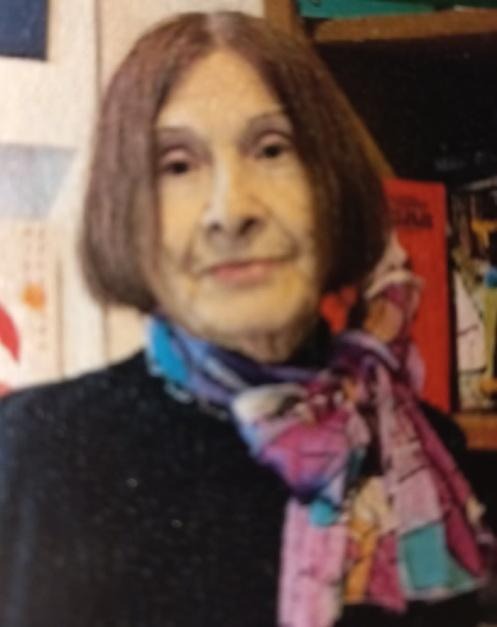
CYRIL ETCHEV, pseudonym of Elvira Cirila Etcheveste, was born in the city of Gualeguaychú, Entre Ríos. She studied at School No. 4, Gervasio Méndez, and became a teacher at ENOVA. She taught in Islas del Ibicuy, Entre Ríos, and in Buenos Aires: Necochea, Quequén, and Mar del Plata. She is a Professor of Language and Communication Sciences, with a degree in Language and Literature.
She specializes in Reading, Writing, and Education, and has completed national and international postgraduate studies. She is an independent researcher of the works of Cortázar, Borges, and Chekhov. She is an International Ambassador of the Word (Quero, Toledo, Spain) and a World Ambassador of Culture (Tarija, Bolivia). She is a Distinguished and Illustrious Citizen in cities in Argentina and Bolivia. She has directed plays for children and young people, as well as adult storytelling performances. Founder of Literature Clubs: Little Prince, The Blue Heron, and The Bicycle.
Published books: She Tells, The Book That Speaks, and Amara, the Eyes of Time. Essay and profile magazine: The Blue Heron. Attends Writers’ Meetings and National and International Book Fairs. Has given lectures on Latin American authors in theater, art, and literature. Edited the book: The House on San Juan Street and Other Stories. De Los Cuatro Vientos Publishing House. San Telmo, Buenos Aires. Tucumán Park Editions: The Women of the Earth. She pro bono promotes Latin American stories among children, young people, and adults in cultural centers, libraries, and institutes. She collaborates on anthologies with the group: Together for Letters: THE IMMORTALS on the Web, in ArtePoética, the cultural magazine THOTEM, and in Weaving International Brotherhood: with essays and short stories. Dr. Mirta Ramírez, Chaco, Argentina. Translated into thirteen languages.
She is invited to read, present, teach classes, and give lectures to all countries via streaming networks: YouTube and Facebook. She also appears simultaneously on radio and YouTube. She has been an active writer at Mercosur Congresses since 2020. President: Professor Zulma Nicolini, Gualeguaychú, Entre Ríos. In Mar del Plata, she belongs to the Ibero-American Society of Poets, Writers, and Artists (SIPEA). From Mexico, she represents the International Book Confederation. Presidents: César Salvatierra and Alan Morales from Peru. Coordinated by Cultural Ambassador Julio Gorenaud for the world. She receives distinctions as a Writer and Cultural Promoter from the Organization for the Defense of Peace and Art AWARD THE BEST World Federation of Women Grand Masters.
Presidents: Elena Paniagua and Nora Miranda at the Palace of the Buenos Aires City Legislature. The International Mendoza Condor Award/Presidents: Guillermo Salinas and Adela Cornejo. She receives the Silver Seagull Award/The Knight Errant/Dr. Princess Alexandra of Easter Island. Dr. J. Manuel Equihua Estrella International Literature Prize from the International Cultural Collective, Universal Poetic Utopia USA Branch, and the International Program of Virtual Tributes to Living Artists. Selected among the 100 writers of Ibero-America and the Caribbean by EDITORIAL HISPANA USA, Atlanta, Georgia, 2020.
She has numerous publications in anthologies from Argentina to the world. MSADEI Diplomas of Honor. J. PAYRÓ, Dr. Jorge Citrángolo Casal. Mercedes, Buenos Aires, Argentina. Sworn in as a writer at the “Monument to the poet Alfonsina Storni” in Mar del Plata, Buenos Aires, by Dr. Jorge Citrángolo Casal. She is a member of the National Society of Writers (SADE) and the Gualeguaychú branch in Entre Ríos, Argentina. She donates books of her authorship to the Domingo F. Sarmiento Library in Gualeguaychú, Entre Ríos, the National Library, the Library of Congress, and the Library of the Legislature of the Autonomous City of Buenos Aires, as well as to schools and museums she visits. In 2025, she published Romance de la Sirena, followed by the publication of BORGES, nació con el Tango (Borges, Born with Tango).
Ecological-Geochemical Assessment of Soil Salinization and Humus Degradation in the Irrigated Lands of Kashkadarya Province, Uzbekistan
Author: Oʻktamova Sabrina Mahmud qizi
1st-year Student of Ecology, Faculty of Geography and Agronomy, Karshi State University, Uzbekistan
——————————
Abstract
Anthropogenic land degradation in the arid zones of Central Asia poses a severe threat to agricultural security. This study presents a comprehensive ecological-geochemical assessment of irrigated soils in the Karshi Steppe of the Kashkadarya Province, focusing on Kasbi and Nishan districts. Soil samples collected from the 0–20 cm and 20–40 cm depths were systematically analyzed for pH, electrical conductivity (EC_1:5), dry residue (TDR), individual toxic ions (Cl^-, SO_4^2-), and soil organic matter (SOM/Humus). The geochemical analysis revealed a predominant sulfate-chloride type of secondary salinization, with dry residue values exceeding $1.1\%$ in heavily impacted zones of the Kasbi district. Concurrently, a critical decline in soil organic matter was observed, with average humus levels dropping to $0.65\%–0.88\%$. This paper establishes the direct correlation between high saline groundwater tables and topsoil degradation, proposing integrated ecological mitigation measures such as gypsum application, biological drainage, and conservation agriculture to halt further desertification in southern Uzbekistan.
The transformation of the Karshi Steppe in the southern part of Uzbekistan during the 1970s via the construction of the Karshi Cascade of Canals stands as one of the largest hydrological engineering feats in Central Asia. It brought over a million hectares of virgin grey-brown (bo’z-qo’ng’ir) and desert soils under intensive irrigation, primarily for cotton and wheat monoculture. However, this massive anthropogenic intervention lacked sufficient closed horizontal and vertical drainage networks, leading to a long-term ecological imbalance (Gafurova et al., 2020).
Under the influence of a sharply continental, arid climate—where potential evapotranspiration exceeds precipitation by almost tenfold—the water-salt balance of the region’s soils has shifted dramatically. The saline groundwater table has risen from a depth of 10–15 meters to a critical level of 1.5–2.0 meters from the surface (Kuziev & Sektimenko, 2009).Capillary forces continuously pull this brackish water upward, depositing high concentrations of toxic sodium chloride and magnesium sulfate in the root zone upon evaporation.
In addition to salinization, the ecological status of these soils is highly threatened by organic carbon depletion. Humus (soil organic matter) is the core indicator of soil biological activity and physical structure. Intensive tillage, burning of crop residues, and lack of organic manure application have accelerated the mineralization of organic carbon, leading to a structural collapse of the soil. This study aims to provide a precise geochemical and ecological evaluation of these dual degradation processes in the Kasbi and Nishan districts of Kashkadarya.
——————————
2. Materials and Methods
2.1. Study Area and Environmental Settings
The research focused on the irrigated agricultural zones of Kasbi district (characterized by clayey-loam meadow alluvial soils) and Nishan district (characterized by sandy-loam grey-brown soils). The regional climate is characterized by an average annual temperature of 16.2°C and an annual rainfall of only 180–210 mm, concentrated mainly between November and April.
2.2. Sampling and Analytical Geochemical Methods
A total of 20 representative soil profiles were dug, and composite samples were collected at depths of 0–20 cm (rhizosphere/plow layer) and 20–40 cm (subsoil). The samples were air-dried, crushed, and passed through a 2-mm sieve.
• Water Extract Analysis (1:5 ratio): Used to determine total soluble salts (Dry Residue), chloride anions (Cl^-) via Argentometric titration, and sulfate anions (SO_4^2-) via precipitation with barium chloride.
• Electrical Conductivity (EC_1:5): Measured using a calibrated digital EC meter.
• Soil Organic Matter (SOM): Determined using the Tyurin method (wet combustion with K_2Cr_2O_7 and H_2SO_4), followed by titration with Mohr’s salt.
• Soil pH: Evaluated in a 1:2.5 soil-water suspension using a glass electrode pH-meter.
——————————
3. Results and Discussion
The laboratory geochemical data presents a clear picture of severe soil degradation and secondary salinization profiles in the studied districts (Table 1).
Table 1: Geochemical and Chemical Profile of Irrigated Soils in Kashkadarya Province
3.1. Chemical Typing of Salinization
The ratio of anions (Cl^- / SO_4^2-) is the primary geochemical index used to classify the type of soil salinity.
• In the Kasbi district, the ratio is approximately $0.54$, which firmly categorizes the soils under the Sulfate-Chloride type of salinization. This indicates a highly toxic environment, as high chlorine ions inhibit the enzymatic activity of the soil and restrict the uptake of essential nutrients like nitrogen and phosphorus by crops.
• In the Nishan district, the salinity is slightly lower but still harmful, displaying a Chloride-Sulfate chemistry with a dry residue of $0.58\%$ in the topsoil.
3.2. Humus Depletion and Ecological Imbalance
The soil organic matter (Humus) content in the plow layer (0–20 cm) of both districts is dangerously low, ranging between $0.68\%$ and $0.85\%$. Historically, the native soils of the Karshi Steppe maintained a humus baseline of $1.5\%–1.8\%$.
This dramatic decline ($>50\%$ loss) is a direct consequence of:
1. Intensive tillage: Conventional deep plowing accelerates the exposure of organic compounds to microbial decomposition, leading to rapid carbon mineralization into CO_2.
2. Absence of Crop Rotation: The continuous rotation of cotton and wheat without alfalfa (bedapoya) or cover crops has depleted the natural nitrogen-carbon cycle.
3. High Salinity Stress: High salt levels restrict the growth of soil microbes, lowering the overall microbial biomass carbon and preventing the natural synthesis of humic substances.
——————————
4. Advanced Ecological Mitigation Strategies
To restore the ecological health of Kashkadarya’s soils, a multi-tiered ecological approach must be implemented:
1. Chemical Amelioration (Gypsum Application): Since these soils exhibit high pH ($>8.3$) and sodium accumulation, applying phosphogypsum (CaSO_4 · 2H_2O) is necessary to replace toxic sodium ions (Na^+) on the soil clay exchange complex with calcium (Ca^2+), thereby improving soil structure and water permeability.
2. Phytoremediation with Halophytes: Cultivating deep-rooting halophytes like Glycyrrhiza glabra (Licorice) and Atriplex nitens helps lower the saline water table through biodrainage and removes toxic salts from the upper horizons.
3. Humus Restoration via Conservation Tillage: Transitioning to Minimum Tillage or No-Till systems, coupled with applying biochar and organic composts (15–20 tons/ha), will sequester carbon and rebuild the degraded humus layer.
5. Conclusion
The agricultural lands of Kasbi and Nishan districts in the Kashkadarya Province are undergoing profound ecological stress. The dual pressure of sulfate-chloride secondary salinization and extreme humus depletion has crippled the soil’s natural productivity. Correcting this ecological trajectory requires an immediate transition from intensive conventional farming to modern, eco-friendly conservation agriculture and biological
References
1. **Gafurova, L. A., & Nabiyeva, G. M.(2020). Degradation of irrigated soils under the influence of anthropogenic factors in the southern regions of Uzbekistan. Journal of Soil Science and Agrochemistry, 74(3), 145-154.
2. Kuziev, R. K., & Sektimenko, V. E. (2009). The Soils of Uzbekistan: Genesis, Classification, and Ecological Status. Tashkent: Fan Publishing House, 256 p.
3. Pankova, E. I., & Konyushkova, M. V. (2013). Assessment of soil salinization in the irrigated lands of Central Asia using remote sensing and ground truth data. Arid Ecosystems, 3(4), 212-221.
4. Shirokova, Y. I., & Morozov, A. N. (2006). Salinization of irrigated lands in Uzbekistan and ways to improve the state of soils. Irrigation and Drainage, 55(s1), 53-62.
5. Ibrakhimov, M., Park, S. J., & Vlek, P. L. G. (2007). Temporal dynamics of groundwater table and salinity in the lower reaches of the Amu Darya River. Agricultural Water Management, 92(3), 115-126
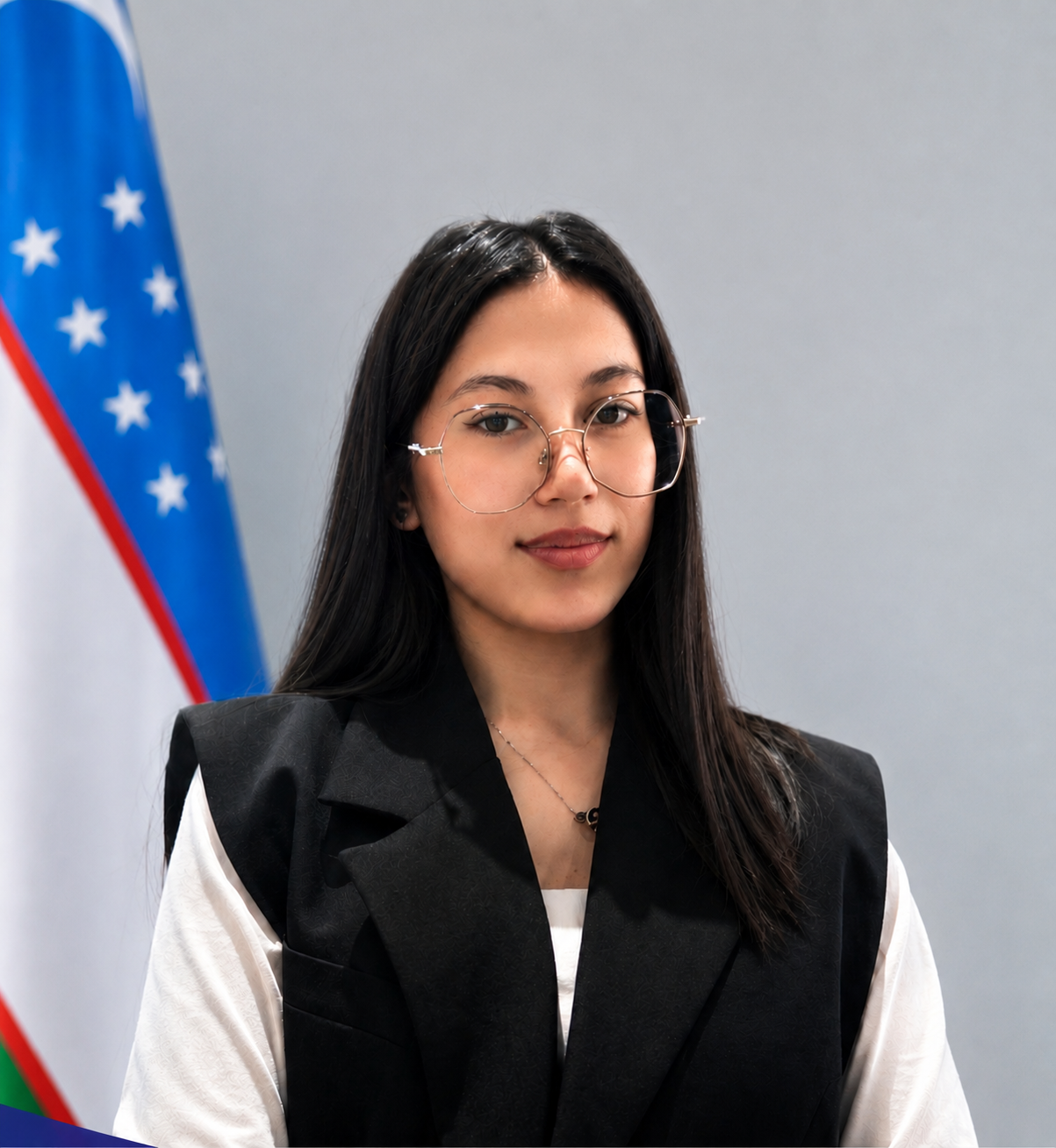
Oʻktamova Sabrina Mahmud qizi is a prominent and highly intellectual young representative of modern Uzbek youth, distinguished by her thirst for knowledge, social activism, and ambitious goals for the future.
Born on March 24, 2007, in Karshi city, Kashkadarya region, into an intellectual family, Sabrina graduated from school with excellent grades. She gained admission to Karshi State University (QarDU) on a state grant, where she is currently pursuing her bachelor’s degree in Ecology.
Despite her young age, Sabrina’s ability to fully capitalize on opportunities and achieve remarkable success is greatly supported by her parents, Islomov Mahmud and Geldiyeva Shahnoza. Her elder sister, Jasmina Makhmudovna, has been a key mentor and a significant source of inspiration in fostering Sabrina’s profound passion for knowledge and excellence.
Sabrina’s current achievements include:
• An active Eco-Volunteer and Social Volunteer.
• Regional winner of the Vociep project.
• Member of the “Children and Youth Support Movement” and a recipient of its special badge.
• An active member of the People’s Democratic Party.
• Recipient of over a hundred certificates from various educational and extracurricular programs.
• Participant in several international forums.
• An active participant and international certificate holder in the recent International Eco-Zakovat competition, recognized as a talented and active student and leader.
• An active member of the Kashkadarya “Golden Wing” Organization and the Youth Golden Wing initiative.
• Recipient of multiple Machine Learning (ML) grants.
Sabrina embodies a dynamic spirit, combining academic excellence with a strong commitment to social and environmental causes, making her a highly promising future leader and expert in the field of ecology.
Our regular contributor Rui Carvalho invites readers and contributors to submit poetry to the next annual Nature Writing Contest.
Our contest, Nature 2025-2026, is a new opportunity that we, as organizers, create to reach the rest of the world. Every Contest is a challenge for authors participating and to people that make it happen. This year we invite all authors to write poetry about: (i) Flowers; (ii) Trees and wind; (iii) Water; (iv) Nature Conservation; (v) Turtles; (vi) Love for people and nature; (vii) Hope and Happiness.
Synchronized Chaos’ new issue, Questing for Renewal, explores how people navigate a world marked by impermanence, injustice, loss, and change while continuing to seek meaning, compassion, and growth. Across poetry, fiction, essays, and criticism, the contributors examine life, always asking how individuals can respond with courage, creativity, and hope.
Christopher Bernard’s fourth installment of Otherwise argues that even in times when evil appears triumphant, humanity must continue imagining and building a better future. David and Emile Sapp offer complementary poetic and prose reflections on a natural scene with egrets and herons, while Elmaya Jabbarova envisions a fairer society grounded in ethics and spirituality. Sumana Bhattacharjee calls on individuals to improve the world through personal action, and Nidia Garcia presents a peaceful meadow that reminds readers of nature’s restorative power.
Many contributors confront mortality and the passage of time. Mahbub Alam reflects on life’s transience and the need for gentleness; Kumushbibi Hamidova surveys contemporary longevity research; Alan Hardy meditates on aging, creativity, humility, and nature; Nurbek Norchayev examines impermanence and human experience; and Nad Raf offers visceral poems on grief, aging, and mortality. Royal Rhodes’ three poems deepen these concerns through explorations of vision, madness, embodiment, spiritual longing, and the tension between earthly existence and transcendence.
Several works address social realities and cultural history. Kahlil Crawford depicts cultural and ecological regeneration amid disruption while Shlok Pandey reveals the suffering war inflicts on ordinary lives. Alan Catlin’s work explores the ways writers, photographers, and other artists have borne witness to war, loss, and suffering and refused to abandon even the lives they could not save to oblivion. Joseph C. Ogbonna’s work is a politically charged, spiritually framed lament that draws on William Blake’s “Jerusalem” to reinterpret Nigeria’s national crisis through religious longing and moral urgency. Stephen Jarrell Williams’ work contains a spiritual element as well, urging readers to help make the present-day world more humane and just while holding to an eternal hope through faith. Bill Tope’s story recalls the discrimination faced by LGBTQ communities and Jacques Fleury’s darkly comic narrative uncovers the lingering struggles of abuse survivors. Hassan Musa Dakasku advocates fearless self-expression, Alex S. Johnson profiles artist and activist Nina Hartley, who advocated body autonomy, Patricia Doyne satirizes federal monuments mismanagement, and Dr. Jernail Anand Singh reflects on how societies create heroes and what heroism means today. Dr. Kathleen Bryson’s poetry recollects the U.S. 1969 moon landing and how it captured people’s imagination even as reality descended. Thi Lan Anh Tran and Musharraf Hussain examine the US-Iran conflict through the metaphor of a troubled relationship as Sardor Raximov outlines potential solutions to modern-day challenges to effective United Nations global leadership.
Spiritual, ecological, and existential questions weave throughout the issue. Lan Xin calls for a global awakening from ignorance into higher consciousness. Shermamatova Dilnura Shavkat qizi describes personal reflections on what kind of person she wishes to become. Duane Vorhees combines myth, humor, tenderness, and everyday experience to show how people sustain one another through life. Mykyta Ryzhykh’s surreal and unsettling work explores homelessness, trauma, alienation, and fractured identity. J.J. Campbell’s poetry evokes disappointment, bodily exhaustion, failed idealism, and the slow erosion of meaning in everyday life, as Patrick Sweeney sketches out everyday life tipping into absurdity. Taryn Allan speaks to existential crisis, melancholy, and the human condition. Zunaira Rehman captures the ordinary heartbreak of life’s many farewells, while Elaine Murray finds resilience in rivers, mist, and starlight even as she mourns environmental degradation. Charos Ismoilova urges the ecological restoration of the Aral Sea as Ananya S. Guha suggests that continuing to love a natural place that has been degraded over time is itself an act of hopeful rebellion. Christina Chin celebrates peaceful moments with birds as Su Yun’s middle grade students revel in the mysteries and beauty of their environment. Brian Barbeito offers up a nostalgic and introspective reflection on his childhood and adolescence as Mark Young collaborates with nature on a fresh and vibrant set of his altered geographies. Sayani Mukherjee journeys through memory, history, and consciousness toward an affirmation of identity and selfhood. Finally, in his new collection tombboy, reviewed by Cristina Deptula, poet Mykyta Ryzhykh reaches out in an alienating, violent world for a fragile affirmation of love.
Together, these works form a rich tapestry of voices united by a common conviction: that despite loss, conflict, mortality, and uncertainty, human beings continue to seek understanding, preserve memory, nurture connection, and imagine renewal.