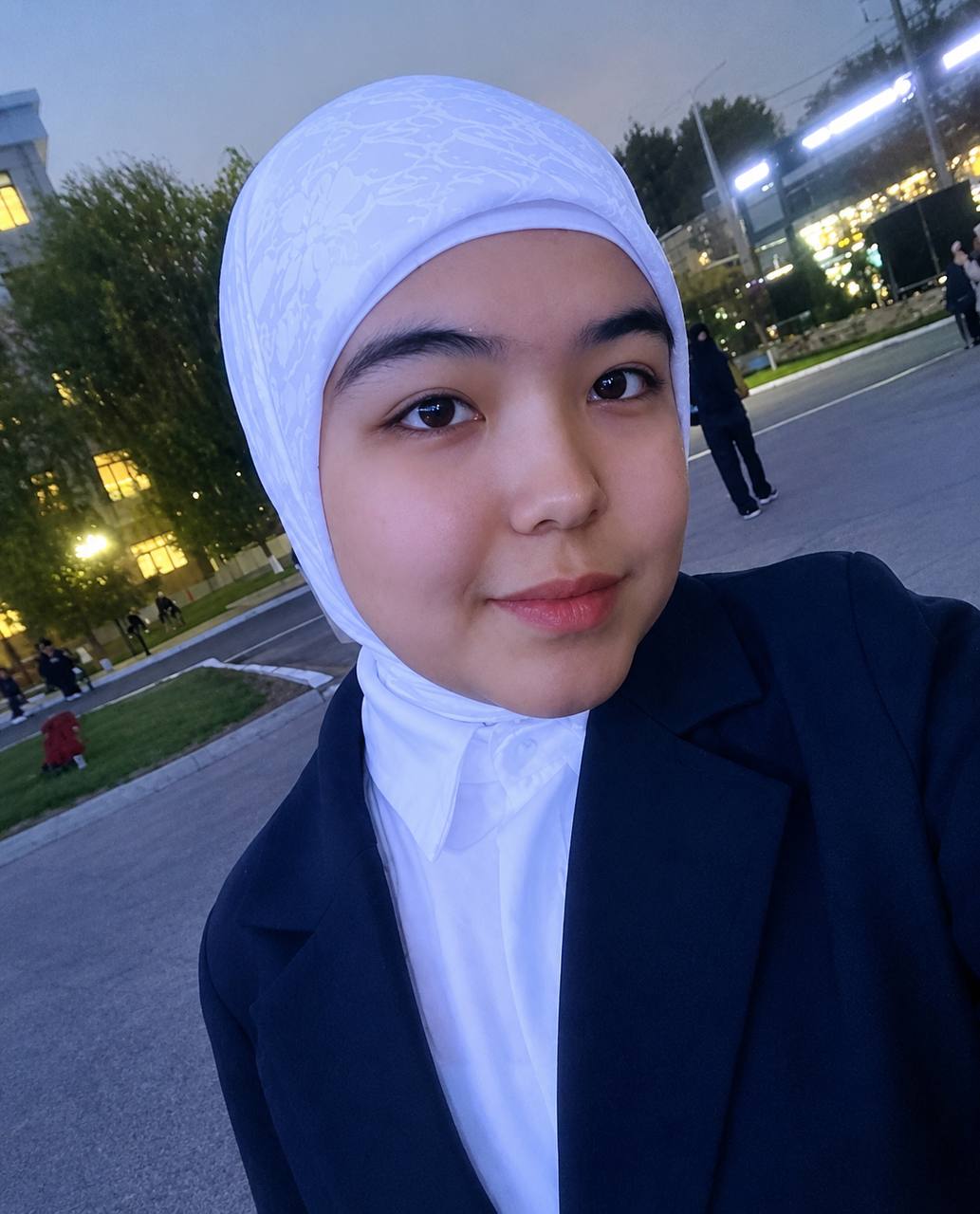
Türkan Ergör, Sociologist, Philosopher, Writer, Poet, Art Photography Model. Türkan Ergör was born 19 March 1975 in the city of Çanakkale, Türkiye. She was selected International “Best Poet 2020”. She was selected International “Best Poet, Author/Writer 2021”. She was selected International “Best Poet, Writer/Author 2022”. She was awarded the FIRST PRIZE FOR THE OUTSTANDING AUTHOR IN 2022. She was awarded the 2023 “Zheng Nian Cup” “National Literary First Prize” by Beijing Awareness Literature Museum. She was awarded the “Certificate of Honor and Appreciation” and “Crimean Badge” by İSMAİL GASPRİNSKİY SCIENCE AND ART ACADEMY. She was awarded the “14k Gold Pen Award” by ESCRITORES SIN FRONTERAS ORGANIZACIÓN INTERNACIONAL.
If you still think of English as belonging to the British or the Americans, it may be time to reconsider. Over the past few decades, a quiet but enormous revolution has taken place in the world of linguistics: non-native speakers by a staggering three-to-one ratio. Of the nearly two billion people who use English worldwide, only about 400 million are native speakers. As linguist H. G. Widdowson argues, English is no longer a “product” exported from a western center; it has become a global resource, continuously reshaped bypeople from different cultures to meet their own communicative needs. This remarkable transformation raises a fascinating question: if English belongs to everyone, does it still belong to anyone? And as new varieties continue to emerge, will English eventually evolve into distinct localized languages, or will globalization keep it united?
English is a West Germanic branch of the Indo-European language family that took shape in early medieval England. Its name derives from the Angles, one of the Germanic tribes that migrated to Britain after the fall of Roman Empire. Over the centuries language underwent enormous transformation. The Norman Conquest of 1066 marked a turning point in its history: thousands of French words entered the language, giving rise to Middle English. Later, during the Renaissance and the era of William Shakespeare, English absorbed a great many new words from Latin, Greek, French, German, and Dutch. At the same time, a phonetic shift known as the Great Vowel Shift fundamentally changed the language’s pronunciation. By the late seventeenth century, the foundations of modern English as we know it today had been laid. But this was only the beginning of its most fascinating journey. Today, English has long since expanded far beyond the borders of Britain or the United States. It is used as an official, administrative, or cultural language in nearly ninety countries and territories, and has become the primary means of connecting people of different nationalities in education, science, business, diplomacy, and technology. With close to two billion users, English is the most widely spoken international language in the world. What is most striking is that the majority of its users speak it not as a native language but as a second or foreign language. This means that most communication conducted in English today takes place between people for whom English is not their mother tongue.
This shift has transformed English from the property of any single nation into a global language used by the whole world. As a result, distinct varieties of English have emerged in countries such as the United States, Britain, Canada, Australia, India, Nigeria, and Singapore. Each variety reflects the history, culture, and worldview of its respective people.
To account for this linguistic diversity, linguists have put forward the term “World Englishes.” This concept recognizes the many legitimate and independent varieties of English that have formed under the influence of different societies and cultures. While the term “World English” refers to the language’s role as a vehicle for international communication, “Global Englishes” emphasizes its worldwide expansion driven by globalization. “World Englishes,” by contrast, signals that English no longer exists in a single standard form, but is continuously being enriched and developed by the millions of people who use it.
Today, English is no longer governed by any single country or standard. As it has spread across the world, different societies have adapted it to their own needs and cultures, creating new varieties of the language. This is precisely why linguists today prefer the term “World Englishes” rather than simply “English.”
The English used in India, Singapore, Nigeria, Australia, and many other countries is not simply a copy of British or American English. Each has its own pronunciation, vocabulary, and modes of expression that have developed over the course of history.It is precisely this diversity that, rather than weakening English, makes it a richer and more adaptable language. The social function of English also varies from country to country. In India and Nigeria, for instance, English is an essential part of education, governance, and everyday communication. In countries such as Uzbekistan, by contrast, it is studied mainly as a foreign language that expands opportunities for international education, business, travel, and global communication. Because millions of people use English every day, it continues to evolve constantly. New words, new expressions, and even entirely new hybrid forms — such as “Hinglish,” a blend of English and local languages — keep emerging. This clearly demonstrates that English is no longer the sole property of its native speakers, but the shared wealth of everyone who uses and develops it.
Saymurodova Madinaxon Zohidjon qizi, 2nd-year student at Uzbekistan State University of World Languages, majoring in Foreign Language and Literature, Uzbekistan
“I speak Spanish to God, Italian to women, French to men, and German to my horse.”
This famous quote, attributed to the multilingual Holy Roman Emperor Charles V, reflects a belief that has endured for centuries: that every language has its own unique personality. Even today, French is often described as romantic, Italian as musical, and German as harsh or rigid. Japanese is widely associated with politeness, while English is seen as direct and practical. These descriptions have become so familiar that many people accept them without question. But how accurate are these perceptions? Do languages truly possess personalities, or are they simply reflections of the attitudes we attach to them?
At first glance, it may seem obvious that languages sound different and therefore create different impressions. However, linguists argue that our emotional responses to languages are influenced by much more than pronunciation or grammar. The way we judge a language is closely connected to the way we view the people, culture, and society associated with it. In other words, our opinions about languages are often social rather than linguistic.
According to sociolinguists, the appeal of a language has far less to do with its grammar or pronunciation than with our perceptions of the people who speak it. Dr. Vineeta Chand of the University of Essex argues that when we admire a particular country or culture, we often transfer those positive feelings to its language. Likewise, languages spoken by socially or economically marginalized communities are frequently perceived as less attractive—not because of their linguistic features, but because of the social status of their speakers. This demonstrates that language attitudes are deeply influenced by society and are rarely based on objective linguistic facts.
This pattern is clearly visible in the modern world. The growing popularity of Mandarin Chinese, for example, stems largely from China’s economic influence rather than from its sounds or grammatical structure. English, meanwhile, continues to dominate international communication because it provides access to education, business, science, technology, and countless professional opportunities. For millions of learners, English is more than just another language—it is a bridge to higher education, international careers, and global connections. In many cases, people are not evaluating a language itself; they are evaluating the opportunities that language can provide.
Yet stereotypes remain remarkably persistent. French is still considered romantic, Italian melodic, and German harsh. Linguists, however, argue that these qualities are not inherent characteristics of the languages themselves. Instead, they are social perceptions shaped by history, culture, media, literature, films, and our experiences with the people who speak them. Because these images are repeated over generations, they eventually become accepted as common sense, even when there is little evidence to support them.
How do such perceptions emerge? Language attitudes refer to the beliefs, opinions, and emotional responses people develop toward a language and its speakers. These attitudes may be positive, negative, or neutral, but they are never inborn. Rather, they are gradually formed through family, education, media, cultural influences, and personal experience. As societies change, so do these attitudes. Throughout history, some languages have gained prestige while others have lost it. Consequently, the value we assign to a language often reflects changing social realities rather than any intrinsic quality of the language itself.
Research also supports this perspective. A study highlighted by BBC Future explored how speakers of twenty languages described colors, smells, tastes, and shapes. The findings offered fascinating insights into the relationship between language, culture, and human perception. Rather than proving that one language is richer or more expressive than another, the study showed that different communities develop specialized vocabularies according to what is most important in their everyday lives.
English speakers, for instance, showed remarkable precision when describing colors and geometric shapes. The Jahai people of the Malay Peninsula, on the other hand, possess an exceptionally rich vocabulary for describing smells. Speakers of Persian, Lao, and Cantonese demonstrated greater precision in describing tastes than many other language communities. Researchers concluded that these differences arise not from the complexity of the languages themselves, but from the environments, lifestyles, and cultural experiences of the people who speak them. The language people use naturally reflects what they experience, observe, and value in daily life.
Ultimately, language is far more than a means of communication. It reflects the ways people perceive the world, the aspects of life they consider important, and the experiences that shape their daily lives. Perhaps languages do not possess personalities of their own after all. What we perceive instead is the history, culture, and worldview of their speakers. French is not inherently romantic, German is not naturally harsh, and Italian is not born musical. These are not qualities embedded within the languages themselves, but perceptions we have constructed over time. Understanding this helps us appreciate languages not as collections of stereotypes, but as living expressions of the diverse communities that speak them.
Saymurodova Madinakhon Zokhidjon kizi, student of UzSWLU, faculty of foreign languages and literature
This poem is an Uzbek nazira (a creative poetic response and homage) to the famous patriotic masterpiece “O‘zbekiston” by the Hero of Uzbekistan and People’s Poet, Abdulla Oripov. Written in traditional stanzas, the work connects Uzbekistan’s rich historical legacy—referencing luminaries such as Avicenna (Ibn Sino), Al-Biruni, Tamerlane (Amir Temur), Imam Bukhari, and Mahmud al-Zamakhshari—with modern reflections on identity, national pride, and peace. The English translation preserves the stanza structure, rhythm, and classical imagery while ensuring cultural nuances remain accessible to an international readership.
UZBEKISTAN
(A Nazira to Abdulla Oripov’s poem “Uzbekistan”)
I wrote a ballad all about love, I sang a song of passion true. Yet, since I tasted no stranger’s bread, I had not shown my love for you. Today I write of you, my Homeland, Perhaps no heavier verse is known. When soul parts from the dying body, Mother Earth claims us as her own. Yet feeble is this pen of mine, Uzbekistan, true Homeland of mine. With tulips blooming in her embrace, A land of gardens, vast and bright. Where golden sun shines soft as silk, My Uzbekistan sheds its light. A sacred garden, pure and fine, Uzbekistan, true Homeland of mine. Along your borders stand your braves, Guardians of your sacred soil. If I but touch a branch by chance, The trees bestow their fruitful spoil. My mother nation, soul of mine, Uzbekistan, true Homeland of mine.
A cradle holds a child so calm, Lulled by a soft and tender strain. No traitor springs from such a cradle, No room for war on this domain. The world became a garden fine, Uzbekistan, true Homeland of mine. How graceful are the Uzbek maidens, Dreaming as Zulfiya once dreamed. A modest maiden’s noble mother Is virtue’s spark, so pure, esteemed. You are my honor, pride divine, Uzbekistan, true Homeland of mine. Cross over the bridge if you give cheer, The clear streams ripple in Qarshi’s light. And should you visit in Ramadan, The crescent smiles upon the night. Rich with gold, a precious mine, Uzbekistan, true Homeland of mine. Mahmud of Khwarazm brought such pride, “Jarullah” was his Mecca name. When such great souls have walked this land, God blessed this home with holy fame. My ancient roots, a sacred sign, Uzbekistan, true Homeland of mine. Ibn Sina held the soil dear, Gathering herbs across the land. This healer born in Afshona Healed four continents by his hand. I claim today, he is part of mine, Uzbekistan, true Homeland of mine. Amir Temur cast swift justice On traitors who would sell their birth. Beruni’s knowledge lit the West, And lifted men above the Earth. I hold a grievance in Columbus’ time, Uzbekistan, true Homeland of mine.
The proudest soul of Muslim faith, Whose heart knows true humility, Imam Bukhari penned Hadiths In the Prophet’s own purity. Faith’s joy is what I hold divine, Uzbekistan, true Homeland of mine. Call them proud if you so choose, The souls of Turon earn their praise. Follow the ancestors, descendants, And rise to great and holy ways. My freedom, pride, and praise divine, Uzbekistan, true Homeland of mine.
Ishq haqida yozdim ballada, Muhabbat haqida kuyladim qoʻshiq. Musofir nonidan totmaganim-chun, Oʻz yurtimga boʻlmapman oshiq. Bugun seni yozyapman Vatan, Balki boʻlmas bundan ogʻir she’r. Jondan ayro qolganida tan, Oʻz bagʻringga olding Ona Yer. Faqat ojiz qalamim manim, Oʻzbekiston Vatanim manim. Quchogʻida lolalar ochgan, Gulistonim bor mening. Quyosh zarrin ipak sochgan, Oʻzbekistonim bor mening. Nomi qutlugʻ gulshanim manim, Oʻzbekiston Vatananim manim. Chegarangda paxlavonlaring, Qoʻriqlaydi tuprogʻing orin. Tasodifan bir tegib ketsam, Daraxtlaring toʻkadi borin. Ona xalqim, jon-tanim manim, Oʻzbekiston Vatanim manim.
Alla eshitadi bolang beshikda, Bunday bola bo
ʻlmas yurtpurush. Boqsahamki yovlar teshikdan Bu Vatanda bo
ʻlmaydi urush.
Dunyo bo ʻldi chamanim manim, O ʻzbekiston Vatanim manim. Nozanindir o
ʻzbek qizlari, Zulfiyaning hayolin surar. Hayosini saqlagan qizning, Onalari asli mastura. Sensan nomus va shanim manim, Oʻzbekiston Vatanim manim. Rag ʻbat bersang ko
ʻprikdan kelib, Mavjlanadi Qarshingda zilol. Ramazonda buyursang tashrif, Oqshomlari jilmayar hilol. Tuprog ʻi zar, ma’danim manim, O ʻzbekiston Vatanim manim. Xorazmning faxri Mahmudga, Makka ahli dedi Jarulloh. Shunday bashar o ʻtgan bo ʻlsa bil. Yurtga nazar solibdi Alloh. Olis tarix qadamim manim, Oʻzbekiston Vatanim manim. Ibn Sino tuproq ardoqlab, Giyohlar-u nabodat terdi. Afshonadan chiqqan bu tabib, To ʻrt qit’aga tabobat berdi. Aytgum, bu kun, u manim manim, Oʻzbekiston Vatanim manim. Vatan sotar xoyinpurushni Amir Temur tortdi jazoga Beruniyning tahsilin olib, Gʻarb millati uchdi fazoga. Kolumpda bir alamim manim, Oʻzbekiston Vatanim manim.
Musulmonning ulugʻ magʻruri Xushu boʻlmoq asli dilida Hadis yozdi Imom Buxoriy Soʻnggi Paygʻambarning tilida. Iymon zavqin tuyganim manim Oʻzbekistin Vatanim manim. Kiborli deb oʻylang mayli Turon ahli tahsinga loyiq. Ajdodlarga ergashing avlod, Siz ham boʻling buyuk mashoyiq. Erkim, faxrim va madhim manim, Oʻzbekiston Vatanim manim.
(c) Rushana Shomurodova
CONTEXTUAL & CULTURAL NOTES Nazira: A classical Eastern poetic genre where a poet composes an artistic response/homage to a celebrated masterpiece, matching its rhyme scheme or thematic tone. Abdulla Oripov (1941–2016):** Hero of Uzbekistan, National Poet, and author of the Uzbek National Anthem. His poem “O‘zbekiston” is one of the most iconic works of modern Uzbek literature.
Zulfiya (1915–1996): A prominent Uzbek poetess and cultural icon who symbolizes fidelity, grace, and feminine poetic tradition. Qarshi: Capital city of the Qashqadaryo region in southern Uzbekistan, historically known for its iconic 16th-century vaulted bridge over the Qashqadaryo River.
Jarullah: An honorific title meaning “The Neighbor of God,” granted by Mecca scholars to the great Khwarazmian scholar Mahmud al-Zamakhshari (1075–1144) for his monumental linguistic work on the Quran. Ibn Sino (Avicenna, 980–1037): Universal scholar born near Bukhara in Afshona, recognized worldwide as one of the most influential founding fathers of modern medicine. Beruni (Al-Biruni, 973–1048):** Polymath who calculated the Earth’s radius with remarkable precision and predicted the existence of an inhabited landmass across the ocean long before Columbus. Amir Temur (Tamerlane, 1336–1405): Renowned ruler, military strategist, and founder of the Timurid Empire headquartered in Samarkand. Imam Bukhari (810–870): Islamic scholar born in Bukhara, compiler of Sahih al-Bukhari, the most authentic collection of Hadith in Sunni Islam. Turon: Historical term for the ancient Central Asian region encompassing modern Uzbekistan.
AUTHOR BIOGRAPHY
Rushana Shomurodova is an Uzbek poet, medical scholar, and writer based in Uzbekistan. She pursues her medical degree at Turon University while actively contributing to modern Uzbek literature through bilingual poetry and lyrical works. Her poetry frequently explores themes of national identity, historical legacy, spiritual devotion, devotion, and youth perspectives. She writes in both Uzbek and English.
Success has always been one of humanity’s most fascinating topics. Thousands of books have been written about it, countless seminars have been organized, and millions of people spend their lives searching for its secret. Although there is no single formula for success, the lives of highly accomplished individuals reveal a common pattern. More often than not, success is built on discipline, consistent habits, and perseverance rather than extraordinary talent.
Many people believe that success depends mainly on natural ability or luck. While talent may provide an early advantage, it does not guarantee long-term achievement. History has shown that individuals who continuously improve their knowledge, develop new skills, and remain committed to their goals often outperform those who rely solely on their natural gifts. Daily effort and self-discipline create opportunities that talent alone cannot sustain.
The digital age has also transformed the meaning of success. Today, a person’s background matters less than their willingness to learn, adapt, and embrace change. Online education, artificial intelligence, and global communication have made knowledge more accessible than ever before. As a result, continuous learning has become one of the most valuable qualities for anyone who wishes to succeed in a rapidly changing world.
Another essential element of success is the ability to respond positively to failure. Many people give up after experiencing setbacks, viewing failure as the end of their journey. However, successful individuals treat failure as a valuable learning experience. Every mistake provides insight, strengthens resilience, and prepares a person to make wiser decisions in the future. In this sense, failure is not the opposite of success—it is an important step toward it.
It is equally important to understand that success should not be measured only by wealth or fame. Genuine success is reflected in personal growth, meaningful contributions to society, and the satisfaction of achieving one’s goals with integrity. Financial achievements may come and go, but knowledge, experience, and a positive impact on others leave a lasting legacy.
In conclusion, the secret of success cannot be reduced to a single strategy. It is the result of clear goals, consistent effort, lifelong learning, resilience, and the courage to continue despite difficulties. Success is not achieved overnight; it is built through small, purposeful actions repeated day after day. Those who remain committed to growth and never stop learning are the ones most likely to achieve lasting success.
Maftuna Rustamova Ruslan qizi, 30th school 10 class
Pulling into the parking lot of Walgreens, I sat in the driver’s seat of the paratransit bus I piloted for the county’s elderly and disabled citizens, waiting as my latest fare, Appearing as if by magic, Ray struggled up the four steps, handed me his token and walked to his seat. He leaned heavily on an ancient, non-descript wooden cane.
“Mornin’,” he greeted me.
“Hi Ray,” I responded in kind. “Straight home, right?” I asked.
“Yes, please.”
I waited as he eased down the aisle of the small bus, empty now but for the two of us. Eventually he found a seat and plopped down into it.
Waiting until he secured his seatbelt, I put the vehicle in gear and we rumbled away. My passenger lived but a mile distant. Elderly and disabled, he couldn’t travel more than 50 yards under his own power.
As I sped down HY 111 en route to ninth st., where Ray’s modest clapboard home reposed, we enjoyed a companionable silence.
Suddenly he spoke up. “A guy yelled at me today,” he told me.
“What?” I asked, incensed. Why would anyone yell at such a pleasant and harmless fellow? I wondered.
“Yeah,” said Ray. “I was sittin’ outside the pharmacy, my back against the wall, waitin’ for you, when I saw this couple walk past, aroun’ 30 feet away. The woman this guy was with was a real looker,” he continued. “The guy wasn’t much to look out, but she was fine.”
“Why did he yell at you?” I asked. I glanced in my rearview mirror and saw Ray shrug.
“I dunno. Because I looked at his girlfriend, I reckon,” replied Ray. “I mean, my tongue wasn’t hangin’ out or nothin’, and I didn’t say nothin’ to her and I certainly never touched her. I just sat on the sidewalk and looked. Liked what I saw, too” he said, remembering.
“What did he say to you?” I asked.
“Asked me how I’d like to get my ass kicked,” replied Ray. “An’ I said, ‘thank you, no.’ ” Ray chuckled.
“Then what did he do?” I asked.
“He yelled some more. I couldn’t unnerstan’ what he said,” said Ray, “but he started walkin’ in my direction, until his girlfriend grabbed his arm and pulled him back. As she took hold of him, I could see her smirkin’.”
I looked in the mirror again and saw Ray shake his head.
“She got what she wanted, I’m thinkin’. But lemme ask you, what kinda girl wants to fire her man up with jealousy like that? I mean, I’m forty years older’n that guy. They both insecure,” he said.
“I don’t know, Ray,” I said, shaking my head.
“Apparently, I still got it,” he said brightly.
“You do,” I agreed.
“Lucky he didn’t tangle with me,” said Ray. “I wouldn’ta been gentle,” he promised.
I looked in the mirror once more, to observe Ray. At five feet, six inches tall and perhaps 115 pounds, he had a formidable demeanor. I smiled.
“Uh…” Ray said, “…what’s your name again?” He asked me this every Thursday when he rode on my bus. His faulty memory was a product of his nascent dementia.
“Rolanda,” I told him again.
We pulled up in front of Ray’s modest cottage on ninth street.
“Home again, home again,” sing-songed Ray, struggling to his feet.
“Have a good one, Ray,” I said.
“Be cool, Yolanda,” he replied, then sidled to the sliding door.
Suddenly he turned back. “I know it’s Rolanda,” Ray said, then added. “Sometimes it’s best not to give ever’thin’ away.”
He limped to his front door, waving and smiling at me.