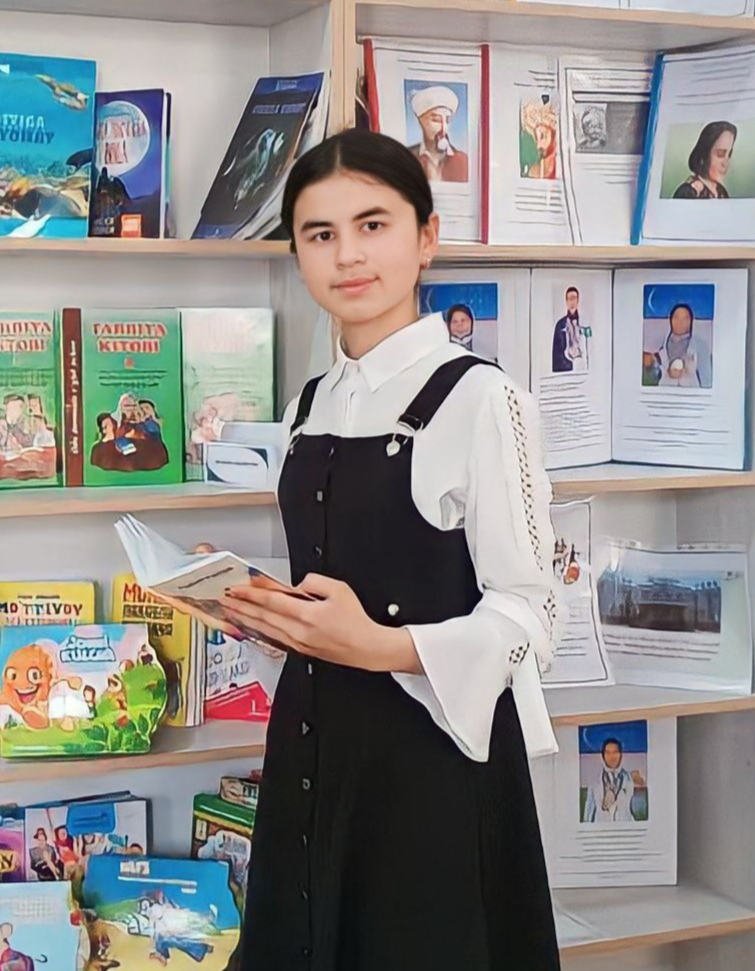
Intizor Samandarova was born on May 3, 2007 in Gurlan District, Khorezm Region, Respublic of Uzbekistan.She is the author of the books “The best invitation” and “My grandfather’s memoir”.She is the member of international organizations “Iqra” of Pakistan,”Asih Sasami”of Indonesia,”Juntos por las letras”of Argentina,”All India council for technical skill development” of India.Her poems have been published in newspapers, magazines and international anthologies.
Let tie our broom sticks together and sweep the floor in our society.
A word of peace is like a kettle of water,
But we are now ruled by the kingdom of pieces.
Nowadays
Neighborhood is like enemies of yester age,
Where two neighbors live in the same compound but opponent heart.
The tree of hatred planted into our minds,
Who’s bear the fruit of conflict,
Growing stronger and bearing more fruits.
Hatred killing the foundation of good Morrow
Now today
Hatred is building the tower of conflict
Injecting odium Into the heart of today child.
Killing love in the mind of tomorrow men’s
Where indeed in yester age
A child spent a day in friend house
Where they Will play together
Eat lunch together
And even call the friend mother mummy
But in today years
We are lost in a black forest
Where our hatred have distract our children friendship
Always avoiding them from eating neighbors meals
Giving them toys to stop playing with the neighbors children
This are not the anthem of democracy we heard from larks during quadrennial replacement.
Half dead tree unlikely to bear fruit,
Watering with patience,
But refuse to change.
They are quadrennial replacement,
Yearning for the votes from our thumbs.
The trees are becoming enormous,
Like tree’s in the forest,
Standing with dry leaves.
They keep rejecting works
Becoming more baren than ever.
They grow to consume our toils,
But serving us nothing.
Moon(haiku)
Shining all the night,
In the gap between darkness,
That lighten the earth.
Market
A panel board,
That bridge different wires,
Red, black and yellow,
With different insulators
Wealth
Wishes that makes dream
Come true,
The pride of human
That defines existence.
Precious stone
Oh precious stone
Human are thirsty to have,
Hustle through curdles day and night.
Green fingers
The wealth of the nation
Waving at us
Agriculture growing
Crops mingling with us.
Stay in gist with them
From dawn to dusk.
Green fingers that wave at us
Like calabash on a river
Accompany us with air.
Green fingers
Our marketer
That we undergoes barta trade
Exchanging health and joy.
Argony(haiku)
Always Mood changer
That fills the heart with anger
Like a mourning one
I am in pain
Blood flow like stream
Embracing the soil
That reduce our fertile.
Bandit and Boko Haram
Acting of their choice
Insecurity embracing us
Victims have no fear for law again
Kill and earn
Murderer becoming occupation
Rule of law abandoned
People suffering from pieces
Peace have been buried cause by low security.
Nuraini Mohammad Usman is a passionate writer and student from Minna, Niger state with roots in Kano State. Inspired by his experience and culture, he crafts uplifting poems and stories that ignite positive change with a strong foundation from Better Treasure international school and Al-fawzul Azeem International School, Nuraini is currently honing his skills at Legend International School and Hilltop Creative Art foundation. He believes in the power of words to inspire and motivate others.
Mother. There is a world of meaning in this small 3-letter word. Mother is such a beautiful and meaningful word. When we say “mother”, a kind of peace and love appears inside us. Is it easy to be a mother? Who can love their children like a mother? Who can protect them like a mother? When we fail, when the doors of fortune are closed to us, only and only our loving mother can stand by us. Your closest friends, relatives, and even your loving hearts, who always say “You’re fine, you’re fine,” turn away from you in that situation and cannot help you. The lives of all people in the world are not equal. Sometimes they succeed and sometimes they fail. For example, I have had many failures in my life. In those situations, even if I didn’t tell my mother, they could tell by my voice and face that I was depressed. A mother’s heart feels everything. They gave me strength and motivation, they taught me that there is still life ahead of me, that everything will happen in life, just try not to give up. They show me the right way. When I succeed in life, I tell my mother first. They are always proud to have children like me.
Mothers can raise their voice to their children, they can be angry, they can say words that hurt your heart, but their love for their children never ends. A mother is such a being that every being carries that mercy and that blessing with motherhood. From humans to monsters, mothers never change, never hurt their children, their children’s lives are beautiful, and they work tirelessly to ensure that they don’t need anything in the future. A hyena, carrying her baby between her sharp teeth and protecting her children from danger, shows us how sensitive motherhood is. Mothers feed their children without eating, clothe their children without wearing them, so that their children do not become separated from their peers, so that they do not become dependent on anyone in the future, they work tirelessly, not calling night night, not calling day day, not knowing what rest is. He educates them and teaches them in big cities.
A mother is a heart full of blessings. Even though he vomits blood and cries blood, he does not let his child feel it. He swallows his pain. He shows the world to his children as beautiful and charming.
A mother is not just a person who gave birth to a child. A mother is a whole world for a child, a painful and never-closing door. When it comes to mother, you can hear a different definition from each child. Someone praises his mother with the most beautiful words in the world, while someone else says that there are no words to describe. So who is mother to you?
“For me, mom…
The most kind, beautiful, sweet woman in the world is my mother. Without my mother, I cannot imagine the worlds, not even a single moment. My mother has a feeling, it is patience. I always admire these sentiments. No other person has the patience my mother has. My mother always helps the people around her, she is a generous woman. My mother is my heaven. May my mother be healthy and safe for me.”
Mother is a happiness that you cannot see! Some people cannot even feel this happiness. Life is beautiful for me because my mother lives in it. There will be days when my mother will always be proud of me, Inshallah! I will do my best for it!
Thank you, my mother!
Majidova Sevinch was born on March 8, 2004 in Shahrisabz district of Kashkadarya region. On September 1, 2010, she was admitted to the 1st grade at the 8th general secondary school located in Shahrisabz district. After graduating from school with excellent grades, in 2021 she was admitted to the Faculty of Elementary Education of Tashkent State Pedagogical University named after Nizami. She is currently a 3rd-year student at the Faculty of Elementary Education. During her career, she participated in many webinars, courses and competitions and received diplomas and certificates in many fields. Currently, she is fluent in Turkish, English and is studying Arabic and Russian. In his free time, she reads books on various fields and learns languages.
1

staggering

in rising flood water

his empty bottle

something left

a man’s will


— Christina Chin/Uchechukwu Onyedikam


2

exposed wood

of the upholstery

the cat's claws

a toddler traces

the outline


— Christina Chin/Uchechukwu Onyedikam


3

morning

the snails

after the rain

on the wall

a route


— Christina Chin/Uchechukwu Onyedikam


4

dogs in the

neighbourhood

hot afternoon

taking shade

under the bamboo hut


— Christina Chin/Uchechukwu Onyedikam


5

food scraps

crows on the disused

telephone cables

the hour—

after scavenging


— Christina Chin/Uchechukwu Onyedikam
In our life we can meet different educated people, who read different books to achieve these successes. It is these books that made the uneducated and educated people become scientists. There are many types of books. There are also books for people with different skills. There are many books of world literature.
Among us there are folk proverbs like: ‘a book is our friend’ and ‘a book is a source of knowledge’. Always full of valuable and useful information for us. I mostly like to read world literature. I am especially interested in the works of Shakespeare and Pushkin. I recommend it to you too. A person who reads books is never lacking. Besides, he craves knowledge in his adult life. We can use the wide opportunities given to young people to visit various libraries and read to our heart’s content. It is this books that make scientists, and we should read various magazine and articles without limiting ourselves to books.
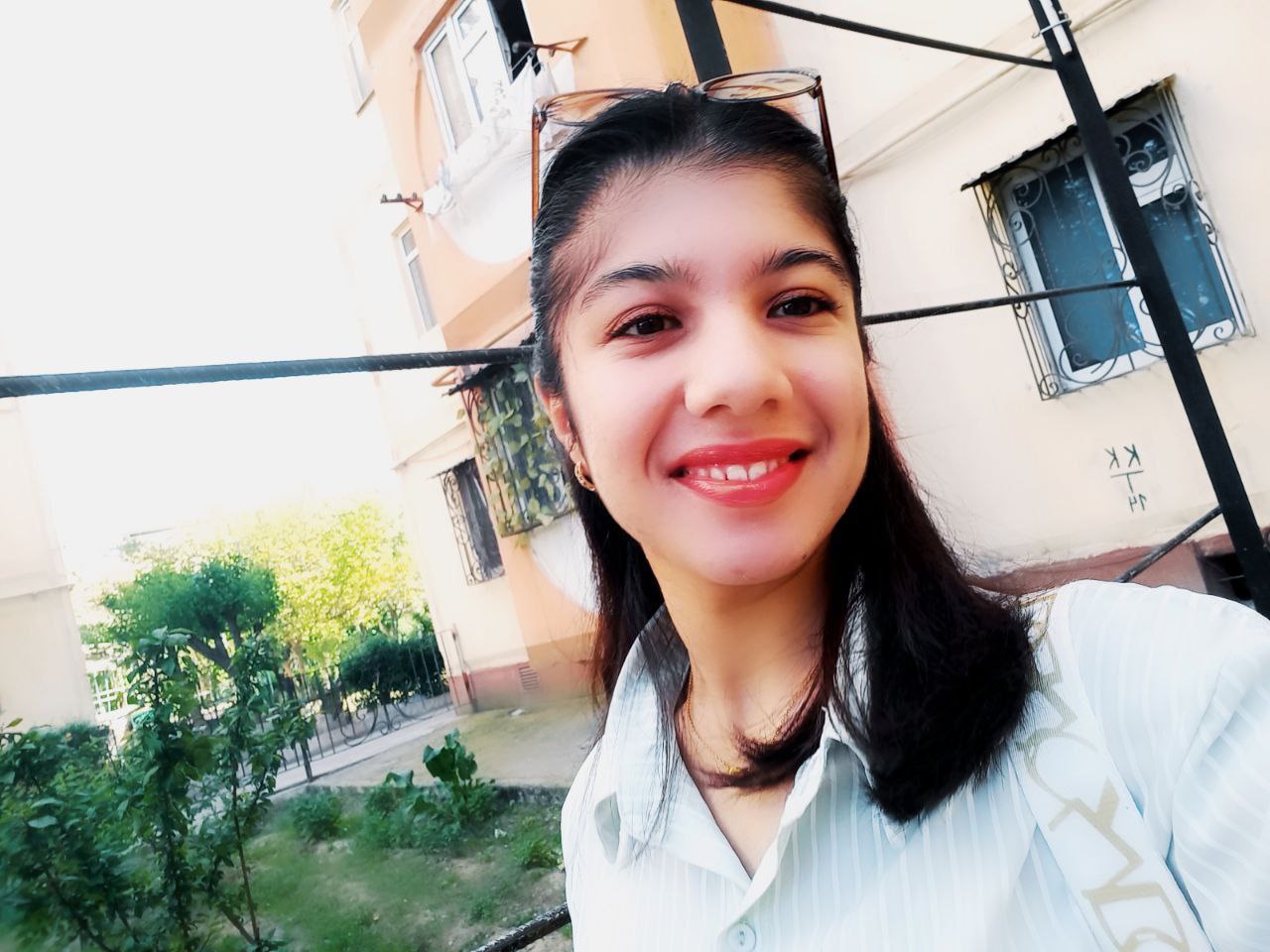
Mo’minjonova Diyora was born in 2007, 4th September in Turakurgan. She is a student of 11th grade.
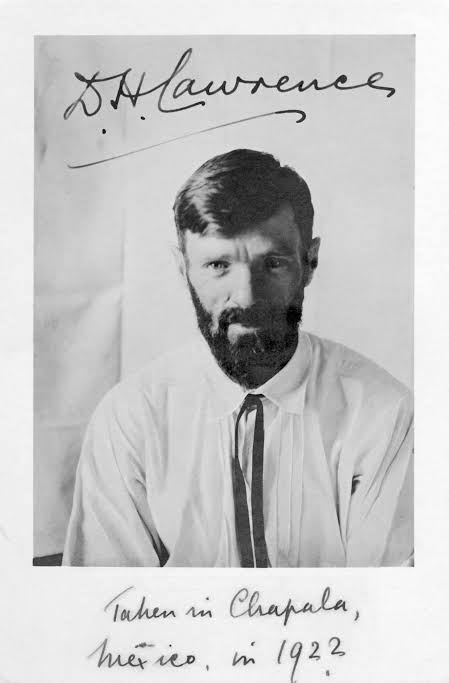
Evaluate D.H. Lawrence’s Sons and Lovers as a case study of Freudian psychoanalytical genesis of the emotion of love.
A son loving his mother too dearly and in turn, the mother who lavished all her affection upon her son. Elusiveness and mystification of the psychic conflicts between mother, lovers, father and sons framework engenders the Freudian psychoanalysis and thus underscores the Oedipal and Electra complexes. Mr. Lawrence voices the struggle of the central protagonist Pual Morel to emancipate himself from maternal allegiance and thus transfer his affections to a fiancee who belongs to another human creed. Furthermore, mother and son are one and the husband is completely effaced and the father exists merely as a harlequin humbug.
Obsession with the possessive love between mother and son salvages the creaking domestic hearth’s explosive ambience from the parental violence and physical intimidation including banging fists, muffled voice, hurling of attics. Paul Morel’s tokens of love and appreciation such as the bouquet of flowers and extracurricular activities accomplished with accolades, medals and laurels become entirely dedicated to the heartfelt charismatic lady, Mrs. Gertrude Morel. This possessive obsession is explicated in the statements from the textual reference: “In the end she shared everything with him without know … She waited for his coming home in the evening, and then she unburdened herself of all she had pondered, or of all that had occurred to her during the day. He sat and listened with his earnestness. The shared lives.” Furthermore, this recreational exchanges and emotional correspondence provide salvation to Mrs. Morel’s macabre existence that compelled her life to a maniacal debacle, haunting the Derbyshire coal mining family.
Eventually with the demise of the patriarchal head of the family, Paul Morel’s dilettantism and hedonism frame the newly orphaned boy to earn a thirty and/or thirty-five shillings a week. With that petty finance Paul Morel intends to pursue a Bohemian lifestyle except purchasing a real estate shanty cottage in the neighbouring countryside and live there with his mother happily ever after. In this episode, Paul Morel develops a romantic affair for the neighbouring farming family maiden Mirriam Leiver, a loner, reticent, exalted and reserved girl. Herein, the intruder motherly figure creeps into the lives of these romancers to a hellish extent and that her intrusion, however, can be solely vindictive in case of apprenticing Paul Morel to surgical warehouse for the rapid surge in effeminization.
Nonetheless, Mrs. Gertrude Morel admonishes the camaraderie of vampirish girls such as Miriam Leiver emphasizing that, “She is one of those who will want to suck a man’s soul out till he has none of his own left.” This commentary satirizes the trenchant of a scathing wife to her husband. Relationship between the newly piquant romancers thus prove to be a futile endeavour if analogies to textual references are contextualized: “Oh, Lord let me not love Paul Morel. Keep me from loving him, if I ought not to love him” and “He was afraid of her. The fact that he might want her as a man wants a woman had in him been suppressed into a shame.” Tumultuous turmoil invades the relationship and thus virulent acrimony plagues their relationship through rhetorical estrangement and psychological alienation. Except the church gatherings harboured a sense of spiritual reconciliation by reuniting his two loves under the spell of the place of worship.
Even the maternal allegiance disintegrates to a dread and dreary affair as soon as gerontological diseases and William Morel’s death inflicted Mrs. Morel. Off late Paul Morel’s Lincoln Cathedral excursion proves to be a bizarro after witnessing Mrs. Morel to the emblematic manifestation in idolized version of an old sweetheart.
The amorous conquest progresses toward Clara Davies, distant relation of Miriam Leiver. She possesses sensual mysticism as revealed by the intimation of Paul in the statement that “She was to him extraordinarily provocative, because of the knowledge she seemed to possess and gathered fruit of experience. Afterall, Clara advises Paul that Miriam wanted sensual gratification instead of soul communion and fantasy imagination. In this way, she thus, boldly wields the shield of courage in the fantastical Paul Morel that he couldn’t have achieved out of his own accord. .
Morbid manifestations of the abnormal environment transforms the hero of the narrative fiction from a wreck and a ruin to a ruthless egotist and a vicious weakling in his dealings with the feminine characters. Even his masculinized maleness can be challengingly grisly by his dealing with his elderly mother whom he had stooped to get rid off. These human flaws are the result of the love instinct that gradually partakes with the sudden efflorescence and poetic charm booming from evolutionary stages of puberty. Freud explicates motherly love to be maidenly love that blooms during maternal caresses and intimate feelings of oneness, thus we feel a conscious passion for another individual of the opposite sex. Frank hostility and incessant jealously invoke the spirit of childhood and adolescence love fantasy and this testimony testified unbridled egoism. Paul Morel is tenaciously rooted in his maternal parent and doesn’t relinquish his hold upon her unless her elderly transition to old sweetheart.
Paul Morel’s dejection and desertion of love life is the result of the interweaving of immature phantasies of procreation with his former ideal adoration of his beloved mother Gertrue Morel. Furthermore Freudian psychoanalysis implies that male characters like Paul Morel chooses a girl who most resembles his mother and the heroine figures are likely to mate mostly with the man who reminds themselves of their fathers. Our fathers and mothers are ingrained imagoes in the veil of forgetfulness ever since childhood which we cannot obliterate.
Further Reading
Sons and Lovers: A Freudian Appreciation [1916], Alfred Booth Kuttner, Psychoanalytical Review, Vol. 3, No. 3, July 1916, pp. 295-317, D. H. Lawrence’s Sons and Lovers, A Casebook, Editorial of John Worrhen [Emeritus Professor of the University of Nottingham] and Andrew Harrison [a tutor in English Literature at the University of Warwick], Oxford University Press.