You were the first and I didn’t know what to expect
My mother had forbade me from SSRI’s
when I needed them the most
We had a good run for a few years
but then you took a turn
Left me a dizzy, dazzled mess
Couldn’t drive my car for more than a mile
without swinging open the door
to empty you and my lunch onto the side of the road
Sorry, but we needed to break up
Our relationship was no longer sustainable
I don’t want to ever see you
or the mess you make
ever again
Wellbutrin
I wish I could call you a fling
Truly I wish I’d never swallowed
My mind had never been in such a state
Let’s leave our memories in the past
and never speak of them again
Buspirone
I need you to know
We may have met at the wrong time
In another world maybe we’d be together still
Our short time that we shared
I can hardly remember it except that
It wasn’t you, it was me
Zoloft
We are still limping along together
but I am hoping to see less of you
We started off small
but swallowing 100mg of you
is simply too much
I can’t be the only one putting in the work between us
You make me feel like a shell of myself
I am stuck in neutral
There are no ups or downs
I can’t keep living like this
It’s taking everything inside me
to not throw you out the window
Boiling water
The thing about human minds
is they can make up things
without your permission
Years of craving control and stability
may look like getting a college degree
In spite of your own family
trying to drag you back to them
and all their codependent habits
Five years after you get that college degree
kicking and screaming
You’re still suffering
Your therapist has told you
your family is happy being miserable
and misery loves company
They have shown you they don’t want to change
Stop asking your mother to come see you
Stop calling your grandmother
if she keeps saying anytime is a bad time
You’re her only granddaughter
and she is angry that she has to turn down her television
to talk to you
That isn’t love
When are you going to learn
it isn’t in your best interest to interact with them
You are sticking your hand
in a boiling pot of water
Even if you pour some cold water into it
it’s still going to be a boiling pot of water
You’re still going to get burned
Diamonds & dust
When I asked
why we never wed
I remember you said
You couldn’t afford a ring
A ring?
Such a worthless thing
So I said to you
What is the difference
between diamonds and dust?
They start
with the same letter
and they
are ground dwellers
What is the difference
between diamonds and dust
when the finger
that wears the diamond
turns to dust?
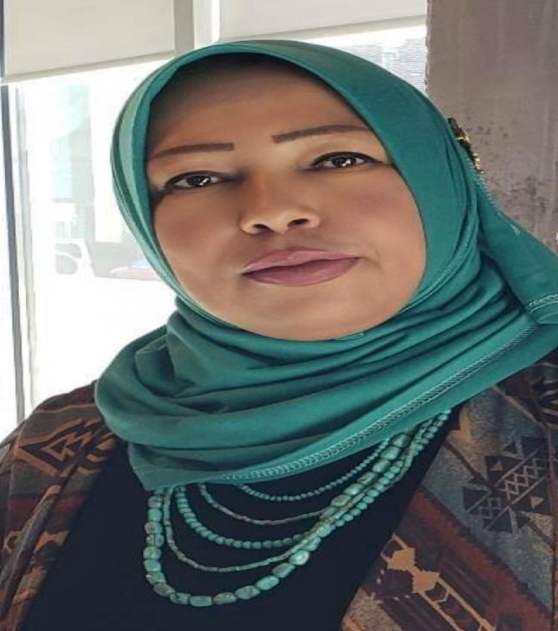
Marissa LaPorte is a resident of Michigan; she holds a Bachelor of Arts degree in English Literature from Grand Valley State University. Marissa has also been published in Wingless Dreamer, The Fictional Café, Speculative 66, Sick Lit Magazine, The Drabble, The Flash Fiction Press, and more.
Raising the war

Like a pet
The tyrants raise the war
At first, they feed it
Their sick dreams
Their reviews of the soldiers under the heat of the summer sun
Maps they have imagined for their conquests
Speeches they have written in dark rooms
The future of our children
And when that war grows
It chews away at us
Every day
Every hour
Every moment
Like a ruminating animal.

Faleeha Hassan is a poet, teacher, editor, writer, and playwright born in Najaf, Iraq, in 1967, who now lives in the United States. Faleeha was the first woman to write poetry for children in Iraq. She received her master's degree in Arabic literature, and has now published 26 books, her poems have been translated into English, Turkmen, Bosnian, Indian, French, Italian, German, Kurdish, Spain, Korean, Greek, Serbia, Albanian, Pakistani, Romanian, Malayalam, Chinese, ODIA, Nepali and Macedonian language. She is a Pulitzer Prize Nominee for 2018, and a Pushcart Prize Nominee for 2019. She's a member of the International Writers and Artists Association. Winner of the Women of Excellence Inspiration award from SJ magazine 2020, and the Winner of the Grand Jury Award (the Sahitto International Award for Literature 2021). She served on the Women of Excellence selection committees for 2023, was a winner of a Women In The Arts award in 2023 and a Member of Who's Who in America 2023. She's on the Sahitto Award's judging panel for 2023 and a cultural ambassador between Iraq and the US.
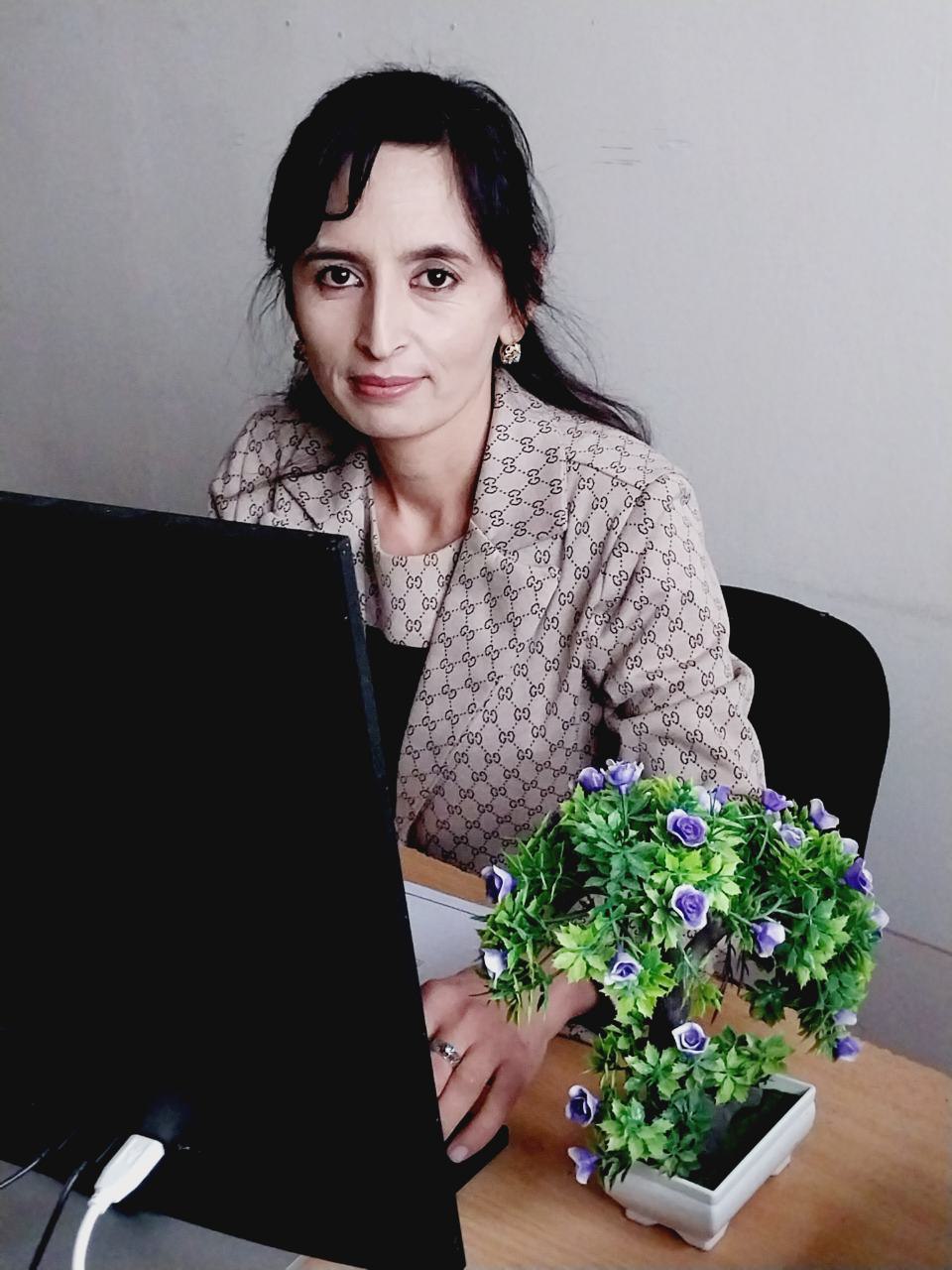
Tursunova Sarvinoz, student of group 3-22, faculty of pedagogy, Shahrisabz State Pedagogical Institute.
Abstract: Monological speech is formed in the process of teaching storytelling – children learn two categories of oral monologic speech – retelling and narration, descriptive stories, narrative stories, and proof stories.
In teaching children to form a widespread thought, the educator needs to form in them the simplest knowledge about the structure of the text (beginning, middle, end), and the imagination of the connections between the sentence and the components of the thought. It is this indicator (a means of communication between sentences) that participates as one of the important conditions for the formation of the fluency of speech thought. Any complete sentence will have common options for linking phrases. The most common way to connect sentences is chaining. Any complete sentence will have common options for linking phrases. The most common way to connect sentences is chaining. Pronouns, lexical repetition, and synonymous substitution are the main tools of this communication. Chain communication makes speech more flexible and colorful, because when a child learns this method, he avoids repeating the same word.
The teacher should teach children to connect sentences in parallel, in which sentences are not connected to each other, but are compared or even contrasted (A strong wind blew. The rabbit hid in the nest). Through this approach, children’s monologic speeches are formed.
A monologue is a speech addressed to others by one person
and telling stories, reporting, retelling what they read or heard
it is manifested in the form of asking questions and answering.The main part. When teaching older preschoolers to compose fluent texts, it is necessary to pay special attention to the development of the ability to reveal the topic and the main idea of the spoken word, and to put a title on the text.
Intonation plays a big role in the organization of fluent thought, therefore, the formation of the skill of using the intonation of certain sentences will help to note the structural unity and completeness of the text as a whole.
The joint creation of words by adults and children is the main condition for the development of monologic speech. Children who have just turned five years old show interest in telling familiar tales, weaving stories, telling stories from their personal experiences. An adult should support the child’s initiative by asking guiding and clarifying questions, creating game situations. It is important for the joint creation of words that the teacher quietly tells the content of the story, the plan, the possible development of events, the form of words. The formation of the grammatical system in children – syntax, morphology, word formation – has its own special features, and for their development, the pedagogue needs to use various tools. Stimulating language games for mastering morphology and word formation; and for the development of syntax, it is important to create a motivation to express a wide range of ideas. Didactic games and exercises in grammatical content are an important means of stimulating children’s language games and their activity in the field of grammar. It is necessary for the teacher to teach children the ability to think of a word combination, and then to correctly connect words with each other in a sentence. It is recommended to form complex syntactic structures in children’s thoughts in the situation of written speech, that is, in a situation where a child speaks the text, and an adult writes it down.
Children’s speech serves as a reliable means of communication only if it is understandable to others. This depends on the consistent, fluent and complete expression of thoughts in words, the choice of specific words, the purity and correctness of pronunciation. Monologue speech requires a good memory, focus on the form and content of the speech. Therefore, at the same time, monologue speech relies on thinking. According to the above tasks and contents of the monologue speech development program, children in the middle group of the kindergarten should master the types of storytelling:
1.
Retelling familiar tales and stories.
2.
Retelling the story and short stories that were read for the first time in the classes.
3.
Create a visual story about the things you see: toys, plants, clothes, dishes, furniture, etc.
4.
Creating a visual story based on real-life pictures.
5.
Children tell stories from memory based on their experiences.
The text chosen for retelling should be understandable for children.
Retelling lessons are created taking into account the personal characteristics of each age group, their retelling abilities. With the help of these lessons, monologic speech is formed. Summary. In this case, the child should control the words chosen by the child to clearly and correctly express the author’s opinion.
Assessment of children’s retelling is one of the important methodological methods. In evaluating the children’s retelling, telling about its advantages and disadvantages, mobility. a short analysis is necessary. With this, it is necessary to fulfill the following program task: to educate children’s ability to notice the place that does not correspond to the text in the retelling. By teaching children to retell stories, the teacher affects the development of their speech activity and independence.
Used literature.
1. Kadirova F.R., Kadirova R.M. Development of children’s speech
theory and methodology. – T.: 2006
2 Sadiqova Sh. A. “Pedagogy before school”. -T.: Science and
technology, 2017.
Tursunova Sarvinoz Fazliddinovna was born on March 22, 1989 in the Kitab district of Kashkadarya region. Since childhood, she was interested in poetry and as an amateur artist, she has been creating on various topics. She is a 2nd year student at the State Pedagogical Institute. In January, she participated in the conference of the National Human Rights and Humanitarian Federation. She has published works in many anthologies and is an environmental volunteer and a member of Juntos pos las Letras organization.
Three decades had passed since David last entered the Empress Diner. During those years, when David returned to Brooklyn, it was to see his parents and they always preferred to eat at home.
David preferred diners and the Empress had been a favorite growing up. Restaurants were for occasions. Weddings, anniversaries, divorces, birthdays, deaths, engagements, breakups, graduations, promotions. Diners were the everyday. Everyone from everywhere eating together. They were for people with places to go and those with nowhere to be. Diners were a respite from the harsh world. Even if you sat alone.
Which was what David was doing in a booth, by himself, with two plates of pie, one apple, one blueberry, and a cup of coffee. He removed a tiny candle from his jacket pocket and pushed it into the slice of blueberry pie.
“That’s just sad,” a woman said, taking of her sunglasses.
David looked up as his memory searched for a name to match a vaguely familiar face.
“Hi, David,” she said.
“Michelle?”
“You got there.” Michelle said.
“It’s been a long time,” David said. “And I don’t get back here often.”
“Back from where?” Michelle asked. In high school, David sat next to Michelle in trig and calculus.
“Santa Monica.”
“And you made the trip to celebrate your birthday alone at the Empress with not one but two slices of pie?” Michelle said. “Pie? Not cake?”
“I don’t like cake.”
“Okay.”
“And it’s not my birthday,” David said.
“So you always light a candle when you eat pie?”
“I haven’t lit it yet.”
“Don’t let me stop you,” Michelle said as she sat down across from David.
David lit the candle.
“Do we blow it out?” she asked.
“We leave it alone,” David said. “We don’t eat the pie.”
The waitress came over and Michele ordered a grilled cheese and fries. “We sat next to each other for two years and you barely talked to me.”
“High school was not fun for everyone,” David said.
“You and your friends seemed to have a lot of fun. You were always laughing and joking about something. What was your thing back then? You were always carrying around a book.”
“I was into Jack Kerouac,” David said. “On the Road was my Bible.”
“I was a Deadhead,” Michelle said.
“Let’s not do that whole reminiscing, glory days thing,” David said. “It’s like looking for ghosts.”
“Ghosts are real,” Michelle said. “What brings you back home?”
“My mom died.”
“I’m so sorry.”
David took a bite of apple pie.
“How’s your dad?” Michelle asked.
“He died three years ago.”
“Are you having a service for your mom?” The waitress brought Michelle’s food and refilled their coffee.
“Two days ago,” David said. “I’m in the sorting and tossing phase so I can sell the house.”
“Is that hard? Both my parents are still living.”
“It’s quite weird. There’s a lot of stuff,” David said.
“And a lot of memories?”
“Memories are always there. I don’t get attached to things. Things don’t care. I just have to find places that will take the stuff.”
“So, you’ll be around for a while?”
“There’s a LOT of stuff.”
“Is the candle for your mom?” The candle had burned its way down to the crust where the flame went out.
“You ask a lot of questions,” David said.
“It’s really not your birthday?”
“My sister’s.”
“Really?”
“Yes,” David said.
“Didn’t your sister die when we were in high school?”
“If you remember that, then you remember Emma killed herself,” David said.
“I do. I remember trying to get you to talk to me about it and you became even more distant. Which I had not thought possible.”
“I was told I did not take her death well.”
“Why would you?” Michelle said. “Why should you?”
“There were those who insisted I should.”
“Who?”
“School psychologist for one,” David said. “She talked my parents into sending me to shrink. I didn’t want to add to my parents’ grief, so I agreed. But I insisted on seeing someone in Manhattan. I wanted to be sure I wouldn’t run into them here in Brooklyn.”
“Did it help? Did the therapy help?”
“It did not,” David said.
“Do you do this thing with the candle every year?”
“Is this an interview?”
“It’s how people get to know each other,” Michelle said.
“Is that what we’re doing?”
“Why didn’t it go well?” Michelle asked.
“Because he just sat there listening to me lie and never said a word.”
“Did you stop lying?”
“I stopped going,” David said.
“Were your parents upset?”
“I didn’t tell them,” David said. “They had enough to deal with. I took the cash they gave me every week and put it in the bank,” David said. “Your turn. What’s your story?” David said as he speared a piece of the apple pie.
“I don’t have one.”
“Everyone has one,” David said.
“I went to school in the city. Hunter College. Then NYU law. I’m a partner at a firm that does criminal law. I still live in Brooklyn. I’ve been divorced for six years. And I’ve been sober for five years and eleven months,” Michelle said.
“That last part. With the dates. There’s a story there.”
“Not an original one. More of a cliché,” she said.
“The pre sober part. I guess it didn’t stop you from making partner.”
“I hid it well,” Michelle said. “What did you do with the money?
“I used it to move to LA after high school,” David said.
“What did you do when you got there?”
“I was always using video cameras and making movies with my friends. Not a lot of people knew about video back then, so it was easy to get a job operating cameras.”
“Did you work in movies?” Michelle asked.
“At first. Then television and later sports. I worked for ABC Sports and traveled all over the world. I loved it. I worked nonstop for a long time and saved a lot of money and quit.”
“So, you’re happy,” Michelle said.
“That’s not something I worry about or think about.”
“You don’t?” Michelle said.
“I’d rather focus on things that interest me,” David said. “We’ve become so obsessed with happiness that we turned unhappiness into a fatal flaw, a character deficiency.”
“That’s crap,” Michelle said. “But you’ll tell me more tonight. And I’ll tell you why ghosts are real. And you’ll tell me about those things that interest you.”
“Tonight?” David said.
“Tonight.” Michelle stood. “I need to run but you should come out with me tonight. I have to go to a party for a colleague who just made partner at my firm. We’ll pass by and if you hate it and I’m sure you will hate it, I’ll take you to dinner.”
“I don’t see that happening.”
“You’ll have fun.” Michelle put ten dollars on the table. “I’ll meet you by the subway on Continental at 7:30. I think that after I leave, you’ll realize that I’m something that might interest you.” Michelle turned and left the diner.
Elan Barnehama is the author of two novels, Escape Route, and Finding Bluefield. Barnehama’s short fiction, personal narratives, and essays have appeared in ParisLitUp,10x10FlashFiction, BoogCity, JewishFiction, DrunkMonkeys, Entropy, RoughCutPress, BostonAccent, JewishWritingProject, RedFez, HuffPost, public radio, and elsewhere. A recent flash fiction was nominated for BEST OF THE NET 2024. At different times, Barnehama has worked with at-risk youth, was the flash fiction editor for Forth Magazine LA, had a gig as a radio news guy, and did a mediocre job as a short-order cook. More @ https://elanbarnehama.com
Every morning, when I took my little girl to the ballet palace, her eyes would shine and she would be very happy. She liked the elegance and charm of ballet movements. One day my little princess cried:
– Father, I can’t do it.
– My little princess, don’t cry, you can do anything. One day my little princess will definitely become a ballet princess.
– Really? When?
– If you keep moving forward.
«Ok» she said, walking away from me.
One day I came home and called my little girl:
– My daughter, your teacher gave you a gift.
– Really? What kind
– See for yourself.
– Wow, that’s great – her eyes were shining. In the big picture, a beautiful ballet princess in a blue dress, with roses in her hands, kneeling at the horse’s feet, and the silver roads, transparent canals and rivers of the paradise garden were depicted.
– Your teacher praised you. If you keep trying, this beautiful ballet queen said that you too can be.
– Thank you, father. I will definitely be a ballet queen as my teacher said.
Years have passed. Looking at this picture for a long time, today I was one of the ballet masters who embodied all the beauty and grace. But today my father was not with me. When I took the picture and hugged it tightly, I noticed the inscription on the back: «A gift from father to my little princess.»
Nosirova Gavhar was born on August 16, 2000 in the city of Shahrisabz, Kashkadarya region of Uzbekistan. Today, she is a third-year student of the Faculty of Philology of the Samarkand State University of Uzbekistan. Being a lover of literature, she is engaged in writing stories and poems. Her creative works have been published in Uzbek and English. In addition, she is a member of «All India Council for Development of Technical Skills», «Juntosporlasletras» of Argentina, «2DSA Global Community». Winner of the «Korablznaniy» and «TalentyRossii» contests, holder of the international C1 level in the Russian language, Global Education ambassador of Wisdom University and global coordinator of the Iqra Foundation in Uzbekistan. «Magic pen holders» talented young group of Uzbekistan, «KayvaKishor», «Friendship of people», «Raven Cage», «The Daily Global Nation», Argentina;s «Multi Art-6», Kenya’s «Serenity: A compilation of art and literature by women» contains creative works in the magazine and anthology of poets and writers.
Village of Navos

During my three month vacation,
I went to my village.
Sweet - sweet apple,
I ate my fill.

A heart-warming song,
The air is burning.
Apricots, cherries, apples,
A sweet moan.

And the chirping of birds,
There are few bad people.
Many good intentions,
Children always say "hope".

Ilhomova Mohichehra is a student of the 7th grade of the 9th general secondary school of Zarafshan city, Navoi region.