Gastric Juice

What is a woman if not fluid

cursed and born bubbling up the esophagus

meeting fingers at the uvula and spewing

heated siren songs of stomach acid and

torn-up lemon slices and cucumber bile.


if not trapping and festering life

with eyes of gold and silver-plated teeth,

they cover tobacco stains under lips stapled tight

shrouding their deadbeat heart

with red right-hand knuckles.


What is a woman if not a frame imagined

too plump, if not a figure

malnourished from longing, yet so full

from desire, of indentured servitude

to their own stomach rumbling

with craze and clouded appetite.


A woman, if not

A sickly yellow vomited like

a scream amplified

From the depths of the womb.
Category Archives: CHAOS
Poetry from J.D. Nelson
Five Untitled Monostichs
independence prickly pears at long last
—
millions of it this bottomless denver
—
instead of concrete bright yellow bird hank
—
late eclipse pepper sandwich later
—
grass lather unless tree & tree
—
bio/graf
J. D. Nelson is the author of eleven print chapbooks and e-books of poetry, including *purgatorio* (wlovolw, 2024). His first full-length collection is *in ghostly onehead* (Post-Asemic Press, 2022). Visit his website, MadVerse.com, for more information and links to his published work. Nelson lives in Boulder, Colorado, USA.
Synchronized Chaos Mid-September 2024: Located
We begin this issue with an announcement. Bird and Beckett Books in San Francisco is hosting a marathon poetry reading on Indigenous People’s Day, Monday October 14th, to benefit the Middle East Children’s Alliance (https://www.mecaforpeace.org/) which provides humanitarian aid to all children of any race or background in Gaza and the West Bank. For a donation to the Alliance of any amount, you can choose a time and come to Bird and Beckett to read any one poem on stage that day. More information here.
Also, several of our contributors invite reviews of their written works. Please feel welcome to contact us and we will put you in touch with the authors.
Noah Berlatsky has a book of poetry recently published from Ben Yehuda Press called *Not Akhmatova*, which is translations/responses/arguments with the work of Anna Akhmatova, thinking about Jewish diaspora.
Daniel De Culla has a collection, Grandparents Dance, that he hopes to publish, and for which he invites reviews. You’re welcome to email him directly at gallotricolor@yahoo.com for a copy.
Duane Vorhees has a book of poetry titled Between Holocausts and invites pre-publication reviews.
Duane Vorhees also offers expertise on a variety of topics and is happy to have writers contact him and pick his brain! Please reach us at synchchaos@gmail.com and we’ll forward your message to Duane.
From Duane:
I grew up in rural SW Ohio (actually about 20 minutes from JD Vance’s home). I lived in Montreal when Rene Leveque won the provincial governorship and launched a French domination movement.
I spent most of my active professional career teaching for the University of Maryland to US military. dependents, and locals in Korea and Japan. I currently live in Thailand.
My PhD was on Immanuel Velikovsky (as a result I probably am one of the world’s leading experts, though I have not engaged in the field for a long time).
***************************************************************************
Now, for this month’s second issue, Located.
Our contributors explore and play with the idea of location, of what it means to be somewhere.
Lorraine Caputo’s verbal postcards serve as windows on South and Central American townscapes.
Brian Barbeito dreamily reflects on a suburban neighborhood where he used to live. Soren Sorensen’s art concerns liminal states and the uncanny: a calm suburban house at night with a vague occult reference, hazy suggestions of sunrises, and an arrangement with a dagger and rose. Robert Fleming reinterprets cows in a multitude of surreal directions. Kylian Cubilla Gomez zooms in for closeups of uncanny or unusual aspects of nature.
Mark Young intermixes text, line, and swathes of color in the artworks he calls ‘geographies.’ Patrick Sweeney crafts little vignettes through his haiku-ish sentence fragments. J.D. Nelson brings us another set of quirky monostich poems, peering into the world with gentle humor and curiosity.
Noah Berlatsky illustrates how art can liberate us from commonplace thinking. Kelly Moyer’s photography renders common objects, even a restroom, intriguing visual and tactile experiences. Grant Guy pays tribute to an artistic faction whose ideas he appreciates as they bring a sense of humor to their speculations on life’s absurdities. Doug Holder describes the visceral experience of listening to Etta James.
AG Davis conveys the psychological weight of dislocation in his poetic piece. Ahmad Al-Khatat’s short story evokes the despair and helplessness of soldiers in wartime who cannot return home. Alexander Kabishev evokes the fear and despair of the blockade of Leningrad in his memoirs, a time when home became unrecognizable.

Christopher Bernard envisions the impact of an imagined disaster tearing at the heart of the American city as Pat Doyne pokes fun at Donald Trump’s recent comments on urban immigrants.
Parichita Saha explores the roles of Greek and Roman mythologies in their respective cultures. Z.I. Mahmud explores how W.B. Yeats’ poem Leda and the Swan relates the themes of the Greek myth to the Ireland of his time, situating the story within his own world. Kahlil Crawford celebrates the power of language to provide shelter and refuge and to convey and inspire thoughts that go even deeper than human culture. Aminova Oghiloy pays tribute to the culture and scholarly work done in her region of Turtkul, Uzbekistan.
Texas Fontanella ponders whether the answers to life’s ultimate questions are simple or complex and whether we stand a chance of figuring them out.
Maja Milojkovic finds belonging and peace through a very personal faith and sees the inspiration of the Lord in nature. Michael Robinson reflects on the steady and caring hand of the Lord throughout his life as a Christian in two pieces, here and here. Mahmud Dzukogi speaks to the spiritual grounding people receive through faith, compassion, and ethics.
Jacques Fleury reminds religious leaders and adherents of our common humanity before God. He points out that racial marginalization can manifest within church settings as well as in the secular world and must be confronted as part of the practice of faith.
Mesfakus Salahin reminds us that we are all equal at the moment of death. Eva Lianou Petropoulou urges readers to hold onto innocence in a harsh world. Daniel De Culla captures a loss-of-innocence moment for a young and naive girl.
Some contributors speak to inclusion and belonging within society. Mykyta Ryzhykh laments the callousness of humanity towards the vulnerable. Nahyean Taronno memorializes the courage of student protesters who recently changed the course of Bangladeshi society. Rakhimjonova Mashhura highlights Uzbekistan’s efforts to include children with disabilities in the national education system.
Salihu Muhammad Ebba reminds us of the ubiquity of disease and biological predators and our shared human biological vulnerability. Raquel Barbeito brings a tender eye to her drawings of cats and people, crafting images with colors and lines softly fading into each other.
Many writers find their spiritual and emotional home with another person, or wish to do so. Jasna Gugic expresses the beauty of close, yet wordless, intimacy. Fadwa Attia celebrates the deep and steady love she has found with her partner. Mahbub Alam also speaks of a tender, intimate love. Faleeha Hassan expresses each of the ways in which a close relationship affects and inspires her life. Dr. Prasanna Kumar Dalai contributes delightful rhyming romantic sonnets. Dilnura Kurolova highlights the value of close friendship.
J.J. Campbell speaks to the years-long pain of lost love. Nosirova Gavhar shares a tragic tale where a man recovers from his injuries, yet loses the love of his life. Graciela Noemi Villaverde reflects on the emptiness of her home as she grieves a loved one. Otteri Selvakumar shares his hopes for an honest conversation between lovers to clear the air.
David Sapp reflects on his connection to his father across generations through their shared boyhood collections. Lidia Popa reflects on the memory of those ancients who have died and been lost to history. Isabel Gomez de Diego highlights the smallness of humans, mere children amid the size of nature and culture.
O’tkir Mulikboyev speaks to the depth and breadth of cultural and natural history in the voice of a river flowing to the sea. Sayani Mukherjee muses on rivers, and other natural phenomena, as reminders of impermanence. Utso Bhattacharyya celebrates the wisdom of ecologically sustainable development, including drawing hydroelectric power from moving water.
Jerome Berglund captures and celebrates moments and the flow of time in his mixed media art. Duane Vorhees speaks of physical intimacy, aging, and love and art in his poetry.
Elmaya Jabbarova compares human emotion to the rainbow, asserting that a wide range of feelings are natural. Sandy Rochelle urges us not to fear suffering, but to learn as much as we can by all of our life experiences.
Taylor Dibbert reflects on a past relationship with hard-won wisdom. Tuliyeva Sarvinoz walks away from an unequal relationship and finds true love. She also celebrates the moral vision and courage in Said Ahmad’s novel Silence.
Lilian Dipasupil Kunimasa illustrates the pain of social rejection and abuse, yet reminds us that every season passes, like the night back into day. Dr. Jernail S. Anand offers up wisdom for various stages of life. Ilhomova Mohichehra speculates on life’s mysteries while watching the rain and asserts that on a future sunny day, she will choose to be happy. Idris Sheikh conveys the strength of hope through a poem about seeds. Thaalith Abubakar Gimba affirms his hope for the future despite others’ cynicism.
Poetry from Duane Vorhees
EMPTY AND PEBBLED
--Cheops Beach in autumn

Naked we together again run
on our gold dust and pearls
beside the sleeping sea.
The waning sun beads our skin
while the wind smothers our lungs.

Every vagina is exposed,
a messy lagar where the wine is formed.
Any penis is Hermetical, closed,
an opaque clarinet.

Today the halves of the hinge
are rusty, stiff, and worn.

These times before,
nipple and prick would respond
to the air the sheen the motion
with alert anticipation.
These times before. But no more.

This is what this fall displays:
our lifetimes are pyramids
infinite at base
inexorable toward the point.


TAKE ME IN

“Take me in.” the poet prayed, “take me in.” The prophet hid.
“Take me in,” the poet said. “take me in.
No banker paid. “Take me in.” The soldier fled;
“Sink or swim,” the lawyer pled. “Take me in,”
the poet said, take me in.”
A woman did.

“Make me warm,” the woman cried, “safe from harm.”
The poet sighed. “Words are thin,” he did reply, “weak and thin.
But yet I’ll try. Weak and thin, but yet I’ll try.”

In the bin by page by page,
in the bin the books were laid,
inch by inch were set ablaze.
Line by line the match was lit.
Word by word
the poems all went.

“Now I’m warm,” the woman said,
“safe from harm. But poet’s dead.”
Poet dead?
Poet dead?
He lives on inside her head.
His words go on inside her head.


JENNIFER IN TWO VOICES

I know why the sky sings the blues – for you, Jenny, for you – atmosphere breaks down and cries. Once the wind must have had your voice: Wind makes my soul rejoice to hear you echo once more. Your precious beauty to preserve, earth freezes to its nerves in ecstasies of ermine. And the waves for you outreach – the sea begs up the beach, hands-&-knees its way in pride. And trees have honored you in gold, red carpet where you rode, jade ceilings and emerald floors -- nature’s learned your lesson well how to be beautiful: your appearance is your sermon.

I know why the sky sings the blues – for you, Jenny, for you – atmosphere breaks down and cries. (Across the landscape many-firred, atmosphere breaks down and cries,) Once the wind must have had your voice: Wind makes my soul rejoice to hear you echo once more. (urges us make love manifold to hear your echo once more.) Your precious beauty to preserve, earth freezes to its nerves in ecstasies of ermine. (Among the creeks and conifers in ecstasies of ermine,) And the waves for you outreach – the sea begs up the beach, hands-&-knees its way in pride. (in fields of foxes henna-furred – I hands-n-knees my way inside,) And trees have honored you in gold, jade ceilings and emerald floors (where moist warmth is plentiful, on jade ceilings and emerald floors.) -- nature’s learned your lesson well how to be beautiful: your appearance is your sermon. (Raven-eyed/lynx-face Jennifer: Your appearance is your sermon.)

Across the landscape many-firred, atmosphere breaks down and cries, urges us make love manifold. To hear your echo once more among the creeks and conifers in ecstasies of ermine, in fields of foxes henna-furred – I hands-n-knees my way inside where moist warmth is plentiful. On jade ceilings & emerald floors, raven-eyed/lynx-face Jennifer: Your appearance is your sermon.


AN ORDINARY LOVE STORY

If you are the vault, I
am the combination.
(a tux,
a mum,
a candled dinner)
If I am the match, you
are the conflagration.
(a kiss,
the cum,
those tangled
fingers)
If we are the watch, you
are the complication.


PEACE MEAL


…That night we dined. We had port and escargot
       and music,                      and the candles kissed the wine, the
WE                           *I                 way
       WERE                   *tried        one
REFUGEES                          *to  would                                                     the
        WEIGHING --minds not on *hold or cargo,                          rosebud
              INTO  (the)                   pearls*her                                        parted,
                     (PORT)                     or           *eyes                        blossomed,
                   (pearled)  FROM       fine                  *in                            grew
                           (on)               CHINA.                     *mine.
                          (her)                                           OR                           toward
   Fine food our (lips) barely touched--     SOME                                  the
                         (like)                   OTHER                                                    sun
                        (dew)               FAR                                                                in
                           (on) WHERE.                                                                     my
                (rosebuds,)                  Words chilled                                     eyes,
(like rain on shipsail)                      in the air.                                      kissed
      (as from her port)                   Finely she said: we’re through.       the
              (she slipped)                                                                                  sun, And cried.
And I cried too.                                   And then we left, as diners do
                                                                          when they are finished.
Essay from Jacques Fleury
“Spiritual Pulse” Letter from Churchgoer Per the Request of a Local Pastor
By Jacques Fleury
Local Pastor: Dear Churchgoers,
We live in uncertain times filled with both possibility and peril, not to mention the daily joys and challenges of living. What are your hopes, dreams and fears in [sic] this moment? What are the urgent spiritual, moral, ethical, and religious questions that are on your hearts as we face these turbulent times? Your questions also help me take the “spiritual pulse” of our congregation, and they inform my preaching throughout the year.
Churchgoer’s reply to Pastor’s request:
I attended this Sunday’s service and although I spoke to the Reverend about how much I “felt” his sermon in the viscera of my soul, which left me in a haze of joy, I did not get a chance to tell him how much I enjoyed the singing and piano playing and how it blended harmoniously with the his sermon on being “grounded” through deep penetrating “roots” of the spirit.
The choir sounded ethereal, as a creative, I felt like I was in one of my lofty literary dreams, as doves and butterflies flutter around me in some, as we say in French “Île de la Cité” akin to Elysian Fields …in some island paradise.
First and foremost, I want to offer a snippet about my origins. I am from the island of Hispaniola, as it was re-named by notorious colonial era usurper Christopher Columbus or Hayti (meaning mountainous land) as it was originally named by the indigenous Native American Indians, I have not been there since I left to study abroad with my parents in America when I’d just completed the 7th grade in an exclusive, strict and abusive catholic school near the Haitian White House called Frere Andre or “Brother Andre” in English. My father had U.S. Residence & mercantile status as a business owner hence he lived in both America and in Port-au-Prince, Haiti, where his retail store was located adjacent to the then Versace storefront in the bustling sunny city.
Both he and mom owned businesses so they both travelled back-and- forth which meant sometimes I had to live in other parts of the world. At times I stayed with my paternal grandmother, who was biracial, my paternal great grandfather was a “white” man from France, hence explaining the reasons why my DNA tests on Ancestry dot com reveals Euro-Afro-Haitian ancestry since I’m also a descendent of enslaved West Africans brought to Haiti by the French for the purpose of cultivating and harvesting a then prosperous island replete with natural resources. Bauxite (aluminum ore), copper, calcium carbonate, gold, and marble were the most extensively extracted minerals in Haiti. Once the richest colony in the world, Saint Domingue (Haiti) was a leader in the production of sugar, coffee, indigo, cacao, and cotton.
I have published four books thus far and in all my books you’ll soon find out that Hayti, or St. Domingue/Santo Domingo or Haiti, as it is now called, and its people are NOT defined by “misery and hardship” as the mostly North American mainstream media would have you believe.
In the impassioned pages of my books, you will find stories of beauty, joy, resiliency and its revolutionary marker as the First Black Republic in the world and it was money from the then prosperous island that France used to supplement the American Revolution and Haitians also came to fight America’s fight against the British for independence for which they are memorialized in Savannah, Georgia. “The largest unit of soldiers of African descent who fought in the American Revolution was the brave “Les Chasseurs Volontaires de Saint Domingue from Haiti. This regiment consisted of free men who volunteered for a campaign to capture Savannah from the British in 1779” according to Contemporary Monuments to the Slave Past. The island constituted 70% percent of France’s economy, which is why they fought so hard to uphold the system of slavery and keep the country under French rule.
Now that I’ve said a bit about myself to provide some interpersonal context, here are my questions; which will be listed in two parts.
Part I.
I spent my early primary schooling in catholic school up the 7th grade when my father sent me to study in the States. I was physically and psychologically abused by the “Brothers” in my school, which has damaged my sense of self-worth and trust in “any” religious organization.
Q. How do you propose healing these immanent wounds of yore and letting go of the anger and resentment I often wrestle with daily and be able to keep my heart “open” to the love and light from a Higher Power, or Universal life Force Energy, God, or Allah whatever one chooses to call him/her/them etc…?
Part II.
Growing up in America has also inflicted additional wounds to my already wounded heart having been labeled falsely a “Black man” when I am just “A Man” — due to the pseudoscience of eugenics and polygenesis–and considered an anomaly and the pejorative prejudice that is tethered along with that notion and practice. I try to keep an open mind and heart and try not to see the potential for more harm from those who look like the people who’d acted with prejudicial intents in the past; and who conceivably continue the atavistic practice of discrimination and dehumanization against those who look like me in the present. Particularly considering the Global Call for Social Justice and Racial Reckoning currently manifesting in America and elsewhere after collectively witnessing the public lynching of George Floyd on National Television. All this harmful racialized hoopla triggered by the misinformation and xenophobic theoretical discrimination exalted by biased “scientists” of yore. They exalted a myriad origins of humanity and consequently separated the races into white, brown, black etc.
As you may already know, Polygenism was expressed in the seventeenth century in the work of Isaac De Peyrère (1596–1676) and by some philosophers and writers of the eighteenth-century Enlightenment. Monogenists of the eighteenth and nineteenth centuries, such as Buffon and Blumenbach, countered, arguing for the unity of the human species as ONE race: the human race.
I have written extensively about this in my book: Chain Letter To America: The One Thing You Can Do To End Racism for according over 100 years of genome research from such prestigious Universities as the likes of Stanford and Harvard, the first civilization was traced back to sub Saharan Africa 50,000 years ago, before their eventual migration to Asia, Europe and other parts of the world hence we are all geophysical representations of our African ancestors! The farther away from the equator, the lighter our skin colors and other modified traits. I wish this had been taught in high school…which would have probably prevented my negative sense of self and the ensuing feelings of “inferiority & not enoughness” which then propelled me to write my latest book: You Are Enough: The Journey to Accepting Your Authentic Self to celebrate myself just as I am!
Q: How do I reconcile the celebration of newfound racial justice “allies” and/or “accomplices” while navigating the relative continued oppression of Black Indigenous People of Color (BIPOC) in America?
Rev. I am aware that my two questions almost read more like essays, it’s just that I have NEVER been given this opportunity before…NO ONE has ever asked me about how I feel about these matters since I’ve been an American citizen or “Black” or “African (-) American” or “Haitian (-) American” citizen etc… As the ubiquitous Pulitzer Prize winning writer Toni Morrison of “Beloved” fame once said: “In this country American means white. Everybody else has to hyphenate (-).”
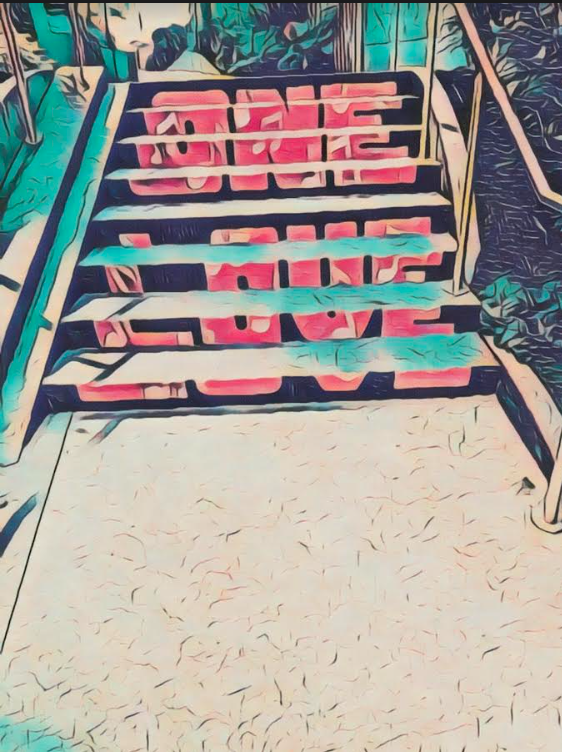
Thank you, Reverend, for this momentous and iconoclastic opportunity. I will treasure it always. One Love!

Jacques Stanley Fleury is a Haitian-American Poet, Author and Educator. He holds an undergraduate degree in Liberal Arts and is currently pursuing graduate studies in the literary arts at Harvard University online. Once on the editing staff of The Watermark, a literary magazine at the University of Massachusetts, his first book Sparks in the Dark: A Lighter Shade of Blue, A Poetic Memoir was featured in and endorsed by the Boston Globe. His second book: It’s Always Sunrise Somewhere and Other Stories is a collection of short fictional stories dealing with the human condition as the characters navigate life’s foibles and was featured on Good Reads. His current book and hitherto magnum opus Chain Letter to America: The One Thing You Can Do to End Racism, A Collection of Essays, Fiction and Poetry Celebrating Multiculturalism explores social justice in America and his latest book, “You Are Enough: The Journey to Accepting Your Authentic Self” along with all other previously mentioned titles are available at public libraries, The Harvard Book Store, Porter Square Books, The Grolier Bookshop, Goodreads, bookshop, Amazon etc. His CD A Lighter Shade of Blue as a lyrics writer in collaboration with the neo-folk musical group Sweet Wednesday is available on Amazon, iTunes & Spotify to benefit Haitian charity St. Boniface.
Poetry from Lilian Dipasupil Kunimasa
Rebirth

Upon the mighty sun's death
Comes gentle moon's birth
Twelve beats of burning labor
Darkness shines with cool favor
Silence disturbed by chirping
Cicada's courtship revibrating
Floating a heavenly orchestra
Twinkling lights of stage's extra
Nocturnal actors play a drama
Mysterious aura of a diorama
Silence fill the eight hour recess
Secret dreams no one can guess
Dawn creeping slow and gently
Sending off darkness longingly
A rooster screamed with might
Announcing valiant sun's rebirth


Be Free

When voice is silenced by insults and threats,
When life is drowning in anger, pains and regrets
When mind is forbidden to be free and fly
When truth is twisted and one is forced to lie
When sound is hoarse towards the heaven's ears
Yet not even a single blot of cloud hears
When one's soul and spirit is condemned to die
Then one has no recourse but carve all into words
Be they bleeding festered wounds or sheathed swords.
For a windy fire, muteness cannot afford
Its blaze shall cackle on its on accord
What joy to be read and understood
Though no difference if forever hidden under hood
For the heart's knife scraped not for honor
Thrusts and slashes are to expose the horror
Thanks Green Owl

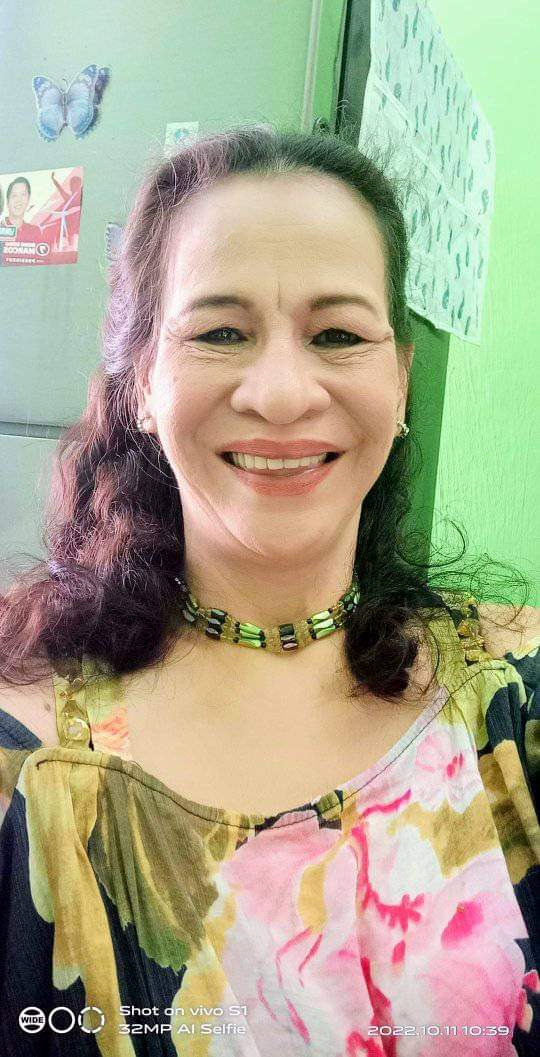
Lilian Dipasupil Kunimasa was born January 14, 1965, in Manila Philippines. She has worked as a retired Language Instructor, interpreter, caregiver, secretary, product promotion employee, and private therapeutic masseur. Her works have been published as poems and short story anthologies in several language translations for e-magazines, monthly magazines, and books; poems for cause anthologies in a Zimbabwean newspaper; a feature article in a Philippine newspaper; and had her works posted on different poetry web and blog sites. She has been writing poems since childhood but started on Facebook only in 2014. For her, Poetry is life and life is poetry.

Lilian Kunimasa considers herself a student/teacher with the duty to learn, inspire, guide, and motivate others to contribute to changing what is seen as normal into a better world than when she steps into it. She has always considered life as an endless journey, searching for new goals, and challenges and how she can in small ways make a difference in every path she takes. She sees humanity as one family where each one must support the other and considers poets as a voice for Truth in pursuit of Equality and proper Stewardship of nature despite the hindrances of distorted information and traditions.
Essay from Kurolova Dilnura
Friendship
Friendship is close to the concepts of brotherhood, friendship and brotherhood, but from a psychological point of view, it is different from each other. We believe that friendship is a psychological concept. Friendship is a wonderful bond that connects one person to another person, one nation to another nation. Every person and every country has a brother country, a friend. Even lonely people. Loneliness is not unique to people. People have many friends, but only one friend. .He stands by your side in good and bad days. Friendship is a relationship between people based on views, mutual understanding and trust. If you trust your friend to tell your secrets, he will never He does not reveal to whom. There are poems about friendship with a wonderful meaning. Friendship can be likened to a glass, because the glass cannot be restored and returned to its original state…
Friendship is not likened to a bottle for nothing.!!!
Kurolova Dilnura Shokirjon’s daughter was born on October 15, 2009 in Gurlan district of Khorezm region. She is currently a student of the 8th grade of the 30th school. To date, she has achieved many achievements.