Essay from Michael Robinson

Middle aged Black man facing the camera with his face resting on his hand
Michael Robinson

Forty Days of Sadness

Psalm 16:1-3

1 Keep me safe, my God, for in you I take refuge.
2 I say to the LORD, “You are my Lord; apart from you I have no good thing.”

During the past forty days, I experienced the loss of a friend, and not for the first time. I knew of children in my community whom we had lost at an early age. Jesus was my friend, and I talked and prayed, knowing he was there for me. In my early childhood, I had come to know Jesus. We talked, and in my innocent child's spirit, Jesus was alive. 

During Lent all was going to change. He was to be taken to the Cross to die. I was an altar boy during that period. I witnessed Christ's suffering and death at the Stations of the Cross. His death was real to me at that time. My friends who had passed didn't come back to me. Serving each Station of the Cross Friday night for forty days brought sadness within me. I knew how this was going to end. Jesus was marched to Calvary to die. 

Each Friday during that time was a reliving of his suffering on his way to the Cross leading up to the black Friday when he died. The whole forty days were darkness for me, not just during the Friday evening service but throughout the week.   

I spent time in the church praying as the candle flames flickered. There was a realization that my friend Jesus wasn't there to share my life. Easter Sunday was so far away without my true friend Jesus. 
 
I knew Jesus was real because there was always a feeling of comfort when I talked with Him and felt him beside me. My foster Mother talked about how Jesus was alive to her. I, too, felt that Jesus was alive. She was convinced of Jesus' presence. Those good Fridays were indeed challenging because we remembered the end of Jesus' life. I knew that on Easter I would get new clothes to wear to church for the celebration of Jesus' return. 

Come Easter Sunday there was a feeling of having my friend come back to me. On Easter, when I talked and prayed, it brought me great comfort and peace. 

Poetry from Wazed Abdullah

Young South Asian boy with short black hair and a light blue collared shirt.
Wazed Abdullah
The Independence of Bangladesh
 
Through 71's war we got independence 
We are free hence. 
In the heart of Bengal, 
A nation's pride, 
Independence Day, 
A journey's stride. 
With courage and hope, they took their stand, 
Freedom's flame ignited, 
Across the land. 
Bangladesh's story, in history's rhyme, 
A nation's spirit, enduring through time.

Wazed Abdullah is a student of grade nine in Harimohan Government High School, Chapainawabganj, Bangladesh.


Essay from Makhfiratkhon Abdurakhmonova

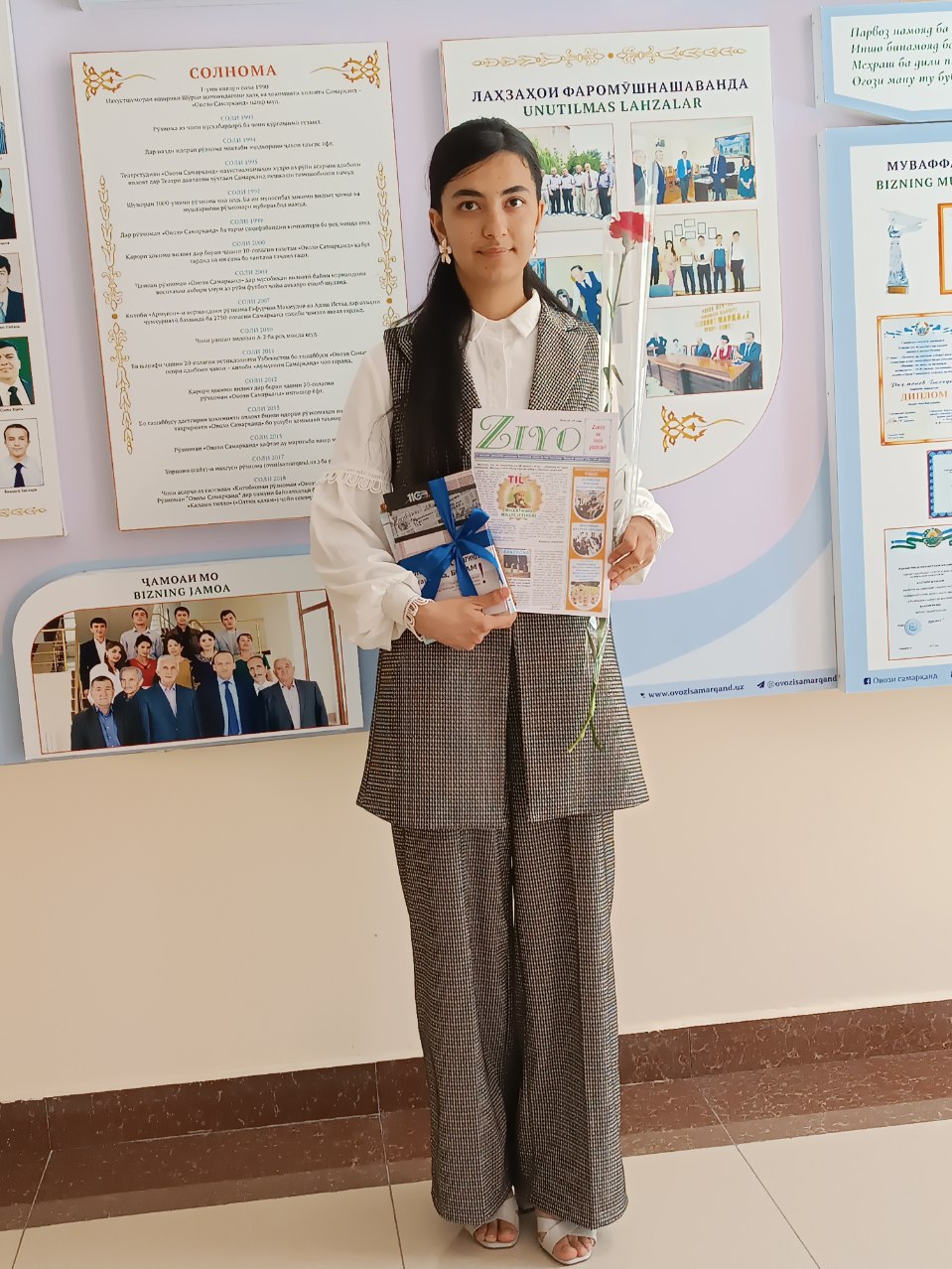
Young Central Asian woman picking dandelions in a field. Some trees in a distance and she's got a pink cape and headscarf and a long sleeved top with black dots on a white background and a blue skirt.
Makhfiratkhon Abdurakhmonova

The Importance of Early Childhood Education

Annotation: Early childhood education plays a critical role in the development of young children. Research has shown that high-quality early childhood education programs can improve academic achievement, social skills, and emotional well-being. Children who participate in such programs are more likely to graduate from high school, attend college, and have successful careers. Additionally, early childhood education is essential for closing the achievement gap between disadvantaged and advantaged children. This article discusses the importance of early childhood education and highlights the benefits it provides for children, families, and society as a whole. It also explores some of the challenges facing early childhood education and offers recommendations for improving access to high-quality programs.

Key words:early childhood, education, development, learning, brain development, socialization, cognitive skills, emotional intelligence, school readiness, lifelong success.

Early childhood education (ECE) is a field of study that focuses on the development of children from birth to age eight, which includes the preschool and kindergarten years. It is widely recognized as an essential component of human development, with significant implications for a child’s future academic and social success. The importance of ECE is particularly significant because it lays the foundation for children’s later life, providing them with the necessary skills and knowledge to succeed in school and beyond.

Research has shown that children who receive quality ECE are more likely to have better cognitive abilities, higher academic achievement, fewer behavioral problems, and better overall health outcomes. In fact, studies have found that children who attend high-quality preschool programs are less likely to be held back in school or require special education services later on. They are also more likely to graduate from high school and pursue post-secondary education.

Early childhood is a critical period for brain development. During this time, the brain is rapidly developing new neural connections at an astonishing rate. It is estimated that by age three, a child’s brain has reached 80% of its adult size, making this a crucial period for learning and development. Research has found that early experiences shape the structure and function of the brain, laying the foundation for lifelong learning and behavior.

The quality of ECE programs plays a crucial role in shaping a child’s developmental outcomes. High-quality programs provide children with opportunities to engage in play-based learning activities that promote their social-emotional development, language skills, cognitive abilities, and motor skills. Play-based learning allows children to explore their environment through hands-on experiences, fostering their creativity and imagination.

Moreover, high-quality ECE programs provide children with a safe and nurturing environment where they can develop positive relationships with adults and peers. These relationships serve as a foundation for future social interactions and help build resilience in young children.

Despite the importance of ECE for child development, access to quality programs remains a challenge for many families. Many low-income families face financial barriers to accessing high-quality ECE programs, while others struggle with finding a program that meets their needs or is located in their community. This has led to significant disparities in ECE access and quality, with children from low-income families being less likely to attend high-quality programs and more likely to experience negative developmental outcomes.

The COVID-19 pandemic has further highlighted these disparities, as many families have faced disruptions in their ECE services due to closures and reduced capacity of childcare centers. The pandemic has also underscored the importance of strong partnerships between families and early childhood educators, as parents have had to take on a more significant role in supporting their child’s learning at home.

In conclusion, early childhood education is a critical component of human development that provides children with the foundation for future success. Research has shown that high-quality ECE programs can have significant positive impacts on children’s academic, social-emotional, and health outcomes. However, access to quality programs remains a challenge for many families, particularly those from low-income backgrounds. As we navigate the challenges of the COVID-19 pandemic, it is essential to prioritize investments in ECE programs that promote equity and provide all children with the opportunity to thrive.

Early childhood education is a vital component of a child’s development. It includes programs and activities that are designed to support children’s learning and growth from birth until they enter kindergarten. The importance of early childhood education cannot be overstated, as it lays the foundation for a child’s success in school and beyond.

Early childhood education provides children with the opportunity to develop key skills that will serve them throughout their lives. These include social, emotional, cognitive, and physical skills. By providing children with the tools they need to succeed, early childhood education can help reduce achievement gaps between high- and low-income families.

One of the most important aspects of early childhood education is the development of social skills. Children who receive high-quality early childhood education are more likely to develop strong relationships with their peers and adults, which can help them succeed in school and beyond. They learn how to share, take turns, communicate effectively, and resolve conflicts in a positive manner.

Another key benefit of early childhood education is the development of cognitive skills. Children who participate in high-quality educational programs are more likely to develop strong language skills, problem-solving abilities, and critical thinking skills. They also tend to have better memory retention and stronger attention spans.

Physical development is another important aspect of early childhood education. Children who engage in regular physical activity are more likely to develop healthy habits that will last throughout their lives. They also tend to have better coordination and motor skills than those who do not.

Emotional development is also critical during this stage of life. Children who receive nurturing care from adults are more likely to develop a positive sense of self-worth and self-esteem. This can lead to greater academic success later on as well as better mental health outcomes.

Early childhood education has been shown to have significant long-term benefits for children, including higher levels of academic achievement, increased earnings potential later in life, lower rates of criminal behavior, improved health outcomes, and greater social mobility. It is also an important tool for reducing inequality and promoting social justice.

Unfortunately, not all children have access to high-quality early childhood education programs. Low-income families, in particular, often struggle to find affordable, high-quality programs for their children. This can lead to significant disparities in educational outcomes later in life.

To address this issue, many policymakers and educators are calling for increased investment in early childhood education programs. This includes expanding access to high-quality childcare and preschool programs, as well as providing additional resources for parents and caregivers to support their children’s learning at home.

In conclusion, early childhood education is a critical component of a child’s development. By providing children with the tools they need to succeed in school and beyond, it can help reduce achievement gaps and promote social justice. It is essential that we invest in high-quality early childhood education programs to ensure that all children have the opportunity to reach their full potential.

In conclusion, early childhood education plays a critical role in the development of children. It lays the foundation for their future academic, social, and emotional success. Children who attend quality early childhood programs are more likely to succeed in school and have better outcomes later in life. Research has shown that investing in early childhood education yields significant returns on investment, both economically and socially.

Parents, caregivers, educators, policymakers, and society at large must recognize the importance of early childhood education and invest in it accordingly. This includes providing high-quality programs that are accessible to all children regardless of their socioeconomic background. It also means investing in professional development opportunities for early childhood educators so that they can provide the best possible learning experiences for young children.

In addition to traditional early childhood programs such as preschools and child care centers, there are many other ways to support early learning. Parents can read to their children and engage them in conversation from a young age. Community organizations can offer free or low-cost programs that promote early literacy skills or provide access to high-quality educational resources.

The benefits of investing in early childhood education extend beyond the individual child and family; they also have positive impacts on society as a whole. Children who receive high-quality early childhood education are more likely to become successful adults who contribute positively to their communities.

In conclusion, we cannot afford to overlook the critical role that early childhood education plays in shaping our future generations. By investing in quality programs and supporting parents and caregivers, we can ensure that all children have access to the tools they need to succeed in school and beyond.

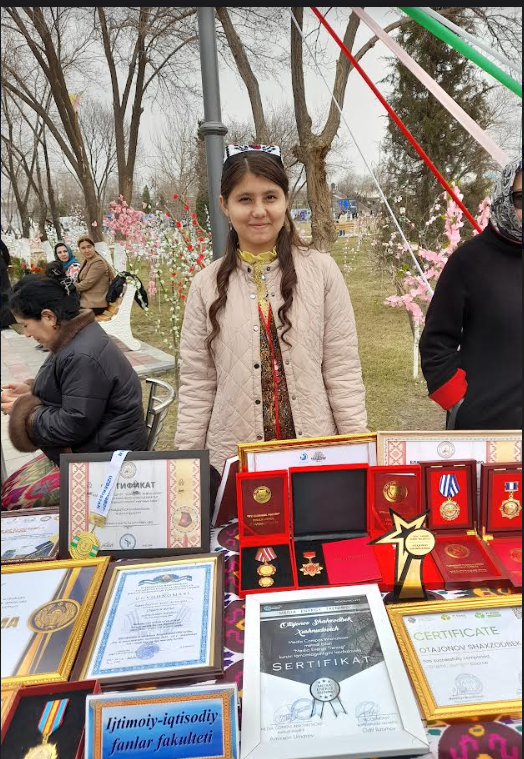
Makhfiratkhon Abdurakhmonova, born in 2004 in Uzbekistan, is a remarkable individual with an impressive list of achievements. She has been an International teacher of English for four years and holds various language certifications, including CEFR (UZB)-C1, International ESOL-B2, SAYLOR ACADEMY-C1, and EFSET-C2.

Makhfiratkhon is also a holder of over 70 international certificates and is a member of approximately 35 international organizations. She has completed more than 65 paid courses from international universities and has earned the prestigious IBM $1200 badge. Notably, she completed Arizona State University’s 150-hour TESOL certificate course.

Her academic excellence has led to acceptance into esteemed universities such as North Texas University, Barry University, and St. Johns University. Makhfiratkhon is the recipient of the University Incentive Scholarship.

Aside from her academic pursuits, Makhfiratkhon is a founder of several projects and has participated in around 50 international conferences. She has translated several books and served as a delegate for Asia World Model National Model Offline Conference. Makhfiratkhon also won an International MUN internship and became an ambassador for SGAP Leaders. She is a fellow member of ERU and a member of ISRES.

Makhfiratkhon’s passion for making a difference extends beyond academia. She serves as a Child Rescue Ambassador for IQRA Foundation and a Child Advisor for Glory Future Foundation. Additionally, she is an ambassador for Greenpeace organization and an ACCA member.

She actively participates in various clubs and organizations such as Global Friends Club, IHRC (International Human Rights Commission), FIAG (Foundation for International Affairs and Governance), IAAC (International Association for Advancement in Computing Education), Gurukshetra Foundation, Borsiba International Organization, and INERY.

Makhfiratkhon is also a Global Youth Ambassador and a volunteer for the Movers Program. She has completed courses in TOEFL iBt from the University of California and Food and Health from Stanford University.

Furthermore, Makhfiratkhon has represented Uzbekistan as a delegate for ‘Best Diplomats’ in Thailand, Malaysia, and the United Arab Emirates. She is a volunteer for ‘Quyosh nuri’ and serves as a coordinator for IHRC in Uzbekistan.

Her passion for peace and social initiatives is evident through her role as a Global Peace Ambassador for Iqra Foundation and as the coordinator of Iqra Foundation in Uzbekistan. She is also an ambassador and representative of IHRC in Uzbekistan.

Makhfiratkhon’s dedication to personal development extends to various other areas. She holds two TEFL certificates, is an Independent Travel Manager for Dreamport Company, a VIP member and representative of Borsiba International Organization, and a Global Youth Ambassador for Global Youth Conference Dubai-2023. She also serves as a Country President of Iqra Foundation Global in Uzbekistan, an Ambassador of 21st DigiSkillz, and a Global Education Ambassador.

With her exceptional achievements, Makhfiratkhon Abdurakhmonova embodies the true spirit of ambition, determination, and commitment to lifelong learning. Her contributions to education, humanitarian causes, and global awareness are commendable, making her an inspiration to many aspiring individuals around the world.

Poetry from Sabina Rasulova

SPACE – 

Is an event that is placed in spirit. 

The border of limitation is just

Absence.

Daydream – 

That slapped by truth,

What is the scarcity of life, 

As inconvenient? 

The tear

is only a sign of my innocent,

Hey stone, 

please exchange to my heart!

Poetry from Duane Vorhees

we marble lunatics love poets


we

are organized dust     ego constructed from cosmic mix     massproduced but with divergent faces     our destinies the crossings of expectation habit constitution accident habit    sculptors and poets waste their available dictionaries, unless resupplied by quarrymen and etymologists their arts would die on touch and tongue

marble

no bowel no brain no brawn no breath     condemned to be free, slave stone accomplice of master sculptor     mutated by love by language by law by belief its appearance mirrors its butcher’s thought     but it holds its is its was its will be     the sculpture never forgives the chisel

lunatics

wanting the strength and beauty of youth we moon the sun     our fears defend the fortress while our foes search for our sally port     in dream we become vicious trees and randomic machines and thus think we are free from matter’s fetters     the earth is my floorboard the sun my incandescent bulb     rains and rains (repetitions of repetitions) massage a hollow in the rock

love

an infinite latitude looking for a latitude to fix its place     each lover an assemblage of unlike entities, each an infinite diversity     an eventual child of memory doing that old mortar-and-pestle     our tears were blushes once     the wool outvalues the sheep, the horn its rhino

poets

try to keep secret the genius of their creation by gloving fingers and genitals but hints always reveal their command     juggling invisible maracas in nets of intimate timpani      imagination corrals disorder     complexity camouflages simplicity


THIS IS HOW . IT ALL BEGINS


Mother Sky Aphrodite

slides into her nightie

(Silk. Black. Strobe-filled sequins.)

and glides like Ponds into bed.


Papa Earth rolls over once,

hugs her, humps her, then grunts,

groans, snores: sprawls like lead.


From their bedclothes crawls a Moon-faced

offspring, squalling till the dawn,


when a newer, brighter son

spits up in his spoon.


A POEM WITH A TITLENEAR THE MIDDLE


felt hammer


         a stammer

/a sermon


honey in an

             iron jar


  a temple/

a jungle


(:Marriage is:)


philosophy

            and football


KAMASUTRA

How do I love thee? Let me count the ways….

--Elizabeth Barrett Browning


11. You are the axe in the well. It shines then rusts.

15. Because there is a clearing in the woods. Winter sun is iced beer. The short noon lengthens its shadow.

17. By rotating ringmaster, acrobat, lion tamer, and clown. Entertaining the performers keeps the circus alive.

23. We are like a hinged door that swings wildly.

25. By being the wind coaxing the wallflower.

26. Because our tantric nirvanic altar sacrifices the doves and the lambs, the flour and the wine.

28. By eating as much trout as we can while avoiding the hooks.

34. You are like the hand of the tongue, signing in diverse dialects. No tongueless poet can tell the honey from the vinegar.

39. Because, first, each of us must talk to the other’s eye and make our halos sparkle. The organ must fit the occupation.

42. Because pleasure’s foundation must hold the skyscraper’s weight.

46. Because every successful love merchant barters ego for empathy: To exalt the narcissist, the narcissist must appease the other narcissist.

48. Like the crack that makes the kaleidoscope.

50. Because solids grow hollow, and tall beauties shrink to a willow branch but swell again when roots are watered. Fingers harvest the garden’s onions, the parsley patch.

53. By being an interpreter of hints into commands. Genitals never blush, never lie.

55. Just as the nomad, mapping the way from one Alone to another, discovers new silk roads.

57. By having a limb that blooms and buds and sometimes becomes a club.

59. You are the careful steward, partitioning the jewels, the perfume, the spice, and the lace from the placenta and the excrement.

61. By allowing the passion to run free while confining the caution.

63. Because desire is the part of us that touches the parts of others.

66. Through the realization that we fell in love with the other’s image of our possibilities. So, be your Mahdi! Establish an infinity in every instant.

69. Like our instruments, we are all we have for reaching out.

72. Through incessant practice. Even the bunglers of love can learn to be jugglers.

75. Because sex completes a bachelor’s halfness. Sex is the prophet of progeny.

77. Your Monaco arms seek to engage my vast Russia passions.

80. Through awareness of eternity’s sting. Stars swarm around the hive of our moon but remain balanced: We can release ourselves from our body of death in the knowledge that we carry our own prisons and paroles with us.

82. By not becoming so old as to expect passion or so young as to seek respect.

97. I love thee upon greeting.

98. And at leaving.


PILGRIM


At Lourdes you chose to laugh

at my perfect body.

You mocked me on my knees,

scoffed my alabaster,

scorned my lisp and my limp,

called my cactus lily.

Demanded that I show

sure proof of my disease.

How could you not have seen

the cancers on my skin?

The flags of leprosy?

Poetry from J.J. Campbell

Middle aged white guy with a beard, blonde hair, and reading glasses wearing a big orange tee shirt. He's in a room in front of a wall full of posters and a nightstand with cologne bottles and a rose.
J.J. Campbell
consumed with death
 

they say i talk about

death too much


that all this doom is

not good for my soul


that makes me laugh


my life has been

consumed with

death since i was

four years old


imagine understanding

the concept fully before

ever going to kindergarten


don't get me wrong


i love love


love women, especially

the ones that love me


i would do anything to be

consumed by that but i am

not a lucky soul


i know my number will be

pulled soon enough


i don't have the money to live

like tomorrow doesn't exist


if that changes, oh boy


i might finally know what life

is like living by the seat of

your pants
----------------------------------------------------------------
cigarettes and cheap booze
 

fell asleep last night to

nina simone singing in

my ear


calling me a white devil

and making me laugh


under the piano in some

bar in paris


cigarettes and cheap

booze in the air


longing for the days

twenty years before

i was born


only for the music

though


i have no use for the

caveman thoughts in

humans


give me some chaos

of jazz and my animal

feels the only comfort

it finds possible
-------------------------------------------------------------
in early march
 

three dead after a tornado

hits indian lake in early

march


imagine that


a bunch of idiots that

don't believe in climate

change get hit by a

massive tornado, but

not in the summer


my empathy is getting

harder to find
--------------------------------------------------------------
across from the bathroom
 

sitting across from

the bathroom in the

waiting room here

at the hospital


if i was a junkie

or if i was in rehab

for being one


i can imagine this

could be quite the

test


for me, i'm just

hoping i don't

have the need

to take a shit


the waiting room

is getting crowded
-------------------------------------------------------------
for a rainy night
 

the old songs of leonard cohen certainly

set the mood for a rainy night


she had the longest legs you had ever

seen on a woman


fishnets, she must have read the poems


she would dangle her foot up against

my knee, hitting it playfully from

time to time


i whispered in her ear, as seductively as i could,

that if she kept this up, she was going to get

in trouble


right then, her husband called her name

from the kitchen


i laughed


she came back and handed me a glass of scotch,

whispered in my ear that she wasn't wearing

any panties


i licked my lips and took a sip, playfully placed

my hand on her thigh and started to slowly

investigate


she was telling the truth


i put that finger in my mouth and told her

she tasted like the morning dew


we slipped out into another room

and started to kiss


her husband found us right before all

the good shit started to happen


he asked me to leave before

he found the shotgun


i took the scotch with me


J.J. Campbell (1976 - ?) is old enough to know better. He's been widely published over the years, most recently at Black Coffee Review, The Asylum Floor, Horror Sleaze Trash, The Rye Whiskey Review and The Beatnik Cowboy. You can find him most days on his mildly entertaining blog, evil delights. (https://evildelights.blogspot.com)

Poetry from Don Bormon

Young South Asian teen with short brown hair, brown eyes, and a white collared shirt with a school emblem on the breast.
Don Bormon

Nature's Sound

In the hush of dawn, the world awakes,
To the gentle sounds that nature makes.
A chorus of birds, in the canopy sings,
As the whispering wind, its message brings.
 
The rustle of leaves, in the ancient trees,
A soft, subtle hum, carried on the breeze.
The babble of brooks, over pebbles and stones,
In nature's orchestra, each has its tones.
 
The pitter-patter of rain, on the forest floor,
A rhythm, a beat, a natural encore.
The buzz of the bees, as they dance in the air,
A melody of life, without a single care.

Don  Bormon is a student of grade nine in Harimohan Government High School, Chapainawabganj, Bangladesh.