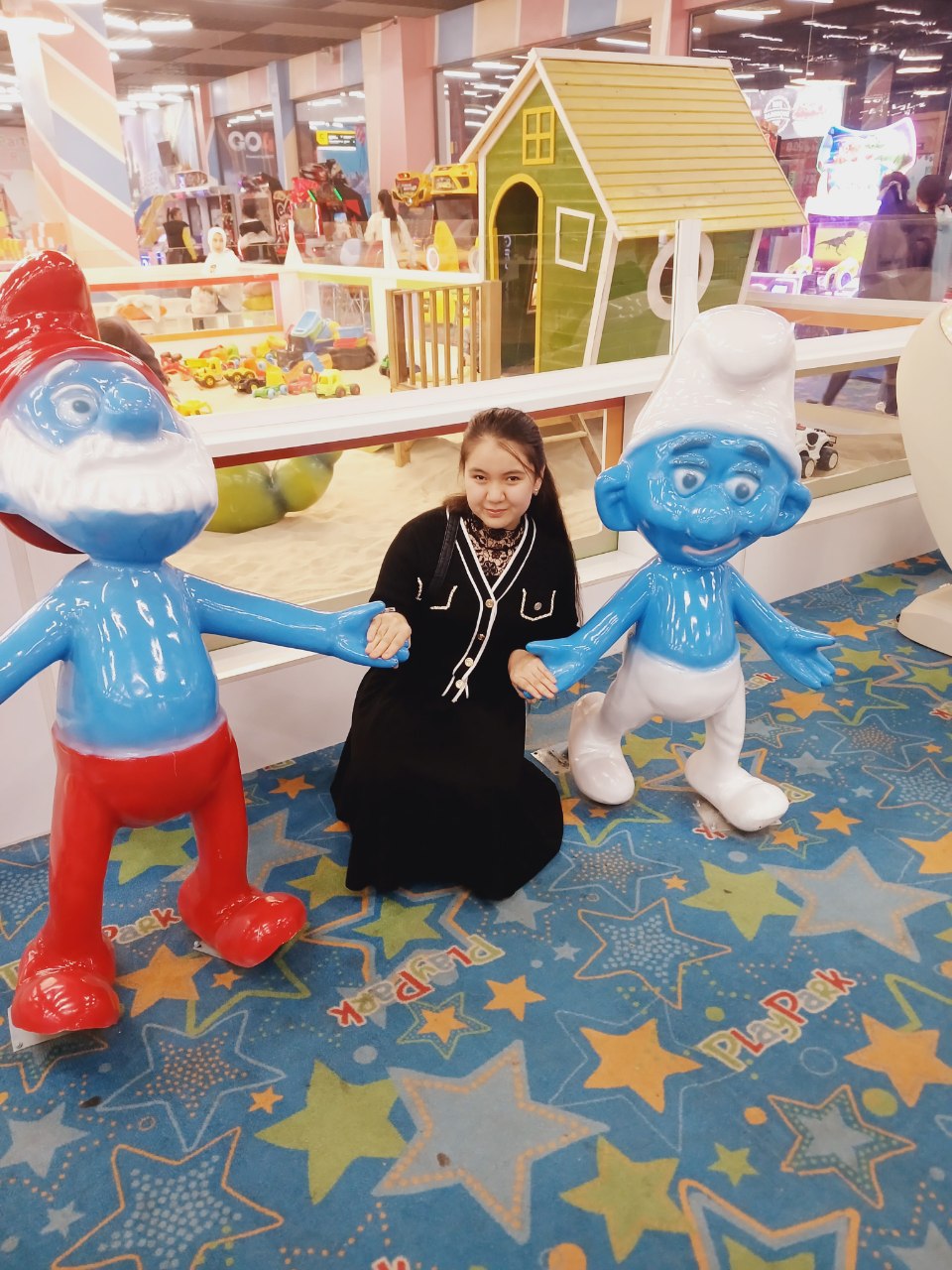
Hello, my name is Muslima, and I am from the beautiful and unique Uzbekistan. For those who have not heard about Uzbekistan, I will tell you briefly:
The Republic of Uzbekistan gained independence as a result of the collapse of the USSR in 1991, but despite this, Uzbekistan is a wonderful country with its ancient history, traditions, and world-famous scientists, but my story today is not about that. Today I want to tell you about the sad fate of the sea, which is located in my country.
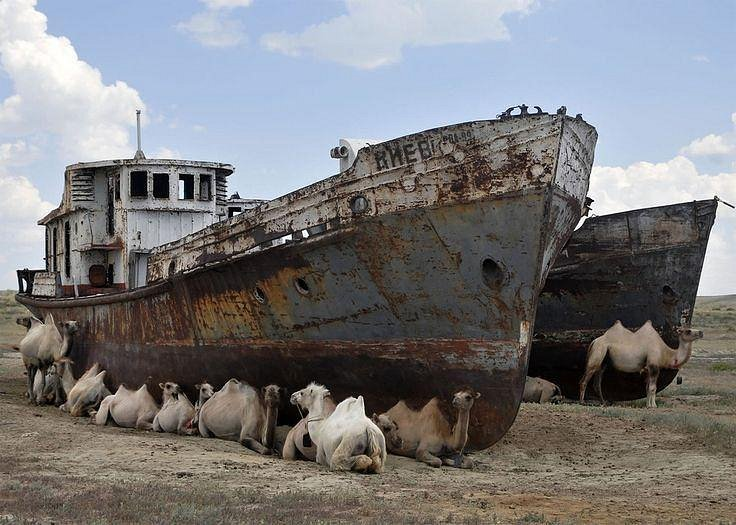
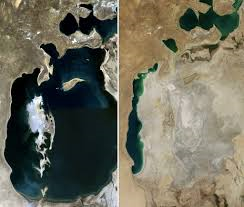
Once upon a time, there was a sea whose water was blue, transparent, wavy, and rich in fish. It was a source of life for many plants and animals. But as a result of the irresponsibility and carelessness of people, the water in it dried up, and only a third remained. The name of this unfortunate sea is the Aral Sea.
In the last century, the Soviet state, intending to turn my country into a large cotton plantation, inefficiently used natural resources, including water. As a result, the volume of water entering the Aral Sea decreased, and since the 1960s, it has begun to dry up. As a result of this ecological tragedy, many fish, animal, and plant worlds were destroyed. The salt that appeared on the site of the dried-up sea is carried away by the wind, causing damage to the environment and the atmosphere. In recent years, respiratory diseases have increased among the population (I think this is the reason for my allergic rhinitis). These salts melt even the snow on the peaks of the Pamirs and Tien Shan and destroy the country’s climate.
Today, the preservation of the Aral Sea has risen to the level of state policy. Attracting the attention of many international organizations, several foundations have been created, but no matter how difficult it may be, we must admit the truth: it is impossible to return the Aral Sea to its former state. Nevertheless, our state and international organizations are doing a number of things to reduce the damage from this environmental disaster. To be more specific, saxauls are planted in the dry part of the sea. I will explain why it is the Saxauls.
Firstly, saxaul is resistant to drought (I think everyone understood that). Saxaul (English Haloxylon) is a plant that, if it grows large, will retain 90% of the sand and will multiply by itself. In addition, it softens the ecosystem and provides food to many animals. In other words, there is no analogue of this type of saxaulization in the world. In addition to the saxaul, other drought-resistant trees are planted. This is the beginning of the second life of the Aral Sea, but this time not as a “sea,” but as a “forest.”
What I want to say to my peers who read my story is: Always be ready to answer for the result of each decision made and draw the right conclusions from the mistakes made in history.
What is True Friendship?

Annotation: Friendship is a feeling that adorns human life, giving tranquility and peace of mind. Finding a true friend starts with becoming close with them, earning their respect and trust. For trust is nurtured by the peace of the heart and the purity of the soul.

Keywords: Interest, Support, Selflessness, Honesty, Respect, Motivation.

True friendship is the embodiment of a person who stands by you in any situation with their whole heart and wholehearted sincerity. A compassionate soul who cares for you without expecting anything in return, who doesn't demand anything from you. Throughout life, a person experiences various situations: good and bad, problematic, joyful, and a host of others. A person who stands by you during those moments, supports you without expecting anything in return, is a true friend.

Friendship is a tree where its seeds are loyalty, its branches are hope, and its leaves are bliss. Friendship can be described with the following characteristics: interest, trust, selflessness, respect, support, and honesty.

Interest: A true friend is not indifferent to what is happening in your life; they are with you during your good and bad times, showing interest in your work, your mood, and your overall well-being.

Trust: Trust plays an essential role in any relationship. When there is mutual trust in a relationship, people feel true friendship. If someone you trust betrays your secret by telling someone else, it damages the friendship.

Selflessness: Be genuine in your relationship without expecting anything from the person beside you. Some people bring comfort to your soul with their conversations. Not everyone turns out to be as they seem. True friends are those who stand by you during difficult times, not leaving you alone.

Respect: This is an essential element in any relationship between people. When there is respect, the relationship becomes genuine. A person who respects themselves will also respect others. Respect strengthens the foundation of friendship, inspiring envy in groups and collectives.

Support: This involves constantly seeing a person's work, achievements, or shortcomings, guiding them in the right direction, supporting them, and motivating them. A true friend is one who lifts a person's spirits, inspires new hope and trust, and gives good advice.

Honesty: It is characterized by a person accepting another's personality without any additions, speaking the truth in various situations, and expressing genuine concern for the person, even if the truth is harsh.

In conclusion, friendship is a bond built on love, sincerity, simplicity, and truthfulness. The foundation of this bond is built on trust, its bricks are made of love, and its roof is earned through respect. May every person experience such a sincere, true feeling in their lives.

Xadichaxon Yuldasheva was born on January 8, 1993, in Tashkent, Uzbekistan. She has a deep interest in literature and art, particularly enjoying reading ghazals and other forms of literary works. During her school and lyceum years, she actively participated in competitions and contests, achieving notable success in ghazal recitation and poetry composition.
Save nature!

As much as the universe is bright,
Our heart will be bright.
If our house and street are clean,
Our hearts will also be clean.
We humans leave garbage,
We damage the whole world,
Without planting trees and flowers,
We cut down without cruelty...

 "No, no..."
This is not a cruel world,
These are cruel people...

Everyone needs love,
Nature and flowers,
To grow and live
Let's protect it for our children,
Let's protect it for our future,
Let's protect the green nature...

2


Peace is needed!

Oh my friends in the world,
Give me your hand.
I am against knocking today
Give peace to my dear path.
We are united on the good path,
May peace be in our hearts,
This is our clear sky.

May peace shine forever,
We need love We need happiness
The only feeling of friendship for us.

Oh my friends from afar,
It is the dream of the universe to share goodness.
The anger of the earth will burst on the bad day,
The one who suffers, is swallowed by the earth.
If you love the earth, it will live.

If it gets angry, it will sleep in the dark.
We need peace, we need goodness.
Let us rest peacefully at night,
Poets of the world we meet today,
Let us sing a song of goodness.
We need peace
We need happiness!

Heart flowers

  The more beautiful the world is,
  The heart will be so flowery.
  In the soil where the flowers grow,
  Love always expresses.

  Love is the decoration of the heart,
  Love is the decoration of the world,
  Nature takes away color,
  The flowers are beautiful from the light.

  When love disappears from the heart,
  It looks like a drought...
  Hearts without love are like
  To a world mired in poverty.

  Love makes flowers grow,
  Fill the heart with happiness,
  The smell of childhood remains,
  There will be rejuvenation in the world.


WIO Global Women Award Academy ®️
In view of social media survey and the expert panel recommendations, The Governing Body of Warsi International Organization & WIO Global Women’s Award Academy do hereby confer this WIO GLOBAL WOMEN AWARD 2023 to Ms. Munavvar Boltayeva, Renowned Youth Activist, Educationist, Influencer, Human Rights Activist and Arts & Cultural Promoter of Uzbekistan
Award Title: Global Iconic Women, Uzbekistan 🇺🇿
WHAT I AM TO YOU

Tell me, My Love, what I am to you
Come to me without fear of any penance
Take hold of my willing hand again as we continue
down life's rocky roads or sandy beaches
You were never meant to walk either without me
Nights were meant to be spent together
and together we will find our somewhere
I've waited so long to feel you once again
The thousands of miles you've traveled
to find me through many restless nights
tells me without a doubt what I am to you


THE DESTINATION THAT BARES MY NAME

You, the one who consumes all the love within me
The only star that shimmers for me in the night
You wait for me like a rain filled cloud coming
to drench my being with the love within you
You know the destination that bares my name
and you await your bride in the coming season
The threads of our hearts entwine and strengthen
the once fragile love that is now set in stone

You at one end and I at the other... waiting... wanting

Our first rebirth awaits us and many more will follow
For the one who carries the other half of my heart
found the sound of the one that it beats for

It now holds both of our names, carved deeply within it...


THE MOONLIGHT IN MY LIFE

You are the the moonlight in my life
that still leads the way to our happiness
You steal every passionate feeling within me
like the hummingbird that draws the sweet
nectar from the depth of the honeysuckle
The heat of love we both have for each other
soaks my skin like a misty layer of morning dew
Whispers between us are sweeter than any love poem
and the feel of your hand on my arm still thrills me
When the dawn comes and I feel your gaze upon me
It is the way you still look in my sleepy eyes
that will always make life worth living.


   Meet Poet, Writer, author and Human Rights Advocate, Kristy Raines, born in Oakland, California, USA.

   Before becoming a poet and writer, Kristy worked as a Legal Assistance Secretary for the Naval Legal Service Office at The Naval Reserve Readiness Command in San Francisco, California. She then later retired from the medical field as a Medical Technician and Office Manager where she worked with and assisted many physicians from different countries and specialties.

   Kristy has several books not yet published. One book of epistolary poems is waiting to launch with a prominent poet from India, Dr. Prasanna Kumar Dalai,  called, "I Cross my Heart from East to West". She also has two fantasy books of her own called, "Rings, Things and Butterfly Wings" and "Princess and The Lion", and also, her autobiography called, “My Very Anomalous Life” which she is working on.  Kristy  has received many literary awards for her unique style and passionate verses of poetry and short stories along with many humanitarian awards for helping others globally.  Kristy enjoys being a free lance journalist.
My village

When the mind wants to see
The green world, I go to my village
When you think about the game you
Remember that green nature
Means the smell of the soil
The green, the farmer’s dream
The mind in the unconscious race of
There is laughter, as many plants and trees
As I can bear, take this mine one by one.


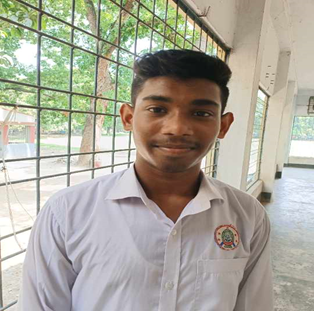
Md. Easa Hossain (subas) is a student of grade nine in Harimohan Government High School, Chapainawabganj, Bangladesh.
A Tuesday Afternoon in the Fall

I first met the boy who was to become my BFF during grade school shortly after my eighth birthday. Having discovered each other in the third grade class we both attended at the small school house a few blocks away, we developed an instant affection. We discovered, as we walked home from class that first day -- a Tuesday afternoon in the fall -- that we lived just four houses apart. I had only recently moved to the neighborhood and knew no other children.

Following the habits of the day, we become fast friends and almost inseparable. We "stayed all night" at one another's homes, accompanied the other's family on various excursions, made snow forts in winter and practically lived at the other's residence.

I was a slight lad and Murray fairly towered over me. Also, he was overweight, which only invited the ridicule and scorn of the other children on the block and in school, almost none of whom could stand him. Which made his friendship with me all the more precious to him.

"Why are you hanging around MacRae?" demanded one of my classmates, having spied Murray and me at recess.

"He's a pecker," opined the first boy's companion. "He thinks he knows everything."

Indeed, even in class, the third grade teacher confided aloud that Murray was a "know-it-all." This opinion was greeted with the snickers and the bobbing heads of the other children. Like water off a duck's back, Murray let these recriminations fall away.

ii

"Sweeney," Murray said one day early in our friendship, "do you want to stay all night this Friday?" I agreed that I did. I had stayed over several times already and I had naturally met Murray's family -- an older brother and sister and his father and step-mother. And in his stepmother lied the rub.

Kay interrogated me at length about all variety of things, most pointedly about my religious affiliations. She was given to infrequent but rather zealous flights of Roman Catholicism. Murray at no time seemed to be guided in his behavior by religious strictures, although on occasion he would volunteer that "Jesus is the answer!" I was never certain if the sentiment was heartfelt, or if he was taking a jab at Kay.

One time I came back with, "But, what is the question?" At that time no one in my family attended a regular service, so Kay took me in hand to proselytize. She insisted that Murray and I burrow under the covers of her bed, there to  recite prayer after prayer. She was alarmed at my unfamiliarity with them. When Murray made a facetious quip about Kay's "holy-roller" attitude, she excused me to go upstairs and wait for my friend. It wasn't until after he returned fifteen minutes later that I discovered she had beaten him viciously with a leather belt.

Immodestly, Murray pulled up his shirt and lowered his pants to show the angry red welts on his backside and flanks.

"Why'd she do that?" I asked incredulously.

"Because I laughed at her religion," he explained, tenderly feeling the abrasions.

"So what? I laughed too," I pointed out.

Murray shook his head. "You're lucky she didn't lay into you, too," he observed.

"If she had," I said confidently, "My mom would've murdered her."

We spent the rest of the evening playing with Murray's toys, preoccupied with the stuff that interests eight-year-olds. Murray seemed to have put the episode behind him, but it stuck with me for a long time.

Sometimes I would talk with Murray on the telephone and we would be interrupted by an angry Kay, who would violently knock the receiver from my friend's hand for any of a hundred reasons, or for no apparent reason at all. One time, she chipped his tooth, he told me, showing me the tooth in question the next day at recess.

Perhaps it's appropriate to mention at this point in the narrative that while my parents spanked me -- but only when I really had it coming -- they were never overly severe in their discipline. There stemmed from them none of the brutality visited upon Murray by his step-mother. The number of times I got slapped I could count on one hand, and I was never beaten. I loved my parents and they returned that love. It was as simple as that. One time, my mom said that, as I got older, other children would tell me how badly they were treated by their parents. "But you'll always be able to look back," she said, "and tell how your parents never mistreated you." Before I met Murray I hadn't a clue what she was talking about, but now I knew.

Such physical—as well as psychological (sometimes even worse)—violence, was especially repugnant to me because my brother and I were raised with great tenderness and affection. I forever felt embraced by my parents’ loving arms and supportive characters. They were always on my side. One time, that same year, when I was in third grade, our teacher hatched a hairbrained scheme: using construction paper, she fashioned a giant “crib” on one of the bulletin boards.

If anyone were deemed to be acting inappropriately, she plumped down their name into the crib, to illustrate how badly they had behaved. For most of the day I remained free of the shame of the hated crib, having done my homework, successfully tied my shoelaces and avoided all the other crimes for which I might be humiliated. But, when she then asked us all what we’d had for breakfast, I admitted I’d had only toast, oatmeal and orange juice, which seemed like a feast at the time. She tsk-tsked and added my name to the crib. In fact, as if to emphasize the permanence of the penalty, she stapled rather than pinned, my name in place. I was crestfallen.

When I got home that night after school, I groused to my mom about the tyranny of “the crib.” In a flash, she was on the phone to old lady Dinwiddie, who had been principal of Burbank School for perhaps 200 years, and Mom raised holy hell. What did that school mean by humiliating her son that way? She must have burned up the telephone line. Next day, the crib was history, but for the telltale pinholes where the paper had once been affixed to the bulletin board.

My teacher took me aside and asked bleakly, “Why do you hate me?” Hurricane Katherine had worked its magic.

But cruel or violent teachers and parents made no sense to me. Were these people monsters, two-headed dragons who preyed on the minds and bodies—the souls—of defenseless children? Well, basically, yeah. Seriously, though, they were just ordinary people, raised in the culture they inherited. They were your store clerks, your policemen, your letter carriers; they were us!

iii

I detected a sort of love/hate relationship between the MacRae children and their stepmother. One day, as I ate breakfast with them in the dining area, and Kay filled the dishwasher with dirty plates, she remarked whimsically that "I'd rather give up one of you kids than this dishwasher."

"Me!" cried Lori, 13.

"Me!" cried Malcolm, 17.

"Me!" chirped Murray gaily, joining the chorus, but with fear and mistrust in his eyes.

I don't know if Kay abused the other children as she did the youngest amongst them, but they were a disaffected bunch.

Late the next summer, while on break between third and fourth grade, Murray's dad invited me to join them on an expedition to the "clubhouse," a vacation cabin on the Illinois River. Of course I said yes. Armed with my miniature suitcase full of underwear, sweaters and army men, I joined the entourage on the 80-mile trip.

One night, as we sat about a camp fire, a mudpuppy crawled up inside my pants leg and about scared me to death. I flung myself to the ground and kicked and screamed and pled for mercy. Finally, the creature escaped, probably as frightened as I had been, and Mrs. MacRae comforted me. I instantly felt better; I'd no idea, after the way she treated Murray, that she was capable of hugs and squeezes and an arm about the shoulders. It seemed so out of character for her.

Over the next year, Murray received regular beatings from Kay. Always with a stiff leather belt. Always on his bare backside or legs. No matter what he and I were doing, she seemed to find some fault with it.

"Does your mother ever whip you, Sweeney?" she asked out of the blue one time, in an eerie voice and with a vapid smile. I shook my head no. "More's the pity," she said in a hollow voice.

The time came, however, when Kay beat a hasty exit. I don't know what the reason was for her sudden departure, but Murray would often cryptically remark that his "folks were having trouble." At any rate, one day, she was just gone. But, the abuse didn't stop; it just transferred from his stepmother to his dad. One time, when we were both eleven and I was on another trip to the "clubhouse," I was tossing rocks from a graveled pier into the river. Murray's father, Doug, saw me pitch one in that was oversized and he took umbrage. And he took it out on his youngest son. Approaching Murray, who wasn't even casting rocks into the water, but was sitting on the ground nearby, Doug hauled off and kicked Murray brutally in the thigh, then muttered darkly at him. Struggling to contain tears, Murray only nodded his head.

When I asked him what that was all about, my friend told me that I had thrown into the river a rock that was too big. "Did he really kick you?" I asked, reluctant to believe what I'd seen.

"Damn right he did!" muttered Murray resentfully, tears of pain and anger rolling down his cheeks.

iv

The next year we entered junior high school and Murray's beatings, a secret between him and me until now, became common knowledge. Still punching and kicking his son only where it wouldn't show in street clothes, Doug's aggression only accelerated. Murray would show up for P.E. and strip to don his gym attire, revealing a garish rainbow of bruises and cuts and welts.

"I'd kill my old man if he did something like that to me," asserted one classmate.

"My old man is 6' 2" and weighs 250 lbs, Murray pointed out.

"Does he own a gun?" asked the first boy. Murray nodded. "Then blow his goddamn head off," the boy suggested.

"Murray seemed to turn this idea over in his mind for a moment, but then apparently decided that a life in juvie hall wasn't for him and he shrugged the suggestion away.

One afternoon, as we walked home from school, Murray turned to me and remarked, "You know, Sweeney, I can't wait till I get big enough to fight back." I glanced at him. "I'll kick his ass," he promised.

As we progressed through school, Murray became something of a cut-up. He smoked, he drank, he experimented with pot, and he got a girl pregnant. He cut classes and got bad grades. How much of this owed to the beatings at the hands of first his stepmother and then his father, I can't fathom.  Were the beatings the cause or the result of his mischief?

I asked him once in our sophomore year: "Just what the hell is your old man's problem?"

"He ain't gettin' any," Murray replied at once.

"Any what?" I asked naively.

Murray rolled his eyes. "Sex, stupid. He's not getting laid."

I nodded. I hadn't thought of that. I had not considered that old people -- Doug was then in his 40s -- thought about or ever acted on sexual impulses.

Lo and behold, one day Doug announced to God and everybody that he was to be wed -- perhaps the third time would indeed be the charm. Carol was a plain-looking woman about Doug's age, but she seemed to have a way about her that Murray found appealing. In no time at all he was calling her "Mom." He confided to me that Doug's new wife reminded him a little of his birth mother, who had died when Murray was just 3 or 4.

v

Murray and I did not see much of one another after about freshman year; he went on to cultivate an array of ne-er-do-wells as friends and I was studying in preparation for college. We checked in once in a great while, however. On the abuse front, he reported several times that things were looking brighter.

After high school, I went to college and Murray moved south and became a coal miner. He wed his high school sweetheart and they had three children over the next five years. I wasn't invited to the wedding. I didn't see him for almost ten years and only then to attend his daughter's nuptials. This was  the child he had sired out of wedlock, while still in high school.

As I walked into their ranch-style home, I saw his other three kids, Lori, ll, Malcolm, 12, and Murray Jr., 14, strewn out across the living room furniture, that familiar McRae gleam of the devil in their eyes. I hadn't seen them since they were infants. The bride, named Coleen, after Murray's birth mother, was just 17 and she was obviously with child.

We stayed up all night at the reception at the Moose Hall, drinking beer. At one point, I asked Murray where Doug and Carol were. He was quiet for a moment, and then he said that they weren't invited. He added that he hadn't spoken to either of them for nearly ten years, which was when he had punched out his father, as he'd promised a decade before. He pounded a meaty fist into his palm for emphasis, then grinned stupidly. One thing Murray had learned from his father: you settled issues with your fists.

When we returned to the MacRae homestead, I made for the bathroom and was alarmed to find 12-year-old Malcolm there, rubbing salve onto a huge, raised welt on his side. He looked up, embarrassed, then apologized and started to leave. I told him to stay where he was. He was the spitting image of his father. In many ways.

Now, this was 1987, and the admonition against going public about child abuse was not nearly so great as it had been 20 years before. I stalked into the living room, where Murray was holding forth, and asked to speak to him alone. Repairing to the back porch, I instantly confronted him about what he'd done to his son.

"I didn't invite you here to criticize the way I raise my kids," he barked loud enough for everyone to hear. He was quite drunk.

"I'm not trying to tell you how to raise your family," I protested.

"Then stay the hell out of what don't concern you," he snarled in a threatening manner.

"Or what?" I challenged him. "Are you going to belt me one? I know you like to beat on people half your size -- like your son. I remember Doug being the same way."

At the mention of his father's name, Murray seemed to collapse in on himself, like melting wax on a flickering candle. Suddenly there were tears in his eyes. He held his head in his hands. I hadn't seen him sob since he'd been a very young boy, when he'd gotten kicked on the bank of the river. "I don't mean to do it," he said with anguish. "When they're bad, it's all I can think of to do..."

I just stared at him, not giving an inch. This was not the reaction I'd expected.

"I'll do better," he promised weakly.

All through school, brutalizing a child was considered “family business.” But, times had changed. When I brought this up and vowed to bring the authorities in the next time such an event occurred, Murray was instantly sobered. It was a hollow threat, because the next day I departed for home, more than an hour away. I never saw my best friend again.

vi

As I crept into old age, I eschewed computers and the like until one day when I purposely stumbled into the 21st Century and bought a PC. I eagerly sought out information on the web about friends from my past. Foremost among them was Murray. I checked his last known whereabouts -- Southern Illinois -- where I had seen him more than thirty years before. We hadn't exchanged a phone call or even a Christmas card, in nearly as long. After the wedding reception, he probably considered me a buzz kill. What I discovered online didn't shock, but it did sadden me. Murray, aged 64, had died some six years before. The cause of death was not mentioned, but I discovered it later. Where in school he had been handsome, proud, smart, had even played on the football team, he was now a bloated, bent, ghost of the person he’d been. He had a wild gray beard and regarded the camera with a toothless grin and a truly mad stare. He was the epitome of Doug, down to the squinty eyes, and I sympathized with the man who had to regard his father's face in the mirror every day when he shaved. Perhaps that explained the beard.

As I silently read Murray's obituary, I considered the cultural change in attitude toward child abuse. Today, school officials are encumbered with reporting any “red flags” of abuse, both physical and psychological. Back in the day, that didn’t help my friends even a little bit. There were no such rules. I had other friends, some student leaders, others outstanding athletes, still others just regular students, who were likewise abused; everybody knew who they were, and their despicable parents, but nothing was ever done. Eventually I contacted a mutual friend of the two of us to get the skinny on his passing.

Requiem:

Murray and his wife were married for more than 40 years and I often wondered if their four children, following my well-intentioned but half-assed intervention many years before, had been larded with the same kind of abuse that was levied on Murray during his childhood. They say that abusive behavior is inheritable, either by means of a bad gene or through faulty acculturation. I never did ever find out. But all four children predeceased their parents, through tragic circumstances: automobile wrecks; hunting accidents; one son was shot to death by his estranged wife who, at the trial, testified that Malcolm had made his family's life a living hell with outbursts of temper and physical abuse.

Like his children, my friend met an untimely and violent end. Faced with

terminal lung cancer—he had begun smoking at only nine—he put a

loaded 10 gauge shotgun under his chin and pulled the trigger. It must have been a lonely end to a benighted existence. It’s perhaps not insignificant, and it certainly wasn't lost on me, that I lost my best friend, as I had found him, on a Tuesday afternoon in the fall.
Happiness

In gardens bright where laughter sings,
And joy blooms on angel wings,
In hearts aglow with radiant light,
Happiness dances through the night.

It whispers in the gentle breeze,
And dances 'neath the rustling trees,
In every smile, in every sigh,
In every tear that's wiped dry.

It's found in friendships, pure and true,
In love that's strong and ever new,
In simple joys that fill each day,
In moments where we find our way.

So let us cherish, hold it tight,
This precious gift, this guiding light,
For happiness, both near and far,
Is the compass to where we are.

Nigora Tursunboyeva was born on February 23, 2009, in Namangan region. Currently, she is a 9th grade student of Ishakhan Ibrat creativity school. Along with writing poems and stories she can speak freely in 4 languages: English, Russian, German and Uzbek.