
Anatomy of the Lemon: Placenta

First, a confession: I have eaten many of them. Countless.
Lemons are one of my favourite childhood foods,
and like oranges, I eat the columella for completion’s sake.
Completion? You ask. Well, it wasn’t OCD.
I looked up the anatomy and learned:
I eat lemons, pulps, placentas, and all.

Anatomical emphasis for frugivores: lemon is 0vary.
Not O like Orange but 0 like 0bl0ng, pr00f that
fruit is font and font is anatomy and anatomy is destiny.

Leafing aside the fallopian twigs, knotwithstanding arborisms…
The peel I rarely eat (they get ground up into cookies or icing or composted)
the 0rgan in the 0vary (((0))),
(note the nested hierarchy
((I could have said ovarian organ))
Aristotelian qua peripatetic)
the 0rgan that seeds explaining stuttering wh00psie daisy-yellow uh-0

Lemon w0mb dissolves tooth enamel, the reversal of Freud’s V. dentata,
contributor to my adult dental erosion.
How could I have not known?
Ironically, lemons dissolved, drip by acidic drop, my baby teeth, too slowly to see.
They fell out before they fell apart.
Witness! The false security from not living the recurring nightmare of teeth falling out.
Watch! The geological parallels of sleepily grinding Alps into Appalachians,
revealing sedimentary mineral layers and geode cavities.
As always, childhood is one step faster than fate,
	(lemon-eating kids getting away with it)
adulthood is always one more step further into it,
	(we live with the consequences of eating delightful acids)
and both blindfolds of age
 are both sides of the same 0blivi0us unseeing desire for lemons.

For me, the lengths of lifetimes were measured in teeth.
The hourglass that flipped from one stage to the other
was a yellow 0.


Amoeba is an Astronomer

under whose microscopes we sleep in stabbing light
-Marc di Saverio (2020). Crito Di Volta, 31.

Amoeba has spent hours measuring
the distance between illuminator and aperture.
Pseudopods akimbo, trying different contractile vacuoles
as lenses, the protoplasm imagines formulae.

Amoeba has to explain gravity.
Gravity makes no sense to a creature with no up, down, or direction.
But there is a “below” now, unlike the tumult of pond scum.
The illuminator proves there is such thing as “direction”
and beyond that, Amoeba cannot see.
The between-space between slides, though,
has different textures of dimensionality than pond scum.
There are limits where the light of the illuminator
begins to glare against two transparent boundaries.

Amoeba, and the rest of them, let the light shine through.
Their bodily images become artworks on the upper slide.
Images of themselves pass through the glass transparency.
Amoeba decides that the slide sky has constellations
describing life on the slides. The life can organize themselves,
even organize each other, and create narratives out of their images.
Amoeba is the opposite of an astrologer:
what happens inside the world determines what is written on the sky.

The opposite of illuminator is oculus.
Oculus changes distance, and does so all-of-a-sudden.
Amoeba’s endoplasmic flow and search for prey
are two ways to measure velocity.
Amoeba wishes for parallax.
What is between the slide and the oculus?
Maybe there are two spheres, illuminator and oculus,
nested between them is a crystalline horizon.
Amoeba is an Aristotle.
Amoeba lives for van Leuwenhoek’s cosmology, Galileo’s imagination.


Birds Look at the Time

My spade is the earth
and my hands turn the spade.
Five minutes of sunlight
turn my shadow five minutes east.
Clouds cast shadows.
Castes of birds fly between tree tiers.
My spade turns over,
more dirt turns over,
another brown bird hops near me
and peers into the dirt.

Sap of deadly nightshade on my hands.
I remember not to touch my eyes.
Clouds shade me
but can’t shade me from pollen.
Intermittent sun must change
the colour of my eyes
but I cannot see it.
My spade is on the ground
beside some dirt
and I am not yet done with it.

Every bird has black eyes today
but somehow manage to reflect me.
From where is the black in their eyes reflected?
My eyes are also not mirrors
But I see the birds and they look at me.
My spade is on the ground beside a brown songbird.
The songbird looks at me and does not sing.
Another bird flies over me and sings,
Although it does not look down at me.
If they are waiting for me and my part,
they must be satisfied with me picking up my spade
and turning over more dirt.


Terry Trowbridge's poems have appeared in Synchronized Chaos before. He is grateful to the Ontario Arts Council for his first two writing grants.
Category Archives: CHAOS
Poetry from Alan Catlin
Cows Coming Home with Portrait of the Artist in a Sideview Mirror

“You say you want a revolution”
Adrian Brody on the set of The Pianist
“Both thrilling and disturbing when you see your own son
	can conjure ghosts”
Blown-up Soviet barracks in East berlin used to represent
	Poland in WWII
Striped pajamas on hangars framed against windowlight, Dachau
Office telephone on a desk in Stasi headquarters, former East Berlin
Political prisoners in TV drama, Budapest
Extra on the set of a musical film about Collectivism, Your Rigged Life
“It’s for you” photo of a disconnected line hanging from a telephone pole
In a dream, the sleeping car compartment Jung emerged from
Single flower stuck into the snow on snow covered grave with headstone
	elaborate carving of a young girl holding bouquet of flowers.
Watching the dismantling of a paper mâché statue of Stalin 1989
Toppled, wrecked statues, from heroes row, as junk
Déjà vu all over again
Pretend execution of two teenage boys up against the Berlin Wall
Mother’s warning to daughter after collapse of Communism 1990,
	“Beware, things will get worse.”
Was she right?
Empty picture frame on a bureaucrat’s wall formerly reserved for a
	portrait of Marshall Tito, Belgrade
Marina, a porn actress getting a manicure watched by a fascinated
	young girl
Lighting candles for the dead 40th anniversary of Hungarian Revolution


Scrambled Rice (Stan), Annotated

Small Self-portrait (Prototype for Anne’s vampire?)
Cave Wall Late 20th Century (The Internet of things)
The Lighter Side of War
Demon and Cherubs at Play
“A painter paints to unload himself of feeling and visions”
Said Picasso
Two Hell’s Angels Taking Christ Down from the Cross While
	Drinking Wine in California with a Mule
Ascending Oranges
Narcissus in Heat
Head du Jour (Christ in a crock pot)
Busts (like death masks) (Not tits, busts)
Visitation of the Wisemen (The Nightmare)
Hitler Denies to Six Million Jews the Watermelon of Life
Adam and Eve Riding from Eden on Beasts
Public Dance (Like early David Lynch experimental films)
Guerilla Penetrated by Projectile Clown (see the Lighter Side of War)
Woman with a Wooden Indian
Satyrs Dancing
Dogs fighting at Paris Carnival
Day 1 ( of the Autocracy with out of focus TV screen shot
	of Big Brother)
Rooster Mistakenly Sent in as a Linebacker
“You’re Innocent When You Dream” (after Tom Waits)
Nine Attempts to Paint Hitler as a Baby (“after trying unsuccessfully
	eight times; you get only rats, then the baby”)
Rembrandt Departing by Limo
De Kooning refusing an honorary academic degree said, “I can’t
	see myself as an academic. I think of myself as a song and
	dance man”
Don’t Believe Everything You Read (printed in Bold on a canvas
	titled “Recline Nude.” There is no nude figure)


Mary Woronov

Self-describes as “a rat in the sewer of popular culture”
(she’s) the sweet and sour chicken on our cosmic mine
(An) Exploding Plastic Inevitable
Mary Bland
Eating Raoul
Dancing Mary
Singing Mary
Mary Wonderly
Mary Woronov
Rock ‘n Roll High School
Death Race 2000
Fur Coat in Florida
Life Studies Without Models
First the paintings, then the stories
Scenes from the Class Struggle in Beverly Hills
Secrets of the Chambermaid
Where Sleeping Dogs Lie
Blue and Brittle
Boy Dares Car to Run Over His Girlfriend
Hollywood Hangover
Uneasy Rider
One Night Stands
Red Death
Anxiety, Grief, Depression, Pain
At first, the picnic looked like an after-lunch massacre
Giant black cinders floated from the sky onto California snow
(A) Wake for the Fallen Angels


Hawkes’ Hell’s Angels, The Cannibal

“The night was so black that the red lights from the hatches
	of his tanks would have reflected against the clouds
	and brought death.”
“It was years since the people had stopped talking.”
“The child ran all the faster when the light went out in the
	butcher shop.”
“…jewels of tin cans littered the indefinable yards without
	lawns or bushes.”
“She wondered how the strange wild cannibals on tropical
	islands or on the dark continent, running with white
	bones in their hair, in the shimmering sand, could
	bear, in only their feathers, this terrible sun.”
“Behind them one of the chickens began to scream and a
	speck appeared in the sky.”
“The policeman’s call faded into nonsense.”
“He was in the presence of the white lady of the other world.”
“The dark angel stood in the doorway cutting off the candlelight
	from the other world.”
“How peculiar, the wooden man and fleshless God, they kept
	company.”
“In Winter Death steals through the doorway sending for both
	young and old and plays for them in his court of law.”
“At last, the rats and the monkeys died.”
“Their bodies were strewn over the main grounds, and since
	they froze, they looked life like, tangled together in
	the snow.”
“It was difficult keeping the patients from the heaps of small black
	corpses.”


On Assignment for Joseph Pulitzer, Nellie Bly’s,
	Ten Days in a Madhouse

“I felt a quixotic desire to help them by sympathy and presence.”
“Could I pass a week in the insane ward at Blackwell’s Island?
	(later renamed Welfare Island) I could, I would, I did.”
“How will you get me out?”
“The more sanely I talked and acted the crazier I was thought
	to be.”
“The woman had a hideous nightmare. She had been dreaming
	of me.”
“It is only after one is in trouble that one realizes how little
	sympathy and kindness there are in the world.”
“People on charity should not expect anything and should nit
	complain.”
“The eating was one of the most horrible things.”
“Choking and beating patients”
“It’s a crime to lock people up and freeze them.”
“She would talk into steam heaters or get up on a chair and talk
	out the window.”
“You don’t need to expect any kindness here, for you won’t get it.”
“Promenading with lunatics.”
“How will you get me out?”
“My face was the brightest he had ever seen in a lunatic.”
Photography from Isabel Gomez de Diego

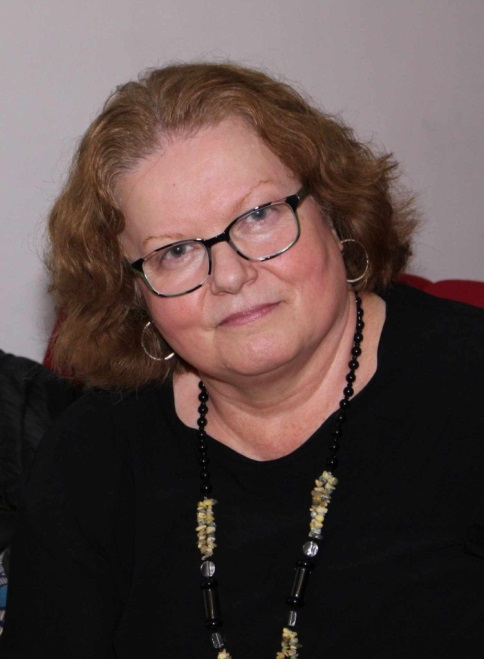
Poetry from Lidia Popa
Shroud

You toiled in that suffering death
to which no one has consented,
it because death is an open wound,
with death in passing death.

And the eternal moment of life is an opal
the apple, the serpent and sin are the original
consented by Adam and Eve to be reborn
like blood that is not made of water and flows.
You embodied an idea in your watch,
the prayers of the man who prayed,
relic of culture and holy sacred religions
they created holograms from a cloud.
Believers worship icons, statues
and clouds with human incarnations,
when fear dominates pure thought
as an artificial myth that has eroded consciousness.

BIOGRAPHY

Lidia Popa was born in Romania in the locality of Piatra Șoimului, in the county of Neamț, on 16th April, 1964. She finished her studies in Piatra Neamț, Romania with a high school diploma and other administrative courses, where she worked until she decided to emigrate to Italy.

She has been living for 23 years and worked in Rome as part of the wave of intellectual emigrants since the fall of the Berlin Wall.
She wrote her first poem at the age of seven. She is a poet, essayist, storyteller, recognized in Italy and in other countries for her literary activities. She collaborates with cultural associations, literary cenacles, literary magazines and paper and online publications of Romanian, Italian and international literature. She writes in Romanian, Italian and also in other languages as an exercise in knowledge.

BOOKS

She has published her poems in six books:
in Italy:
1. " Point different ( to be ) " - ed. Italian and
2." In the den of my thoughts ( Dacia ) " - ed. bilingual Romanian/ Italian Aletti Editore 2016,
3.“ Sky amphora " - ed. bilingual Romanian/ Italian Edizioni Divinafollia 2017,
in Romania:
4. " The soul of words" ed. bilingual Romanian/ Albanian Amanda Edit Verlag 2021,
5." Syntagms with longing for clover " ed. Romanian, Editura Minela 2021.
6." The Voice interior " Lidia Popa and Baki Ymeri ed. bilingual Romanian/Italian, Amanda Edit Verlag 2022.

Her poems featured in more than 50 literary anthologies and literary magazines on line from 2014 to 2023 in Italy, Romania, Spain, Canada, Serbia, Bangladesh, United Kingdom, Liban,USA,etc.
Her poems are translated into Italian, French, English, Spanish, Arabic, German, Bangladesh, Portuguese, Serbian, Urdu, Dari, Tamil, etc.
Her writings are published regularly with some magazines in Romania, Italy and abroad.
She is a promoter of Romanian, Italian and international literature, and is part of the juries of the competitions.
She translates from classical or contemporary authors who strike for the refinement and quality of their verses in the languages: Italian, Romanian, English, Spanish, French, German, stating that "it is just a writing exercise to learn and evolve as a person with love for humanity, for art, poetry and literature ".

SHE IS
*Member of the Italian Federation of Writers (FUIS)
*Honorary member of the International Literary Society Casa Poetica Magia y Plumas Republic of Colombia,
*Member of Hispanomundial Union of Writers (Union Hispanomundial de Escritores) (UHE) and Thousands Minds For Mexico (MMMEX)
*President UHE and MMMEX Romania, August 21, 2021
*She had come power of attorney Vice-president UHE Romania, Mars18, 2021- August 21, 2021
*President UHE and MMMEX Romania, August 21, 2021
*Counselor from Italy for Suryodaya Literary Foundation Odisha India,
*Director from Italy for Alìanza Cultural Universal (ACU) Argentina
*Member Motivational Strips Oman,a member of numerous other literary groups at the level internationally,
*Director of Poetry and Literature World Vision Board of Directors (PLWV) Bangladesh
*Membership of ANGEENA INTERNATIONAL NON PROFIT ORGANISATION of Canada
International Peace Ambassador of The Daily Global Nation International Independent Newspaper from Dhaka Bangladesh - 2023
*Founder literary group Lido dell'anima with LIDO DELL'ANIMA AWARDS
*Founder LIDO DELL'ANIMA Italian magazine
*Founder SILVAE VERBORUM INTERNATIONAL multilingual magazine
*Founder literary currently #homelesspoetry
etc.
Poetry from Sushama Kasbekar
THE COVETED YELLOW TEA SET

Oh the old teacup handle broke today
Quite accidentally I am sad to say
Because it was the family treasure
Only used in small measure

Oh what a  pleasure it had been
As a child to have gazed at the yellow set
From the glass mirror of the cabinet
Nose squashed against the glass with longing eyes

Eyes wide with dreamy sighs
Of using the coveted yellow tea set some day
Which didn't come in my parents’ time
Finally gifted to my daughter many years down the line

Hence, dear friends, before the dust catches it all
Use the beautiful sari which still hangs in the cupboard many years’
Or the red T-shirt which lies untouched
Or soon you’ll  feel shy to wear a colour so bold

Do you hoard waiting for a suitable day?
A dress, a shirt, an event or travel?
Do not tary, dear friend, time is short,
You may never use that old treasured thing you bought

Or visit that favourite place
Or say those loved words
Time swishes past
Like sand in an hour glass doesn’t last!


Sushama Kasbekar
Essay from Jasmina Rahmatullayeva
SOME ISSUES OF CHECKING ADVANCED VERSIONS IN THE INVESTIGATION OF CRIMES CAUSING INTENTIONAL BODILY INJURY
Rahmatullayeva, daughter of Jasmina Abduvahid, 2nd stage student of World Economy and Diplomacy University
ANNOTATION
The article develops proposals based on the use of tactical and methodological tools recommended by the investigation method, as well as on the basis of preliminary information about the reason for
the use of weapons, traces, the identity of the victim and the infliction of bodily injuries and the correct organization of the investigation.
Keyword. Body injuries, the victim, the instrument of the crime, jealousy, alcohol
INTRODUCTION
With the decision of the President of the Republic of Uzbekistan on May 14, 2018 “On measures to radically improve the system of criminal and criminal procedural legislation” PQ 3723[1], the Criminal
and Criminal Procedure of the Republic of Uzbekistan as the main directions and tasks of improving the legislation: unification of norms of criminal legislation; effective and reliable protection of citizens’ rights and freedoms, society and state interests; improvement of the mechanisms of reliable guarantee of the rights and freedoms of the person in the criminal proceedings; it was decided to introduce new forms and procedures of the criminal process.
When carrying out the investigation of the cases of intentional bodily injury to the investigation, the case related to the honor, dignity and other inviolable rights of the person and the crimes with a low social risk. There are more and more cases in which it is necessary to obtain his consent. In the investigation of these crimes, it is appropriate to conduct the case based on the grounds of dispositiveness.
DISCUSSION AND RESULTS
Intentional bodily injury crimes are serious and the investigative method is considered to be one of the most complicated incidents. The application of the criminalistic investigation method in the
investigation of the intentional bodily injury crime is focused on determining the cause of bodily injury to the victim: determining whether the intentional bodily injury occurred as a result of an
attack.
Therefore, in any case, intentional bodily injury should be investigated based on the rules of the criminal investigation method in a suspicious situation. Criminals use various methods and
weapons to commit intentional bodily injury crimes. In most cases, they cause injuries with shooting and cold weapons, various household items (knife, ax, ax), and some hard object (such as iron,
stone).
Methods of intentional bodily injury, motives of criminal action, place, time, consequences of the incident, traces, weapons, all these make up the criminalistic description. Some of its elements are related to each other, stemming from and complementing each other. In particular, elements such as the subject of the crime, the victim, the weapon used, and the crime scene are closely related, and
the traces (consequences) left by each element are reflected in other elements, and the observation and investigation of one depends on it.
When determining the criminalistic description of the crime,
determining the sequence of the above-mentioned cases, the origin of the situations at the scene of the incident, the consequences of one of them leaving certain traces on the other, is the basis for the
success of the initial stage of the investigation. Based on the experience of investigative practice it can be said that the most common crimes of intentional bodily harm are committed in residential buildings, public places, on the streets, where the consequences of the crime, weapons, traces are
not hidden, and the person who committed the crime sometimes does not run away, does not hide.
Such crimes often occur as a result of malice, revenge, jealousy, hooliganism, conflicts between two criminal groups. In these cases, the detection and investigation process of crimes of intentional
bodily injury is not very difficult. Using the tactical and methodical tools recommended by the investigative method and developing versions-images based on the initial information about the weapons, traces, the identity of the victim and the cause of the injury at the scene of the incident, and properly organizing the investigation, i.e. the case it will be possible to reveal and prove it within the appropriate time frame.
In some cases, the crime of intentional bodily injury is committed in a
hidden situation, without witnesses, using the darkness of the night, the absence of a person. Tries to take it with him. Investigation of such crimes is complex from the point of view of proof and causes some difficulties. In the investigation of this type of intentional bodily injury, the investigator must use specialized skills, be able to use the preliminary investigation information correctly, and perform prompt and quality investigative actions that cannot be delayed [2 ].
In the investigation of crimes of intentional bodily harm, it will be possible to obtain preliminary information about the method of its implementation, motives, the weapons used, and the person who committed it. In cases where the identity of the victim is known, it will be possible to create relevant versions-pictures about the criminal, the relationship between them, and the methods of committing the crime. It is possible to find and arrest a person suspected of a crime by obtaining information about the places of intentional bodily injury to the victim of a criminal incident and conducting preliminary investigative actions.
Intentional bodily harm committed in urban settings is often aimed at eliminating traces of crime. If the places where the crime of intentional bodily harm was committed are in different regions, it is
necessary to determine the connection and compatibility of these places. Another description of the crime of intentional bodily harm is the method of its commission. The method of committing intentional bodily harm includes the weapon used, the means, the act, the preparation of the crime in advance and the attempt to remove the traces of the crime.
Intentional bodily injury caused by domestic disputes, jealousy, bullying, under the influence of alcohol and drugs is almost always done without prior preparation.) or another means of injury and
achieves its goal. If intentional bodily harm is done with malicious intent or against the victim’s position, duty, the criminal prepares in advance; determines the place and time. After committing the crime, the criminal tries not to leave footprints and handprints. These cases determine the need to obtain information about the identity of the criminal and among whom to search for him [3].
Efforts to cover up the traces of these crimes sometimes involve masking the injury to make it look like another incident. Depriving the victim of intentional bodily injury, inflicting severe injuries, pushing him from a height, creating the appearance of a mask, etc.
Describing the identity of the victim of intentional bodily injury also helps to make the right clues and find the suspect at the initial
stage of the investigation. When the victims of intentional bodily harm are women, in most cases they are victims of violence, malice or jealousy. The relationship between the criminal and the victim
is related to each other and indicates the reason for the criminal outcome and the content of the intention.
A suspect who has caused bodily harm with intent can be characterized as follows, based on investigative practice. Males between the ages of 18 and 50 who use alcohol or drugs are often
abusive, immoral, disrespectful to the community and women, and have previous convictions. Some of the actions of the criminal who caused the injury – inflicting a lot of injuries on the victim with
extreme lack of mercy, inflicting physical injuries on his close relatives and family members indicate his mental disorder, such cases can be included in typical situations [4 ].
Atypical cases also occur in investigative practice. The criminal is well-versed in the handling of weapons, has mastered the use of shooting or cold weapons in military service or on the basis of
special training, and determines in advance the preparation for the crime and the loss of traces of it after committing it. Such situations creates some complexity at the initial stage of the investigation.
However, according to the law of criminal activity, no crime can leave its consequences and traces, therefore, any crime, including the crime related to intentional bodily harm, has been successfully
investigated, will be exposed.
In conclusion, it should be noted that pre-trial investigation of cases of intentional bodily injury, circumstances that must be determined in the initiation and investigation of crimes, features of the development of investigative methods, the conduct of the case to the court is a complex technology.
Should be recognized as Because he performs a complex, complex and responsible task as part of proceedings before the court. This is a separate special proceeding on intentional bodily injury, the
procedural and organizational-methodical activities related to its specific features are interconnected.
REFERENCES
- Decision PQ 3723 of the President of the Republic of Uzbekistan “On measures to radically improve the system of criminal and criminal-procedural legislation” adopted on May 14, 2018
//http://lex.uz/docs/ 3735818 (national database of information on legislation of the Republic of
Uzbekistan). - Avakyan M.V. Metodika rassledovaniya i podderjaniya gosudarstvennogo obvineniya po delam ob umyshlennom prichinenii tyajkogo vreda zdorovyu: Diss. … doc. Walk science – Kalingrad, 2017. – C. 51.
- Bezruchko E. V. Prestupleniya, posyagyushchie na bezopasnost zdorovya cheloveka: teoretikopravovoe issledovanie: Diss. … doc. Walk science – Rostov-on-Don, 2018. – S.45.
- Bespechnyi O. V. Teoreticheskie i prakticheskie problemy rassledovaniya prespleniy, svyazannyx s
prichineniem tyajkogo vreda zdorovyu: dis. … candy. Walk nauk / O. V. Bespechnyy. – Barnaul, - – P.121.
Poetry from Dr. Jernail S. Anand

LOVE

We love things which look beautiful
Or things which are useful.
And when things lose beauty
Or turn useless,
The love evaporates.

But men and women
When fall in love,
These benchmarks of
Beauty and utility
Turn irrelevant.

Love like hope springs eternal
In human heart
And stays
Even when cheeks lose glow
And winds lose their blow.

Offspring is loved by the living species
But when parents grow old,
Or if some accident
Breaks a child beyond repair,
How long can love be stretched?

Animals are loved only so long
As they give milk.
Or they have enough strength
In their knees to pull the carts,
Before being sold out to the slaughter house

Love of this land has its limitations
Even men and women who love
Sometimes find it a burden
And rush to the courts.
Who carries a relation reduced to a carcass?

Earth is a different type of mother
And God a doting father
Who call to their embrace
Voyagers whose boats were broken
Before they could cry "Eureka".


Dr. Jermail S. Aaand
India