Not Crying Baby

Under the rubble, the collapse of the wall,
Sits a three-year not crying kid,
In the screaming hell,
Like a wild beast from the sky,
Among the layers of exploding roofs.
With the stroke of eyelashes
Blood drops in the eye,
Sliding on the check.
Small hand silently rubbing the eyelid,
Palm red spots for the first time.
Stepmother- war mixes with the dust
Mop of chestnut hair tenderness.
Splinters dug into the snow white feet.
My angel, what are your faults?
Well, at least cry, baby,
I’m no longer able
To look into your innocent eyes.
You are my clean world,
You are more than all!
So you lived

I have died a hundred times!


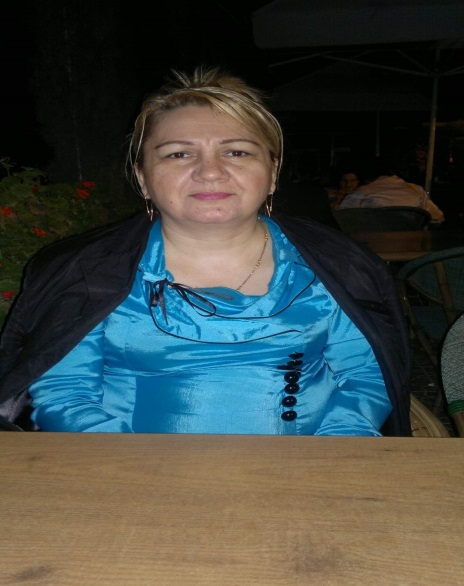
Nigar Nurulla Khalilova is a poet, novelist, translator from Azerbaijan, Baku city, currently living in the Kingdom of Saudi Arabia. She is a member of the Azerbaijan Writers Union. Nigar N. Khalilova graduated from Azerbaijan Medical university, and holds a Ph.D degree. She has been published in books, literary magazines, anthologies and newspapers in Azerbaijan, Russia, Saudi Arabia, and the USA over the years.

Nigar N. Khalilova participated in poetry festivals and was published in international poetry festivals anthologies and in the Austin International Poetry Festival (AIPF), 2016-2017.
This month the theme is Self-Determination, having the space and power and dignity to be able to understand and shape one’s own destiny. We stand with all peoples of the world seeking self-determination.
Raafia Shaheen urges us to see people on their own terms and not just how they are useful to us.
Michael Robinson reviews and finds encouragement from Jacques Fleury’s You Are Enough: The Journey To Accepting Your Authentic Self. The book suggests that Black men worldwide should define themselves on their own rather than simply following social stereotypes.
Shahnoza Ochildiyeva tells the story of a girl who has to leave her Uzbek home due to loss but who returns home having made something of herself.
Zarina Abdulina speaks to the importance of worthwhile work to a person’s self-concept and how teaching fills the role for her. Marjona Shayimova talks about finding the courage and perseverance to achieve her goals.
Nazokat Urinboeva offers up a tribute to Uzbekistan’s strength and cultural heritage, all the way back to Mughal emperor Babur while O’tkir Kochkor enscribes poetic praise for the majesty and history of his Uzbek homeland. Mannonova Shakhnoza outlines scholarly research into the history of the Kagan Khanate in Uzbek history as Zulayho Sultonaliyeva illustrates how her culture and society can adapt for the times in her piece on the legal precedent and need for updating and modernizing Uzbekistan’s constitution.
Behruz Toshtemirov argues for the unique qualities of literature as an art form, inspired by her Uzbek cultural heritage.
Abdunazarova Khushroy gives us a poetic tribute to the heritage and language of Uzbekistan as Feruza Abdullayeva pays tribute to the many Uzbek writers whose work she admires.
Evie Petropoulou showcases an Egyptian celebration of the Greek poet Cavafy, who was known for his sensual and political poems and unconventional personal style.
Alan Catlin rearranges verbal ephemera from famous people to create unique character sketches. Jacques Fleury celebrates the good fun of the Blue Man Group while Noah Berlatsky shares a harsh and iconoclastic thought about Ezra Pound and Daniel De Culla’s poem pokes gentle fun at the wealthy and powerful.
Mark Young presents a fresh set of his signature mix of text and colorful images as Saad Ali showcases ekphrastic work in response to historical paintings, inserting his thoughts into the fabric of history.
Kylian Cubilla Gomez crafts photographic closeups of his dinosaur and tractor toys and other childhood ephemera. Habibova Mahzuna expresses nostalgia for her lost childhood.
Wayne Russell avows his allegiance to travel and adventure while Sayani Mukherjee’s poetry evokes flights of imagination around the globe.
Adam Fieled peers into the close and tempestuous relationship between an artist and a muse. Gaurav Ojha outlines his path from youthful lusts to maturity and spiritual transcendence. Sandip Saha’s pieces explore the search for mystical spirituality amidst daily life.
James Whitehead probes timeless questions about human life, ethics, and suffering. Niginabonu Amirova reflects on our mortality and the cycles of nature as Mykyta Ryzhykh crafts lowercase poems about the tragedies of quick and slower deaths and Mashhura Abduhalilova renders the experience of mental distress, showing how anxiety distorts time and sensations.
Nigar Nurulla Khalilova laments society’s being uncaring to the vulnerable while Iraqi poet Faleeha Hassan takes a quiet moment to mourn family members lost to war.
Bruce Roberts reminds us of the historic coexistence of Jews, Christians, Muslims and other people in the Middle East and laments the current violence in the region.
Bill Tope’s story exposes different levels of corruption in the nonprofit world, how greed can mess with even the best of intentions.
Z.I. Mahmud looks into scholarly literature that explores the tension between Batman’s heroism and his lawbreaking and vigilante violence.
J.J. Campbell seeks to show small kindness in an alienating world. Feruza Muzaffarova highlights the humane sensibility behind O’tkir Hashimov’s novel Between Two Doors. On a personal level, Niginabonu Amirova urges a return to common courtesy, beginning with greetings.
Tuliyeva Sarvinoz speaks to the importance of setting a good example and preparing children for the world. Diyora Tursunboyeva reminds us of the importance of encouraging children’s dreams. Niginabonu Amirova celebrates the joy of sports and athleticism for young people as Rano Babamurodova encourages children to read books and learn.
Tuliyeva Sarvinoz also outlines offerings at Uzbekistan’s vocational schools as Abdunazarova Khushroy reflects on educating herself by learning Arabic and Jumanazarova R. gives honor and respect to a dedicated teacher. Tuliyeva Sarvinoz also pays tribute to another educated and accomplished writer and teacher.
Muslima Murodova Kadyrovna pays tribute to the spiritual and compassionate love of her mother. Zuhra Ruzmetova also honors the care and encouragement and constancy of her mother. Nosirova Gavhar pays tribute to her grandfather who introduced her to books and gardening. Zilola Khamrokulova sends up a poetic love piece for her mother as Nozima Uloguva’s poetry and prose celebrates the sacrificial and dedicated love of many mothers as Dilnoza Eshqulova renders up her intense grief and spiritual angst after losing her mother.
Prasana Kumar Dalai presents the joys, pains, and trepidations of love and Mesfakus Salahin contributes delicate romantic poetry. Duane Vorhees presents various sensual love poems through the metaphors of music, literature and cosmology. Kristy Raines sends up passionate and adoring pleas to her lover to remain close.
However, Taylor Dibbert reminds us that no matter how much work you put into a relationship, it doesn’t always last forever. Perhaps the couple he describes could have heeded Madina Toxirova’s advice on the importance of psychology for young people to understand themselves before marrying. Zafar Nur contributes a poem of lament over a heartbreak as Maurizio Brancaleoni translates poetry from Italian writer Amelia Rosselli on quiet heartbreak and loneliness.
J.D. Nelson’s haiku captures spring moments of transition and in-betweenness as Isabel Gomez de Diego contributes photos of various doors and entry ways. Lynn White highlights the whole worlds going on in what we might consider the background of nature.
Mahbub Alam celebrates nature and love in his Bangladeshi homeland. Abduvohid Holikov presents a description of the cultural and natural beauty of the Denov region of Uzbekistan while Ochildiyeva Dilnoza Abdivokhid celebrates the Surkhandarya region’s cultural and natural history and her family heritage. Abduhoshim Maxamadov celebrates the geographic and biological diversity of Central Asia’s Ferghana Valley. Samadov Aziz Xasanovich encourages technology development in harmony with these natural environments in his paper on measurement techniques for constructing horizontal and inclined wells.
Graciela Noemi Villaverde captures a moment of personal and mental stillness and rest. Lilian Dipasupil Kunimasa finds her psychological rest and inspiration in water: rain and the ocean’s diversity of life. Annie Johnson speaks to calm moments with her love throughout time and seasons of nature.
confess i love you today I hid this love for years. I hid from my father, I hid from you I hid from the world, even from myself. I buried it deep in my heart, But I remember you every day… My mind recognized love this day, At that time I ran to you, My eyes are full of tears, my heart is full of toys, My hands are shaking with excitement, Sometimes red cheeks from embarrassment, My lips whisper your name. Mother, mother, there are thousands, mother, I just can’t put this word out of my mouth, I’ll give it to you if you need it, dear, I always think about you. Mother, my heaven, my priceless state, I love you more than anything, Knowing that my heart is pounding Sorry, I realized this feeling later. Having struggled for nine months, At that time you suffered a thousand pains, Now the most suitable girl for you, I walk around in the gardens of paradise. I will scatter flowers on your path, Kneel down at your feet, kiss your feet, Carrying me to Mecca in my head Drink zam-zam water from your hands. Mother, mother, there are thousands of mothers, I just can’t put this word out of my mouth, I’ll give it to you if you need it, dear, I always think about you.
Hamrokulova Zilola was born 2006.06.26 in the village of Kyzilcha, Nurota district, Navoi region. She studied at the 22nd general secondary school there for 9 years, and now she is a 1st-year student of the NDKTU academic lyceum in the direction of “Foreign Languages”. Zilola’s poem expressing her love for her mother.
Ra’no Babamurodova member of the “Qaqnus” circle of the school “harmonious generation of children”Ra’no Babamurodova is a student of School No. 25 of Gallaorol district, Jizzakh region. The school “children of the perfect generation” is a member of the “Caqnus” circle. Poems were published in international books i.e. (America, Great Britain, Antalogy). At the same time, articles and stories were also published in the Republican newspapers “goodness”, “Bilagan” and the district newspapers “Voice of Gallaorol”.
Vocational school — educational institutions that prepare personnel at the initial professional education stage aimed at social support of 9th grade graduates on the basis of educational programs corresponding to the 3rd level of the international classification. Purpose, content, size of the lesson determined on the basis of lim standards (curriculum, program, textbook and manual). The lesson is conducted in different ways and means, depending on the nature of the academic subject, the content of the material being taught, and as part of the educational system, it provides complete knowledge and creates a foundation for mastering the next knowledge.
What is the work being done in the Vocational School of Shaikhontohur district today? Shaikhontohur District Vocational School mainly covers areas related to the automobile industry, students are trained in diagnosis and repair of car engines, repair and diagnosis of car bodies, maintenance of electrical and electrical equipment and other areas. theoretical and practical knowledge is being given. Also, the boys and girls studying in the dual education direction of the vocational school are also acquiring theoretical knowledge of their professional activities and receiving monthly salaries after doing internships in their assigned areas.
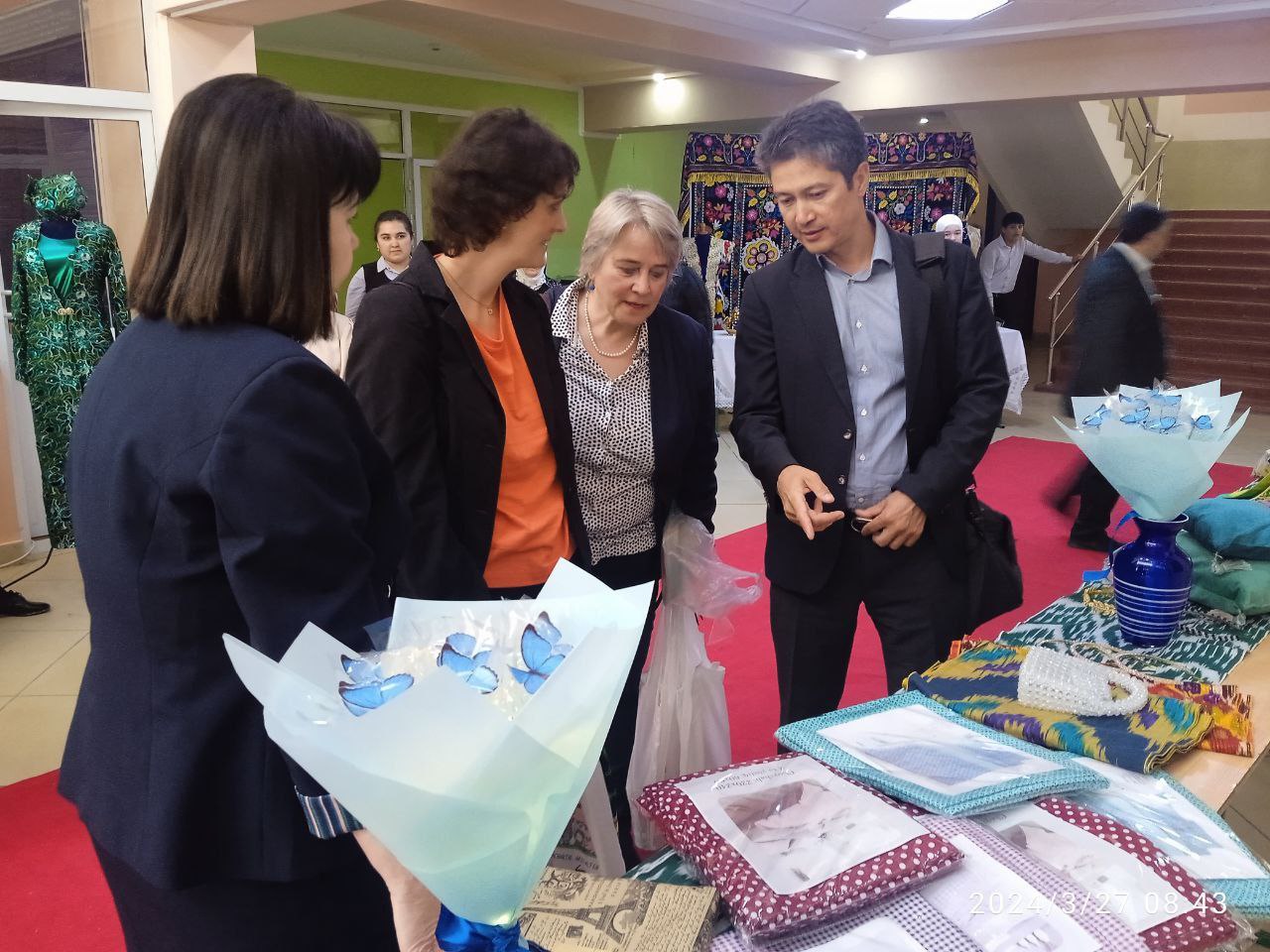
Also, many events and meetings are organized in the vocational school within the framework of the GIZ project. For example, on March 27, 2024, a meeting was held by the GIZ project “Supporting the process of reforming and modernizing vocational education in Uzbekistan (TexVET)” at the Shaikhontohur district vocational school in Tashkent. ‘tdi.
Representatives from the Ministry of Higher Education, Science and Innovation, Ministry of Employment and Poverty Alleviation, Ministry of Preschool and School Education, Institute of Pedagogical Innovations, Institute of Labor Market Analysis took part in the meeting.
Vocational guidance is the formation of professional activity, development of work experience and skills of students through studying and practicing in a vocational school. At the meeting, there were discussions about the orientation of students to the profession and what profession they should have in the future, and the need to further develop the qualifications and skills of teachers and production masters for it.
Various games and puzzles were solved with the teachers. This serves to increase their qualifications and experience as pedagogues. Meetings and events held in vocational schools serve to further increase the knowledge, skills and qualifications of teachers and students.
Tuliyeva Sarvinoz Teacher of native language and literature at Shaikhontohur District Vocational School, Tashkent.
the rain tarot blues, the world weary watery hues

along the worlds, the sleepy town, passengers by the mile, the down trodden in spirit for they have money but lack a smile. oh the skies; seven days and nights of it…wind and water and dark, even the artists who muse upon such things say, ‘This here is no lark.’ and somewhere past air brakes and tires on puddles melancholic and lit by electric light and chemical rainbows both, beyond old time Christian church some kind of Protestantism, further than the purlieu of the pastoral world (pastoral in summer sun past anyhow), is the unknown den of coyote far past the feral fields beyond coyote road. the tarot reader places the cards and speaks. there are truths spoken about the orphan soul, and how journey’s take their toll, but to yet take heart; for much w/light is writ for a double crowned poet inside an astral scroll. deep inside the witching hour dream between strange hours I walked in a small space w/kindred souls looking on. the space is too small, thought I; and it must mean I have outgrown it. and I awoke to the old rain laden branches outside the window, and they said nothing.
Ours is a Place

Ours is a place
Where nature smiles on
Ours is a place where birds circle overhead
Ours is a place
The green welcomes
Ours is a place where the peacock dances with colorful feathers
Ours is a place
Where the tigers, the lions roar in the Sundarbons
Ours is a place
Where rivers, lakes run through almost all its areas
Ours is a place
We love each other
Ours is a place which we bought
In exchange of sea blood
Ours is a place
We sleep with a sweet dream and get up
Walk hand in hand stepping in and out all over.

Chapainawabganj, Bangladesh,
25 April, 2024.


Md. Mahbubul Alam is from Bangladesh. His writer name is Mahbub John in Bangladesh. He is a Senior Teacher (English) of Harimohan Government High School, Chapainawabganj, Bangladesh. Chapainawabganj is a district town of Bangladesh. He is an MA in English Literature from Rajshahi College under National University. He has published three books of poems in Bangla. He writes mainly poems but other branches of literature such as prose, article, essay etc. also have been published in national and local newspapers, magazines, little magazines. He has achieved three times Best Teacher Certificate and Crest in National Education Week in the District Wise Competition in Chapainawabganj District. He has gained many literary awards from home and abroad. His English writings have been published in Synchronized Chaos for seven years.