Today was a different day than any of my other days. I was in a hurry, in a hurry, and I didn’t manage to do anything. My class seemed like eight hours, time passed very slowly. Well, I started to get bored as if I had passed this subject all day. While I was sitting in the classroom, it was as if four walls were coming closer and closer to me, as if the air was choking my throat, as if our teacher was singing an unpleasant opera to us, as if I were imprisoned in this room with my classmates, and even the door could not be opened again. I was writing on the blackboard. Every time my friend walked around, a sound like a squeal-squeak from a broken cable would disturb my nerves. I wonder why I’m disturbed…
BURIED FANTASY!

The fantasy I had buried deep
Within my heart began to flash
She met me after a long time
Like an untimely rain
My vision got shifted to one side
Now you are laughing at me
As if nothing has happened
The wounds you have given me
Have started hurting me yet
I thought to set fire in our love
I was the one who changed my fate
My heart cursed you million times
Every time I remembered you
Even in my sweet dreams
Your shadow is always chasing me.


 ONLY LOVE CONNECTS!

My poor heart was stolen by a stranger
I loved you more than you did  yourself
Though I 've so much pain and anguish
This impatient heart 'll get patience
By giving you happiness
I was capsized by bundle of sorrows
Know not how these years 'll pass
Perhaps this is the condition of my heart
I am leaving the whole world
My heart is covered in dark clouds
The day I forget your love
Will be the last day of my life .


 TWILIGHT OF TIME!

Sans you my life crawls to despair
Eyes search you all day and night
As this selfish world crashes on me
My dreams are scattered into pieces
Yours appears in the west horizon
Can't stay alone with the twilight of time
Heart can't bear pain of your parting
Wish you were here with me at this crisis
Eyes drench with your words and thoughts
The whole world is with your sightings
But you are unable to see me only.


 INTIMATE BOND WITH YOU!

Someone who dips deep into your eyes
And quivers on your lips like an unseen word
Someone who can read your mind
And has an intimate bond with you
Someone whose warm breath you feel
And who meets you daily stealthily
Someone who never misses dreaming of you
And lives in your lovely thoughts playfully
Someone who claims you as his own
I know I'm not the one you're in love with.


 Biography of the Author.

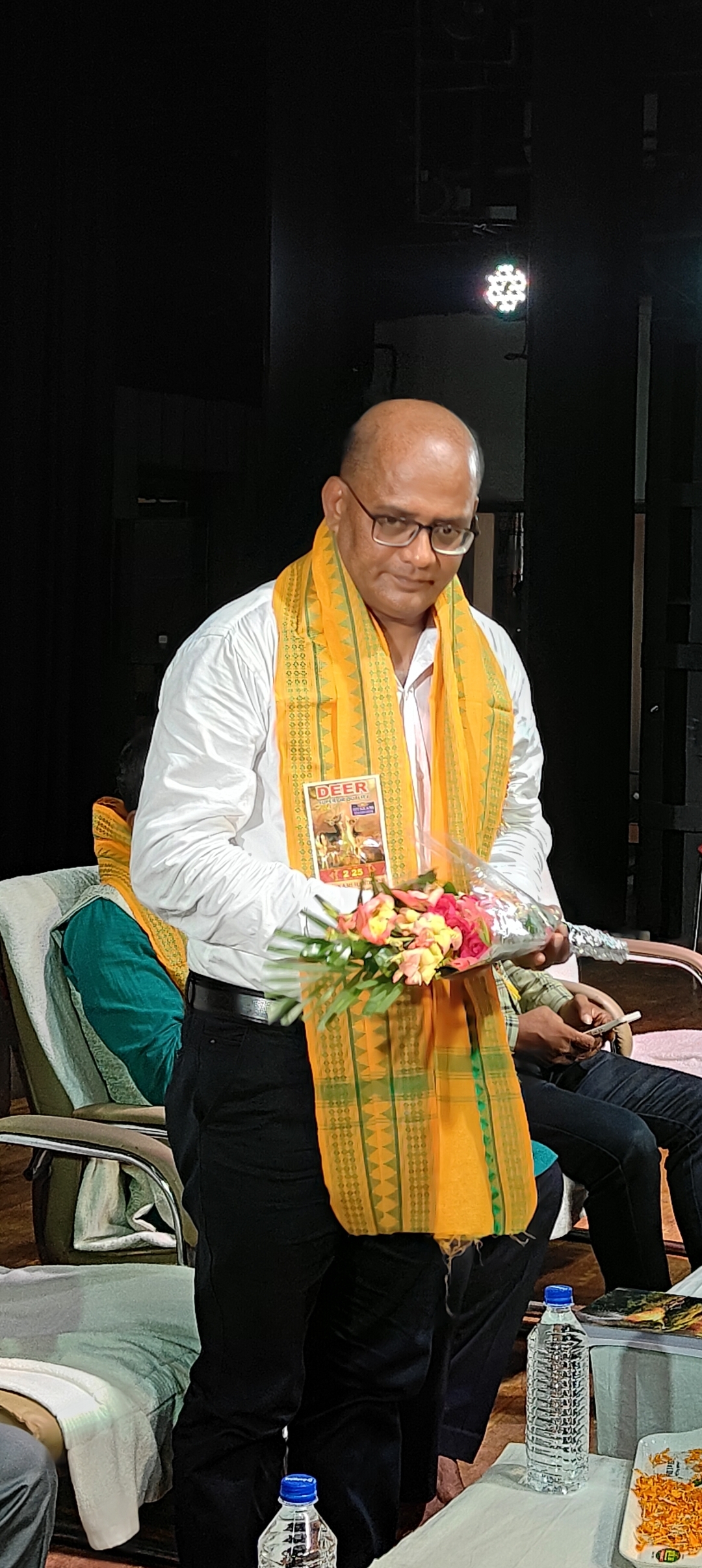
Dr. Prasana Kumar Dalai

(DOB 07/06/1973) is a passionate Indian Author-cum-poet while a tremendous lecturer of English by profession in the Ganjam district of Odisha. He is an accomplished source of inspiration for young generation of India. His free verse on Romantic and melancholic  poems appreciated by everyone.

He belongs to a small typical village Nandiagada of Ganjam District, the state of Odisha. After schooling he studied intermediate and Graduated In Kabisurjya Baladev vigyan Mahavidyalaya then M A in English from Berhampur University PhD in language and literature and D.litt from Colombian poetic house from South America.

He promotes his specific writings around the world literature and trades with multiple stems that are related to current issues based on his observation and experiences that needs urgent attention. He is an award winning writer who has achieved various laurels from the circle of writing worldwide. His free verse poems not only inspires young readers but also the ready of current time. His poetic symbol is right now inspiring others, some of which are appreciated by laurels of India and across the world. Many of his poems been translated in different Indian languages and got global appreciation.

Lots of well wishes for his upcoming writings and success in future. He is an award winning poet author of many best seller books. Recently he is awarded Rabindra nath Tagore and Gujarat Sahitya Academy for the year 2022 from Motivational Strips . A gold medal from world union of poets France & winner Of Rahim Karims world literary prize 2023.The government of Odisha Higher Education Department appointed him as a president to Governing body of Padmashree Dr. Ghanashyam Mishra Sanskrit Degree College, Kabisurjyanagar. Winner of " HYPERPOEM " GUNIESS WORLD RECORD 2023.

Recently he was awarded from SABDA literary Festival at Assam.
Books.

1.Psalm of the Soul.
2.Rise of New Dawn.
3.Secret Of Torment.
4.Everything I never told you.
5.Vision Of Life National Library Kolkata.
6.100 Shadows of Dream.
7.Timeless Anguish.
8.Voice of Silence.
It is Raining!!!

Pitter Patter, a symphony
Drops of diamonds I longed to see
Listen to its gentle harmony
Calmness comes with destiny
Months I waited to meet
Sieved by spidery nylon net
No floods, no swamp, yard unwet
Cool misty breeze, winkled cheeks pet
Days of drought, soul withered, upset
Burning ground, leaves vexed to death
Feverish, stinky body covered by sweat
Now vitality's reborn, one's lifespan reset
Rain, oh beloved rain
Just a short visit, much did gain
Summer's gone, May is here again
Small kisses, wispy clouds so plain


Let Me Ride

Let me ride the waves of your sea
Corals, turtles and school fish to see
Show me the beauty of your depth
No sufferings of life nor of death
Let me ride the curves of your hill
Where time peacefully stood still
Trees, meadow of grass and flower
Butterflies, bees and birds gather
Let me ride the winds of your sky
Free to fly way above all so high
Sun, moon and stars hanging bright
And fluffy clouds floating so light
Let me ride lines of your poetic words
Strum my heart with nature's chords
Let my mind be where body can't go
Let me ride along your ink as it flow

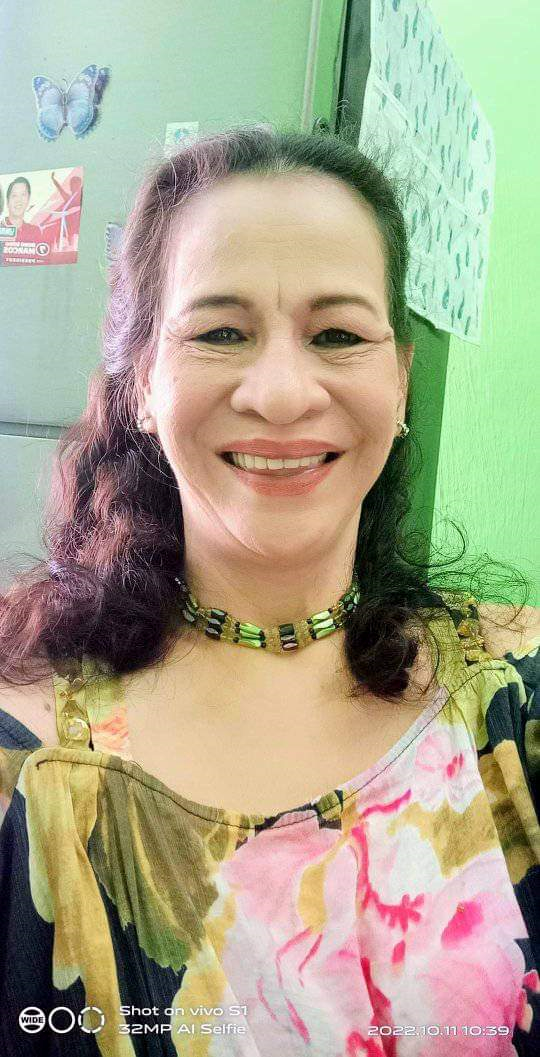
Lilian Dipasupil Kunimasa was born January 14, 1965, in Manila Philippines. She has worked as a retired Language Instructor, interpreter, caregiver, secretary, product promotion employee, and private therapeutic masseur. Her works have been published as poems and short story anthologies in several language translations for e-magazines, monthly magazines, and books; poems for cause anthologies in a Zimbabwean newspaper; a feature article in a Philippine newspaper; and had her works posted on different poetry web and blog sites. She has been writing poems since childhood but started on Facebook only in 2014. For her, Poetry is life and life is poetry.

Lilian Kunimasa considers herself a student/teacher with the duty to learn, inspire, guide, and motivate others to contribute to changing what is seen as normal into a better world than when she steps into it. She has always considered life as an endless journey, searching for new goals, and challenges and how she can in small ways make a difference in every path she takes. She sees humanity as one family where each one must support the other and considers poets as a voice for Truth in pursuit of Equality and proper Stewardship of nature despite the hindrances of distorted information and traditions.
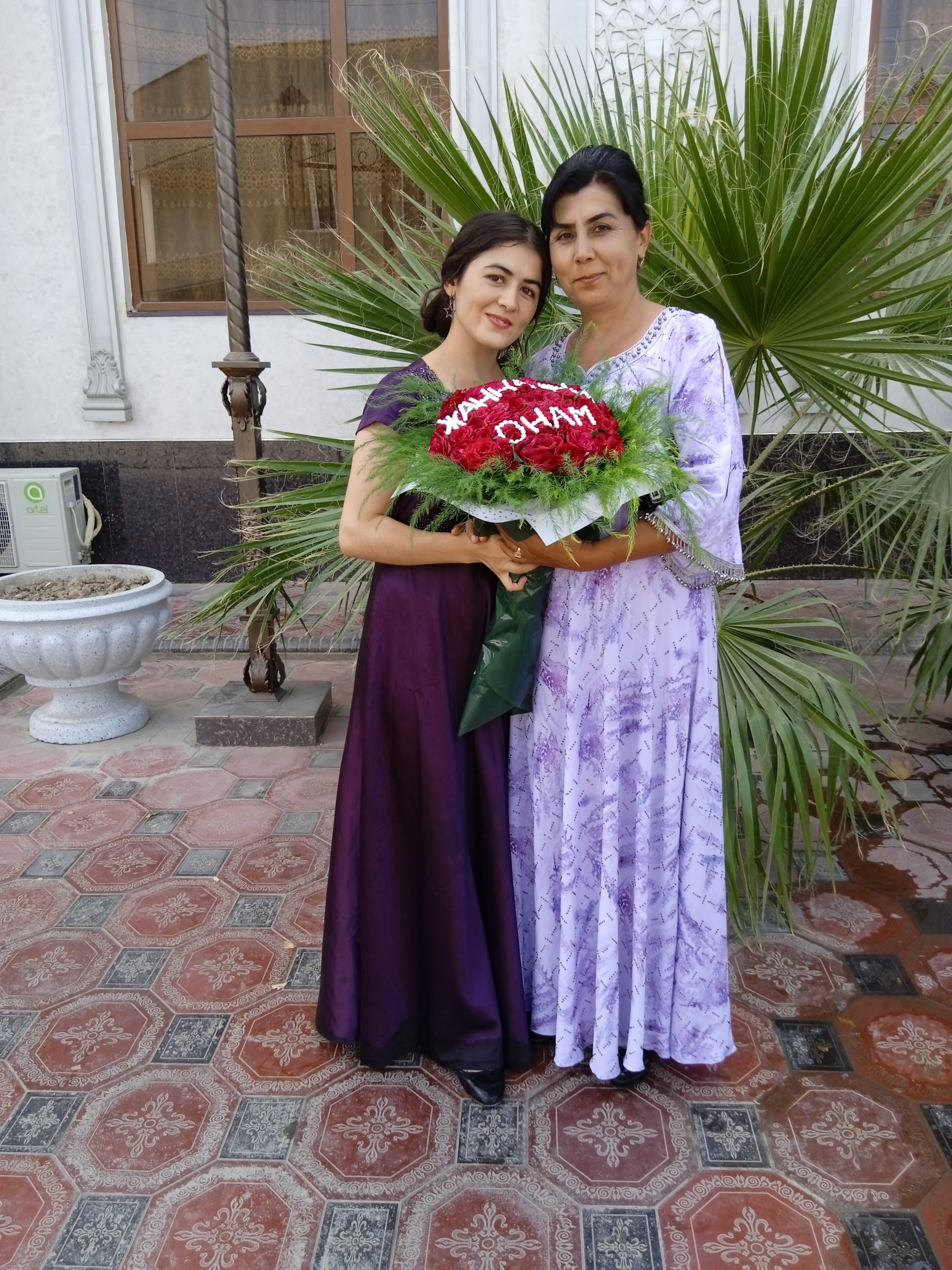
Our hearts are full of spring flowers. (Nozima Ulugova)
A day before the birth of the baby from God asked:
Why am I coming to this world? What am I? Should I do
The God replied:
- I will give you an angel. He is always with you will explain everything.
- Where can I find him, after all, its language I don’t know?
– The angel will teach you the language and protect you from various calamities.
What is the name of my angel?
Its name is not important. You call her “Mom”.
you name it!
Do you know who the mother is?
The dark nights are for you when you are helpless
radiating light, leading you to bright days
outgoing breed.
Do you know who the mother is?
Even if she is about to die of hunger
She is the one who can give you the last bite, the destiny.
if it’s like a thorn in your heel, it’s her who who feels pain as if spears are being stabbed in her heart
Do you know who the mother is?
How many pains to bring you into the world,
even death is under her feet
the great lord of heaven!
Do you love your mother when we were children, or rather, when we started to recognize our memories?
do you love your dad – they asked
and, of course, many answer that it is my mother.
It doesn’t mean I hate my father at all.
on the contrary, it is your love for your mother
a high symbol, priceless sincerity to the mother
Our fathers also understand that it is an expression. To them
to love and honor our mothers,
our respect never sinks. Because
our fathers also have mothers. They still are
they call their mothers lonely. Uzbek children, Uzbek
Mother has always been unable to speak the language of her people
is a symbol of inexhaustible love in the heart! honoring the mother,
like a crown on our head instead of its dignity
lifting is our heritage from our ancestors. as a great person said: “If you ask who is the greatest in this world, I will always say my mother without a doubt.”
Mother is amazing in herself as well as being great
rich in mysteries embodying miracles
is a human being. For example: the baby is screaming and crying. Him
calm down no matter how hard the people around you try
they don’t get it. The child does not agree to deception or deception.
His mother, freed from her chores, immediately took him in her arms
press A baby calms down when it smells its mother.
Another case: the child is sick, has a high temperature, one
is lying in a state. The doctor’s medicine for him
is not too blind. then the mother lovingly touches the forehead of her crying child
He puts his warm palm. After a while, the child calmed down
starts to get Such a miracle worker related to mother
many examples can be given.
When a person is happy, when from diseases
when he is healed, when his sweet soul rests. And the mother
He feels happiness when his children are happy.
The mother is so kind and generous that with great invisible power and love only
not children, loved ones, but the whole head
take humanity into your bosom and be a cure for its pain
takes Mother’s happiness is children’s happiness, family happiness is society
is happiness. Mother this priceless happiness to no one, no
what can’t they do?
Mothers often lie. Witness
I have:
“Baby, you eat, I’m full.”
“Eat this meat, I’ll eat that
I don’t like it.”
“Take this money, I don’t need it.”
“Close this sheet, I’m not eating.”
“Don’t cry, I’m not sick. On the contrary, I am
If I sneeze quietly, immediately take it out to the patient
they try to preserve.”
When I was a child, I suffered a lot from toothache
I would Before falling asleep, I would ask my mother to tell me a story. My mother is also a mija with me
they came out without hesitation. They started their stories while pressing their palms on my face. Early morning my eyes
I didn’t feel any pain when I opened it. Har
Sometimes when I was sick, my medicine was my mother.
I went to the market in winter in shoes and gave me boots as a gift
My mother, the world, household worries
when you’re down and teary-eyed,
“It seems that dust has entered my eyes, my daughter.”
my lying mother, today is your little girl
grew up. don’t worry mom, yours
your child is a strong person. You now to no one
does not hurt.
I found love in this world,
You are my happiness, I am lucky without you.
My paradise found in the worlds,
There are no tears in your eyes, mother!
A human child sees this bright world because of his mother
will be lucky and prosperous. Because of mother
he will enjoy all the pleasures of this life.
Thanks to the mother, to the pleasures and joys of the world
is buried. He will get happiness because of his mother. He dedicated his life to goodness, virtues, and selfless deeds
mobilizes and good deeds during his life
will be surrounded. Same with me
I will never give you my pain, advice, or advice
My loving prayers are always with me.
I feel comfortable and happy with them.
When I dream of heaven, my dreams come true
the dream is alien to me, happiness is in my way.
It is a house full of light, a house with mothers,
I am happy, you are with me, my heavenly mother.
Every child, be it a boy or a girl
first of all, he should try to please his mother.
We are upset with our mothers when we raise our voices
it is impossible for us to be.
Think brother, God is under the feet of mothers
didn’t he leave heaven? Praise them with love
didn’t you urinate, a light in our head in dark nights
didn’t he do it? If we sing, we will be happy
didn’t it burn? Instead, what did he ask us?
Just love. Who are we to be unkind to him?
we do An orphan to know the value of parents
It is not necessary to be born.
Mankind appeared on earth
glorifying the image of the holy mother, the venerable woman,
always comes with honor. In honor of our mothers,
The soil of our homeland is beautiful like the gardens of paradise
is priceless. Our country is peaceful and our sky is peaceful because of the prayers of mothers
pure, fruitful in our work, blessed in our life.
Let’s protect our paradises near us, dear ones
Owner of the “Islam Karimov” State Scholarship.
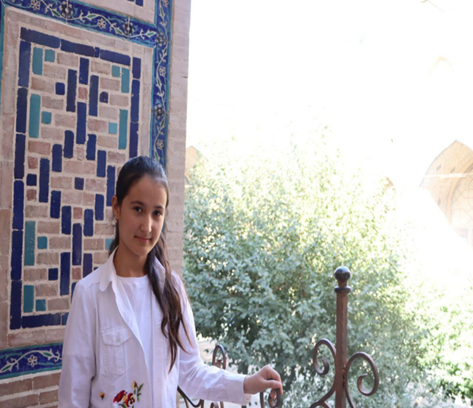
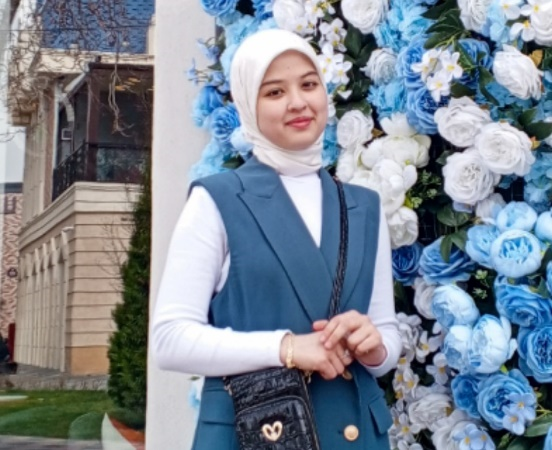
Nozima Ulug’ova was born on October 13, 2001 in “Yosh gayrat” neighborhood, Shorchi district, Surkhandarya province. He graduated from the 37th general education school in the Shorchi district and at the same time, the Nukus branch of the State Institute of Arts and Culture of Uzbekistan “Art Studies” 3rd-level student of the department “Dramaturgy of Stage and Screen Art”. In 2022, his creative author collections “Mother for you” and “Salvation” were published and gained their readers. At the same time, his creative story is among the young artists of Uzbekistan. “Culture”, “Creative Flight”, “Women and Time”, “Surkhan Youth”, “Morning Star” are examples of creativity in our republic. It is covered in newspapers, “Gulkhan” magazine and “Nurli Jol” newspaper of Kazakhstan. The young penman did not limit himself to creativity, but participated in conferences and scientific meetings in prestigious journals with a factor recognized by OAC with about 20 scientific articles, pamphlets and theses.”Samarkand Youth Forum 2021″ “Uzbekistan Development Forum 2021” Participant of several forums and conferences, festivals and seminars. Nozima Ulug’ova in Personal development & Step into the international sphere Course, because he was able to show his activity and interests in the fields of literature and art in this course .Creativity Forum for Culture, Arts and Peace International member, Active member, working Group of International writers “Jontous por las Letras” Iqra Foundation has received membership offers from several international organizations in its field.
A person without a job is not a person. We tend to be constantly doing something, learning something. Lucky are those people who have understood from an early age in which field they would like to develop. But everyone has the right to their favorite job.
In every person’s life, the most important thing is what they do, their profession. And it is very important for each person to choose the right profession. One of the important criteria for success in life is improvement in the profession, improvement of oneself, love and dedication to one’s profession, only with these small rules a person can be fully happy.
It is important for us that our work, profession, and life’s work bring us not only material, but also moral rewards. A lot of people don’t spend much time on this issue. Some believe That the profession should not be loved, because it is a job, others run only for money, and others do nothing at all, hoping that others will do everything for them, and thus take responsibility off themselves, throwing it on someone else’s shoulders, they believe that in choosing a profession their parents, relatives, friends, and fate will help them.
And this is not the case. Each person builds his own destiny, life and chooses his own profession. Sometimes it is very difficult to do this, but you need to listen to yourself, to your heart, and understand what you will do throughout your life, which will become your joy. I have been in a professional search for a very long time and today I firmly know that working with children, giving them knowledge is exactly the direction that I would like to pursue and grow professionally.
Today I can safely say that I am happy in my profession, I get up every morning with a smile thinking that I will go to work and improve there. My personal and professional development is in constant dynamics. They say we don’t choose the roads, they choose us. The idea is beautiful, deep, but perhaps not always true. My personal opinion is that people choose the road themselves. I really love my profession because it makes my life brighter! Why did I choose the profession of a teacher? I think that nothing happens by chance in life.
After graduating from high school, I entered the Pedagogical Lyceum, and then the Pedagogical University in the same direction. Before I graduated, I started working at school. But life is complicated, unpredictable and presents its own surprises at a certain period of his life. The profession that I have dreamed of since childhood is becoming a reality.
Now, working at school, I never cease to be surprised how different all children are: interesting, surprisingly intelligent, able to set a task for any adult with their reasoning and actions. Each child is unique in its own way, each of them is talented.
Even watching quiet, somewhat indecisive children, you constantly begin to notice manifestations of certain abilities, and my task remains to help develop these abilities. To rejoice with them in their achievements, their first heights in educational or creative activity. Step by step, they become more independent.
A child’s joyful greeting, warm hugs make me smile, forget about everything, awakening in me the strength and desire to do everything so that this bright light, this love, not only never disappeared, but kindled and became stronger and brighter.
The teaching profession forces us to always stay young and this is especially pleasant, but it also requires constant work on ourselves. A variety of knowledge is needed to satisfy the curiosity of a modern child.
Abstract: The role of psychology in our lives and how much it is needed by children, especially teenagers
Key words: psychology , Jalaluddin Rumi , me , family , research
Let’s look at one sort of psychology—family psychology—to better comprehend its role in our lives. According to Jalaluddin Rumi, “There are two conditions for building a happy family, one is to be able to choose a good spouse, and the other is to be a good spouse.” Education is one of the parents’ and the family’s other major responsibilities. The family is not a site where the construction of the human person ends with the foundation; rather, it is his final brick, or responsibility. the location for which the designated father is accountable until the completion of his parenting duties. Since the family is where a person first matures. He grows, succeeds, and is respected there.
“Scientists compared the difference between 15–16-year-old boys and girls 90–100 years ago and today,” an article I read stated. Sexual and physiological puberty have progressed by 2-3 years in the last century. Although puberty truly happens between the ages of 12 and 13, it currently happens at 15. In the past, girls and boys who entered puberty between the ages of 15 and 16 were ready to get married, but they had a job. These were people who worked in farming, cattle breeding, or other occupations and had surmounted both material and spiritual challenges. Children become adults at the age of 12 or 13, at which point they enroll in an 11-year vocational program at a school or lyceum. In conclusion, it will take them 20–21 years, and for some of them, 23–25 years, to become independent. At this point, family building is included along with their development. Then, a lot of obligations and changes will fall on them; regrettably, this is what leads to divorces in our culture, with children suffering the most. Had everyone taken a psychology course prior to marriage, they would not have been disappointed to such an extent.
A person needs to be able to discover his or her “ME” before getting married, as I previously stated. The idea that a person discovers his or her “I” during this transitional stage between childhood and youth—a time when experiences are more nuanced than at other stages—astonishes me. This time frame roughly corresponds to students in the fifth through eighth grades. Every child and every type of young person exhibits the completion of this phase. Adolescence is often referred to as the “transition period,” “difficult period,” or “crisis period” by some.
Adolescence is a challenging and complex time due to changes in many facets of growth, including moral, social, mental, and physical. Puberty is when this time frame starts. He will have an entirely new relationship with both himself and other people. He has a unique perspective on life. His values, self-awareness, and assessment shift, and his interests also do.Even folks who don’t seem to like anything can seem to have nothing they need at times. His “I” and the significance of this “I” to him.
It is reasonable to state, in conclusion, that psychology is a subject that needs to be researched. A person who studies psychology gains knowledge on how to interact to others, communicate, and navigate challenging circumstances. These days, a lot of people require psychologists. As you can see, psychology is essential to us regardless of where we travel or what we do. The application of psychology is personal.