HER NAME
At the bottom of the river you sleep,
and then you emerge
on the soft palm of the sacred hands
that lift you out of the water.
You feel your awakening;
there was enough sleeping,
others would like to see you the way you are.
Oh, a stone black for this world,
but for eyes that see deeper
your name is… Shila.
Oh dear, you immediately soften the river
where you were found
as if she is also rejoicing with you
seeing you above her very clearly,
and in her bosom rested your dream.
Drops of water are gliding down
your dark smiling face,
and a ray of light illuminates your sweet gaze.
You travel on the sacred palm to the river bank,
they place you on pure silk to rest,
and then you go to your throne,
not for you but for others
who are eager to see you.
You are neither a black stone nor a woman,
You are a living soul that has a form and a name.
My hand moves towards you,
I give you a flower that smells like spring,
and my soul wakes up again
when it sees awakened eyes,
and understands the meaning of yourself.
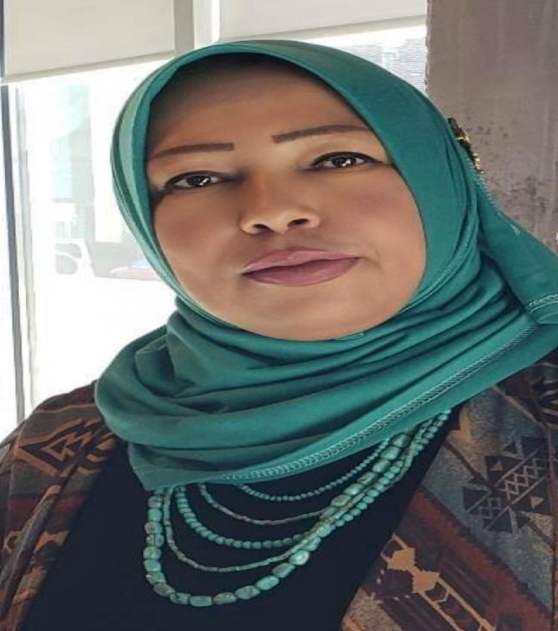
Maja Milojković was born in 1975 in Zaječar, Serbia.
She is a person to whom from an early age, Leonardo da Vinci's statement "Painting is poetry that can be seen, and poetry is painting that can be heard" was circulating through the blood.
That's why she started to use feathers and a brush and began to reveal the world and herself to them.
As a poet, she is represented in numerous domestic and foreign literary newspapers, anthologies and electronic media, and some of her poems can be found on YouTube.
Many of her poems have been translated into English, Hungarian, Bengali and Bulgarian due to the need of foreign readers.
She is the recipient of many international awards.
"Trees of Desire" is her second collection of poems in preparation, which is preceded by the book of poems "Moon Circle".
She is a member of the International Society of Writers and Artists "Mountain Views" in Montenegro, and she also is a member of the Poetry club "Area Felix" in Serbia.
***
tigers in the zoo:
no one sees how
the meat is prepared for them
chest hurts
once again the heart can
withstand everything
fork and knife pierce my body
i fall asleep
***
I died for you
Removing freckles from face completed successfully
***
we were left with a petal and
empty cider bottles as a souvenir
autumn has never been
so forgotten before
***
the ant
under my
feet
taught me
to be small
***
no one will ask the foliage
about green silence
***
the worm in my body
cherishes the emptiness
***
love is broken like a river
glass grass river
***
my heart is looking
for a cemetery at your steps
***
the cage asked the bird
and received no answer
***
who dies at night while bones
burn in the sky?
we are trying to forget
our little betrayal
– After February 24, 2022, I will never speak Russian again, I will never be silent again. - Helga said, but the next morning this mood passed.
The next morning old Helga went to church for free milk. She took her place in line, as did hundreds of other people.
Hundreds of people did not want to stand in line, but the post-Soviet habit of poverty encouraged them to stand in line.
Pensions were paid to bank cards. banks and ATMs did not work. Stores were open. Stores that were not closed were open. Only a few shops were open. Stores that started working as a result of a raider seizure of a neighboring business do not count.
The pensioners in the queue began to argue: someone took a place in the queue dishonestly.
The pensioners in line began to argue very rudely and broke off the entrance gate of the church.
Not everyone got milk that day, although everyone was in line.
Crowds of hungry dogs began to run past the crowd of upset pensioners. The dogs, abandoned by their owners to the mercy of fate, wanted to eat.
Over time, hungry dogs began to attack the parishioners. Over time, hungry dogs began to turn on all the inhabitants of the city, including atheists like me. People are the same animals. The ring-shaped world history is a strong confirmation.
My favorite Ukrainian director (Kira Muratova) once said:
"I can understand cannibalism because a hungry person behaves like an animal. But I don't understand how you can kill for anything. Even if it's your homeland."
Hungry dogs: they live much worse than pensioners. Dogs do not have pensions, churches, public organizations. And over time, pensioners began to receive two pensions: Ukrainian and Russian. But it does not matter. By the way, I have never been to church as an adult. This in some way makes me related to street dogs. When I was a child, my parents often had puppies: but the puppies constantly ran out into the street and died.
The dogs continued to walk the streets. People continued to walk the streets. Kira Muratova once said:
"Humanity does not develop. First there was Nero, and then there was Stalin." It's good that Kira Muratova died before 2022. Over time, death begins to seem like a relative that everyone has always known about, but no one has seen. It turns out that death cannot be seen - there is no death. Especially during the war: during the war, everyone turns into walking corpses. From dust to dust, because as Jim Jarmusch (or someone else) said: "The dead do not want to leave." The dead cannot leave because their limbs are torn off. The dead cannot die, especially when air bombs forbid the very existence of life.
I want to dye my hair blonde. For some reason, this fact seems especially vital and important at the time of the shelling.
Over time, people who walked the streets began to get tired. People started dying. But no: people have died before.
Over time, people stopped giving out free milk in churches and rotten vegetables at bus stops. Over time, people got used to what was happening. People have been accustomed to what is happening for thousands of years. For thousands of years, the same events have been happening.
Once a neighbor's cat caught a mouse and ate it, but not completely. Therefore, the guts and tail (the remains of a mouse) I found just on the sidewalk. But the neighbor's cat is well fed: why did he poop on a mouse? Why didn't the cat eat the mouse's tail? Can not understand anything.
Even along the streets, besides people, cats and dogs, birds roamed. But birds have wings: just like military planes. Birds constantly remain in the shadow of human attention. Sometimes birds peck at groats at the point of distribution of humanitarian aid. They say that the point of issue of humanitarian aid is also full of pensioners in line. Then some pensioners sell this humanitarian aid on the market. Sometimes many birds flocked to the market: the birds tried to get their own food.
Birds in those days began to fly to the streets of the city, probably in anticipation of spring. But spring never came.
People in those days stopped believing that it was possible to fly and began to silently walk through the markets. Some people still continued to go to work. Some animals in those days still had owners who hadn't left.
As a child, I had different toys: plush animals, plastic constructors, toy soldiers. At the time, I didn't understand why toys weren't allowed to tear limbs off.
Meanwhile, people and animals quietly ran away wherever their eyes looked. As a rule, people left for Europe. The rest of the people and animals remained where they were. Being a refugee is either uncomfortable or expensive, depending on your financial situation.
Thus began the first month of military occupation.
J. D. Nelson’s poems have appeared in many publications, worldwide, since 2002. He is the author of ten print chapbooks and e-books of poetry, including *Cinderella City* (The Red Ceilings Press, 2012). Nelson’s first full-length collection is *in ghostly onehead* (Post-Asemic Press, 2022). Visit his website,MadVerse.com, for more information and links to his published work. His haiku blog is atJDNelson.net. Nelson lives in Boulder, Colorado, USA.
Migratory Soul
My soul is resting here under an umbrella,
Hearing the rhythmic roar of big waves,
Observing dead Oyster shells heart quivers.
They come from mysterious abysmal burg
After completing their life journey.
Looking at the vast open sky,
I whispered to the chariot wind;
When are you taking my migratory soul,
To that unspotted sea of empty garden?
Soon heart filled up with an obscure pain.
Aklima Ankhi is a poet, storyteller and translator from Cox'sbazar, Bangladesh. Born in Mymensingh, Bangladesh, she has a published book of poetry named "Guptokothar Shobdochabi" written in Bangla. She is a post graduate in English Literature and she is a lecturer in English.
It’s what nature taught us. The older we grow up, the more we see our mothers in us, and us in them.
And the three generations of Iranian women in this film, are no different.
It had to take an innovator, a pioneer like Sierra Urich, a filmmaker, to unravel the mystery of those three women, and bring their different worlds together. It had to take a brave woman like her to bring women’s stories to the table and unwrap the cellophane, the layers and layers of dust that women use to cover up their lives and put it out into the world.
The link was the mother, Mitra, who was the heart of both languages, the bridge between two distinctly foreign worlds. Sierra represented the new world, while the grandmother represented the old world. Mitra brought these two worlds together, through a shared love between the three women of storytelling.
I felt Sierra’s isolation in her language barrier bubble, how her grandma, Behjat was happily enjoying the culture she held close to her heart, how comfortable Mitra was freely moving from one culture to the other, her peace and easiness evident through her daughter’s camera. Sierra on the other hand was the one most bothered, or uncomfortable in her skin. I related to her feelings of difficulty adjusting to her mother and grandmother’s heritage or their adaptation to their lives. Mitra and Behjat seemed in harmony, while Sierra seemed lost and grappling with her sense of self. How easy it used to be for the older generations, while we are usually stuck with how we view ourselves, how the world perceives us, and what we want from the world.
Sierra’s use of imagery and poetic interceptions threw me in the middle of the culture, the mesmerizing stories that her grandmother told as the backdrop to an already active mise-en-scène, there was constant movement and a powerful sense of space and presence in Sierra’s film, and that allowed the viewer to enter her world at the pace and time that she fully decided.
JOONAM felt like a journey through womanhood, as each woman discovered her path individually from the other, but brought together they navigated it together as one. In different cultures, times, and ideologies, all three women had their own battles to conquer, wounds to cover, and intergenerational trauma to come to terms with. Sierra perfectly gave her subjects the air to breathe and exist in an environment without judgment or disdain. It was the perfect safe space for these women to share stories and bond over their family history as they each tread a different spot on the spectrum of life. Sierra didn’t overuse intimate feminine moments as breaking points for her narrative, each point was present in the right spot, like her mother having her hair done at the hairdresser’s and getting bombarded with serious interrogative questions, or her grandmother beautifully recounting the time she had her first period. None of it felt forced or created a false sense of feminine mystique but rather a milestone in an intricately structured narrative, not built on women’s bones, but from their tales around the -hypothetical fire- as they rebuild each other up, bones and all.
She tried to abort me drinking turpentine before I was born he left us and it changed me poisoning my mind, my life
always a disappointment displeasing, distrusting mother, stepdad at 3 a grey-black spirit of doom a foreordained unhappiness a grievous, murderous hatred I had to learn to live with
when they dragged me away from my home in big sky Texas to the gritty streets of New York lost and scared they sent me back to Grandma in Fort Worth I never knew why or when or if they would come for me and I hated them for that
when I returned to Manhattan belonging no place, not there not Queens, Greenwich Village I chose Barnard, literature stylish clothing, affected poses drinking my way up the ladder with society girls and gin whiskey shots in bars schmoozing the lions for inroads to the literary life I craved women and booze and writing
about identity and deception the fears and furies of secret selves the subterfuge of the repressed Graham Green called me the poet of apprehension my characters got the revenge I wanted for myself.
Patricia Highsmith on Her Sexuality
My first job was for a man writing scripts for comic books freelancing and living alone dead broke in Taxco the Mexicans knew how to drink cheap all day
I returned to New York and headed to Yaddo writer’s colony in the woods met the man I would not marry promised him and hurt him completing my first novel for a British publisher and Alfred Hitchcock adapted it for the screen
I was headed for top rungs while suffering from cycles of anorexia and alcoholism therapy helped my writing the psychology of the psychopath I felt I understood I was a man who loved women and mistreated them
enjoyed seducing straights breaking up couples the two Pats the charmer, the offender battling inside, on the page my life a novel I made up lies in interviews in my diaries fantasies inventing until the end
I left millions to Yaddo my literary estate to the Swiss my heart in a bottle of whiskey and turpentine.
Virginia Kent Catherwood on Patricia Highsmith
With her I felt strange unlike what I thought I was yet loved, I loved her manly ways in a woman’s body deep dark warmth I found another kind of love my husband used against me in court took away my daughter to protect her from her own mother’s love.
After we broke up Pat worried about me afraid of my reaction to my story in her novel based on a pretty stranger she waited on once while working the counter at Bloomingdale’s and stalked her home to the rich enclaves of suburban New Jersey and fantasized about her made up a world, a love a taboo romance destined to be a cult classic a major motion picture.
Pat heard how the woman killed herself in her running car in her closed garage while Pat was writing about her, about me in her novel Carol.
Ellen Hill on Patricia Highsmith
I don’t know why I loved her left her, went back to her so many times she used sex to make me unhappy she went from cool green grass underfoot to shattered glass shards
like the time she got drunk at a party in London and fell over the table her long dark hair caught fire and we put it out and carried on British-style as if the singe of bitter burn didn’t smell up the room the time she hid her pet snails in a purse, dozens spilled on the dinner table sliming starched white cloth.
I was not a homosexual but I fell for her stormy kissing biting hardness always fighting she thought I was too straight, too organized too critical and a snob I expected her to treat me as a man would and I was forever after her to stop drinking, cheating ruining other people’s lives
when she threatened to leave I sprawled on our bed sucked down two martinis in my silky underthings let her watch me swallow barbiturates she couldn’t leave me not like that
yet off she went to some party out late, waiting for me to die in a coma for days she did not visit involved in a twisted tryst on Fire Island and you’d think I would not forgive her antipathy, cruelty, selfish fear I would accuse her of murder by proxy once I read her novel about a man driving his wife to commit a suicide mirroring my own
but I still loved her lived with her in Mexico England, France, Switzerland in her black bunker with lookout slits a sad drunken recluse when she was all yellow skin, bones, bitterness still writing, still carrying that little hell in her head hating what galvanized her Pat still Pat always looking for a fight.
I did not attend her funeral.
Marijane Meaker on Patricia Highsmith
We met cute in a lesbian bar in the 1950s we could be arrested for the love we made I was taken with her gentlemanly manners, good bones and thick dark hair her laughter, shared book talk and gay gossip I wanted to be her my books paperback dime store pulp and Pat a literary lion, lesbian icon.
Isn’t it wiser to accept that life has no meaning is what she said the earth like the moon with only her on it her dark fantasies keeping her going all those years all those books stories of men who compete who climb, who con, who kill for the thrill in her novels about the American Abroad an excuse for excess self-indulgence, hedonism how she lived herself from villages in France to villages in Greece Venice and Positano she said our love cured her wanderlust.
We settled down together in an artsy community in the Pennsylvania countryside fruit trees and a barn, she gardened cooked dinner and dressed up in slacks, a crisp white shirt bright ascot, polished loafers with a shiny switchblade from her blazer pocket she trimmed our indoor plants and sipped a second martini while studying the dictionary— a strange cocktail hour, yes but we had a sweet life
mostly because of Pat affectionate, easygoing didn’t want her mind cluttered with bad feelings but she knew I was besotted obsessed and afraid of losing her I became her drinking too much smoking her Gauloises wearing her jackets reading her diary I wrote a literary book about famous suicides.
Perhaps I don’t like anybody was how she explained her characters’ lack of decency, humanity her own prejudices her own shifting identity her withdrawal, escapes from love affairs like ours while above her a window filled with light blue sky just out of reach too small too far away to escape through