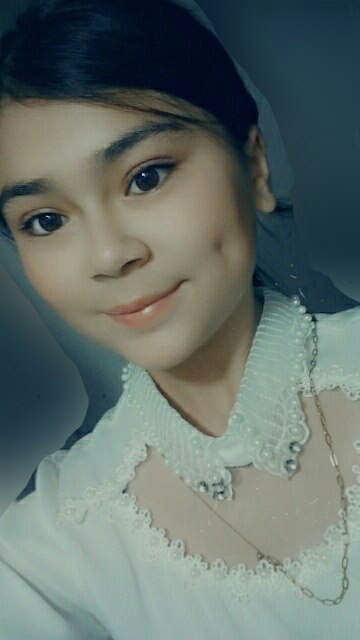
Nobody is perfect

Everyone think I'm perfect, that I have a perfect family, that I have good friends, but one thing is for sure! That's fk bullshit! My life is far from perfect! Everyone keeps asking "how can you not have a boyfriend? You are perfect! You are beautiful, all the boys want you! You have a good body, you are so sweet and you only want the best for others" and yes, ofc I do! Bc I know what it's like to treated like shit! NO, I'm NOT perfect!

Nothing about me is perfect! NO all the boys don't want me! I am broken! Everything I have been through has destroyed me inside! I'm not the same as I was yesterday, I'm not the same as I was a week ago, a month ago or a year ago! I do not know who I am, I do not know what I want, I do not know who my friends are, I can't live with my family! Nothing in my life is perfect! My whole world is laughing! The only thing I want for others is the best, be I don't want them to end up like me! I put on a face, so people don't see any other thing that a happy me! No one should see the truth. People won't understand! It anyway! All I do is wait! Wait for something good to happen, wait for me to find myself! But now it doesn't seem to happen! That's just how people are born!

Someone is happy, someone is unhappy and some people are just waiting!
One day..

One day, he'll know. He'll know your birthday, your middle name, your parents' names and where you were born. He'll know your zodiac sign, your eye color, how many scars you have and how you got them. He'll know how many cousins you have and how old you were when you first learned how to ride a bike and exactly how many freckles you have. He's going to know your favorite book, movie, song, food, pair of shoes and color. He'll know your dreams and why you can't sleep at night. He'll understand why you worry about irrelevant things. He'll know that when that one song comes on, he'd better turn it up. He's going to memorize your facial expressions, your laugh when you really think something is funny and the bad habits you wish you could break. He'll know how you don't want to get any older, how much you love golden hour and when the sun sets or rises. He's going to know how many kids you want and what colors you want in your wedding and how you wish you could tell all the people that you hurt how sorry you are. He'll know that you like your coffee with cream and sugar and lots of it. He'll know that it takes you forever and a day to decide where you want to eat and exactly what ice cream you like to order because you never change it. He's going to know how you dance, kiss, smile, walk and sing. He'll figure out what to do when you can't stop crying and he'll know exactly what's wrong before you tell him. One of these days he's going to know everything there is to know about you and he's going to love all of it.

So, be patient and wait for the right person.
Vocational school No. 2, Koshtepa district, Fergana region. In this vocational school, young people are directed to various professions and trades. Vocational school has various directions.
1 Car body repair.2 Repair and maintenance of car engines.3 Tractor driver4 Tailor5 Electro-manteur6 Car electrical and electronic equipment servicing.7 We can cite computer graphics design and operator directions as an example. In this school, all conditions are created for young people. Students can apply the knowledge they have acquired during the lesson in the process of practical training.
As an example, we can say that all conditions are created for the students of the computer graphic design room in this room. And provided with enough computer equipment. Through computers, they study the fields of IT and graphic design. And in the future, they can get a job based on the fields they have studied in school. Nowadays, due to the high interest of schoolchildren in the profession, schools also guide young people to the profession.
The main goal of these works is to ensure employment of young people in the future.
Ro'ziyeva Gulbahor Hasanboy qizi. She was born on September 7, 2006, Koshtepa district, Fergana region. Currently, she is a 2nd year student at KHM No. 2, Koshtepa district.
----------------------------------------------------------------------
the chinese alphabet


i dread the holidays


mostly because i grew

up on dysfunction


normal shit is as foreign

to me as the chinese

alphabet


but i'm old now


crazy left years ago


i seek the quiet


never minded being

alone, just never wanted

to be lonely


the phone won't ring

on christmas


all my former friends

have their families

and the friends they

are using now


i'll turn on some music


something dark and melodic


we never even bother to

put up a tree anymore


somewhere charlie brown

is laughing
-------------------------------------------------------------------------------
while alone in the shower


she reminds you of

a ghost from your past


listens to mozart

while humming

in spanish


pretends to play

the slide trombone

while alone in the

shower


her kisses taste

like you were

born on the

wrong planet


she once kissed me

on my lips and told

me to close my eyes


i never saw her again
---------------------------------------------------------
plastic bombs in the sand


insomnia dances

like a lost lover

strung out on neon

lights and a gentle

line of cocaine


think of all the years

since our lips first met


then ponder how each

of us should already

be dead


rainbows and smiles


plastic bombs in the sand


maybe one day the poor

won't have to fight a rich

man's war


i know


long after most of the planet

ceases to exist


you ever learn to speak

another language


yeah


i can say fuck fluently

in nearly all of them


that's really all you need
------------------------------------------------------
make believe brilliance blah blah blah


long lines


rising prices


i knew there was a reason

i never wanted children


and all the good alcohol

is too expensive


and the shit i can afford

is only meant to harm

the liver faster


i put on some charlie parker

and wonder which will

come first


the first line of a poem


or a fresh vein


don't worry


if i can't afford the alcohol

how the fuck can i afford

the drugs


poem after poem


make believe brilliance

blah blah blah


maybe santa should actually

bring me some scratch offs

that are winners
----------------------------------------------------------------
way too early in life


the darkest eyes

cover up the most

pain


her smooth skin

tasted like all my

nightmares made

into an off broadway

play


the twinkling lights

are supposed to be

joyful


you've seen too

many movies

about small

towns


backwoods killers


and all the children

that succumb to reality

way too early in life


the holidays are rarely

happy


no snow for christmas


just rain


endless fucking rain


misery fit for everyone

around here

J.J. Campbell (1976 - ?) was raised by wolves yet managed to graduate high school with honors. He's been widely published over the years, most recently at Dumpster Fire Press, Lothlorien Poetry Journal, Horror Sleaze Trash, The Asylum Floor and The Beatnik Cowboy. You can find him most days on his mildly entertaining blog, evil delights. (https://evildelights.blogspot.com)
the sun has come out
one crow flies across the lot
& then another


—


on the 38
one block from Jack’s Lawson Park
sidewalks lined with tents


—


ol’ crow got sum’n
he takes it up to the roof
of the bus station


—


the year’s shortest day
the mailman knocks on my door
& postage is due


—


without a coffee
I walk back from Circle K
crow caws out hello!


—


bio/graf

J. D. Nelson’s poems have appeared in many publications, worldwide, since 2002. He is the author of ten print chapbooks and e-books of poetry, including *Cinderella City* (The Red Ceilings Press, 2012). Nelson’s first full-length collection is *in ghostly onehead* (Post-Asemic Press, 2022). Visit his website, MadVerse.com, for more information and links to his published work. His haiku blog is at JDNelson.net. Nelson lives in Boulder, Colorado, USA.
ENHANCING STUDENTS’ CREATIVE THINKING THROUGH INTERNATIONAL ASSESSMENT PROGRAMS

Annotation: This article describes the concept of creative thinking in a broad sense and mentions that this concept is important for students' future research.  The PISA program, which is considered one of the international researches, requires creativity and the opinions are expressed about the further improvement of the quality of education
Key words: skill, creative thinking, divergent thinking, science, mathematics, problem, platform, domain,

INTRODUCTION

       The main task of education is to form the skills that the student will need today and in the future to lead a successful life in society.  Creative thinking is an important skill that today's youth should have.  These skills help them adapt to a world that is constantly and rapidly changing, requiring workers with "21st century" skills that go beyond simple literacy.  In general, today's student is expected to work in the future in fields that do not even exist now, to solve new problems through new technologies. A number of researchers have tried to identify the mental capacities necessary for creative thinking.

The importance of developing creative thinking at school is not limited to the labor market.  School is important for young people to discover their abilities and skills, including creative talents.  Also, creative thinking supports students' learning by interpreting events, experiences, and behaviors in a new and personally meaningful way. In order to increase the student's motivation and interest in the school, it is necessary to establish new forms of education that take into account the creative potential and enthusiasm of all students.

This can especially help students who are not very interested in the educational process, and it will help them express their opinions and develop their potential.  the concept of convergent and divergent thinking has greatly influenced research in this field.  Analytic thinking is generally defined as the ability to use conventional and logical strategies to search, understand, and make decisions based on information gathered in order to find answers.  Divergent thinking, on the other hand, is original by applying new approaches and forming unexpected combinations from existing information, as well as using the capacities of connections, thinking, and transformation, such as semantic variability and fluidity.  is the ability to develop ideas.

        REFERENCES AND METHODOLOGY

          Divergent thinking is also described as the ability to abandon ready-made instructions, to search for different solutions to problems, to resort to unexpected measures when all other means are exhausted, to look at problems from a different point of view, to abandon ready-made methods and try new ones.  In general, divergent thinking is often about generating new, unusual, and unexpected answers.  Creative thinking is often described in terms of divergent thinking, and most research to date has been devoted to studying the mental processes associated with divergent thinking.

But the research is analytical or decision-making  clearly shown that mental processes of similar thinking, such as the ability to do, are important for creativity. For example, the ability to generate new and valuable ideas may depend on the implementation of other processes, such as problem definition.  In fact, it was found that the success of art students in defining the problem is closely related to the criteria of aesthetic value and originality of the pictures they draw.  These criteria, in turn, depended on the long-term success of these students as artists.  Schools can promote educational methods that support the mental skills and approaches necessary for creativity, and learning to form mental representations has been shown to improve student creativity in science, mathematics, and ICT.

     The literature suggests that the more domains covered in an assessment of creative thinking, the better the coverage of the construct.  However, some practical and logistical limitations of the PISA study affect the possible domains to be included in the PISA program.  The first of these is related to the age of those being tested.  Given that the target audience of the PISA study (15-year-old students) has limited knowledge and life experiences, the domains chosen for assessment should be based on knowledge and experiences common to all students in the world (such as drawing, writing or problem solving).  The domain being tested (and related tasks) should also reflect a realistic expression of the creative thinking that a 15-year-old student can demonstrate in this context.

 The second limitation is related to the time allotted for testing.  According to the structure of the current PISA assessment, one hour is allocated to the test to assess students' creative thinking.  This means that the number of possible domains must be limited so that a sufficient amount of data can be collected for each domain.  Since the purpose of the PISA study is to provide benchmarks of test results at the country level rather than individual test results, different forms of tests can be used interchangeably.  In this, students solve a diverse mix of tasks (with some accidental overlap) within the domain.

However, ensuring that students obtain reliable indicators of national test performance in each domain requires that sufficient time be allocated to each domain's task and limits the number of tasks that can be covered in an assessment.  A third limitation is the implementation of the test of creative thinking in the standard PISA test-taking platform related to the obligation.  PISA tests are performed on a standard computer, which does not have a touchscreen or an Internet connection.  The platform currently supports various forms of response input, including multiple choice, text input, drag-and-drop, hot-spot (clicking on an area within a text or image), chat interface, interactive charts, and graphics.

Although it is possible to add new functionality to the platform during the development of this assessment, such as a drawing tool, selection of assessment areas, the technical limitations of the platform must be taken into account when developing the same tasks.  The development of an international program for the assessment of creative thinking can lead to positive changes in educational policy and pedagogy.  The PISA Assessment of Creative Thinking in Research provides a clear, reliable, and actionable assessment tool to help policymakers make evidence-based decisions.  The results also fuel debates in society about the importance and methods of developing this important skill through education.

This activity in the international assessment program PISA is related to another project of the Organization for Economic Co-operation and Development aimed at supporting a new pedagogy for the development of creative thinking.  The main task of education in creative thinking is to form the skills that the student will need today and in the future to lead a successful life in society.  Creative thinking is an important skill that today's youth must have, and this skill will help them adapt to a constantly and rapidly changing environment that requires personnel with up-to-date skills beyond simple literacy.  In general, today's students will work in fields that do not even exist in the future, for new skills for new problems will allow them to solve increasingly complex local and global problems through an unusual approach.

The importance of developing creative thinking at school is not limited to the labor market.  School is important for young people to discover their abilities and skills, including creative talents.  Creative thinking also supports student learning by interpreting events, experiences, and behaviors in new and personally meaningful ways.

         Conclusion

      A number of educational research studies have explored different methods of teaching or learning that increase the likelihood of knowledge and skill acquisition.  Research shows that creative thinking can be effectively developed by working together in a team environment that allows for the creation of knowledge and skills.  In other words, schools act as knowledge and skill-generating organizations, where students are actively engaged in creative and regular activities infused with new ideas.

When the process of creating knowledge becomes a purposeful activity that is an integral part of the educational process, that is, a type of everyday activity, Knowledge can also be created by "looking at the world with the eyes of questioning wonder."  Looking at the world with questioning wonder is understood as the process of a student trying to understand the world, and it motivates students to put forward their own opinions about various phenomena.  Students' creativity is reflected in their creative thinking skills, especially when most of the creative thinking process involves "invisible" tasks.

              REFERENCES

1.	Amabile, T. (2012), «Componential theory of creativity», No.12-096,HarvardBusinessSchool, http://www.hbs.edu/faculty/Publication%20Files/12-096.pdf (accessed on 28 March 2018). [59]
2.Amabile, T. (1997), «Motivating creativity in organizations: on doing what you love and loving what you do», California Management Review, Vol. 40/1, pp. 39-58, http://dx.doi.org/10.2307/41165921.
3.Guilford, J. (1956), «The structure of intellect», Psychological Bulletin, Vol.
53/4, pp. 267-293, http://dx.doi.org/10.1037/h0040755. [46]

4.Guilford, J. (1950), «Creativity», American Psychologist, Vol. 5/9, pp. 444-454, http://dx.doi.org/10.1037/h0063487.
5.Essex, C. (1996), Teaching Creative Writing in the Elementary School. ERIC
Digest, ERIC Digest., https://files.eric.ed.gov/fulltext/ED391182.pdf. [108]

6.Feist, G. (1998), «A meta-analysis of personality in scientific and artistic
creativity», Personality and Social Psychology Review, Vol. 2/4, pp. 290-309. [61]

7.Gajda, A., M. Karwowski and R. Beghetto (2017), «Creativity and academic
achievement: A meta-analysis.», Journal of Educational Psychology, Vol.
109/2, pp. 269-299, http://dx.doi.org/10.1037/edu0000133.