A baby girl was born into a family. They named her Sabriya because her parents had waited many years for her birth. Eight years before Sabriya was born, her elder sister named Maftuna had passed away when she was only three months old. She had been born prematurely and could not survive.
Two years later, Sabriya’s brother Umarbek was born, but he lived only for two days. Unable to bear the pain of losing her children, their mother became seriously ill. Years passed, and finally Sabriya was born. Her parents were overjoyed at her arrival. They organized a feast for relatives and neighbors and cared for Sabriya with great love.
When Sabriya turned two years old, her younger brother Hayotbek was born. They cherished him dearly as well. Three years later, Sabriya’s little sister Barchinoy was born. By then, Sabriya was already five years old. Their family was very close and loving. The three children always cared for and helped one another.
One day, when Sabriya was in the 7th grade and Barchinoy was in the 2nd grade, Sabriya was cooking. Barchinoy said:
— “Sister, let me help too.”
Sabriya agreed and explained what needed to be done, while she went to clean the hallway. There was boiling water on the stove. Barchinoy tried to lift the kettle, but it slipped from her hands and spilled onto her foot.
“Si-i-ster!” Barchinoy screamed loudly.
Sabriya ran over and saw that her sister’s foot had been badly burned. She quickly cut a potato in half and placed it on the burn. In those days, people often used potatoes instead of medicine for burns. Their mother saw what had happened and became frightened. Barchinoy’s foot was badly injured, and her mother scolded her. After that incident, Barchinoy stayed away from the kitchen for years.
Days passed. One day, their mother gave Barchinoy and Hayotbek a plate of samsa and asked them to take it to their grandmother’s house. Barchinoy carried the plate in her hands. While walking, she tripped over a stone, and both the plate and the samsas fell to the ground.
Hayotbek quickly helped his sister stand up. Barchinoy cried because she had hurt her foot and the plate had shattered into pieces. Fortunately, the samsas had been wrapped in a bag. Hayotbek gathered them and placed them back into the bag.
As they continued walking, the siblings talked:
— “Brother, what will we do now?” — “We’ll still give them to Grandma. What else can we do?” — “What will we tell Mom?” — “We’ll tell her the truth.”
After delivering the samsas to their grandmother, they returned home. Their mother asked:
— “Did you take the samsas to Grandma?” — “Yes, we did,” Hayotbek replied.
Their mother noticed Barchinoy’s bandaged hand and became worried. Barchinoy explained everything, and both siblings lowered their heads and apologized. Their mother smiled and said:
— “It’s alright, my children. The most important thing is that you are safe.”
That evening, their mother Maryam cooked pilaf, and the whole family happily ate together around one table.
Years passed, and Sabriya grew into a beautiful young woman. Suitors frequently came to ask for her hand in marriage. One day, the son of Samad aka’s close friend came as a suitor. Samad aka spoke with Sabriya:
— “My daughter, you’ve grown up. As you can see, many suitors are coming to our home. My friend’s son has asked for you. What do you think?”
Sabriya blushed shyly and replied:
— “Whatever you decide, father.”
— “Then meet Jamshid tomorrow at the park.”
— “Alright, father,” she said and went to her room.
The next morning, Maryam aya was baking bread in the tandir oven, while Sabriya prepared for the meeting. She looked more beautiful than a princess from a fairy tale. Before leaving, she said:
— “Mother, I’m going now.”
— “Go safely, my daughter,” Maryam aya replied.
Sabriya and Jamshid talked for a long time and realized they were perfect for each other. Both families approved of the marriage. The wedding was planned for two months later, and both families began their joyful preparations.
Soon, the wedding day arrived. Everyone was happy. Accompanied by the sounds of traditional trumpets and drums, Sabriya left her parents’ home and entered Jamshid’s household as a bride.
Sabriya and Jamshid lived a very happy life together. A year later, Maryam aya and Samad aka became grandparents. Sabriya and Jamshid became parents—not to one child, but to twin boys. They named them Hasanjon and Husanjon. The family was extremely happy.
But sadly, their happiness did not last forever.
Years passed, and Hasanjon and Husanjon turned four years old. Relatives gathered to celebrate their birthday. Hayotbek gave each twin a bicycle as a present. Since the twins were born in spring, a gentle breeze was blowing outside. They took their bicycles and went out with Hayotbek.
Hayotbek met a friend and became distracted while talking. Meanwhile, the twins rode their bicycles toward the main road. A large truck was speeding down the road. Hayotbek turned around and saw the horrifying scene—the twins were on the road, and the truck was rushing toward them at great speed.
There was almost no distance left between the truck and the twins. Hayotbek screamed with all his strength:
— “No-o-o!”
The next morning, after the dawn prayer, four deceased family members were buried. After the tragedy, Sabriya often fainted from grief. The women around her would splash water on her face to bring her back to consciousness. Barchinoy cried endlessly. Samad aka became seriously ill and was hospitalized for a month.
Whenever Jamshid and Sabriya saw children playing in the street, they remembered their sons and sighed deeply in sorrow.
Two years later, suitors began visiting Barchinoy as well. She married a young man named Rustam. That same year, Jamshid and Sabriya had another child. They raised the child with endless love and care.
A year later, Barchinoy and Rustam also had a daughter and named her Sevinch. However, two years after Sevinch was born, Samad aka passed away. By the will of Allah, he too left this world during the spring season.
That is why, whenever spring arrives, Sabriya and Barchinoy feel a deep sadness, remembering all the memories and sorrows they experienced in the past.
Madina Asliddinovna is an 8th-grade student at School No. 16 “Jasorat” in the Qashqadaryo region. From an early age, she has shown great interest in creativity, reading books, and journalism, and is recognized as one of the active and inquisitive students.
She began her creative journey at a young age by launching her personal blog on Telegram, where she shared her thoughts and opinions on various topics.
Madina successfully completed the “Efirdamiz” course, further improving her knowledge and skills. She was invited several times to the “Fayzli Kun” program of Qashqadaryo Television Channel, where her creative works were presented on television. Her performances were also broadcast on Madaniyat va Ma’rifat TV Channel.
Her creative works have been published in local and international websites and magazines. In particular, her works were featured on the international literary platform ATUNIS Poetry. Additionally, her writings appeared in international anthologies published in the United States, including Voices Without Borders and Ziyo Izidan.
Madina is the holder of several international certificates and has actively participated in various competitions, where she received cash prizes, books, and commemorative gifts.
She has been recognized as a favorite student by journalist Nigora Tog‘ayeva and continues her creative activities in collaboration with international organizations.Despite her young age, Madina Asliddinovna is a promising and talented young creator who is striving to establish her place in the fields of creativity, journalism, and media.
The mill of fate keeps crushing life away, Years fell like snow upon my darkened hair. Unable to find a fragment of true peace, Lonely hearts weep, longing for you everywhere.
Where are those innocent dreams of the sky? Those paper boats in muddy streams we sailed? Today my eyes are filled with bleeding feelings, Falsehoods consume me, tearing me apart without fail.
Though I lament like Erkin Vohidov, My soul still lacks the spirit of “O‘zbegim.” Tulips have withered in old memories, In this vast world, my strength grows dim.
Abdulla Oripov’s sorrow flows like my river, The whirlpool of thought devours my soul. When my forehead bows down in prayer, To whom can I confess this heavy silence untold?
Like Muhammad Yusuf, my heart cries aloud, Mother, I miss the scent of wild mint again. Have I become lost in the city streets, These deceitful worlds feel foreign and strange.
There were days I built cities from mud, A king in innocence, free from greed and pride. Those green gardens stayed far behind, Now I am imprisoned within myself inside.
Where is my father’s dignified presence now? The smell of my mother’s warm bread is gone. The marketplace of life has burned me deeply, There is no heart left in me — only coldness lives on.
So growing up itself is truly a burden, Worries bend my once-proud head low. Unanswered questions, one painful mystery: To whom am I leaving these flowing tears to show?
Today I am tired of these deceitful worlds, Fake smiles have wounded my chest inside. Old memories are tangled knots within my heart, My soul still feels the days of childish joy and pride.
Farewell, my innocence, farewell, my paradise, I shall forever wash you with tears from my eyes. I do not need this false glory anymore, At your feet, I slowly fade and die…
Sabina Tursunqulova was born on October 15, 2006, in Kitob district of Kashkadarya region. She studied at Secondary School No. 3 in Kitob district. From an early age, she showed a deep interest in art, poetry, and culture, developing a special passion for creativity. Her love for books and literature gradually blended with her enthusiasm for learning languages.
Currently, she is a third-year student at the Faculty of Russian Philology of the Uzbekistan State World Languages University. During her student years, she has continued her creative activities and constantly worked on self-development. Her aspirations, research, and devotion to creativity demonstrate her determination to become one of the leading specialists in her field in the future.
[From Fleury’s book: Chain Letter To America: The One Thing You Can Do To End Racism:
A Collection of Essays, Fiction and Poetry Celebrating Multiculturalism]
Ah, this place called Earth…. Stop for a minute. Look around you. Try to see your earthly surroundings as if through the eyes of a fascinated child. Bask in the majesty of the Great Smoky Mountains or stimulate and overwhelm your senses with the geologic colors and magnitude of the Grand Canyon; the lush splendor of a giant redwood; a 150 feet tall tulip, an ash, a sycamore or a weeping willow. Stop for a minute on your way to work and behold the morning sun rising over the lofty landscape; its light feeding the plants through photosynthesis and at dusk be still and behold the full moon. Stop for a minute and think before you throw that empty plastic bottle in the river, on the city streets and sidewalks or in the public park; thus disparaging our environment.
There are a number of things in this world that aggravates me, but none as pesky and infuriating as careless, indifferent and insolent litterers. Yes, you know who you are; the ones leaving your Dunkin Donuts cups behind on mail boxes, subways and park benches or tossing their plastic beverage bottles audaciously on city streets in spite of the presence of onlookers. Perhaps it’s because we live in a world where people are becoming increasingly rude and inconsiderate.
During my formative years growing up partly in Haiti, I received a social and familial education unlike the education I received in my catholic school in Port-au-Prince. My family and even my extended community of family friends and neighbors contributed to my upbringing. Proper manners were an integral part of my life on the island. My mother—Marie Evelyne—was an advent figure in my learning of proper manners and etiquette and one such behavioral teachings were to always “pick up after yourself” and to leave a place as clean as you found it.
In Haiti, even the very poor adhere to a strict code of what is considered to be socially acceptable behavior. Hence once in America, I continued this tradition of being conscious in how I conduct myself in a public setting and one such conduct is not tossing my rubbish on public property.
Now some may scowl reading this upon perceiving it as some type of a harangue about how they should conduct themselves but it’s not meant to be. I hope to express the frustrations most likely felt by fellow pedestrians who too are probably fed up with straddling litter on the city streets.
“America, we’ve got a problem,” declares some state legislatures in an internet article titled “Toxic torpedoes.” Apparently there has been an influx of truckers tossing bottles full of their urine out the window, littering our countryside. This further exemplifies the problem with people—who for esoteric reasons disregard the environment in which they live through blatant effrontery in disposing of their debris on public property.
“Littering is a mindset problem…We need to make it socially unacceptable to throw rubbish on the streets, “asserts an anonymous person in a letter to the editor in Design Week titled “It’ll take more than graphics to beat the litter problem.” He goes on to say, “Offenders must appreciate the link between dropping litter and the cost of cleaning it up and realize that litter is never thrown ‘away’—it’s just moved elsewhere.” This problem permeates apparently in other parts of the world, a number of people are ostensibly and collectively non-socially conscious when it comes to how they treat the environment. In Berlin, talking trash cans will soon thank people for not littering.
Another article in “The Science Teacher” promulgates that, “A 100-fold upsurge in human produced plastic garbage in the ocean is altering habitats in the marine environment.” This is based on a new study titled “Environmental Accumulation of Plastic Expedition” (SEAPLEX), conducted by a graduate researcher at the Scripps Institution of Oceanography at UC San Diego.
Apparently, in an area known as the “Great Garbage Patch”, the journal “Biology Letters” evinces that plastic shards in the surrounding area have risen 100 times over the last 40 years causing detrimental shifts in the natural habitats of marine animals in particular.
Let’s face it. The world is an ever-evolving place. Now with the continuous dawning of the technological age, more and more “stuff” will continue to surface for us to dispose of. Now, I am cognizant of the possibility that not all of us were taught proper social behavior or etiquette, or if you were, you have forsaken your social manners and public etiquette over the years, but the cliché “It’s never too late to learn” or in some cases “re-learn” social formalities rings true in this instance.
So Stop for a minute, look around and find a trash receptacle and keep the earth green and clean.
Jacques Fleury
Jacques Fleury is a Boston Globe featured Haitian American Poet, Educator, Author of four books and literary arts student at Harvard University online. His latest publication “You Are Enough: The Journey to Accepting Your Authentic Self” & other titles are available at all Boston Public Libraries, the University of Massachusetts Healey Library, University of Wyoming, Askews and Holts Library Services in the United Kingdom, The Harvard Book Store, The Grolier Poetry Bookshop, Amazon etc… He has been published in prestigious publications such as Spirit of Change Magazine, Wilderness House Literary Review, Muddy River Poetry Review, Litterateur Redefining World anthologies out of India, Poets Reading the News, the Cornell University Press anthology Class Lives: Stories from Our Economic Divide, Boston Area Small Press and Poetry Scene among others…Visit him at: http://www.authorsden.com/jacquesfleury.–
Jacques Fleury’s book You Are Enough: The Journey Towards Understanding Your Authentic Self
“No Extracurricular Moaning: Diamanda Galás on Suffering, Irony, and the Wily Mind”
Interview by Alex S Johnson
INTRODUCTION
In this newly released segment of Alex S. Johnson’s ongoing conversation with avant‑garde vocalist and composer Diamanda Galás, the artist dismantles sentimentalism in contemporary music, critiques the misuse of feminist rhetoric, and explores the philosophical and psychological architectures that shape her work.
Galás rejects the “namby‑pamby, like, crying into the hanky shit” of modern singer‑songwriters, insisting that authentic expressions of suffering must contain irony, perspective, and survival intelligence. As she states in the interview: “If you got nothing else in your deck to show me, then why don’t you just get lost… I want a punchline in there.”
Drawing on country legends like Hank Williams and Johnny Paycheck, she contrasts their sardonic, outlaw‑inflected storytelling with today’s confessional pop, which she finds “revolting” when stripped of humor or self‑awareness. She also critiques certain strains of contemporary feminist performance as “weak,” noting that “what they think is maybe feminist… is not feminist in the original sense of the word.”
The conversation expands into classical philosophy, the Stoics, and the Greek concept of wily intelligence—the survival‑driven cunning embodied by figures like Odysseus. Galás emphasizes that “wily is by no means a negative… it means you are a man who can survive in situations designed to destroy you.”
Finally, she discusses the conceptual roots of her piece Panopticon, drawing from Jack Abbott’s In the Belly of the Beast and the psychological violence of total surveillance. She describes the panopticon as “a system of mental destruction… a massive paranoia situation for prisoners,” and critiques the naïveté of releasing institutionalized people into society without support.
This exchange reveals Galás at her sharpest—philosophically incisive, culturally unsparing, and fiercely committed to artistic rigor. It is a portrait of an artist who refuses sentimentality, demands intelligence, and insists on the power of the wily mind
ALEX 07:59
Suffering has never been, and even earlier, I’m going back decades, suffering has never been for you as sort of an abstraction. A lot of artists will, in pop music, for example, they’re suffering in love, and again, I’m going back to you, I’m thinking of, you know, “I Put a Spell on You,” because you take this classic by Screamin’ Jay Hawkins,
Diamanda Galas 08:33
oh yeah,
ALEX 08:34
So this is, I’ll just give you my sort of theatrical interpretation of it…what I felt from it was that it’s there are two voices here, one voice is, is the one who’s genuinely in anguish, who’s genuinely hurt, who’s, you know, wants to be beloved, has been failed in some way, shape, or form. The other is more like the dark goddess manifestation, who is putting a curse on the person, assuming power, and with a lot of pop songs, it’s like, why did you leave me, like country western, it’s like, why’d you leave me, or, a female empowerment song, which is completely valid, but I – go ahead,
Diamanda Galas 09:29
Yeah, well, my take, yeah, actually, a lot of the songs, I think that when Hank Williams sang them, when, Johnny Paycheck was singing them, it was a very different time, and initially, and there was a lot of sardonicism, there was a lot of irony, and there were, they were just singing. Sing the life, life as they knew it, and they would sing about a lot of other things too, besides, you know, unrequited love, but I think that right now there’s a lot of singers who sing a lot of these songs, love songs, and poor me songs, and I really, when I hear a lot of women or men singing these kinds of songs without any irony, without any humor, without any perspective other than poor me, I find it revolting, because it’s just like, look, you know, I really don’t need to know all those details, you know? If you got more, if you got nothing else, in your, in your deck to show me, then why don’t you just get lost, because you know what? We all know what these things feel like, and I want a punchline in there. I want a punch line in there. I want a point of view that will help me survive that, if that, if you know, if that’s what I’m looking for. I don’t want all this namby-pamby, like, crying into the hanky shit. I can’t bear it. I still seriously can’t bear it, you know.
And, and I find, and musically, it’s like the singer songwriter tradition, that kind of thing. I can’t stand it. It’s with, with Hank Williams, or especially with Johnny Paycheck, there would always be this kind of, you know, two feet up on the bar,
ALEX 11:47
Right,
Diamanda Galas 11:48
And getting really drunk, and, and knowing that he was an outlaw, he was going to do the wrong thing every time, and then writing a kind of a sort of imitation poor me song, but always had these punch lines, were just like, like, with ‘Pardon me, I’ve got someone to kill.’ He sings, you know what I mean.
ALEX 12:10
I do.
Diamanda Galas 12:10
I don’t know..I mean, I’m sorry, I’m gonna have to leave you because I got someone to kill. I told her not to do it, and blah blah blah, and I’ve been so miserable, and blah blah blah. At the end of the song, he just says, ‘Okay, pardon me, I got someone to kill, you know?’ They’re on the hill, they’re on there. He talks about them being on the hill, and his wife and her lover, and.. and it’s.. it’s kind of like all in a, all in a day job, in a day’s job
ALEX 12:41
Right. Yeah, that’s…
Diamanda Galas 12:42
Their approach to art is the life that they’re in, that’s just the way it is, you know, and it’s sorrowful, but there’s no extracurricular moaning, and you know, and I think that a lot of women do that, just like what they think is maybe they think it’s feminist, that’s not feminist in the original sense of the word. The expressions that people use a lot of times right now that are supposed to mean feminist are for me just weak.
ALEX 13:18
Okay…
Diamanda Galas 13:19
And I don’t like all that weak shit. I don’t want to be around it. I don’t want to hear it, and too many sweet voices, fine sweet voices. I’m just like Jesus Christ, don’t strangle me to death.
ALEX 13:31
Okay, so examples, please.
Diamanda Galas 13:34
Nope!
ALEX 13:36
That’s fine.
Diamanda Galas 13:38
Examples, no, there’s so many examples, it would just be redundant.
ALEX 13:42
Okay? Because, because I know, I don’t hear a lot of sweetness, I hear a lot of what they call it, sort of selective outrage, or blaming men for shit that’s really structural…
Diamanda Galas 13:58
I think if you get to this point where you’re just sitting blaming men all the time, you know, you should make up your mind, just go out there with the scissors and just kill them,
ALEX 14:06
Okay?
Diamanda Galas 14:07
Or just, you know, do something else, but the same old theme over, over it, it just glorifies these, these people that they’re supposedly got a hate on for, and it’s just like, oh, for Christ’s sakes.
ALEX 14:25
Well, you know, that’s a fascinating because it makes me think of two things. First of all, Hegel, right, the master-slave dialectic, and also Nietzsche, you’ve got, like, fucking. I really, I’m not meek at all, you know, but I’m going to clad myself in the robes of meekness in order to dominate people, right, and try to gaslight them into thinking that they should be meek in order to be dominated by me.
Diamanda Galas 14:57
Well, that’s a stoic that comes from the Stoics. Actually, if you think about it, because the Stoics were the slave, the Greek, at first the Greek slaves of the Romans,
ALEX 15:08
Yeah.
Diamanda Galas 15:08
They were the counselors to the Roman emperors, and because they were slaves, of course, they could never, never express their feelings or any of their, their particular resentments or angers, they, but they were, they were sought after because of their use of logic, and they had to put an emphasis on certain things, logical thinking, and they were valued for that, because they will be able to make constructs that would work for the people they, for the people that employed them, military designs, just mental… how do you put it? How would I say this devious in Greece? There’s an expression in Greek which means wily thinking, [πολύμητις (polýmētis)] and to survive as a slave of the Empire, Roman Empire, with people that were syphilitic emperors and very evil, had to be extremely wily, and that’s a one of the most revered words in Greece, so you have these people, like you know, Zeno Heraclitus, and these others,
ALEX 16:47
Right,
Diamanda Galas 16:48
Helping plot, plot the rule of a Roman government, and that’s what I’m talking about, I think that that’s very interesting.
ALEX 17:04
It is, it is very, very interesting. I almost.. I lost my, my thought. It was.. oh, yes. There’s a word.. I don’t know Greece. I don’t know Greek. I don’t know anything about it, except, you know, my poem, which is translated into Greek, which I don’t understand my own poem, but anyway, I’ve been assured that it’s really good Greek, and it’s called “Alchemist of Sorrows,” anyway, after Baudelaire, actually, but so, so in in the original Greek of the of the Odyssey, when, when, and I was wondered about this, you know, when Odysseus, they’re one of the epithets, is always used is, you know, you know, man, in many ways, or I guess it’s polytropos, probably mispronouncing it, but I, you know, and, and you know what’s, what’s her name, the she’s a professor at Columbia, Gayatri Spivak, right, translates it says basically sardonically big liar, so I’ve always, I’ve always been curious about that, and now you’re kind of filling something in for me, where that the mentality of being wily is not necessarily wrong, it’s just so Odysseus. What’s your, what’s your take on Odysseus and his ways?
Diamanda Galas 18:35
I, I, I don’t think I’m qualified to discuss.
ALEX 18:39
Okay, okay…
Diamanda Galas 18:40
Wily is by no means a negative, it’s a positive, it means you are a man who can survive right in situations that are designed to destroy you.
ALEX 19:03
Yes.
Diamanda Galas 19:04
And that means you must be extremely clever. You must be able to to see paradigms, and you must be able to recognize patterns before one is exacted upon you, and that is why they’re, we’re hired and revered,
ALEX 19:30
Right?
Diamanda Galas 19:32
So much as revered,
ALEX 19:34
Right? Yeah, I mean, that’s that’s that’s brilliant, and I think that, you know, pattern recognition is the, you know, skill set of our era in so many, so many ways, right? Yeah, so also I just wanted to kind of pivot to Panopticon. So you did a piece called Panopticon, immediately think, obviously, Jeremy Bentham, but famously Michel Foucault, and right, and could you, could you talk about the origins of that piece, and your, your, your use of vocal language to express the concept of the panopticon?
Diamanda Galas 20:16
One of the texts that I was reading at the time was was a, oh my god, in the morning I’m, I tend to forget it, a Jack Abbott’s In the Belly of the Beast.
ALEX 20:34
Yes.
Diamanda Galas 20:35
That was promoted naively by Norman Mailer, who fought very, very hard to get the guy out of prison, and as soon as the guy got out of prison, he killed somebody, you know, that was just it. It’s like that’s where you look at Norman Mailer, and you know, I remember that Truman Capote used to laugh all the time, he called him “the most vicious bitch in the world.” And my favorite things were to read in Gay Sunshine, they’re casting aspersions upon each other, and I would just fall out laughing…Norman Mailer was very protected.
So, anyway, when you talk about Panopticon, it’s really a system of many eyes, in, in, in the sense that the guards, the guards, and the warden are in the center, they’re in the center, they have the center seat, and they can see every cell in the prison, they so that there, there is a, there’s, it’s a massive paranoia, paranoia situation for prisoners. There’s no privacy, there’s no privacy at all…a system of mental destruction.
So you have a guy like, like Jack Abbott, and all these liberals are thinking about, ‘oh, poor guy,’ you know? Like, well, you could say poor guy all you want, but I mean, you don’t want to just hatch him out of prison, like, and give him 50 bucks and say have a good life, you know. It doesn’t work that way in your life. Doesn’t work that way.
It’s like when a person becomes institutionalized, that person becomes terrified of the outside world. That person does not know how to interpret gestures from the outside world. A gesture, I believe it was a gesture by a bartender or a situation like that that got killing him because he thought the gesture meant that it was he was threatening Jack Abbot and it wasn’t that…The thing is, is, is that the person to leave is, is a, is a second execution, is a second punishment, because, where do you go, where do you go, where do you go to learn the skills of, of, of a normative? It’s not a normative society, is it? But it’s called normative society. Where do you go to learn how to communicate and how to interpret signals after you’ve been in a place for eight years, and always have 24 eyes in the back of your head.
Alex S. Johnson — American author, editor, and cultural interviewer. Known for over 100 works in horror, bizarro, surrealism, and the dark fantastique, and for conducting a major interview with avant‑garde vocalist Diamanda Galás. His projects include Black Diadem: Magazine of the Fantastique and the Axes of Evil metal‑horror anthologies. Johnson’s work aligns with underground, mythic‑punk, and transgressive traditions; he has been praised by cyberpunk pioneer John Shirley, who called him “the Baudelaire of our time.” His interview with Galás situates him within the lineage of writers engaging with radical performance, political art, and the aesthetics of extremity.
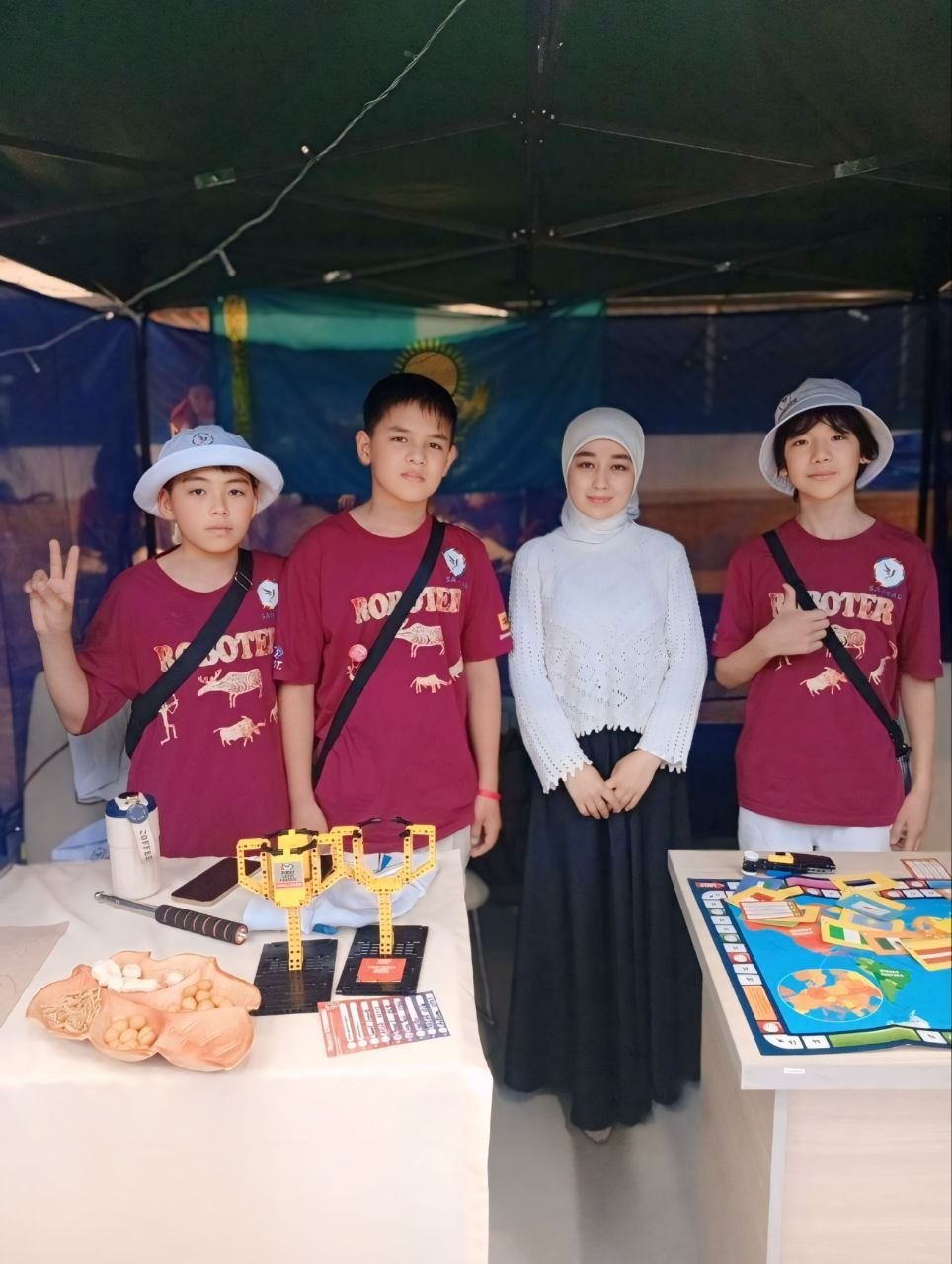
FIRST Championship is not only a competition of robots and technologies, but also a beautiful bridge that strengthens friendship, culture and unity between young people from different countries. During the International FIRST Championship, we had the opportunity to meet talented participants from different countries, exchange ideas and learn about each other’s cultures and traditions. Even though we speak different languages and are representatives of different nationalities, technology united us like one big family.
This unforgettable experience once again proved to us that science and innovation have no boundaries. Through teamwork, respect and sincere communication, we not only created robots, but also built strong international friendships. While proudly demonstrating our culture, values and traditions, we also got to know the rich heritage of other countries. Moments like these inspire young people to dream big, explore more, and believe in international cooperation. FIRST Championship is not just a competition for us — it has become a true celebration of friendship, diversity, and youth innovation.