Student of Fergana Medical Institute of Public Health
Introduction
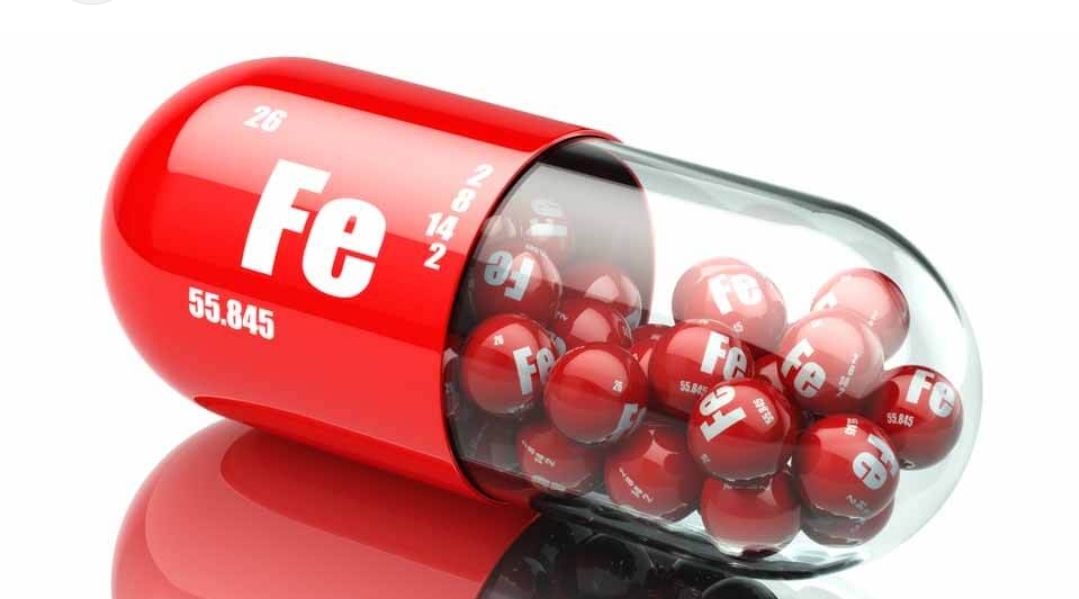
Iron is one of the most essential microelements for the human body. It plays an important role in normal cellular activity, oxygen transport, energy metabolism, and enzyme functions. A deficiency of iron in the body leads to anemia, while excess iron may cause various toxic conditions. Therefore, iron metabolism is considered a strictly regulated biological process.
Iron is mainly found in hemoglobin. Hemoglobin is a protein contained in erythrocytes (red blood cells) that transports oxygen from the lungs to tissues. In addition, iron is also a component of myoglobin, cytochromes, and many enzymes. The body of an adult human contains approximately 3–5 grams of iron.
Absorption and Transport of Iron
Iron enters the body through food products. The main dietary sources of iron include meat, liver, egg yolk, legumes, spinach, and cereals. Dietary iron exists in two forms: heme iron and non-heme iron. Heme iron is mainly found in animal products and is more easily absorbed by the body. Non-heme iron is found in plant products and is absorbed less efficiently.
Most iron absorption occurs in the duodenum and the upper part of the small intestine. Ascorbic acid (vitamin C) enhances iron absorption, whereas phytates, as well as tannins found in tea and coffee, reduce iron absorption.
Within intestinal cells, iron passes into the bloodstream with the help of special proteins. In the blood, iron binds to the protein transferrin, which transports it to the bone marrow, liver, and other tissues.
Functions of Iron in the Body
One of the main functions of iron is its participation in oxygen transport. Iron in hemoglobin binds oxygen molecules and delivers them to all organs and tissues. Iron in myoglobin creates an oxygen reserve in muscles.
In addition, iron is a structural component of many enzymes involved in oxidation-reduction reactions. It plays an important role in energy production, immune system function, and cell growth. Iron deficiency weakens the immune system and may lead to fatigue, dizziness, and reduced working capacity.
Storage of Iron
Excess iron in the body is stored in the forms of ferritin and hemosiderin. The main iron reserves accumulate in the liver, spleen, and bone marrow. Ferritin is a water-soluble protein that safely stores iron, whereas hemosiderin represents a more concentrated storage form of iron.
Iron metabolism in the body is regulated by hormones and biologically active substances. In particular, the hormone hepcidin controls the absorption of iron from the intestine and its release into the bloodstream. When hepcidin levels increase, iron transfer into the blood decreases and slows down.
Iron Deficiency and Iron Overload
Iron deficiency is one of the most common micronutrient deficiencies worldwide. It may result from poor nutrition, chronic blood loss, pregnancy, or intestinal diseases. In iron deficiency anemia, the hemoglobin level decreases, and oxygen delivery to tissues becomes impaired.
Excessive accumulation of iron may lead to hemochromatosis. In this condition, iron accumulates in the liver, heart, and pancreas, disrupting the function of these organs. Therefore, maintaining a normal level of iron in the body is extremely important.
Conclusion
In conclusion, iron is an essential microelement necessary for the normal functioning of the human body. It plays a vital role in oxygen transport, enzyme activity, and energy metabolism. Both iron deficiency and iron overload are dangerous for the body. Therefore, consuming iron-rich foods in moderation and maintaining a healthy diet are crucial for preserving overall health.
Hello, I wanted to share an idea with you: heat recovery from a fireplace.
When one heats a house, an apartment, or any living space with a fire in a fireplace or stove, heat is emitted and radiates around it, warming the room where the fire is located.
The idea I am presenting is that by recovering the hot air from the combustion in pipes, this hot air, then circulated through a system of pipes around the living space and out of the room, can carry the heat. This heat, radiating from the pipes themselves, will spread around them and be able to heat the entire space, or at least a portion of it, beyond the room where the initial fire was located.
Several applications of this idea are possible. First, it is important to avoid capturing combustion fumes and catch only the hot air. This can be achieved by carefully positioning the hot air intakes and using a filter, for example. Next, the heating system’s circulation pipes must be made of a suitable material, such as a heat-conducting metal like lightweight aluminum, to maximize the system’s performance. Finally, the hot air, being naturally mobile, must be directed either to a cooler outside outlet or, potentially, to a storage system, as properly conditioned hot air is known to retain heat well.
In the installation of these two, hot air outlet and storage systems, I believe a small turbine, either propeller-driven or powered by a dynamo, could be installed. With the right equipment, this could generate a small amount of domestic electricity. In the case of a domestic dwelling, having a stock of hot air will easily serve, if installed for this purpose, to heat water for the inhabitants’ use.
Thus, by recovering heat in the truest sense of the word, we can save firewood, firstly to improve our living conditions, and secondly, we can see it as a potential source of responsible electricity and hot water!
We could easily imagine this system on the scale of an entire building, or even a group of houses…
You’ll probably need to be a bit handy or a “DIYer” to install such a network of pipes, but I think it’s within reach of many people around the world.
And having already seen it installed at a friend’s house who followed my advice, I can guarantee you it’s remarkably efficient!
The Role of Phytochemical Components in the Therapy of Liver Diseases and Uterine Fibroids and Their Organic Chemical Classification
Senior Lecturer of the Department of Medical and Biological Chemistry
Fergana Public Health Medical Institute
Rozia Mamadaliyevna Nazirtashova
Second-Year Pharmacy Student
Merojxon Ahliddin qizi Majidova
Abstract
This article explores the biological and chemical interrelations of phytotherapy in the treatment of liver pathologies and hormone-dependent benign tumors, particularly uterine fibroids. The study mainly focuses on the chemical structures, stereochemistry, isomerism, and mechanisms of action of biologically active organic compounds such as flavonolignans, glycosides, and alkaloids found in medicinal plants including Silybum marianum, Rhodiola quadrifida, and Chelidonium majus.
In the human body, gynecological homeostasis and hepatobiliary system functions are closely interconnected. Liver cells (hepatocytes) perform the detoxification and utilization of excess steroid hormones, especially estrogen, which is considered the main stimulator in the pathogenesis of uterine fibroids. When liver function deteriorates or hepatocyte membranes are damaged, the metabolism of xenobiotics and endogenous hormones becomes impaired. As a result, the concentration of free estrogen in blood plasma increases, contributing to the enlargement of uterine fibroids, which are hormone-dependent tumors. Therefore, the use of phytochemical compounds promoting liver regeneration indirectly provides significant therapeutic benefits in fibroid therapy.
The active extract isolated from Silybum marianum fruits, known as Silymarin, is a polyphenolic compound belonging to the flavonolignan class. The most active component of silymarin is Silibinin (Silybin), with the molecular formula C25H22O10 and molecular weight of 482.441 g/mol. It naturally occurs as an equimolar mixture of two diastereomers: Silybin A and Silybin B. Their molecular difference lies in the spatial configuration of hydroxymethyl (-CH2OH) and phenyl groups at chiral centers.
Silymarin possesses antioxidant and anti-inflammatory properties. It is widely used to protect liver cells from toxins and to support treatment of liver diseases such as hepatitis and cirrhosis. It reduces damage caused by toxins, medications, and free radicals, stimulates protein synthesis in hepatocytes, and enhances liver regeneration. Silymarin is commonly prescribed as supportive therapy in chronic hepatitis and alcoholic or non-alcoholic fatty liver disease.
Typical dosage ranges from 100 to 300 mg daily.
Regioisomers
The extract also contains regioisomers such as Isosilybin A and Isosilybin B, Silychristin containing a benzofuran heterocyclic ring, and Silydianin characterized by a bicyclic ketone system. The biosynthetic precursor of these compounds is the flavanonol Taxifolin (C15H12O7).
For liver protection and профилактика, recommended doses are 140–280 mg/day. In chronic hepatitis and steatosis, 140 mg two or three times daily is administered. In Amanita phalloides poisoning, intravenous doses of 20–30 mg/kg/day are used to block amanitin uptake into hepatocytes.
Hypericin is a polycyclic aromatic compound derived from anthraquinone with the molecular formula C30H16O8. Due to its highly conjugated pi-electron system, it demonstrates anti-inflammatory and strong photodynamic activity. It reduces bile stasis in the gallbladder and hepatic ducts.
Molecular formula: C14H20O7. The molecule consists of glucose and p-tyrosol (aglycone) linked via a beta-glycosidic bond.
Salidroside possesses adaptogenic properties and stabilizes estrogen and progesterone balance. Since uterine fibroids are hormone-dependent tumors, chronic stress may disrupt hormonal balance and accelerate fibroid growth. Salidroside reduces cortisol levels and helps normalize hormonal status.
Its antioxidant and anti-inflammatory effects reduce oxidative stress and pathological fibrosis in uterine tissues. In vitro studies indicate that salidroside can suppress proliferation and induce apoptosis of gynecological tumor cells. However, sufficient clinical evidence confirming its effectiveness in shrinking uterine fibroids in humans is still lacking.
Chelidonine belongs to the benzophenanthridine alkaloid group with the molecular formula C20H19NO5. Due to the presence of a tertiary amine group, it forms salts with acids and exhibits high toxicity.
Chelidonine demonstrates cytostatic activity by inhibiting mitosis, thereby suppressing hyperplasia and proliferation of fibroid tissues. However, unsupervised use may result in hepatotoxicity.
Chemical Basis of Antioxidant Mechanisms
The hepatoprotective effects of polyphenolic compounds such as silymarin and hypericin are associated with the hydrogen-donating ability of their phenolic hydroxyl (-OH) groups. Free radicals damaging liver tissue react with phytochemical antioxidants according to the following mechanism:
Ar-OH + R• → Ar-O• + RH
Table of Medicinal Plants and Their Active Compounds
Plant Name| Active Compound| Chemical Class| Molecular Formula| Main Function
Silybum marianum| Silibinin (A and B)| Flavonolignan| C25H22O10| Restoration of hepatocyte membranes
Hypericum perforatum| Hypericin| Anthraquinone derivative| C30H16O8| Choleretic and anti-inflammatory effect
Rhodiola quadrifida| Salidroside| Phenylethanoid glycoside| C14H20O7| Modulation of estrogen/progesterone balance
This study presents new scientific perspectives on understanding the pathogenetic relationship between liver diseases and uterine fibroids based on principles of organic chemistry and modern phytopharmacology. The findings indicate that the functional state of the hepatobiliary system plays a crucial role in regulating hormonal homeostasis, particularly estrogen metabolism.
Diastereomers and regioisomers of silibinin found in Silybum marianum stabilize hepatocyte membranes and inhibit lipid peroxidation, thereby enhancing detoxification capacity and indirectly reducing hormonal imbalance that stimulates fibroid growth.
At the same time, glycosides of Rhodiola quadrifida and alkaloids of Chelidonium majus exhibit selective cytostatic and adaptogenic effects on fibroid tissue proliferation. Nevertheless, the high biological activity of phytochemical substances and the hepatotoxic risk associated with compounds such as chelidonine require careful medical supervision during phytotherapy.
Considering the potential negative effects of phytoestrogen-containing plants in patients with uterine fibroids, phytotherapy should not be regarded as an independent treatment method but rather as a supportive synergistic approach complementing standard clinical therapy under physician supervision.
Future studies focusing on the molecular mechanisms of natural polyphenols and alkaloids may contribute to the development of new safe therapeutic agents at the intersection of gynecology and hepatology.
Interpretation of the Female Image in the Works of Cho‘lpon and Hamza
Hamida Nazarova Teacher of Uzbek Language and Literature Scientific Supervisor: Normat Yo‘ldoshev
If we look at the works of Abdulhamid Cho‘lpon, we can see the richness and diversity of his creativity. His depictions of nature and human emotions attract every reader deeply. Cho‘lpon wrote poems and stories about topics connected with every person’s life. His novel “Night and Day” and many other stories reflect important social and moral issues.
Cho‘lpon especially described the difficult condition of Uzbek women of that period, the injustice and humiliation they faced, and society’s silence toward such oppression. In many of his works women are insulted, oppressed, and treated unfairly. Fathers often looked at their daughters as objects and sacrificed them for their own interests or reputation. This shows how tragic the condition of women was at that time.
One of the brightest examples is the novel “Night and Day.” In this work Cho‘lpon truthfully portrays characters such as the innocent and simple Zebi and Qurvonbibi, whose life passes in darkness because of ignorance and oppression.
Zebi is an Uzbek girl who completely submits herself to the environment around her. The writer presents her naturally, without exaggeration. Like Qurvonbibi, she spends her whole life within four walls. Although she has no education or special knowledge, her innocence and simplicity make the reader admire her.
Throughout the novel Zebi experiences many hardships. Fate punishes her mercilessly for crimes she never committed. However, despite all the suffering, her inner purity and moral beauty never change. In many literary works heroes grow and change over time, but Zebi remains the same innocent and sincere girl from beginning to end. Her suffering only increases, yet her spiritual beauty becomes even stronger.
When imagining Zebi, one sees a modest, innocent, and honorable Uzbek girl. She does not know deceit, trickery, or rebellion. She accepts injustice silently and represents the traditional image of an Uzbek woman of that era.
During the same period Hamza Hakimzoda Niyoziy was also creating literary works. The themes in Cho‘lpon and Hamza’s works are very similar: criticism of ignorance, encouragement of enlightenment, and love for the nation and homeland. While Cho‘lpon described the suffering of oppressed women, Hamza encouraged women to become educated and enlightened, to free themselves from ignorance and darkness.
In his poems Hamza wrote:
“The time has come to reveal yourself, Break your chains and scatter them everywhere.” In the novel “New Happiness” he encourages people to seek knowledge and education:
“Study and gain knowledge, Drink from the fountain of enlightenment, Free your tongue from ignorance, Live with concern for your nation.”
In Cho‘lpon’s works women suffer physically and spiritually, while in Hamza’s works women struggle for their freedom and dignity. In the drama “Poisonous Life or Victims of Love,” the heroine Maryam refuses to accept injustice and even chooses death instead of surrendering to oppression.
Maryam and Mahmud are educated young people who dream of bringing enlightenment to society. Maryam especially believes that women and men together should guide the nation from darkness toward light. However, the conservative environment destroys their dreams, and in the end they sacrifice themselves as a form of protest against the unjust system.
Cho‘lpon’s stories such as “Tulip in the Snow,” “Breakfast,” “The Baker’s Daughter,” and “In Moonlit Nights” also reveal the patience, sincerity, and simplicity of Uzbek women. In “Tulip in the Snow,” the fate of the young girl Sharofatxon resembles the tragic fate of Maryam. She is forced to marry an old religious leader against her will.
Unlike Maryam, Sharofatxon does not resist injustice. She obeys her parents and submits to destiny. This difference can be explained by education and awareness. Maryam becomes educated and develops her worldview, while Sharofatxon remains powerless because of ignorance and lack of opportunity.
The title “Tulip in the Snow” itself carries symbolic meaning. The tulip symbolizes a young girl in the spring of her life, while snow symbolizes coldness, old age, and tragedy. The story criticizes a society in which young girls are sacrificed to old men in the name of tradition and blind respect.
The image of the old Eshon creates strong anger in the reader. Even though he is very old, society praises him when he takes the young bride. This demonstrates the deep ignorance and injustice of that period.
A father giving away his daughter like an object naturally creates hatred toward such behavior. Girls, just like boys, have the right to happiness, freedom, and a meaningful life. The reason for such oppression was ignorance and lack of education.
Education and morality play an important role in human life. An educated person can resist cruelty and protect oppressed people. Unfortunately, in the past many people had no opportunity to receive education, while wealthy people spent their money on pleasure instead of knowledge. Ignorance brought selfishness, cruelty, and indifference, which became the main causes of women’s suffering.
References: 1. Qosimov B., Yusupov Sh., Dolimov U., Rizayev Sh., Ahmedov S. Uzbek Literature of the National Awakening Period. 2. Sultonxo‘jayeva Sh. The Skill of Creating Characters in Cho‘lpon’s Stories. 3. Haqqul Ibrohim. Two Articles about Cho‘lpon. 4. Cho‘lpon A. Night and Day. 5. Niyoziy H. Poems for Uzbek Women. 6. Niyoziy H. Poisonous Life or Victims of Love. 7. Niyoziy H. New Happiness.
The magician, who cut off a rhinoceros’s horn and wore it on his head,
Borrowed a penguin’s wings to caress the texture of a green apple.
Click, he opens the door to the heart and steps inside.
Cut in half the time you have experienced and tap on its flank.
Dress each and every seed with imagination.
Lift the shade, as if invisible hours are opening their eyes one by one.
Pay heed to the mesmerizing silhouette from behind, and the tears in between.
The desert wind blows in, carving away the walls of the mind.
An occasional, unexpected intent—the hunger grows desperate.
Causing a stir at the center of life, the fallen apple’s shoulders tremble.
The magician secretly, stealthily covets
Dali’s art book hidden inside his hat.
On days when his neck stiffens from trying to soothe colliding tendons,
He stands Gala from the drawer upon a plate.
Shall we stir the hardening spring water with the rhinoceros’s horn?
Shall we borrow the magician’s hat and wear it for just ten months?
Who knows? On the first day of the New Year, in a major daily newspaper,
We might just read the smile of a ripe, red apple.
마술사는 모자를 쓰고
연명지
코뿔소의 뿔을 잘라 머리에 쓴 마술사
펭귄의 날개를 빌려와 풋 사과의 결을 매만지다
딸깍, 심장의 문을 열고 들어가
경험한 시간의 반을 잘라 측면을 두드려보세요
씨앗 하나 하나에 상상력을 입혀주세요
보이지 않는 시간이 하나 둘 눈 뜨듯이 그늘을 들어 올리세요
매혹적인 뒷태와 사이의 눈물에 유념하세요
사막의 바람이 불어와 마음의 벽을 깎아낸다
간간이 허를 찌르는 의도, 허기가 간절해진다
삶의 중심에서 소동을 부리다 떨어진 사과의 어깨가 떨린다
마술사는 몰래몰래 모자안에 숨겨논
달리의 화집에 눈독을 들여요
충돌하는 힘줄들을 말리느라 뒷골이 당기는 날에는
서랍 속 갈라를 접시위에 세우지요
코뿔소의 뿔로 굳어가는 샘물을 저어볼까요
마술사의 모자를 빌려와 열 달만 써볼까요
혹시 알아요 신년 첫날 중앙 일간지에
빨갛게 익은 사과의 미소를 읽을 수도
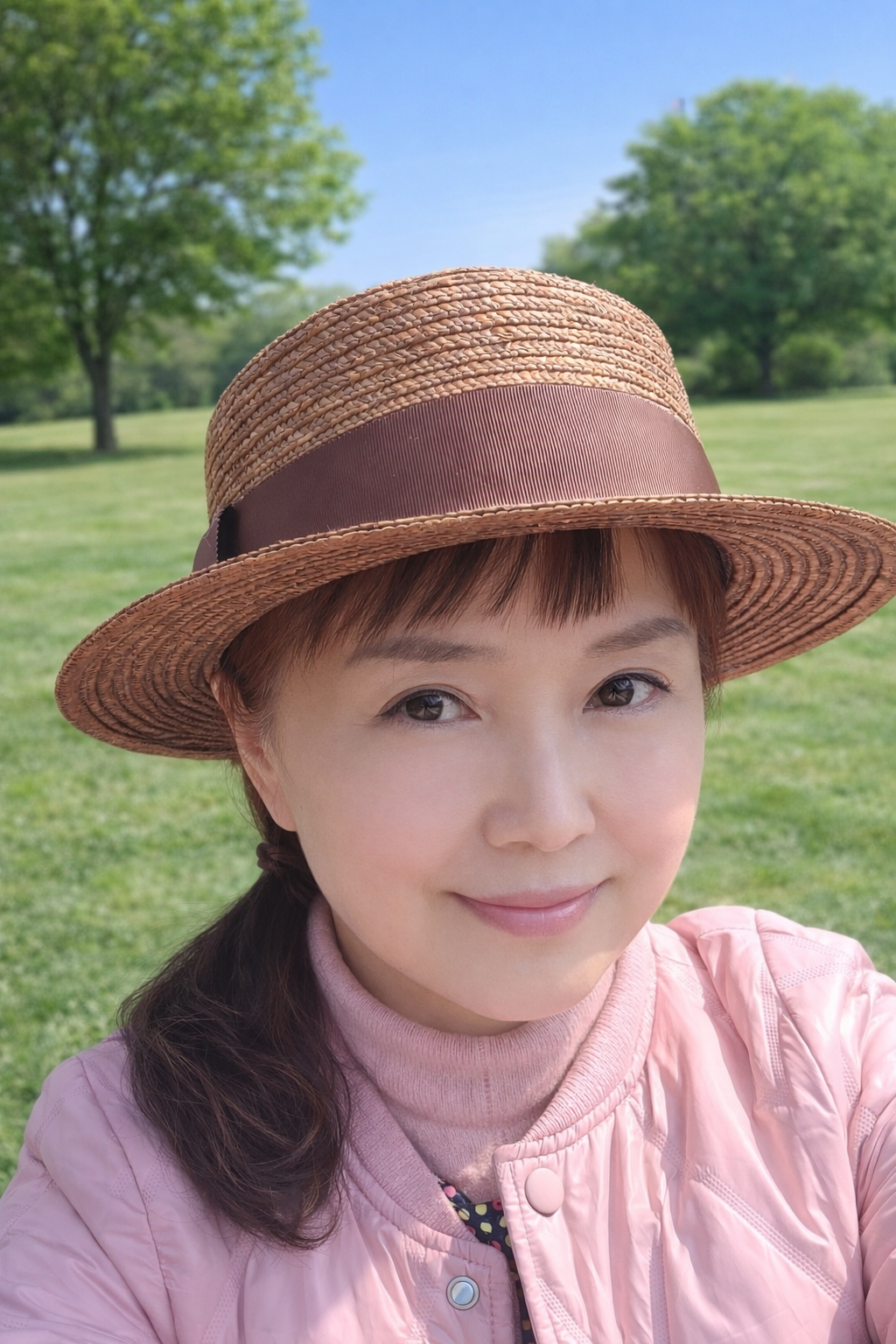
Profile
Poet Yeon Myeong-ji began her literary career in 2013 with the poetry collection 『Gashibi』, published in the Minerva Poetry Series.
Her published works include the poetry collections 『Sitting Like an Apple』 and 『Where would the House of the Sorry’ be? 』 the e-poetry collection 『Seventeen Marco Polos,』 and the travel essay 『Step by Step, Walking the Camino.』
She has received the Tolstoy Literary Award, the Homi Literary Award, the Cheongsong Gaekju Literary Award, and the Aviation Literary Award. In 2025, she was awarded the Bronze Prize in Poetry at the Literature Asia Awards.
Her poems have been translated and published in local languages in India, Pakistan, Kosovo, Italy, Egypt, the United States, and Belgium, Greece, UK, and Iraq.