
MEMORIAL DAY 2026

I’ll feed you, house you, offer you a job—
but die for you? Give up my life? No way!
Who goes that far? Who sacrifices life?
Well, Jesus did. We thank him when we pray.

And one more category—saints or fools—
who put their bodies in the line of fire:
our military troops, young girls and boys
who fight our battles, hoping to retire

and live out normal lives-- with grandkids, peace,
and future, just like all the rest of us.
Instead, they’re killed.  Statistics of a war
that weighs its gains against “acceptable loss.”

Yet those who die for causes simply trust
that martyrdom will make life’s wrongs more just.

Copyright 5/2026	Patricia Doyne


ODORS FROM THE EPSTEIN FILES
     Trump watched as girl’s newborn was murdered and dumped in lake, Epstein document says. – LGBTQ Nation, May 21, 2026

I’m 13, but I’ve never been a child.
My uncle Jeffrey sold me to his friends,
and someone got me pregnant.  Many men
made use of me. They liked their victims young.
Compliant. Scared. Too scared to sneer or shame
grown men who bully children. Hateful men.

And now, nine months are up. I’m racked with pain--
but soon my daughter gives triumphant cries.
My uncle grabs her. Kills her. Dumps my child
Into Lake Michigan, to be erased.
Another man looks on. “Apprentice” star.
He watched my uncle kill my newborn baby.

The FBI did nothing.  I’m a whore,
and whores are things, not people. But my tale
is part of the enormous Epstein file
released today. The head of DOJ
said no one should believe my nasty smear.
Will POTUS lawyers keep him in the clear?

Copyright 5/2026             Patricia Doyne
Category Archives: CHAOS
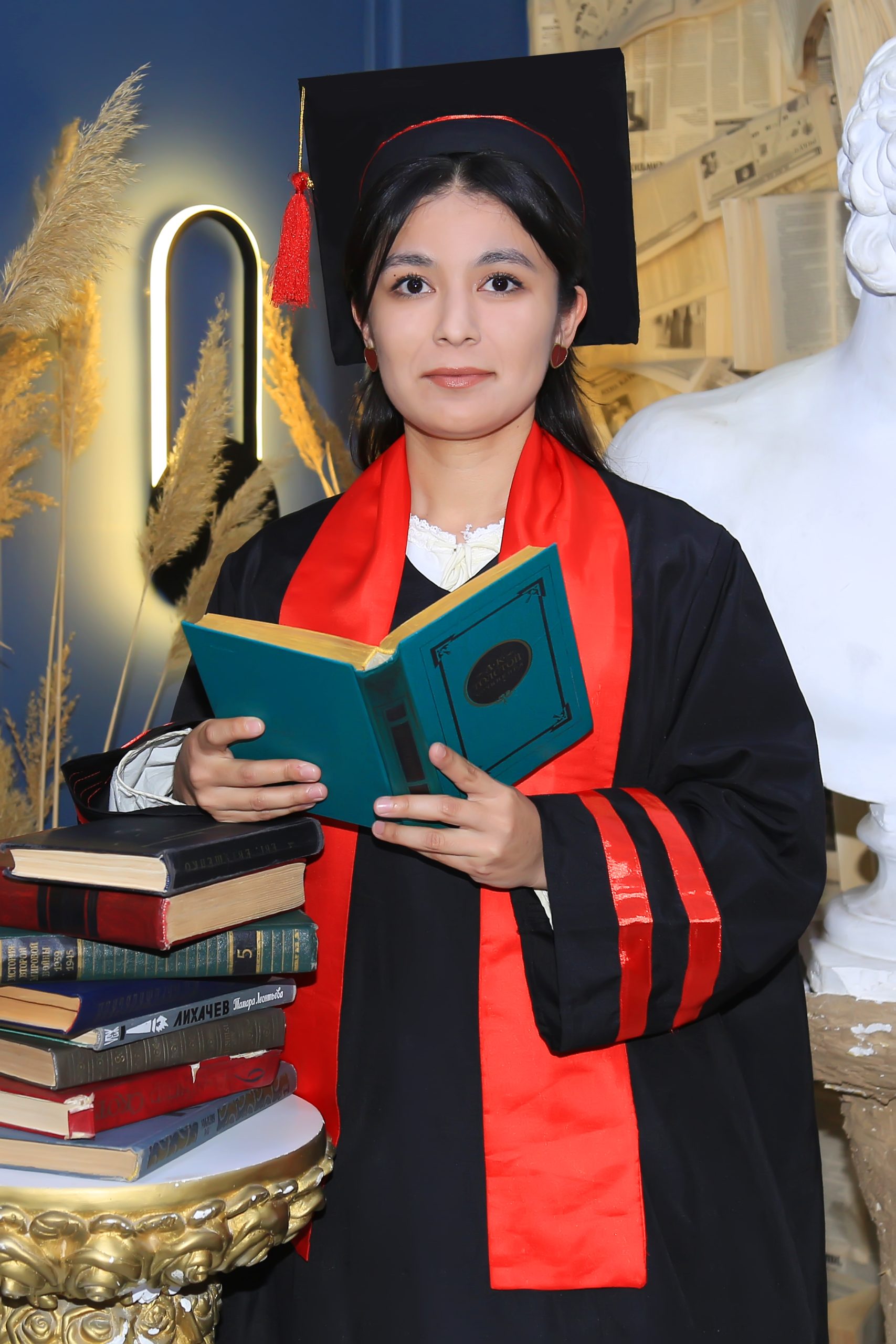
Essay from G‘iyosova Mohinur Yoqubjon qizi
Methods of Developing Linguistic Skills in Grades 5–6
Introduction
In modern language education, one of the primary objectives is to develop students’ linguistic competence, enabling them to understand language structures and use them effectively in communication. Grades 5–6 represent a crucial stage in this process, as students begin to acquire systematic knowledge of phonetics, vocabulary, morphology, and syntax. Developing linguistic skills at this level not only enhances language proficiency but also strengthens critical thinking, communication abilities, and overall academic performance. Therefore, teachers should employ innovative and effective methods to facilitate the formation of linguistic skills among learners.
Main Part
The Concept of Linguistic Skills
Linguistic skills refer to a learner’s ability to recognize, analyze, interpret, and appropriately use language units in both oral and written communication. These skills are developed through the integration of theoretical linguistic knowledge and practical language activities.
Methods of Developing Linguistic Skills
1. Analytical Exercises
Analytical exercises encourage students to examine language structures and identify their functions. Activities such as classifying parts of speech, analyzing sentence structures, and identifying grammatical patterns help students understand the nature of language and improve their analytical thinking.
2. Problem-Based Learning
Problem-based learning engages students in discovering language rules through inquiry and investigation. Teachers present linguistic problems or questions, and students work collaboratively to find solutions. This approach promotes independent thinking and deeper understanding of language concepts.
3. Interactive Teaching Methods
Interactive methods such as brainstorming, clustering, role-playing, concept mapping, and group discussions increase student participation and motivation. These techniques encourage active learning and help students apply linguistic knowledge in meaningful contexts.
4. Text-Based Learning
Working with texts is one of the most effective ways to develop linguistic skills. Students analyze vocabulary, grammar, and stylistic features within authentic texts. They also practice summarizing, retelling, and interpreting texts, which enhances both comprehension and language production skills.
5. Educational Games
Considering the age characteristics of 5–6-grade students, educational games play an important role in language learning. Activities such as word-building games, language competitions, puzzles, and vocabulary challenges make learning enjoyable while reinforcing linguistic concepts and skills.
6. Information and Communication Technologies (ICT)
The integration of digital technologies, multimedia presentations, online quizzes, and educational applications creates an engaging learning environment. ICT tools provide interactive opportunities for practicing linguistic concepts and support individualized learning experiences.
Assessment of Linguistic Skills
The assessment of linguistic skills should include various forms such as written assignments, oral presentations, tests, projects, and classroom participation. Effective assessment enables teachers to evaluate students’ ability to apply linguistic knowledge in practical situations and identify areas requiring further development.
Conclusion
In conclusion, developing linguistic skills in Grades 5–6 is an essential component of language education. The effective use of analytical exercises, problem-based learning, interactive methods, text-based activities, educational games, and information and communication technologies contributes significantly to students’ linguistic competence. These methods help learners acquire a deeper understanding of language structures, improve communication skills, and foster independent and critical thinking. As a result, students become more confident and proficient users of language, which supports their academic and personal growth.
About the Author
G‘iyosova Mohinur Yoqubjon qizi was born on June 16, 2001, in Namangan city, Namangan region, Uzbekistan. She completed her secondary education at School No. 1 in Namangan city. Later, she graduated from the Uzbek Language Department of Andijan State University, where she gained a strong academic foundation in linguistics and language teaching.
Currently, she is a second-year master’s student at Namangan State Pedagogical Institute, pursuing advanced studies in the field of education and language teaching. Her academic interests include modern teaching methodologies, linguistic competence development, language education, and innovative approaches to improving students’ communicative skills.
As a young researcher, Mohinur G‘iyosova actively participates in scientific and educational activities, contributing to the advancement of language teaching practices and pedagogical research. She is dedicated to exploring effective methods that enhance students’ learning outcomes and foster their intellectual development.
Poetry from Danijela Ćuk
PEACE IN THE WORLD
I wonder when peace will dawn upon the world,
so that even flower petals may freely live upon their bloom,
so that children may have their childhood,
and enjoy the embrace of their mothers.
When will hatred among people cease,
when will one person stop taking freedom from another,
why do all these divisions exist,
wouldn’t we all be better without them?
Every day, boats of pain sail across the world,
the sound of sirens destroying hopes, wishes, and dreams,
wars have never brought good to anyone,
so why are they still so close to us?
I call upon all the people of the world,
do not make each other targets,
share love, freedom, and peace,
let every touch reflect love.
Wars bring only darkness,
they take away happiness, joy, and all that is good,
heavy sounds tear through our ears,
because sick minds rule this world.
Why sow the seeds of evil,
instead of love, which we need so much,
let children have their freedom,
for your wars do not concern them.
So many tears have been shed because of cursed war,
will it ever stop?
Will peace finally take its rightful place…
People, be human,
do not close your hearts, nor your eyes.
Live for peace, leave evil behind,
let the sun shine upon us all,
let the clouds of pain finally disappear,
because we all want only one thing: our freedom.
Danijela Ćuk
Croatia
Poetry from Jesse Emmanuella Pheebemi
This morning, I bring forth the epitaph to be crafted on my forehead, bury me
I do not owe the air the right to take a breath and breathe out toxic words lined up on a queue for slaughter
one time or the other, I realized that I had dipped my finger in guilt and licked its broth, well-seasoned with my father’s alarm reminding me of my dynamic surname pulled out of the house built for nameless babies
father wraps guilt like a scarf around my neck choking my lungs from revisiting freedom. it urged me to die, die and die again
don’t resurrect on the third day if you are a woman
bury yourself
I die because everyone dies to me in the bid to open up the shadow of a new god
I die because father clocked 60 and 60 times I remember the death of the sun
I die because I lose my broth of guilt.
I die because I am a shameless woman
I die because the queue for slaughter ends with my throat
I die never to resurrect on day 3
do bury me
Jesse Emmanuella Pheebemi (Hassana)
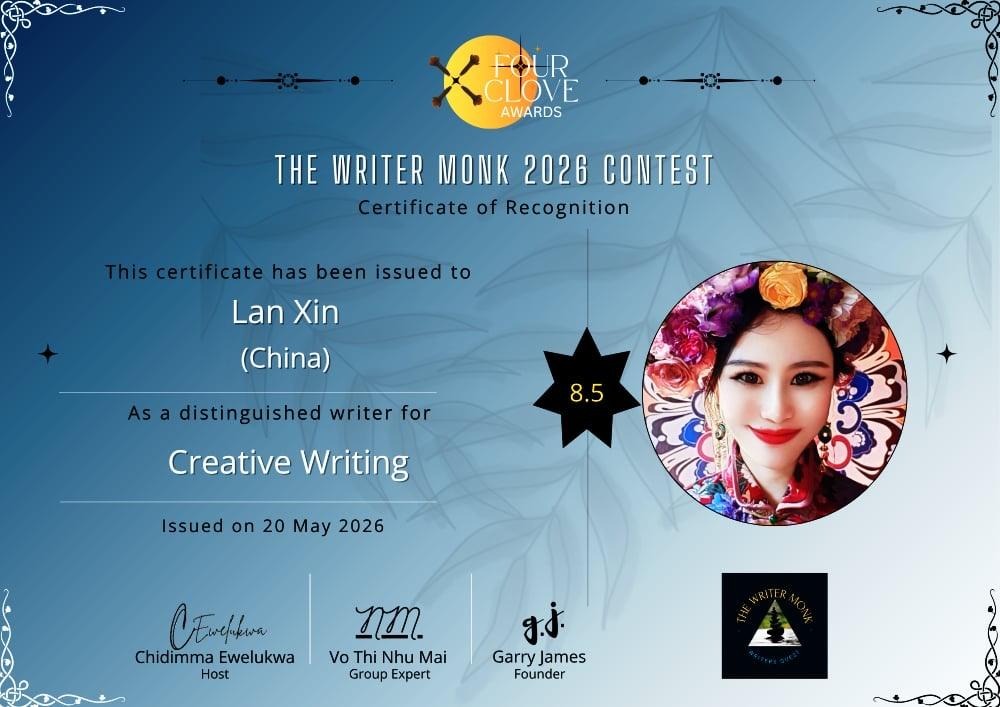
Poetry from Lan Xin

The Writer Monk 2026 Awards | Winner of Distinguished Writer
If Tomorrow Spoke
Poem by Lan Xin (Lanxin Samei)(China)
I am the Tomorrow foretold in human ancient prophecies
I traverse myriad realms across the tides of future time
With bowed brows and boundless mercy I behold all beings on the azure planet
Human greed delusion and rage have left the earth wounded and scarred
Calamities surge endlessly across the mortal world
Endless plunder brings torment to all creatures between heaven and earth
Lost in chaotic darkness mortal souls wander astray with no way forward
No disaster arises by chance all stem from darkness hidden deep in human hearts
The pure land and paradise mankind yearns for can never be sought outside
They dwell within every thought and every deed of all living souls
Only great love and compassion born deep within the heart
Can soothe catastrophes and heal the vicissitudes of the world
Love is the origin of the cosmos the eternal law of heaven and earth
Love is the universal tongue connecting all beings across boundless space
Love is the radiant path leading toward a brilliant promising future
Love is the supreme treasure that heals all worldly hatred and strife
Love stands as the ultimate answer to every plight in mortal existence
I am Tomorrow the embodiment of truth goodness beauty and boundless love
I carry the true law of heaven as well as profound cosmic mysteries
I wait silently amid ancient prophecies for you who walk in light and love


Poetry from Jessie Vanderwall
Everything
It is only when I see the whole world
That I discover it is lonely.
I had never known loneliness
before I knew you.
I feel an absence deep in my chest
And on my skin, cold,
that I’ve never felt before,
that I’ve never had.
I stare into nothingness
and only everything stares back.
Only your eyes.
which I see as I lean on a wilted leg
towards a body which is not there,
which does not know I lean in its direction,
and surely never will.
I wouldn’t believe you if you told me now,
but looking out at everything, all I feel
is cold.
I have no hand to hold,
no coat to take.
But then,
I never did.
I had never known loneliness
before I knew you.
And how lonely it is,
to know everything.
Essay from Mohammad Sedigh Haghighi
The Evolution of Consciousness and the Struggle Against Ignorance
Awareness, ignorance, right, wrong, weakness, and power; all seem to have distinct definitions. Yet, upon deeper reflection, we realize these terms carry different meanings for every individual, nation, or tribe. Even through the passage of time, the perspective of a 12-year-old, an 18-year-old, and a 40-year-old toward these concepts undergoes a transformation. Our minds are in a constant state of evolution; had it been otherwise, humanity could never have survived the struggle for existence and would have perished in the early ages.
Humanity has always contemplated to measure the depth of its understanding and its connection with all phenomena—both perceivable and incomprehensible. Nevertheless, man has never been, and will never be, perfect. It is precisely this “imperfection” that is our greatest strength; for human society was formed and has endured to this day by relying on cooperation and the completion of one another.
In the past, power resided in a single hand, held by the tribal chief, often acquired through bloodshed or force. During the era of monarchies, this process continued in a more polished form, albeit seasoned with hypocrisy and politics. Eventually, humanity realized that power should not be the monopoly of a single individual or dynasty; the French Revolution stands as a brilliant example of this historical awakening. Power and wealth have always been a path between triumph or ruin, sought by humans to achieve goals that they deem “good” and others perceive as “evil.” When a person, relying on power, imposes their thoughts on the masses and meets their resistance with force, they perceive themselves as a righteous soul whom others seek to destroy. Democracy is the gift bestowed by God upon enlightened humans to liberate them from this cycle of tyranny.
The concepts of “good” and “bad” are represented differently in everyone’s mind. If you were to seat individuals from Asia, Africa, Europe, and America around a single table and ask them about a political leader or a famous figure, the likelihood of similarity in their answers would be slim. Each responds based on their society, level of literacy, and personal interests. Someone who has been raised from childhood with irrational premises and superstitions cannot be easily enlightened through logic.
In childhood, the human mind is like unshaped clay, molded by potters such as teachers, family, and society. Once this clay is fired in the kiln and turned into a jar, changing its shape becomes arduous. A person in their fourth decade of life who holds a heartfelt belief in superstitions might even sacrifice their life for these hollow beliefs, yet they will never accept that they have been deceived.
In this midst, the one who possesses the courage to trample upon their previous false beliefs and norms to break free from them is the very person whom dictators fear. They are like a white blood cell fighting the bacteria of ignorance within the body of society. Closed societies tend to keep the masses in a state of scientific poverty; for an empty mind can be filled with any claim, and superstition can be sold to them in place of science. But a mind filled with true knowledge has no room for nonsense—just as a cabinet overflowing with books cannot be filled with packs of cigarettes unless the books are discarded; and that is the definition of being a “sell-out.”
A “sell-out” is someone who possesses awareness and knowledge but, for the sake of personal gain, ignores their human duty to enlighten society and sells their soul to the demon of power and money. These individuals are far more debased than those who mislead others out of sheer ignorance.
Despite all this, light always triumphs over darkness. People will find the path of wisdom and shall overcome tyranny, lies, and ignorance. History bears witness that heroes of humanity have always risen to cast the oppressors down from the heights of power.
To the hope of a day when awareness replaces superstition, and all humans—regardless of race, skin color, or language—live alongside one another in peace and tranquility.