
BUSON’S ADVICE:  HAIKU OF THE FOUR ELDERS

Bashō, Buson, Issa and Shiki first by the judgment of the years, but then who?  Buson said: “Seek out Kikaku, visit Ransetsu, recite Sodō, and accompany Onitsura. Meet those four elders every day.”  For today, then, knocking on Kikaku’s door, a visit with Ransetsu, and a walk with Onitsura.  But Sodō--he’s hurrying off to the melon patch.  Another time for that one.

Overtures

Waking before dawn, see
How the constellations
Are all
Turned around!

--Ransetsu tr. Harry Behn and Peter Beilenson

Every morning
Shaking out the fireflies
When drying the straw rain-coat.

-- Ransetsu tr. R. H. Blyth (1)

In my four-foot bamboo hut this spring,
There is nothing; there is everything.

-- Sodō tr. Harold Stewart


The Great Morning

The Great Morning
Winds of long ago
Blow through the pine trees.

-- Onitsura tr. R H. Blyth (2)

Its first note;
The uguiso
Is upside down.

-- Kikaku tr. R. H. Blyth (3)

Here water,
And there water,
The waters of spring.

-- Onitsura tr. R H. Blyth (3)

The cool breeze
Fills the empty vault of heaven
With the voice of the pine-tree.

-- Onitsura tr. R H. Blyth (4)

The wind ceases;
Water drips in the forest;
A kankodori sings.

-- Kikaku tr. R. H. Blyth (4)

Above the pilgrims
Chanting
On a misty road
Wild geese are flying.

-- Ransetsu tr. Harry Behn and Peter Beilenson

Lightning flashing
All night in the east
This morning
Smoulders in the west.

-- Kikaku tr. Harry Behn and Peter Beilenson

At last, when her song
Is still
The goddess becomes
A small green bird.

-- Onitsura tr. Harry Behn and Peter Beilenson


Melon Patch

The morning after the storm;
The melons alone
Know nothing of it.

-- Sodō tr. R. H. Blyth (4)

Gathering young greens
In the garden, they called out
To a kerchief.

-- Kikaku tr. R. H. Blyth (3)

Pale, the yellow rose
In spring already—bitter
Too, the lettuce grows.

--- Sodō tr. Kenneth Yasuda

Able to look after
Its own self,--
The melon.

-- Ransetsu tr. R. H. Blyth (1)


Pleasure Quarter

A courtesan enclosure
A hototogisu sings
In the dawn
I am made to buy an umbrella.

-- Kikaku tr. R. H. Blyth (2)

The whole tenement house,
Having locked their doors,
Are dancing and dancing.

-- Kikaku tr. R. H. Blyth (5)

Catching goby;
A river village, a mountain quarter,
A wine-shop flag in the wind.

-- Ransetsu tr. R. H. Blyth (4)


Dolls for Sale

There a beggar goes!
Heaven and earth he’s wearing
For his summer clothes.

-- Kikaku tr. Harold Henderson

A summer shower;
A woman sits alone,
Gazing outside.

-- Kikaku tr. R. H. Blyth (4)

A childless woman…
How tenderly she touches
Little dolls for sale.

-- Ransetsu tr. Peter Beilenson (2)


Moon Viewing

A copper pheasant wakes with shrill-edged cry;
The silver crescent cuts the chilly sky.

-- Kikaku tr. Harold Stewart

Harvest moon is bright,
Casting the shadows of pine
On the mats tonight!

-- Kikaku tr. Kenneth Yasuda

This autumn
With no child on my lap
Gazing at the moon.

-- Onitsura tr. Adam Kern

The frenzied dash and dart of dragonflies
Is stilled:  a crescent moon begins to rise.

--Kikaku tr. Harold Stewart

Painting pines
The blue sky
The moon tonight

-- Ransetsu tr. Geoffrey Bownas and Anthony Thwaite

Harvest moon,
And mist creeping
Over the water

-- Ransetsu tr. Geoffrey Bownas and Anthony Thwaite

Leading me along
My shadow goes back home,
From looking at the moon.

-- Sodō tr. Harold Henderson


Night

How cool things are:
The coolest—on Musashi Plain
A falling star.

-- Kikaku tr. Harold Henderson

To bring me the flowers,--
Oh, that the evening path of the messenger
May be moon-lit!

-- Kikaku tr. R. H. Blyth (3)

Stillness . . . then the bat
Flying among
The willows
Black against green sky.

-- Kikaku tr. Peter Beilenson (1)

Come come!  Come out!
From bogs old frogs
Command the dark
And look . . . the stars!

-- Kikaku tr. Peter Beilenson (1)

In stony moonlight
Hills and fields
On every side
White and bald as eggs . . .

-- Ransetsu tr. Harry Behn and Peter Beilenson

A bowel-freezing night
The sound of an oar striking the wave,--
Tears.

-- Kikaku tr. R. H. Blyth (2)


Blossoms

On top of skeletons
They put on a gala dress, and then—
the flower-viewing!

-- Onitsura tr. Harold Henderson

Over and over,
Sprinkled over by blossoms
Drowsily drowsily.

-- Onitsura tr. Adam Kern

The cherry blossoms having fallen,
Enjôji Temple
Is quiet once more.

 -- Onitsura tr. R H. Blyth (2)

Oh, how green
The threads of the willow,
Over the stilling waters!

-- Onitsura tr. R H. Blyth (3)

The wild cherry:
Stones also are singing their songs
In the valley stream.

-- Onitsura tr. R H. Blyth (3)

When cherry trees bloom
Birds have two legs
Horses four

--Onitsura tr. Faubion Bowers

Gusty spring breezes . . .
But the stubborn
Plum buds still
Gripping their thin twigs.

-- Onitsura tr. Peter Beilenson (3)

Silent the garden
Where the
Camellia-tree
Opens its whiteness.

-- Onitsura tr. Peter Beilenson (3)

A blossom of the plum,
A blossom’s worth
Of warmth.

-- Ransetsu tr. R. H. Blyth (1)


Tea Bowls

Evening squall!
Scampering among the houses,
Squawking ducks.

-- Kikaku tr. Adam Kern

A tree frog, clinging
To a banana leaf—
And swinging, swinging.

-- Kikaku tr. Harold Henderson

Play about, O, fair
Beads of dew, from one grass-leaf
To another there!

-- Ransetsu tr. Kenneth Yasuda

The grain of rice
Stuck on my face
I gave to a fly.

-- Ransetsu tr. R. H. Blyth (1)

No letter
No message,--
Five rice dumplings in bamboo leaves.

-- Ransetsu tr. R. H. Blyth (1)

The pine cricket
Does not make a sound -
This black bowl

-- Ransetsu tr. R. H. Blyth (2)

Flying in from the bamboo-blind
The swallow is tame
With the beautiful girl.

-- Ransetsu tr. R. H. Blyth (3)

Catching the reflection
Of the yamabuki,
The spring is yellow.

-- Ransetsu tr. R. H. Blyth (3)

The pampas grass,--
It sums up all
The loneliness of Saga.

-- Ransetsu tr. R. H. Blyth (5)


Seasons

New Year’s Day
Dawns clear, and sparrows
Tell their tales.

-- Ransetsu tr. Geoffrey Bownas and Anthony Thwaite

In the New Year dawn
Solemn and
Deliberate
Tall cranes go marching.

-- Kikaku tr. Peter Beilenson (1)

Green cornfield:
A skylark soaring,
There—swooping.

-- Onitsura tr. Geoffrey Bownas and Anthony Thwaite

Even I who have
No lover . . .
I love this time
Of new kimonos.

-- Onitsura tr. Harry Behn and Peter Beilenson

Daybreak—
On the corn shoots
White frost of spring.

-- Onitsura tr. Geoffrey Bownas and Anthony Thwaite

In spring, frogs sing;
In summer,
They bark.

-- Onitsura tr. R H. Blyth (3)

Trout leaping:
On the river-bed
Clouds floating.

-- Onitsura tr. Geoffrey Bownas and Anthony Thwaite

How hot, on afternoons without a breeze,
The cobwebs hanging from the dusty trees!

-- Onitsura tr. Harold Stewart

How woeful
The wail of a cicada
Caught by a hawk.

-- Ransetsu tr. Adam Kern

Paulownia leaves
Scatter, crinkle, one by one
On the breeze.

-- Ransetsu tr. Adam Kern

Winter having come,
The crows perch
On the scarecrow.

-- Kikaku. tr. R.H. Blyth (5)

Blue-shadow-bolted . . .
The castle gate
Of Edo
In frozen moonlight.

-- Kikaku tr. Peter Beilenson (3)


Afterwords

The table of the spirits;
Dew, and tears,
These are the oil.

-- Ransetsu tr. R. H. Blyth (5)

A leaf is falling…
Alas alas another
And another
Falls.

-- Ransetsu tr. Harry Behn and Peter Beilenson

And so the spring buds burst, and so I gaze,
And so the blossoms fall, and so my days . . .

-- Onitsura tr. Harold Stewart


Biographical Notes

Takarai Kikaku (1661—1707)
The son of a physician, Kikaku followed a muse instead of the family practice and became one of Bashō’s most accomplished students.  He studied Confucianism, Chinese poetry and painting.   His account of Bashō’s death can be found here: http://simplyhaiku.com/SHv4n3/features/Nobuyuki.html

Uejima Onitsura (1661—1738)
Born into a family of saké brewers, Onitsura sold his share of the family business to a younger brother and immersed himself in the study of poetry.   His efforts to elevate the writing of haiku from a parlor game to a serious form of literature have historically been overlooked and over-shadowed by the Bashō narrative.  Current scholarship credits him with equal and independent contributions.

Hattori Ransetsu (1654—1707)
Eldest son of a low-level samurai and a disciple of Bashō, Ransetsu studied Zen under Saiun Hōjō and painting from Itchō. R. H. Blyth states he was born in a farmer’s house and served several feudal lords as a samurai.  One account states Ransetsu's first wife was a bathing house prostitute. She died after giving birth to a son, whereupon Ransetsu took a geisha as his wife.

His poetry first appeared during 1680 in a pair of anthologies compiled by Bashō. He was numbered among the Ten Philosophers of Bashō’s circle of students.  He shaved his head and became a monk when Bashō died in 1695.  His poem on the master’s passing:

Sent off
By the winter blast
His retreating figure.

Ransetsu’s religious convictions did not prevent him from continuing his writing although he did not leave behind a large volume of work.  He was known as an established poet by 1702 and he authored a diary of his travels to Southern Japan three years later.  Little is known of his own death in 1707.

Yamaguchi Sodō (1642—1716)
Said to have been employed as a flood control engineer, Sodō studied the tea ceremony, calligraphy, and Confucianism.  He lived for a time near the lotus-filled Shinobazu-no-Ike Pond in Ueno.


Sources of the translations

Adam Kern, The Penguin Book of Haiku

Faubion Bowers, The Classic Tradition of Haiku

Geoffrey Bownas and Anthony Thwaite, The Penguin Book of Japanese Verse

Harold Henderson, An Introduction to Haiku

Harold Stewart, A Net of Fireflies

Harry Behn and Peter Beilenson, Haiku Harvest

Kenneth Yasuda, A Pepper-Pod: A Haiku Sampler

Peter Beilenson (1), Japanese Haiku

Peter Beilenson (2), The Four Seasons

Peter Beilenson (3), Cherry Blossoms

R. H. Blyth (1), A History of Haiku Volume One

R. H. Blyth (2), Haiku I:  Eastern Culture

R. H. Blyth (3), Haiku II:  Spring

R. H. Blyth (4), Haiku III:  Summer/Autumn

R. H. Blyth (5), Haiku IV:  Autumn/Winter
Category Archives: CHAOS
Essay from Mekhriniso Ergashova
GOLDEN RULES FROM SUCCESSFUL OWNERS

Success is when a person turns his dreams into a goal, overcomes difficulties, climbs a huge mountain and conquers the peak.  Everyone is lucky in life, but not everyone can be successful.  It requires not only hard work and effort, but also smart thoughts from a person.  If success depended on hard work and effort, about 90 percent of people in the world would climb to that podium.  Many people ask what is the most important thing in achieving all their goals.  And I choose to answer only that trust, hope and prayer are interconnected.  Because where there is a prayer, the white flower of hope, which was buried under thick snow, will definitely return, and where the flowers of hope have awakened, steadfast faith will appear.  Just believe.

Everything, everything is waiting for you.  We climb the stairs to the podium of success.  He has a rule, no one has ever climbed the ladder of success with his hands in his pockets.  Do you understand  As long as we breathe in life, there is hope.  As long as there is hope, there is prayer.  And the most important thing is that our own success is waiting for us somewhere.  Do you want to know the basic 12 rules by collecting the words of famous people who are known to the world for their action and smart thought tactics?  Let’s see together…

   Do you want to be successful in your business, but don’t know where to start?  You can get on this path through the stories of successful people.  So, here are 12 rules that successful people follow differently:

 Pursue the right goals.
 Successful people have realistic goals.  That is, they set their own goals within their capabilities, and move forward in a planned manner.
 Be persistent and act quickly.
 Success depends on the decisions you make and the steps you take.  If your resolve is to truly pursue your goals and achieve them, there is no reason why you should not achieve them.

 It Is necessary to work effectively, not to be busy.
 That is, the factor leading to success is not too much work without conscious thoughts, but smart thinking.  Because hard work and effective work are two different concepts.
 Make a logical and informed decision.
 When making a decision, listen to your mind, not your feelings and emotions.

 Not trying to be a perfect person all the time.
 It is necessary to be not only in the non-dangerous environment, but also in the dangerous environment. Tasks and goals should be taken for granted.

 If every task is told that it is too complicated, I can’t do it, the ego will accept it in the same way and the person will stop trying.  As a result, trust is lost.
 Focus on small and regular developments.
 It is only necessary to follow the development.
 Learning from mistakes.
 That’s right, spending time with people whose goals are similar to yours.

 The main thing is to live life in a balanced way.
 If you want to spend your life happily, attach yourself to goals, not people and things.  In order to be successful, it is necessary to work intelligently and efficiently like bees.  The most important thing in conquering the peak and planting the flag is not to win everything, but to stand tall and proud after the stream of blows during the process of climbing to the top.  Because as Shams Tabrizi said: “If you look at life, it seems to be over, everything will end.”  But if you look again, it will be as if everything has started anew.”  You have to wait for miracles and believe in the dawn.  Because there are no nights without dawn.
                                                 ~~~
Daughter of Ergashova Mehriniso Husnidin, student of the 2nd stage of the Bukhara State Pedagogical Institute.
Poetry from Mark Young
oxygen deprived

Polka dots & mung beans, &
millions of dead fish floating
& coating kilometers of river.
Essentially they're all ingre-
dients, the type of thing you
keep in your kitchen cupboards

along with other ingredients.
Ready to be thrown into a
mixing bowl & turned quickly
into a topical &/or nostalgic
treat should your relatives
unexpectedly come around.


Gourmand eyes

Wearing a
seasonally
significant
hachimachi
headband

the kami-
kaze poet
prepares to
eat himself
to death.

He fails. &
the wind
is not
divine.


He spent the morning

deciding what color Model T to ask for. Assembly lines were de facto machines of war—the Arsenal of Venice, Springfield Rifle. He wanted to disrupt the process.


The $1 million white picket fence

Subtlety or stupidity? I'm never
sure which when it comes to the
Defense Force. So I debate myself

about what the Army's up to in
raising a gigantic sign which reads:
A STRONG FENCE CAN MATE

MULTIPLE TIMES IN  A SINGLE
SEASON & STILL SERVE AS
GRACELAND'S GUEST BOOK.


Le Civilisateur
(after the paintings by Magritte)

Three paintings of a dog, all
different dogs but the same
one painted. All different names
but painted under the same
name. Somewhere I read that

this Loulou was black, but painted
white for the occasion. Narrow
nostrils, but supposedly had a
big heart. So loved by its child-
less owners that it traveled with

them everywhere, even to the
States, its right of passage paid
for by a promise to allow the fuse-
lage of one of the airline’s planes
to later carry a Magritte motif.

All things pass, including the in-
fluence of a civilizer. The livery
of the plane redone to reflect new
alliances. & of the other themed air-
craft, Tintin will be the next to go.
Poetry from Elmaya Jabbarova

MY HEART
Don’t let it burn with longing,
Don’t spare, don’t let my heart turn to ashes,
Come back, this heart recalling you,
Let my heart love and rejoice!
Let me desire to reach,
Let my heart to return to the rain,
Let me to write epics, preach the gospel,
Let my heart to come ecstatic!
Oh Lord, do not oppress my heart,
Don’t beat in vain my heart,
Protect every moment of my infinite love,
Don’t mercy the wind my heart!
Refrain:
I’m dizzy to love you,
Leaving my heart,
You left it in ruins.
Swear to the Koran,
I am loyal to you,
I love you, my love.
NOAH or DREAM ark.
Having lived nine hundred and fifty years,
His is the Noah, he is a Prophet.
In order to protect from the storm
Receiving a revelation by Creator
He built a great ship.
Humans and animals all together
While being provided by water and food,
The life was created on this huge ship,
Everyone was satisfied with this act,
Humanity’s salvation was in this ark.
It is impossible to know the work of the heavens.
After all, a well is not filled by pouring water,
Roses nourished by love do not fade,
A sudden storm could not destroy
Traces of the ship remain to this day.
Now no need for Noah’s ark
To ward off the troubles,
The “Dream Ship” of Human Intelligence
Floats in the sky, floats in the river,
Not anchored in the shallows.
The dream rushes in all directions,
You can go wherever you want,
You can laugh heartily,
You can ride this boat anytime,
It never ran out of fuel.
Everyone rides his own ship,
From the power of the dream,
Faithful hearts are happy,
Every desire, every wish in the blink of eye
It comes to life like a mysterious spell.
MY LOVE
If you hadn’t suddenly appeared in my path,
I wouldn’t freeze in place,
If you did not shoot arrows with your hidden gaze,
I would not let your love into my heart.
You were fascinated by my path,
You became a gardener planting flowers,
Like an angel on right and left of path,
You would stand guard as a soldier.
When the heartbeat increases,
I’m out of breath, I’m suffocated
When i realize the love,
It’s like I was born again.
Refrain:
Soothing my heart,
Falsely or truly,
You have always been,
The one who made me understand love,
Oh faithful kind sweetheart!
Elmaya Jabbarova was born in Azerbaijan. She is a poet, writer, reciter, and translator. Her poems were published in the regional newspapers «Shargin sesi», «Ziya», «Hekari», literary collections «Turan», «Karabakh is Azerbaijan!», «Zafar», «Buta», foreign Anthologies «Silk Road Arabian Nights», «Nano poem for Africa», «Juntos por las Letras 1;2», «Kafiye.net» in Turkey, in the African’s CAJ magazine, Bangladesh’s Red Times magazine, «Prodigy Published» magazine. She performed her poems live on Bangladesh Uddan TV, at the II Spain Book Fair 1ra Feria Virtual del Libro Panama, Bolivia, Uruguay, France, Portugal, USA.
Poetry from Kang Byeong Chen
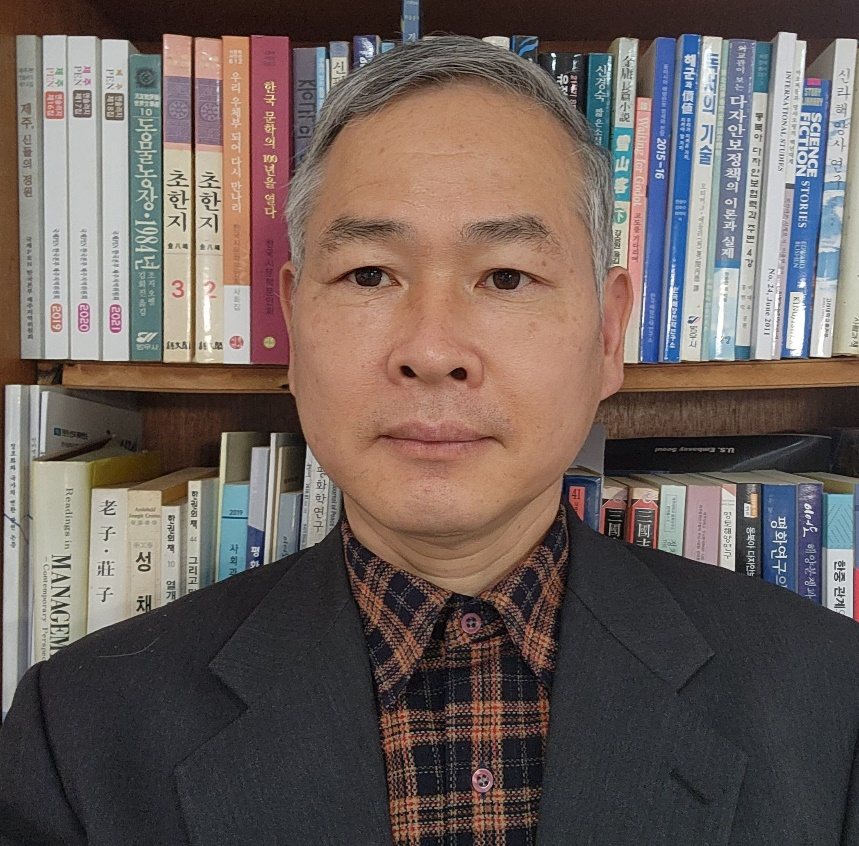
Sounds of Bamboo Forest

No matter how strong the wind blows,
the green forest never crumbles.
When the wind passes by,
the green forest stands tall and proud,
inspiring admiration.

The sounds of bamboo forest,
echo through the trees,
whispers of wisdom and peace,
carried on the gentle breeze.

A symphony of rustling leaves,
Soft words win hard hearts,
a melody of harmony,
ringing in the bamboo forest glen.

So let the forest speak to you,
let its wisdom guide your way,
listen to the sounds of bamboo,
and find peace in each passing day.


대나무 숲의 소리

아무리 강한 바람이 불어도
푸른 숲은 무너지지 않아
바람이 지나가면
푸른 숲은 높고 자랑스러운 모습으로 서 있어,
감탄할 만한 영감을 주지

대나무 숲의 소리,
나무들 사이에 울려 퍼지지,
지혜와 평화의 속삭임,
부드러운 바람에 실리지.

속삭이는 잎들의 교향곡,
부드러움이 강한 것을 이겨,
대나무 숲의 계곡에서 울리는 화음

숲이 말하는 것을 듣고
지혜의 길로 이끌게 두라
대나무의 소리를 들으며,
하루하루 평화를 찾을 수 있으리니

The Sharp Rocks by the Seashore

Even the strong black rocks
can be shattered by the waves
the never-tiring power of the waves.

I used to be one of the sea's sharp rocks,
strong and sharp-edged,
fighting against the waves.

Now, I have crumbled into a round pebble,
having learned a lesson over time.

Softness can conquer strength,
and the pen is mightier than the sword.

The truth of the universe,
Sharp rocks turn into pebbles,
and sharp things change into round and soft things.

The pebbles playing with the waves on the shore,
no longer fight against the waves.
They live in harmony with the peaceful waves.

바닷가의 날카로운 바위

강한 검은 바위도
파도에 부서지지
지치지 않는 파도의 힘을 당할 수 없어

나는 바다의 검은 바위였어
강하고 날카로운 모서리로
파도와 싸웠지

이제, 나는 부서져 내리고 둥근 조약돌이 되었어
오랜 시간 배운 교훈이지

부드러운 것이
강한 것을 이겨
칼보다 펜이 더 강해

우주의 진리
날카로운 바위는
조약돌로 바뀌고
날카로운 것은
둥글고 부드러운 것으로 변해

해안에서 파도와 노는
조약돌은 이제
파도와 싸우지 않아
조화로운 파도와 조약돌의 평화

Endurance of the Shoebill

In the wetlands of Uganda, a bird stands tall,
unending tranquility, waiting for food
Its massive bill shaped like a shoe, ready to haul.
With patience and poise, it stands in the water,
Waiting for prey to come, it doesn't falter.

Its eyes are sharp, its focus intense,
The shoebill picks food with skill and sense.
With lightning speed, it strikes at its prey,
Its powerful beak leaving no delay.

Through thick and thin, the shoebill endures,
Through harsh climates, it steadfastly ensures,
Its survival and place in this world,
Its determination, never give up.

From dawn to dusk, it forages on,
Until the day is done and night has drawn.
The shoebill is a creature of strength and might,
A symbol of endurance, a wondrous sight.


슈빌의 인내와 끈기


우간다 늪지대, 그곳에 큰 새가 서 있네
신발 같은 큰 부리를 가진, 그 새가
차분하게 물속에서 기다리네
먹이를 기다리며,
끝이 보이지 않는 물 위에 선 고요

날카로운 눈, 집중하는 시선,
먹이를 고르는 그 새는 대단하지
빠르게 부리로 내리치며,
주저없이 먹이를 잡는 강한 부리의 힘

변함없이 견뎌내는 새
극한의 환경을 이겨낸 새,
이 세상에서의 생존과 존재감,
절대 지지 않겠다는 그 각오

새벽부터 저녁까지 사냥하고,
낮이 가고 밤이 깊어질 때까지,
그 새는 끊임없이 먹잇감을 찾지.
그 새는 인내와 끈기의 생명체,
환상적인 모습, 그대로 인내의 상징.
Kang Byeong-Cheol is a Korean author, poet, translator, and holder of a Doctor of Philosophy in Political Science degree. He was born in Jeju City, South Korea in 1964, and began his writing career in 1993. His first short story, “Song of Shuba,” was published when he was twenty-nine years old.
In 2005, Kang published a collection of short stories and has since won four literature awards, publishing over eight books in total. He was a member of The Writers in Prison Committee (WiPC) of PEN International from 2009 to 2014. From 2018 to 2022, he served as Secretary General of the Jeju Unification Education Center. Prior to that, he was a Specially Appointed Professor at Jeju International University from 2016 to 2018, a Research Professor at Chungnam National University National Defense Institute from 2013 to 2016, a Senior Researcher at the Society of Ieodo Research from 2010 to 2017, and CEO of Online News Media Jejuin News from 2010 to 2013.
Kang also worked as an editorial writer for NewJejuIlbo, a newspaper in Jeju City, Korea. Currently, he holds the position of Research Executive at The Korean Institute for Peace and Cooperation.
Poetry from Guzal Sunnatova
A poem of joy

I’m not crying, I’m laughing,
May the sorrows of the world remain at my feet.
I lean like this, separation cry
Let unloved hearts be love.
This night, knowing myself more,
I buried everyone in silence.
My dreams that hurt my chest
I buried it whole, alive in the heart.
Happiness is born from happiness, my mother is happiness, I am happiness,
I am the offspring of an elegant daisy.
After all, I belong to this world
I am the eighth miracle.
Let me share happiness with my smile
May the earth and all beings be filled with joy.
Live in such a way that you cry from the world
Let him die of tears without making me cry!
Guzal Sunnatova was born on January 12, 2007 in the Republic of Uzbekistan. She has been practicing writing poetry since she was 12 years old. Her poems have been regularly published in newspapers and magazines, such as “Mushtum”, “Gulkhan”, “Guncha”, “Bilag’on”, and “Bulbulcha”. Guzal Sunnatova published her poems in books entitled “Gallalar orolida” and “Yosh ijodkorlar” and her riddles on various topics have also been published, in a collection entitled ”Riddles”. She is the winner of more than 20 republic-wide competitions. Her future goals are to become writer and ambassador. This book is her second poetry collection. Her first poetry collection is “Journey to the Mysterious World”.
Poetry from Kushal Poddar
Spring Sprawls Across the Fence of the Reality


The river and the wind bring Spring in your house;

the leaves and the gravel announce a stranger;

your curtains rise and fall; one cuckoo blurs

the boundary of singularity; you turn in your bed;

on your South side lies your lover whom you have gybed

towards sleep; all of his flesh and his mind

at its puerility's height hold the railing of a ship leaving

the port of reality. Those leaves talk with the stranger.

So much exist outside one's perception,

love outside your windows,

patience across the fence of waiting.

You stream on the bed, reflections of the stars on your chest.

You breathe, and it rains in the city.


Have You Seen That Patch of Green


The wind within

bleeds on the blades of my dreams.


This is the patch of the wild blooms

I carry, held between


the house I desire

and the one I own.


Today summer liquifies

the red. The prayers sway.


An arrow of the birds free

in the cage of my mind's geosphere flies.


Waiting


The clock unwinds silence;

in the embrace of our pillows

we sleep off twelve gongs;

snow swirls to settle on

our tropical forty degree Celsius land;

a singular apparition

holds its crow mien and fettle.


The mango tree writhes underneath

its unaccustomed white sheath.

Patience waits outside, leaves

its footprints on the snow

although in the morning we see nothing

except some wet roads, cars,

greenery and feathers, nothing that

can make us believe in the myths.


The String


Why the road and the pavements look wet?

Rain remains absent in this plain for awhile.

Do we sweat this much? Oh so wet!


The kite whisperer friend lets it be

a white stingray in the almost-white blue.

"Report back; bring back the messages of the clouds."


The news from the sky sounds fake; we misread it.

"If you misinterpret something fake," hope says,

"what you perceive might be true."


The boys reels and pulls the string.

Sometimes the thin line cuts the skin.

The asphalt glistens. Do we bleed that much?
Kushal Poddar, the author of ‘Postmarked Quarantine’ has eight books to his credit. He is a journalist, father, and the editor of ‘Words Surfacing’. His works have been translated into twelve languages.
Twitter- https://twitter.com/Kushalpoe