It’s time for the stone of everything that is not my silence
Of extinction, of total oblivion
Life forms endless furrows
Footprints of the road
Past mistakes sealing lips, looking up at the written pages
Eloquence of silence that sustains a silent wind
There is still so much beauty!!!
It is necessary to fall apart
Give in for a moment fair
To let the crying pass before being forgotten.
Graciela Noemi Villaverde has a degree in letters and is the author of seven books of poetry. She has been awarded several times worldwide. She works as the World Manager of Educational and Public Relations of the Hispano-Mundial Union of Writers UHE and as the World Honorary President of the same institution. She is a Buenos Aires-based Argentine writer.
How to be a Published Author

If you want to be a self published author, do not read this. But if you want to earn a traditional publication, please read below

You have taken your time to write that thought. You sacrificed a lot-time, energy and money-to ensure you complete that literary task. You were led to put pen on paper those great train thoughts. Finally, you completed the literary task! Congratulations!

Next, you possibly  seek other pairs of eyes to review and possibly proofread the piece you have written. Perhaps, you sought the attention  of your best friend, family member or associate to read through, point out the typos and grammatical errors. Eventually, you have the task of proofreading met.

The stage is now set...pitching to 'appropriate' agents and publishers. Having read through their guidelines, you pitch them individually. Some publishers and literary agencies would disclose the timeframe. In other words, some will disclose to you the turnaround period: feedback time. Interestingly, others might to assert to you when you will get to know the status of your submission.

In the literary world, there is a saying: 'it is all man for himself'. You are all alone to exercise the waiting game. It becomes herculean to wait for that period of time. Patience is needed to cope with the demanding literary industry. As a smart author, you should be looking at working on your next title.

The wait is over...the feedback is about to be given, primarily via email or postmail. 'Dear john, thanks for your submission. We have read your submission with great interest. While we find your piece very fascinating, we regret to announce to you we cannot take your submission at this time. We wish you the best in your writing endeavor..' You feel depressed, afterwards.

Never mind! Your literary journey has just started! It is at this point you dwell on the 'never give up' pysche if you want to proceed at this point. It is at this point you begin to do a research on publishers and agents who specialize on your genre online, horn your skills, attend several writing conferences, book fairs and other literary events to meet with people, get connections and establish relationships (mentorship).Then, by listening to and reading the stories of authors who made it, you will understand rejection is part of your literary journey.

Luckily, you get a literary recognition, be it a publisher or an agent who would be willing to take on your submission. Congratulations! The wait is worth it. The contract is presented to you for perusal, after receiving a Letter of Intent. You are satisfied with the terms of the contract through the 'green light' of an Intellectual Property Attorney, you sign the contract. Your piece now has a literary home!

It takes time to become successful. A personal instance: I started writing in 2006. Having faced several rejections from publishers and agents for years, it took me eight years to publish my first book! During those waiting periods, I was writing other books, attending book fairs, getting to meet authors like me and researching online authors who made it: what they went through.

Being a published author is not an easy feat. It takes patience, resilience, persistence, connection (and some element of luck) to become that person whose name would be penned in print, electronic, audio and other formats.

Remember this: Discouragement is a part of success!
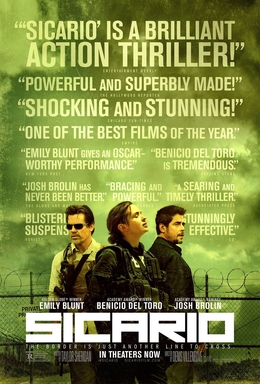
Sicario is a word used in Spanish, Portuguese, and Italian. It means “paid assassin” or “hitman”. As a movie title, it has nothing to do with what this film is about. To make a clearer mental image, imagine using the word “Cannibal” as a title for ‘’Silence of the Lambs” and prepare for 121 minutes of one of the darkest films of 2015.
Have you ever tried to capture the moment and use it as an anchor for what you plan to write?
This is what it feels like while describing what “Sicario” has done to me.
Sicario is a very visual movie, shot by none other than the brilliant cinematographer Roger Deakins who holds films like “Raising Arizona “, “The Shawshank Redemption”, “Fargo” and “No Country for Old Men” to his name. It might come off as another drug-cartel thriller, but “Sicario” reminisces on morality and how the world blurs the thin line between right and wrong, to the point of reaching an utterly bleak endnote, making for one thrill ride. Denis Villeneuve’s film doesn’t leave audiences with a rush of euphoria, but more like a burning sensation at the pit of the stomach.
Emily Blunt brilliantly and ephemerally portrays the role of Kate Macer, an idealist FBI agent who gets thrown into a world of drug cartels, assassinations, cold-blooded revenge, and senseless interrogation scenes. Macer’s world becomes turned upside down when she is chosen to join a task force for the war against drugs, and her whole existence is put on a stake.
How the film plays the female lead’s storyline is very sensitive to the nature of being a woman in the middle of a battlefield. Through her eyes, viewers judge the world she is naively thrust into. Macer explores herself and the male-dominated hostility that surrounds her presence. Viewers are introduced to a unique female protagonist; incapable of senseless violence but tough, humane yet detached. Macer bends the gender roles, she looks for fun through booze, a pack of smokes, and a one-night stand, yet as a woman her priority alternates between getting the job done and saving lives, following procedures, and maintaining a moral ground where there is none.
Villeneuve, with Deakins’s help, creates the tunnel infiltration scene like no other. He introduces audience members to the entire scene through two different perspectives. One is a green-tinted sequence, while the other is an infrared thermal imaging system that created a video game idea of a hunter seeking prey. Shot in black-and-white, where humans appear like negatives on a black screen. No sound is heard. It is just the agents, gun-pointing their way through the murky tunnels. Corpses are shown without a bit of humanity attached, their blood another shade of grey, which deprives the scene of emotionality. It’s an immoral, inhumane world. Human lives are not even questioned whether to be spared or not. How could the viewer sympathize with an action-adventure sequence that could easily play on their Xbox as a first-person shooter via twisted role-playing where they get to be the bad guy (or the cop) shooting nameless, mute targets?
How Macer is roughly handled also shows how disdainful most of her colleagues are towards her mere presence. She is seen as a joke, a pawn used by those hard-knuckled, shady people as means to their ends. When she is attacked by the man she picks at a bar and discovers he wasn’t after her –just using her to get to the big boys behind her- her look of disappointment captures the essence of her experience. The way her eyes register every single violation or atrocity allows the audience to get entangled with her point of view, self-righteous and monochrome at best, yet empathetic and empowered.
Using Macer’s relationship with the sicario, Alejandro –played to perfection by Benicio Del Toro- could be first interpreted based on a mentor taking in a naïve rookie to mold them into the mini-version of that mastermind. Examples that played on this theme vary from Dr. Hannibal Lecter in “Silence of the Lambs” to Detective Alonzo Harris in “Training Day’’. In “Sicario” however, Alejandro doesn’t gift Kate a valuable life lesson or allow her to discover pieces of herself that she never thought existed. They both remain unchanged, she is incapable of violence, and he is amoral –or according to her immoral- and violent, without a hint of doubt or regret.
“Sicario” is a dark poem of practicality that plays out its amorality (or immorality card) with no shame. It prides itself on being brutal, raw, and dark. With excellent performances, a haunting score, and a daunting fin, “Sicario” is not a movie to watch but to watch out for.
Jaylan Salah
Jaylan Salah Salman is an Egyptian poet, translator, two-time national literary award winner, animal lover, feminist, film critic, and philanthropist. She has published film criticism articles, short stories, poems, and translations in many websites and offline publications such as “Al Ahram”, “Vague Visages”, “Synchronized Chaos”, “theProse.com”, “Cinema Femme Magazine”, ” Eye on Cinema” and “Guardian Liberty Voice”. She Won the “Bleed on the Page” Competition for Poetry and Prose for her piece titled “Poof, Vagina”. Her first short story collection, “Thus Spoke La Loba”, was published in 2016 by the Egyptian Supreme Council of Culture. Her first poetry collection in English, “Work Station Blues”, was published by PoetsIN, a British publisher.
The whole world stopped in my eye, the most remote areas of untouched sandy shores and wild horses, everything unknown is known to me. I lost myself in searching for and approaching distances, so that i distanced my self farthest away from my self.
DANCE MAYA
Do not run ahead of your body with either mind or heart,
don’t believe in fairy tales that are a creation of illusion,
your step has clear coordinates
Dance Maya only for God’s eyes.
WORDS
Words can hurt, words can lift you up and comfort you, but only words in the form of prayer can set the soul free.
Maja Milojković was born in 1975 in Zaječar, Serbia.
She is a person to whom from an early age, Leonardo da Vinci’s statement “Painting is poetry that can be seen, and poetry is painting that can be heard” is circulating through the blood.
That’s why she started to use feathers and a brush and began to reveal the world and herself to them.
As a poet, she is represented in numerous domestic and foreign literary newspapers, anthologies and electronic media, and some of her poems can be found on YouTube.
Many of her poems have been translated into English, Hungarian, Bengali and Bulgarian due to the need of foreign readers.
She is the recipient of many international awards.
“Trees of Desire” is her second collection of poems in preparation, which is preceded by the book of poems “Moon Circle”.
She is a member of the International Society of Writers and Artists “Mountain Views” in Montenegro, and she also is a member of the Poetry club “Area Felix” in Serbia.
(Uzbekistan, Navoi) Student of Navoi State Pedagogical Institute
We are the creators of the future!
We know that the 21st century is an era of intellectual development. The uplifting force of this development is young people, that is, people with high intelligence. Of course, today there is a great responsibility towards the creators of the future. After all, according to President Shavkat Mirziyoyev, “In order for our youth to become independent thinkers, have high intellectual and spiritual potential, become people who are not inferior to their peers in any field on a global scale, our state and society should be happy. We will mobilize all the possibilities of strength”, his words serve as a program for us. Being among such young people, I am proud to see the development of our country day and night. In my opinion, it is natural for every person who considers himself a child of the new Uzbekistan to have a question at this moment: how did I contribute to the development of my country?! Whatever I do, even if it’s a little, will benefit my people?! In order to find answers to such questions, I took a pen in my hand and began to write down my goals on a white paper.
First of all, as they say, “A job without a plan is a brick without a mold”, a person should make his plans so that all the good deeds he thinks about from early in the morning will be good. And the plans become more and more great goals. And I strive for not daily, but annual prospective goals. I want these targeted plans to serve not only me, but also the development of my country.
Secondly, no country can rise without sports and science. These two concepts will always accompany me. Of course, sport is a guarantee of health. Every young generation who plays sports follows a healthy lifestyle. Only healthy and strong youth can protect the country. As our elders say, “If there is knowledge, there will be greatness”, even a young person like me in the ranks of the youth of Uzbekistan will mobilize all my energy to acquire knowledge.
Thirdly, it is the effective use of the doors of opportunity created for young people and, most importantly, the supreme gift of time. “If you love life, don’t waste time, because time creates life,” said one of the philosophers. Today, the lives and work of famous people who have achieved great success in their field show that one of the main keys to their success is their ability to allocate time correctly. If time is spent in vain during the youth years, the opportunity to gain knowledge is also lost. Our today will become history tomorrow. The services and happy deeds of each person for their people will be forever imprinted in the history. Therefore, we, the creators of the future, appreciate our time, which is more valuable than gold, and achieve high goals!
It should be said that young people who are in tune with the times are leading in every field today. Of course, it is impossible to count the opportunities created for us today. I would like to put forward a proposal to hold the traditional republican competition “Sprouts of Future” in order to pay attention to young people capable of achieving greater goals and in order to support young people in every way. Because, you say, there are many different auditions. However, unlike them, this competition is organized among young people who have achieved more or less success in the field of science and education, literature and sports and have limited opportunities to show their talent. Because they, like you and us, are the bright future generations of Uzbekistan!
In conclusion, it should be said that we, the youth, are the hope of a great country. If we don’t waste time and fulfill the huge task in front of us wholeheartedly, no crowd, no foreign ideas can stand in our way. Everything is in our hands. After all, as our President said, “We have set ourselves the great goal of establishing the foundation of the Third Renaissance in our country, for this we need to educate new Khorezms, Berunis, Ibn Sinas, Ulugbeks, Navoi and Babur!” We are the worthy successors of such ancestors and will be the mirror of the future of New Uzbekistan!
Iroda Bakhronova is an “Initiative reformer” badge holder; laureate of the international contest Russian Talents and author of about 100 public and about 30 scientific articles. She is the author of the poetry collection My dreams are more than you, stars, the winner of the “International Womania Award – 2023” recognition. Her articles were published in prestigious magazines in Turkey, Thailand, Spain, USA, India, Germany, and Belarus and her works were published in anthologies in the USA, Moldova, and Germany. Her work was published in the international anthology “Talented voices of Uzbekistan” published on Amazon in the U.S. and sold in 26 countries. Her work was published in the collection Hilol, which includes the work of talented young people across Uzbekistan. She is a member and ambassador of the Iqra International Foundation and a participant in the IV and V Nobel Fest, the “Student of the Year-2022” laureate of the institute stage and a member of the International Council of World Technical Development. She is a graduate of the online course of the US Institute of Peace; a participant in the “International Scientific Forum-2022” in Great Britain, and holds a certificate from the International Internship University.
I personally had a dream, when I was in kindergarten, I dreamed that I can do as my aunt’s daughter when her daughters met the president and received the state award named after Zulfiya as the world and Uzbekistan champions. Even when I was in school, I had a dream, but I didn’t know how to make it happen, and in the 5th grade, I learned how to plan, and I made videos to motivate myself. When I was in the 8th grade, when the Is’haqkhan Ibrat school was opened, I was assigned to study and entered the 15th place to the school. In 2018, one of my dreams in kindergarten came true, that is, by the grace of God, I shook hands with the President of Uzbekistan Shavkat Mirziyoyev on May 3, 2018, and I set my plans as a goal. I focused on my goal and didn’t even listen to the people around me.
After some years, I graduated my school and enrolled at Uzbekistan State University of World Languages, another dream came true, because I became a student of my dream university. I did not stop saying “my dreams have come true, that’s it”, I strengthened my efforts in order to properly use the opportunities given to young people due to their language skills, and until now I have been a participant, coordinator, organizer, and volunteer of many projects. I am blogging because of my interest, I have been sharing my achievements and my knowledge of how to have these achievements for more than 1000 young people. In addition, I also made students through my personal projects.
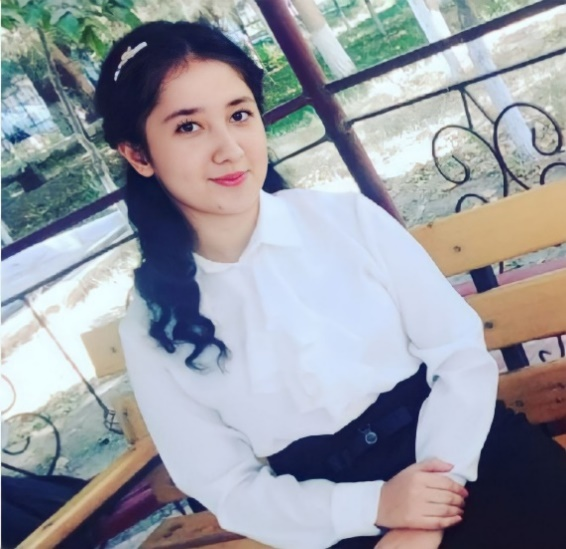
Alisherova Dilshoda Azizxon qizi
Student of Uzbekistan State World Languages University