The Survivor


The once healthy cell

Has been invaded like hell

The once healthy hair

Has fallen throughout this fair


Like drifting wood in the river afloat

Winter snow on the ground, melt it connotes

Sunlight cascading to the forest floor

Feeling uncertain, thus, you close the door


The strength you have to surpass them all

Unwavering faith will not falter His call

You fought the illness uncalled for

You’re the greatest survivor of them all.


Life


If life is like picking the right song

Choose the one that bangs the gong

To the rhythm of the beat that is in bloom

Like the windy beat of air in a lagoon


Swiftly flowing, the rhythm in your ear

That’s how smooth you want life to appear

Like trees laid into the sunny rays

Field of dancing flowers full of grace


If life is like picking the right song

Choose your band and favorite song

Trials in reality you cannot shun


Yet after the rain the sun will surely shine


Facade


When I met you decades ago

We were young, free and on the go

Uncaring for whatever it might be

My heart throbs for you endlessly


You got my heart from the start

Yet treated me wrong from the day we start

You tricked me with all the lies

It was long enough for me to realized


What we had were all facade

Made most of my days gloomy and sad

My brain unquestionably says No!

But my heart undoubtedly says Go!


Behind the hidden memories

Lies all the troubles and worries

A painful yesterday

Is now a memory far away


Too many years have been wasted

With all the trials busted

Facing all challenges to pursue


Until one day... I’m so over you


Youth of Yesteryears


Those were the budding days

So young & carefree with your ways

All you do is play the race

Until the beaming sun hides its rays


Those were the youthful times

When life doesn’t have to rhyme

When folks’ counsels do not matter

Never sorry for a dreadful scatter


Those were the blossoming years

Shedding pointless tears

Dwelling on wasted years

For some worthless fears


Those were the years gone by

Treasured mem’ries long gone by

Old secret mem’ries gone by


Reminiscing will give you a little cry
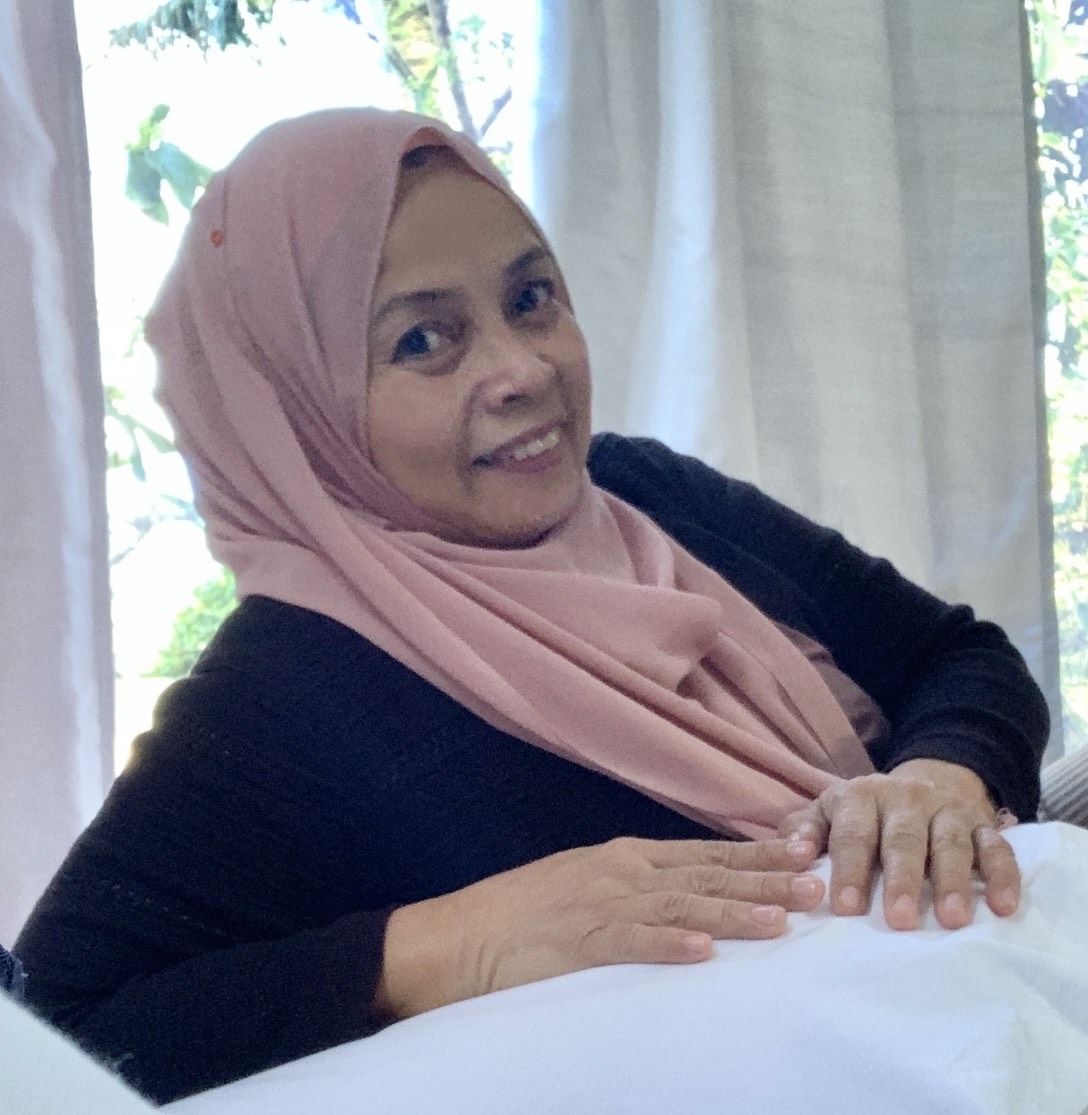
Jazira Munding Ismael aka Jazira Mi
A published poet, photo enthusiast, and an aspiring novelist, she is a registered writer/author with the National Book Development Board (NBDB), Philippines. Her passion for writing awakened her curiosity to explore genres like romance, and fantasy, mystery and dystopia.
Her poetry collection entitled “Poems of Life” speaks for itself as life’s intertwined roads are filled with wonders, challenges, both highs and lows. She also has a booklet on marriage vows called “I Do”, both of which, were published by 8Letters Bookstore and Publishing, Philippines.
She regularly lectures and critics poetry writing contests of Poetry Hub, an international online platform of aspiring poets from countries like Nigeria, India, Somalia, Zambia, and its neighboring countries. She has gained notable following on Instagram (My writing Journey- Jazira Mi) as well as in her photography world: Fotografia y Viaje Alrededor.
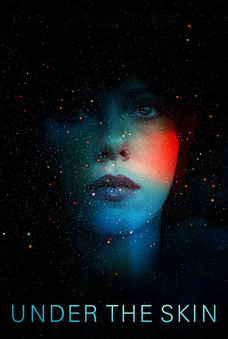
Under the Skin movie poster featuring Scarlett Johansson
Scarlett Johansson – The Bombshell that haunted screens with body dysmorphia
(Ghost of the Shell – Under the Skin)
By Jaylan Salah
Scarlett Johansson has always been an unreliable narrator of sexuality and femininity in its primitive form. The blonde bombshell of the 50s/60s reincarnated, her breasts and her voluptuous figure, her features that combine sultry coyness and childlike girth have made her a dream girl of the late 90s and early 00s. The actress has admitted lately that this wasn’t the image she wanted to be seen through as an actress, that she was groomed into the blonde bombshell/pretty baby archetype in her earlier acting years. Scarlett defied that, however, through her later career choices, where she became more comfortable in her skin to the extent of shedding it all off.
How Scarlett Johansson became the symbol of heteronormative sexuality and then flipped it upside down
There are two films in which Scarlett plays on the “Scarlett” persona with a mischievous in-your-face rebellion twist: “Under the Skin” and “Ghost in the Shell”. Although the latter might have brought questionable casting choices and criticism for whitewashing reasons, it was -on her part- a brave choice and a bold move to deconstruct her celebrity image.
When Scarlett first appears on screen in “Ghost of the Shell” she is stripping. Everybody anticipates. It’s Scarlett Johansson on the big screen getting naked with flawless skin and lips that have always been marketed as the ultimate cis hetero man’s (and lesbian) dream. Scarlett never fails to drag on hungry onlookers, perverse spectators from behind their laptop screens or in the safe, dark movie theater dreaming of splashing their semen all over her body.
But something else is revealed. Scarlett’s female body is sexless without all the definite features that cause a female to be -arguably- female: no nipples, clitoris, or vulva. It’s a sewn female body without all the openings, but it’s still there to ponder with all its sexual/sexless energy. It’s a female mannequin like the ones found in horror movies such as “Maniac” and “Lights Out”, a sea of genitalia-less female figures displayed and not exposed. This defines Scarlett’s rendition of Motoko or Major Mira Killian, the first full-body cyborg. A human whose brain has been implanted in another body, her sense of abduction is a constant reminder that her presence is in a body where she doesn’t belong. A reminisce on body dysphoria or a hijacking of sorts translates a lot that many people might not be able to express in words.
In multiple scenes of the movie, Scarlett is seen naked, but it’s a form of cocooned nudity, a bare body imprisoned in the confines of gender aesthetics. She is still Scarlett, still described in one of the video titles on YouTube “Being Thirsted Over by Men”. But she redefines what it means to be a woman, and a past sex symbol for all that matters, having all the metrics of the penultimate sexy Hollywood blonde. Scarlett doesn’t dispose of her attractive features for the sake of a role. She’s not Charlize Theron shaving her brows or Nicole Kidman donning a prosthetic nose, but she’s retaining her cool features, her cat-like eyes, and her infamous pout, without a body underneath to complete the wet dream.
In “Ghost in the Shell,” Scarlett plays a character with a gender identity crisis, coming to terms with her body and existence. She questions the link between biological sex and actual gender with her subtle treading on gender lines, being a fully-developed female and refusing to succumb to the gender plethora of femininity. Major Mira Killian is not just a cybernetically modified human but a lost soul, a creature that hovers on the borders of feminine and female, not fully conforming to either.
The idea of owning a body, gendered but non-gendered, becoming but also unbecoming, working the way through gender discovery and dysphoria, is the core of the original “Ghost in the Shell” animated movie. Aside from the A.I. anxieties and the futuristic doom, we are attached to Motoko’s journey across humanity and bodies, identifying with her quest to discover her true self and those around her, in the process though she touches on different themes and pathways that make her distinct, that is her corporal journey as she comes to terms with her bodily restrictions and capabilities.
Body Discomfort, dysmorphia, and depicting gender identity crisis
In “Under the Skin”, Scarlett is a female. She just exists with a skin that she puts on to become more familiar with the planet she plans to invade. She’s not a woman but a female entity that doesn’t conform to presumed ideals of sexualizing that gendered being. The alien is incapable of having sex, almost punished for that by being forced into it. The alien becomes an embodiment of an agender dream. It is a female on the border of gendered expression, without femininity but also defined as such.
It’s easy to dismiss someone’s identification or lack of their body. It’s a question that plagued my mind for years. What is a body? What is a male or female body? My body scared and intrigued me in how it differed from “other” members of the same gender that I am supposed to belong to. When I noticed the quirks and mismatching details, I realized that body dysphoria is not that foreign.
The idea of an imperfect female body begins at a very young age for some girls, and it’s also something that some women struggle with as they grow up. However, the idea of a “weird” female body is something else. There’s always something wrong with this woman: too much hair, dark armpits on fair skin, a mustache that needs constant waxing or painful laser sessions to remove, a weird-looking boob, a vagina buried underneath bushes of coarse hair, a strange-looking face; blemishes, scars, pigmentation, freckles, too many freckles, etc. As someone who has always felt like an alien in their own body, suffering the scrutiny of female peers who might or might not have criticized or pointed out an eccentricity, it was refreshing to watch Scarlett Johansson reject that embodiment of feminine perfection.
What is Under Scarlett’s Skin?
In “Under the Skin”, Scarlett sheds the skin of a sexy female luring people. She harbors on the fringes of the world, wearing a fur coat that creates an allegory to prominent male figures in other cinematic masterpieces -The Driver in Nicholas Winding Refn’s “Drive”- but doesn’t provide proof of consent to being male or female. Scarlett plays an alien, prying on unsuspecting men and feeding them to the void, a place where matter dissolves and shrinks and people are merely energy sources for a more considerable creation. Scarlett’s creature is female underneath, but the escalation to the revelation of the true self also brings up how gender is a barrier in people’s perceptions of them and how universal expectations of them hinder their emotional, physical, and actual growth in an accepting world. Scarlett again plays on the fetishized version of her. She is nude without a sexual undertone. She sheds the skin that has usurped her all of her life, to reveal the truth, a rather female but in a version that heteronormativity would never understand.
What does it take to be a woman? And how does one accomplish so? The freak reaction of the sexual predator throws shade at the culture of objectifying women, like Scarlett, or setting definitions for femininity and gendered existence where a woman would not feel safe to become who she chooses to become. And in the scary scene at the end, Scarlett’s reality is burned. The creature is burned alive and it’s as if people are burning the mere thought of her existence. But in reality, Scarlett is burning that skin, her sexualized younger self is given the final treatment, buried deep underneath the new woman who exists as beautiful, sexy, or even quirky and funny as she chooses to be, but further from the old self as one could expect. And to depict gender dysphoria using her old “very archaic and normative” self as a backdrop to a shifting world in terms of gender and sexuality is not only an act of liberation but a rebellion against the ideal femininity trope which could be a deicide in progress.
SAN GIUSTO


Trieste, march 2019.

He put his arm around my shoulders and led me through the small door to Bottega del Nonno

- La Veglia di Finnegan, se ne hai una?

Then we walked along one of the narrow streets towards the castle of San Giusto.
He was holding a book in his right hand all the time, his veins were swollen,
And he would hold my forearm with his left when we were climbing.
I felt so safe, as if the Lord had placed all the power in his hands.
(Actually, this could be a poem about his hands.
How I loved his hands!)

"I am forever trapped, walking along the river, always returning to the castle..." – he quoted.

   - That life until now was a sketch drawn with a graphite pencil, the fragments of which we will
     be able to erase, and what is inside us are colors. Let's start painting!

I looked for a moment at the sidewalks where the weeds had grown, and then at his big eyes where
the darkness had grown.
The wind opened around us,
The guards fell asleep long ago,
The walls grew like giants,
Distant history played with our depths,
And it seemed insignificant to us
Compared to this one that is just starting.


Azemina Krehić was born on October 14, 1992 in Metković, Republic of Croatia.
Winner of several international awards for poetry, including:
Award of university professors in Trieste, 2019.,
„Mak Dizdar“ award, 2020.
Award of the Publishing Foundation of the Federation of Bosnia and Herzegovina, 2021.
„Fra Martin Nedić“ Award, 2022.

She is represented in several international anthologies of poetry.
Angel at 1AM

I woke at 1 a.m. dryer than
a desert and went to the
kitchen for a glass of water.
I noticed her naked, slowly
brushing her long blonde
hair in front of the bathroom
mirror. Ava Maria sung by
Sumi Jo playing on her phone.
Her tiny body and face more
beautiful than the angel from
the song. I went back to the
bedroom before she noticed
me. No longer thirsty. Feeling
closer to God than ever.


A Poem for the Young
Woman that Jumped
off the Coca Cola
Building at 8AM on
a Sunday Morning

I just want you to
     know. Even though
  the majority

of the large
     crowd gathered
  around

your bodies only
     thoughts were to
  take photos

to post online.
     There was someone
  who cared.


The Working Poet

I was sitting alone
in the lunchroom
at work watching
Muay Thai on my
phone when Kerri
tapped me on the
shoulder with a
considerable smile.
"I heard you write
poetry! Is that true?"
he said. I'd never
seen him so happy.
"No, I said, "whoever
told you must have
mistaken me for
someone else."
"Makes sense. I
wrote poetry until
I started working
here. You simply
can't write working
at a job like this.
There is never
anything to write
about," he said
dejectedly leaving
the room. I thought
about everything
he has said. Writing
this poem shortly
after. My fourth of
the week.


Vincent's Sunflowers

I am in
a long line

of people
waiting

to get a
close look

at van
Gogh's

"Sunflowers".
Insane

yellows,
brighter

than the
sun.

Glowing
forever

in our
hearts.


The Poorest Taxi Driver in Bangkok

In Bangkok the taxi drivers with older
cars that can't afford to tip the hotel
concierges sit outside hotels for hours,
sometimes days, waiting for a fare. I
watched one driver leaning against his
ancient taxi the entire time I stayed
there. Smoking cigarette after cigarette.
Watching the newer taxis get all the
fares. On my final day I asked him to
take me to the airport. He immediately
threw his cigarette in the gutter and
loaded my one bag in the boot. "You
American?" he said. "Almost," I said.
"Australian!" "Yes," I said. When we
arrived I had a few hundred dollars in
American notes left in my wallet. I
handed them all to him. He quickly took
the money with a big smile, removed
the fare, giving me back the rest. "Keep
it all!" I said. "No, no. It wouldn't be
right," he said. Flying home, I thought
of his smile when I handed him the
notes. Imagining the look on his face
when he discovered the rest.


Brenton Booth lives in Sydney, Australia. Poetry of his has appeared in New York Quarterly, Chiron Review, North Dakota Quarterly, Main Street Rag, Naugatuck River Review, Heavy Feather Review and Nerve Cowboy. He has two full length collections available from Epic Rites Press.
Mercy

One day a boy named Sam was going door to door,
Because he was very poor.
He was selling his goods to continue his study,
Doing this he became thirsty.
He planned to get a house at last,
Seeing a beautiful woman from a house he afraid fast.
For this he told to bring a glass of water instead of food,
Seeing the facial expression, the women brought as she could.
She brought a glass of milk instead of water,
For this sympathy to him, he thanked her.
After a few years, the woman was too sick,
No native doctor could treat.
She was referred to a reputed hospital,
Dr. Sam Kaily found her unnatural.
He recognized her at a glance,
He determined to recover her at any way
Dr.Sam Kaily said the receptionist to give the bill-sheet,
Writing something at one side and send it.
Being afraid, the woman opened the bill,
She seemed it could be heavy like a hill.
But there was one word,
I am the little Sam, Mercy of Lord.
Don't afraid about your bill,
It is only a glass of milk.

Robiul Awal Esa is a 1st year student of Diploma in Nursing Science & Midwifery Course in  Government Nursing Institue, Chapainawabganj, Bangladesh.
+


WALKING Water
       Support my feet

Looks like Liquid
       feels like street

I'm Heart filled Dreaming
     I could go Home

But Bring Here Heaven
      just now on loan

LOVE lift my thought
     Above Being tried

As STEPS ON Liquid
          are not denied

WALKING Water
       Support my feet

Looks like Liquid
       feels like street

                                                ............
by John Edward Culp Saturday Morning February 18, 2017