Poetry from Milena Pčinjski

MINUET AT MIDNIGHT

Thou art my minuet at midnight,

a primal ember, softly stirred;

the tender call of the turtledove at dawn

that gently heralds the morn.

Thou art my silence, and my trembling,

which in longing I weave into verse.

Thou art the flame of a restless body,

a fervent yearning that warms within.

Thou art the depth and essence of my soul,

long hidden from unworthy eyes.

A love awaited since days of childhood;

a tender blossom that I tend in rapture.

Woven of the same mystic substance,

in a gleam that sets each atom aflame;

fate hath bestowed us one upon the other,

in a wondrous fire that dreams of the eternal.

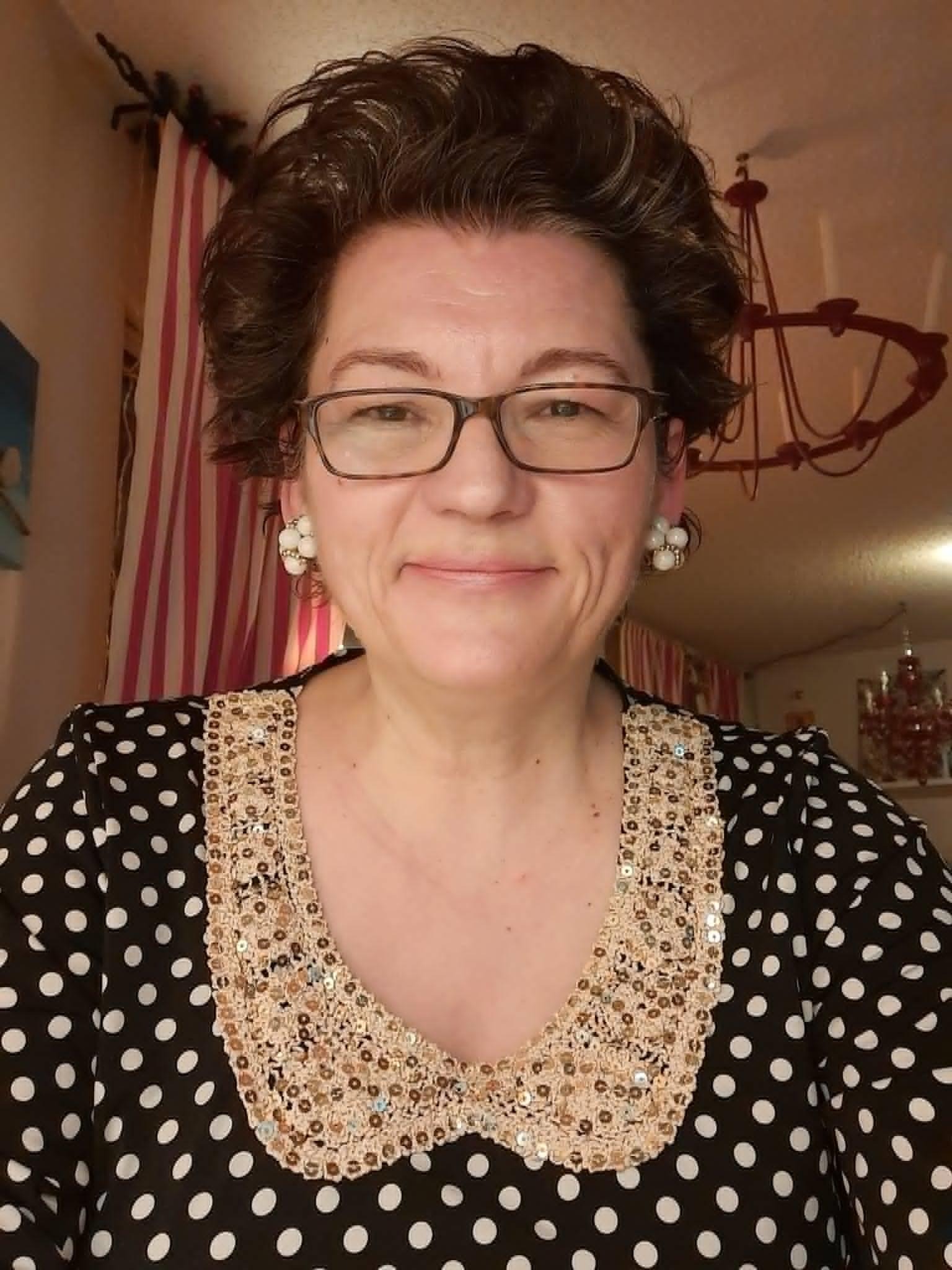
Milena Pčinjski, MA – Biography

Milena Pčinjski (Милена Пчињски) was born on October 28, 1986, in Prokuplje, Republic of Serbia, and currently resides in Ćuprija. She holds a Master’s degree in English Language and Literature. She is recognized as an international poet who writes in both Serbian and English. Her poetry has been published in numerous collections and anthologies of contemporary Serbian literature, as well as in international and online poetry compilations. Her poems have been translated into English, Hungarian, Russian, Romanian, Bengali, and Finnish.

She is a member of several book clubs in Serbia and regularly participates in literary events and poetry competitions. In 2025, she published her poetry collection Verses Imprisoned (Заробљени стихови). She works as an online English professor and also serves as a translator and editor for Area Felix, an international Serbian e-magazine dedicated to creative literature and culture. Additionally, she is a proofreader for the Association of Writers –SKOR, where she also serves as the President for the Pomoravlje Region.

Her collection Verses Imprisoned was awarded the Honorary Silver Diploma by the Orthodox Cultural and Artistic Almanac Arina NN in Nizhny Novgorod in 2025.

Milena is an honorary member of the International Advisory Board of the Academy of Farsala in Greece, as well as of the Global Literary Society, where she received a Certificate of Appreciation for „her excellent contribution to the Global Movement of Positive Literature” from Bhagirath Choudhary, the founder of the organization. She is currently preparing her second poetry collection.

Poetry from Saeed Koushan

Wet Stars

I lean against the wall.

The sky is half torn open —

stars threading through broken cloud,

rain falling like it can’t decide

whether to drown the night

or just wash it.

The streetlamps along the sidewalk flicker,

surrendering one bulb at a time.

Below them, the puddles hold

whatever’s left of the sky —

a smear of starlight and headlight,

no longer telling which is which.

Then she arrives.

The rain doesn’t care that she’s coming.

It falls exactly as it would

on an empty street.

Her hand reaches me

before her face does —

a cigarette held loose between two fingers,

nails long, lacquered a green so bright

it cuts through the rain

from half a block away.

She lifts the cigarette,

and for a second

its ember is the one star

on this street

that isn’t drowning —

small, orange, only hers.

I hear her

before I see her shoes —

ankle boots, leather, six centimeters of heel,

striking the wet ground

like small, deliberate clocks.

Her coat is long,

black leather, soaked through,

and it doesn’t shine

so much as exhale —

the smell of rain

caught in old hide,

each step releasing a little more

of the storm she’s already walked through.

She doesn’t slow down.

She walks straight toward me

never breaking stride.

She sits down beside me.

The smell of it pulls

something loose in me —

two months ago, my uncle paid me

not in money

but in a leather coat,

worn soft by someone else’s years,

and I carried it home

like a small fortune.

My brother saw it

before I’d even hung it up.

“Will you give it to me?”

And I did —

the way you hand over

the one warm thing you own

without quite deciding to.

I watched him wear it.

I watched it become his —

like an old door

I keep forgetting is there,

until tonight, when it opened again,

beside her, in the rain.

II

Her fingers find my hand,

slow, like she’s not entirely sure

she’s allowed to.

We don’t talk.

We just look.

Then, without deciding to, she leans in.

Smoke and the chemical

sweetness of her lipstick

reach me before she does,

mixing into something

that isn’t quite a smell anymore.

When the gap between us

runs out of room,

her mouth finds mine,

and I swear the stars hung lower,

trapped between the buildings, blurred by rain,

close enough to mistake for witnesses.

Then it’s over.

We pull apart too fast,

the way you let go

of something hot

before you’ve decided if it burned you.

She goes one way.

I go the other —

walking home under the same wet sky.

III

By morning,

the puddles that held the sky

are dry again —

no trace of the stars

mistaken for witnesses,

no trace of us.

The city had room enough

for the rain.

It never had room

for us against the wall.

——————————————-

When Little Boys Fall in Love

Age 5 — The Sand Kiss

You hated it when someone

kissed your nose.

I buried you deep

in warm sand,

then stole a kiss

beneath the sky.

The waves kept our secret.

Age 6 — First Light

Your nails chewed down

to rosy tips,

sorting bottle caps

with quiet concentration.

You gave me your father’s crown.

I slipped it silently

into my pocket.

Age 7 — The Promise

Beneath sheets stretched

between two chairs,

your breath smelled sweet.

You whispered in the cotton dark:

“Promise our hands will never part.”

Age 8 — First Mercy

Gravel dug deep into my palm.

You kissed the stones away,

the sting turning calm.

Salt and copper on my skin—

your tender lips

made healing begin.

Age 9 — The Communion

You bit the apple,

passed it to me.

I held those tooth marks

like sacred things.

We rode our bikes

at nine each morning,

the air cool,

the streets empty.

When cousins came,

I told them I was busy.

“You might come tomorrow,” you said.

I turned away,

stubborn with pride.

Age 10 — The Fracture

“He throws things

when the bottle’s empty.”

You traced the rusted gate

with careful fingers.

Your voice cracked

like old hinges.

I counted my heartbeats—

sharp, cold—

not knowing yet

what to do

with someone else’s pain.

Age 11 — The Shift

Two knocks: your father.

Three knocks: safe.

But when they cornered me

at school,

you looked away.

I stood there long

after they had gone,

waiting for you to turn back.

You didn’t.

That was the day I learned

that love and courage

are not always

the same thing.

Age 12 — The Breaking

Your mother combed your hair

on Sunday mornings,

pressed you close.

“They say boys like us shouldn’t—”

You stopped.

Looked at the window.

As if the word itself

had weight

you couldn’t carry.

Age 13 — The Aftermath

I passed your house at dawn.

Counted steps since you were gone—

forty-seven to the old front tree

where you used to yawn

beneath the sky.

The moving truck came Thursday morning.

Your mother waved.

My heart broke quietly.

Inside the tree, I found your note—

three words in your handwriting,

the letters uneven,

pressed hard into the paper

like you meant them to last:

I’m sorry. Goodbye.

Coda — Forty Years Later

Sometimes I wake to phantom knocks—

two, then three, then silence.

If I could ride

those streets again,

I’d knock—two, then three—

and wait.

Not to explain.

Not to forgive.

Just to let the boy

behind the door

know that I remember—

every tooth mark,

every promise,

every morning

we chose each other

before the world

taught us not to.

The crown.

The apple.

The rusted cap.

Inside the house,

a boy

holding the door

a second longer

than necessary.

Poetry from Ananya Guha

What Do I Love

Love the poem

taciturn

love the voice

love the roots

taking space

love the crisp

turn of the phrase

importunate word

strip teasing me into

surrender,

love rainbow in your eyes;

what do I love

but barking times

of restlessness?

Ananya S Guha lives in Shillong in Northeast India. His poems have been published in both print and electronic formats, and he has been writing poetry for the last forty years. 

Poetry from Tanja Ajtic

Two plates

And now I see you

as you go down the long corridor

and you wanted love

and you wanted to help me

because I am alone

and empty was a refrigerator

and nobody needed me

My head hurts because of me

of all ghosts

who possessed me

There was no place for you

normal and sensual.

And now I see you

as you go down the long corridor

and I want to scream

and I want to get you back

but I still close the door

because my spirit has returned

to torture me

invited

to dinner

with two plates set

and me alone…

Tanja Ajtic was born in Belgrade, Serbia. She lived and studied in Serbia. She is a poet and a writer but she is also an artist. She also deals with fine graphics. Since 2002, she lives and creates in Canada. Moved to Belgrade, Serbia 2023. Tanja Ajtic is a member of many groups and associations. In Serbia, she is a member of the prestigious Society of Writers of Belgrade. Her poems and stories have been published: two hundred collections (books), anthologies and electronic books. Her poems have been published in twelve languages.

She published a book, Outlines of Love. She participated with books and anthologies at many fairs in the world with other authors. In 2024 and 2025, Ajtic collaborated with Indian poet Sourav Sarkar on two joint poetry collections that present two works by the poet in one book. – She won second prize in Great Britain from the Serbian Library in London (2019). – She won III World Prize for Excellence ;Cesar Vallejo; 2021 in the category of artistic excellence Lima, Peru, by the World Spanish Union of Writers and International Award of Excellence; from the World Spanish Union of Writers, UHE Mexico.

She won the I International Award of Excellence “Cita Del Glateo” Antonio De Ferrariis, IX edition 2022 – Rome, Italy, a prestigious award in the group of poets for the English language (IX edition of the award for foreign poetry in English) in 2022, Rome, Italy. – Winners of Foundation Naji Naaman literary prize iz 2023; (21 st Edition), from the Republic of Lebanon, Honor Prize (for complete work) for Literary prizes 2023. Poetry for the competition was submitted in three languages: English, French and Arabic. – Winning the 2023 “Zheng Nian Cup” Literary Award – Third Prize by the Beijing Mindfulness Literature Museum, China. – Winning Third Prize, Friedrich Schiller International Literary Competition (2025). She is the winner of many awards, diplomas and certificate. She is currently writing poetry, short stories, haiku, and Gogyoshi poetry as well as freelance graphic design.


Poetry from Danijela Ćuk

May peace awaken all across the earth,

may golden sunlight warm us, chasing clouds of gray.

We long for smiles, for freedom, joy, and hope,

let love’s true paths forever guide our way.

Let nature bloom in all her grace,

for she belongs to every heart and land.

Do not destroy the gifts she freely gives,

for she remembers all by nature’s hand,

even when your eyes can no longer see.

Let the young embrace the light of life;

let sorrow cast no shadow on their days.

Do not teach them hatred for one another,

for hatred fills the world with grief and pain.

Let children keep the wonder of their youth.

Teach them to give with love and to receive.

Every child deserves a place of peace,

a safe haven where their dreams may gently breathe,

not hands that steal their innocence away.

Offer peace to one another.

If you take this world’s bright light,

its darkness will return to you.

Be humble, grateful, cherish every breath,

for no one has the right

to imprison another’s peace.

Release each other from pain and hate,

what good have they ever done?

Peace is the gift we all are searching for.

Why turn against each other,

making this beautiful world

a kingdom built on sorrow and chains?

Long live peace.

May your hearts forever shine with light.

It takes so little,

only one sincere,

truly human embrace.

Danijela Ćuk

Croatia

Poetry from Bahtiyar Hidayet

The Fate of Uncle Mammadhasan’s Donkey

Back then, in those beautiful days,

Uncle Mammadhasan was happy, his family was happy, and his donkey was happy too.

In summer, Uncle Mammadhasan worked at a Pioneer camp.

All the Pioneer children knew his donkey.

The donkey knew them too.

It could even tell the city Pioneer children from the village children.

He took very good care of the donkey.

He bathed it in the river,

burned garma to drive away its flies.

The Pioneer children even fought with each other

for the chance to bathe the donkey.

He had convinced us that

when the donkey was bathed, it rained.

But this time it did not rain.

Bullets rained.

The fire of war flared up.

The war began.

The fire of war drove away fairness, mercy, and conscience

like flies.

Uncle Mammadhasan’s two sons became martyrs.

He settled in a remote village as a refugee.

And his donkey was stolen.

This loss burned Uncle Mammadhasan

as much as the grief for his sons.

In those years there was no natural gas in the district.

Everyone carried firewood with donkeys.

The price of a donkey had gone up;

the value of a human being had gone down.

Uncle Mammadhasan’s donkey

had been sold to firewood traders.

Every day it was under a heavy load.

There was no one who knew its suffering.

And one day it died under its load.

They did not even leave its dead body alone.

They gave it to a sausage factory.

…

These were Uncle Mammadhasan’s last days.

He was eating cheap sausage.

The railway wagon where he lived

was a source of a bad smell.

He ate sausage

at the table where he killed flies with a fly swatter.

The heat gave him no peace either.

He no longer killed flies.

He fanned himself with the fly swatter

to cool himself.

It was real torment of hell.

That donkey’s cleanliness

no longer exists in this world.

I wish I could bathe that donkey

in the river once again.

And with the water

with which I bathed that donkey,

I wish I could put out

all the fires of war.

Poetry from Shah Jehan Asrafi

Silence rests 

Silence rests in the buds

It soaks their being 

When the flower is ready to manifest 

Silence blooms and acquires colours 

And learns to dance in illusion’s lap

It witnesses the sun to taste warmth

The flowers and silence encounter love

when the first bees come

Together they weave a love story 

A bereavement lost in shadows

Suddenly, the seasons learn

that they have names 

And the rainbow discovers 

Its hues before freezing 

on the sky.

The birds learn about 

about the importance of

having a purpose.

The mystical arc

hides behind the silky clouds.