

A New Intellectual Revolution: Opportunities Created by Artificial Intelligence
Throughout human history, technological progress has repeatedly transformed the way we live—from the steam engine to the Internet. Today, we are once again at such a turning point: the era of artificial intelligence. This technology is no longer a subject of science fiction; it has become a reality that is becoming an integral part of our daily lives, possessing abilities once considered unique to humans, such as understanding language, solving problems, and analyzing information. Artificial intelligence is a modern technology based on algorithms and software systems that is capable of independently performing a number of complex tasks that the human mind can accomplish.
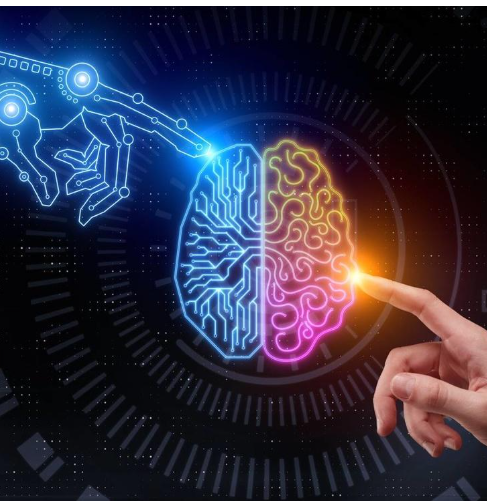
What is Artificial Intelligence? When we hear this phrase, many people imagine assistants that can speak like humans and perform all kinds of tasks on their behalf. However, the concept is much broader. In fact, applications on your mobile device, such as Google Translate, dictionaries, various games, and information-providing applications like ChatGPT and Gemini, can all serve as clear examples of artificial intelligence. Their scope is simply more limited, allowing them to assist users in specific areas. In other words, you use the appropriate application depending on the type of task you want to perform.
The idea of artificial intelligence is not a product of the present day. Its roots go back to the middle of the last century, and it has passed through several important stages of development up to the present. In the 1990s, a new chapter in the development of artificial intelligence began. In 1997, IBM’s Deep Blue computer defeated world chess champion Garry Kasparov.
From that period onward, artificial intelligence began to be applied in various fields and demonstrated its effectiveness in many areas. For example, residents of the city of Yinchuan in China do not need bank cards. All payment-related processes are carried out using artificial intelligence through facial recognition. In addition, the effective results achieved by AI in the medical field in recent years deserve special recognition. Artificial intelligence can analyze X-ray, MRI, and CT images with an extremely high level of accuracy that surpasses what the human eye can detect. For example, in radiology, AI algorithms can help detect cancerous tumors at very early stages. This enables doctors to significantly reduce diagnostic errors and save time. Furthermore, in the past, medical professionals needed 10–15 years and millions of dollars to discover and test new medicines. However, AI technologies have made it possible to model millions of chemical compounds and their interactions with genes within just a few days.
The success of artificial intelligence is not limited to medicine—it has also taken the education system to a new level. Today, every student has the opportunity to have a personalized learning program. AI algorithms can determine a student’s level of knowledge and pace of learning and offer an approach tailored to their individual needs. Intelligent assistants such as ChatGPT have become around-the-clock tutors for millions of students, making the learning process more convenient and faster than ever before.
Artificial intelligence has also brought significant changes to other aspects of our daily lives, particularly in the field of transportation. Today, self-driving cars use sensors and intelligent algorithms to manage road traffic with a high degree of precision, helping to reduce road accidents. In addition, logistics companies use AI to instantly calculate the most efficient delivery routes, significantly saving time and resources.
As we can see, artificial intelligence has entered almost every aspect of human life today—from early disease detection in medicine to personalized approaches in education, from safer transportation to resource-saving solutions in logistics, and many other fields. AI is achieving positive results across these areas. This technology is not intended to replace humans, but rather to expand human capabilities, make everyday problems easier to solve, and improve the quality of life. As artificial intelligence continues to develop, humanity can look forward to an even brighter and more convenient future.
Ochilova Zarnigor Zuhriddin qizi was born on May 11, 2008, in Samarkand Region. She is currently a second-year student at Vocational Polytechnic College No. 1. She holds several national certificates as well as a CEFR English language certificate. She actively participates in various competitions, conferences, events, and volunteer activities. She is an avid reader of fiction.