

Enhancing students` vocabulary knowledge through interactive activities
Turdaliyeva Mohidil Baxtiyor qizi
mohidilturdaliyeva6@gmail.com student of Namangan State Institute of Foreign languages named after Is’hoqxon Ibrat
Abstract
Vocabulary knowledge is a fundamental component of language proficiency and academic success. Traditional rote memorization methods often fail to engage students or promote long-term retention. This research focuses on the problem of lack of vocabulary among 9th-grade students. The aim of this study is to identify and implement effective teaching methods to improve students’ vocabulary knowledge. The study was conducted over four weeks with twenty students in a public school in Uzbekistan. At the beginning of the four-week period, a pre-test was used to establish students’ vocabulary knowledge. The initial results indicated 62,5 percentage of students struggling to remember new words. Survey was distributed to students to gather data on their learning preferences and perceptions. The survey results showed that students found traditional memorization difficult and preferred visual aids and game-based learning. After four-week intervention, a post-test was conducted to measure the effectiveness of the new teaching plan. Following the use of interactive methods, 75 percentage of students achieved excellent levels in vocabulary retention. In conclusion, this research shows that vocabulary is a major challenge for students. However, the four-week study proved that when students learn words through short stories and interactive games, they remember them much better.
Key words: vocabulary retention, interactive teaching methods, game-based learning, visual aids, student engagement.
Introduction
Vocabulary is widely regarded as one of the most critical components of language proficiency. Without a rich and functional vocabulary, learners find it difficult to comprehend texts, communicate effectively, or engage meaningfully with academic content. As Nation (2001) asserts, vocabulary knowledge underpins all four language skills — reading, writing, listening, and speaking — and its development is therefore central to language education. Despite its recognized importance, vocabulary instruction has often been reduced to decontextualized memorization of word lists — an approach that yields limited results in terms of long-term retention and active use. Learners may be able to recognize a word in isolation yet fail to deploy it appropriately in context. This disconnect between recognition and productive knowledge underscores the need for more dynamic, learner-centered approaches to vocabulary instruction. Interactive activities offer a promising alternative. By engaging learners in meaningful communication, collaboration, and problem-solving, these activities create conditions conducive to deeper vocabulary processing and durable retention. The present article reviews the theoretical basis for interactive vocabulary instruction, surveys relevant empirical studies, and proposes practical strategies applicable to university-level EFL/ESL settings.The case for interactive vocabulary learning is grounded in several well-established theories of language acquisition and cognitive psychology. Understanding these frameworks helps explain why interactive activities are more effective than passive approaches.Craik and Lockhart’s (1972) depth of processing framework proposes that the more deeply a learner processes information, the more durable the resulting memory trace. Interactive activities require learners to analyze, evaluate, and use words in context — all of which constitute deeper processing than simple repetition.
When students discuss, debate, or creatively deploy new vocabulary, they form richer mental representations that are more resistant to forgetting. Schmidt (1990) argued that conscious attention to linguistic form — ‘noticing’ — is a prerequisite for acquisition. Interactive tasks, particularly those involving meaning negotiation, naturally direct learners’ attention to vocabulary gaps and unfamiliar forms, thereby facilitating the noticing necessary for uptake.Vygotsky’s (1978) sociocultural theory emphasizes the role of social interaction in cognitive development. Learning, including vocabulary acquisition, occurs first on the social plane before being internalized. Collaborative activities — such as group discussions, peer teaching, and cooperative games — provide scaffolded environments where learners co-construct meaning, enabling them to acquire vocabulary that might be beyond their current individual capability. Krashen’s Input Hypothesis (1985) and Swain’s Output Hypothesis (1995) together provide a compelling rationale for interactive vocabulary instruction. Comprehensible input exposes learners to new words in context, while the push to produce output forces learners to activate receptive vocabulary, notice gaps, and consolidate their knowledge through use.
Literature Review
The effectiveness of interactive vocabulary instruction is supported by a substantial body of empirical research. Several key studies merit particular attention.
Nation and Newton (1997) investigated the relationship between vocabulary and task design in communicative language teaching. Their findings confirmed that tasks requiring learners to use new words in meaningful contexts produced significantly higher retention rates than decontextualized study. Similarly, Joe (1998) demonstrated that creative retelling of texts — a highly interactive activity — led to greater vocabulary acquisition than simple reading.
A meta-analysis by Elley (1991) on vocabulary learning through listening to stories found that interactive read-alouds, in which teachers pause to discuss and elaborate on word meanings, produced substantial vocabulary gains. This finding was later extended to adult learners in EFL contexts by Horst, Cobb, and Meara (1998), who showed that even incidental exposure to words in rich interactive contexts contributes meaningfully to lexical growth.More recently, studies examining technology-enhanced interactive learning have produced encouraging results. Mayer’s (2009) research on multimedia learning principles supports the use of digital interactive tools, arguing that combining verbal and visual information in interactive formats engages multiple cognitive channels and enhances retention. Studies on gamified vocabulary platforms (e.g., Sung, Chang & Liu, 2016) have reported significant gains in both vocabulary size and learner motivation.
The study was guided by the following three research questions:
1) Why do students have difficulty remembering new English vocabulary?
2) How does regular vocabulary practice influence students’ speaking skills?
3) Do interactive classroom activities help students use new vocabulary more confidently?
Despite the abundance of studies on vocabulary instruction, there is a notable research gap regarding the combined effectiveness of visual aids and gamified learning (such as Quizlet and matching games) in secondary school settings. While most literature focuses on either traditional rote memorization or purely digital platforms, the synergy between physical-visual tools and interactive classroom activities remains under-explored.
Taken together, this body of research makes a compelling case that interactive vocabulary instruction is not merely more engaging than traditional methods — it is demonstrably more effective at producing lasting vocabulary knowledge.
Methodology
The present study was conducted at Secondary School in Uzbekistan, with a 9th-grade class of 20 students (7 boys and 13 girls) at the B1 proficiency level. The intervention lasted four weeks.
Data were collected through multiple instruments: pre-tests and post-tests to measure vocabulary knowledge before and after the intervention; classroom observations to monitor students’ participation and word usage; questionnaires to gather students’ opinions about the activities; and analysis of students’ written work, including compositions and sentences.
The four-week intervention followed a structured plan: Week 1 involved a vocabulary pre-test and needs analysis to identify gaps in students’ existing knowledge; Week 2 focused on teaching vocabulary through short texts and visuals; Week 3 introduced vocabulary games including matching activities and Quizlet; and Week 4 concluded with a post-test, student questionnaire, and reflection session.
In the first week, 10 pre-tests(questionnaire) were taken to identify students` knowledge. Classroom observation was conducted to study students` problems in the lesson. In the second week, words were taught through short stories and visual materials. In the third week, lessons were taught through interactive games like matching words, quizlet. This was interesting and understandable for the students. And last week, a post-test was taken to determine the students’ learning progress. The results have changed significantly.
Types of Interactive Activities for Vocabulary Enhancement
A broad range of interactive activities has been proposed and studied in the vocabulary acquisition literature. The following categories represent the most widely researched and pedagogically robust approaches.
1. Word Games and Competitions. Games such as word bingo, crossword puzzles, vocabulary relay races, and word association competitions introduce an element of play that reduces anxiety and increases motivation. Deesri (2002) found that games used in language classrooms not only increased students’ participation but also improved vocabulary recall compared to conventional instruction. The competitive or playful element encourages multiple encounters with target words — a key condition for retention — while keeping learners emotionally engaged.
2. Role-Plays and Simulations. Authentic, contextualized language use is a hallmark of communicative language teaching. Role-plays and simulations require students to use target vocabulary in scenarios that mirror real-world communication, strengthening the link between form and meaning. Nunan (2004) emphasizes that tasks which replicate genuine communicative demands produce more durable learning outcomes than those focused solely on form.
3. Collaborative Word-Mapping and Concept Tasks. Semantic mapping, word webs, and Frayer models encourage students to explore relationships between words — their synonyms, antonyms, collocations, and conceptual associations. When completed collaboratively, these activities promote discussion and negotiation of meaning, deepening knowledge of individual words and broadening the network of lexical associations.
4. Digital and Technology-Mediated Activities. Digital tools have dramatically expanded the repertoire of interactive vocabulary activities available to educators. Platforms such as Quizlet, Kahoot!, and Wordwall allow teachers to create custom vocabulary games and quizzes that provide immediate feedback and can be revisited for spaced practice. Research by Schmitt (2010) highlights the value of spaced repetition in vocabulary learning, and digital platforms are particularly well-suited to implementing this evidence-based strategy at scale.
5. Task-Based Language Activities. Task-based activities — such as information gap exercises, jigsaw readings, and problem-solving tasks — create a communicative need that drives vocabulary use. Because students require specific vocabulary to complete the task, they are motivated to acquire and deploy it actively. Ellis (2003) argues that such tasks create optimal conditions for incidental vocabulary learning while preserving focus on meaningful communication.
Result
The findings from the four-week classroom intervention at School Number 9 yielded four notable results. At the beginning of the four-week period, a pre-test was used to establish students’ vocabulary knowledge. The initial results indicated 62,5 percentage of students struggling to remember new words. Survey was distributed to students to gather data on their learning preferences and perceptions. The survey results showed that students found traditional memorization difficult and preferred visual aids and game-based learning.
In the Figure1, pie charts show the exact percentage of the survey` result. A survey was conducted among students to find out whether the visual materials were useful to them, and the results were as follows, f1. Second, speaking activities increased students’ confidence; learners who participated in interactive oral tasks demonstrated greater willingness to use new vocabulary in communication. Third, students became more motivated and participated more actively once game-based and collaborative tasks were introduced in Weeks 2 and 3. After four-week intervention, a post-test was conducted to measure the effectiveness of using short stories. Following the use of matching games, 75 percentage of students achieved excellent levels in vocabulary retention.
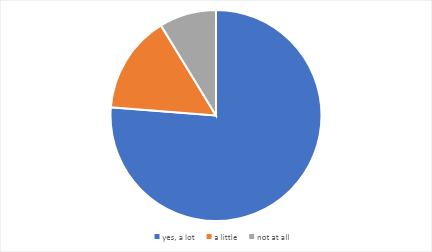
Figure 1.
Discussion
Vocabulary knowledge is indispensable to language proficiency, yet traditional instructional approaches have often failed to foster the deep, productive knowledge that learners need. Interactive activities — grounded in depth of processing, sociocultural, and communicative language teaching frameworks — offer a pedagogically sound and empirically validated alternative.
The activities reviewed in this article, ranging from word games and role-plays to collaborative mapping tasks and digital platforms, share a common feature: they require learners to engage with words actively, meaningfully, and repeatedly. The research evidence strongly supports the conclusion that such engagement produces superior retention and more flexible, generative vocabulary knowledge.
For EFL educators at the university level, the practical message is clear: vocabulary instruction should be designed around interaction, not memorization. By embedding target vocabulary in rich communicative activities and providing the multiple exposures that acquisition requires, teachers can equip students with the lexical resources they need to succeed academically and professionally. Future research should continue to investigate which specific activity types, delivered in which sequences and contexts, produce the most durable gains for learners at different proficiency levels.
References
Craik, F. I. M., & Lockhart, R. S. (1972). Levels of processing: A framework for memory research. Journal of Verbal Learning and Verbal Behavior, 11(6), 671–684.
Deesri, A. (2002). Games in the ESL and EFL class. The Internet TESL Journal, 8(9).
Elley, W. B. (1991). Acquiring literacy in a second language: The effect of book-based programs. Language Learning, 41(3), 375–411.
Ellis, R. (2003). Task-based language learning and teaching. Oxford University Press.
Horst, M., Cobb, T., & Meara, P. (1998). Beyond a clockwork orange: Acquiring second language vocabulary through reading. Reading in a Foreign Language, 11(2), 207–223.
Joe, A. (1998). What effects do text-based tasks promoting generation have on incidental vocabulary acquisition? Applied Linguistics, 19(3), 357–377.
Krashen, S. D. (1985). The input hypothesis: Issues and implications. Longman.
Mayer, R. E. (2009). Multimedia learning (2nd ed.). Cambridge University Press.
Nation, I. S. P. (2001). Learning vocabulary in another language. Cambridge University Press.
Nation, I. S. P., & Newton, J. (1997). Teaching vocabulary. In J. Coady & T. Huckin (Eds.), Second language vocabulary acquisition (pp. 238–254). Cambridge University Press.
Nunan, D. (2004). Task-based language teaching. Cambridge University Press.
Schmidt, R. (1990). The role of consciousness in second language learning. Applied Linguistics, 11(2), 129–158.
Schmitt, N. (2010). Researching vocabulary: A vocabulary research manual. Palgrave Macmillan.
Sung, Y.-T., Chang, K.-E., & Liu, T.-C. (2016). The effects of integrating mobile devices with teaching and learning on students’ learning performance: A meta-analysis and research synthesis. Computers & Education, 94, 252–275.
Swain, M. (1995). Three functions of output in second language learning. In G. Cook & B. Seidlhofer (Eds.), Principle and practice in applied linguistics (pp. 125–144). Oxford University Press.
Vygotsky, L. S. (1978). Mind in society: The development of higher psychological processes. Harvard University Press.