
To Risk or Not to Risk?
Its Role in Our Lives: Benefits and Drawbacks
Abstract: This article analyzes the concept of risk-taking as an integral part of life, exploring its positive and negative dimensions and its overall impact on human development.
Keywords: Risk, life balance, experience, growth, choice.
Life is an invaluable blessing (bebaho ne’mat) bestowed upon us. However, not everyone perceives this gift in the same way. Many imagine life as a smooth and straight path, but the reality is that it never remains linear. It is filled with rugged terrains (o‘nqir-cho‘nqir), unexpected highs and lows, and sudden turns. In these moments, we stand at a crossroads: we can either remain stagnant or take a risk and step forward.
Taking a risk is not merely the absence of fear; it is the act of moving forward despite uncertainty. It plays a fundamental role in our lives because risk-taking can transform us—not just materially, but also spiritually. It leads us to what I call the “worth side” of life.
Every risk we take opens a new door. If we never step out of our comfort zone, we will never truly discover who we are or what we are capable of achieving. If we look at the lives of successful individuals, we see that at some point, they were all willing to put everything on the line and take a leap of faith.
Of course, every coin has two sides. Blind or reckless risk-taking can lead a person toward a precipice. Actions taken without a plan or careful calculation result in a loss of not only time but also vital life resources. Therefore, it is essential to distinguish the thin line between brave risk-taking and sheer recklessness.
In conclusion, one should not be afraid of taking risks, but those risks must be “smart” or calculated. Every “up and down” in life provides a lesson. Even if a risk does not yield the expected result, it leaves us stronger, more experienced, and wiser. After all, doing nothing just to avoid losing anything is, in itself, the greatest risk in life.
In my opinion, truly living means overcoming fear and taking that bold step toward new opportunities.
Does Money Bring Happiness, or Is Happiness Found in Money?
The Balance Between Material Wealth and Spiritual Peace
Abstract: This article analyzes one of the most debated topics in modern society: the relationship between money and happiness. It examines the role of financial resources in improving the quality of life, while also highlighting the vital importance of human relationships in defining true happiness.
Keywords: Happiness, money, opportunity, family values, quality of life, balance.
In today’s fast-paced era, money has become one of the most powerful instruments in human life. Society is constantly engaged in debates surrounding the concepts of money and happiness: while some argue that “money buys happiness,” others maintain that “true happiness cannot be measured by wealth.” In my view, while money is not the sole source of joy, it serves as an essential foundation that provides the conditions and opportunities necessary for a fulfilling life.
On one hand, money plays a decisive role in our existence. It is difficult to imagine a comfortable life without material well-being. Primarily, wealth grants us access to quality education, modern medical services, and the ability to travel the world. As noted in my reflections, money makes life more “colorful.” For instance, engaging in a favorite hobby or working on personal development requires a certain level of financial freedom. Money is not just paper; it is a tool that serves us in reaching our highest goals.
However, there are aspects of life that no amount of wealth can purchase. No matter how rich a person may be, it is difficult for them to feel truly happy if they lack sincere friends, a loving family, and inner peace. Psychological studies show that individuals who spend quality time with loved ones—despite having lower incomes—often feel more content than those who are wealthy but lonely. This suggests that the roots of happiness lie not in bank accounts, but in human connections and the richness of our inner world.
In conclusion, money and happiness are not contradictory concepts; rather, they complement each other. While money opens doors to comfort, security, and new opportunities, it cannot entirely fill the human soul. True happiness is the balance between material maturity and spiritual wealth. Therefore, in life, one should not only pursue wealth but also cherish the peace of the heart and the relationships we share with those closest to us
Time: An Unstoppable Force and the Fairest Resource
Why Do Some Succeed While Others Fall Behind?
Abstract: This article analyzes the most limited resource available to humanity: the concept of time. It emphasizes the art of time management, its role in achieving success, and the fundamental reason why time can never be “purchased.”
Keywords: Time, opportunity, discipline, future, investment, life balance.
Introduction: The Most Precious Investment
In this world, almost anything can be reacquired—lost wealth can be rebuilt, and material possessions can be replaced—but time is the one exception. Time is the most fairly distributed asset in the universe; whether a monarch or a humble student, everyone is granted the same 24 hours a day. However, how one utilizes these hours determines their future and their place in the world. In my view, to manage your time is, in essence, to manage your life.
“Investing” Time vs. “Spending” It
Most people simply “pass” or “spend” their time. However, those who achieve true success view time as an investment. For example, a single book read today or a new language learned is time invested toward future prosperity. Organizing time effectively—specifically, distinguishing between what is “important” and what is merely “urgent”—not only yields results but also helps smooth out the “rugged terrains” of our life’s journey.
The Cost of Procrastination
One of the greatest enemies in human life is procrastination. Every task labeled with “I will do it tomorrow” is, in reality, a lost opportunity. Time flows like water; when we eventually look back, we may find ourselves burdened only by the regret of unfinished business. Therefore, valuing the present moment and spending every second productively leads an individual toward spiritual and professional maturity.
Conclusion: Today Is Your Opportunity
In conclusion, time is the greatest trust bestowed upon us. How we choose to spend it is a direct reflection of our character. Mastering time management provides us not only with success but also creates the necessary space for our families and the hobbies we love. Remember: yesterday is history, tomorrow is a mystery, but today is a gift.
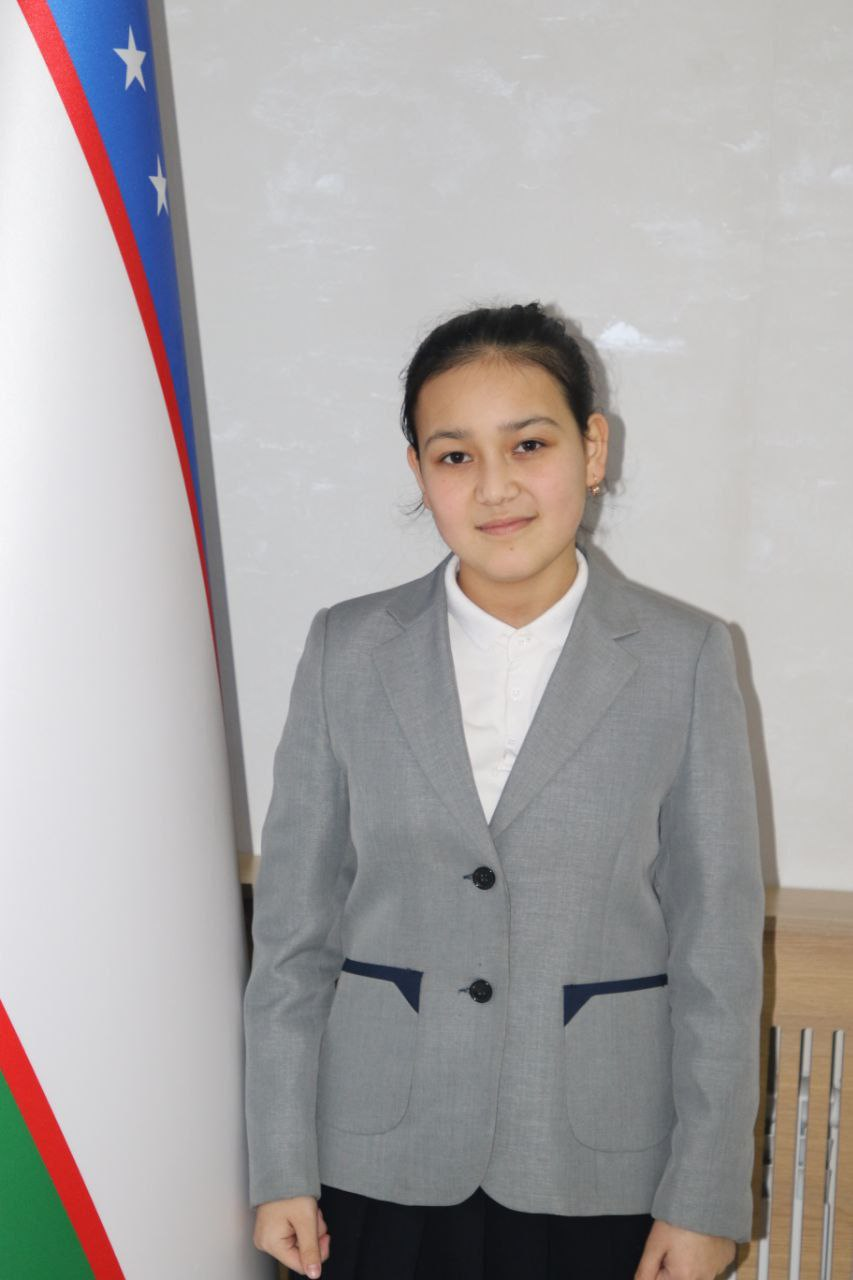
Zinnura Yo‘ldoshaliyeva was born on June 17, 2011, in Rishton district, Fergana region. She is currently an 8th-grade student at the Fergana branch of the specialized school named after Muhammad al-Khwarizmi. She actively participates in various educational and intellectual projects. In particular, she has taken part in “Anim Camp,” “Future Founders Online Forum,” “Young Reader,” as well as regional stages of STEM subjects. Her scientific article was published in a collection titled “Feelings on Paper,” while several other articles have been published in the journal “Synchronized Chaos.” In addition, she has participated in many other projects and initiatives, demonstrating her strong scientific interest and leadership skills.