
Chris Butler is an illiterate poet shouting from the Quiet Corner of Connecticut. The 8th book in his Poems of Pain series, Montage of Madness, was published by Scars Publications. He is also the co-editor for The Beatnik Cowboy literary journal.
Employees Must Wash Hands
One hand washes the other,
as the other hand washes the mind.
Still radiating from the mass graves of radium girls,
shining their minor economical sacrifice
with indentured smiles and a can-do attitude,
just so their obsolete creations could be sold.
Imagine employing human beings
to become nuclear nightlights.
Snowflakes (are Not Special)
Social justice warriors,
fair weather warfare
as warlords of words,
whining war whoops
with primal chants
of fascist correctness
echoed from bullhorns,
virtue smoke signaling
freedom to hate speech,
wearing war paint,
resembling black face.
Blackpill
Boomers
are big babies born
into the economic spoils
of cold wars,
promised the security
of a nine to five career,
a brand new Cadillac
off the assembly line,
two-point-five children
in a nuclear family
and a suburban castle
with a picket fence,
painted white only.
Zoomers
are bigger babies
raised in the womb
of mother’s basement,
as the outside world
is far too slow paced
compared to their
technology on Adderall,
ubiquitous dumb phones
and the accumulations
of friends and likes,
as culture is cancelled
for their privilege.
Bloomers
frolic in the
poppy fields of
nature’s sunflower
petal embrace,
blissfully oblivious
to any sun not
shining smiles,
with every day
better than the last,
until the peaceful
passing reaches
pure perfection.
Gloomers
overdose on too
many blackpills.
a representation of
societal and civilized
degeneration, uninspired
despite wildfires
in the hearts of desire,
with self imposed
alienation on all
antisocial networks,
until no longer a
negative side effect.
Doomers
accept a lonely fate
without resentment,
driving down every
dead end road,
tormented by each
unrequited love,
dulling all senses
with substances
in preparation for
pending death without
spiritual redemption, only
only hitting the brakes once they hear the glass break.
Knight and Death
When the white Knight
reaches the rocky beach
at the end of the earth, Death
challenges the unknown soldier
at the end of his last crusade
to a game of height stakes chess.
Glistening steal armor versus a black cloak.
the game begins with pieces arranged
with endless possibilities, but only one
inevitably…the beheading of god.
Each move is followed by doubt,
sending another soldier for casualty
as Death casually orders the murder
of the on the front line of frightened with pawns.
The Knight follows the horizontal
And vertical positioning by the bishops,
neighing with doubt as each shoed
hoof clicks and clatters across the board.
The stampedes charged across the board,
but not in time to save the Queen,
the Knight’s only love, as her cries were left
unheard under the silent reply of god.
Death allows vengeful rage to lead to mistakes,
as the Knight unleashes upon the black army to jestingly
prolong the attacking warrior’s last show of defiance,
reaching the last row in the rear of his opponent,
“Check”
Death could not envision his army parting
as the battled field by the raining blitzkrieg of the blood
of an inferior foe, unleashing a tornado of swords.
The inevitability still exists that Death
wins the war every time, but there’s
still a chance for victory in everyday battles.
“Mate”.
Catching the Dragon
She loved the drug more than she loved him. He loved the drug more than he loved her. This was not a Biblical revelation, but something both had settled to realize as he watched her shaking hands desperately combing her arms for a usable vein whilst stooped upon the toilet seat. Her bleach blonde streaks of hair slowly molding into dreaded knots, her robe was stained by weeks and months of tomato sauce spills and cigarette burns. One bunny slipper covered her left foot. The uncut toenails on her right foot grew coiled.
As the needle penetrated her skin, he looked away to avoid his own reflection in the misty bathroom mirror. Her bloodshot eyes tweaked their tinge from their sober blue. The dark bags dragged her sockets down. Her cheeks sunk so deep she appeared to be puckering for a model’s kiss to the camera. Her insipid skin haunted him, along with the skeleton pressing against it. Then the red ooze of life climaxed all over the white walls and porcelain. With the decay of time the blemishes became bilirubin.
But when she finished plunging the brown venom and escaped blood back into her stream, the need overcame his brain. He reached for his own needle, resting impatiently on the edge of the sink, and began cooking his own concoction of self-destruction. The charbroiled spoon was filled with brown powder, ready to spread a sugary blizzard over children’s cereal. His juddering hand turned the faucet with the letter C clockwise. He stirred his stew until the ingredients thoroughly mixed. The tip of the thirsty needle sucked the puddle on the spoon dry. With much effort he discovered his last useful cable on his infected arm. He closed his eyes as his bullets of blood shot the mirror like that aftermath of a butcher’s murderous horror scene. The tingling numbness conquered him. For the first time since his last dose he felt life and death pumping through him from his beaten heart. When he turned away from himself and towards her, she was still seated still upon the home’s throne, hunched forward, trying to prevent herself from falling over between each pipe dream.
He loved her more than he loved himself, but he needed the chase more than he needed her. And vice versa.
Poetry from Michael Lee Johnston
| Dance of Tears, Chief Nobody (V5) By Michael Lee Johnson I’m old Indian chief story plastered on white scattered sheets, Caucasian paper blowing in yesterday’s winds. I feel white man’s presence in my blindness-cross over my ego my borders urinates over my pride, my boundaries -I cooperated with him until death, my blindness. I’m Blackfoot proud, mountain Chief. I roam southern Alberta, toenails stretch to Montana, born on Old Man River− prairie horse’s leftover buffalo meat in my dreams. Eighty-seven I lived in a cardboard shack. My native dress lost, autistic babbling. I pile up worthless treaties, paper burn white man. Now 94, I prepare myself an ancient pilgrimage, back to papoose, landscapes turned over. I walk through this death baby steps, no rush, no fire, nor wind, hair tangled− earth possessions strapped to my back rawhide− sun going down, moon going up, witch hour moonlight. I’m old man slow dying, Chief nobody. An empty bottle of fire-water whiskey lies on homespun rug,cut excess from life, partially smoked homemade cigar-barely burning, that dance of tears. *Music Video Credit: Native American Indian Music – Sunset Ceremony- Earth Drums 02https://www.youtube.com/watch?v=QtdYWcoYKWo Missing Feeding of the Birds (V3) By Michael Lee Johnson Keeping my daily journal diary short these sweet bird sounds lost-reviews January through March. Joy a dig deep snow on top of my sorrows. Skinny naked bones sparrows these doves beneath my balcony window, lie lifeless without tweet no melody lost their sounds. These few survivors huddle in scruffy bushes. Gone that plastic outdoor kitchen bowl that held the seeds. I drink dated milk, distraught rehearse nightmares of childhood. Sip Mogen David Concord Wine with diet 7Up. Down sweet molasses and pancake butter. I miss the feeding of the birds, these condominiums regulations, callous neighbors below me, Polish complaints. Their parties, foul language, Polish songs late at night, these Vodka mornings-no one likes my feeding of birds. I feel weak and Jesus poor, starving, I can’t feed the birds. I dry thoughts merge day with night, ZzzQuil, seldom sleep. Guilt I cover my thoughts of empty shell spotted snow these fragments, bone parts and my prayers- Jesus dwelling in my brain cells, dead birds outside. I miss feeding of the birds. Open Eyes Laid Back By Michael Lee Johnson Open eyes, black-eyed peas, laid back busy lives,consuming our hours, handheld devices grocery store “which can Jolly Green Giant peas, alternatives,darling, to bring home tonight-these aisles of decisions.” Mind gap: “Before long apps will be wiping our butts and we, others, our children will not notice.” No worries, outer space, an app for horoscope, astrology a co-pilot to keep our cold feet tucked in. Tequila (V5) By Michael Lee Johnson Single life is Tequila with a slice of lime, Shots offered my traveling strangers. Play them all deal them jacks, some diamonds then spades, hold back aces play hardball, mock the jokers. Paraplegic aging tumblers toss rocks, Their dice go for the one-night stand. Poltergeist fluid define another frame. Female dancers in the corner Crooked smiles in shadows. Single ladies don’t eat that tequila worm dangle down the real story beneath their belts. Men bashful, yet loud on sounds, but right times soft spoken. Ladies men lack caring verbs, traitors to your skin. Ladies if you really want the worm, Mescal,don’t be confused after midnight. |
Michael Lee Johnson lived 10 years in Canada during the Vietnam era and is a dual citizen of the United States and Canada. Today he is a poet, freelance writer, amateur photographer, and small business owner in Itasca, DuPage County, Illinois. Mr. Johnson published in more than 1072 new publications, his poems have appeared in 38 countries, he edits, publishes 10 poetry sites. Michael Lee Johnson, has been nominated for 2 Pushcart Prize awards poetry 2015/1 Best of the Net 2016/2 Best of the Net 2017, 2 Best of the Net 2018. 204 poetry videos are now on YouTube https://www.youtube.com/user/poetrymanusa/videos. Editor-in-chief poetry anthology, Moonlight Dreamers of Yellow Haze: http://www.amazon.com/dp/1530456762; editor-in-chief poetry anthology, Dandelion in a Vase of Roses available here https://www.amazon.com/dp/1545352089. Editor-in-chief Warriors with Wings: The Best in Contemporary Poetry, http://www.amazon.com/dp/1722130717.
https://www.lulu.com/shop/search.ep?keyWords=Michael+Lee+Johnson&type= Member Illinois State Poetry Society: http://www.illinoispoets.org/ Do not forget to consider me for Best of the Net or Pushcart nomination!
Elizabeth Hughes’ Book Periscope
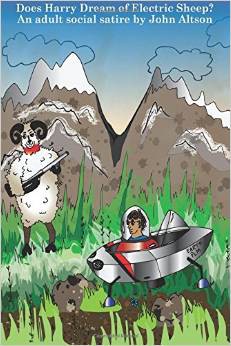
Does Harry Dream of Electric Sheep is a fantasy/science fiction work by John Altson. It takes place on the planet Baa. The inhabitants of the planet are sheep that walk and talk like humans.
Harry Enlightenment is from the planet Earth and has gone to Baa to see what kind of industries they have and if any would be compatible on earth. Harry is a healer back on earth and hopes he will be able to bring his skills to their planet.
Harry goes on many tours of their businesses and manufacturing plants. He finds out that many of their industries are not that different than on Earth, and neither are their politics.
This is an extremely hilarious fantasy that will leave you rolling on the floor laughing. This is absolutely perfect to read right now to get away from the news if for just a tiny bit and put some laughter back into your day.
Laura McHale Holland’s The Kiminee Dream

The Kiminee Dream by Laura McHale Holland is a delightful fantasy and suspense that is the perfect book to read while doing our part in Staying At Home. It is the story about a very gifted girl named Carly Mae. She gets injured by a twister that goes through the small town of Kiminee. Before the twister she was very gifted in practically everything she did. Even after the twister she was still very loved by her family and everyone in town. Then one day she overheard a conversation that upset her so much, she ran off. While she was running away she was abducted by a murderer. One day she escapes and is led to a house in the woods owned by an older woman known as Aunt Truly, by some raccoons. She has to spend a very bitterly cold winter there. After she finds her way home, the whole town including all the animals celebrate. There is enough suspense and adventure that will leave the reader wanting more. This is about a small town and its residents and how their lives intertwine. This would be perfect for teens and adults.
The Kiminee Dream is available here right on the author’s website.
Essay from Abigail George
By writing a few lines: How Arthur Nortje, Cecil Colin Abrahams,
Dennis Brutus, George Botha, Jakes Gerwel, Neville Alexander, and
Ambrose Cato George found the way out of apartheid South Africa
By Abigail George
Miss Gilbey taught Speech and Drama. Every Friday afternoon as the car
speeded down the highway en route to her studio cum house I would
learn a poem about ducks or gypsies parrot fashion. As my mother or
father said the words out loud to me, I would recite them back
verbatim. I was six years old fashioning a posh, whitey English accent
with clipped tones that did not win me any friends back at the school
I went to and especially on the playing field during break. I was six
years old. I had not begun to straighten my hair yet to look like the
blonde, horsy looking with long teeth, fair or dark, golden-haired,
freckled, hockey and tennis playing children who had names like
Miranda who joined me when I started going for lessons. She drilled,
‘Speak with expression, expression, expression into me.’
The first thing I noticed is that they weren’t self-conscious like me.
They were brimming with confidence, made friends easily while I had to
battle with bullies who mocked me by imitating my voice that was
beginning to change at the predominantly coloured school that I went
to. The first time I went to Miss Gilbey’s studio I went with my
mother who was taking elocution lessons but she stopped soon after
taking me. I sat there, in a corner on a bench, my back against a cool
wall, felt in my pocket for the candy my mother had given me and
started licking away at a red lolly that tasted like cherry making
what my mother told me afterwards in the car were ghastly sucking
noises that perturbed the dear old Miss Gilbey.
Every now and then I would catch her looking at me and I would smile
at her. She never smiled back. Her eyes felt like laser beams when
they connected with mine. I felt them keenly. Only later on the way
home with my mother scolding me for bringing that sweet inside with me
would I realise that I had been very irritating like only a child
could be; completely oblivious to what the grownups around her were
thinking without being told that she had done something wrong. Later
on when I had moved onto Sharon Rother’s, a past pupil of Miss Gilbey
who had done her licentiate, Speech and Drama studio in Walmer, which
was held in a room adjacent to a church, Miss Gilbey also moved on.
She moved all the way to Montagu with her sister who suffered from bad
bouts of asthma. The air there would be good for her, I reckoned. Two
women living on their own for most of their adult life; when did they
ever come into contact with men, I wondered? In the aisles of a
supermarket when they shopped for groceries going down a long list of
perishable items? Did a man ever call Miss Gilbey ‘a good girl’ or
‘you’re a beauty, sweetheart’, wink at her, put his arm around her
waist and walk with her for awhile while asking her what her name was
(her name was Marjorie and I couldn’t ever imagine even if I tried
very hard now that any man, even a brazen man or a boy could call her
by her first name) and where she lived and would she like to get a
bite to eat.
Perhaps some hot tea and a steak and kidney pie with gravy in a
restaurant at a hotel. The English men I had been taught by were
gentlemen. They were quiet intellectuals, academics, teachers, soft
spoken lecturers at universities and introverted and bookish.
What did the life of a spinster feel like? What did the life of an
unmarried woman who did not have to cook for a husband, a small child
or children, who never hovered and cooed over a crib of a pretty
new-born baby? What did a woman over fifty who was past the age of
flirting, the cunning moves of seduction do for fun? Did she attend
church, bible study with other young women; serve tea at the end of
the Sunday morning service with crumpets and sandwiches made with
fish; pilchards and sardines or cheese and tomato or egg with dollops
of mayonnaise or chicken, wilting lettuce and mayonnaise, cakes, petit
fours, biscuits made with coconut and almonds all laid out on tables
with white table cloths?
Was that the appropriate behaviour for a woman her age, a lady? Had
there ever been a man in her life? In the time I imagined when she was
young had she ever corresponded with a young man writing letters
filled with lover’s nonsense that only made sense to them, not to the
outside world. Did they write about their unfolding passion, their
wonder at their innocent love, the madness of the war, the burning
houses, flames licking attics, bedrooms, roofs, charred flesh, bodies
burnt beyond recognition?
Did they write in code, draw entwined hearts made out of paper? Did
she ever seal the letter with a wet, crimson kiss that peeled off her
lips or did she ever put her feet up in the afternoon and watch the
soaps as a middle-aged woman or quiz shows as a girl?
Did they even have a television now in South Africa? I knew Miss
Gilbey didn’t do that because she gave Speech and Drama lessons every
afternoon during the week. I was the only coloured child amongst
whites. But I didn’t, not for a long time, see myself as being the
only coloured child amongst whites. I played with them because I was a
child and when you are child words like racism and prejudice do not
ring incessantly inside your head like say in the head of a
representative of the local government, the president, his cabinet or
a community leader who was voted into power by stalwarts, comrades,
communists and people who believed in Biko’s Black Consciousness.
Had she ever gone swimming with friends when she was as old as I was
when I first started coming to see her? Had she ever clutched her
mother’s hand frightened of the road outside her house filled with
screaming cars? What were her parents like? How did she come to live
in South Africa? Did she grow up during the war; when bombs rained
down from the black skies in England, was she ever stuck with other
people, families robbed of their men in bomb shelters? Was she a
liberal? She obviously didn’t believe in the politics of the day
because she had taken my mother and then me on. So, in her own quiet
and independent way she was rebelling against the government.
She was making a political statement. At thirty-one I imagine the
woman, the child, the girl and then her middle-aged. Didn’t she ever
want to be a wife? Growing up I thought as a very young girl, a child,
that everyone wanted to be a wife but at thirty-one and the divorce
rate globally so high, the only people getting hitched are those
blinded by the alluring volcano that is love. They are not conscious
of the other person’s imminent flaws yet, how arguments can erupt from
seemingly nowhere, the cancer of talk of divorce in the interim wild
in the air while you and the other person in the relationship is
waiting to make up. They are not conscious yet of the fall out of an
illness that will later on strike the family or an intense, lingering
depression that manifests and steeps itself into the bones of either
the wife or the husband or the small child whose homework is
overlooked over the breakfast at the kitchen table while the parents
of that small child or children, who wants the attention of both of
the adults his or her features resemble while they are at war with
each other over some petty, childish thing.
A thing like who had to take the garbage out, who didn’t come forward
and help to make the unmade beds, the smears of toothpaste in the
bathroom’s basin or whose turn was to wash the dirty dishes in the
sink and put it in the dishwasher. Miss Gilbey must have died already
in Montagu; perhaps in her sleep, in her bedroom. Perhaps she is
buried there now. Who visits her grave, puts fresh cut flowers on it,
clears away the old ones, throws the brown water out and puts clean
water in the pots or jars or bottles? Even in death she is a mystery
to me; these two lonely sisters in a world of light of their own
making; their contemporaries with double chins, sagging bosoms,
grandchildren, wearing too much make-up, wearing hats to church that
bloomed roses, smelling of perfume.
Miss Gilbey had a solid air about her when I first met her. As if she
knew she belonged in the world. She always had a pot of tea on her
desk that she poured with poise, a jug of milk, a pretty cup and
saucer with patterns of flowers on; very English, very proper, very
old-fashioned. She sipped her tea as we recited our poems out loud
correcting our enunciation, willing us to speak fluently, with
emphasis, willing us to reach for that gold star she would stick in
our books that we children pasted our poetry and monologues from the
books of Winnie-the-pooh in. If she was satisfied with how our vowels
sounded, how we articulated the poet’s language, how invested we were
in executing the lull of the text, showing the full range of emotions
that was expected of us as a spirited ghost or a highwayman we would
see a gold star shining off the page, blinking up at us.
In the room filled with a breeze that felt as cool as a humming fridge
(we didn’t have air conditioners in those days) as my voice bounced
off the walls of the studio, as I watched the backs of the white
children’s heads, tufts of dark or golden hair escaping from
ponytails, still in their school uniforms or sport kit sniggering.
There was nothing, nothing said of the forced removals that took place
in 1964 in South End in what was once a diverse and cosmopolitan
suburb filled with Indians, Malays, Muslims, blacks, whites and
coloureds living together harmoniously; religion, awash with their
culture at times of thanksgiving and holiness and their loyalty, their
faith in their different Gods and to each other were their pillars of
strength.
There was nothing, nothing said of the unrest that was brewing in
South Africa, the daily disdain and underlying aggression in chars as
they faced their employer’s, men and women; comrades being picked up
by the Special Branch or plainclothes policemen or police spies, being
detained after being questioned, brought before a court of law,
imprisoned on Robben Island. There was no talk of a coloured man
called Georgie Botha’s apparent suicide in this room where my voice
rose and rose and rose higher and higher making an imprint, burning
it, a hole in the head of Marjorie Gilbey. In the heads of those
privileged whites who also came to the studio. I wanted to achieve
what they had.
All those gold stars stuck in their books. I didn’t mind the silver
ones but gold spelled something marvellous; something magical.
Something accomplished wonderfully; magnificently. I never got red
stars. Seeing a red star gave me a start, a headache started
throbbing, butterflies in the pit of my stomach started to flit as if
I had failed a test at school, got all the sums wrong, spelled the
words incorrectly. You only got a red star when you hadn’t learnt all
the words to the poem, stammered and needed prompting from Miss
Gilbey. There was no talk of the Rivonia Treason Trial, George Bezos,
what was in the newspapers about it, the stories that were running
internationally and a man called Mandela.
There was no talk of coloured men like Dennis Brutus and the poet
Arthur Nortje who was born in Port Elizabeth, in South End which was
now a suburb where white people lived comfortably, well off behind
their high walls, their dogs and electric fences. Nortje later won a
scholarship to study literature at Jesus College at Oxford. It was on
Dennis Brutus’s recommendation that he got that scholarship. But I was
only six and didn’t know anything besides school and my family. I was
just a colored girl, innocent and wide-eyed, six years old with
skinned knees from playing amongst the teachers’ cars, wearing North
Stars when I came to Marjorie Gilbey’s Studio for Speech and Drama.
A child bullied by the older kids from other standards, tormented by
them as they stalked me speaking in high pitched, squeaky voices
making me cry. Mandela was just a ghost of a man. The essence of the
man never showed the outward shame of humiliation from his
persecutors; the Afrikaner wardens who spoke English poorly at the
prison on the island. He never showed pain or suffering. His spirit
was the spirit of a child, unfettered. The work of his soul continued
to live in the outside world, outside of Robben Island where he was
imprisoned, living in his supporters, garnering more and more praise
internationally.
There was nothing, nothing of men being found hanged in their cell,
tortured with burning cigarettes, told to strip naked so that they
could be searched or a detainee slipping on a bar of soap.
Poetry from J.K. Durick
Plague Poem for Day Thirty-Six
She asks me what’s up for today,
an innocent enough question
one we’ve asked each other
for so many years it’s easy to
lose count, but now it takes on
a weight of meaning, perhaps
a subtle dig, I have been doing
very little recently, yards need
tending, garage cleaning, and
the cellar organizing, or she may
be making a point about how
much more she does every day
while I read, write a bit, watch
too much TV, nap, and some days
walk around our neighborhood
the world I’ve built and live in now
and when she asks what’s up, I end
up saying I have plans, plans I leave
mysterious, a bit of pride, a vague
something to say when she asks
and I have nothing else.
Plague Poem for Day Thirty-Seven
Sometimes I forget things, easy things
a pill at a certain hour, a person’s name,
or who I sent something to but forgot and
sent the same thing off again. I forget
so easily, why I walked from the kitchen
into the living room, what it was that I
hoped to find in the car. Forgetting has
become part of every day, I shed parts
of me this way, I trim down my life
get rid of whole sections of my past,
parts I miss and parts I’m better off
without. It’s part art, part medical, much
too methodical in its ways to be creative,
more paint by numbers than impressionist,
more fill-in-blanks than poetry. I forget
more each day, have become proficient in
my own way. Tried to write a check, but
fumbled the date, remembered the number
of the day, the month, even could have said
Wednesday with confidence, but I couldn’t
remember the year, it’s not ’97 anymore,
what happens to years, days are simple, but
years hurt – I wrote 2015, I remember that
year but for some reason have forgotten all
the rest, even today, it’s an easy thing to do.
Plague poem for Day Thirty-Eight
Where do they go after they’re done with us?
Where do they go, the dead that is, where do
they go after they give up the ghost, the ship,
stop all this nonsense? Do they gather in the
wings, compare notes, watch to see who’s next?
Do they take time, think back about how their
ends unfolded? Do they talk about the who, what,
and when of it, the warning signs, the bad advice,
the look on the faces around them when they knew?
Do they decide which ones of us they will haunt,
tap on the glass, drag chains, pace slowly back and
forth in the attic, whisper to us on windy nights?
Now that they know that enough wasn’t enough but
all they could take; do they mark things down in
their ledgers, try to balance the book, the things
they remember and what we are saying about them?
Do they care about body bags, coffins, and makeshift
morgues? Do they care about the numbers, the living
and then the dead, the seeming winners and their place
as losers? Do they measure remembrance – the flags
at half-staff, the mention on the evening news, vague
funerals with nothing left to say? Do they know that
they were/are keeping us from returning to normal?
Do they wonder now that they know more than we do?
Poetry from Michael Robinson

| Autumn Leaves II In the fall, I find myself playing in a hill of leaves, Like when I was a little boy, The world was full of adventure with the sounds of life. In the fall, I found myself looking at the world, When the skies were gray with a hint of life, Something unique about the sun being hidden. At that moment I find that I was alive, Alive to see the world in a new way, In a way that I will never forget. 4-12-2020 Autumn III There are no clouds in autumn that are white, The sky is gray like my foster’s mother hair, With silver streaks. An old washing ringer washtub, Pressing the clothes as she feeds them, Through the wringer. The gray wooden porch and bending steps, Clothes blowing in the November wind, It was quiet as I watched her, A moment in which I understood, Life was safe at that moment with gray clouds, And hair streaking gray hair and her countenance were soft. 4-12-2020 Autumn Leaves IV The leaves fall on me as snowflakes would, There were gray skies and I watched, My foster mother with her silver-gray hair, And arthritic hands hanging clothes on a clothesline. At that moment, I realized that life was fleeting, In the very moment, I felt the world stop, And she with her reddish tan face, With a nose that had been broken. Her silver hair blowing in the breeze, On that autumn day, When I realized that my love for her, Was true. 4-12-2020 Autumn Leaves V For Donna In the fall of nineteen seventy-seven, It was a blizzard of leaves fallen to the earth, The wind was blowing as it were December, Winter winds. The hospital ward was mostly empty, Except for my foster mother and me, She had a soft face and farmers hands, From a life of hard work. I applied lotion to her face, As she had done so many times when, I was a little boy getting ready for school, “No ashy kids in my house!” her voice commanded. One of the few times, I heard her voice, Now on her death bed, Gentle warm tears flowed down her face, It was the first and last time that I saw her. It was the first time that this Seventy-year-old, Half Negro and Cherokee woman, Accepted a gentle touch, It was a moment that we all long for, To be loved and to love. A moment like that first time watching her, From afar that November day seven years earlier. We both knew that this was a moment, We shared life and her last connection to someone, She loved me as her son. 4-12-2020 Autumn Leaves VI The leaves return to the earth, One by one in a shower of many. Dancing in the wind, Fallen to the fertile ground. In the spring of the year, they shall return, When the sun is hot, and the moon is bright. When the stars light up the sky, There a twinkle and I will see. I will remember the gentleness of your soul, And the warmth of your smile. Spring will be the beginning, Of love that we shared, Never to be forgotten. 4-9-2020 |
Poetry from Joan Beebe
A rose has beauty
And sending it to someone
Has a message so caring.
A thank you for friendship,
And being always there
What more could one ask .
So I leave with a prayer.
And may blessings pour down
That we will share the roads of life
And remember the rose that will
help us through strife.