Poetry from Michael O’Brien

you won’t hear a friend out of me. the earth is flat. 

Summer ends. You buy a bag of carrots. You take the bag of carrots home. You open a bag of carrots..

‘Hey, is anyone one in there?’

Nothing. Nothing n the bag of carrots but the quietness of carrots. 

You ask again but louder. 

easter hymnal

how to poison eggs:

pacific ocean. joaquin phoenix. tulips. rimbaud. fish. dead editors. birds of sudan. soldiers playing with beetles. when they make a movie about you, you disappear. baking competitions. a river with no name. things that bother you. alphabet spaghetti. the sound of an approaching train. rivers that begin with the letter q. kurt cobain’s last dream. too long in the sun. mary magdalene’s 1991 donruss rookie card. jay feathers. virtue signaling. cool breeze. napoli. scuffed knees. paint factory. street signs facing the wrong way. 

you googled banana bread recipe 

and now it is baseball season again.  

your hair is still your hair.

you trimmed it yesterday.

but it is still yours.

like the banana bread you baked yesterday.

the snow has started to shift.

and the roads are wet from melting ice

not rain

you found the recipe 

after you googled banana bread recipe

and now it is baseball season again. 

Poetry from John Thomas Allen

Quote


A Dying Angel 


Timing is insufferable puppetry.
           
            Her cellular transmogrification            
in Tron stars and winding chutes of richoceting snowfall
in hourglasses of disco moons and drooling easels,
Soaked with the spider’s mandala.
         
The filigree’s weathervane neon above              
  a deserted cemetery-these
  are lattice, roomy and singes
      Rembrandt black and green
      from one flipping coordinate


In a symphonic
 
magnetite trance, her mandala’s 
 
vegetating jingo code 


under the duneflower’s tongue           


      t h e s o l e s e n s a t e s p l e n d o r  
                 
t h e p l a s m a d e w’s t o u c h
   
  in a crisp noon 
  
 That film in the desert with 
   her at a distance, broken in clown makeup
  these mirrored digital sifts
  reflect back  
 a mis en abyme angle, cracked 
  in lunar symmetry.
  
The crude moon’s communion
             jackal pale, sphinx eyed
  mercurial black spinning   
a chrome silhouette cinching


Time’s ether gases these cufflink
            reveries, green stones, the glass
 porch angels, cross legged
 on the choral villas 


The straw sun sounding
; the arrival, the moving yard sale
 her reflection the bought mirror’s whole


           The cube dreamt porch shingles
           splinter and wet 
           these diamond tattoo tears
           of  a djinn belly dancer, her stare
the mosaic of how voodoo
              suffer in these pixie sandstorms


           in  leveled chambers    
       
of oceanic catcalls
       These free digits and running    
in that hushed, aromatic shade


           Her rolling eyes  
 green and yellow                                                                                                                        
  planetary eyes,   
            narcotic stars
in dust, transit as Grecian peaches 
  centering in a dizzy star scab
             Her voice a score a planisphere between
shredded Euclidean angel tongue
 The smoked mirror’s unsung
The fractal singing sand dunes
                     
           Krenek’s flute guns


     I dreamt I traced you
Your simile a head in the Magic 8 ball 
On the alien bouquet of rose water UV shade 
On crumpled silkscreens, a faded Japanese smile
Eyes cinders in the windmills of diadem fortunes
The crypts of serrated light tombs  


Insomnia moons
Rotten marquee lights spilling
The pegged lights lit like Judy Garland’s 
black primrose trail 
 from her lap


She is chewing her movie jewels
in revolving chambers of yoga silk
Her yard line a ghost factory  
An echo and Hindu arms winding
    
Her hair gone up in ringlets
  
                            seaweed silk


of combed astral smoke


Sounding in a black box,


Sky marble and glass 
John Thomas Allen is from New York. His latest book entitled Lumière was published by NightBallet Press in 2014. His poems have appeared in Veil: a Journal of Dark Musings, Arsenic Lobster Magazine, Sulfur, Mad Verse, The Cimarron Review, etc., and he has a story in the anthology titled Narrow Doors in Wide Green Fields edited by R.W. Spryszak. In 2019, he won James Tate Prize for his chapbook entitled Rolling in the Third Eye,  which was subsequently published by SurVision Books in 2020 

Poetry from Giovanni Mangiante

chronicles

some people fall apart alone in their rooms

with a bottle of rum and a photograph

while others looking for coins in their pockets

as people begin to pile up behind them

and the bus driver’s face

twists slowly into a smeared painting

of boredom and rage.

some people fall apart looking out the window

and scraping the bottom of a can of tuna.

sorrow isn’t blue.

sorrow is the orange late afternoon sun

and the warm breeze of dusk

in 1978, in 1982, in 1999, in 2008,

in a yesterday that left us all behind

a long time ago.

mental patient

in the hotel of my mind,

every hallway is covered in missed-opportunity doors,

and in every turn there’s a shadow of unsolicited pain

creeping from its splintered walls.

I am a vagabond in my own home

unsuccessfully trying to smash open doors to the past,

running up and down broken stairs

while some cosmic creature watches from the outside,

and places a new shadow in the next hall.

11/15/2020

somber tones

for my drought-stricken heart,

40 days away from

Christmas,

I think I smelled my childhood

for a second there,

but it went away with Lima’s

lung-breaking twilight smog.

I need to go out for cigarettes,

I need to go out for wine.

I need to go out for the sake of going out.

something is telling me

tonight I might need to reach

inside the back of my head,

speak again

to the angels from the past,

and see

if we can finally

come to an agreement.

sooner or later,

one of us will have to be

let go.

ripped apart by silence

these quiet nights are nails

being pushed down through my temple

by the hands of loneliness:

friday is again just friday,

tuesday is again just tuesday,

christmas is coming soon,

new year is coming soon,

she is not.

in these quiet nights:

I need the factories to roar, every dog to bark,

every cat to hiss.

I need window-breaking winds,

every human to scream, plates & glasses

smashing against the floor.

I need an epicenter in my bedroom.

in these quiet nights:

I need to silence the sound of trickling water—

the sound of the shower being shut off

as she steps out of it

in someone else’s bathroom.

demon

the first sting would set the whole room on fire

and make everything come alive at once;     

                        and if

the chairs

the doors

            the shoes

            the clothes

the lightbulb

the curtains

            the windows

            the walls

had a mouth,

they would all have screamed at once

as I tore myself to pieces, dead-eyed and silent,

searching under my skin for the sleeping newborn

in his mother’s arms, sometime in 1996.

Giovanni Mangiante is a poet from Lima, Peru. He has work published in Newington Blue Press, Rusty Truck, The Daily Drunk, Anti-Heroin Chic, Heroin Love Songs, Rat’s Ass Review, Three Rooms Press, and more. He has upcoming poems in The Piker Press. In writing, he found a way to cope with BPD.

Poetry from Paul Cordeiro

Don't Wait Up


I'm off to Hawaii,
Hold my hat!


He Needs More Outside World


He never did poisons
Like absinthe,
But a corner view
Gets Dickensian
By a prison-brick
Fireplace his keepers
Don't let him use.
He orbits the town green
Three times a day,
Dislikes the crow stares,
Would like a go-free-pass
To the library stacks.
His single visitor
Most days, who brings
The fire to his belly,
Isn't the Mistress Lovelace,
But an anonymous mailman.


Vanity


The best practice after sixty
Is to pass by mirrors with a shrug;
As mirrors punish viewers
Who expect someone younger.


The Jesuit Priest


He lived a double life
As a clergyman
And gay-nudist-activist.
He was disloyal
By carefree lifestyle, detested
Misogynist scripture
And the afterlife angel hierarchy.
He paid for an Irish wake,
Then had drunken friends
Bury his ashes at sea.


2020, a Quatrain, After e.e. cummings


Nature is kind 
When graves
Mount the stairs
And heroes die.


Poetry from John Sweet

[no loyalties, no rules of war]

have these maps of yr sleeping mind but the

sunlight in this town still spills through my fingers

one room for magritte and then one for

ernst and the one

for your father in his bed of flames

                                  dali

at the edge of the picture

frightened old man with faith only in himself

and once he’s dead he no longer matters

last of the warm days and already cold in the

shadows of these subtly collapsing buildings

already shadows spreading over everything i say

jessica’s father

born to live in a shack at the

edge of the desert with the barrel of a

gun in his mouth

the song he sings and the one he doesn’t and

the failure of words in general

the need for both threats and apologies

                                                but listen

                                            bottom line

not enough time in this life to break every law

made to protect the wealthy from the rest of

us, but it doesn’t mean we shouldn’t try

fear is the weapon to turn back against

those in power

all blood tastes the same to

dogs dying of thirst

just keep licking it up as fast it pours

from the mouth of every false savior

the holy age

these overgrown lawns in the

last bitter days of summer

this cold white sun in its pale blue sky

dogs tied to trees in

front of abandoned houses

prayers on the

lips of luminous ghosts

drove north past the trailer park where i

saw you for the first time 25 years ago

then 80 miles further to the water’s edge

sacred ground in some small way and

when i’m tired of the

truth i still have my memories

when i forget your name

i can still imagine your body

can still believe in the

promise of redemption

[flower, choose the sunshine]

or your lover wearing the

mask of your enemy and

what if you can’t tell them apart?

what if all possibilities fade before

the trigger is even pulled?

the choice between fuck and love,

or the distance

the idea of hope,

which waxes and wanes

i meet her in the wrong room,

in the wrong age,

and we have known each other forever

an impossibility, yes,

and a reality

a glass overflowing

and the best stories, i think,

can never be truly expressed

cannot be spoken out loud

or written down

i will tell you i love you and

then the moment will pass and

what we’re left with is doubt

what matters isn’t the future but

the path we choose to get there

the lies we tell to

help show us the way

a reflection of fire

the bad news is a fistful of

tiny fingers grabbing for your heart and

your heart is only a faulty machine

it believes in ghosts and in

the neverending now

writes letters to god in

silver ink, but listen

the junkies here all spend their

days digging for brighter truths

the carrion eaters want your vote

or at least the

chance to fuck your children

at least the privilege of dropping your

babies from 14th story windows

can’t keep crying about the dead when

all we’re fed from birth is

the unavoidable necessity of war

small miracles

step out into the sunlight

without prayer, without hope

with the idea of salvation,

which won’t be enough

10 degrees and dropping and

all of these children left for

dead by the sides of too many

                     windswept roads

tell them sorry or tell them

it’s your own goddamn fault

or maybe just drive on by

without a word

there isn’t enough room here

for all of us to survive

there isn’t enough humanity

i sit in a dark room and

think about suicide, which

isn’t the same thing as

considering it

i would like to tell amusing

stories about my father,

but i have none

it isn’t immediately clear

whose fault this is

a lifetime filled with clocks running backwards

or my own lies

which i cherish

a lifetime taking

small breaths of poison

laughter both

heartfelt and hollow and that

we will die separated by years,

by thousands of miles, and each of us

alone and forgotten by the other

that there are open windows

in maria’s house through

which the ghosts travel freely

doors locked against

obvious violence

walls painted white,

rugs thick with dust and

how many months do you spend there

waiting for a message from

your father?

how much silence does it take

to fill an empty room?

don’t answer that

John Sweet sends greetings from the rural wastelands of upstate NY. He is a firm believer in writing as catharsis, and in the continuous search for an unattainable and constantly evolving absolute truth. His latest poetry collections include A FLAG ON FIRE IS A SONG OF HOPE (2019 Scars Publications) and A DEAD MAN, EITHER WAY (2020 Kung Fu Treachery Press).

Essay from Jaylan Salah

Josef – Born in Grace

Interviewing Indian producer Ashok Mahapatra

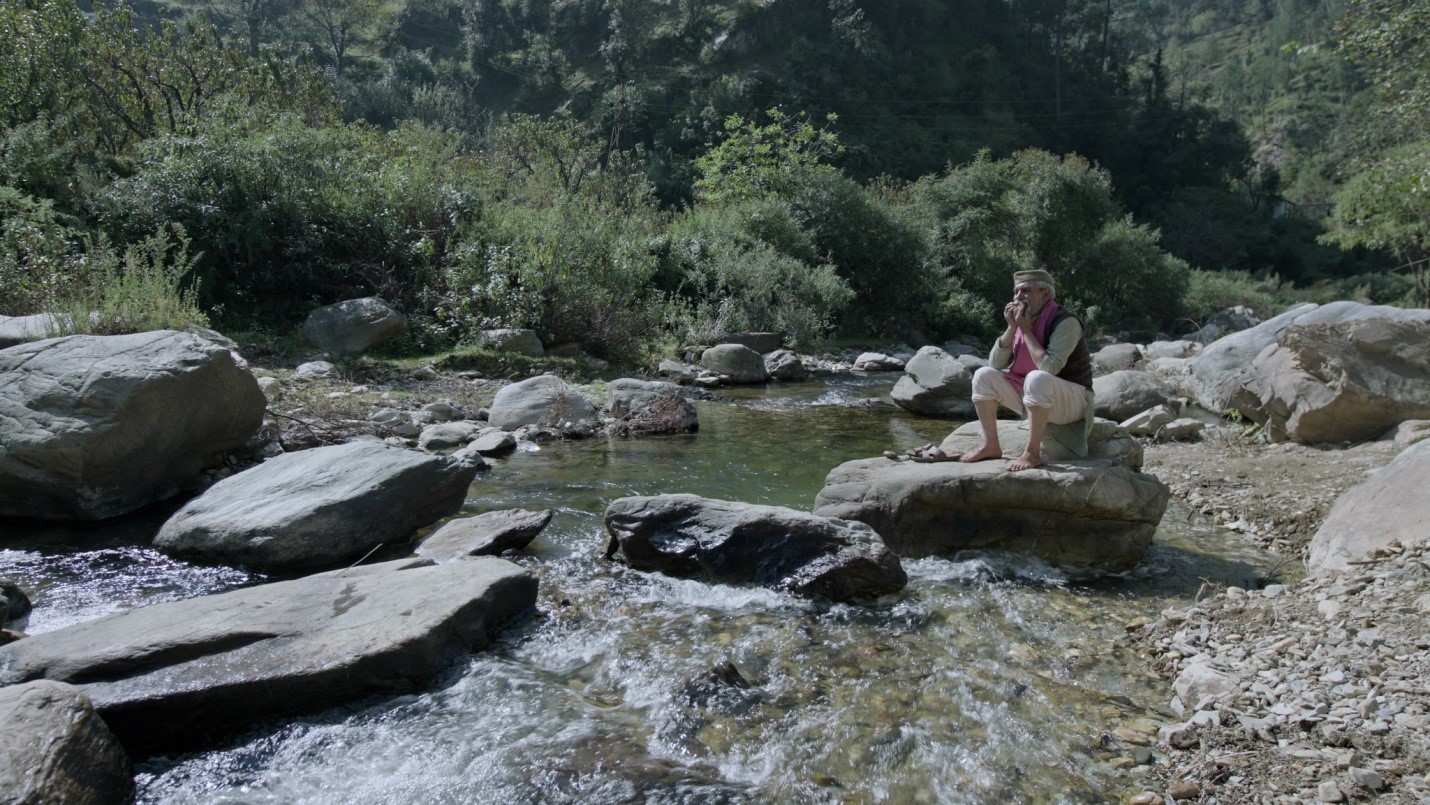
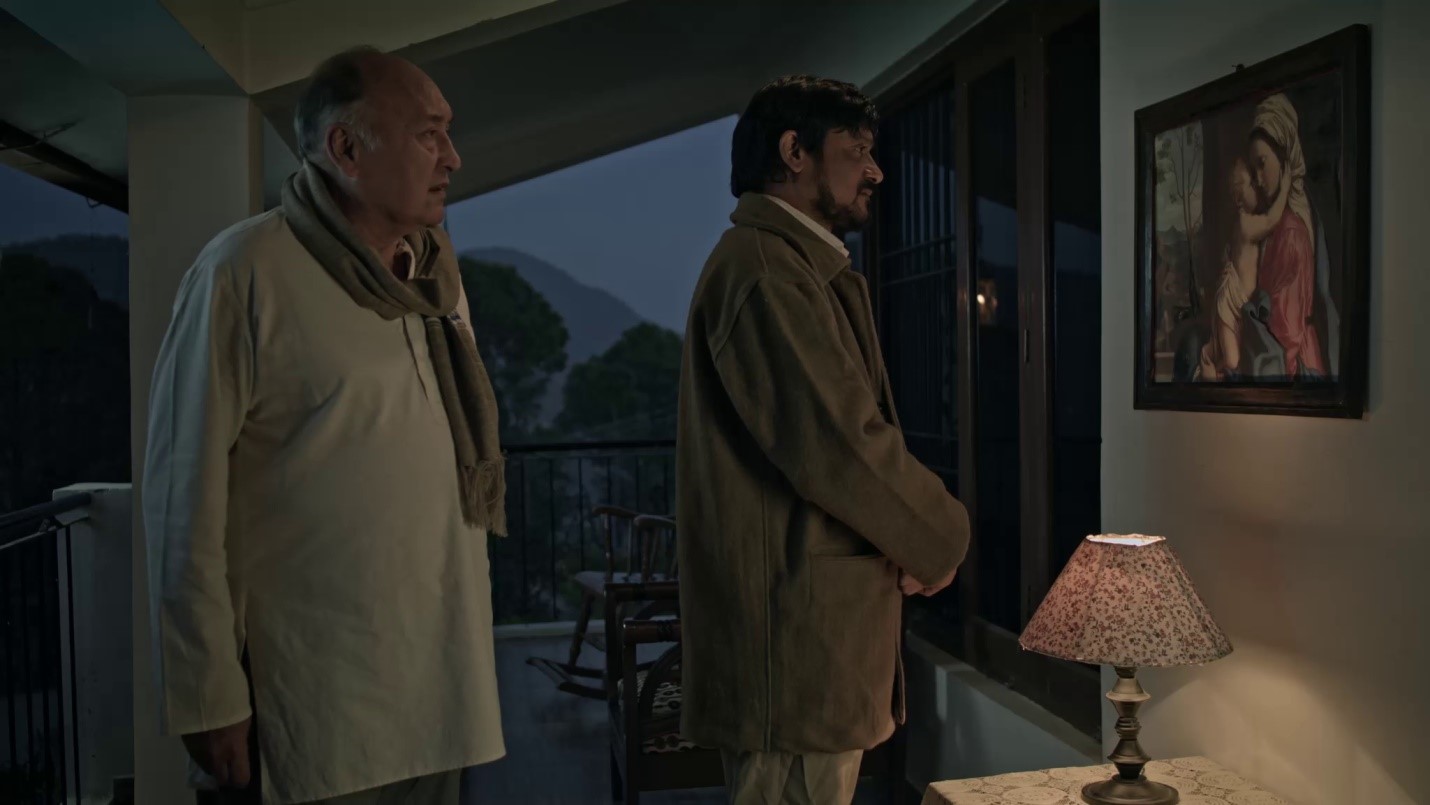
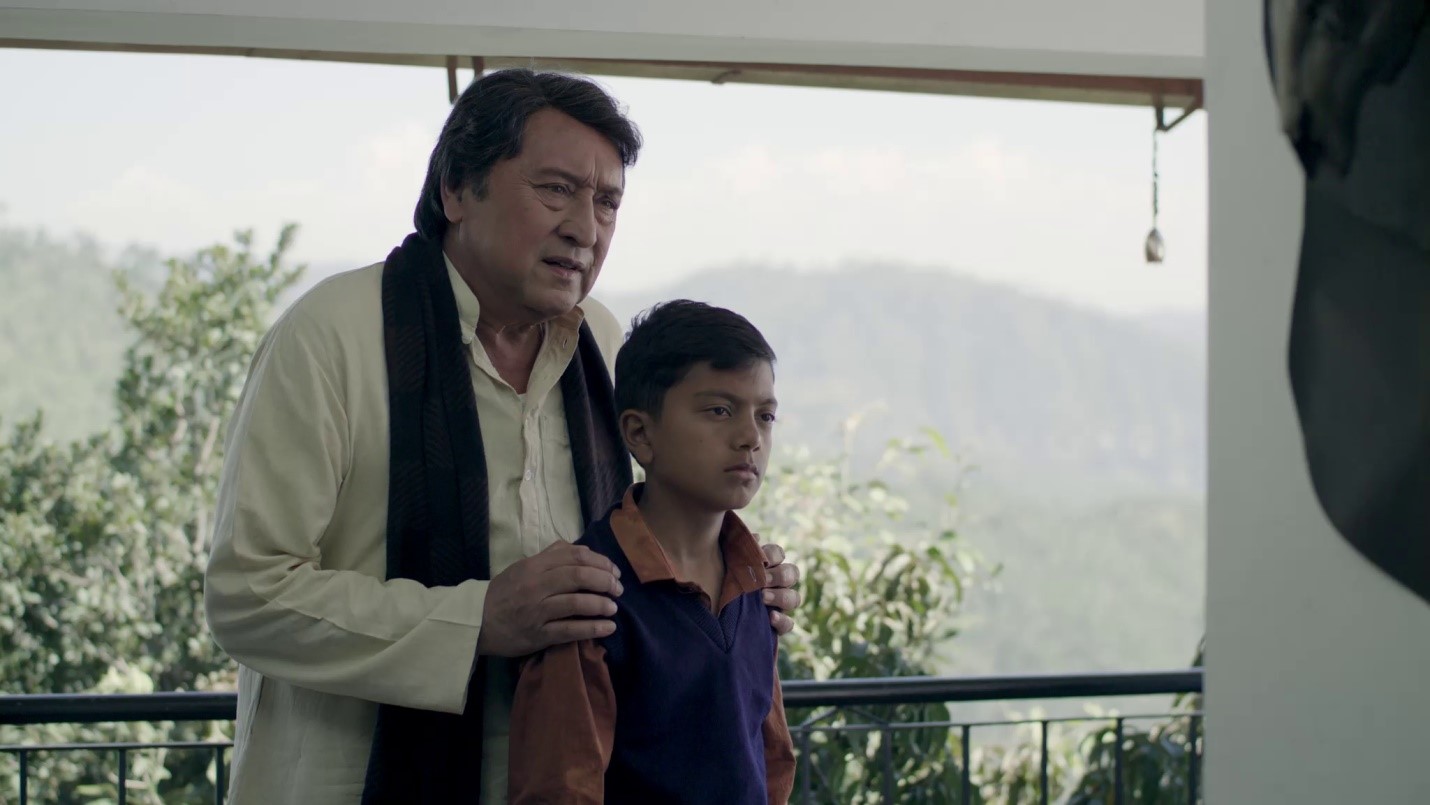
Still from Josef – Born in Grace featuring Josef and Father O’Hara (Victor Bannerjee)

I was lucky enough to get an invitation from Mr. Ashok Mahapatra to watch his film Josef – Born in Grace, an independent Hindi film that won the Silver Remi for Best Christian Film at WorldFest Houston; Best Set Design, Madrid International Film Festival; Best Cinematographer, Best Screenplay, and Best Second Actor, Ontario International Film Festival and Best Actor (Victor Banerjee), India International Film Festival Boston in 2020. Also, the film was featured in the long list for the 2020 Academy Awards.  

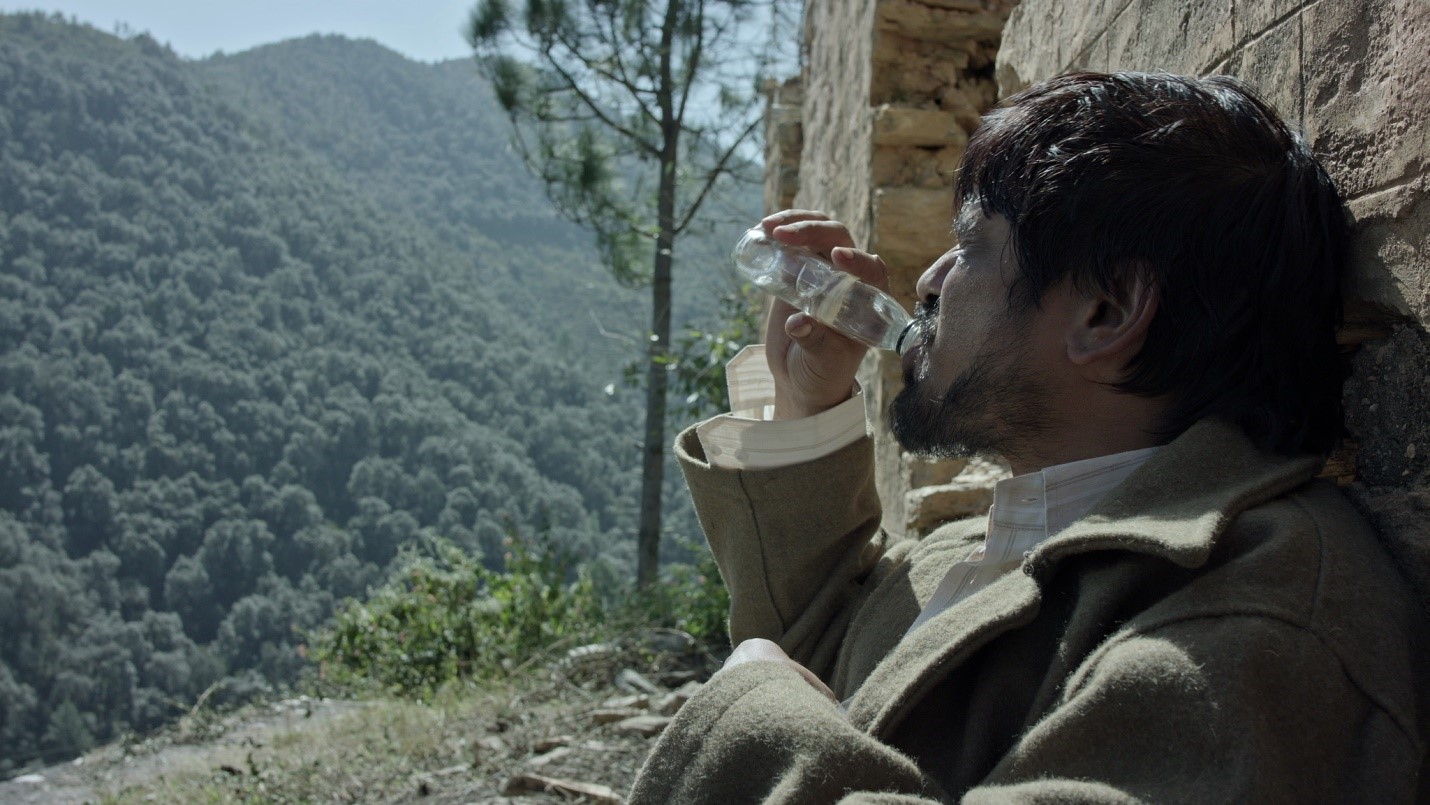
I was struck by the breathtaking cinematography and a beautiful story about grief, redemption, and acceptance. The hero, Josef, an alcoholic, is deemed a sinner and hopeless by his community. His soliloquy with his dead mother and God is elaborate and beaded with intense meanings. What I enjoyed most about the movie was how it does not sensationalize grief or show ways to overcome it. It tells the story of someone who is not able to let go of past tragedies that transcend generations. The landscape of the Himalayan Hills and the breathtaking scenery create a powerful story that is both larger than life and iridescent.

“As regards the picking of the location, I knew that my father has written the story when he was posted in the Himalayan Hills. Hence, we scouted around the Himalayas and zeroed in on the area around Ranikhet as it was virgin territory and had not been used earlier. It was a challenge to cart all the equipment there as the communication facilities were not the best. Furthermore, accommodation for the cast and crew was also a challenge.  Nonetheless, the cast was so enamored with a script that they put up with all the difficulties to complete the film on schedule. In fact, due to their cooperation, we managed to complete the shoot with two days to spare.”

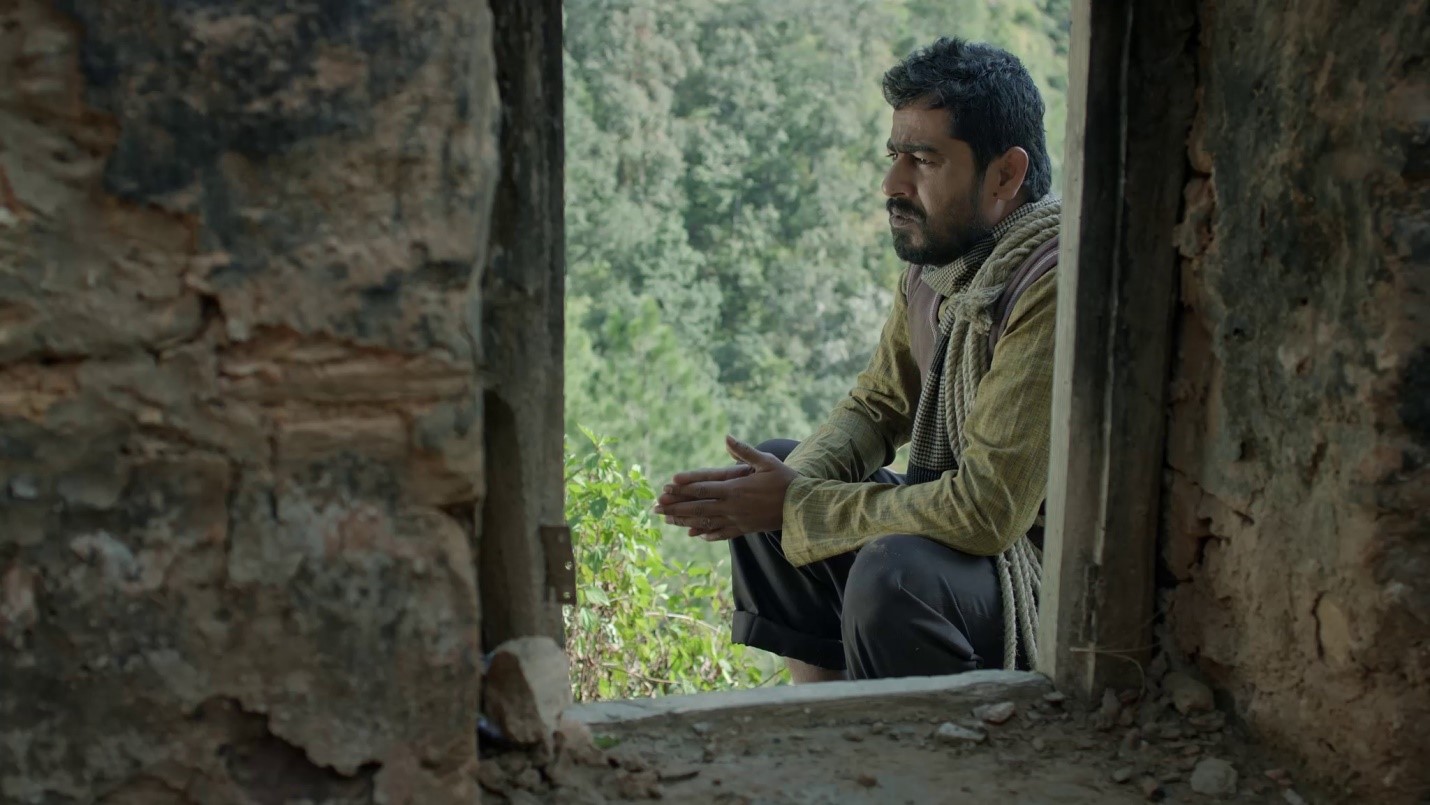
Still from Josef – Born in Grace featuring Maularam (Sudarshan Juyal)

I had the pleasure of speaking to Ashok about the intensity of the film which he considers a “passion project” that he made based on a short story titled Joseph written by his father Umakanta Mahapatra who also wrote 12 books after retiring from his government job. Mr. Umakanta wrote this story based on his experiences. Somehow the way Ashok describes his family reminds me of Egypt and how most middle-class and lower-class people postpone their dreams until after retirement. They all have stable jobs which they postpone their dreams and true selves to pursue.

“I am a retired UN Civil Servant. I started my career as a cadet, sailing out of Kolkata, in the merchant navy, and rose to Captain. After that, I came ashore and worked with the Government of India before being recruited to the International Maritime Organization. I was there for twenty years before retiring as the Director (Maritime Safety Division). Following my retirement, I decided it was time to fulfill a long-held dream and make Josef – Born in Grace, a film based on a short story written by my father, Umakanta Mahapatra. He wrote his stories based on his experiences in life. This film is a tribute to him. He was more of a friend than a father. I sincerely hope that I am 10% a father to my sons that he was to me.”

Although it is not a coming-of-age story in the true sense of the genre, Josef – Born in Grace sees the spiritual journey of self-discovery for three characters; Josef the orphan, his caretaker Maularam, and Father O’Hara the missionary who raises him,

“As regards the selection of the cast, it is a very long story. They all came along more or less on their own. It was like my father was pleased with me and guiding us all the way. Making of the film has reinforced my faith in human relationships.”

From his enthusiasm about the film, I first thought that Ashok was the director and producer of the film, but turns out this also had another interesting story,

“I am not the Director of the film. I am the Producer (though I was actively involved in all aspects in the making of the film including the cameo role as the Bishop). Susant Misra is the Director of the film. He is my first cousin and a bit of a recluse. He had given up making feature films for almost fifteen years. I had to sit on his head to make this film so that his talent is not wasted. Susant studied film direction at India’s premier film institute (Film and Television Institute of India (FTII)). His first film after graduation was accepted at Cannes Festival.”

I searched for more information about Susant since it was difficult for Ashok to talk in detail about him. Somehow, I sensed the pain in talking about his cousin who gave up his passion for 15 years. Again, the similarity between Indian and Egyptian lives became prominent, how some people give up their dreams to pursue a normal, much calmer life. When I found Susant’s notes on the website, I couldn’t agree more on some parts in which he described his movie:

Still from Josef – Born in Grace

“Although the film is set between 1960 – 1980, the period facts, people, artifacts, props, costumes, etc; had to be seen as something living and breathing. The effort was to create a sense of timelessness. The stillness and the calm the locations in the mid-ranges of the Himalayas had, gave a feeling of this timelessness and universality.”

Susant graduated from the Film and Television Institute. His directorial career spans over thirty years of notable films such as Nischal Baadal, Indradhanura Chhai, Biswaprakash, and Dharini. His films received acclaim at various film festivals such as Oberhausen, Cannes (Un Certain Regard section), Sochi, Moscow, Rotterdam, Montreal, Cairo, Shanghai, Singapore, Paris, IFFI, MAMI, and MIFF.

It would never have occurred to me that the film was set in an earlier era. The story is a tale as old as time, and yet has a freshness to it that made it believable either way. Whether Josef – Born in Grace took place in the 1900s or the post-millennial world, it didn’t show. The creators couldn’t care less about the time in which the events took place. All they wanted was to create a picturesque life

Ashok’s views were no different from his cousin which explains his passion for as well –

“I am a very simple man who likes to explore the conflict between instinct and reason as well as the value of human relationships. Life has given me so much that I felt that I should give something back for it. Hence, I thought I would start with a tribute to my father by putting pictures into his story. We are presently writing another screenplay based on another of his stories once again based on human relationships. It relates to a woman’s conflict between her need for a career and her passion for art.”

Still from Josef – Born in Grace

Speaking of women, I had to ask him about the lack of central female characters in this movie (the characters of Dona and Rajula are simply tending to the male protagonists). One of the characters that piqued my interest was Josef’s mother figure. From the moment we see him, Josef is an orphan, but his obsession with his absent mother is insurmountable. Although we don’t see her onscreen, her presence is deep-rooted within the narrative through Josef’s various monologues-

“While the film does not have a central [female] character, one has to understand the symbolism of Rajula’s role. If you recall that when questioned by Father O’Hara as to whether the child is his, Josef replies “it is God’s Child”. This subtly links her to Mother Mary. This is further amplified by Father reciting Ave Maria. Thus her role is central to Josef finding a purpose in life.”

Religious symbolism is prominently featured in the film, and Ashok reinforces that through his insistence that, “It [the movie] symbolizes that always from the ruins there is a fresh beginning. This is the circle of life.”

Still from Josef – Born in Grace featuring Josef (Subrat Dutta)

This comes at a critical time in the history of our universe. With the world shifting towards a new normal, a post-pandemic reality has shifted all that we took for granted, with its immersion in nature and deep focus on emotions and compassion, Josef – Born in Grace sounds more relevant than ever for our modern times,

“This film was shot and completed before the pandemic. However, the pandemic has made the world look back and reflect as to whether the present pace of life is sustainable. The movie is paced in a way that reflects the times and the innocence of the period. There is a haunting beauty that is captured in detail and delight – as one sees Father O’Hara go about tending to his patients. At home, his caretaker, Maularam, helps the priest look after Josef, a baby who was abandoned, a baby that O’Hara finds and brings home.”

Josef – Born in Grace is by no means a lazy film, it is not made for fans of Hollywood or Bollywood, but dreamers who immerse themselves in the film experience through the lens of someone else. Think of Jim Jarmusch meeting Ritesh Batra and you get yourself a film about faith, humanity, forgiveness, and acceptance. I recommend Josef – Born in Grace to those still willing to dream in a heartless, uncertain world.

Jaylan Salah, film critic, poet, novelist and essayist

Synchronized Chaos April 2021: Escape Room

Wishing everyone who celebrates a very happy Easter and Passover and beginning of spring, or fall if you’re in the Southern Hemisphere.

First, a special shout-out to the Yiddish Theater Ensemble (Berkeley, CA) for the invitation to view a Vimeo video production of Sholem Asch’s 1906 play God of Vengeance, directed by Bruce Bierman, translated to English by Caraid O’Brien. We announced this play in last month’s issue and it represents a creative triumph of translation of live theater to the virtual environment. Everything between the actors and actresses, from a slap to a kiss, was cleverly conveyed through highly coordinated gesturing from within tiny Zoom boxes. Whether you see this play, concerning a socially questionable Jewish family determined to marry their daughter off well, as a tragedy or a tale of the daughter’s empowerment, you will likely agree that the Ensemble carried it off with passion and energy.

This month Synchronized Chaos’ contributors explore themes of escape and presence. How do we escape, or try to escape, the world around us, and when and how do we choose to stay present and experience and learn from situations we face?

Nondescript shadowy male figure running against a blue and black background carrying a briefcase in his right hand.
Public domain image from Gerd Altmann

Mark Blickley, in an ekphrastic poem inspired by Belgian photographer Inge Dumoulin’s image, comments satirically on the artistry of a man who has ducked his head under a table.

In the same spirit, John Robbins’ piece explicates why someone slips away from the world into the bar for cocktails. Stephanie Johnson reminisces about lunches and wine shared among expatriate women in Turkey, in an enclave they created for themselves away from the local culture.

Dan Flore also writes of disconnection: how our minds, and varying mental states, can separate us from each other. Even when we’re physically near each other, we’re not always on the same wavelength.

Brick building with white stone bricks and a gray painted door. A spiral concrete staircase with a railing extends out of the door as a fire escape.
Public domain image from Karen Arnold

In a different vein, Canadian poet Allison Grayhurst’s pieces embrace the merging of individual identities into the partnership of marriage. Rather than escaping into one’s own space, her speakers join with others at an intimate level and choose to embrace the uncertainty, risk, and joy that can bring.

In his poem, Christopher Bernard mourns the loss of someone he deeply loved with an ironic, poignant image; while John Culp illustrates the process of change and personal transformation, something that can happen when we choose to stay present and hear the lessons life has for us.

Sonia Das writes of childhood, home, and memories, while Alan Catlin presents a stream-of-consciousness look at cultural nostalgia and musings on the fragility of life. Dave Douglas celebrates the joy of playing and connecting with a little autistic girl in a piece he submitted for Autism Awareness Month in April.

J.K. Durick’s pieces also probe the effects of time: our memories, what we put away over the years and what (and who) we bring out again to remember. Drifting down memory lane can be an escape, but choosing to remember can be a way to be present in your life, deciding what’s important.

Arched opening in a brick wall opens to a view of a large body of water with clouds and a sunrise/sunset in the background. A green island looms in the distance.
Public domain image from Flash Alexander

In other pieces, Allison Grayhurst illustrates people healing from loss. South African writer Abigail George’s impressionistic essay also processes a loss: the speaker mourns and struggles to understand the end of a relationship she had with an older male writer. As part of this, she reflects on her life journey, relationships and writing and what she brings to her personal and artistic lives.

J.J. Campbell also points to themes of loss and loneliness as his middle-aged speakers reflect on their lives. Yet he finds space to mention what he enjoys as well: friendship, caring, and the joy of artistry for its own sake.

Michael Johnson presents various characters in persona poems who are unafraid to be themselves, including a Native American woman proud of her heritage and a girl comfortable in her own skin and ready to have fun.

Mark Blickley presents a rather unique character who helps a boy cope with his father’s impending death and his mother’s misplaced anger. Kahlil Crawford also writes of mortality, commenting through a single image on what we can leave behind us when we depart.

Bangladeshi poet Mahbub brings us short pieces from speakers hoping to escape their lives, or who find themselves unable to get away from their realities. Nigerian poet Daniel Ezeokeke’s speaker turns to history and academic study as an escape from the trauma of war and violence.

Nigerian writer Chimezie Ihekuna warns in his screenplay about the psychological dangers of developing an obsession with horror and violence as entertainment. Bruce Mundhenke speculates on the mysteries and hidden dangers of Internet technology, also an obsession and escape for many, in a piece evoking the Trojan War.

Nondescript clip art white male figure in a business suit runs from his shadow, which has grown and morphed into a menacing creature with teeth and claws.
Public domain image from Mohamed Mahmoud Hassan

Samara Hayley Steele uses the Free Britney Spears movement as a cultural touchstone in an essay where she hopes that ‘celebrity culture’ will become more than a mindless diversion. Perhaps the increased awareness of some social issues that we gain through watching celebrities’ lives will inspire us to liberate non-famous people as well.

Chinese poet Hongri Yuan and translator Manu Mangattu continue to craft poems illuminating a celestial world in which some may wish to escape.

Chris Butler tackles real world issues through surreal poetry: humans’ rapacious fingerprint on our planet, melting glaciers, rising seas.

Australian poet Nathan Anderson transmutes the language of his poetry into a jumbled concoction to convey the mindless monotony of oppression and the futility of assuming the world operates according to simple manufacturers’ instructions.

White or Latino man with short brown hair (real image of a person) with chains around his neck and hands underwater. Part of an escape stunt game.
Public domain image from Ron Sanderson

Other writers play with words and language to express mood rather than literal meaning. Mark Young’s poetry sounds resolute in its opacity and J.D. Nelson’s lines flow together in a poetic rhythm. Jack Galmitz showcases a ‘gallery’ of ordinary folks in plain language, to show that writing can be intriguing without being incomprehensible.

Chimezie Ihekuna contributes a piece of bold determination. He will not escape difficult situations or surrender to them, but will persevere in the face of any obstacle.

Synchronized Chaos Magazine is happy to have persevered throughout the time of Covid-19 with you. We are always flattered by the number and diversity of submissions we receive and encourage readers to leave comments for the writers and artists.