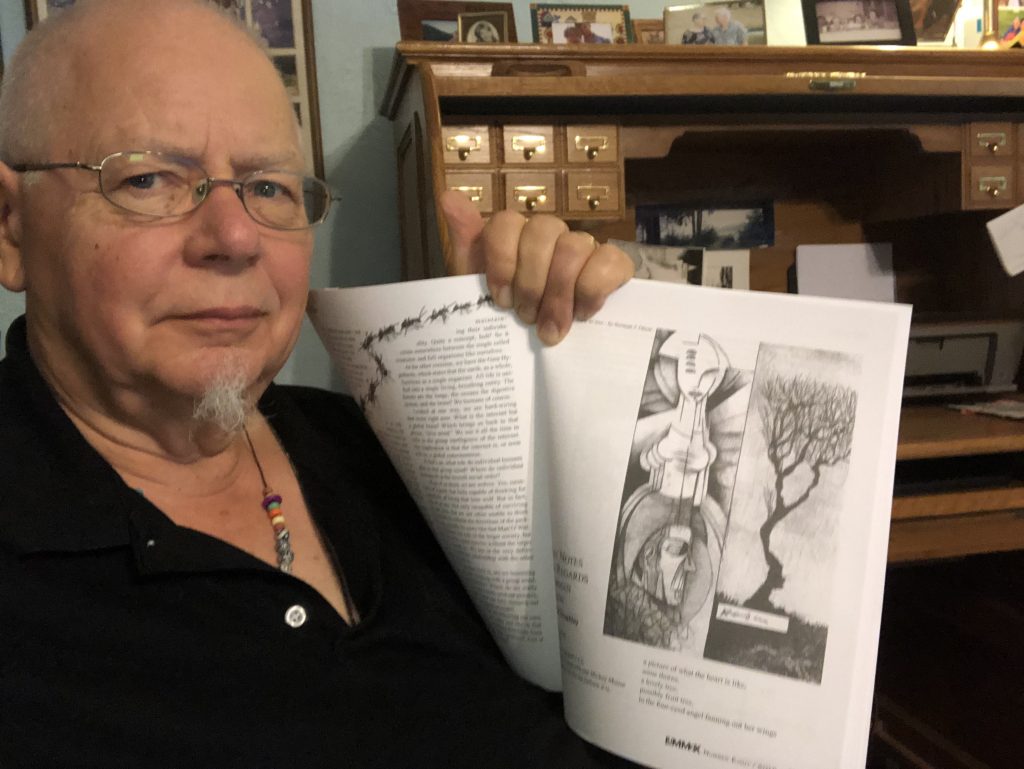
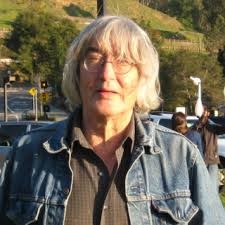
Essay from Doug Hawley

Interview

Interviewer – Here’s what you’ve been waiting for – the interview with God. Because we are mostly broadcast to English speaking areas, we’d like to concentrate on Western concerns. Welcome to WXYZ television, God. First question, what should we call you?

God – God is fine. Lower case, upper case, I’m cool. I’ve been called Y*hw*h, Chemos, Tengri, Baal. Baal, hah, hah, I always laugh at that Lord Of The Flies joke Beelzebub from the Hebrews. Don’t know that one? Look it up. If there is a point to all the names, it is lost on me. Different places think that I’m their God and I’m on their side. No, I’m the same one with different names. Tribalism caused naïve humans that couldn’t see the big picture to get it wrong. And holy crap, the “religious” guys really messed up. There was “fake news” way before the short-fingered vulgarian ever brought it up. All of their names are different local manifestation of the one me.

Interviewer: I’m quite surprised that you look a lot like the late, lovely Hammer Studios’ horror star, Hazel Court, but about two meters tall (close to 7 feet for Americans).

God: If you were to view my reality, you would go blind, your brain would boil and you would die a torturous death. Nah, I’m just yanking you, this is the real me. You got it backwards, since I’ve been around for billions of earth years, Hazel Court looked like me. Side note – I created numerous legends when I visited earth many years before. Lately, I hang out with NBA players and don’t create much of a stir.

Interviewer – So you are the real deal, the creator of earth?

God – Don’t sell me short, I created the whole universe. But don’t blame me for whatever happened later. Sure I messed around with various life forms on different planets, but I didn’t plot out their entire evolution.

Interviewer – I’m going to have to ask you to back up. First, you don’t control history?

God – No, what kind of monster would set Hitler in motion? I didn’t make plagues or invent rap. That’s on you humans. A lot of planets have done better. And I just started things and evolution and the physical sciences did the rest.

Interviewer – Wow. There is a lot I didn’t expect. For one thing, a lot of your fans say that evolution doesn’t exist.

God – Yeah, I know about those crackpots. One of the humans that I kind of like, Paul Simon, put it to music in his song “The Boxer”: “A man hears what he wants to hear and disregards the rest.” Every time some bozo “disproves” evolution, he disregards accepted science.

I’ll give you an example. Some argue that the human eye is proof of “intelligent design”. It has been incorrectly claimed that Darwin saw eyes as proof of my work. When some chemicals are light sensitive (ever take a picture?), given billions of years and lots of mutations eyesight has evolved several times among many different kinds of animals. This is well known to scientists, but not to the willfully ignorant.

Another thing – would an intelligent designer build in planned obsolescence? Prostate glands, appendices, cancer?

Interviewer – Are you telling me that Genesis isn’t the word of God and it is inaccurate?

God – Much of what is in the Bible is metaphor or parable, but some just don’t get it. You know the part about the pillars of the earth? That part is a rip-off of the Greek idea about the earth being held up by pillars on a turtle or some such claptrap.

Interviewer – Do any of the creation stories hold up? I know there a lot of different ones from different areas.

God – They may be good poetry, national myth or just jokes, but they don’t hold up. Sea monsters, ravens, parts of my body, voids, national heroes. Maybe good literature, but totally accurate, no.

Hell, I can’t even follow the Greek mythology. Weird stuff, incest, war amongst the gods. I may have different manifestations, but I am just one entity.

Interviewer – How did we humans get it so wrong?

God – Two things went wrong. Some groups just made things up to explain things that they didn’t understand. Say you wonder about how the world got started. Maybe you use reproduction as a model, so you guess that two things mated and made the earth. Could be you see a volcano erupt, so you decide that the earth was created out of a catastrophe. A mushroom grows seemingly out of nothing, so the earth is created out of the void.

Early on I talked to humans before it became obvious that it was hopeless. People that don’t understand nuclear physics or astronomy aren’t going to get the big picture.

Interviewer – How did the universe begin?

God – Both science and some of the mythologies got it partly right. It was the big bang. What happened before the big bang? I don’t know. Rumors of my omniscience are overblown. Still, I’m fairly sure I created the universe, because there wasn’t anyone else around.

The whole thing about the cat is in the box or not in the box, the speed of light and quantum physics in general make no sense to me.

Interviewer: Then what was or is your part of the process?

God – I didn’t say I didn’t have ANY powers. I just don’t remember creating the universe. I’m really good at biology. I seeded millions of planets with various forms of life.

Interviewer – That answers definitively what many of our viewers have questioned over the years. Could you give us some examples of your creations?

God – There are the liquid creatures on the planet I call Riverdale. They aren’t too smart, they just babble all day. Their life cycle consists of liquid, vapor and then liquid again. That’s probably why they believe in reincarnation or resurrection, I’m not sure which. Another oddity of the Riverdalians is that they are not exactly either individuals or one entity. They mix and mingle literally. You could be Joe, then Joe plus Jane, then half a Joe.

The Askari did not turn out well. They look like humans, but are even more arrogant. They claim to have spread their kind around the universe, including humans, when in fact they just moved some animals, human and otherwise, that I had created.

They are really mean to immigrants. Every once in awhile, they find refugees from some catastrophe and “save” them, but put them to work on the most menial tasks and offer very little sustenance. Later they kick them off on another planet to fend for themselves. Some of my gambles have not paid off.

One of the planets where they drop off immigrants has some of my favorite inhabitants, the Renn. Not too bright, but they are always Zen-like in the moment. They look like small Centaurs except for their dog-like faces. They spend their time running around screwing and not worrying about a thing. I wish more of my creations were like them.

The Randd were the smarter cousins to the Renn. They live on the planet Randdog and are probably where human conspiracy theorists get the idea about Ancient Aliens. As is so often the case, the theorists got the story part right. The Randd are brilliant and even though they resemble the Renn they deny the obvious kinship. A few thousand years ago, the Randd had accomplished faster than speed of light travel. Don’t ask me how, but they did it. Because they had all the material possession that could possibly want, they began to dream of kinky sex. Both males and females had none of the talent that the Renn had, so they decided to cast their net wide. As a result, they encountered earth. The humans at that time looked just like the rough trade that their jaded tastes wanted. Earth people and the Randd were surprisingly compatible. Earthers were quite taken by the savoir faire and bling that the Randd had, and the Randd were mad for the variety that the humans presented. The progeny of these unions had gained some of the intelligence of the off planet sexual tourists. The Nazca lines of Peru, the Egyptian pyramids and so much more are the result of the alien brain power. The misfortune of your planet is that after the Randd left, humans went back to hooking up based on gross sex appeal and soon lost all that they had gained.

Interviewer – If I may ask, what happened to the Randd?

God – The brilliant Randd had one big blind spot. Their sex drive made them stupid. They caught stds from all over the universe and infected a number of worlds, which is why the Randd are now extinct. Be glad that they visited earth before they picked up some really bad diseases.

Now if I may return to the original question.

You humans would probably like the Feline planet. It has all the variety of cats that you know and love, and some that you have never seen. Sniggle is short legged and looks something like a snake, but is covered in fur. A few hundred years ago idiot humans killed thousands because either you thought that they were familiars of witches or that they carried the plague. THEY WERE MY GIFT TO YOU, YOU INSUFFERABLE CRETINS. Sorry, I just got a little overwrought. I see that some of you have gone back the other way and worship them as the Egyptians did. I love cat videos. How can you not believe in me when there are cats?

You hate mosquitoes because they vex you and ignore the fact that they are major player in the food chain. As larvae they feed fish and as adults they feed birds and bats. You like fish and birds don’t you?

Interviewer – You mentioned that the Randd became extinct. Is that common?

God – The latest report says that 32% of civilizations have become extinct. War, introduced toxics, plague, or just giving up has doomed lots of planets. A couple of ways things go south is like a couple of your movies. Some are defeated by an alien invasion like in “Independence Day”, but with a different outcome. Likewise sometimes it’s “Terminator”. There are enough replacements by the Askari to keep the number of populated planets fairly steady.

Interviewer – We can hope that our aliens are more like E.T. and that we aren’t smart enough to make machines smarter than us. I’d like your take on some holy leaders. Let’s start with Buddha.

God – I’m not really high on Siddhartha Gautama based on what I know. Maybe I can’t blame him. He may have been misquoted. The whole thing about Nirvana and rebirth is quite the crock, you know. Do you really want to know how to be a poor beggar with no ambition? No, I didn’t think so. Those that see him as supernatural are off their nut. He was just a guy with some ideas, some good, and some bad. Lying is bad – he got that at least. Despite his reputation as being peaceful, his followers don’t mind beating up minority Muslims.

Ask yourself, is some guy who has extinguished all of his desires and ambition, and has no interest in material rewards likely to invent the car, the internet, defibrillators and peanut butter? Didn’t think so.

Interviewer – Mohammed?

God – He’s one of the newer guys isn’t he? Can’t say I followed his career too closely.

Interviewer – Confucius?

God – Some of Kong Qui’s jokes are good. Just kidding. Some guy supporting the status quo.

Confucius say woman who fly plane upside down, heeesorry, that always breaks me up.

Interviewer: Moses?

God – I think that his biographers got a lot of it wrong. I’ll give you a couple of examples from the tablets. I don’t care about the graven images. Take my picture if you want, do my bust – I guess that could be taken the wrong way. I already mentioned that we are all the same god, so no gods before me makes no sense. That bit was just put in there by the priests that wanted an exclusive franchise.

But Moses was a national hero. I don’t want to take anything away from him.

Interviewer – Jesus?

God – One of my favorite children. Wonderful person, but like so many others, mercilessly persecuted, misquoted and misunderstood. The world would be a lot better off if his teachings were followed.

Interviewer – Did you just say “one of my children” and “misquoted and misunderstood”? Could you expand on that?

God – I could, but if I did your TV station would be burnt to the ground and the land covered in salt. As it is, you will at least get death threats based on what I have said here. Have I mentioned that humans are not tolerant? Yes I did.

Interviewer – The founder of the Mormon Church of Latter Day Saints?

God – Joseph Smith Jr.? He’s another new guy that I have not followed. I do like many of the Mormons.

Interviewer – Did we miss anybody important?

God – You most certainly did. He had a lot of good ideas, and was largely plagiarized in other beliefs. Now he’s known from a book and a composition used in a movie and at concerts by the late, overweight Elvis Presley. I hope by now you know I’m talking about Zoroaster of “Thus Sprach Zarathustra” renown.

He originated the religion of the Asian steppes which was the principal religion of what we call now Iran. The Magis of Biblical fame were adherents, but little is known of them today. While other beliefs had a whole panoply of “gods”, Zoroastrianism realized there was just one, namely me. They called me Ahura Mazda. Now Mazda is known as a car, and not even a luxury one. Zoroaster recognized the value of leading a good life. It was not all about smiting ones’ enemies, although I confess there was some of that too.

Today, some religions have thousands of times the number of Zoroastrians. It makes no sense to me.

Interviewer – I feel stupid asking this. Is God dead?

God – You got that right. You should feel stupid, but I know that you are asking because that was a movement of the moment. What is and was dead is the search for what is right and true in the world. So many people are sleeping through life making widgets, laugh tracks for bad sitcoms, or looking for a reason to go to war, that they ignore what is important. I welcome your worship of course, but ask yourself “Am I leaving the world a better place, am I just existing, or am I aiding my world?”

Interviewer – We talked about a lot of your creations on other worlds. How about us on planet earth?

God – I’m afraid that’s going to hurt. Some of you have been great. I mentioned Jesus already. Those that attempted to save the Jews in World War II. Those that wanted to prevent war or at least end it. Bill Gates did some cool technological things. People that grow healthy food. Employers that take good care of their workers and give marginal people a second chance. The few that work on a healthy environment. Nothing else comes to mind.

The bad list is much longer I’m sad to say. The worst of all is the misreading of “Be fruitful and multiply”. I think that I was misquoted, but in any case you humans way over did it. There was plenty of land for millions of people to live in comfort. There could have been enough for everyone, even if disaster hit somewhere. Just peacefully move some other hospitable place without conflict. Now places like Haiti and India are so overburdened, the people live in misery.

Partly because of the avarice for resources in an overpopulated planet, tens of millions died in the two world wars. If you don’t remember your history, WWI was precipitated over the assassination of one person. Think about the arithmetic, one death led to the death of over ten million. What kind of creatures would participate in that calculation?

Against your few saints, you have Roman emperors that ravaged Europe and beyond, Genghis Khan who killed millions in Asia, colonial powers that took the physical and human resources from Africa, Europeans that decimated of the aborigines in the Western Hemisphere and Australia. I could go on about China, Russia, Japan and the U.S.. All the great powers through history have a lot to answer for.

Interviewer: You don’t see any improvement?

God – With the current P.O.T.U.S? With the rise of anti-Semitism, attacks by and against Muslim factions? Have you no reason at all?

Interviewer: Don’t we get any credit for culture, Hazel? Sorry, God.

God – Some of your classical music is OK, some just puts me to sleep. Don’t get me started on rap, country and new age.

For every good book or poem, there are about a thousand bad ones. Romance novels? All the same. Have you read James Patterson? He’s a best seller. Even Stephen King wrote “Under The Dome”.

There are a lot of Ed Woodses out there. Stanley Kubrick, who did some good stuff, made “Eyes Wide Shut”. What was he thinking? Had he become senile?

Interviewer: But we’ve made such technological advances.

God – Your advances can’t keep up with your burgeoning population. When agriculture improves, the mouths needing to be fed outpaces it.

Do you consider the ability to receive phone calls around the clock from someone selling time shares a good thing?

Interviewer – This has been quite bleak, but I hope that we get another chance to talk. By the way, why did you agree to this interview now? People have wanted to talk to you for eons. Some have even claimed to have received your divine proclamations.

God – The reason that I have not talked to humans lately is twofold. As I already said, I am regularly misquoted in order to profit the reporter. Also, thousands of years ago, people couldn’t understand the truth.

I chose to talk to you now, because I didn’t think that you would be around long, and you should know the truth before you go.

Interviewer – Oh, my god – sorry – I’m going to die?

God – I wasn’t referring to you, I was referring to humans.

Appeared in Café Lit.
Poetry from Joan Gelfand

Branded

Lowing, she is jolted. Free roaming once, now “Triple SSS” ranch.

After the branding, she returns to tall grass,

Her bell clanging a song she longs to escape.

The stench from the Ranch shocks drivers, passersby.

“Methane. Global warming,” they mutter, alarmed,

And vow to eschew meat. Up in San Francisco

The young flourish, workforce warriors

Pray like hell to survive, to preserve back, wrists, eyes.

Tied to screens and cubes. They brandish

Salesforce backpack, Twitter snow cap, Uber baseball jacket.

Liberty Mutual briefcase. Google thermos, Facebook key chain,

DropBox t shirt, Organic socks, Apple everything, NetSuite ball caps.

Logos of belonging. They relish their bells, glued to notifications,

Texts, mail. Ninjas in their crowded fields, they

Take the searing poker bravely:  tradeoffs. Paycheck, health insurance

Babies. A chance at the payoff, a wild ride, maybe, early retirement.

At dinnertime, they taste the hint of something

Burnt under the sniff of grassy air, hear the faint

Jangle of the chain, the distant sound of bells.

“Peonies”    

She won’t sell the country house. Not yet!

And not because of Locust Lake, sailboats in summer.

Alders in snow. Not because of the long view of the Poconos,

Those graduating waves of forest, deep green fading

To watery sage, tiered like a chiffon dress.

Lost in those folds, the dizzy roller coaster

Of marriage, sickness, the push pull of desire.

Paul planted peonies. She, a lover

Of woodblock prints, bamboo, toro nagashi,

 Candle lit lanterns on a lake.

Her tears water the earth where peonies proliferate.

In life, he betrayed, but in death transmogrified,

Missed. At night, she denied him the touch

The skin he craved. You can’t have it both ways,

She chided. Just now, she wants it exactly

Both ways. Perfect in life. Perfect in death.

Now that he’s gone, her loneliness, tissue thin, blooms.

She is married to the million petal profusion of pink.

The peonies are her private grief, their souls, reunited.

She needs, him, and his perfect peonies.

“Besides,” she cries, “It’s such a short season.”

Tongass

In Ketchikan, flaming fireweed

Isn’t red but lavender.  Pale buds

Luminescent against all that green.

They grow (but only in July) proud natives

Like the artful Tlingit. Erect. Stewards for ten thousand years,

First Nation. Black and red. Carving, carpets, paintings, poles.

Overhead, raven soars, screams!

Ever a trickster, he twists himself into seal, bear, shaman.

I don’t dare whisper pristine.

Tlingit voices reach. Nitchi tai tai/Ora nika ora nika/hey hey hey hey.

Oh changing mother/Mother of creation/We call upon you/Waters of our birth

Land of our sustenance fire that cleanses at death/Breath of life”

Eagle screech. “For all we stand to lose.”

Raven talks story from totem pole, story guards history.

Did we fly too high? Did we ignore the fireweed’s whisper?

Raven marries eagle and eagle marries raven.

It’s the law of balance, of love. Tribal codes for long life.

Respect the seal, the whale, the forest, the bear.

Heed the screech, the call.

Praying at the Altar of Nam June Paik

Gunboat/day-glow/birdflock/drones.

Lotus blossom’s sharp/snub-nosed catfish.

Flashes. We are clones/Forty years after Aquarius dawned,

We become frozen psychedelic hearts/petrified/concrete block.

Summer of love/revival/nostalgia’s sour. We starve but for

An altar. Fluxus sculptor constructed a tower

TV/consoles/fragmented images/sounds. Harmonic and

Found/art, these east/west wats become our galleries

Have busted out. Do it yourself. Reuse. Museums/immolation

Immigration dying on streets where/we refuse/petition. A prescient vision

Paik named “the electronic superhighway.” I quit. Global to drill bit

Amphora to inkwell. The long view just got myopic. School of fish with no insight

We protest/resist/ our rage palpable/the turtle indecipherable.

The river, muddy as ever, sinking.

 I am losing ground. Can art save us from this circus act?

 I’m lost.  Listening to John Cage, I’m atonal, afraid to glance

Sideways, back. Here’s that bird flock, limp cock/tails as black as drones.

Everyone’s gone/viral/we are in the hands of a reality TV bully.

A hoax. All protocol tossed overboard/words useless/loose

Lips/sinking ships. Twitter/ feeds/ nourishes hate speech.

I’m praying at the altar of Nam June Paik.


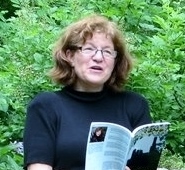
Author Joan Gelfand

My reviews, poetry and stories have appeared in over 150 literary journals and magazines including Rattle, PANK!, The Los Angeles Review of Books, Prairie Schooner, Chicken Soup for the Soul: Dreams and Premonitions, The Meridien Anthology of Contemporary Poetry and Fire and Rain: California Eco-Poetry.

The author of three poetry collections and an award winning chapbook of short fiction, my recent book, “You Can Be a Winning Writer: the 4 C’s of Successful Authors,”  published by Mango Press was an Amazon #1 best seller.

I coach writers and teach in the San Francisco Bay Area. 

Poetry from Joan Beebe

Joan Beebe and fellow contributor Michael Robinson
Joan Beebe (left) and fellow contributor Michael Robinson

Whispering and Dreaming


I hear a sigh in the distance and suddenly

I realize it had come from me.

My dreams are of long ago

when life was simpler

And most days happiness surrounded me.

My sighs keep on and my dreams become

a source of comfort.

I am whispering into the night when there

is no one to hear me.

I whisper my dreams into the darkness.

Poetry from Susie Gharib

Largs 

The mortified, to-be-groomed, piling plates

of my trendy, executive-to-be flat mates,

the stereo that ravishes the flimsy fiber of my walls

every second of the day,

the periodic cleaning of the communal toilet,

the frugal, frozen meals,

the droning laundry that churns my brain with twisted sleeves,

the window-shopping that constantly reminds me of aesthetic needs,

the constricting shoes that are past their retirement age

have all decidedly urged me to go on a three-day retreat.

I arrived in Largs on a very gusty, snowy day.

A female taxi-driver kindly waved at me

I inquired whether I could walk to the Benedictine Monastery.

Viewing the piling snow, my slender frame,

she shook her head negatively.

I boarded the vehicle banishing all thoughts about the fare.

I was always on a budget but it was high time I loosened care.

Instead, I focused on the beauty of a snow-puffed affair.

The first thing that conversed with my languid eyes

was the crow which rescued St. Benedict from harm,

serenely perching upon the saint’s shoulder.

Warmly received with the Madonna smile,

I was preceded by the Sister up the stairs,

then having inadvertently tripped over her habit of grace,

I was instantly forgiven before I blinked a single, apologetic phrase.

I had learnt from a song that silence has a sound.

It was true indeed of that realm of the devout,

so with attuned ears I began to learn how to hearken

to the peace of the un-worded.

Dinner was served with guesthouse mates.

No students’ broils, no mounds of plates,

but my days were spent swirling with snowflakes.

In a pair of navy Wellington boots,

I crunched my way up and down the unsullied coast,

a single tiny blemish on unbroken snow,

except for a visible dog now and then,

being walked to execute its needs.

The Sisters must have marveled at my eccentric need

to be constantly outdoors

when life was freezing to its very core.

I was bent on braving an inner storm

when people sat snug in cozy homes.

Grasmere

I constantly think about his inward gaze

that sees beyond all feminine grace

and the flamboyant phrase,

but Winter seduces him with voluptuous peaks

and Alpine skiing has never been my expertise.

Instead, I yearn to nestle to April’s daffodils

in Grasmere’s dales.

He loves to hear the wind buffet his lateen sails,

to expose his nimble limbs to mischievous air elves,

when I prefer to float on the placid lake

that Wordsworth and De Quincey used to contemplate.

A Water-Sphinx

I moon away my swimming hours
flirting with fish who dare approach,
viewing some seaweed or a fleet of clouds,
rippling the sea with arms grown bronze.

The lane I’ve chosen in this mass of waters
is the darkest, deepest and quite aloof.
An occasional splash from an efficient diver
or a professional swimmer would beat my course.

With a soft stroke I caress the flowers
that ripples have weaved with straying foam.
No need to speed or brave the miles,
no race to win, no end in view.


But whose breath has now agitated the quiet,
ruffling the surface with rhythmic moves?
Attuned, each ear begins to marvel
at this consistent, persistent tune.

The surge that precedes a Leviathan towers
before my eyes that catch a glimpse
of a figure resurrected from Roman times,
a Triton or Spartan, a moving myth.

Two orbs that see through films of water
assess the nymph that within me dwells.
A commanding glance beckons me to follow
to race this legendary water-Sphinx.

With eyes mesmerized by a giant’s biceps,
my hands then whisk the sweet sea’s blue.
An unwinnable race it is but now,
I have a mate with an end in view.

A Historian

Benignity resides in the gleam of his eye

that calmly views a slumbering mankind,

too loath to unfurl.

Anger has never diluted his avowals

against the falsification of historic files,

the forgery of dates,

ecclesiastical guile,

and Truth’s demise.

He wonders what makes most people so blind

to every de-shrouding he has espoused.

Is it a complacent way of life?

An ancestral dread of the Inquisitor’s styles!

A shield against psychiatric art!

Or the plights of irretrievable Snow Whites!

Celestial

Grant me that purple cloud

for a funeral shroud,

some Autumn rain

to anoint my name,

a pyre of rays

for immolation in space,

a harp of stars

to play my rites,

a chariot of doves

my celestial hearse,

a headstone of light

for my burial site,

a wreath of beams

above remains.

Comeliness

Comeliness does not gather dust.

Its innateness surpasses must

and the intricacy of rust.

Ornate is the translucent facade

that glows with jovial smiles,

and the efficacy of a glance.

Melifluous is its lingual form,

resonating through spinal cords,

a euphony of throbs.

Redolent is its lingering scent,

regaling the mind in its absence,

a cerebral incense.

My Umbrella

The story of my umbrella is not a romance.

It has nothing to do with recreation, leisure, or class.

Floral as it may look, it is a weapon that defends,

derails, defuses, debars and deters.

Though I’m nearing retirement, my feet still serve an end.

The sun is quite hot-tempered in this portion of the world,

so my umbrella is the armor that shields my arms and head,

but not my legs.

Though incongruous with my sartorial façade,

it has become an appendix,

a perennial blemish on elegance,

derailing the gentility of an academic.

For some it has defused many feuds

over the efficacy of learning.

If knowledge cannot purchase one a car,

then one can fare better as a clerk,

a plumber, a sailor, or attending a bar.

As for my gender, a housewife.

This colorful nebula encircling my head

has debarred and deterred the ones to wed

who seek in a nuptial life more than a bed,

a financial credit.

Susie Gharib is a graduate of the University of Strathclyde with
a Ph.D. on the work of D.H. Lawrence. Her poetry and fiction have
appeared in multiple venues.

Essay from Norman J. Olson

A Philosophy of Art, Maybe

Norman J. Olson

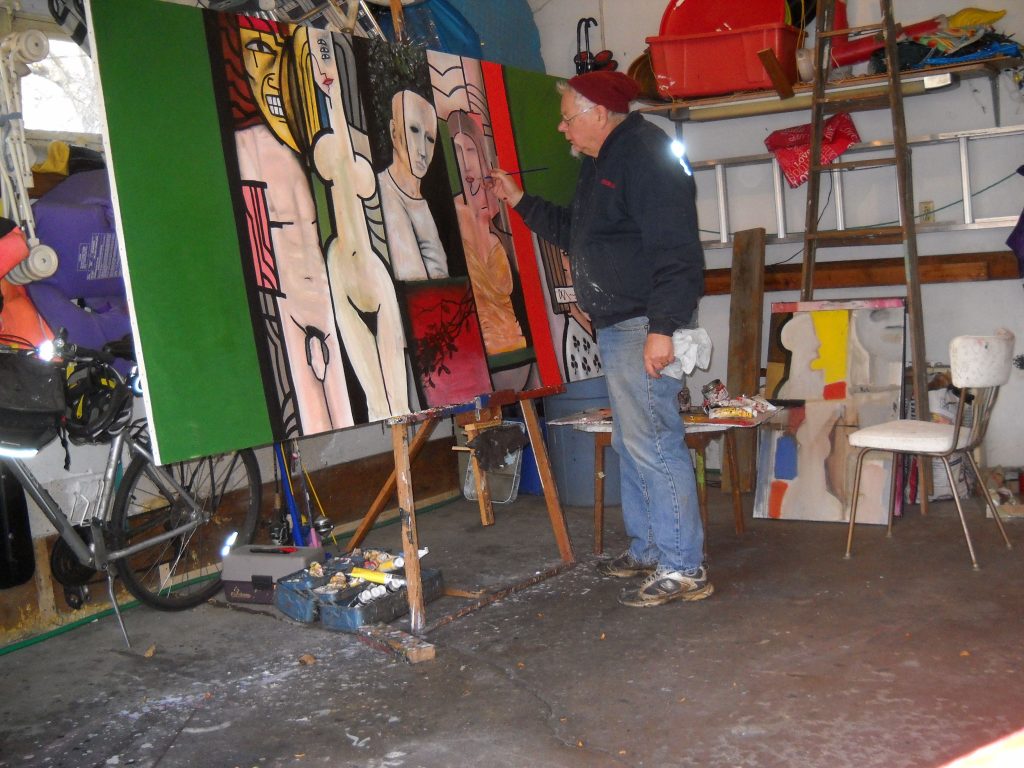
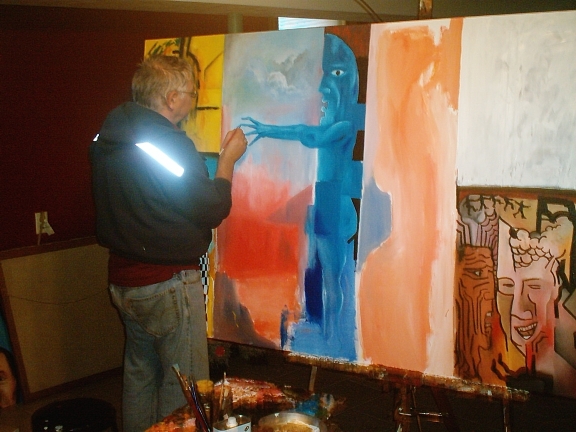
I tell people that I am an intuitive artist…  I make art by starting with a surface, putting some marks on it and using the medium at hand to keep working on the piece until I feel that it is done, or it “feels right,” whatever that means…  I am not a naïve or self taught artist, as I have a Masters degree in painting and have studied art history all my life…  my area of study for many years has been Pre Raphaelite art and I have traveled extensively to see the original works by those artists…  ever since I was a child, I have loved looking at art, especially old master, European art and more recently, 19th Century academic and Victorian art…  my roots as an artist are firmly in the late 19th Century and I use materials and techniques from that era…  many people say that they see the influence of Picasso and Duchamp in my art and I’m sure that is there as in art school, I was given a heavy dose of Picasso and I have always thought Duchamp was the only really great artist of the 20th Century…

I remember that I discovered the magic of drawing as a pre schooler, drawing in the margin of books and on whatever paper I could find…  when I got to grade school (there was no kindergarten in the country school I attended) I discovered the encyclopedia which was full of information that fascinated me and pictures that I loved…  I began studying old time sailing ships and tried to use the diagrams and pictures in the encyclopedia to make crude drawings of my own invention which had the right sails in the right places….

In 6th grade, I discovered Michelangelo and a book called Anatomy for the Artist and spent the next six years studying anatomy and attempting to learn to draw people by learning the names and locations of all the muscles, sinews and bones… when I got to the University of Minnesota, I discovered life drawing which I loved loved loved…  I don’t know if they even do that in art schools any more, but in those days (late 1960s) a life drawing class would have a person come into the class naked for us to look at and draw…  I learned to draw what I saw and surprisingly, I learned that men and women naked do not look as different from one another as I would have thought…  and in fact, from across the room in many poses, it was not obvious what gender the model was…

so, given the importance of the nude in the art that I studied and loved, old master and Victorian drawings and paintings, and my fascination with how people look without clothes, I spent most of my artistic life making drawings and paintings more or less centered on images of naked men and women…  I very early on realized that this kind of art was never going to be very popular, would always make people more or less uncomfortable and would not bring me much in the way of commercial success in the greater world of art galleries and art shows… I also knew that my sort of old fashioned way of working, making drawings and paintings which were not formally innovative was out of step with what was going on the world of contemporary galleries  and museums so, I decided to work first for 20 years in a factory printing telephone books and then for 20 years in a civil service job and continue to do art as a hobby i.e. something one does for reasons other than to earn a living…

Hewlett-Packard

I never expected to have an audience for my art work at all so continued on through the years, making drawings and paintings, working intuitively, trying to let images flow from my unconscious mind without thinking much about it…  I have always loved music of every kind and found that listening to and thinking about music seemed to facilitate the flow of images from my brain through my fingers onto the surface of the drawing or painting that I was working on…  I have not done actual “life drawing” from a nude model for many years, but continued to make images of figures because that is what my subconscious seemed to want to do…  I often carry a small sketch book with me and find myself making sketches of people I see around me, especially when traveling…  I also found many years ago that I like making imaginative drawings in public places, where there are people around to look at and especially if there is music playing in the background…  so, while traveling, I have made many many drawings in the shade sitting by a pool at a Las Vegas hotel, or on the deck of a cruise ship for example… sometimes using India ink and/or watercolor, more often using ballpoint pen…  just because it was handy and I had developed a technique of chiaroscuro using ballpoint pen over many years while sitting on an ink can in the corner behind the old Wood-Hoe Telephone Directory Letterpress that I worked on for 20 years, watching the rolls of paper wind down, waiting to splice the new roll onto the old one…  drawing with a ballpoint pen on telephone book cover stock…

anyway, I was always a poet as well as an artist and after many years of regular submission and rejection of my poetry, I finally started having poems regularly published in the early 1990s and realized that some of the journals were using art and that the art they were using seemed less interesting than the drawings I was making…   so I started photocopying the drawings and submitting them along with poetry…  I found to my amazement that the literary people loved my art (while art people had never shown any interest in it whatsoever) and so now, nearly all of my 600 plus mature works of art have been published in the literary press – one place or another…  and I have a small audience that is interested in my work…  I also find that when I am drawing in public, people are fascinated by the images and want to talk about them…  this, I guess is for me, the same kind of public interaction that a gallery or museum artist would get from their vernissage…  people ask me “what does it mean” and I tell them, either, “I don’t have any idea what it means” or “it is an art work and you as the viewer have to decide what it means…” 

Hewlett-Packard

so, what I was trying to do here was to write about my philosophy of art, my aesthetic, I guess you would call it, and what I wound up talking about was the history of my practice…  which is to allow my intuition to work on a painting or drawing until it “feels right” or, “seems to be done…”  until the piece feels done, until it feels right, I can as easily tear a piece up/destroy it, as keep on working on it but if I do not do one or the other, the piece will keep on bothering me until I make it right or destroy it…  other than that, the only thing I have to say about my philosophy of making art is that it has to feel honest…  if I am trying to force it, or fake it, I usually wind up throwing the piece away once I realize that it feels dishonest…  also, the older I get (I am now 71) the more I realized that I do not understand art, life or philosophy very well at all and although I am a somewhat introspective person, I am not sure I really understand myself that well either…  I do however think I get insight about these things by looking at my artworks and trying to figure out what they mean and, why they exist… and seeing them published here and there…

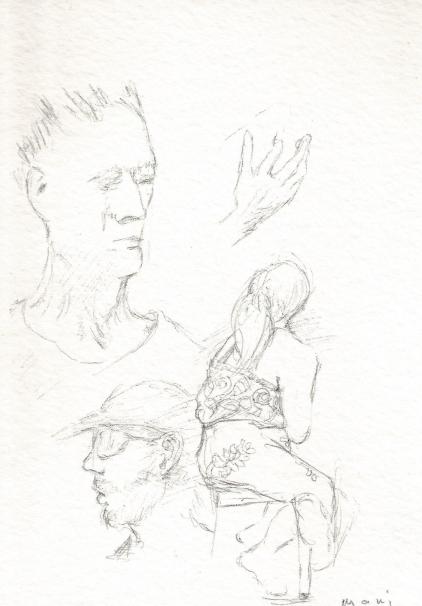
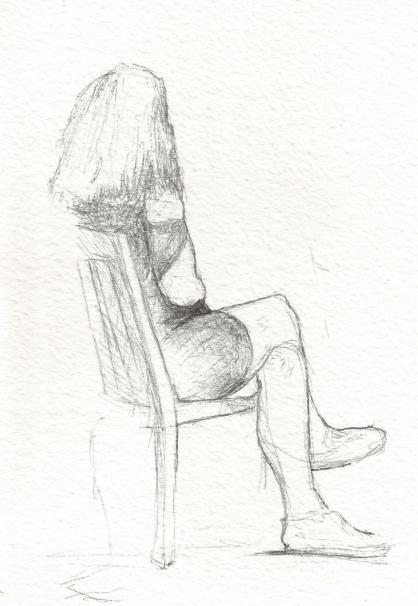
Drawing by Norman J. Olson
Also by Norman J. Olson

You can see more of my art at: 

as well as some recent publications of poetry and art by doing a google image search for “Norman J. Olson”.

Medusa’s Kitchen…  a book of my poetry is available at:  lulu.com/shop/norman-j-olson/forty-four-image-poems/paperback/product-23723310.html 

Poem from Henry Bladon

as an insomniac

sleep is elusive

so as you lie there

in your bed you

allow your mind

you wander through

the streets of Prague

or the Venetian piazza

and then sweat through

the New York streets

on dog-day parades,

all of which is better

than wedging your eyelids

open with a used toothpick.


Henry Bladon is based in Somerset in the UK. He is a writer of short fiction and poetry with a PhD in literature and creative writing from the University of Birmingham. He is the author of several poetry collections and his work can be seen in Poetica Review, Pure Slush, Truth Serum Press, Lunate, and O:JA&L, among other places.

Christopher Bernard reviews Ivan Arguelles’ HOIL: An Unfinished Elegy

Ivan Arguelles

A Micronaut at Last

HOIL: An Unfinished Elegy

by Iván Argüelles

With an introduction by Jack Foley

Goldfish Press

A review by Christopher Bernard

Celebrity, “cultural attention,” fame (“that last infirmity of noble mind,” as Milton said in “Lycidas,” another elegy), is fickle, often very strange, sometimes preposterous. Andy Warhol may have been an optimist: in the future everyone will be famous for no more than fifteen seconds, with anyone famous for longer than that in serious danger of being trolled by the envious until they wish they had never been heard of.

Yet there was, at one time, a point to fame: the holding in memory by a culture, a nation, a people, of exemplary beings whose deeds inspired the rest of us to strive to shape ourselves into something truer, nobler, finer—proofs of what a person is capable of for good. We have examples enough of the contrary, their “fame” one more proof of our eternal human folly.

The noble spirits among us go almost unseen, unregarded; condescended to with a nod here, an award there, but taken for granted for the sake of the mad men, the mirrors of our weakness, who genuinely fascinate us. We are of course free either way—but, born ignorant, needy and weak, and needing as we do to learn everything from the darkness of our beginning, we require examples to teach us which to choose: nobility, infamy, indifference, golden mediocrity? Or?

One criticism of democracy has always been that it pretends the ordinary person, the “common man,” capable of few or no superlative acts, nor claiming to be so, is an ideal. And yet perhaps it is one, an ideal worthy of respect and value: the basic decency of the ordinary person—once the adolescent manias have been seared off via an acid bath in reality, leaving a rooted awareness of vulnerability, our ultimate powerlessness—is surely closer to the reality of the human condition than the brief exhilarations of conqueror, genius and saint.

The exceptional person inspires us to demand more from ourselves, sometimes more than is possible—they can be as cruel to those around them who are less able to endure it, as toward themselves. The ordinary person reminds us that our limits are as absolute as our promise; that the greatest of all human beings will be never more than human: that all of us live in bodies that are born, are vulnerable to vicissitudes we can neither prevent nor even know the existence of till they strike us, and that perish as completely as if they had never been.

Which makes it all the more revelatory of our painfully contradictory position—as vulnerable, mortal, and limited beings of flesh, blood and bone who at the same time have the minds and spirits, the gifts of gods, demons and angels, and the will, in our small way, to use them—when we see a direct expression of the nobility of our spirits meeting the nothingness and cruelty of our bodies, and the meeting does not end in stalemate, but in an eloquence that, while only a partial victory, is nevertheless a sign of the holiness of existence, of life and mind, of humanity and the world.

Such a revelation I believe can be found in this book. For the poet Ivan Argüelles has given us a book of great beauty and emotional power, heart rending and moving, because we see enacted in it a human nobility in stark confrontation with ultimate human weakness—in woe and wonder, bafflement, grief, and a strange and grateful joy.

Early in 2018, the poet and his wife lost their son Max. Max had suffered for almost four decades from encephalitis, an inflammation of the brain contracted when he was ten years old. He spent most of his life with his parents, moving from crisis to crisis, in and out of hospitals, severely challenged in mind and body if not in spirit. In recent years, the poet had also lost his brother and identical twin, José Argüelles, about whom he has written eloquently. But this new death, though long expected, clearly wounded at an even deeper level, calling up an anguish not only over the loss of what was, from all accounts, a loving and gentle soul, but over the mystery, the apparent cruelty and senselessness of his son’s fate.

The result has been an anguished outpouring of poetry, a despairingly eloquent questioning of life, the universe and the emptiness suffusing it, of himself, the world, and the void; of “the Unknown,” as he puts it—a hopeless yet determined quest for an answer he knows, believes, suspects, and fears cannot be found. The poems have been collected into this, his most focused and moving book – “HOIL” was a word of unknown meaning that (according to the poet) Max wrote on various drawings in his early childhood, and thus especially appropriate for this book.

In these poems Argüelles displays what anyone who knows his work would expect: a seemingly limitless inventiveness of startling imagery, a gift for paradox seducing assent, surrealist elisions of logic that seem as natural as breathing, and a near perfect ear—coupled with a mastery of condensed statement that demands, and rewards, close attention, to say nothing of a depth of personal feeling and illumination, vulnerability, in some ways unique to his poems here.

There are poems “spoken” by Max:

I can’t tie my shoe strings

my pulse is fluttering madly

black spots devour my left eye

and people randomly assembled

all with someone else’s hands

what are they doing and saying

where is the illuminated globe

and the scissors that cut the wind

                                    —from SHORT CIRCUIT

And poems spoken to him:

tell me you’ve just gone

to a temporary Elysium

where flowers are made of paper

in colors that last a day

a place where they burn water

because death does not exist

tell me that on the other shore

your hands are still making

shadows that the blind can feel

                                    —from MAGIC MAX

There are poems about Max:

great and splendid the mornings when

in your magic chair you greeted the first light

. . .

and with joy bush herb grass tree leaf

beloved of bug and bird alike you blessed

. . .

and when you reached your happy hand forth

to greet and bless the homeless and hungry

who in their morning passage came to you

a benediction in their grateful smiles

                                    —from SAINT MAX

And about his child’s game of traveling through outer space, powered by a favorite toy:

                       
. . .  I was a miconaut

in my plastic toy sailing the galaxies

                                    —from MAX: A SHORT AUTOBIOGRAPHY

There are poems about the basic mystery of being:

all the schools of thought

fit into a blade of grass

the heat and magma of the past

the very turbulence of the cosmos

a dew drop a petal in the wind

all expressions of the seen and felt

are nothing in the sweep of time

. . .

             . . . the rapacious gods

flash their gaudy crowns

parading magnificent see-through

bodies like shadows of alabaster

they too are nothing but absence

                                    —from IN PERPETUITY

. . . and the mystery of death:

where does one go when the door shuts

are there windows inside or a trap-hole

hidden in the ceiling or secret words

to transport the soul to its next destiny

. . .

does it feel like an ancient ruined temple

the feel of moss the scent of damp grass

blind statues representing the gods

of futility and longing . . .

. . .

is it easier to sleep again to forget what

it was that was being sought—a hand?

                                    —from AVERNUS

There are poems made up, partly or all, of questions with no answers:

how many is number? who talks to the comb?

who are the zero? what letter comes second?

who counts the echoes? who sets light in the glass?

who emerges in the cloud? who sleeps with the child?

who wakes in the well? who pronounces the moon?

                                    —from THE PURVEYOR OF SOUND

And poems about the anguish of this death:

the discarded comb

the useless shaving brush

and what the mirror no longer holds

distance of immeasurable hours

nowhere now in the spent landscape

of discarded talismans

                                    —from THE REMAINS

you have become sleek a streaking flash

in the night heavens which we scour looking

for the brilliant dust of your swift passage

into eternity a micronaut at last

                                    —from MICRONAUT II

And there are poems about the responsive questioning and questionable responses of poetry:

when they wrote that page

who was at the window watching?

who could restrain the hands of the wind?

it came from a chasm of ink

illegible words of a rotating night

errors in punctuation and syntax

what could be the one way forward

if not opening the side door

and going directly into the woods

                                    —from FATE

Above all, there is the embrace of mind, spirit and heart of a noble soul (when will fame come?) speaking from the depths of sorrow and grace:

you reached out for a handful of air

to define your true being the essential inner you

great internal blossoming of sand and rock

imprinted with the hearsay of the archaic

enormous unfolding waves of letters

missives from secret gods hidden in liquid gold

what their mouths were telling you in a language

of fever and ancient fingerprints HOIL
which you wrote in your mysterious passage

to the underworld riding the enigmatic thunder

                                    —from CHILD-OF-MY-HEART

____

Christopher Bernard is co-editor and poetry editor of the webzine Caveat Lector. His new novel Meditations on Love and Catastrophe at The Liars’ Café will appear in 2020.